Tag Archives: Joy

Campus Crusade for Christ; Bill Bright – A Solid Foundation

dr_bright

“All who listen to My instructions and follow them are wise, like a man who builds his house on solid rock. Though the rain comes in torrents, and the floods rise and the storm winds beat against his house, it won’t collapse, for it is built on rock. But those who hear My instructions and ignore them are foolish, like a man who builds his house on sand. For when the rains and floods come, and storm winds beat against his house, it will fall with a mighty crash” (Matthew 7:24-27).

What a wonderful promise for supernatural living to know that no matter what happens – the greatest tragedies, adversities or losses – your house will stand. You will not only survive, but mature, grow and become more like Jesus.

As you listen to and follow His instructions, you will observe that He has been speaking to the multitudes in what is frequently referred to as the Sermon on the Mount. Review chapters 5, 6 and 7 of Matthew. List all the things that He commands us to do, and then by faith claim those instructions in your life. For there is nothing that God ever commands that He will not enable us to do if we seek His help.

Remember, too, His promise recorded in Matthew 22:37-40, that all of the commandments in the sermon on the Mount are fulfilled when we love God with all of our heart, soul, mind and strength, and when we love our neighbor as ourselves. So the instructions that He is giving are not difficult, for He who gives the command will enable us to build on a sure foundation of solid rock.

Note, however, the admonishment for those who ignore His instructions. For those foolish people who build their houses on sand, collapse of those houses is the certain consequence. One need only look around to see evidence of the fulfillment of God’s warning in the lives of numerous loved ones, neighbors and friends. God loves us, and He wants to bless us, but He cannot if we ignore Him.

Are you following the instructions of the Lord Jesus Christ? If not, I encourage you to begin today, with the assurance that He will bless you, your family and all who are dear to you.

Bible Reading: 1 John 2:3-9

TODAY’S ACTION POINT: I will meditate upon our Lord’s instructions as contained in the Sermon on the Mount, as well as the Ten Commandments and the Golden Rule. I will meditate upon 1 Corinthians 13 and other commandments of our Lord on love. Through the enabling of the Holy Spirit, I will obey His instructions for supernatural living.

Presidential Prayer Team; J.K.-Conscious Reliance

ppt_seal01

Each of you is prompted in your life by some distinct principle or passion. It affects how you contend with good things as well as bad. The tendency of each person is to live in themselves, to act in their own strength and to work toward selfish motives.

Whatever you do, in word or deed, do everything in the name of the Lord Jesus.

Colossians 3:17

But Christians can find the holiest and purest motives only in Jesus. Out of love for Him and respect to His authority, selfishness is pushed aside. Jesus provided a noble example of moral excellence in life, obeying His Father’s will even to death. Today’s verse encourages you to recognize Christ in everything…in your work, conversation, public worship, private prayer and in all matters related to your home and family – everything!

To live your life fully is to depend absolutely on Jesus at all times. He is God’s greatest gift to you. Full, conscious reliance on Him helps you be humble in successes, encouraged in perplexities, and uplifted in your grief. Dear one, take His example to heart in the coming year. Then intercede for the leaders of this nation that they accept God’s gift in 2014 so their motives will not be selfish but Christ-centered.

Recommended Reading: Colossians 3:5-16  Click to Read or Listen


Greg Laurie – A Legacy that Lasts

greglaurie

So we tell others about Christ, warning everyone and teaching everyone with all the wisdom God has given us. We want to present them to God, perfect in their relationship to Christ. —Colossians 1:28

In his book, Nearing Home, Billy Graham said, “God doesn’t want us to waste our latter years or spend them in superficial, meaningless pursuits. Instead, He wants us to use them in whatever ways we can to influence those who will come after us. God wants us to finish well. . . .”

One day, your most precious possessions will fit inside a hospital drawer. You will leave it all behind and will enter into eternity. What kind of legacy will you leave? If you are a Christian, are you seeking to win people to Christ? Are you helping anyone to get on their feet spiritually, grow, and continue on to serve the Lord?

Someone did this for me. I accepted Christ during a meeting at my high school, but afterward, I was sort of left all alone, wondering what I was supposed to do. But then God brought along someone named Mark. He introduced himself and told me that he wanted to take me to church and that I needed to go to church if I wanted to grow spiritually. He was persistent in a good way. He brought me to church again and again. Mark showed up at a critical moment in my life. If he hadn’t, I tremble to think of where I would have ended up. He was just some regular guy who had a concern for me and took time with me.

You can be that regular person for someone else. Are you doing that? If not, will you start?

You can’t really control when God will call you home. That is not up to you. You don’t determine the date of your birth or the date of your death. But you have everything to do with what you do between those dates. So finish well.

Max Lucado – No Harm Done

Max Lucado

Insensitivity makes a wound that heals slowly!

Words like, “Whoa–she’s put on some weight!” Or a question carelessly asked, “Trish, is it true you and Brian are separated?”

If you were to tell the one who threw these thoughtless darts about the pain they caused, the response would be, “Oh, but I had no intention. . . it was just a slip of the tongue.”  No one’s at fault.  No harm done.

But as the innocent attackers go on their way excusing themselves, a wounded soul is left in the dust.  God says, “He who guards his lips guards his life, but he who speaks rashly will come to ruin” (Proverbs 13:3).

The message is clear.  Excuses are shallow when they come from those who claim to be followers and imitators of God. Insensitive slurs may be accidental—but they’re not excusable!

From God Came Near


Charles Stanley – Putting Off Procrastination

Charles Stanley

Acts 24:24-27

Some people like to say that they are “born procrastinators.” According to Scripture, that is impossible for believers. Procrastination can be a form of bondage in a person’s life, and the Lord, who wants the best for His followers, didn’t design us to be enslaved.

Procrastination has several common causes. The first is an attempt to dodge discomfort. Many people put off taking action because they feel uncomfortable or anxious about the ramifications. In today’s passage, Felix sends Paul away, fearing the apostle’s talk about righteousness, self-control, and judgment.

This can show up in our spiritual life— we sometimes delay Bible reading and meditating because we are afraid God will bring to the surface a matter we need to confront. Then, if such a subject comes up, we often choose to procrastinate about dealing with it. Issues like pride, self-control, or guilt may not be comfortable to face, but dodging them obstructs God’s purpose in our life.

The second cause for putting things off is self-doubt. Those who consider themselves inadequate to complete a task may choose not to begin it. Related to this is another factor: fear of making a mistake or failing in an endeavor can make postponement seem preferable.

Procrastination is no laughing matter, particularly in the spiritual realm since delaying on an assignment from God is the same as disobeying Him. Are you prone to delay? Identify problem areas and the feelings that accompany them. Then confess your tendency, and rely on God’s strength to overcome it.


Our Daily Bread — Mixed Emotions

Our Daily Bread

Revelation 21:1-7

Even in laughter the heart may sorrow, and the end of mirth may be grief. —Proverbs 14:13

For Marlene and me, “mixed emotions” precisely describes our wedding. Don’t take that the wrong way. It was a wonderful event that we continue to celebrate more than 35 years later. The wedding celebration, however, was dampened because Marlene’s mom died of cancer just weeks before. Marlene’s aunt was a wonderful stand-in as the “mother of the bride,” but, in the midst of our happiness, something clearly wasn’t right. Mom was missing, and that affected everything.

That experience typifies life in a broken world. Our experiences here are a mixed bag of good and bad, joy and pain—a reality that Solomon expressed when he wrote, “Even in laughter the heart may sorrow, and the end of mirth may be grief” (Prov. 14:13). The merry heart often does grieve, for that is what this life sometimes demands.

Thankfully, however, this life is not all there is. And in the life that is to come, those who know Christ have a promise: “God will wipe away every tear from their eyes; there shall be no more death, nor sorrow, nor crying. There shall be no more pain, for the former things have passed away” (Rev. 21:4). In that great day, there will be no mixed emotions—only hearts filled with the presence of God! —Bill Crowder

Peace! peace! wonderful peace,

Coming down from the Father above,

Sweep over my spirit forever, I pray,

In fathomless billows of love. —Cornell

For the Christian, the dark sorrows of earth will one day be changed into the bright songs of heaven.

Bible in a year: Zechariah 13-14; Revelation 21


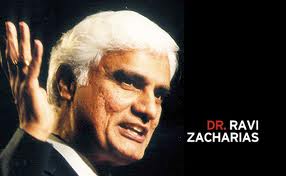
Ravi Zacharias Ministry – Reasonable Christmas

Ravi Z

“Miracles,” said my friend. “Oh, come. Science has knocked the bottom out of all that. We know now that Nature is governed by fixed laws.”

“Didn’t people always know that?” I said.

“Good Lord, no,” he said. “For instance, take a story like the Virgin Birth. We know now that such a thing couldn’t happen.”

“But look here,” I said. “St Joseph, the husband of the Virgin Mary; if you’ll read the story in the Bible you’ll find that when he saw his fiancée was going to have a baby he decided to cry off the marriage. Why did he do that?”

“Wouldn’t most men?”

“Any man would,” I said, “provided he knew the laws of Nature—provided he knew that a girl doesn’t ordinarily have a baby unless she’s been sleeping with a man. St Joseph knew that law just as well as you do.”(1)

It’s not difficult to find any number of people who have trouble with the nativity scene at the heart of the Christmas story. According to the Barna Research group even Christians are struggling with the virgin birth at the center of their own faith tradition. More than fifteen percent of Christians in the United States admit not believing in the virgin birth, a statistic readily increasing.

Across continents, atheist campaigns ask the world each year to admit over its primitive nativity scenes that we know it is only a myth or to celebrate reason instead this season. The battle they propose (and the compliant perpetuate) between science and faith describes something like two opposing swordsmen sworn to fight to the death. Though it is an image supported at times by both sides of the fight, it is at best a blind spot in the minds of many and at worse a wishful delusion.

In his 1945 essay “Religion and Science,” which begins with the conversation above, C.S. Lewis exposed one of the most common false assumptions at the heart of the science/faith divide, particularly as it pertains to the nativity of Jesus. The assumption is that this “primitive” nativity was likewise filled with primitive thinkers devoid of any sort of knowledge of biology or natural reasoning. Here and elsewhere, Lewis saw that we hold our scientific advancements as something like demerits for prior generations, perpetuating the mentality that the only accurate thought is current thought, the only mind worth trusting is an enlightened one—of which we, of course, are conveniently members.

Yet, Joseph knew enough about the laws of nature to at first conclude the infidelity of his fiancée. He knew that babies and pregnancies did not appear on their own and thus intended to divorce Mary quietly, until something changed his mind. The disciples, too, knew enough about the laws of physics to be completely terrified by the man walking on the water toward their boat. The crowd of mourners knew enough about death to laugh at Jesus when he insisted that the dead girl was only sleeping, and to walk away astonished when she came back to life. There were also the magi, astrologers who followed their scientific calculations to the child, Philip and Andrew who knew that the mathematics of two fish and a starving crowd were not going to divide well, Mary and Martha who knew that their brother’s death was the last word, and Thomas who knew the same after he watched Jesus crucified.

In each of these objections, I thankfully hear my own. So much so, that it would appear faith is not a turning of one’s back on the fixed laws of nature or physics or mathematics, but rather, a recognition in the very face of these laws which we know and trust that something from outside the law must have reached into the picture. I find each of these scenes both remarkable and reasonable precisely because of the reactions of men and women with a grasp of natural law and the same objections that any of us would have offered had we been present. It would be blind faith indeed if we were receiving a story that wanted us at the onset to fully reject the laws of natural reasoning in replacement of something else. What we receive instead is a story filled with undeniable indications which suggest that something—or Someone—has startlingly stepped into the picture.

Jill Carattini is managing editor of A Slice of Infinity at Ravi Zacharias International Ministries in Atlanta, Georgia.

(1) C.S. Lewis, “Religion and Science,” Undeceptions (London: Geoffrey Bles, 1971), 48.

Joyce Meyer – Truth in the Inner Being

Joyce meyer

Have mercy upon me, O God, according to Your steadfast love; according to the multitude of Your tender mercy and loving-kindness blot out my transgressions. Wash me thoroughly [and repeatedly] from my iniquity and guilt and cleanse me and make me wholly pure from my sin! For I am conscious of my transgressions and I acknowledge them; my sin is ever before me. Against You, You only, have I sinned and done that which is evil in Your sight, so that You are justified in Your sentence and faultless in Your judgment. Behold, I was brought forth in [a state of] iniquity; my mother was sinful who conceived me [and I too am sinful]. Behold, You desire truth in the inner being; make me therefore to know wisdom in my inmost heart.

—Psalm 51:1–6

The heading under this psalm reads: “A Psalm of David; when Nathan the prophet came to him after he had sinned with Bathsheba.” David cried out for mercy because he had sinned with Bathsheba, and when he learned she was pregnant, he had had her husband murdered in battle.

After David confessed his sin, Nathan said to him, “The Lord also has put away your sin; you shall not die. Nevertheless, because by this deed you have utterly scorned the Lord and given great occasion to the enemies of the Lord to blaspheme, the child that is born to you shall surely die” (2 Samuel 12:13–14).

That’s the first lesson I want you to grasp from this incident. When you fail God, you harm yourself, but you also bring dishonor to His name. Whenever you take a false step, there are those who watch and gleefully point their fingers. The two always go together. Not only do you bring disgrace on the name of the Lord, but you fail yourself. You knew the right but chose the wrong.

As if that were not enough, the evil one also whispers, “See how bad you are. God won’t forgive you. It’s too awful.” Of course, he’s lying, because that’s what he does best. Don’t listen to those words, because there is no sin you’ve committed that God won’t forgive. You may have to carry scars or pay the penalty, but God wipes away the sin.

There’s something else to learn from this: You need to face reality. You sinned. You disobeyed God. What will you do about your sin? You can plead excuses (and most of us are good at that), or you can follow David’s example. When the prophet said, “You are the man . . .” (2 Samuel 12:7), the king did not deny his wrongdoing or try to justify his actions. David admitted he had sinned and confessed.

He wrote in the psalm quoted earlier: “For I am conscious of my transgressions and I acknowledge them; my sin is ever before me. Against You, You only, have I sinned and done that which is evil in Your sight, so that You are justified in Your sentence and faultless in Your judgment” (vs. 3–4).

If you follow Jesus Christ, not only are you declaring to yourself, to your family, and to the world your trust in the Savior, but you are also declaring your stand for truth. It’s easy for us to deceive ourselves, but God has called us to be totally, completely, and scrupulously honest in our inner being. Don’t look at what others may get away with or how they justify their behavior. We can’t blame others, the devil, or circumstances.

When you fail, remind yourself that the greatest king of ¬Israel cried out to God and said, “My sin is ever before me” (v. 3). Those sins, failures, or shortcomings (or whatever you may choose to call them) will always be there until you admit them and confess them to the Lord; only then can you know the joy of living with integrity and in truth.

This is the message for you from this final meditation; this is the message of the entire book: Strive to live with truth in your inner being. You—you and God—are the only ones who know what’s in your heart. Live in honesty and truth.

Holy God, David prayed, “You desire truth in the inner being; make me therefore to know wisdom in my inmost heart.” Through Jesus Christ, I plead with You to help me desire truth in my inner being, to live in such a way that I’m as honest and as open with You as I can become. I know that the life You honor is the life You bless. Amen.


Campus Crusade for Christ; Bill Bright – God Is a Loving God

dr_bright

“If a child asks his father for a loaf of bread, will he be given a stone instead? If he asks for fish, will he be given a poisonous snake? Of course not! And if you hardhearted, sinful men know how to give good gifts to your children, won’t your Father in heaven even more certainly give good gifts to those who ask Him for them?” (Matthew 7:9).

Roger interrupted our Bible study on this passage of Scripture to say, “I guess I have trouble believing God is a good God because my earthly father was a tyrant. He hated me, and I hated him. I do not recall a single experience in my life where he encouraged me. I want to believe that God is good, but I have difficulty. Please help me.”

Unfortunately, there are multitudes of men and women who are relatively new Christians and who have come from similar backgrounds where there was no love, no compassion, no concern, and their view of God is therefore distorted. They somehow equate the loving, forgiving God with their own tyrannical fathers. When such is the case, only the Holy Spirit can heal these deep wounds and remove these scars. So, I assigned Roger a special project. I asked him to make a list of all the attributes and qualities of God recorded from Genesis to Revelation. The project lasted several months, but in the process a transformation took place in Roger’s life.

The day came when he exclaimed with great joy, “The Holy Spirit has illumined my mind and taught me that God is truly a loving God, worthy of my trust. Now I can believe Him for anything. I know that even if my father on earth was the best father ever, God’s love, compassion and care for me transcends anything that he could do for me. Therefore, I can ask Him for good gifts, knowing that He will hear and answer me. I want to live only for His glory for the rest of my life.”

Are you having difficulty trusting God because of an unfortunate early relationship with your father or mother? If so, I encourage you to do what Roger did. Saturate your mind with the attributes of God – His love, sovereignty, wisdom, grace, compassion, power and holiness. As you do, the Holy Spirit will use the Word of God to cleanse your mind of all the memories that weigh you down, and you will be able to say with Roger, “I can trust God for anything, because I know He is a loving God who cares for me.”

Bible Reading: 1 John 3:1-3

TODAY’S ACTION POINT: I will continue to meditate upon the attributes of God, knowing that the more I trust Him, the more sure I can be of His faithfulness to enable me to live a supernatural life for His glory.


Greg Laurie – Not Duration, But Donation

greglaurie

To everything there is a season, a time for every purpose under heaven. —Ecclesiastes 3:1

As one year comes to an end and another one begins, it is a great time to evaluate how we are doing and where we are going. We want to make sure that we are living our lives the way they ought to be lived because for some of us, this may be the last year.

Reflecting on the passing of human life, ethicist Michael Josephson wrote, “Ready or not, some day it will all come to an end. There will be no more sunrises, no minutes, hours, or days. . . . So what will matter? How will the value of your days be measured? . . . Living a life that matters doesn’t happen by accident. It’s not a matter of circumstance but of choice.”

The Bible says, “To everything there is a season, a time for every purpose under heaven: A time to be born, and a time to die” (Ecclesiastes 3:1–2). It also reminds us that our times are in God’s hands (see Psalm 31:15). Regarding the length of our lives, Job said to God, “His days are determined, the number of his months is with You; You have appointed his limits, so that he cannot pass” (Job 14:5).

God determines how long we will live—not us. We may be able to improve the quality of our lives through diet and exercise. But the quantity of our lives—that is up to God. So we want to make sure that we are living our lives well.

As Corrie ten Boom said, “The measure of a life, after all, is not its duration, but its donation.”

You determine the evening of your life by the morning of it. So start thinking about it. Start charting the course the rest of your life will take.


Max Lucado – Reliable

Max Lucado

Reliable! Liable means responsible.  Re means over and over again.

I’m wondering if someone’s listening who’s a saint of re-liability? If you are, I can’t resist the chance to say two things. The first?  Thank you!

Thank you teachers for the countless Sunday school lessons prepared and delivered with tenderness. Thank you senior saints for a generation of prayer. Thank you missionaries for your bravery in sharing the timeless truth. Thank you preachers. You thought we weren’t listening, but we were.

Thanks to all of you who practice on Monday what you hear on Sunday.  It’s on the back of your fidelity that the Gospel rides. You are reliable! You get the job done.

I said I had two things to say.  What’s the second? Keep pitching! Your Hall of Fame award is just around the corner.

From God Came Near

Charles Stanley – A Vision for Believers

Charles Stanley

People often have bright aspirations for their lives. Some aim for a high-powered career or financial success. Others dream about making close friendships or impacting the world.

But no matter what our personal goals may be, the Lord has cast a vision for all of His children. It is known as the Great Commission: “Go therefore and make disciples of all the nations, baptizing them in the name of the Father and the Son and the Holy Spirit, teaching them to observe all that I commanded you” (Matthew 28:19-20).

What does it mean, to “make disciples”? Some Christians think this refers to adding new church members and growing the size of the congregation. But God is not interested in numbers or external appearances; He’s concerned about genuine heart change. So He commissions His followers to lead others, first to saving faith in Jesus Christ and then to the next step—baptism—as a public declaration of their trust in the Savior.

Once Jesus shared these objectives, most of the disciples spent the rest of their days fulfilling them. In fact, almost every one gave his life to accomplish them.

This command has not changed. God still expects us, His children, to share the good news of the gospel, to teach people how to be followers of the Lord Jesus Christ, and to baptize those who are saved.

Are you living with God’s purpose as your guide? Ask Him for opportunities and the courage to share His message of hope and love.

Excerpt from In Touch magazine. Subscribe to In Touch magazine free here.


Related Resources

Related Video

A Heart for God – A Vision for the World

Do you have a heart for God? If so, you are compelled to share the good news of salvation with a lost and dying world. In this sermon, Dr. Stanley explains how having a heart for God means we desire to know God, obey Christ, and share the gospel. (Watch A Heart for God – A Vision for the World.)


Our Daily Bread — Letter To A Child

Our Daily Bread

All of 3 John

I have no greater joy than to hear that my children walk in truth. —3 John 4

Even at the end of his life, C. S. Lewis showed an interest in the spiritual nurture of younger believers. Although in ill health, he took time to respond to the letter of a child named Philip. Complimenting the boy’s fine written expression, Lewis said he was delighted that Philip understood that in the Narnia Chronicles the lion Aslan represented Jesus Christ. The next day, Lewis died at his home in the Kilns, Oxford, England, one week before his 65th birthday.

The apostle John, in his later years, sent a letter to his spiritual children. In it we see the joy of a mature believer encouraging his spiritually younger disciples to keep walking in the truth and following Christ.

John wrote, “I have no greater joy than to hear that my children walk in truth” (3 John 1:4). Short by New Testament standards, John’s letter demonstrates the joy that comes in nurturing and watching the next generation’s spiritual growth.

Encouraging spiritual understanding in the next generation should be the pursuit of mature believers. Sending a note of appreciation, giving a word of encouragement, praying, or offering sound advice can all be ways of helping others on their spiritual journey with God. —Dennis Fisher

To help another in Christ to grow

You have to pay a price

It takes the giving of yourself

And that means sacrifice. —D. DeHaan

The journey is better with someone who knows the way.

Bible in a year: Zechariah 9-12; Revelation 20

Alistair Begg – The Lord Has Helped Us

Alistair Begg

Till now the Lord has helped us.

1 Samuel 7:12

The phrase “till now” is like a hand pointing in the direction of the past. Twenty years or seventy, and still “till now the LORD has helped us.” Through poverty, through wealth, through sickness, through health, at home, abroad, on the land, on the sea, in honor, in dishonor, in perplexity, in joy, in trial, in triumph, in prayer, in temptation, “till now the LORD has helped us.”

We delight to look down a long avenue of trees. It is delightful to gaze from end to end of the long vista, a sort of verdant temple, with its branching pillars and its arches of leaves. In the same way look down the long aisles of your years at the green branches of mercy overhead and the strong pillars of loving-kindness and faithfulness that support your joys.

Are there no birds singing in those branches? Surely there must be many, and they all sing of mercy received “till now.”

But the word also points forward. For when a man reaches a certain point and writes “till now,” he is not yet at the end; he still has a distance to go. More trials, more joys; more temptations, more triumphs; more prayers, more answers; more toils, more strength; more fights, more victories; and then he faces sickness, old age, disease, death. Is it over then? No! Then there is wakening in Jesus’ likeness, thrones, harps, songs, psalms, white raiment, the face of Jesus, the company of saints, the glory of God, the fullness of eternity, the infinity of bliss. Be of good courage, believer, and with grateful confidence raise your banner, for-

He who hath helped thee hitherto

Will help thee all thy journey through.

When read in light of heaven, how glorious and marvelous a prospect will the “till now” provide for your grateful eye!


Charles Spurgeon – The cleansing of the leper

CharlesSpurgeon

“And if a leprosy break out abroad in the skin, and the leprosy cover all the skin of him that hath the plague from his hand even to his foot, wheresoever the priest looketh; Then the priest shall consider: and, behold, if the leprosy have covered all his flesh, he shall pronounce him clean that hath the plague: it is all turned white: he is clean.” Leviticus 13:12-13

Suggested Further Reading: Colossians 3:5-14

Sinner, if you are to be saved, Christ must do it all; but when once you have faith in Christ, then you must be washed; then must you cease from sin, and then by the Holy Spirit’s power you shall be enabled to do so. What was ineffective before shall become mighty enough now, through the life which God has put into you. The washing with water by the word, and the cleansing of yourself from dead works, shall become an effectual and mighty duty. You shall be made holy, and walk in white, in the purity wherewith Christ has endowed you. The shaving off of his hair was fitly to represent how all the old things were to pass away, and everything was to become new. All the white hair was to be cut off, as you read in Leviticus 14:9: “He shall shave all the hair off his head, and his beard, and his eyebrows.” There was not a remnant or relic left of the old state in which the hair was white; all was to be given up. So it is with the sinner. When he is once pardoned, once cleansed, then he begins to cut off the old habits, his old prides, his old joys. The beard on which the hoary Jew prided himself was to come off, and the eyebrows which seem to be necessary to make the countenance look decent, were all to be taken away. So it is with the pardoned man. He did nothing before, he does everything now. He knew that good works were of no benefit to him in his carnal state, but now he becomes so strict that he will shave off every hair of his old state. Not one darling lust shall be left, not one iniquity shall be spared, all must be cut away.

For meditation: Very soon many will be breaking their New Year’s resolutions! The Christian is already a new creation in Christ (2 Corinthians 5:17), a new person with a new nature. May God give us grace and strength to be what we are in Christ.

Sermon no. 353

29 December (Preached 30 December 1860)


John MacArthur – He Who Sanctifies

John MacArthur

“Both He who sanctifies and those who are sanctified are all from one Father; for which reason He is not ashamed to call them brethren, saying, ‘I will proclaim Thy name to My brethren, in the midst of the congregation I will sing Thy praise.’ And again, ‘I will put My trust in Him.’ And again, ‘Behold, I and the children whom God has given Me'” (Heb. 2:11-13).

From our own perspective and experience, it is difficult to think of ourselves as holy. Sin simply is too much a part of us in this fallen world. In thought and practice we are far from holy, but in Christ we are perfectly holy.

We may not always act holy, but because of our faith in Christ we are perfectly holy in God’s sight. Just as a child may not always act like his father, he is nonetheless still his son. We are holy in the sense that before God, the righteousness of Christ has been applied and imputed on our behalf through faith. We were made holy through His sacrifice and have become “those who are sanctified.”

“By one offering He has perfected for all time those who are sanctified” (Heb. 10:14). We are as pure as God is pure, righteous as Christ is righteous, and therefore entitled to be called His brothers because we now share in His righteousness.

The Sanctifier and sanctified now have “one Father,” and the Sanctifier “is not ashamed” to call the sanctified His brothers. What an overwhelming truth!

The practical experience of a Christian’s life in this world includes sin, but the positional reality of his or her new nature is holiness. “In Him [we] have been made complete” (Col. 2:10). Yet practically we have a long way to go. So the overriding purpose of our lives is to become in practice what we are in position. Now that we are Christ’s brothers and God’s children, let that be all the motivation we need to live like it.

Suggestion for Prayer:

Thank the Lord for His sanctifying work on the cross, which enables you to be holy.

For Further Study:

Read Romans 1:16. Based on what God has done for you through Christ, can you wholeheartedly echo Paul’s statement?


Joyce Meyer – Dwell in Unity

Joyce meyer

Behold, how good and how pleasant it is for brethren to dwell together in unity!—Psalm 133:1

Great power was manifested in the lives of the early believers. Acts 2:46 tells us why: “And day after day they regularly assembled in the temple with united purpose.” They had the same vision, the same goal, and they were all pressing toward the same mark. They prayed in agreement (see Acts 4:24), lived in harmony (see Acts 2:44), cared for one another (see Acts 2:46), met each other’s needs (see Acts 4:34), and lived a life of faith (see Acts 4:31). The early church lived in unity—and operated in great power.

Now the church is divided into countless factions with different opinions about everything. Even individual congregations are split by the most trivial differences. When we finally see Jesus face-to-face, we will surely discover that not one of us was 100 percent right. Only love holds people together. Make a strong commitment to do whatever is necessary to live in unity—you will discover how good it is!


Presidential Prayer Team; P.G. – Great Way to Start

ppt_seal01

Some 50 years ago, an American president challenged, “Ask not what your country can do for you – ask what you can do for your country.” More than 2,000 before, that phrase might have been used by Jesus to His apostles: “Ask not what the Lord can do for you. Ask what you can do for Him!”

You received without paying; give without pay.

Matthew 10:8

It’s easy to feel conflicted with the giving and receiving of this season when you consider Syrian Christians being persecuted in their hometowns, Filipino Christians flooding into makeshift churches to pray for relief after the super-sized typhoon, and fellow Americans in the Midwest sifting through what’s left of their homes after devastating tornadoes. As you look to toward the New Year, consider how you can comfort the suffering and support the needy. A great way to start is to share your knowledge of the immeasurable gift that God has given with a hurting world – one prayer and one word of love at a time. Remember you have freely received; now it is time to be a good steward of that gift.

Offer prayers today for members of Congress and others in government and the Pentagon that, in the last days of this year, they might find Jesus, the only gift worth having.

Recommended Reading: Matthew 10:5-15

Charles Stanley – When God Is Silent

Charles Stanley

John 11:1-6

As Lazarus was dying, his sisters urgently called for Jesus to come. Imagine how their grief must have compounded when He didn’t instantly respond to their request.

God’s silence is difficult to accept. We want Him to leap into action at our call, particularly if we are hurting or afraid. But since He promises to meet our needs, we can be sure that a silence from heaven has purpose.

• Silence grabs our attention. The disciples knew that Jesus could heal, so they must have wondered why He delayed instead of rushing to His friend’s bedside. But the Lord wanted them to witness something even greater: His power over death. They had been confused by His statements about conquering death, and they needed to understand that He could fulfill His own resurrection prophecies (Mark 9:31-32). The miracle at Lazarus’s tomb was part of their preparation.

• Silence teaches us to trust. Mary and Martha sent word of Lazarus’s illness because they anticipated the Lord would heal him. But if that expectation was not met, would their faith waver? Martha answered the question by stating that she believed Jesus was “the Christ, the Son of God” (John 11:21-27). The women’s trust was rewarded with a stunning miracle: their brother’s return to life.

At times, the only thing we can hear when we pray is our own breathing. That can be frustrating and frightening. But Scripture says God is always with us, and His silence won’t last forever (Ps. 38:15; Heb. 13:5). Cling to those promises as you seek the purpose behind His silence.


Our Daily Bread — The Presentation

Our Daily Bread

Colossians 1:21-23

He has reconciled . . . to present you holy, and blameless, and above reproach in His sight. —Colossians 1:21-22

My wife, Martie, is a great cook. After a long day I often look forward to the smell of spicy aromas that promise a tasty feast. Not only does she know how to prepare a meal, but she is also a master at the presentation. The colors of the food on the plate, beautifully arranged in a harmony of meat, white puffy rice, and vegetables welcome me to pull up my chair and enjoy her handiwork. But the food was not so attractive before she got her hands on it. The meat was raw and squishy, the rice was hard and brittle, and the vegetables needed to be scrubbed and trimmed.

It reminds me of the gracious work Jesus has done for me. I am well aware of my frailty and propensity to sin. I know that in and of myself I am not presentable to God. Yet when I’m saved, Jesus makes me a new creation (2 Cor. 5:17). He takes me just as I am and makes me just as I should be—“holy, and blameless, and above reproach” (Col. 1:22). He presents me to our Father as a thing of beauty worthy to be in His presence.

May His transforming work on our behalf stimulate us to live up to the presentation and to be humbly grateful to Christ for His finishing work in our lives! —Joe Stowell

Let the beauty of Jesus be seen in me—

All His wonderful passion and purity!

O Thou Spirit divine, all my nature refine,

Till the beauty of Jesus be seen in me. —Orsborn

Jesus takes us as we are and makes us what we should be.

Bible in a year: Zechariah 5-8; Revelation 19