Tag Archives: Joy

Denison Forum – My response to ‘A Day Without a Woman’

According to this morning’s Washington Post, some women will refuse to smile today. Some schools will be closed in Washington, DC, and Alexandria, Virginia. Some restaurants are shrinking their menus as women go on strike. Rallies will be held around the country.

Today has been designated “A Day Without a Woman.” Organizers are encouraging women to take the day off work, shop exclusively at “small, women- and minority-owned businesses,” and wear red “in solidarity.” The emphasis is timed to coincide with International Women’s Day.

The day is meant to recognize “the enormous value that women of all backgrounds add to our socioeconomic system—while receiving lower wages and experiencing greater inequities, vulnerability to discrimination, sexual harassment and job insecurity.” It is organized by the same people who created the Women’s March on Washington last January in support of abortion and other women’s “rights.”

While I disagree with the organizers on a host of moral issues, I agree with them that the value of women in our culture cannot be overstated.

If women stopped working, 53 percent of the American workforce would disappear. More than three-quarters of our public school teachers would not be in the classroom. Eighty-five percent of our nation’s obstetricians, 75 percent of our pediatricians, 57 percent of our psychiatrists, and 58 percent of our family doctors would no longer see patients. Thirty-six million volunteers would no longer volunteer.

Continue reading Denison Forum – My response to ‘A Day Without a Woman’ →

Charles Stanley – Overcoming Distractions


Nehemiah 6:15-16

As we saw yesterday, distractions have potential to get us off track. Gossip. Criticism. Financial pressure. Poor health. Conflict. Desires. Praise from others. Any of these can cause us to turn away from God’s perfect plan. But Scripture gives us a role model to emulate (Neh. 4:1-23, Neh. 5:1-19, Neh. 6:1-16). Nehemiah shows us the value of:

Single-mindedness. Nehemiah feared the Lord and conscientiously applied himself to His work. He didn’t have a divided mind. By setting our attention solely on God’s plan, our minds will stay fixed, regardless of the difficulties.

Obedience. The Lord wants to show us His favor; His blessing is always upon us when we are obedient to Him. This knowledge should bring us confidence in hard times, just as it did for Nehemiah.

Accountability. The king wanted progress reports on what Nehemiah was accomplishing. One day we will stand before Jesus, our King, and give an account for how we used our resources and gifts (1 Corinthians 3:12-15).

Consistency in our prayer life. When the Israelites were ridiculed, they were helpless to stop their opponents’ taunts. So Nehemiah prayed, and the people received strength to continue. As the plotting worsened, Nehemiah and his fellow workers cried out to God, who not only provided His people with discernment but also frustrated the enemies’ plans.

Nehemiah completed the ambitious project in just 52 days. When we follow his example, God can accomplish great things in and through us. Which of the above points from Nehemiah’s life can help you overcome whatever is distracting you?

Bible in One Year: Joshua 7-9


http://www.intouch.org/

Our Daily Bread — Ruler of the Waves

Read: Job 38:1–18

Bible in a Year: Deuteronomy 3–4; Mark 10:32–52

[The Lord said], “This far you may come and no farther; here is where your proud waves halt.”—Job 38:11

King Canute was one of the most powerful men on earth in the eleventh century. In a now-famous tale, it is said that he ordered his chair to be placed on the shore as the tide was rising. “You are subject to me,” he said to the sea. “I command you, therefore, not to rise on to my land, nor to wet the clothing or limbs of your master.” But the tide continued to rise, drenching the king’s feet.

This story is often told to draw attention to Canute’s pride. Actually, it’s a story about humility. “Let all the world know that the power of kings is empty,” Canute says next, “save Him by whose will heaven, earth and sea obey.” Canute’s story makes a point: God is the only all-powerful One.

Job discovered the same. Compared to the One who laid Earth’s foundations (Job 38:4-7), who commands morning to appear and night to end (vv. 12-13), who stocks the storehouses of the snow and directs the stars (vv. 22, 31-33), we are small. There is only one Ruler of the waves, and it is not us (v. 11; Matt. 8:23-27).

Canute’s story is good to reenact when we begin feeling too clever or proud about ourselves. Walk to the beach and tell the tide to halt or try commanding the sun to step aside. We’ll soon remember who is really supreme and thank Him for ruling our lives. —Sheridan Voysey

You are high and above all, Lord Almighty. I bow to You as the Ruler of my life.

God is great, we are small, and that is good.

INSIGHT: The book of Job reflects on the question that continues to trouble the human race: “Why do bad things happen to good people?” Job’s friends accused him of having some secret sin that resulted in divine punishment. But God rebuked this unfounded view. The question of why the righteous suffer is not answered. However, because God is supreme over all creation (38:2-40:2; 40:7-41:34), we can trust Him even when we don’t understand. What can you trust God for today? Dennis Fisher


http://www.odb.org

Ravi Zacharias Ministry – Solidarity

In 1943, two hundred and thirty women were arrested as members of the French Resistance and sent to Birkenau. Only 49 survived, but this in itself is remarkable. These women were as diverse a group as could be imagined. They were Jews and Christians, aristocrats and working class, young and old. Yet they were united by their commitment to the French Resistance and to one another.(1) In her book A Train in Winter, Caroline Moorhead reconstructs the story of these women through the journals and memoirs of survivors. Noting the mutual dependence that made the difference between living and dying, Moorhead highlights how the solidarity of these women to one another and to their mutual survival sustained them through unspeakable horror and torture.

In many accounts of Holocaust survivors, the hellish conditions of extreme deprivation and torture drove many to hoard whatever meager resources they could save for themselves. And how could they be blamed? Survival became the only goal—no matter what the cost, even to others. Yet, in most of the cases with these French women in Birkenau, their solidarity toward each other trumped the selfishness that engulfed so many others. As Moorhead writes, “Knowing that the fate of each depended on the others… egotism seemed to vanish and that, stripped back to the bare edge of survival, each rose to behavior few would have believed themselves capable of.”(2) Moorhead recounts that when unrelieved thirst threatened to engulf one of their members in utter madness, the women pooled together their own meager rations to get her a whole bucket of water.

Altruism of this magnitude is seldom seen. Putting one’s own needs first is as natural as breathing, and just as unconscious. Yet adversity sometimes coaxes out the best and the most beautiful in human beings.

In the ancient biblical account of Ruth, three women are left widows, and one, Naomi, has lost her sons as well. Bereft of their economic and financial support, the women instinctively stay together even as Naomi insists they return to their homeland of Moab, where the prospect of finding a husband would be more likely. But the women insist on staying. “No, we will surely return with you to your people.”

Continue reading Ravi Zacharias Ministry – Solidarity →

Joyce Meyer – Worship with Your Whole Hear


I will cry to God Most High, Who performs on my behalf and rewards me [Who brings to pass His purposes for me and surely completes them]! —Psalm 57:2

Great worship leaders know to come into the presence of God with their entire being, prepared to give thanks and praise (see Deuteronomy 10:12). They don’t just roll out of bed, throw water on their face, and run a comb through their hair before church. They know that the anointing comes from a sincere pursuit of loving God with their whole heart.

Likewise, as you approach God in the morning, come to Him with a heart full of worship, expressing your awe of Him for His faithfulness toward you. He promises that He will never forsake you, but will be with you all day long (see Joshua 1:5).

From the book Starting Your Day Right by Joyce Meyer.


http://www.joycemeyer.org

Campus Crusade for Christ; Bill Bright – Share His Treasures

“For His Holy Spirit speaks to us deep in our hearts, and tells us that we really are God’s children. And since we are His children, we will share His treasures – for all God gives to His Son Jesus is now ours too. But if we are to share His glory, we must also share His suffering” (Romans 8:16,17).

You may cringe, as I do, at the thought of suffering for Jesus. As He reminds us in Mark 10, anything we ever give up for Him will be given to us a hundred times over, with persecution. Quite frankly, I have never relished the thought of being persecuted. Yet, again and again, in my own experience I have known the reality of that supernatural presence of God, that peace that passes all understanding, during times of suffering and persecution.

Our Lord Himself, knowing that He was on His way to the cross, spoke of peace, love and joy more than at any other time in His ministry. The apostle Paul knew all kinds of suffering. He was in prison frequently; he was beaten, and he finally died as a martyr for his faith. Yet, even while in prison, he wrote of joy and peace – “Count it all joy,” he said. “Rejoice ever more.”

Philippians 3:10 records the desire of his heart: “That I may know Him, and the power of His resurrection, and the fellowship of His sufferings, being made conformable unto His death” (KJV). Apart from the fellowship of His sufferings, Paul knew that he would never mature and become like the Lord Jesus Christ. “Adversity is the touchstone of character.”

All men suffer; however, the disobedient Christians and the unbelievers suffer far more than the obedient, Spirit-filled Christians, because most of the problems of life are self- imposed and when they suffer, they suffer alone, for they are on their own. But the Spirit-filled, obedient, faithful servant of God always knows the reality of God’s faithfulness.

Bible Reading: Romans 8:18-23

TODAY’S ACTION POINT:  Since it is my desire to be conformed to the image of Christ, to share His glory and His treasure. I will gladly share His suffering, knowing that He will be with me, ministering to me, caring for me, enveloping me with His love and peace. And I will share this word of encouragement with others who may not understand the faithfulness of God.


http://www.cru.org

Max Lucado – Our Harshest Judge

When it comes to shame, we are our harshest judges! Marred by hurt and humiliation, we don’t see the situation clearly. We listen too much to the voices that got us into this mess. The abuser still abuses our self-esteem. Our judgments are limited.

At these times who makes a better judge? You or Jesus? Jesus knows the situation inside and out. He sees from every perspective and feels all the pain. He knows when lines were crossed and when motives were just. Jesus is the best judge. So when he says, “I don’t judge you guilty”(John 8:11 NCV), that verdict is based not on a whim, but on a careful examination of all the hearts; all the guilt; and all the genuine repentance. So if Jesus declares you not guilty, then who keeps whispering guilt in your ears?

From Max on Life

For more inspirational messages please visit Max Lucado.

Home

Denison Forum – Republicans release ‘American Health Care Act’

“Obamacare has failed the American people. Over the past seven years, we’ve seen premiums skyrocket, choices dwindle, and government take more control over our health care. Left unchecked, the damage wrought by Obamacare would continue to spin out of control.”

With these words, House Speaker Paul Ryan has introduced the American Health Care Act, the long-awaited bill to repeal and replace Obamacare. According to the Speaker and other media sources, here is what the measure contains:

  •  The bill maintains coverage for people with preexisting conditions.
    •    It allows children to stay on their parents’ insurance plans until the age of twenty-six. It also requires all insurers to offer ten essential benefits, including maternity care and preventive services. And it bars insurers from setting a limit on how much they must pay to cover a person.
    •    The “Patient and State Stability Fund” allows states to allocate resources in ways that will best care for their most vulnerable populations.
    •    The bill enhances Health Savings Accounts, creating choice and competition among insurers.
    •    The measure continues Medicaid expansion for low-income Americans until 2020, then provides an advanceable, refundable tax credit to create an open market for insurance coverage. The credit is capped to prevent wealthier Americans from claiming it.
    •    The bill repeals fines on people who don’t carry insurance. However, it levies a 30 percent penalty for lapses in coverage.
    •    A provision bars Planned Parenthood from receiving federal funds. President Trump reportedly offered to preserve Planned Parenthood’s funding if the organization would promise to stop providing abortions. The organization quickly rejected the president’s offer.
    •    Analysts have not yet had time to assess how the bill would affect federal spending or the number of people covered by insurance.

House committees plan to begin voting on the 123-page legislation this morning, launching “what could be the year’s defining battle in Congress,” according to the Associated Press. The bill’s passage in the House is not assured, and opposition is mounting in the Senate because of concerns that poor people could lose insurance.

Continue reading Denison Forum – Republicans release ‘American Health Care Act’ →

Charles Stanley –Dealing With Distractions


Nehemiah 1:1-11

When Nehemiah was cupbearer to the king, his heart was deeply stirred over the plight of the Israelites back home and the condition of their city. With the king’s permission, he set out to rebuild Jerusalem. He encountered numerous obstacles but refused to let them distract him from the task.

From his example, we learn the importance of:

Being in the center of God’s will. When Nehemiah cried out in prayer about his people and homeland (Neh. 1:4-11), the Lord showed him exactly what to do. Then God caused the king to be favorably disposed toward the request and to provide everything needed. Knowing we are right where God wants us will give us confidence to move through trials without being sidetracked.

Remembering what the goal is. Nehemiah knew that the Lord’s priority for him was to rebuild the city. God has also planned things for us to do, and His work is always of great value. We are not to underestimate our part, no matter how small it seems to us.

Accomplishing each task. Following every crisis, Nehemiah returned to the task at hand. By keeping the Lord’s goal in mind, we’ll be able to stay in our God-appointed place, carry out each step, and remain on course.

Accurately identifying our distractions. Those who seek to interrupt our work, divert our attention, or attack us personally are not from God. With the Father’s help, Nehemiah recognized whom to heed and whom to ignore.

Think about people and situations that are likely to distract you. Being aware of their potential to get you off track can help you stay focused.

Bible in One Year: Joshua 4-6


http://www.intouch.org/

Our Daily Bread — Loving Perfectly

Read: 1 Corinthians 13:4–8

Bible in a Year: Deuteronomy 1–2; Mark 10:1–31

[Love] always protects, always trusts, always hopes, always perseveres. Love never fails.—1 Corinthians 13:7–8

Her voice shook as she shared the problems she was having with her daughter. Worried about her teenager’s questionable friends, this concerned mum confiscated her daughter’s mobile phone and chaperoned her everywhere. Their relationship seemed only to go from bad to worse.

When I spoke with the daughter, I discovered that she loves her mum dearly but is suffocating under a smothering love. She longs to break free.

As imperfect beings, we all struggle in our relationships. Whether we are a parent or child, single or married, we grapple with expressing love the right way, saying and doing the right thing at the right time. We grow in love throughout our lifetime.

In 1 Corinthians 13 the apostle Paul outlines what perfect love looks like. His standard sounds wonderful, but putting that love into practice can be absolutely daunting. Thankfully, we have Jesus as our example. As He interacted with people with varying needs and issues, He showed us what perfect love looks like in action. As we walk with Him, keeping ourselves in His love and steeping our mind in His Word, we’ll reflect more and more of His likeness. We’ll still make mistakes, but God is able to redeem them and cause good to come out of every situation, for His love “always protects” and it “never fails” (vv. 7-8). —Poh Fang Chia

Lord, our intentions are good but we fail each other in so many ways. Thank You for being our model in showing us how to live and love.

To show His love, Jesus died for us; to show our love, we live for Him.

INSIGHT: Do you ever find yourself hurting those you love, and maybe even forgetting in the emotion of the moment how much you really do care about them? If so, keep in mind that long before Paul wrote 1 Corinthians 13 he was an angry man who was mindlessly hurting the God he thought he knew and loved (Acts 9:1-6). So what brought about Paul’s change? First he needed to see how wrong he’d been about Jesus. He also needed to see that knowing the law is not the same as keeping it—and that he himself needed not only mercy but also the help of the Spirit of God to love others as God loved him. The Spirit who brought him from law to grace now invites and leads us into the loving patience and kindness that our Lord wants to express in and through us. Mart DeHaan


http://www.odb.org

Ravi Zacharias Ministry – Journey and Quest

In J.R.R. Tolkien’s The Lord of the Rings, Frodo, the young hobbit, has been given the burden of bearing the one ring of power. It is a ring that has the potential to put all of Middle Earth under terror and shadow, and the darkness is already spreading. With a fellowship of friends, Frodo determines he must start the long, dark journey to destroy the ring by throwing it into the volcano from which it was forged. It is a journey that will take him on fearful paths through enemy territory and overwhelming temptation to the ends of himself. Seeing the road ahead of him, he laments to Gandalf the Wise that the burden of the ring should have come to him in the first place.

“I wish it need not have happened in my time,” said Frodo.

“So do I,” said Gandalf “and so do all who live to see such times. But that is not for them to decide. All we have to decide is what to do with the time that is given us.”(1)

A fan of Tolkien’s epic fantasy once wrote the author to say that he preferred to read The Lord of the Rings particularly during the season of Lent. Though I don’t know all this reader had in mind with such a statement, Tolkien’s portrayal of a journey into darkness with the weight of a great burden and a motley fellowship of companions certainly holds similarities to the journey of the church toward the cross. The forty-day period that leads to Easter is both an invitation and a quest for any who would be willing, albeit a difficult one. The deliberate and wearisome journey with Christ to the cross is a crushing burden, even with the jarring recognition that we are not the one carrying it. On the path to Holy Week, the fellowship of the church far and wide is given time to focus in detail on what it means that Jesus came into this world that he might go the fearful way of the Cross. It is time set apart for pilgrimage and preparation, forty days with which we decide what to do with the time that is given us.

In fact, Christian scriptures attach special meaning to the forty-day journey. Considered the number of days marking a devout encounter with God, we find the occurrence of forty-day journeys throughout the stories of the prophets and the people of God. For forty days Noah and his family waited on the arc as God washed away and revived the earth. Moses spent forty days on Mount Sinai, where he received the Law of God to share with the Israelites. Later, he spent forty days on the mountain prostrate before the LORD after the sin of the golden calf. Elijah was given food in the wilderness, which gave him strength for the forty-day journey to Horeb, the Mount of God. Jonah reluctantly accepted forty days in Nineveh where the people, heeding his warning, repented before God with fasting, sackcloths, and ashes. For forty days the prophet Ezekiel laid on his right side to symbolize the forty years of Judah’s transgression. And finally, for forty days Jesus was tempted in the wilderness. As Mark reports: “The Spirit immediately drove him out into the wilderness. He was in the wilderness for forty days, tempted by Satan; and he was with the wild beasts; and the angels waited on him.”

Continue reading Ravi Zacharias Ministry – Journey and Quest →

Joyce Meyer –Lay It on the Altar

…God tested and proved Abraham and said to him, Abraham! And he said, Here I am. [God] said, Take now your son, your only son Isaac, whom you love, and go to the region of Moriah; and offer him there as a burnt offering upon one of the mountains of which I will tell you. —Genesis 22:1-2

Once the Lord said to me, “Joyce, do you love Me? If so, will you still love Me and serve Me even if I don’t do everything just the way you want or just when you think I should?” At the time of the Lord’s visitation, I had been asking God for a huge ministry. He also said, “Joyce, if I asked you to go down to the riverfront here in St. Louis and minister to fifty people for the rest of your life and never be known by anyone, would you do it?” My response was, “But, Lord, surely you can’t really be asking me to do that!”

We always have such grandiose plans for ourselves. If God asks us to do something that isn’t prominent, we aren’t always sure we are hearing Him correctly or that it is His will for us! When God asked me those questions about my ministry, I felt the way I imagined Abraham must have felt when the Lord asked him to sacrifice his son Isaac through whom He had promised to bless him and all nations of the earth (see Genesis 22).

It seemed God was asking me to give up the very work He had given me through which He blessed many others as well as me. But God wasn’t asking me to give up that ministry. He was just asking me to lay it on the altar, just like Abraham laid Isaac on the altar before the Lord.

We must not let anything—even our work for God—become more important to us than God Himself. To keep that from happening, from time to time God calls upon us to lay it all on the altar as proof of our love and commitment. He tests us by asking us to lay down our most treasured blessing as proof of our love for Him.

From the book New Day, New You by Joyce Meyer.


http://www.joycemeyer.org

Campus Crusade for Christ; Bill Bright – No Longer Under Law

“So there is now no condemnation awaiting those who belong to Christ Jesus” (Romans 8:1).

What an exciting fact! We are no longer under the law. We have been liberated from the bondage of trying to please God through our self-effort.

What is our motivation under grace? Under law our motivation was fear, and desire for reward and blessing; under grace, our basic motivation is an expression of gratitude – an inward appreciation and response to God’s love and grace.

Why do we do what we do as Christians? We should respond because we, like the apostle Paul, are constrained by the love of Christ. We live for the glory of God. You will remember that the apostle Paul had been beaten, imprisoned, shipwrecked, starved, buffeted, criticized and condemned, yet he said, “The love of Christ constrains me.”

Even if there were no rewards for those who live godly lives and obey our Savior, the reward of knowing Him as our God and Father, being forgiven of sin and cleansed from all guilt, is more than just enough; it is unfathomable. We can know Him, love Him, worship Him and serve Him by faith – here and now!

A young man I know is writing a book on how to become rich in the kingdom of God. He is basing his theme on the rewards that will be his by winning souls. “I want to be rich in heaven,” he says.

That may be a worthwhile goal, but it is not mine. Mine is gratitude and love. I love Him because He first loved me – died for me, liberated me, set me free.

Bible Reading: Romans 8:2-6

TODAY’S ACTION POINT:  I will sing praises and give thanks in my heart to the Lord upon every remembrance of the liberty and grace that is mine in Christ Jesus, and I will tell everyone who will listen that we are no longer in bondage to sin, for Christ has set us free.


http://www.cru.org

Max Lucado – Confess and Believe


Can we know we are truly saved? The Bible says, “If you confess with your mouth, ‘Jesus is Lord,’ and believe in your heart that God raised him from the dead, you will be saved” (Romans 10:9). Confess and believe…and you will have salvation.

Catch what the verse does not say: live perfectly, be nice to everyone, don’t mess up, always smile—and you will be saved. Can’t do it. Impossible. Just confess and believe. Salvation will follow. It’s so easy. . .yet so hard.

God wants us to know we are saved, for saved people are dangerous people, willing to face off with the world, unafraid of the consequences since we know that, whatever happens, we will have eternal life. “Therefore, there is now no condemnation for those who are in Christ Jesus” (Romans 8:1 NIV).  Watch out, world!

From Max on Life

For more inspirational messages please visit Max Lucado.

Home

Denison Forum – ‘You May Want to Marry My Husband’

So headlines a New York Times column that has gone viral. Amy Krouse Rosenthal is dying of ovarian cancer. She has been married to “the most extraordinary man for 26 years” and planned on at least another twenty-six with him. Instead, she wrote a deeply moving essay about her husband in hopes that “the right person reads this, finds Jason, and another love story begins.”

Reading her tribute, I wanted to be as caring as Jason. If I were a wife, I would want to be as courageous as Amy.

We need more models of courageous caring today. What does it say about us that Logan, the bloody final installment in the “Wolverine” series, topped the weekend box office? Or that nudity at a Paris fashion show is making headlines? Or that Facebook is testing artificial intelligence tools as it tries to help curb the suicide epidemic?

In days like these, our culture can use the best models we can find. But the answer to our challenges isn’t so simple.

Stanford professor Albert Bandura is widely considered America’s greatest living psychologist. The recipient of sixteen honorary degrees, he is best known for pioneering “social cognitive theory.” In essence, Bandura believes that students learn by observing models and replicating their behavior. If imitation enables students to accomplish their goals, such success encourages them to perform similar behaviors. Over time, the successful student becomes a model for others and the process multiplies.

Prof. Bandura would agree that Amy Krouse Rosenthal’s article has been popular in large part because it inspires us to follow the example she and her husband have set. Imitating success is a popular self-improvement method in our secular culture. But I’m convinced that it’s not enough to take us where we need to go, for three reasons.

First, if we merely imitate our models without truly understanding their behavior, we will struggle to apply their example to different circumstances. What works in starting a church may not work in leading an established congregation. Unique challenges sometimes call for unique approaches. Continue reading Denison Forum – ‘You May Want to Marry My Husband’ →

Charles Stanley –God Is Sovereign Over Delays


Proverbs 16:9

No one likes to wait, but have you ever wondered why? Perhaps it’s because delays show us that we are not in control. Someone or something else is calling the shots. Although we may be able to identify the immediate cause—like a traffic light or the long checkout line—ultimately the One who controls all our delays is the Lord. Since He is sovereign over everything in heaven and on earth, even our time and schedules are in His hands.

This means that in every delay, we are actually waiting for God in one way or another. You might have thought that the expression “waiting upon the Lord” applies only to seeking guidance from Him or an answer to prayer. But it can mean so much more when you remember that He controls all your day-to-day inconveniences and frustrations.

In the Christian life, learning to wait is vitally important because until you do, you’ll never be able to walk in obedience to God, have an effective prayer life, or experience the peace of resting in His loving sovereignty. We must learn to trust His judgment—not just about the big events in our lives but also about trivial ones, which can cause us to become irritated, impatient, or even angry. If we are sensitive to His instruction, each delay has an important lesson.

The next time you face an unexpected or unwanted wait, remember that it comes as no surprise to God. He wants to teach you patience and increase your faith. He’s more interested in developing godly character than He is in making sure your schedule runs according to your plans.

Bible in One Year: Joshua 1-3


http://www.intouch.org/

Our Daily Bread — The Gift of Welcome

Read: Hebrews 13:1–2

Bible in a Year: Numbers 34–36; Mark 9:30–50

Do not forget to show hospitality to strangers.—Hebrews 13:2

The dinner where we hosted families from five nations remains a wonderful memory. Somehow the conversation didn’t splinter into twos, but we all contributed to a discussion of life in London from the viewpoints of different parts of the world. At the end of the evening, my husband and I reflected that we had received more than we gave, including the warm feelings we experienced in fostering new friendships and learning about different cultures.

The writer of the book of Hebrews concluded his thoughts with some exhortations for community life, including that his readers should continue to welcome strangers. For in doing so, “some people have shown hospitality to angels without knowing it” (13:2). He may have been referring to Abraham and Sarah, who as we see in Genesis 18:1-12 welcomed three strangers, reaching out to them with generosity and treating them to a feast, as was the custom in biblical times. They didn’t know that they were entertaining angels who brought them a message of blessing.

We don’t ask people into our homes in the hope of gaining from them, but often we receive more than we give. May the Lord spread His love through us as we reach out with His welcome. —Amy Boucher Pye

Lord God, You are the source of all that we have. May we share what we receive, that You may be glorified.

When we practice hospitality, we share God’s goodness and gifts.

INSIGHT: In Hebrews 13 we are reminded to show “hospitality to strangers” (v. 2). This is about more than inviting friends over for Sunday lunch. In Bible times, travelers and strangers were often invited to stay in people’s homes. The hosts would provide food and a place to sleep along with safety and protection. We can serve others by opening our lives and homes to the people God places in our path. Can you remember a time when others showed hospitality to you? How did that make you feel? In what ways can you show hospitality? Adapted from Welcoming the Stranger. Go to ourdailybread.org/lookingdeeper.


http://www.odb.org

Joyce Meyer – Tell God How You Feel

…Do not ever let your wrath (your exasperation, your fury or indignation) last until the sun goes down.—Ephesians 4:26

Anger expressed inappropriately is a problem, but so is repressed anger. Anger that is stuffed inside and not dealt with properly will eventually come out one way or another. It may show up in depression, anxiety, or any of a variety of other negative emotions—but it will come out. It can even manifest in sickness and disease. If we don’t deal with our anger quickly, we will eventually either explode or implode.

The right way to express anger is to talk to God. Tell Him all about the way you feel and ask Him to help you manage the feelings properly. Talk to a professional or a mature friend if necessary, but do not pretend you’re not angry when you are. That’s not managing your emotions—that is ignoring them, and it is dangerous.

One thing that helps me deal properly with anger is to realize that sometimes God permits people to irritate me in order to help me grow in patience and unconditional love. None of the fruit of the Spirit develops without something to make us exercise them. Ouch! I wish I could magically have all these wonderful fruits working full force in my life without any effort on my part, but that is just not the way it works.

The offending person’s bad behavior is not right, but God often uses their behavior as sandpaper in our lives, to polish our rough edges. He is more concerned about changing our character than He is about changing our circumstances.

If I get angry when someone does something to me that’s wrong, is my anger any less wrong than the wrong they committed? I think not. Sometimes their wrongdoing merely exposes my weakness and I am able to repent and ask God to help me overcome it. Be determined to get something good out of every trial you face in life, and don’t let the sun go down on your anger.

Trust in Him: Are you angry about anything or at anyone? If your answer is yes, begin controlling that emotion right now, deal with it properly, and trust God to deliver you from your circumstances in His timing.

From the book Trusting God Day by Day by Joyce Meyer.


http://www.joycemeyer.org

Campus Crusade for Christ; Bill Bright – How Dearly God Loves Us

“…we are able to hold our heads high no matter what happens and know that all is well, for we know how dearly God loves us, and we feel this warm love everywhere within us because God has given us the Holy Spirit to fill our hearts with His love” (Romans 5:5).

For years I had often spoken on the subject of love – the greatest privilege and power known to man. But, as in the case of most sermons on love, something was missing.

Then many years ago, in an early hour of the morning, I was awakened from a deep sleep. I knew that God had something to say to me. I felt impressed to get up, open my Bible and kneel to read and pray.

What I discovered during the next two hours has since enriched my life and the lives of tens of thousands of others. I learned how to love. With this discovery, God gave me the command to share this wonderful truth with Christians around the world.

There are five things every person needs to know about love.

First, God loves us with an unconditional love. The love that God has for us is without measure and will continue forever.

Second, we are commanded to love. “‘Love the Lord your God with all your heart, soul, and mind.’ This is the first and greatest commandment,” (Matthew 22:37,38). We are commanded to love our neighbors as ourselves and we are even to love our enemies.

Third, we cannot love in our own strength.

Fourth, we can love with God’s love. It was God’s love that brought us to Christ.

Fifth, we love by faith. Everything about the Christian life is based on faith. We love by faith just as we received Christ by faith, just as we are filled with the Holy Spirit by faith and just as we walk by faith.

In 1 John 5:14,15, we read: “And this is the confidence that we have in Him, that, if we ask anything according to His will, He heareth us: And if we know that He hear us, whatsoever we ask, we know that we have the petitions that we desired of Him” (KJV).

Bible Reading: Romans 8:14-17

TODAY’S ACTION POINT:  I will make a list of everyone I do not like. Then, on the basis of God’s command to love all men, I will claim the promise of 1 John 5:14,15 and begin to love others by faith as a way of life.


http://www.cru.org

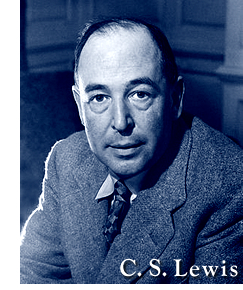
C.S. Lewis Daily – Today’s Reading


If you asked twenty good men today what they thought the highest of the virtues, nineteen of them would reply, Unselfishness. But if you had asked almost any of the great Christians of old, he would have replied, Love. You see what has happened? A negative term has been substituted for a positive, and this is of more than philological importance. The negative idea of Unselfishness carries with it the suggestion not primarily of securing good things for others, but of going without them ourselves, as if our abstinence and not their happiness was the important point. I do not think this is the Christian virtue of Love. The New Testament has lots to say about self-denial, but not about self- denial as an end in itself. We are told to deny ourselves and to take up our crosses in order that we may follow Christ; and nearly every description of what we shall ultimately find if we do so contains an appeal to desire. If there lurks in most modern minds the notion that to desire our own good and earnestly to hope for the enjoyment of it is a bad thing, I submit that this notion has crept in from Kant and the Stoics and is no part of the Christian faith. Indeed, if we consider the unblushing promises of reward and the staggering nature of the rewards promised in the Gospels, it would seem that Our Lord finds our desires not too strong, but too weak. We are half-hearted creatures, fooling about with drink and sex and ambition when infinite joy is offered us, like an ignorant child who wants to go on making mud pies in a slum because he cannot imagine what is meant by the offer of a holiday at the sea. We are far too easily pleased.

From The Weight of Glory

Compiled in A Year with C.S. Lewis