Turning Point; David Jeremiah – Praise as a Remedy


NEW!Listen Now

Why are you cast down, O my soul? And why are you disquieted within me? Hope in God; for I shall yet praise Him, the help of my countenance and my God.
Psalm 43:5

Recommended Reading: Psalm 47:6-9

If you have ever been disappointed in a friend or family member, you have probably found it a challenge to pray for them. But it is hard to stay angry with another person when we are praying for them. The same could be said about our relationship with God. If we find ourselves disappointed in our circumstances, the surest remedy is to praise God.

Psalms 42–43 were likely originally one psalm later divided into two for purposes of liturgical worship in the temple. They recount a period of disappointment by the psalmist who thought God had forgotten him and was not going to rescue him from his oppressors. But both psalms end the same way: “Hope in God; for I shall yet praise Him” (Psalm 42:11; 43:5). The psalmist didn’t let his disappointment keep him from praising God and hoping in Him.

Being disappointed with our circumstances ultimately means being disappointed with God. The most direct way to counter those feelings is to praise Him for His goodness and His love.

Praise is the best of all sacrifices and the true evidence of godliness. 
John Calvin


https://www.davidjeremiah.org

Our Daily Bread – David’s Deliverance


The Lord will rescue his servants; no one who takes refuge in him will be condemned. Psalm 34:22

Today’s Scripture

1 Samuel 21:10-15

Listen to Today’s Devotion

Apple LinkSpotify Link

Today’s Devotion

In the semifinals of his high school wrestling tournament, Dave cracked a rib on his right side. He won the match but wondered how he’d survive the championship with a damaged ribcage.

In the finals, Dave limped out to the mat on his left, uninjured leg. So his opponent targeted Dave’s left leg throughout the match. Dave protected his right side and won.

Another “Dave” used deception to extract himself from a tough situation. David had been fleeing a murderous King Saul. He found refuge among Israel’s enemies, but word soon got to the enemy king that David was a Hebrew war hero (1 Samuel 21:11). Fearing for his life, David “pretended to be insane . . . making marks on the doors of the gate and letting saliva run down his beard” (v. 13). The ploy worked (vv. 14-15).

Good people can debate such tactics and arrive at different conclusions. But Psalm 34 sheds light on David’s experience. There, David credited not his deception but God for his deliverance. He sang, “I sought the Lord, and he . . . delivered me from all my fears” (v. 4). And again, “This poor man called, and the Lord . . . saved him out of all his troubles” (v. 6). David had sought safety with the Philistines, but he found his only reliable refuge when he turned to God (vv. 8, 22).

Reflect & Pray

When have circumstances caused you to take desperate measures you regretted? How does turning to God first change your response?

Dear Father, when I rely on my own cleverness, I get into trouble. Please help me see my challenges as an opportunity to turn to You.

Today’s Insights

When “the Lord sent a tormenting spirit that filled [Saul] with depression and fear” (1 Samuel 16:14 nlt), David was enlisted to soothe him by playing the lyre (v. 23). The king “liked him . . . and David became one of his armor-bearers” (v. 21). But Saul’s admiration for him was short-lived. After David defeated Goliath (ch. 17), Saul was overtaken by jealousy and tried to kill him (18:6-11). In chapter 21, David is on the run from Saul and hiding among the Philistines, Israel’s enemies. He “pretended to be insane” (v. 13) because it was believed that harming someone who was insane would bring misfortune. Even as David took desperate measures to escape death, his psalms exhibit his trust in God. He wrote, “When I am afraid, I put my trust in you” (Psalm 56:3). When trouble strikes, we too can put our trust in God.

For further study, listen to the following devotional: Presented without Fault


http://www.odb.org

Denison Forum – Finding hope for the future by looking to the past


Hope for an uncertain future – Part 8

A Pew Research Forum headline reads, “Far more Americans say they’d like to live in the past than in the future.” According to the survey, 45 percent of US adults say they would live sometime in the past, while 40 percent said they’d live in the present. Only 14 percent said they’d live sometime in the future.

Which would you choose today? Your answer could reveal more than you think.

A cross unlike any I have seen

If you need hope for the future, I suggest you look to the past.

Picture the scene: Jesus is on his face among the olive trees of the Garden of Gethsemane, pleading with his Father, “If it be possible, let his cup pass from me” (Matthew 26:39). It was not just his physical torture, I believe, but the fact that his sinless soul would soon bear the sins of all humanity. You and I literally cannot begin to understand the suffering he would soon endure.

But it was not just his horrific pain that night. His Father refused his Son’s request, choosing to send him to the cross so he could die for your sins and mine. He chose for his Son to die that we might live eternally.

On one of the study tours I led to Israel, we stopped at an olive wood shop in Bethlehem where a friend purchased for me a gift I will always treasure. Unlike any cross I have ever seen, it depicted the Father with his arms spread on the cross, sheltering his Son as he died for us.

As the famed theologian Jürgen Moltmann wrote, he is “the crucified God.”

My night inside an execution chamber

I thought I did not understand the cross. Then my wife and I had our first son, and I knew I did not. To sentence our precious child to die a tortured death for the crimes of others was incomprehensible to me. It still is.

To shift the metaphor slightly: Some years ago I spoke at a church in Huntsville, Texas, after which I was given a tour of the Huntsville Unit, the prison that houses the execution chamber of the state of Texas. The warden was a gracious and godly man who considered his work to be his ministry to men largely abandoned by society. He especially focused his compassion on those on death row, knowing that they were closer to eternity than anyone else.

On our tour, he allowed me to enter the execution chamber itself. It was roughly the size of a large closet, its cinderblock walls painted a light green. The gurney in the middle resembled a cross with extensions to which the condemned prisoner’s arms were strapped. Behind one wall was an even smaller room where the chemicals that produced death were secured. Lines from them ran through the wall into the chamber and into the veins of the prisoner.

Standing in that chamber, I imagined one of our sons strapped to the execution gurney. In my mind, I somehow arranged at the last moment for the warden to set him free, climbed onto the table myself, placed the needle in my arm, and died in his place.

Would our son ever have reason to doubt my love for him?

Tim Keller asked, “If Jesus Christ didn’t abandon you in his darkness, the ultimate darkness, why would he abandon you now, in yours?”

Why, indeed?

A hope we’re called to share

Across this series, we’ve looked extensively at both reasons why we need hope and reasons why such hope can only be found in the Lord. At the end of the day, though, all of the logical rationale and biblical exegesis pales in comparison to the basic truth revealed through Christ’s sacrifice and God’s enduring presence in our lives.

The creator of all that exists loves you and wants to spend eternity with you. He suffered and died to make that possible. And he continues to patiently endure the sin of the world because he wants as many of us as possible to embrace that truth and find salvation in him (2 Peter 3:9).

But for all that he’s done to show his love and call the lost back home to a personal relationship with him, history shows that it’s through the personal relationships with other people that the lost are most likely to be saved.

So while we can and should find our hope in the Lord, let’s remember that we’re not meant to hoard it for ourselves. Christ’s work through us and the presence of that hope in our lives is the greatest hope that this world has for a better future, both now and in the life to come.

With whom can you share that hope today?


Denison Forum

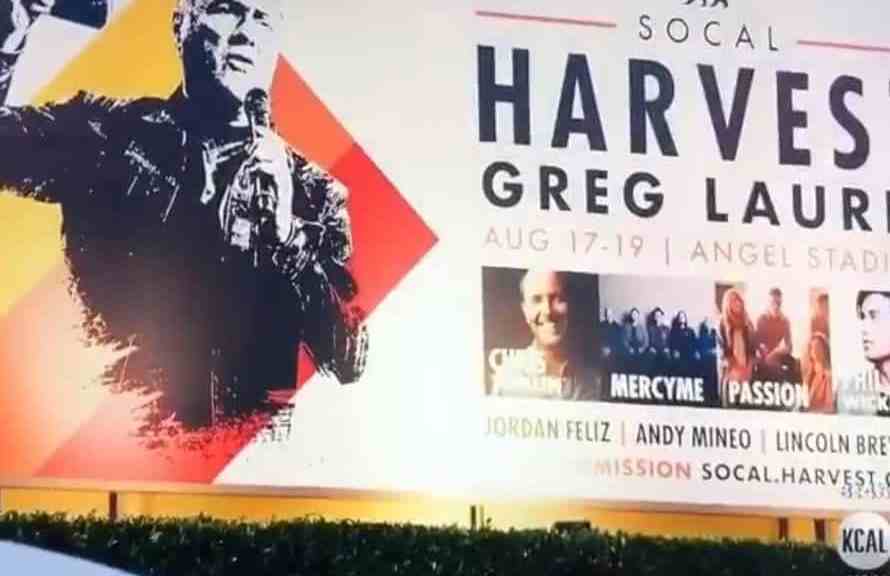
Harvest Ministries; Greg Laurie – What Does It Mean to Carry Your Cross?


 Then he said to the crowd, ‘If any of you wants to be my follower, you must give up your own way, take up your cross daily, and follow me. If you try to hang on to your life, you will lose it. But if you give up your life for my sake, you will save it.’ 

—Luke 9:23–24

Scripture:

Luke 9:23-24 

One of the most common misconceptions about the Christian life is that it’s restrictive—that it keeps people from the things that make life fun and interesting. But that’s not the case at all. In fact, the opposite is true. Following Christ allows believers to avoid the pitfalls and consequences of making foolish choices.

People who follow Christ experience life to the fullest. Following Christ allows us to experience the blessings our Creator built into this earthly experience for our joy and fulfillment. Yes, there are boundaries and parameters, but they are for our own protection.

Jesus said, “If any of you wants to be my follower, you must give up your own way, take up your cross daily, and follow me” (Luke 9:23 NLT).

Most people today probably don’t fully grasp the idea of taking up a cross. But people living in the first century did. In Jesus’ time, someone carrying a cross through the streets of Jerusalem was about to die. So, when Jesus said, “Give up your own way, take up your cross daily, and follow me,” people got it. He was saying that, to follow Him, we must die to our own desires and put God’s will above our own.

Jesus also said, “If you try to hang on to your life, you will lose it. But if you give up your life for my sake, you will save it” (Luke 9:24 NLT). We must lose our life to find it.

Many people today like to say, “I need to find myself.” In other words, “I need to find the life that will satisfy me, bring me joy, and fulfill me.” But that perspective assumes a great deal. It assumes that we know where to look for such a life. It assumes that we will recognize it when we see it. It assumes that we are the final experts on what’s best for us.

But Jesus said that if you want to find life, purpose, and happiness, then you need to lose yourself. You come to God and say, “Here is my life. Here are my plans. Here are my dreams. Here are my hopes. Here are my aspirations. I present them to You. I want Your will more than my own.”

That’s not just a demonstration of faith, but also a matter of common wisdom. It’s like entrusting an operation to the world’s most highly skilled surgeon instead of trying to do it yourself. It just makes sense.

If you really want to find life, then lose your life. If you want to get a life, then present it to the Lord, and watch what He will do.

Reflection question: What would carrying your cross look like in your life? Discuss this with believers like you on Harvest Discipleship!


Harvest.org | Greg Laurie

Days of Praise – Hastening His Coming


by Henry M. Morris, Ph.D.

“But ye shall receive power, after that the Holy Ghost is come upon you: and ye shall be witnesses unto me both in Jerusalem, and in all Judaea, and in Samaria, and unto the uttermost part of the earth.” (Acts 1:8)

These very familiar words of the Lord Jesus are commonly considered His Great Commission, commanding us to go “into all the world, and preach the gospel to every creature” (Mark 16:15). Actually, however, it is not given here as a command but rather as a declarative statement—indeed, a prophecy—saying that we shall witness for Him to the very ends of the earth.

Then, His disciples were promised that “this same Jesus” would return (Acts 1:11), with the promise clearly tied to the prophecy. Just a few weeks previously they had asked, “What shall be the sign of thy coming?” (Matthew 24:3). And Jesus had answered, “This gospel of the kingdom shall be preached in all the world for a witness unto all nations; and then shall the end come” (v. 14). Mark recorded His answer very simply: “The gospel must first be published among all nations” (Mark 13:10).

Peter says that the Lord may seem to have delayed “the promise of his coming” because He “is longsuffering to us-ward, not willing that any should perish,” urging us to “account that the longsuffering of our Lord is salvation” (2 Peter 3:4, 9, 15). This suggests that we should be “looking for and hasting unto the coming of the day of God” (2 Peter 3:12).

We can hardly draw any other conclusion from such passages than that if we want the Lord to return quickly, we can hasten His coming by fulfilling His command and His prophecy, doing whatever we can to publish His gospel among all nations. His coming has always been imminent because this could well have been done—and can be done—at any time. But it evidently has not been done yet. HMM


https://www.icr.org/articles/type/6

Joyce Meyer – Be a Blessing to Others


And let us consider and give attentive, continuous care to watching over one another, studying how we may stir up (stimulate and incite) to love and helpful deeds and noble activities…

Hebrews 10:24 (AMPC)

I have asked hundreds of people to share with me some practical ways they believe we can show love. I have read books, searched the Internet, and been very aggressive on my own journey to find creative ways to incorporate this concept of loving people into my everyday life. I would like to share with you some of the things I have learned.

Here are some ideas I have collected:

  • When it is obvious that you and someone else want the same parking place, let the other person have it and do so with a smile on your face.
  • Mow an elderly neighbor’s lawn or shovel their snow in the winter.
  • Go grocery shopping for a family with a newborn baby.
  • Give someone without transportation a ride to church or another event, even if it is out of your way to do so.
  • Truly listen to someone without interrupting.
  • Hold a door open for a stranger and let him or her go ahead of you.
  • Let someone with just a few items go in front of you when you’re in a checkout line.
  • Babysit for a single parent to give that person a bit of alone time or time to get a project done peacefully.
  • Invite a person who has no family in town to your house for the holidays.
  • Send cards and/or flowers to show appreciation.

Start with this simple list, but let the Holy Spirit show you more ideas. Doing random things for people just to be a blessing is an amazing way to show God’s love.

Prayer of the Day: Father, show me practical ways to bless others today. Give me eyes to see needs around me and a willing heart to act in love, just as You’ve loved me.


http://www.joycemeyer.org

Max Lucado – Take Jesus at His Word 


Play

This life contains many walks from Cana to Capernaum. Journeys between prayer offered and prayer answered. Jesus promised the boy’s father a sure blessing at the end of the journey. He promises the same to us.

We will meet this father when we get to heaven, and when we do I’m gonna ask him about that walk. I want to hear how he felt. I want to know what he thought. But most of all, I want to thank him for inspiring this verse: “The man took Jesus at his word and departed” (John 4:50 NIV).

Do likewise. Set your compass on the pole star of God’s promise. Place one weary foot in front of the other. Jesus has spoken. Let his word do what it was intended to do, and that is lead you home. Remember my friend, you are never alone.


Home

Today in the Word – Moody Bible Institute – Feast of Firstfruits


Read Leviticus 23:9–14

What was actually eaten at the first Thanksgiving? The colonists and Native Americans feasted on fresh venison; ducks, geese, and other fowl; and a kind of corn that they made into cornbread and porridge. Their “stuffing” was onions and nuts. They also ate cod, eel, lobster, and vegetables such as peas, beans, and squash. Sorry, no turkey, no mashed potatoes with gravy, no pumpkin pie.

Like Thanksgiving, Israel’s Feast of Firstfruits was a harvest festival. It took place during what would be March or April on our calendar. “Firstfruits” is just what it sounds like: The earliest part of the harvest was to be offered to the Lord. Specifically, the priest would wave before God “a sheaf of the first grain” harvested (vv. 10–11). The act of waving signified honor and worship to the Lord, acknowledging Him as the source and provider of all blessings, including food.

This wave offering was to be accompanied by a burnt offering of a lamb without defect (v. 12). Why? Again the main purpose was worship, but in this case it also signified substitutionary blood atonement for sin. Ideally, these were outward actions revealing the inward state of the worshipers’ hearts. The burnt offering was likewise accompanied by a grain offering and a drink offering (v. 13). These were not mere formalities but serious business. Not so much as a loaf of bread was to be eaten until these offerings had been made (v. 14)! God declared this and other feasts before Israel had even entered the promised land. Receiving the Law was therefore an act of faith by the people in God’s promises. “Firstfruits” is used in the New Testament to talk about resurrection. Christ is the “firstfruits” from among the dead, meaning that since He rose, we will in due time also rise (1 Cor. 15:20–23).

Go Deeper

What might be considered “firstfruits” that you can offer the Lord as an act of worship?

Watch Video: an introduction to our study with Dr. Bradley Baurain.

Pray with Us

Jesus, thank You for giving Your life for my salvation. Please show me clearly what my “firstfruits” are, and how I can use them for Your glory. I want to give You my best.

A food offering presented to the LORD, a pleasing aroma.Leviticus 23:13


https://www.moodybible.org/