Tag Archives: lord jesus christ

Campus Crusade for Christ; Bill Bright – A Place of Rest

dr_bright

“So there is a full complete rest still waiting for the people of God. Christ has already entered there. He is resting from His work, just as God did after the creation. Let us do our best to go into that place of rest, too, being careful not to disobey God as the children of Israel did, thus failing to get in” (Hebrews 4:9-11).

A Christian leader was asked: “How do you handle the incredible pressure of your schedule – speaking, writing, giving leadership to a great movement that touches the lives of millions of people around the world? How do you do it? You must carry a tremendous load!”

The inquirer was surprised at the response. “No, quite honestly I don’t carry the load. I’m not under any pressure. I made a great discovery, probably the greatest discovery that a Christian can make. In the Christian life there is a place of rest which one enters by faith and obedience. No matter how great the pressure, or how terrible the testing, the supernatural resources of God sustain, empower, bless and encourage us and our Lord carries the load and fights for us.”

Though few Christians ever enter into this rest, it is available to all believers. When the Israelites were on their way to the promised land, God had already prepared the hearts of the inhabitants, filling them with fear. There is reason to believe that they would have capitulated readily. But when the twelve spies returned after forty days of checking out the land, ten of them reported, “There are giants in the land, and we felt like grasshoppers in their sight.” Only Joshua and Caleb said, “Let’s go in and take the land. God has withdrawn His blessing from the people and He will fight for us.”

But three million Israelites agreed with the majority report, and as a result, wandered in the wilderness for forty years. Why did it take so long for them to enter the land God had already given them? Because, as recorded in verse 2, they failed to mix the promises of God with faith.

Why does the average Christian not enter into a place of rest with God – that supernatural life which produces an abundance of fruit? Because he fails to mix the promises of God with faith. That is what this book, Promises, is all about – to remind us daily of our heritage as children of God and to show us how we can draw upon the mighty, inexhaustible resources of deity to live the supernatural life. Are you experiencing the life of the Spirit? Have you entered into God’s rest? If not, you can begin to do so now.

Bible Reading: 2 Thessalonians 1:3-12

TODAY’S ACTION POINT: As an act of faith and obedience, I will enter that place of rest and I will encourage every believer with whom I have contact today to join me in the adventure.


Presidential Prayer Team; H.L.M.- Truth from Error

ppt_seal01

God’s righteous foundation in America is slowly and systematically being destroyed. Society today often calls right wrong and wrong right. People honor the immoral and ridicule the upright.

The anointing that you received from him abides in you.

I John 2:27

Yet when you put your faith in Jesus, you receive a new nature – one of holiness and righteousness. There is not anything you can do to earn this priceless gift of grace. Therefore your Heavenly Father only sees the righteousness of Christ which covers you. As a result, you can live a righteous life through the power of the Holy Spirit. Jesus said, “I will ask the Father, and he will give you another Helper, to be with you forever, even the Spirit of truth, whom the world cannot receive, because it neither sees him nor knows him. You know him, for he dwells with you and will be in you.” (John 14:16-17)

Every day, thank God for the gift of His Holy Spirit. Allow Him to help you discern truth from error. Seek opportunities to be an advocate for God’s righteousness wherever you go. Pray also that your local and national leaders would place their trust in Jesus Christ to relinquish wrong morals and exchange them for His righteousness.

Recommended Reading: John 14:15-21  Click to Read or Listen

John MacArthur – Christ Is Superior to Angels

John MacArthur

“Having become . . . much better than the angels” (Heb. 1:4).

Man is a wonderful and amazing creation–higher than plants, animals, and any other material creation in this world. But there are created beings even higher than man–angels.

Hebrews 2:9 shows this to be the case because when Jesus became a man, He was “made for a little while lower than the angels.” After the fall of the rebellious angels under Lucifer, the angels in heaven were no longer subject to sin. These angels are holy, powerful, and wise. They are special beings created by God before He created man.

The Jewish people understood the exalted position of angels because they knew that the Old Covenant was brought to men and maintained by angelic mediation. Galatians 3:19 says, “Why the Law then? It was added because of transgressions, having been ordained through angels by the agency of a mediator, until the seed should come to whom the promise had been made.”

Because of this high regard for angels by his readers, the writer of Hebrews was faced with a problem. If he was to show that Christ was the mediator of a better covenant, he would have to prove that Christ is better than angels. To do so, he used seven Old Testament passages to verify his claim.

If he had tried to prove from Christian writings that Christ is a better mediator, his unbelieving Jewish readers would have said, “We don’t accept these writings as being from God.” So in effect he wisely replies, “Open up your own Scriptures and I’ll prove my claim from them.” It results in a powerful and irresistible argument.

For the next several days, we’ll see in what ways Christ is superior to angels and how He could mediate a better covenant for us.

Suggestion for Prayer:

Because much of our understanding of the New Testament is based on the writings of the Old Testament, thank God for how He has brought His complete Word to us intact throughout the centuries.

For Further Study:

Read Galatians 3:8, Romans 9:15, and Matthew 4:4.


What Old Testament verses to those passages quote?

What truth does each of them verify?


Joyce Meyer – Take Off the Mask and Behold His Glory

Joyce meyer

Rather, let our lives lovingly express truth [in all things, speaking truly, dealing truly, living truly]. Enfolded in love, let us grow up in every way and in all things into Him Who is the Head…

—Ephesians 4:15

It seems that many people struggle to be real. We act one way on the outside, when really, on the inside, we are someone else. Because we have weaknesses, faults, or fears—things about ourselves that we think make us less likable or desirable—we’d rather hide from other people.

The danger of wearing these masks, of course, is that it misrepresents us. What other people see is a lie. It’s not who we are…who we were born to be. By the time we reach adulthood, we’ve spent so many years hiding we’ve forgotten those things about ourselves that make us different and special.

What a shame! What a waste! Each of us—you, me, and every person—is uniquely created by a loving Father who rejoices in our individuality. In fact, it is those distinctive things about us, not our “sameness,” that make us special to Him. The little girl with freckles, the young lady with the dimples, the beloved gray-headed grandmother with the sweet smile—they all stand out…they’re special! And you’re special, too!

Sure, we all have flaws. We’re all less than perfect and wish we were better. But you need to know that God loves you just the way you are right now, and His love for you will never diminish.

God desires that we walk in truth, because only the truth will set us free (see John 8:32). He will help us to let down the defenses we’ve had up for so long. God knows how badly we want to fit in and be accepted. Trust Him to give you favor with people, instead of feeling that you must hide the real you. Learn to live truly by being genuine and real.

Trust in Him: God loves you, and He wants you to trust Him enough to be fully who you are!


Campus Crusade for Christ; Bill Bright – Teach You Much

dr_bright

“But when the Father sends the Comforter instead of Me – and by the Comforter I mean the Holy Spirit – He will teach you much, as well as remind you of everything I myself have told you” (John 14:26).

Some years ago, at one of our week-long Lay Institutes for Evangelism, attended by more than 4,000 trainees, I gave a message on how to be filled with the Holy Spirit.

Afterward, a missionary who had just retired after 20 years of service in Africa came to see me. He was very excited as he came to share how, during that meeting, he had finally found what he had sought throughout his entire Christian life.

“Today, as you spoke,” he said, “I was filled with the Spirit. For 20 years I have tried to serve God on the mission field, but I have served Him in the energy of the flesh and have had very little results. Now, though I have retired and returned to America, I want to go back to Africa.

“This time, I want to concentrate on working just with missionaries, because I know from experience that many of them are still searching for what I have sought all these years. The most important message I can take to them is how they can be filled with the Holy Spirit by faith.

“I want to teach them what you taught me so that they, in turn, will be able to teach the Africans how they too can be filled with the Holy Spirit.”

Dr. J. Edwin Orr, a leading authority on spiritual revival, describes the Holy Spirit as “the Commander-in-Chief of the Army of Christ. He is the Lord of the harvest, supreme in revival, evangelism and missionary endeavor.”

“Without His consent, plans are bound to fail. It behooves us as Christians to fit our tactical operations into the plan of His strategy, which is the reviving of the church and the evangelization of the world.”

Bible Reading: John 14:13-17

TODAY’S ACTION POINT: I will look to God’s indwelling Holy Spirit for the spiritual lessons I need to learn today and claim His power to serve the Lord Jesus Christ supernaturally.


Charles Stanley – No Work for God Is Unimportant

Charles Stanley

Colossians 4:7-18

The final lines of Colossians seem to have little theological impact. Most of the names listed, except for Luke and Mark, are unfamiliar. We could easily skip these verses and jump to 1 Thessalonians. But Paul’s closing words to the Colossians carry the subtle message that no ministry is unimportant.

It isn’t hard to recognize Paul’s amazing contributions to the faith—much of the New Testament is made up of his divinely inspired letters. The people mentioned in his Colossian missive seem to pale in comparison, but the apostle considered all of them important enough to include. For instance, Tychicus, the first mentioned, played a big role—wherever he appears in Scripture, he is running errands for Paul (Acts 20:4, Eph. 6:21, 2 Tim. 4:12). Thanks to this man, the Colossian letter traveled over 800 miles to its destination, then moved from church to church to be read repeatedly and copied. Tychicus’s job was important in spreading the gospel; without his assistance to Paul, modern believers might not have this valuable letter.

We tend to judge types of service as important or unimportant, and too often pride prevents our approval of a particular ministry. We want a big, impressive job to prove to everyone how much we love the Lord. But God desires the exact opposite: He wants our love for Him to motivate us to do anything He asks, no matter how insignificant or unnoticeable it may seem.

What is God asking you to do that you are resisting? Repent of your pride, and humble yourself to do all that He desires. None of His work is unimportant.


Greg Laurie – Have You Lost Sight of Jesus?

greglaurie

After the celebration was over, they started home to Nazareth, but Jesus stayed behind in Jerusalem. His parents didn’t miss him at first.

—Luke 2:43

On one occasion when Jesus was twelve years old, He went missing. Mary and Joseph lost sight of Him, and it took three days of searching to find Him again. They had been in Jerusalem for the Passover, and as they were returning home, He was nowhere to be found. But here is the interesting thing: they traveled an entire day before they missed Him. It isn’t that they lost their love for Him or their faith. They just lost Him.

Can this happen to us? The answer is yes. It is possible to go through an hour, a day, or even a week without a passing thought of Jesus. (That is, until a crisis hits.) This is the easiest thing to do at Christmas. We are so busy celebrating the birth of Christ that we can forget about Christ. This is the time of year when we have all kinds of responsibilities. And God’s only begotten Son can become God’s only forgotten Son.

One way we lose Jesus is when nonessentials displace essentials. When we are busy, often our spiritual lives are the first things to go. We don’t have time to read God’s Word. We don’t have time to pray, even for a moment. We can’t afford to give anything to God because we have so many things to buy. We allow nonessentials to take the place of essentials.

Whenever I lose something, I retrace my steps. Where did I have it last? I go back to that place, and often I will find it there.

If you’ve found that you’ve lost Jesus in the busyness of life, then you need to go back to where you were before. And the good news is that even if we lose sight of Jesus, He never loses sight of us.


Charles Stanley – When Things Seem Impossible

Charles Stanley

John 6:5-14

Years ago, our church was preparing to purchase some costly property, and our desire was to accomplish the transaction without going into debt. One week before the deadline, we had accumulated less than half the money; raising the rest seemed impossible. I mentioned our need to the congregation, and after the first service, a young couple came up and gave me the husband’s wedding band to use toward the payment. They insisted I take the ring in spite of the fact that they were barely getting by and had a baby on the way.

During the second service, I pulled out the ring and told about this couple’s sacrifice. Then the most amazing thing happened. People started streaming down the aisle and giving all kinds of things—boats, houses, jewelry, cars. At the end of that service, we had exactly the amount we needed.

Nothing is impossible for our Father. He used an inexpensive ring to raise over two million dollars in one day, just as He once borrowed a sack lunch to feed five thousand people.

We often make the same mistake the disciples did in today’s passage—we ask the wrong question: “What am I going to do?” Instead, we should ask the right one: “Lord, what are You going to do?” God has a plan to guide us safely through every seemingly impossible situation if we will simply trust Him instead of our own resources.

Look to your heavenly Father for whatever you need. He has promised to provide for His children, and He knows the best way and timing to do so.


Ravi Zacharias Ministry – Breaking Silence

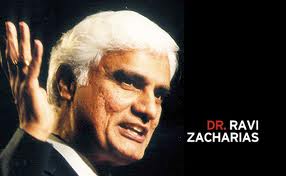
Ravi Z

There are those who say that lukewarm acceptance is more bewildering than outright rejection. I always wonder if they have ever heard the story of the Syrophoenician woman.

Jesus was on his way to a place where no one would recognize him. From the chaos of Jerusalem and the crowds of Galilee he withdrew to the region of Tyre. According to one of his disciples, when he had entered a house, he wanted no one to know of it. Yet, he did not escape notice. A Gentile woman of the Syrophoenician race immediately fell at his feet and began to cry out, “Have mercy on me, Lord, Son of David; my daughter is cruelly demon-possessed.” But he did not answer her a word.(1)

In the lives of those who believe in God, sensed rejection is a difficult pill to swallow. Likewise, many former believers tell stories of a silent or unconcerned God on whom they eventually gave up. Even if we can reckon that God is not rejecting us personally, it is hard to square, “whoever comes to me I will never drive away” or “whatever you ask for in my name, I will do” with the barren silence of years of praying for a child; or the slamming of a door that held a real and certain hope; or the wordless dismissal of a mother brought to her knees. The rejection is indeed personal.

But this woman at Jesus’s feet did not turn away at the first sign of his refusal. She was not deterred by the disciples’ request that she be sent away, nor was she convinced to cease her plea after the harsh words that finally broke Jesus’s silence: ”I was sent only to the lost sheep of the house of Israel.” Being a Gentile, this meant she was not one of them. Lesser rejections have certainly brought me to crumbled mess. Yet even this was not a thought that would dissuade her. Speaking again, she pled once more, “Lord, help me!”

This is precisely the place in the interchange where I can no longer remain comfortable, imagining what it feels like to be truly helpless before someone you know can help you, imagining what it feels like—even then—to be told “no.”  Still, Matthew recounts the story: “And Jesus answered and said, ‘It is not good to take the children’s bread and throw it to the dogs.’ But she said, ‘Yes, Lord; but even the dogs feed on the crumbs which fall from their masters’ table” (15:26-27). Her persistence, her vulnerability—her desperation—is more than most typically give anyone.

There is a line in the book of Hosea where God laments the presence of those who wail upon their beds but do not cry out to God from their hearts. In the brave voice of woman silenced by the world around her, I wonder if she is not the answer to this lament. If prayer is the pillar of a relationship that is built with one who knows us better than we know ourselves, how deeply rooted are the pillars of hope and love that have never been driven again and again into the ground? Perhaps there are times when rejection drives us deeper and we plunge further into faith, into the sheer earnestness of our request, into the presence of the God who hears it.

I don’t know why there are some prayers we seem to need to repeat exhaustively. I don’t know why there are some who seem to live lifetimes marked by the sting of rejected pleas. But I know that it is often the one who has learned to wrestle through denied petitions who also seems to exhibit a tender depth in her relationship with the one who hears; the one who God has given a chance to speak, to know her own voice and to be heard, who comes to value the conversation. I know that somehow even in sensed rejection, or the undesirable command to wait, is the hope of something understood.

At the close of the Syrophoenician woman’s final petition, Jesus turned to her with a response that overfilled the depths of her own rejection with the certainty of a relationship: “O woman, your faith is great; it shall be done for you as you wish.” And her daughter was healed at once.

Jill Carattini is managing editor of A Slice of Infinity at Ravi Zacharias International Ministries in Atlanta, Georgia.

(1) The story of the Syrophoenician woman is told in Matthew 15:21-28 and in Mark 7:24-30.


Charles Spurgeon – The Exodus

CharlesSpurgeon

“And it came to pass at the end of the four hundred and thirty years, even the self same day it came to pass, that all the hosts of the Lord went out from the land of Egypt.” Exodus 12:41

Suggested Further Reading: 1 Corinthians 10:1-11

It is our firm conviction and increasing belief, that the historical books of Scripture were intended to teach us spiritual things by types and figures. We believe that every portion of Scripture history is not only a faithful transcript of what did actually happen, but also a shadow of what happens spiritually in the dealings of God with his people, or in the dispensations of his grace towards the world at large. We do not look upon the historical books of Scripture as being mere rolls of history, such as profane authors might have written, but we regard them as being most true and infallible records of the past, and also most bright and glorious foreshadowings of the future, or else most wondrous metaphors and marvellous illustrations of things which are verily received among us, and most truly felt in the Christian heart. We may be wrong—we believe we are not; at any rate, the very error has given us instruction, and our mistake has afforded us comfort. We look upon the book of Exodus as being a book of types of the deliverances which God will give to his elect people; not only as a history of what he has done, in bringing them out of Egypt by smiting the first-born, leading them through the Red Sea, and guiding them through the wilderness, but also as a picture of his faithful dealings with all his people, whom by the blood of Christ he separates from the Egyptians, and by his strong and mighty hand takes out of the house of their bondage and out of the land of their slavery.

For meditation: Are you getting as much out of the Old Testament as you should? It is full of the Lord Jesus Christ (Luke 24:27)! While it may be wrong and confusing to see types in every verse or action, if you major on the types which are identified and applied in the New Testament you cannot go far wrong.

Sermon no. 55

9 December (1855)


Charles Stanley – The Guidance of the Holy Spirit

Charles Stanley

How does the Holy Spirit guide us? How much does He control our actions? Does He still speak to believers, or was personal communication only for Biblical times?

God does not want us to be confused about this vital area. In talking to His disciples about the Holy Spirit, Jesus said, “When He, the Spirit of truth, comes, He will guide you into all the truth; for He will not speak on His own initiative, but whatever He hears, He will speak; and He will disclose to you what is to come” (John 16:13, emphasis added).

Let’s consider four key truths about the leadership of the Holy Spirit:

1. The Holy Spirit will guide us.

Jesus doesn’t promise that the Holy Spirit will control us. He says He will guide us.

Granted, there are times when I wish the Holy Spirit would control me. For instance, when I am tempted. Or when I become so task oriented that I become insensitive. Or when it’s a beautiful Saturday afternoon and I need to study, but everything in me wants to grab my camera and head for the mountains. Life would be much easier if the Holy Spirit would take control of me.

But He is our guide, not our controller. We never lose our ability to choose to follow His leading. As a result, we are always responsible for our words and actions.

2. The Holy Spirit is a trustworthy guide.

The Holy Spirit, the Spirit of truth, helps believers discern between what is true and what is not; what is wise and what is foolish; what is best and what is simply OK. Each day is full of decisions. Most of our decisions concern issues not clearly spelled out in the Scriptures, for example, where to attend school, whether to hire a particular applicant, how much to budget for vacation, on and on it goes.

As you are inundated with the details of everyday living, the Holy Spirit will guide you. He will give you that extra on-the-spot sense of discernment you need to make both big and small decisions. As you develop a greater sensitivity to His guidance, you will worry much less about the decisions you make. Why? Because the Holy Spirit is a trustworthy guide.

3. The Holy Spirit is God’s mouthpiece to believers.

The Holy Spirit does not speak on His own. Like Christ, this member of the Trinity has willingly submitted to the authority of the Father. Everything He communicates to us is directly from the Father: “He will not speak on His own initiative” (John 16:13).

Our heavenly Father has chosen to communicate to His children through the Holy Spirit (Acts 11:12). He is God’s mouthpiece to believers. When the Father chooses to speak directly to you, it will be through the Holy Spirit.

When you think about it, this really makes perfect sense. After all, where does the Holy Spirit reside? In you! And in me! Therefore, He is the perfect candidate for communicating God’s will to Christians. Living inside us, He has direct access to our minds, emotions, and consciences.

4. The Holy Spirit speaks.

The question of whether God still speaks today is one that has spawned numerous books, articles, and lectures. It is not my purpose to present a tightly woven argument about why I believe He still speaks today. Suffice it to say, I do believe God, through the Holy Spirit, communicates directly with believers. No, I don’t write these revelations in the back of my Bible and call them inspired. Neither do I run around telling everybody what “God told me.”

My experience is that the Holy Spirit, at the prompting of the heavenly Father, still communicates with believers today. How does He do that? The Holy Spirit indwells me. He doesn’t need my ears. What He needs is a listening heart and a renewed mind.

The book of Acts records several occasions when the Holy Spirit spoke to Paul and Peter (11:12; 13:2; 16:6; 20:23). It can’t be denied that those men had a special gift and call on their lives. But the same Holy Spirit who indwelt those men indwells every believer. Just as they needed divine direction at critical times in their lives, we need it today.

In his letters to the Christians in Rome and Galatia, the Apostle Paul refers to believers as “led by the Spirit” (Rom. 8:14; Gal. 5:18). If we are going to be led by the Holy Spirit, we can only assume that He is willing (and able) to communicate with us.

How does God communicate with us today? The Lord speaks through the voice of His Spirit, who resides within us. We may have to seek His face for a season; other times, we can sense His direction immediately. No matter what, the Holy Spirit is a trustworthy guide.

Adapted from “The Wonderful Spirit-Filled Life,” by Charles F. Stanley, 1992.


Related Resources

Related Video

Our Constant Companion

We all need a companion—someone who helps when we’re in trouble, laughs with us in good times, and weeps with us through pain. This is why Jesus sent the Holy Spirit to be our Comforter. In this message, Dr. Stanley shares how the this third Person of the Trinity works within us. (Watch Our Constant Companion.)


Our Daily Bread — Serious Fear

Our Daily Bread

Luke 2:8-20

Do not be afraid, for behold, I bring you good tidings of great joy. —Luke 2:10

After weeks of preparation by the children’s choir, the night had finally arrived for our annual Christmas musical in 1983. The costumed children began filing into the auditorium when suddenly we heard a ruckus at the back door. My wife and I turned to look and saw our own little Matt. Sobbing loudly and with a look of sheer terror on his face, he had a death grip on the door handle. He refused to enter the auditorium. After much negotiating, the director finally told him he didn’t have to go on stage. Instead, Matt sat with us, and soon his fears began to subside.

Although we don’t usually identify Christmas as a time of fear, there was plenty of it on the night of Christ’s birth. Luke says, “Behold, an angel of the Lord stood before them, and the glory of the Lord shone around them, and they were greatly afraid” (Luke 2:9). The sight of the angelic messenger was more than the shepherds could process. But the angel reassured them: “Do not be afraid, for behold, I bring you good tidings of great joy which will be to all people” (v.10).

In a world full of fear, we need to remember that Jesus came to be the Prince of Peace (Isa. 9:6). We desperately need His peace. As we look to Him, He will ease our fears and calm our hearts. —Bill Crowder

Hail, the heaven-born Prince of Peace!

Hail the Sun of righteousness!

Light and life to all He brings,

Risen with healing in His wings. —Wesley

God incarnate is the end of fear. —F. B. Meyer

Bible in a year: Daniel 8-10; 3 John


John MacArthur – Christ’s Radiance and Representation

John MacArthur

“He is the radiance of His glory and the exact representation of His nature” (Heb. 1:3).

Just as the rays of the sun give light, warmth, life, and growth to the earth, so Jesus Christ is the glorious light of God shining into the hearts of men and women. As “the radiance of God’s glory,” Jesus expresses God to us. No one can see God in HIs full glory; no one ever will. The radiance of that glory that reaches us from God appears in the Person of Jesus Christ.

Just as the sun was never without and can never be separated from its brightness, so God was never without and cannot be separated from the glory of Christ. Never was God without Him or He without God, and never in any way can He be separated from God. Yet the brightness of the sun is not the sun, and neither is Jesus exactly the same as God in that sense. He is fully and absolutely God, yet as a distinct Person within the triune Godhead.

Jesus said, “I am the light of the world; he who follows Me shall not walk in the darkness, but shall have the light of life” (John 8:12). As the radiance of God’s glory, Christ can transmit that light into your life and mine so that we can radiate the glory of God to a dark world.

In using the term “exact representation” to describe Christ’s relationship to God’s nature, the writer employs terminology usually associated with an impression reproduced on a seal by a die or stamp. Jesus Christ is the reproduction of God–the perfect, personal imprint of God in time and space.

How wonderful to realize that Jesus Christ, who is both the full expression of God and exact reproduction of God’s nature in human history, can come into our lives and give us light to see and to know God! His light is the source of our spiritual life. And His light gives us purpose, meaning, happiness, peace, joy, fellowship, everything–for all eternity.

Suggestion for Prayer:

Thank God that He determined to become a man so we could know what He is like.

For Further Study:

Read 2 Corinthians 4:3-6 and note who allows people to see or not see spiritually.


Presidential Prayer Team; P.G. – Prioritized Place

ppt_seal01

Do you ever wonder why it seems like you’re always facing one problem or another? Perhaps temptations get the better of you, or you’re driven to anger and bitterness because prayers seem to go unanswered. Could it be you’re not spending enough time reading your Bible?

The word of God abides in you, and you have overcome the evil one.

I John 2:14

Today’s verse reminds you of one of the benefits of letting God’s word abide in you – you will overcome evil. Yet Scripture will only take up residence in your life if you let it in, and the only way you can do that is to prioritize it and give it the rightful place it deserves at the top of your daily routine.

During this holiday season, develop a new habit by setting aside specific time to saturate yourself with the gift of God’s love as found in His Word. Allow the abundance of His grace to flood into your soul. Memorize something new. Enjoy spiritual songs. Play a Scripture CD in your car. The more you abide in the Word, the more it will abide in you!

In a nation where many have lost their way, pray that this will be a season of discovering Jesus for who He really is – Savior, Lord and friend. Ask for this same discovery to happen among your nation’s leaders as well.

Recommended Reading: John 15:7-14

Alistair Begg – The Worst Made the Best

Alistair Begg

God chose what is low and despised in the world.

1 Corinthians 1:28

Walk the streets by moonlight, if you dare, and you will see sinners then. Watch when the night is dark, and the wind is howling, and the thief is hiding in the door, and you will see sinners then. Go to the jail, and walk through the wards, and notice the men with heavy overhanging brows, men whom you would not like to meet at night, and there are sinners there. Go to the reformatories, and note those who have betrayed a rampant juvenile depravity, and you will see sinners there.

Go where you will, you need not ransack the earth to find sinners, for they are common enough; you may find them in every lane and street of every city and town and village and hamlet. It is for such that Jesus died.

If you will select for me the grossest specimen of humanity, if he be but born of woman, I will still have hope for him, because Jesus Christ came to seek and to save sinners. Electing love has selected some of the worst to be made the best.

Pebbles from the brook are turned by grace into jewels for the royal crown. Worthless dross He transforms into pure gold. Redeeming love has set apart many of the worst of mankind to be the reward of the Savior’s passion.

Effectual grace calls deep-dyed sinners to sit at the table of mercy, and therefore none of us should despair.

Reader, by that love looking out of Jesus’ tearful eyes, by that love streaming from those bleeding wounds, by that faithful love, that strong love, that pure, disinterested, and abiding love, by the heart and by the tender compassion of the Savior, we urge you not to turn away as though it was nothing to you.

Rather, believe on Him and you will be saved. Trust your soul with Him, and He will bring you to His Father’s right hand in everlasting glory.


Charles Spurgeon – The Destroyer destroyed

CharlesSpurgeon

“That through death he might destroy him that had the power of death, that is, the devil.” Hebrews 2:14

Suggested Further Reading: Genesis 3:1-15

At last the day arrived; it was telegraphed to the court of hell that at last Christ would die. They rung their bells with hellish mirth and joy. “He will die now,” said he; “Judas has taken the thirty pieces of silver. Let those scribes and Pharisees get him, they will no more let him go than the spider will a poor unfortunate fly. He is safe now.” And the devil laughed for very glee, when he saw the Saviour stand before Pilate’s bar. And when it was said, “Let him be crucified,” then his joy knew no bounds, except that bound which his own misery must ever set to it. As far as he could, he revelled in what was to him a delightful thought, that the Lord of glory was about to die. In death, as Christ was seen of angels, he was seen of devils too; and that dreary march from Pilate’s palace to the cross was one which devils saw with extraordinary interest. And when they saw him on the cross, there stood the exulting fiend, smiling to himself. “Ah! I have the King of Glory now in my dominions; I have the power of death, and I have the power over the Lord Jesus.” He exerted that power, till the Lord Jesus had to cry out in bitter anguish, “My God, my God, why hast thou forsaken me?” But, how short-lived was hellish victory! How brief was the Satanic triumph! He died; and “It is finished!” shook the gates of hell. Down from the cross the conqueror leaped, pursued the fiend with thunder-bolts of wrath; swift to the shades of hell the fiend did fly, and swift descending went the conqueror after him.

For meditation: The powers of darkness enjoyed only an hour of apparent victory over the Lord Jesus Christ (Luke 22:53), but it resulted in his victory procession with them on public display as his captives (Colossians 2:15).

Sermon no. 166

6 December (1857)

Presidential Prayer Team; C.H. – Perfect Present

ppt_seal01

As Christmas nears, people spend hours online and in stores searching for the perfect gift. Would Sue like a picture frame or turquoise earrings? Should you buy Papa John a pair of leather gloves or frame a picture of the grandkids? Everyone wants to give a gift that lasts – something to be cherished for years to come. Inevitably, though, many of those items will be the wrong size or color and others may break in days. “They just don’t make things like they used to,” you think. “Nothing lasts forever.”

The word of the Lord remains forever.

I Peter 1:25

Or does it? As you shop and open gifts to celebrate the birth of your Savior, remember today’s verse. God’s word “remains forever.” It will not break. It won’t shrink. It always fits. It doesn’t even need batteries.

The Bible is a love letter from God to you. As you shop, cook and attend holiday festivities, take time each day to savor the perfect present from your Heavenly Father. Reflect on His words. Read the story of Christ’s birth with your family. Ask God to speak as you read the Bible, and then pray He’ll help President Obama find wisdom and peace from His enduring, eternal words.

Recommended Reading: Psalm 119:89-96 


Ravi Zacharias Ministry – Evidence

Ravi Z

A charge that some people make is that religion in general and Christianity in particular are irrational. It’s ridiculous to believe in God, they say; there’s no evidence that God even exists! Richard Dawkins, in his best selling book The God Delusion, makes this very claim, saying that faith in God is just like belief in Santa Claus!

But of course, there’s a major problem with comparing faith in God to belief in Santa Claus. I don’t know anybody who came to believe in Santa Claus in adulthood. Yet I know many Christians—often former atheists—who discovered God as adults. This alone should tell you that God and Santa are utterly different. (If they weren’t, one wonders why Richard Dawkins didn’t write “The Santa Delusion.”) Furthermore, thousands upon thousands of great thinkers— now, and throughout history, have believed in God. That alone suggests that belief in God is hardly “irrational.”

But what about the other claim: “You can’t prove God exists!” What might a believing person say to skeptics? Well, I might start by gently pointing out that there are many good arguments that, whilst not proving God exists, certainly suggest God’s existence is extremely likely. There are philosophical arguments, such as the cosmological argument: (i) everything that begins to exist had a cause; (ii) the universe began to exist; (iii) therefore the universe had a cause. Most philosophers would say that’s a powerful argument.

There are also arguments from design. The universe and the laws of nature look, as one physicist once put it, suspiciously like a put up job. Or we might talk about the purpose that seems to be inherent in life. Most of us intuitively know that life has meaning and purpose. Indeed, a question one might fire back at our atheist friends concerns this very point: how does the atheist avoid nihilism, the view that life is meaningless, pointless, and nothing really matters. The question for the nihilist becomes “Why not suicide”?

The Christian would also want to point out that the deepest things that matter to us as humans all lie beyond the physical and the material: morality and meaning, love and friendship, beauty and truth. All of these don’t fit happily with atheism: “Darwinian mistakes,” Richard Dawkins once called them. That to me is tragic.

But perhaps the most powerful evidence for God is the one the Bible uses most consistently. The Bible doesn’t offer an argument for God, rather it points to God’s involvement in the world. Most significantly, that would be how, in the person of Jesus Christ, the God who created the world took on flesh and stepped into our world to rescue and save it. This is not a distant, remote, theoretical God, but a God who is very much alive. That’s a quite different proposition—and if that God exists, that changes everything. C. S. Lewis put it this way: “I believe in Christianity in the same way as I believe that the sun has risen. Not because I see it, but that by it, I see everything else.”

Andy Bannister is a member of the speaking team at Ravi Zacharias International Ministries in Toronto, Canada.


John MacArthur – God’s Final Revelation

John MacArthur

God’s Final Revelation

“God, after He spoke long ago to the fathers in the prophets in many portions and in many ways, in these last days has spoken to us in His Son” (Heb. 1:1-2).

A Samaritan woman declared, “I know that Messiah is coming (He who is called Christ); when that One comes, He will declare all things to us” (John 4:25). The expectation of that day, even among the Samaritans, was that Messiah would unfold the full and final revelation of God. The Holy Spirit, through the writer of Hebrews, affirms that to be true: “God . . . in these last days has spoken to us in His Son” (Heb. 1:1-2).

The Old Testament had given divine revelation in bits and pieces. Every piece was true, yet incomplete. But When Jesus came, the whole picture became clear, and though rejected by His own people, He was, in fact, the fulfillment of the messianic hope they had cherished for so many centuries.

The Old Testament age of promise ended when Jesus arrived. He is God’s final word: “As many as may be the promises of God, in Him they are yes; wherefore also by Him is our Amen to the glory of God through us” (2 Cor. 1:20).

God fully expressed Himself in His Son. That’s why John said, “The Word became flesh, and dwelt among us, and we beheld His glory, glory as of the only begotten from the Father, full of grace and truth. . . . No man has seen God at any time; the only begotten God, who is in the bosom of the Father, He has explained Him” (John 1:14, 18). Paul added that in Christ “all the fulness of Deity dwells in bodily form” (Col. 2:9).

The practical implications of that truth are staggering. Since Christ is the fullness of divine revelation, you need nothing more. In Him you have been made complete (Col. 2:10), and have been granted everything pertaining to life and godliness (2 Pet. 1:3). His Word is sufficient, needing no additions or amendments.

Suggestion for Prayer:

Ask God to teach you how to rely more fully on your resources in Christ.

For Further Study:

Read John 1:1-18 as a reminder of the fullness of God’s revelation in His Son.


Ravi Zacharias Ministry – Incarnate

Ravi Z

The Louisiana State Penitentiary at Angola is one of the world’s largest maximum-security prisons, an eighteen-thousand acre habitat to people who have committed horrible crimes. It houses roughly five thousand inmates, more than half of which are serving life sentences. Death looms large at Angola; ninety-four percent of inmates who enter are expected to die while incarcerated. The fear of dying alone in prison, coupled with the reality that for many inmates their first encounter with death was committing murder, makes death a weighted subject, often locked up in anger, guilt, and dread.

For a few, however, the Angola Hospice volunteer program has drastically changed this. In 1998, equipped with a variety of staff trustees and inmate volunteers, the LSP hospice opened its doors to its first terminally ill inmate. Today it is recognized as one of the best programs of its kind. Giving inmate volunteers a role in the creation of the hospice and in the primary care during the dying process, inmates find themselves in the position to tangibly affect the lives of others by being present, by giving a hand, by offering dignity to the dying. Reckoning with death as a fate that awaits all of humanity as they care for dying friends and strangers, the men often gradually let go of hardened demeanors. As one man notes, “I’ve seen guys that used to run around Angola, and want to fight and drug up, actually cry and be heartbroken over the patient.”(1) Another describes being present in the lives of the dying and how much this takes from the living. “But it puts a lot in you,” he adds. A third inmate describes how caring for strangers on the brink of death has put an end to his lifelong anger and helped him to confront his guilt with honesty.

It may seem for some an odd story as a means of examining the story of Christmas, but in some ways it is the only story to ever truly introduce the story of Christmas: broken, guilty souls longing for someone to be present. As martyred archbishop Oscar Romero once said, it is only the poor and hungry, those most aware they need someone to come on their behalf, who can celebrate Christmas. For the men at Angola who stare death in the eyes and realize the tender importance of presence, for the child whose mother left and whose father was never there, for the melancholic soul that laments the evils of a fallen world, the Incarnation is the only story that touches every pain, every lost hope, every ounce of our guilt, every joy that ever matters. Where other creeds fail, Christmas, in essence, is about coming poor and weary, guilty and famished to the very scene in history where God reached down and touched the world by stepping into it.

The Incarnation is hard to dismiss out of hand because it so radically comes near our needs. Into the world of living and dying the arrival of Christ as a child turns fears of isolation, weakness, and condemnation on their heads. C.S. Lewis describes the doctrine of the Incarnation as a story that gets under our skin unlike any other creed, religion, or theory. “[The Incarnation] digs beneath the surface, works through the rest of our knowledge by unexpected channels, harmonises best with our deepest apprehensions… and undermines our superficial opinions. It has little to say to the man who is still certain that everything is going to the dogs, or that everything is getting better and better, or that everything is God, or that everything is electricity. Its hour comes when these wholesale creeds have begun to fail us.”(2) Standing over the precipices of the things that matter, nothing matters more than that there is a loving, forgiving, eager God who draws near.

The great hope of the Incarnation is that God comes for us. God is aware and Christ is present, having come in flesh, and it changes everything. “[I]f accepted,” writes Lewis, “[the Incarnation] illuminates and orders all other phenomena, explains both our laughter and our logic, our fear of the dead and our knowledge that it is somehow good to die,…[and] covers what multitudes of separate theories will hardly cover for us if this is rejected.”(3) The coming of Christ as an infant in Bethlehem puts flesh on humanity’s worth and puts God in humanity’s weakness. To the captive, there is no other freedom.

Jill Carattini is managing editor of A Slice of Infinity at Ravi Zacharias International Ministries in Atlanta, Georgia.

(1) Stephen Kiernan, Last Rights (New York: St Martin’s Press, 2006), 274.

(2) C.S. Lewis, The Complete C.S. Lewis (New York: HarperCollins, 2002), 282.

(3) Ibid.