Tag Archives: love

Charles Stanley – The Power of Grace

1 Timothy 2:1-6

One of the most humbling aspects of the Lord’s love is His desire for everyone to know Him personally. The same God who created the universe—and who interacted with Abraham, Moses, and Paul—wants us to know Him intimately.

How tragic it is that so many ignore Him or look the other way, distracted by friends, family, celebrities, sports, careers, and the endless details of day-to-day life. But the good news is, no matter how distant we may have been until now, the door is open to a relationship with the Father.

First Timothy 2:4 says that the Lord “desires all men to be saved and to come to the knowledge of the truth.” Notice the writer doesn’t say God wants “some” or a certain number to know Him. Rather, He wants everyone on earth to be saved. It’s not His desire that any perish; rather, He longs for all of mankind to know Him (2 Peter 3:9). And that includes you.

Unbelievers sometimes look at their sins and assume there’s no way God could grant them forgiveness. But the moment a person is willing to acknowledge his wrongdoing, the Lord is there to accept the sinner as His child. Regardless of what you’ve done, whom you’ve hurt, or where you’ve been in life, God is ready and willing to forgive you.

Even for those of us who have been Christians a long time, it’s humbling to reflect on God’s goodness. The same grace that saved us is available on every step of our faith journey. Each day, we can move forward, safe in the knowledge that no mistake can ever put us beyond the reach of God’s love for His children.

Our Daily Bread – Giving Up Our Mirrors


Read: Philippians 2:1-5
Bible in a Year: Deuteronomy 20-22; Mark 13:21-37


[Bezalel] made the laver of bronze and its base of bronze, from the bronze mirrors of the serving women. —Exodus 38:8

When Moses gathered the children of Israel together to begin work on the tabernacle (Ex. 35–39), he called on Bezalel, a gifted artisan, to help make the furnishings. We’re told that certain women were asked to give their precious bronze mirrors to make the bronze basin he was constructing (38:8). They gave them up to help prepare a place where God’s presence would reside.

Give up our mirrors? For most of us, that would be hard to do. That’s not something we’re asked to do, but it makes me think about how too much scrutiny and self-examination can be disconcerting. It can make us think too much about ourselves and not enough about others.

When we can forget about our own faces quickly and remember that God loves us as we are—in all our imperfections—then we can begin to “look out not only for [our] own interests, but also for the interests of others” (Phil. 2:4).

Augustine said that we get lost in loving ourselves but found in loving others. Put another way, the secret of happiness is not getting our face right but giving our hearts away, giving our lives away, giving our selves away, in love. —David Roper

Father, may I think more of others today than I think of myself. May I lose my thoughts about myself in my thoughts of other people and their needs.

A heart that is focused on others will not be consumed with self.

INSIGHT: Paul wrote the letter to the Philippians while he was under house arrest. He was waiting for a verdict that would either set him free or result in his execution. It was in these circumstances that he wrote about “consolation,” “comfort,” and “fellowship” (v. 1). Paul reminds the Philippians (and us) that these things come from our commitment to Christ. We have consolation in Christ, comfort from His love, and fellowship with the Spirit. All of our love for each other comes from following the example of Christ (vv. 2-5), which Paul explains in verses 6-11.

Ravi Zacharias Ministry – The Right Circles


I know what the Corinthians were thinking when they fought over theological allegiances. Paul describes the discordant sounds of the Christian community in Corinth: One was saying, “I follow Paul” and another, “I follow Apollos” and another, “I follow Cephas” and still another, “I follow Christ.” I remember a time when these words seemed so strange, and with Paul, I agreed the Corinthians were in need of reprimand. But I know how this happens; I have seen it happening in me.

The longer I study theology and its varying schools of thought, the more I realize how much I do not know. Mapping all of the types and categories, trends in thought and history, and the emerging theologies today seems nearly impossible. And even if it was possible to make sense of every school of thought, it would hardly mean that every theologian today and in history would fit neatly into one such school. The more I study theology, the more I fear being able to soundly navigate through the noisy choruses. I fear the blind spots that I likely have—and nurture. And so I find myself wanting to stand behind one or two trustworthy theologians in particular, drawing a line between us and all the rest, declaring myself a follower of his or her theological camp, and following my safe theological leader through the labyrinth of good and bad theologies.

The Corinthian mindset is not so different from my own.

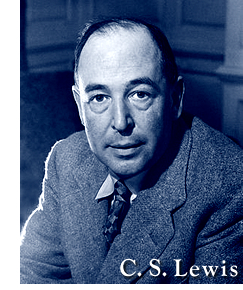
During his tenure as a professor at Magdalen College in Oxford, C.S. Lewis delivered a memorial oration to the students of King’s College, the University of London. It was titled, “The Inner Ring.” Addressing his young audience as “the middle-aged moralist,” Lewis warned of the natural desire to find ourselves a part of the right inner circles, which exist endlessly and tauntingly throughout life. He cautioned about the consuming ambition to be an insider and not an outsider, on the right side of the right camp, though the lines that distinguish the camps are invisible, and the circle is never as perfect from within as it looks from without. Like the taunting mirage a weary traveler chases through the desert, noted Lewis, the quest for the Inner Ring will break your heart unless you break it.(1)

Of course, the desire to be seen inside the right camp is a desire that reaches well beyond the bounds of theology. The longing to belong and belong to the right group is an intense motivator of human behavior. It is how we make sense of the world around us; it is how we navigate through the recesses of conflicting thoughts, ideas, and worldviews. But it is also misleading. Membership can lead to blind allegiance, thoughtlessness, and persecution of those deemed outside. One only has to watch a group of kids to see how easily our desire to belong can be corrupted by our need to exclude. The inner circle is not inner if there are no outsiders. Choosing to follow Cephas is just as often about not choosing to follow Apollos or associate with his followers.

My choice of theological leaders bears similar qualities. Paul’s question rings in my ears the same way it did for the Corinthians: “Is Christ divided? Was Paul [or C.S. Lewis or your seminary professor] crucified for you? Were you baptized into the name of Paul [or John Calvin or your favorite preacher]?”

The kingdom in which Christ invites us to participate is in fact far greater than any one theologian pretends to describe, and it is not one of these, but Christ himself who reigns within it. “We go right on proclaiming Christ, the Crucified. Jews treat this like an anti-miracle—and Greeks pass it off as absurd. But to us who are personally called by God himself—both Jews and Greeks—Christ is God’s ultimate miracle and wisdom all wrapped up in one. Human wisdom is so tiny, so impotent, next to the seeming absurdity of God. Human strength can’t begin to compete with God’s ‘weakness.’…But everything that we have—right thinking and right living, a clean slate and a fresh start—comes from God by way of Jesus Christ.”(2) The camp to which we want most to belong is his.

Following anyone other than Christ, we may find words of human wisdom, but we have emptied the cross of its power. Likewise, we find not the kingdom of God, but an inner circle with which we will eventually grow weary. Following Christ Jesus is something else entirely. Following Christ, we find a wisdom that is foolishness to many and a kingdom whose very description continues to crumble the walls we neatly build. Following Christ, we are repeatedly jarred awake to the realities of God’s reign, the inadequacy of our circles, and one far worthier of our boasting.

Jill Carattini is managing editor of A Slice of Infinity at Ravi Zacharias International Ministries in Atlanta, Georgia.

(1) C.S. Lewis, The Weight of Glory (San Francisco: Harper Collins, 1980), 154.

(2) The Message, 1 Corinthians 1:22-31.

Alistair Begg – For the Non-Christian


Why are we sitting here until we die?  2 Kings 7:3


Dear reader, this little book was mainly intended for the edification of believers, but if you are still unsaved, we are concerned for you, and we would like to say something that would be helpful to you. Open your Bible, and read this story of the lepers, and note their position, which was similar to yours. If you remain where you are, you must perish; if you go to Jesus you will live.

“Nothing ventured, nothing gained” is the old proverb, and in your case the venture is not great. If you sit still in sullen despair, no one can pity you when your ruin comes; but if you were to die seeking mercy, if such a thing were possible, you would be the object of universal sympathy. None escape who refuse to look to Jesus; but you know that others are saved who believe in Him, for certain of your own friends and neighbors have received mercy. So why not you? Why not taste and see that the Lord is merciful? To perish is so awful that if you could only clutch at a straw, the instinct of self-preservation should lead you to stretch out your hand.

We want to assure you, as from the Lord, that if you seek Him you will find Him. Jesus casts out none who come unto Him. You shall not perish if you trust Him; on the contrary, you shall find treasure far richer than what the poor lepers gathered in Syria’s deserted camp. May the Holy Spirit embolden you to go at once, and you shall not believe in vain.

Then when you are saved, share the good news with others. Do not hold back; tell your friends at church first, and join with them in fellowship; let the watchman of the city, the pastor, be informed of your discovery, and then proclaim the good news in every place. May the Lord God save you before the sun goes down this day.

Today’s Bible Reading    

The family reading plan for March 13, 2015
* Exodus 24
John 3


Devotional material is taken from “Morning and Evening,” written by C.H. Spurgeon, revised and updated by Alistair Begg.


Charles Spurgeon – Christ precious to believers


“Unto you therefore which believe he is precious.” 1 Peter 2:7

Suggested Further Reading: 1 Peter 1:18-21

This text calls to my recollection the opening of my ministry. It is about eight years since as a lad of sixteen, I stood up for the first time in my life to preach the gospel in a cottage to a handful of poor people, who had come together for worship. I felt my own inability to preach, but I ventured to take this text, “Unto you therefore which believe he is precious.” I do not think I could have said anything upon any other text, but Christ was precious to my soul and I was in the flush of my youthful love, and I could not be silent when a precious Jesus was the subject. I had but just escaped from the bondage of Egypt, I had not forgotten the broken fetter; still did I recollect those flames which seemed to burn about my path, and that devouring gulf which opened its mouth as if ready to devour me. With all these things fresh in my youthful heart, I could but speak of his preciousness who had been my Saviour; and had plucked me as a brand from the burning, and set me upon a rock, and put a new song in my mouth, and established my goings. And now, at this time what shall I say? “What hath God wrought?” How hath the little one become a thousand, and the small one a great people? And what shall I say concerning this text, but that if the Lord Jesus was precious then, he is as precious now? And if I could declare then, that Jesus was the object of my soul’s desire, that for him I hoped to live, and for him I would be prepared to die, can I not say, God being my witness, that he is more precious to me this day than ever he was?

For meditation: Is the Lord Jesus Christ precious to you? If so, the feeling is mutual (Isaiah 43:4; Psalm 116:15).

Sermon no. 242
13 March (1859)

John MacArthur – Recognizing God’s Fatherhood


“Our Father who art in heaven” (Matt. 6:9).

Prayer begins with the recognition that God is your Father and has the resources to meet your needs.

The term Father is one of the most commonly used terms in our prayers, and rightly so because that’s how Jesus taught us to pray. But as common as that term is to us, it was very uncommon to the people of Christ’s day.

Then, most of the people who worshiped false gods thought of them as distant, capricious, and immoral beings that were to be feared. Even the Jewish people, who should have understood the fatherhood of God, had removed themselves from His Fatherly care through their sin and apostasy. Consequently He seemed remote to them. Even some who did claim God as their Father were rebuked by Christ, who called them children of the devil because they rejected the Son (John 8:44).

Against that backdrop, Christ’s teaching was revolutionary. He proclaimed God as a caring and gracious Father who desires intimate fellowship with His children. That fellowship can come only through faith in the Son.

Beyond that, Jesus revealed the Father’s character in everything He said and did. When Philip asked Jesus to show him the Father, Jesus replied, “Have I been so long with you, and yet you have not come to know Me, Philip? He who has seen Me has seen the Father” (John 14:9).

Jesus also proclaimed God as a Father who has all the treasures of heaven at His disposal and who makes them available to His children so they might glorify Him: “Your Father knows what you need, before you ask Him. . . . Do not be anxious then . . . but seek first His kingdom and His righteousness; and all [you need] will be added to you” (Matt. 6:8, 31, 33).

Your faith in Christ is what makes God your Heavenly Father. He loves you, listens to your prayers, and supplies your needs according to His abundant resources. Look to Him today and live as a thankful, obedient child.

Suggestions for Prayer

  • Thank God that He is your gracious and loving Father.
  • Praise Him for the abundant blessings He gives to you.

For Further Study

Read Proverbs 3:5-6 and Matthew 7:7-11.

  • What are you exhorted to do?
  • What specifically will God do for you?
  • How should those passages affect your relationship with God?

Joyce Meyer – He Will Tell You What’s Ahead


He will announce and declare to you the things that are to come [that will happen in the future]. – John 16:13

One of the many benefits of hearing from God is that listening to His voice helps us prepare for the future. The Holy Spirit gives to us the messages the Father gives to Him, and He often tells us things that will happen in the future.

We find many instances in the Bible in which God spoke to people and gave them information about the future. He told Noah to prepare for a flood that would come to destroy the people of the earth (see Genesis 6:13–17). He told Moses to go to Pharaoh and ask for the release of the Israelites and that Pharaoh would not grant this request (see Exodus 7). Obviously, God does not tell us everything that will happen in the future, but His Word promises He will tell us some things.

There are times when I sense that something good, or perhaps something challenging, is going to happen. When a challenge awaits me and I have some prior knowledge of it, that knowledge helps to cushion the blow when the difficult situation comes. If an automobile with good shock absorbers hits a pothole, those absorbers protect passengers in the car from the jarring impact that would result and no one gets hurt. God’s giving us information ahead of time works the same way.

Part of the Holy Spirit’s ministry is to tell us things to come. He knows the mind of God and He knows God’s individual plans for our lives. He will reveal what we need to know when we need to know it in order to fulfill the good plans God has for us.

God’s word for you today: Trust the Holy Spirit to tell you what you need to know about the future.


Campus Crusade for Christ; Bill Bright – Truly Rich


“Do you want to be truly rich? You already are if you are happy and good. After all, we didn’t bring any money with us when we came into the world, and we can’t carry away a single penny when we die” (1 Timothy 6:6,7).

If you had the choice of choosing between great wealth and good health and a happy, joyful relationship with our Lord, which would you choose? Though many would choose wealth, I am sure that if you are a Christian, you would gladly choose to live modestly the rest of your life if necessary in order to experience daily the joy of your salvation.

During all of my career, I, an agnostic, had worked hard to successfully develop my business interests. Then, in the providence of God, I was brought face to face with Christ and His Word. “What does it profit a man if he gain the whole world and lose his own soul?”

It was as though God touched my mind to enable me to understand that I could eat only one meal at a time, wear one suit of clothes at a time and take nothing with me when I die. I understood for the first time that being truly rich does not involve the accumulation of vast wealth, but it involves knowing and doing the will of God – in walking in intimate, vital, personal fellowship with Him daily as a way of life.

Fanny Crosby, the hymnwriter, gave us more than eight thousand gospel songs. Although blinded at the age of six weeks, she never held any bitterness in her heart because of it.

“I think it is a great pity that the Master did not give you sight when He showered so many other gifts upon you,” a friend once said to her.

“Do you know,” she responded quickly, “that if at birth I had been able to make one petition, it would have been that I should be born blind.”

“Why?” asked the astounded clergyman.

“Because,” she replied, “when I get to heaven, the first face that shall ever gladden my sight will be that of my Savior.”

Bible Reading: Luke 12:25-31

TODAY’S ACTION POINT:  As I figuratively sit at God’s banquet table today, I will feast upon His spiritual bounties and not be satisfied with the crumbs of materialism.

Presidential Prayer Team; C.H. – Life and Death Sayings


“Loose lips sink ships.” This well-known line became famous when it was plastered across World War II propaganda posters in America. The war department cautioned both civilians and servicemen to choose their words carefully to curtail those who may inadvertently share secure information that would help the enemy. The British, Swedish and Germans all had their own version of this phrase.

Whoever guards his mouth preserves his life; he who opens wide his lips comes to ruin.

Proverb 13:3

Today’s key passage, written many years earlier, also shares the same sentiment. Whether you realize it or not, you are at war with Satan. “Be sober-minded; be watchful. Your adversary the devil prowls around like a roaring lion, seeking someone to devour.” (I Peter 5:8) Watch what you say. Your enemy would love to use your words against you – and against Christ.

Does everything you say bring glory to God? Remember, words are powerful and can promote both life and death to the hearer. Ask Him to help keep a guard over your mouth and make your loose lips tight again. Pray for the wisdom to know when to speak and when to be quiet…then make the same request for your national leaders.

Recommended Reading: James 3:2-12

Greg Laurie – The Perfect Book


The law of the Lord is perfect, converting the soul; the testimony of the Lord is sure, making wise the simple.—Psalm 19:7

Do you ever go back and look at your old yearbooks from high school and wonder, What was I thinking? The hairstyles are always entertaining. Remember when mullets were popular? What was the fascination with mullets?

Even as styles change and our culture changes, the Word of God never does. The Bible is never out of date.

The psalmist David declared, “The law of the Lord is perfect, converting the soul; the testimony of the Lord is sure, making wise the simple” (Psalm 19:7). The phrase “the law of the Lord” is a Hebrew term used to define the Scriptures. It’s a word that speaks of the perfection of the Scriptures. The verse could be translated, “The Word of God is whole; it is complete” or “The Word of God is efficient.”

We are told in 2 Timothy 3:16–17, “All Scripture is given by inspiration of God, and is profitable for doctrine, for reproof, for correction, for instruction in righteousness, that the man of God may be complete, thoroughly equipped for every good work.” We know that God’s Word is sufficient. It is infallible. The original autographs, the first copies, were without error.

Not long ago I was watching a pastor being interviewed on a news show. He was being pressed on what the Bible says about some issues that aren’t popular in our culture today. The interviewer asked, “Don’t you think it’s time for us to drag the Bible kicking and screaming into the twenty-first century?”

I thought, Oh my. That is the whole problem: we’ve ignored the Bible. The Bible never goes out of date. The news goes out of date—quickly—but never the Word of God. The Word of God is an adequate book. It is a sufficient book. And it is a perfect book.

Max Lucado – Jesus Chose the Nails


God has penned a list of our faults. The list God has made, however, cannot be read. The words can’t be deciphered. The mistakes are covered. The sins are hidden. Those at the top are hidden by His hand; those down the list are covered by His blood. Your sins are blotted out by Jesus. The Bible says He has forgiven you all your sins. He has utterly wiped out the written evidence of broken commandments which always hung over our heads, and has completely annulled it by nailing it to the cross.

He knew the source of those sins was you, and since He couldn’t bear the thought of eternity without you, Jesus Himself chose the nails. The hand is the hand of God. The nail is the nail of God. And as the hands of Jesus opened for the nail, the doors of heaven opened for you!

From He Chose the Nails

Charles Stanley – Focusing on God


Genesis 37:5-11

“Man is born for trouble” (Job 5:7). There is absolutely no way to avoid or escape this universal condition of mankind. As we continue to look at the life of Joseph, we catch a glimpse of the anchor that held him steady while, one after another, the waves of affliction rolled over him.

When Joseph was a teenager, he was given two dreams about God’s plans for his future. They revealed that he would one day be in a place of authority and honor, and his family would bow down to him. Especially since Scripture had not yet been written in those days, it was not uncommon for the Lord to speak to men through their dreams.

Previously, God had spoken to Jacob in a dream and given him a promise (Gen. 28:10-16). Now his son was hearing from the Lord in the same way. Joseph followed his father’s example of faith and believed the message.

God knew that Joseph was going to need a promise to get him through the difficulty that would soon follow. The Lord’s word to him was his anchor. Throughout all the trials, Joseph kept on believing that God would fulfill His promise. Instead of dwelling on the circumstances, Joseph chose to focus on the Lord’s faithfulness.

When the Lord speaks to our hearts through Scripture, we can hold onto what He says, allowing it to be an anchor for our souls. He will keep His promises to us, just as He did for Joseph. When we focus on God and His Word, our fears will dwindle, our sense of need will diminish, and our doubts will be cleared away.

Our Daily Bread – Hand Me The Binoculars!


Read: Psalm 19:1-6
Bible in a Year: Deuteronomy 17-19; Mark 13:1-20


The heavens declare the glory of God; and the firmament shows His handiwork. —Psalm 19:1

When I was in elementary school my friend Kent and I would often spend time looking at the night sky with a pair of German-made binoculars. We marveled at the stars in the sky and the mountains on the moon. All throughout the evening we took turns saying, “Hand me the binocs!”

Centuries earlier a Jewish shepherd boy looked up at the night sky and also marveled. He did not have a pair of binoculars or a telescope to aid him. But he had something even more important—a personal relationship with the living God. I imagine the sheep quietly bleating in the background as David gazed skyward. Later he would write the inspired text: “The heavens declare the glory of God; and the firmament shows His handiwork. Day unto day utters speech, and night unto night reveals knowledge” (Ps. 19:1-2).

In our busy schedules, we can so easily forget to stand in awe of the heavenly beauty our Creator has prepared for our enjoyment and His glory. When we set aside time to look at the night sky and marvel at what is there, we gain a deeper understanding of God and His eternal power and glory. —Dennis Fisher

We believe that this is Your world, Lord. We marvel at You and Your creativity when we look at the sky and the world around us. You, and what You have done, are amazing! We stand in awe of You.

In the wonders of God’s creation, we see His majesty and His character.

INSIGHT: Charles Haddon Spurgeon wrote this about David and Psalm 19: “In his earliest days the psalmist, while keeping his father’s flock, had devoted himself to the study of God’s two great books—nature and Scripture; and he had so thoroughly entered into the spirit of these two only volumes in his library that he was able with a devout criticism to compare and contrast them, magnifying the excellency of the Author as seen in both. . . . He is wisest who reads both the world-book and the Word-book as two volumes of the same work, and feels concerning them, ‘My Father wrote them both.’”

Ravi Zacharias Ministry – Sibling Rivalry


One of the most humbling moments in my life happened during a soccer match. At a critical moment in the game, I had to decide whether to go it alone or let a better positioned teammate attempt an almost guaranteed goal; a rare treat in soccer. Sadly, the split seconds available for the decision were enough for my ego to override my better judgment. Unwilling to pass on the glory of scoring the winning goal, I made the wrong decision and lost the ball, costing the team an important game in the process.

Ironically, I am inclined to believe that the consequences for me would have been much worse if I had managed to score the goal. Though quite humiliating, that terrible mistake gave me a glimpse into my own soul in a way that might have been impossible if I had actually led the team to a win. While it is hard to assert our egos in the midst of failure and hardship, the ugliness of our self-centeredness can be easily camouflaged in the motives and methods of our success, leaving us blind to our own insuperable finitude. When our pursuit for success is severed from a healthy sense of our chronic indebtedness, achieving success can instill in us a measure of entitlement foreign to our true identity. Such a pitfall is even more consequential in our spiritual lives since it is harder to distinguish between self-serving motives and genuine zeal for God. Unlike the gaping sins of the prodigal son, the dutiful son’s alienation from the father comes neatly packaged in obedience and commitment, the very treasures some of us long to lay before our heavenly Father.

In spite of the fact that Jesus prayed fervently for unity among his followers, the visible church is often a conglomeration of competing factions, each equally convinced of its solitary possession of divine favor. Those who seek signs and wonders through the Holy Spirit are usually suspicious of those who emphasize exegetical approaches to the Scriptures. Christian scholars are sometimes content just to talk to each other, and the uncanny tendency of apologists to sniff out what they deem rotten doctrine is not always appreciated.

As a result, not only do we squander valuable benefits of dedicated teamwork within the household of faith, we also lose our edge in a broken world. Despite the monumental gains made in biblical research and translation, biblical illiteracy is still a high-ranking concern, and the frequent outbursts of oft-unfounded accusations from our detractors succeed in rattling the cage for not a few followers of Christ. While outcasts and sinners braved insults to seek refuge in Jesus, they bolt from the divided efforts of Christians and reject God because they mistake us for God.

When being right becomes an end in itself, we lose sight of our own need for God’s grace—a need that would be there even if we were faultless. Instead of recognizing that orthodoxy, though indispensable, is only the map of a journey which we must travel towards God, confidence in our knowledge of the truth becomes the missing link in our quest for self-sufficiency. We partition God’s comprehensive program for his people into various segments and guard our turfs with Herculean zeal. With a little practice, we become so adept at applying our preferred standards that we can accomplish the feat with our eyes closed. Having zeroed in on what we are certain to be God’s most vexing pet peeves, we stand poised not only to pronounce the verdict on those who offend but also to pound the gavel on God’s behalf. Before long, we, like Elijah, become convinced that we are the only ones who are faithful to God while all of his other children have lost their way.

Probably the best antidote to such spiritual calluses among loyal laborers in God’s vineyard is a healthy appreciation of the all-sufficiency of the Father and our exalted status as his humble children—a theological gem that is beautifully captured by C.S. Lewis in his book, Prince Caspian. When the children are reunited with Aslan after many years, Lucy expresses surprise that Aslan looks bigger. Aslan responds, “I am not. But every year you grow, you will find me bigger.”(1) What a relief to remember that no amount of expertise on our part can ever diminish the glory of God or cause us to outlive God’s fatherly indulgence!

Pure, unadulterated motives may lie beyond the reach of even the most devout among us, but the intentional recognition of our humble place in deference to the majesty of our Maker is an indispensable ingredient in our service to God and others. It was neither out of false piety nor enslavement to sin that both Daniel and Nehemiah included themselves in their profound prayers of forgiveness on behalf of their sinful people (Daniel 9 and Nehemiah 1:6). While I do not subscribe to the relativistic “never judge anyone” maxim that greases the engine of the spirit of the age, I am also convinced that “The one aim of the call of God is the satisfaction of God, not a call to do something for Him.”(2)

J.M. Njoroge is member of the speaking team at Ravi Zacharias International Ministries in Atlanta, Georgia.

(1) C. S. Lewis, The Complete Chronicles of Narnia (New York: HarperCollins, 1998), 259.

(2) Oswald Chambers, as quoted by Os Guinness in The Call: Finding Fulfilling the Central Purpose of Your Life (Nashville: W Publishing Group, 2003), 41.

Alistair Begg – Love Your Neighbor


You shall love your neighbor.  Matthew 5:43


“Love your neighbor.” Perhaps he rolls in riches, and you are poor and living in your humble dwelling next-door to his mansion. Every day you see his estates, his fine clothes, and his extravagant parties. God has given him these gifts; covet not his wealth, and think no hard thoughts concerning him. Be content with what you have, if you cannot better it, but do not look upon your neighbor and wish that he was like you. Love him, and then you will not envy him.

Perhaps, on the other hand, you are rich, and the poor live nearby. Do not scorn to call them neighbors. Admit that you are bound to love them. The world calls them your inferiors. In what way are they inferior? They are far more your equals than your inferiors, for “He made from one man every nation of mankind to live on all the face of the earth.”1 Your clothes are better than theirs, but you are in no way better than them. They are men, and what are you more than that? Pay attention that you love your neighbor even though he be in rags or sunken in the depths of poverty.

But perhaps you say, “I cannot love my neighbors because no matter what I do for them they respond with ingratitude and contempt.” All the more reason for the heroism of love. Would you be a featherbed warrior instead of bearing the rough fight of love? He who dares the most shall win the most; and if the path of love is rough, tread it boldly, still loving your neighbors through thick and thin. Heap coals of fire on their heads, and if they are hard to please, do not seek to please them, but to please your Master; and remember if they spurn your love, your Master has not spurned it, and your deed is as acceptable to Him as if it had been acceptable to them.

Love your neighbor, for in so doing you are following the footsteps of Christ.

1) Acts 17:26

Today’s Bible Reading

The family reading plan for March 12, 2015
* Exodus 23
John 2


Devotional material is taken from “Morning and Evening,” written by C.H. Spurgeon, revised and updated by Alistair Begg.

Charles Spurgeon – Election and holiness


“Behold, the heaven and the heaven of heavens is the Lord’s thy God, the earth also, with all that therein is. Only the Lord had a delight in thy fathers to love them, and he chose their seed after them, even you above all people, as it is this day. Circumcise therefore the foreskin of your heart, and be no more stiffnecked.” Deuteronomy 10:14-16

Suggested Further Reading: Isaiah 45:1-13

Preaching a few months ago in the midst of a large congregation of Methodists, the brethren were all alive, giving all kinds of answers to my sermon, nodding their heads and crying,“Amen!” “Hallelujah!” “Glory be to God!” and the like. They completely woke me up. My spirit was stirred, and I preached away with an unusual force and vigour; and the more I preached the more they cried, “Amen!” “Hallelujah!” “Glory be to God!” At last, a part of text led me to what is styled high doctrine. So I said, this brings me to the doctrine of election. There was a deep drawing of breath. “Now, my friends, you believe it;” they seemed to say “No, we don’t.” But you do, and I will make you sing “Hallelujah!” over it. I will so preach it to you that you will acknowledge it and believe it. So I put it thus: Is there no difference between you and other men? “Yes, yes; glory be to God, glory!” There is a difference between what you were and what you are now? “Oh, yes! oh, yes!” There is sitting by your side a man who has been to the same chapel as you have, heard the same gospel, he is unconverted, and you are converted. Who has made the difference, yourself or God? “The Lord!” said they, “the Lord! Glory! Hallelujah!” Yes, cried I, and that is the doctrine of election; that is all I contend for, that if there is a difference the Lord makes the difference. Some good man came up to me and said, “Thou’rt right, lad! thou’rt right. I believe thy doctrine of election; I do not believe it as it is preached by some people, but I believe that we must give the glory to God; we must put the crown on the right head.”

For meditation: The doctrines of God give God all the glory. The doctrines of man seek to steal some of God’s glory to give to man instead (Isaiah 42:6-8).

Sermon no. 303
12 March (Preached 11 March 1860)

John MacArthur – Praying As Jesus Prayed


“Pray, then, in this way: ‘Our Father who art in heaven, hallowed be Thy name. Thy kingdom come. Thy will be done, on earth as it is in heaven. Give us this day our daily bread. And forgive us our debts, as we also have forgiven our debtors. And do not lead us into temptation, but deliver us from evil. For Thine is the kingdom, and the power, and the glory, forever. Amen'” (Matt. 6:9-15).

Jesus gave six elements that constitute true prayer.

Many people have memorized the Disciples’ Prayer so they can recite it often, but as beautiful as it is, it wasn’t given for that purpose. In fact, after Jesus gave it, no one in the New Testament recited it—not even Jesus Himself (cf. John 17)!

The disciples didn’t ask Jesus to teach them a prayer, but to teach them how to pray (Luke 11:1). There is a significant difference. Jesus preceded His prayer by saying, “Pray, then, in this way” (v. 9), which literally means, “Pray along these lines.” His prayer was a general pattern for all prayer, and although it wasn’t recited, its principles are evident in all New Testament prayers.

Christ’s model prayer teaches us to ask God for six things: (1) that His name be honored, (2) that He brings His kingdom to earth, (3) that He does His will, (4) that He provides our daily needs, (5) that He pardons our sins, and (6) that He protects us from temptation. Each one contributes to the ultimate goal of all prayer, which is to bring glory to God. The last three are the means by which the first three are achieved. As God provides our daily bread, pardons our sins, and protects us when we are tempted, He is exalted in His name, kingdom, and will.

If you understand and follow Christ’s pattern for prayer, you can be assured that you are praying as He instructed, and that whatever you ask in His name, He will do, “that the Father may be glorified in the Son” (John 14:13).

Suggestions for Prayer; Do your prayers reflect the six elements outlined in the Disciples’ Prayer? If not, work on making them a regular part of your prayers.

For Further Study; Read Matthew 6:1-8, where Jesus discusses some of the practices of the Jewish religious leaders.

  • What practices and motives did He mention?
  • How did He feel about their spiritual leadership?


Campus Crusade for Christ; Bill Bright – Nothing Against You


“This includes you who were once so far away from God. You were his enemies and hated him and were separated from him by your evil thoughts and actions, yet now He has brought you back as His friends. He has done this through the death on the cross of His own human body, and now as a result Christ has brought you into the very presence of God, and you are standing there before Him with nothing left against you – nothing left that He could ever chide you for” (Colossians 1:21,22).

Have you ever claimed your right to holiness, not by virtue of anything you have done, but on the basis of what Christ has done and is doing for you?

This passage of Scripture explains how holiness is available to every believer. By acknowledging and receiving His gift of eternal life through Christ, we have been brought into the very presence of God. Now we are candidates for the supernatural filling of the Holy Spirit.

After we have claimed our right to holiness, we must confess all our known sins and appropriate, by faith, the fullness of the Holy Spirit, asking Him to give us spiritual insight into the true meaning of God’s Word.

“And so, dear brothers, I plead with you to give your bodies to God. Let them be a living sacrifice, holy – the kind He can accept. When you think of what He has done for you, is this too much to ask? Don’t copy the fashions and customs of this world, but be a new and different person with a fresh newness in all you do and think. Then you will see from your own experience how His ways will really satisfy you” (Romans 12:1,2).

Bible Reading: II Corinthians 5:17-21

TODAY’S ACTION POINT:  By faith I will claim my right to holiness and, on the basis of Christ’s finished work on the cross in our behalf, I will encourage others to do the same.

Presidential Prayer Team; G.C. – Moving Mountains


Can you move a mountain? If you answered “yes,” chances are you have lived in an area where surface mining is practiced. Extracting minerals and metals like coal, copper, gold, iron and aluminum near the surface of the Earth is a process of moving a mountain…one giant shovel full of dirt at a time. Every miner will tell you the deeper you dig into the mountain, the harder it becomes.

No one is established by wickedness, but the root of the righteous will never be moved.

Proverbs 12:3

As the political winds in America begin to blow with a bit more intensity, you may notice words getting hotter and opinions getting stronger around the water cooler or the dinner table. Everyone wants to believe their candidate is the best hope for the nation’s future. Yet God remains a rock, in control and unmoved. If need be, He’ll move a mountain to ensure His will is done for America…and for you.

Pray for unity among God’s people as the process of electing America’s next president moves forward. Ask for His people to reflect His love first and their political preferences second. Personally dig deeper in your own faith. Then daily ask God to establish and securely anchor your actions and words in Him.

Recommended Reading: Psalm 18:2-18

Greg Laurie – How’s Your Appetite?


As newborn babes, desire the pure milk of the word, that you may grow thereby. —1 Peter 2:2

I love gadgets, but I don’t like to read user’s manuals. So when I buy some new gadget, I will start pushing buttons and always end up doing the very thing that I wasn’t supposed to do. It is always good to consult the user’s manual.

The same is true of our lives. The Bible gives us direction, and it also warns us about things we should avoid. Second Timothy 3:16–17 tells us, “All Scripture is given by inspiration of God, and is profitable for doctrine, for reproof, for correction, for instruction in righteousness, that the man of God may be complete, thoroughly equipped for every good work.”

God’s Word is alive. It is full of living power, exposing us for what we really are. I like what Martin Luther said about the Bible: “The Bible is alive, it speaks to me; it has feet, it runs after me; it has hands, it lays hold of me.”

One way that a physician can tell whether someone is healthy or sick is by their appetite or lack thereof. When a patient doesn’t have an appetite, it is usually an indication that something is wrong. In the same way, if you are a Christian and don’t have an appetite for God’s Word, that is an indication of a spiritual breakdown. It would say that you are not where you ought to be spiritually, because hungry children are healthy children.

Success or failure in the Christian life is dependent on how much of the Bible you get into your heart and mind on a daily basis and how obedient you are to it. If you neglect the study of the Scriptures, then your spiritual life ultimately will unravel. Why? Because everything you need to know about God is taught in the Bible.