Tag Archives: nature

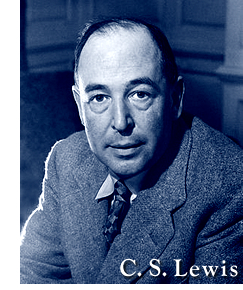
C.S. Lewis Daily – Today’s Reading


On the holy spirit

It is as if a sort of communal personality came into existence. Of course, it is not a real person: it is only rather like a person. But that is just one of the differences between God and us. What grows out of the joint life of the Father and Son is a real Person, is in fact the Third of the three Persons who are God.

This third Person is called, in technical language, the Holy Ghost or the “spirit” of God. Do not be worried or surprised if you find it (or Him) rather vaguer or more shadowy in your mind than the other two. I think there is a reason why that must be so. In the Christian life you are not usually looking at Him: He is always acting through you. If you think of the Father as some- thing “out there,” in front of you, and of the Son as someone standing at your side, helping you to pray, trying to turn you into another son, then you have to think of the third Person as something inside you, or behind you. Perhaps some people might find it easier to begin with the third Person and work backwards. God is love, and that love works through men—especially through the whole community of Christians. But this spirit of love is, from all eternity, a love going on between the Father and Son.

From Mere Christianity

Compiled in Words to Live By

Charles Stanley – Wandering From the Word


Psalm 119:9-16

Jim bought his grandchildren a new toy. After a brief glance at the directions, he set the booklet aside and got busy building. A few frustrating hours later, Jim humbly opened the instructions again and followed the steps to put the toy together. Soon he was done, and the grandkids were playing happily.

Jim knew that the manufacturer had a plan for assembling the toy. But he’s a smart fellow and assumed he could figure it out on his own. Many people take the same approach to Scripture that Jim took with those directions. Instead of treating God’s Word like a manual to live by, they glance at it only when they aren’t sure what to do next.

The Bible is like the Father’s diagram of Himself. He teaches believers who He is, what He thinks, and how He acts. Knowing the ways of the Lord ensures that we can make wise decisions that honor Him.

The Bible is also God’s instruction book for living. I emphasize that it should be read every day because believers cannot be spiritually successful or victorious without it. In today’s passage, we read that if a person wants to be righteous, his or her life must comply with scriptural principles. Of course, the only way to know what those principles are is to read, study, and meditate upon the Word.

God’s Word is our most valuable possession. Casting it aside is as foolish as tossing away a wallet full of money. Among the Bible’s riches are stories teaching us how to serve the Lord and principles about pleasing Him. It also contains a wealth of instruction for building a righteous and meaningful life.

Bible in One Year: Acts 16-17

Our Daily Bread — Shared Struggles


Read: Galatians 6:1-10

Bible in a Year: Ezekiel 3-4; Hebrews 11:20-40

Share each other’s burdens, and in this way obey the law of Christ. nlt —Galatians 6:2

April 25, 2015, marked the 100th commemoration of Anzac Day. It is celebrated each year by both Australia and New Zealand to honor the members of the Australian and New Zealand Army Corps (ANZAC) who fought together during World War I. It marks a time when neither country had to face the dangers of war alone; soldiers from both countries engaged in the struggle together.

Sharing life’s struggles is fundamental to the way followers of Christ are called to live. As Paul challenged us, “Share each other’s burdens, and in this way obey the law of Christ” (Gal. 6:2 nlt). By working together through life’s challenges we can help to strengthen and support one another when times are hard. By expressing toward one another the care and affections of Christ, the difficulties of life should draw us to Christ and to each other—not isolate us in our suffering.

By sharing in the struggles of another, we are modeling the love of Christ. We read in Isaiah, “Surely He has borne our griefs and carried our sorrows” (Isa. 53:4 nkjv). No matter how great the struggle we face, we never face it alone. —Bill Crowder

Thank You, Father, that I don’t have to walk my life’s journey alone. You are near.

Read more about the nearness of God in The Lord Is My Shepherd at discoveryseries.org/hp952

We can go a lot further together than we can alone.

INSIGHT: In Galatians 6:2 Paul instructs the Galatian believers to carry each other’s burdens. However, in verse 5 Paul says that each person should carry his own load. In the case of carrying each other’s burdens, we are to do so in the context of someone caught in sin (v. 1). However, in the case of carrying our own load, it is so that we do not compare ourselves to others and become unduly disheartened by our progress (or lack of it). J.R. Hudberg

“The Lord is my portion,” says my soul.


Lamentations 3:24

It does not say, “The Lord is partly my portion,” nor “The Lord is in my portion”; but He Himself makes up the sum total of my soul’s inheritance. Within the circumference of that circle lies all that we possess or desire.

The Lord is my portion. Not His grace merely, nor His love, nor His covenant, but Jehovah Himself. He has chosen us for His portion, and we have chosen Him for ours.

It is true that the Lord must first choose our inheritance for us, or else we will never choose it for ourselves; but if we are really called according to the purpose of electing love, we can sing-

Lov’d of my God for Him again

With love intense I burn;

Chosen of Him ere time began,

I choose Him in return.

The Lord is our all-sufficient portion. God fills Himself; and if God is all-sufficient in Himself, He must be all-sufficient for us. It is not easy to satisfy man’s desires. When he dreams that he is satisfied, instantly he wakes to the perception that there is still something more, and his longings remain unfulfilled.

But for the believer all that we can wish for is to be found in our divine portion, so that we ask, “Whom have I in heaven but you? And there is nothing on earth that I desire besides you.”1 We can then delight ourselves in the Lord who allows us to drink of the river of His pleasures.

Our faith stretches her wings and soars like an eagle into the heaven of divine love, her proper dwelling-place. “The lines have fallen for me in pleasant places; indeed, I have a beautiful inheritance.”2 Let us rejoice in the Lord always; let us show the world that we are a happy and a blessed people and cause them to exclaim, “Let us go with you, for we have heard that God is with you.”

1) Psalm 73:252) Psalm 16:6

The Family Bible Reading Plan

  • 1 Chronicles 7, 8
  • Hebrews 11

Devotional material is taken from “Morning and Evening,” written by C.H. Spurgeon, revised and updated by Alistair Begg.

Charles Spurgeon – God’s barriers against man’s sin


“Fear ye not me? saith the Lord: will ye not tremble at my presence, which have placed the sand for the bound of the sea by a perpetual decree, that it cannot pass it: and though the waves thereof toss themselves, yet can they not prevail; though they roar, yet can they not pass over it? But this people hath a revolting and rebellious heart; they are revolted and gone.” Jeremiah 5:22-23

Suggested Further Reading: Isaiah 1:1-4

God here contrasts the obedience of the strong, the mighty, the untamed sea, with the rebellious character of his own people. “The sea,” saith he, “obeys me; it never breaks its boundary; it never leaps from its channel; it obeys me in all its movements. But man, poor puny man, the little creature whom I could crush as the moth, will not be obedient to me. The sea obeys me from shore to shore, without reluctance, and its ebbing floods, as they retire from its bed, each of them says to me, in the voices of the pebbles, ‘O Lord, we are obedient to thee, for thou art our master.’ But my people”, says God, “are a revolting and a rebellious people; they go astray from me.” And is it not, my brethren, a marvellous thing, that the whole earth is obedient to God, save man? Even the mighty leviathan, who maketh the deep to be hoary, sinneth not against God, but his course is ordered according to his Almighty Master’s decree. Stars, those wondrous masses of light, are easily directed by the very wish of God; clouds, though they seem erratic in their movement, have God for their pilot; “he maketh the clouds his chariot;” and the winds, though they seem restive beyond control, yet do they blow, or cease to blow just as God wills. In heaven, on earth, even in the lower regions, we could scarcely find such a disobedience as that which is practised by man; at least, in heaven, there is a cheerful obedience; and in hell there is constrained submission to God, while on earth man makes the base exception, he is continually revolting and rebelling against his Maker.

For meditation: Jonah, a great wind, a great fish, a plant, a worm, an east wind (Jonah 1:3,4,17; 2:10; 4:6-8)—which is the odd one out?

Answer: God’s servant Jonah—the rest obeyed God at once. This should humble us!

Sermon no. 220

16 November (1856)

John MacArthur – Stepping out in Faith


“By faith Abraham, when he was called, obeyed by going out to a place which he was to receive for an inheritance; and he went out, not knowing where he was going” (Heb. 11:8).

The life of faith begins with a willingness to forsake everything that displeases God.

Abraham is the classic example of the life of faith. As the father of the Jewish nation, he was the most strategic example of faith available to the writer of Hebrews. But the people to whom Hebrews was written needed to understand that Abraham was more than the father of their race; he also was, by example, the father of everyone who lives by faith in God (Rom. 4:11).

Contrary to popular first-century Jewish thought, God didn’t choose Abraham because he was righteous in himself. When called by God, Abraham was a sinful man living in an idolatrous society. His home was in the Chaldean city of Ur, which was located in ancient Mesopotamia between the Tigris and Euphrates rivers.

God’s call to Abraham is recorded in Genesis 12:1-3: “Go forth from your country, and from your relatives and from your father’s house, to the land which I will show you; and I will make you a great nation, and I will bless you, and make your name great; and so you shall be a blessing; and I will bless those who bless you, and the one who curses you I will curse. And in you all the families of the earth shall be blessed.”

Note Abraham’s response: “So Abram went forth as the Lord had spoken to him” (v. 4). He listened, trusted, and obeyed. His pilgrimage of faith began when he separated himself from the pleasures of a pagan land to pursue God’s plan for his life.

So it is with you if you’re a man or woman of true faith. You’ve forsaken sinful pleasures to follow Christ. And as your love for Christ increases, there’s a corresponding decrease in worldly desires.

I pray your focus will continually be on fulfilling God’s will for your life, and that you’ll always know the joy and assurance that comes from following Him.

Suggestions for Prayer

Ask God for the grace and spiritual fortitude to walk by faith today.

For Further Study

Memorize 1 John 2:15 as a reminder to remain separate from the world.


Joyce Meyer – Every Day Is Thanksgiving


Let us come before His presence with thanksgiving; let us make a joyful noise to Him with songs of praise! —Psalm 95:2

Thanksgiving is not just a day to eat turkey and pumpkin pie, as we do in America. It was a day originally set aside to remember and give thanks to God for what He had done in protecting the first men and women who came to America, fleeing religious persecution in Europe. It was a type of harvest celebration like the one that the Jews celebrated; a day to give thanks for the crops they were able to harvest.

In addition to thanking God as we go through life, it is also a good idea to set aside special times of gratitude and giving thanks. Sometimes our family sits together and remembers where God has brought us from, and we thank Him for all He has done. Dave and I talk about our life when our children were all young and we lived in a tiny three-room apartment and had to cash in soda pop bottles to make it through until payday. I am sure you can recall times similar to those we had, and remembering them makes us thankful for how God brought us through them, and for all the progress we have made by His goodness.

Prayer of Thanks: Father, help me to realize that Thanksgiving is more than just a day on the calendar. I am grateful for all You have done in my life, not just today, but every day of the year.

From the book The Power of Being Thankful by Joyce Meyer.

Campus Crusade for Christ; Bill Bright – He Gives the Victory


“But thanks be to God, which giveth us the victory through our Lord Jesus Christ” (1 Corinthians 15:57, KJV).

In our busy lives, yours and mine, there are days when victory seems an impossibility. Heartaches, trials, burdens, or just the ordinary cares of the day, all seem foreign to the idea of being victorious.

And yet the fact remains that we are “more than conquerors” even when we do not feel like it. God graciously allows His children to be human and to express our doubts and fears when suffering and pain and testing and trial seem to overwhelm us.

“I have to be very honest,” confessed Joyce Landorf, well-known Christian author and speaker, during a long period of illness. “One of the things I have learned from severe pain is that I have felt totally abandoned by God. I didn’t think he’d let that happen to me, but He has.

“And maybe the feeling of abandonment when pain is at its writhing best..maybe that’s what makes it so sweet after the pain goes and the Lord says, ‘I was here all the time. I haven’t left you. I will never forsake you.’ Now those words get sweeter to me because I know what it has felt like to not feel His presence.”

We do not have all the answers, but we know one who does. And that is where our victory begins – acknowledging (1) that God is a God of love, one who never makes a mistake, and (2) he will never leave us or forsake us.

Bible Reading: Romans 7:18-25

TODAY’S ACTION POINT: I will consider myself a victor, whatever may transpire, because I serve the victorious one

Presidential Prayer Team; A.W. – In This Time


American General Robert E. Lee once said, “Knowing that intercessory prayer is our mightiest weapon and the supreme call for all Christians today, I pleadingly urge our people everywhere to pray. Let us pray for our nation. Let us pray for those who have never known Jesus Christ and redeeming love, for moral forces everywhere, for our national leaders…Let prayer be our passion. Let prayer be our practice.” These words, spoken after the Civil War, still apply today. Prayers are needed for those who don’t know Jesus – and for the nation and its leaders.

I do not cease to give thanks for you, remembering you in my prayers.

Ephesians 1:16

In the scriptures surrounding today’s verse, Paul calls for believers to pray just as Robert E. Lee did. He models intercessory prayer. He prays continually without ceasing. He prays with thanksgiving. And he prays mindfully, remembering specific requests and needs.

Just as it was needed during Paul’s time and during Lee’s time, prayer is desperately needed today – in this time. Pause each day to follow their example and petition God on behalf of the nation, its leaders and all believers in the United States.

Recommended Reading: Nehemiah 1:1-11

Greg Laurie –The Advice of Kings


Let us hear the conclusion of the whole matter: Fear God and keep His commandments, for this is man’s all. —Ecclesiastes 12:13

Before Solomon was anointed king, his father said to him, “As for you, my son Solomon, know the God of your father, and serve Him with a loyal heart and with a willing mind; for the LORD searches all hearts and understands all the intent of the thoughts. If you seek Him, He will be found by you; but if you forsake Him, He will cast you off forever” (1 Chronicles 28:9).

David was saying, “Son, listen to me. I know a thing or two about life. I’ve made my mistakes, but I also followed the Lord and served Him. You need to serve the Lord with an undivided heart. You can’t live off my faith, son. You need your own faith.”

Initially Solomon followed David’s advice. His heart wasn’t divided at first. But then he started opening himself up to things that he had no business being a part of. Things went from bad to worse. He went on a little research project to see what was out there. Solomon did everything and tried everything. In the end, here was his conclusion: “Fear God and keep His commandments, for this is man’s all” (Ecclesiastes 12:13).

The word for fear that Solomon used also could be translated “reverence,” “respect,” or “awe.” God is the Creator of the universe. He is holy and righteous. To fear Him means to have reverence for Him. It’s a healthy respect. Solomon was saying, “Have reverence for God. Keep His commandments.”

God’s commandments are like guardrails on the road of life, which keep us from getting ourselves into trouble. When Solomon said, “This is man’s all,” he was saying, “This is what will make a whole man.” If you want to be a whole man or a whole woman, then you need to fear God.

Max Lucado – What You Were Made to Do


Many people stop short of their destiny. They settle for someone else’s story. Grandpa was a butcher, Dad was a butcher, so I guess I’ll be a butcher. Everyone I know is in farming, so I guess I’m supposed to farm. Consequently, they risk leading dull, joyless, and fruitless lives. They never sing the song God wrote for their voices. They never cross a finish line with heavenward-stretched arms and declare, I was made to do this!  They fit in, settle in, and blend in. But they never find their call.

Don’t make the same mistake. Ephesians 2:10 says: “It is God himself who has made us what we are and given us new lives from Christ Jesus; and long ages ago planned that we should spend these lives in helping others.” Your existence is not accidental. Your skills are not incidental. God shaped each person in turn!

From Glory Days

Night Light for Couples – Wandering Sheep


“If a man owns a hundred sheep, and one of them wanders away, will he not leave the ninety-nine… and go to look for the one that wandered off?” Matthew 18:12

I f you are parents of small children, you know exactly how the shepherds mentioned in the Bible felt as they watched over their flocks. Even for a mother with “eyes in the back of her head,” keeping one active child from wandering off can seem as big a challenge as corralling a hundred sheep!

Jesus is called a shepherd, too, but His flock is all of humanity and He watches over us day and night. That’s why He called Himself the Good Shepherd. He came to earth to die so that not one soul would have to be lost. During His earthly ministry, He was always on the lookout for lost souls. He stayed up late to talk to Nicodemus (John 3:2). He wouldn’t let Zacchaeus hide unnoticed in a tree (Luke 19:5). And when the Pharisees were about to stone a despised adulteress, Jesus intervened with a message of forgiveness and direction—“Go, and sin no more” (John 8:11).

Every day, we have divine appointments to lead others into God’s flock—not just our family, friends, neighbors, and coworkers, but also people we’ve never met before and may never see again. God’s wisdom and power are at our disposal. We just have to keep our eyes open.

Just between us…

  • Do you see Jesus as your Good Shepherd? Why or why not?
  • As a couple, are we watching for “lost sheep”?
  • How can we be more watchful for opportunities to reach unbelievers? Is there anyone “lost” with whom we can talk this week?

Lord Jesus, show us how to demonstrate Your great love and compassion to those around us. We, too, want to be shepherds of lost souls. Amen.

From Night Light For Couples, by Dr. James & Shirley Dobson

C.S. Lewis Daily – Today’s Reading


Prudence means practical common sense, taking the trouble to think out what you are doing and what is likely to come of it. Nowadays most people hardly think of Prudence as one of the ‘virtues’. In fact, because Christ said we could only get into His world by being like children, many Christians have the idea that, provided you are ‘good’, it does not matter being a fool. But that is a misunderstanding. In the first place, most children show plenty of ‘prudence’ about doing the things they are really interested in, and think them out quite sensibly. In the second place, as St Paul points out, Christ never meant that we were to remain children in intelligence: on the contrary. He told us to be not only ‘as harmless as doves’, but also ‘as wise as serpents’. He wants a child’s heart, but a grown-up’s head. He wants us to be simple, single-minded, affectionate, and teachable, as good children are; but He also wants every bit of intelligence we have to be alert at its job, and in first-class fighting trim. The fact that you are giving money to a charity does not mean that you need not try to find out whether that charity is a fraud or not. The fact that what you are thinking about is God Himself (for example, when you are praying) does not mean that you can be content with the same babyish ideas which you had when you were a five-year-old. It is, of course, quite true that God will not love you any the less, or have less use for you, if you happen to have been born with a very second-rate brain. He has room for people with very little sense, but He wants every one to use what sense they have.

From Mere Christianity

Compiled in A Year with C.S. Lewis

Charles Stanley – Our Personal Accountability


Romans 14:12

If you are not involved in a personal accountability relationship, then you are missing out on one of life’s greatest gifts. Scripture often gives examples of this relationship: Jesus is accountable to the Father (John 8:28-29), the church is subject to Christ (Eph. 5:24), and Paul felt answerable to the church at Antioch (Acts 14:27). When we have someone with whom we can share our failures, weaknesses, successes, and deep longings, we benefit in several ways.

In our accountability to a Christian brother or sister, we develop a sense of responsibility, which leads to improved performance in all we do. Giving an account of ourselves promotes integrity and protects us from misusing our freedom as believers. What’s more, learning to examine ourselves and evaluate others guards us from unhealthy relationships and, in God’s hand, becomes a tool for our spiritual maturity.

Because an accountability partner can see our blind spots and weaknesses, he or she is in a good position to offer counsel, encouragement, or a loving rebuke. To choose the right person, we must look for a Spirit-filled believer who will offer godly wisdom based on Scripture. Also, we want to be accountable to a person who accepts and loves us just as we are, but who also possesses the courage to confront us when we are wrong. It is important to find someone who will truly be looking out for our best interest.

So where will you find such a person? In the pew at church or among your friends. Begin to pray today for an accountability partner, and ask God to clearly reveal the right one.

Bible in One Year: Acts 14-15


Our Daily Bread — Who We Are


Read: Psalm 100

Bible in a Year: Ezekiel 1-2; Hebrews 11:1-19

You are . . . God’s special possession, that you may declare the praises of him who called you out of darkness into his wonderful light. —1 Peter 2:9

In her autobiography, Corrie ten Boom described her and her sister Betsie’s horrific time in a Nazi concentration camp in the early 1940s. On one occasion they were forced to take off their clothes during an inspection. Corrie stood in line feeling defiled and forsaken. Suddenly, she remembered that Jesus had hung naked on the cross. Struck with wonder and worship, Corrie whispered to her sister, “Betsie, they took His clothes too.” Betsie gasped and said, “Oh, Corrie, . . . and I never thanked Him.”

It is easy for us to live thanklessly in a world that is full of trouble, struggles, and woes. On any given day we can find many reasons to complain. However, Psalm 100 exhorts God’s people to be glad, joyful, and thankful for “it is he who made us, and we are his; we are his people, the sheep of his pasture” (v. 3). As we remember who we are, we can respond in thanksgiving. For even in the worst of times, we can remember Christ’s love and sacrifice for us.

Don’t let the brutality of the world take away your thankful heart. Remember you are God’s child, and He has shown you His goodness and mercy through His work on the cross. —Albert Lee

I thank You, Lord, that though my heart can grow cold at times, when I remember that I am Yours and You are mine, I’m encouraged yet again. Thank You for Your love for me, for Your mercy, and Your sacrifice.

Praise comes naturally when you count your blessings.

INSIGHT: Psalm 100 is a doxology, a statement or word (logos) describing the glory (doxa) of God. This psalm forms the conclusion to a series of psalms that celebrate the Lord’s rule in power, glory, and grace. In spite of its brevity, it is considered preeminent among the psalms of praise and thanksgiving. Its superscription—“For giving grateful praise”—is unique to this song. Psalm 100 is used often in liturgical worship and is the basis for several hymns, including “All People that on Earth Do Dwell.” Bill Crowder


Alistair Begg – By His Sovereign Choice


But the Lord’s portion is his people.

Deuteronomy 32:9

How are they His? By His own sovereign choice. He chose them and set His love upon them. He did this completely apart from any goodness in them at the time or any goodness that He foresaw in them.

He had mercy on whom He would have mercy and ordained a chosen company to eternal life; in this way, therefore, they are His by His unconstrained election.

They are not only His by choice, but by purchase. He has bought and paid for them completely, and so there can be no dispute about His title.

Not with corruptible things like silver and gold, but with the precious blood of the Lord Jesus Christ, the Lord’s portion has been fully redeemed.

There is no mortgage on His estate; no lawsuits can be raised by opposing claimants. The price was paid in open court, and the Church is the Lord’s estate forever. See the blood-mark upon all the chosen, invisible to the human eye but known to Christ, for “the Lord knows those who are his.”1

He forgets none of those whom He has redeemed from among men; He counts the sheep for whom He laid down His life and remembers carefully the Church for which He gave Himself.

They are also His by conquest. What a battle He had in us before we would be won! How long He laid siege to our hearts! How often He sent us terms of surrender, but we barred our gates and built our walls against Him.

Do we not remember that glorious hour when He carried our hearts by storm, when He placed His cross against the wall and scaled our ramparts, planting on our strongholds the blood-red flag of His omnipotent mercy? Yes, we are indeed the conquered captives of His omnipotent love. As those chosen, who have been purchased and subdued, we know that the rights of our divine possessor are inalienable: We rejoice that we can never be our own; and we desire, day by day, to do His will and to declare His glory.

1) 2 Timothy 2:19

The Family Bible Reading Plan

  • 1 Chronicles 5, 6
  • Hebrews 10

Devotional material is taken from “Morning and Evening,” written by C.H. Spurgeon, revised and updated by Alistair Begg.

Charles Spurgeon – Awake! Awake!


“Therefore let us not sleep as do others; but let us watch and be sober.” 1 Thessalonians 5:6

Suggested Further Reading: Titus 1:7- 2:8

“Let us watch.” There are many that never watch. They never watch against sin; they never watch against the temptations of the enemy; they do not watch against themselves, nor against “the lusts of the flesh, the lusts of the eye, and the pride of life.” They do not watch for opportunities to do good, they do not watch for opportunities to instruct the ignorant, to confirm the weak, to comfort the afflicted, to succour them that are in need; they do not watch for opportunities of glorifying Jesus, or for times of communion; they do not watch for the promises; they do not watch for answers to their prayers; they do not watch for the second coming of our Lord Jesus. These are the refuse of the world: they watch not, because they are asleep. But let us watch: so shall we prove that we are not slumberers. Again: let us “be sober.” Albert Barnes says, this most of all refers to abstinence, or temperance in eating and drinking. Calvin says, not so: this refers more especially to the spirit of moderation in the things of the world. Both are right: it refers to both. There be many that are not sober; they sleep, because they are not so; for insobriety leadeth to sleep. They are not sober—they are drunkards, they are gluttons. They are not sober—they cannot be content to do a little business—they want to do a great deal. They are not sober—they cannot carry on a trade that is sure—they must speculate. They are not sober—if they lose their property, their spirit is cast down within them, and they are like men that are drunken with wormwood. If on the other hand, they get rich, they are not sober: they so set their affections upon things on earth that they become intoxicated with pride.

For meditation: The Christian in the pew should aim at the same standards as those which he expects to see in the Christian in the pulpit (1 Corinthians 11:1).

Sermon no. 163

15 November (1857)

John MacArthur – Rebuking the World


“By faith Noah . . . condemned the world, and became an heir of the righteousness which is according to faith” (Heb 11:7).

Your actions and words should rebuke our godless society.

Genesis 6:5 says, “The Lord saw that the wickedness of man was great on the earth, and that every intent of the thoughts of his heart was only evil continually.” Before moving in judgment against the most evil and corrupt society in history, God appointed Noah to build an ark, which became a symbol of life and salvation to all who believed God. For those who disbelieved, it represented impending death and judgment.

Concurrent with constructing the ark, Noah preached about coming judgment. Peter called him “a preacher of righteousness” (2 Pet. 2:5), and every board he cut and nail he drove in was a living illustration of the urgency of his message.

God’s warning was stern and His message horrifying, but His patience and mercy prevailed for 120 years. As Peter said, “The patience of God kept waiting in the days of Noah, during the construction of the ark” (1 Pet. 3:20). The people had ample warning of judgment, but they chose to disregard Noah’s message.

As sad as the account of Noah’s day is, perhaps the greatest tragedy is that man’s attitude toward God hasn’t changed since then. Jesus said, “The coming of the Son of Man will be just like the days of Noah. For as in those days which were before the flood they were eating and drinking, they were marrying and giving in marriage, until the day that Noah entered the ark, and they did not understand until the flood came and took them all away, so shall the coming of the Son of Man be” (Matt. 24:37-39).

Like Noah, you are to proclaim righteousness to an evil and perverse generation by your works and your life. Be faithful to do so even if people don’t want to listen. After 120 years of diligent work and faithful preaching by Noah, only eight people entered the ark. But God’s purposes were accomplished and the human race was preserved.

Suggestions for Prayer

Sometimes you’ll encounter people who scoff at God’s judgment and mock your testimony. Don’t be discouraged. Pray for them and be available to minister to them whenever possible.

For Further Study

Read 2 Peter 3. What effect should the prospect of future judgment have on your present behavior?

Joyce Meyer – The Waiting God


And therefore the Lord [earnestly] waits [expecting, looking, and longing] to be gracious to you; and therefore He lifts Himself up, that He may have mercy on you and show loving-kindness to you. For the Lord is a God of justice. Blessed (happy, fortunate, to be envied) are all those who [earnestly] wait for Him, who expect and look and long for Him [for his victory]. —Isaiah 30:18

This verse has become one of my favorites, and it has often been a source of encouragement to me when I’ve had hard times. The Living Bible paraphrases the verse like this: “Yet the Lord still waits for you to come to him, so he can show you his love; he will conquer you to bless you, just as he said. For the Lord is faithful to his promises. Blessed are all those who wait for him to help them.” Let’s think of the implication of the promise. God waits for us. As I think of that promise, it staggers my mind. The Creator of the universe and the Giver of all life has chosen to wait for us—waits for us to come to our senses, waits for us to respond to His love, waits for us to turn to Him for help.

That’s a staggering thought. God wants to show us love.

Perhaps as much as anywhere else, Satan attempts to build a mental stronghold right there. When we contemplate God’s love for us, many of us can’t take it in. We can only think of our failures, our shortcomings, and dozens of other reasons why God shouldn’t love us.

That reminds me of a kind man I’ve known for many years. One day he took care of a situation for me that he didn’t have to. I was surprised and deeply touched. “You are probably the kindest man I know,” I told him.

He stared at me in shock. “Me? Kind? Oh, I can be mean-spirited and cruel,” he said. For several minutes, he explained to me that he couldn’t possibly be a kind man. “I live with myself all the time, and I see all my defects.”

“Maybe that’s the trouble,” I told him. “You see your defects so clearly, you don’t see your caring, compassionate qualities. You discount all those things.”

He never could accept that he was kind. I also used the word gentle and that surprised him too.

Perhaps that’s how it is with many of God’s people. We are so absorbed by our failures and all the wrong things we see about ourselves, it’s hard to believe that God wants to bless us. If we read, “God wants to punish you,” we wouldn’t have trouble saying, “Yes, that’s what I deserve.”

But how would we answer if someone said, “God wants to bless you”? We probably would say, “I don’t deserve that.”

How many of us believe we are entitled to God’s blessings? We want the good things. We want God to love us, encourage us, bless us, and give us victory, but to say we deserve the blessings may be more than we are willing to accept.

Why do we struggle over the concept of deserving? Our tendency is to think that we have to do something to earn the blessings…that we have to be good enough or faithful enough. We miss the point of God’s powerful, gracious love. Our blessings from God are not a result of our goodness. They are the result of God’s goodness.

We are entitled to God’s blessings for only one reason: because we are His children. It’s just that simple. Those of us who are parents grasp that concept with regard to our children. We brought them into the world, and they deserve our love. We freely give them our love before they do anything good or bad. They deserve our protection and all the good things we choose to give them. They don’t deserve those things because they’ve done something to earn them, but simply because they are our children.

Satan loves to trip us up on this one. As soon as we think it is right for us to be blessed, he points to our weaknesses or our failures. God points to our relationship. That’s the difference.

Gracious and loving God, thank You for being willing to bless me. Even though the devil tries to make me feel undeserving, please remind me that I am Your child and You are my Father. My relationship to You makes me deserving, and I thank You for that in the name of Jesus Christ. Amen.

From the book Battlefield of the Mind Devotional by Joyce Meyer.

Campus Crusade for Christ; Bill Bright – Overwhelming Love


“But despite all this, overwhelming victory is ours through Christ who loved us enough to die for us” (Romans 8:37).

Today I prayed with a beloved friend who is dying of cancer. As he and his precious wife and I held hands, we lifted our voices in praise to God, knowing that He makes no mistakes, that “all things work together for good to those who love Him,” and that he is fully aware of my brother’s body riddled with pain as a result of cancerous cells that are on a warpath. Together we claimed that victory which comes from an unwavering confidence in Christ’s sufficiency.

The victory comes, of course, through Christ who loved us enough to die for us. Such love is beyond our ability to grasp with our minds, but it is not beyond our ability to experience with our hearts. God’s love is unconditional and it is constant. Because He is perfect, His love is perfect, too.

The Scriptures tell of a certain lawyer who asked Jesus, “Sir, which is the most important command in the Law of Moses?”

Jesus replied, “You shall love the Lord your God with all your heart, soul and mind. This is the first and greatest commandment. The second most important is similar: Love your neighbor as you love yourself.”

The question may come to your mind: “Why does God want our love?”

From a human standpoint, this could appear selfish and egotistical. But God, in His sovereignty and love, has so created man that he finds his greatest joy and fulfillment when he loves God with all his heart and soul and mind, and his neighbor as himself.

Early in my Christian life, I was troubled over the command to love God so completely. But now the Holy Spirit has filled my heart with God’s love. And as I meditate on the “overwhelming victory” that He gives us, I find my love for Him growing.

Bible Reading: Romans 8:35-39

TODAY’S ACTION POINT: His great love and “overwhelming victory” for me prompts me to respond with supernatural love for Him and for others