Tag Archives: Peace

John MacArthur – Christ Is Superior to Angels


“Having become . . . much better than the angels” (Heb. 1:4).

Through a deft use of the Old Testament, the writer proves that Christ is the mediator of a greater covenant.

Man is a wonderful and amazing creation—higher than plants, animals, and any other material creation in this world. But there are created beings even higher than man—angels.

Hebrews 2:9 shows this to be the case because when Jesus became a man, He was “made for a little while lower than the angels.” After the fall of the rebellious angels under Lucifer, the angels in heaven were no longer subject to sin. These angels are holy, powerful, and wise. They are special beings created by God before He created man.

The Jewish people understood the exalted position of angels because they knew that the Old Covenant was brought to men and maintained by angelic mediation. Galatians 3:19 says, “Why the Law then? It was added because of transgressions, having been ordained through angels by the agency of a mediator, until the seed should come to whom the promise had been made.”

Because of this high regard for angels by his readers, the writer of Hebrews was faced with a problem. If he was to show that Christ was the mediator of a better covenant, he would have to prove that Christ is better than angels. To do so, he used seven Old Testament passages to verify his claim.

If he had tried to prove from Christian writings that Christ is a better mediator, his unbelieving Jewish readers would have said, “We don’t accept these writings as being from God.” So in effect he wisely replies, “Open up your own Scriptures and I’ll prove my claim from them.” It results in a powerful and irresistible argument.

For the next several days, we’ll see in what ways Christ is superior to angels and how He could mediate a better covenant for us.

Suggestion for Prayer

Because much of our understanding of the New Testament is based on the writings of the Old Testament, thank God for how He has brought His complete Word to us intact throughout the centuries.

For Further Study

Read Galatians 3:8, Romans 9:15, and Matthew 4:4.

  • What Old Testament verses to those passages quote?
  • What truth does each of them verify?

Joyce Meyer – Set Your Mind Ahead of Time


If then you have been raised with Christ [to a new life, thus sharing His resurrection from the dead], aim at and seek the [rich, eternal treasures] that are above, where Christ is, seated at the right hand of God. And set your minds and keep them set on what is above (the higher things), not on the things that are on the earth. —Colossians 3:1-2

Colossians 3:2 tells us to set our minds and keep them set. To “set your mind” means you make a firm decision about how to handle a situation and you keep your mind set in that direction. It means to be single-minded, not double-minded. We can prepare ourselves to handle a difficult situation properly by setting our minds ahead of time—telling ourselves no matter what comes, we can do it. If you’re in a less than desirable situation, but you know it is where God wants you to be, don’t drift off into thinking that can weaken you. Instead, think, I am strong in Christ, and I can do whatever He leads me to do.

Power Thought: I set my mind and keep it set for victory.

From the book the book Power Thoughts Devotional by Joyce Meyer.

Campus Crusade for Christ; Bill Bright – Teach You Much


“But when the Father sends the Comforter instead of Me – and by the Comforter I mean the Holy Spirit – He will teach you much, as well as remind you of everything I myself have told you” (John 14:26).

Some years ago, at one of our week-long Lay Institutes for Evangelism, attended by more than 4,000 trainees, I gave a message on how to be filled with the Holy Spirit.

Afterward, a missionary who had just retired after 20 years of service in Africa came to see me. He was very excited as he came to share how, during that meeting, he had finally found what he had sought throughout his entire Christian life.

“Today, as you spoke,” he said, “I was filled with the Spirit. For 20 years I have tried to serve God on the mission field, but I have served Him in the energy of the flesh and have had very little results. Now, though I have retired and returned to America, I want to go back to Africa.

“This time, I want to concentrate on working just with missionaries, because I know from experience that many of them are still searching for what I have sought all these years. The most important message I can take to them is how they can be filled with the Holy Spirit by faith.

“I want to teach them what you taught me so that they, in turn, will be able to teach the Africans how they too can be filled with the Holy Spirit.”

Dr. J. Edwin Orr, a leading authority on spiritual revival, describes the Holy Spirit as “the Commander-in-Chief of the Army of Christ. He is the Lord of the harvest, supreme in revival, evangelism and missionary endeavor.”

“Without His consent, plans are bound to fail. It behooves us as Christians to fit our tactical operations into the plan of His strategy, which is the reviving of the church and the evangelization of the world.”

Bible Reading: John 14:13-17

TODAY’S ACTION POINT: I will look to God’s indwelling Holy Spirit for the spiritual lessons I need to learn today and claim His power to serve the Lord Jesus Christ supernaturally.

Presidential Prayer Team; C.P. – Love Gifts


When people celebrate Christmas every year, it’s easy to fall into the trap of buying gifts out of obligation. You might think you have to buy someone a present because they bought you one, or they’re a relative, or you bought something for someone at work, so you need to buy gifts for all of your coworkers. When you feel pressured to give beyond what you are able at Christmas, it’s easy to feel disgruntled.

There is no other name under heaven given among men by which we must be saved.

Acts 4:12

Think about the greatest gift of all. Jesus. Salvation. Eternal life. “For God so loved the world he gave His Son.” He didn’t do it out of obligation or because He wanted to make a good impression. He did it out of love.

This Christmas, determine to give out of love. Pray about the gifts you purchase. What would make the person on your list feel loved? Pray that this nation will focus on God and people, not things. Intercede, too, for protection for all of the shoppers, and that the needs of those going through difficult times will be supplied.

Recommended Reading: I Corinthians 13:1-7

Greg Laurie – The Conflict of Christmas


“Do you think I have come to bring peace to the earth? No, I have come to divide people against each other!”—Luke 12:51

This may come as a shock to you, but the real Christmas story is not about love, peace, harmony, and gathering with family around a crackling fire. The real Christmas story is actually about conflict. It always has been, and it always will be.

One of the unexpected passages in the Bible that deals with the subject of Christmas is found in Revelation 12, where we have the picture of a woman being pursued by a powerful dragon who seeks her death. As she is preparing to give birth to a child, the dragon hovers over her, wanting to destroy the baby. The woman is a picture of Israel, the child is Jesus Christ, and the dragon is Satan.

That is Christmas from a heavenly perspective, and it gives us the big picture of what was really happening when God sent His Son into the world. The Devil opposed it and wanted to stop His birth. And really, you can take that story and see how it is still in play today.

Hostility toward Christmas seems to escalate a little more every year. More nativity scenes are being removed from public places, Christmas carols have been prohibited in many places, and atheists have put up billboards attacking the Christian faith. What’s more, many today don’t even want the word Christmas used. These are all symptomatic of the conflict of Christmas.

Jesus did not come to bring a mind-numbing peace on Earth that is devoid of truth. The message to the shepherds on the night Christ was born was, “Glory to God in highest heaven, and peace on earth to those with whom God is pleased” (Luke 2:14).

What does that mean? It means the only way we will have peace on Earth is when we are pleasing to God.

Max Lucado – Pray!

When a believing person prays—great things happen! You might say, I worry so much about how I should pray—I don’t get around to actually praying!  Exactly!

If you want to deepen your prayer life—pray! Don’t prepare to pray. Just pray. Don’t read about prayer. Just pray. Don’t attend a lecture on prayer or engage in discussion about prayer. Just pray! James 5:13 says anyone who’s having troubles should pray. Anyone who’s happy should sing praises! Posture, tone, and place–these are personal matters. Do what works for you. Just don’t over-think it! In other words, don’t be so concerned about wrapping the gift that you never give it! Better to pray awkwardly than not at all. And if you feel you should only pray when you’re inspired, that’s okay! Just see to it that you’re inspired every day!

From Grace for the Moment

Night Light for Couples –The Girl with the Apple


by Herman and Roma Rosenblat

It is bitter cold on this dark, winter day in 1944. But it is no different than any other day in the Nazi concentration camp. Back and forth I pace, trying to keep my emaciated body warm. I am just a boy, and hungry. I have been hungry for longer than I want to remember. Edible food seems like a dream. Each day, as more of us disappear, the happy past seems also like a dream, and I sink deeper into despair.

Suddenly, I see something moving in the field beyond the camp’s two barbed wire fences. Families are working in the field; near the outer fence is a young girl. With an eye out for the guards, I hurry to the inside fence.

The girl stops working and looks at me with sad eyes—eyes that seem to say she understands. I ask, across twenty feet and two fences, if she has something to eat. She reaches into her pocket and pulls out a red apple. A beautiful, shiny red apple. She looks to the left and to the right and then with a smile of triumph, throws the apple over the fences. I pick it up, holding it in trembling, frozen fingers, then run away as fast as I can. If the guards see us, we will both be shot.

The next day, I cannot help myself—I am drawn at the same time to that spot near the fences. Am I crazy for hoping she will come again? Of course. But in here, I cling to any tiny scrap of hope.

She comes. And again, she brings an apple, flinging it over the fences with that same sweet smile. This time I catch it and hold it up for her to see. Her eyes twinkle. And for the first time in so long, I feel my heart move with emotion.

For seven months we meet like this. Sometimes we exchange a few words. Sometimes, just an apple. But she is feeding more than my belly, this angel from heaven. She is feeding my soul. And somehow, I know I am feeding hers as well.

One day I hear frightening news: We are being shipped to another camp. The next day when I greet her, my heart is breaking. I can barely speak. “Do not bring me an apple tomorrow,” I say. “I am being sent to another camp. We will never see each other again.” Turning before I lose all control, I run away. I cannot bear to look back. If I did, I know she would see tears streaming down my face.

Months pass, and the nightmare continues. Only the memory of this girl sustains me. And then one day, just like that, the nightmare is over. The war has ended. Those of us still alive are freed. I have lost everything precious to me, including my family. But I still have the memory of this girl, a memory I carry in my heart as I move to America to start a new life.

The years go by. It is 1957. I live in New York City. A friend convinces me to go on a blind date with a lady friend of his. Reluctantly, I agree. But she is nice, this woman named Roma. And like me, she is an immigrant, so we have at least that in common.

“Where were you during the war?” Roma asks me gently, in that delicate way immigrants ask one another such questions.

“I was in a concentration camp in Germany,” I reply. Roma gets a faraway look in her eyes. “What is it?” I ask. “I am just thinking about something from my past, Herman,”

Roma explains in a voice suddenly very soft. “You see, when I was a young girl, I lived near a concentration camp. There was a boy there, a prisoner, and for a long while, I used to visit him every day. I remember I used to bring him apples. I would throw the apple over the fence, and he would be so happy.”

Roma sighs heavily and continues. “It is hard to describe how we felt about each other—after all, we were so young, and we only exchanged a few words when we could—but I can tell you, there was much love there. I assume he was killed like so many others. But I cannot bear to think that, and so I try to remember him as he was for those months we were given together.”

With my heart pounding so hard I think it will explode, I look directly at Roma and ask, “And did that boy say to you one day, ‘Do not bring me an apple tomorrow. I am being sent to another camp’?” “Why, yes,” Roma responds, her voice trembling. “But Herman,

how on earth could you possibly know that?” I take her hands in mine and answer, “Because I was that young boy, Roma.” For many moments, there is only silence. We cannot take our eyes from each other as we recognize the soul behind the eyes, the dear friend we once loved so much, whom we have never stopped loving.

Finally, I speak: “Roma, I was separated from you once, and I don’t ever want to be separated from you again. Now I am free, and I want to be together with you forever. Dear, will you marry me?”

I see that same twinkle in her eye I used to see as Roma says, “Yes, I will marry you.” We embrace—the embrace we longed to share for so many months, but barbed wire came between us. Now, nothing ever will again.

Looking ahead…

This fictional story offers a powerful glimpse of hope in the midst of terror.

Can any of us live without hope? I think not. Without hope, we have no reason to get out of bed in the morning… no motivation to complete our daily tasks at work, home, church… no desire to take on the sometimes dizzying array of problems in our world. A life without hope is a life without meaning.

Yet as Christians, we always have hope. In Jesus Christ, we have a holy protector, friend, confidante, and guide. We have a reserved seat in heaven that promises unimaginable joy. This is what gives us the endurance, patience, and motivation to bring glory to our Creator during this imperfect existence. In the days ahead, we’ll talk more about how hope can strengthen our marriage.

John tells us, “Whoever believes in the Son has eternal life” (John 3:36). Can you imagine a greater source of hope?

– James C Dobson

From Night Light For Couples, by Dr. James & Shirley Dobson

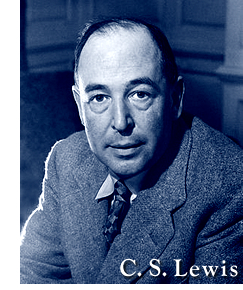
C.S. Lewis Daily – Today’s Reading


In the earliest days of Christianity an ‘apostle’ was first and foremost a man who claimed to be an eyewitness of the Resurrection. Only a few days after the Crucifixion when two candidates were nominated for the vacancy created by the treachery of Judas, their qualification was that they had known Jesus personally both before and after His death and could offer first-hand evidence of the Resurrection in addressing the outer world (Acts 1:22). A few days later St Peter, preaching the first Christian sermon, makes the same claim—‘God raised Jesus, of which we all (we Christians) are witnesses’ (Acts 2:32). In the first Letter to the Corinthians, St Paul bases his claim to apostleship on the same ground—‘Am I not an apostle? Have I not seen the Lord Jesus?’ (1:9).

As this qualification suggests, to preach Christianity meant primarily to preach the Resurrection. . . . . The Resurrection is the central theme in every Christian sermon reported in the Acts. The Resurrection, and its consequences, were the ‘gospel’ or good news which the Christians brought: what we call the ‘gospels’, the narratives of Our Lord’s life and death, were composed later for the benefit of those who had already accepted the gospel. They were in no sense the basis of Christianity: they were written for those already converted. The miracle of the Resurrection, and the theology of that miracle, comes first: the biography comes later as a comment on it. . . . . The first fact in the history of Christendom is a number of people who say they have seen the Resurrection. If they had died without making anyone else believe this ‘gospel’ no gospels would ever have been written.

From Miracles

Compiled in A Year with C.S. Lewis

Charles Stanley – Experiencing God’s Goodness


Psalms 31:19-24

When life is pleasant, we find praising God easy because His kindness is abundantly evident. However, we may have difficulty recognizing pain and trouble as an expression of His loving care as well. In difficult times, we need to trust today’s scripture, which tell us that the Lord has stored up goodness for those who take refuge in Him.

If you believe that God is good only when your circumstances are enjoyable, then you misunderstand His nature and have become numb to the expression of His benevolence toward you. Those who’ve learned to know His character and trust His ways can see evidence of His goodness in all situations.

I haven’t always felt that the Lord was being good. While I was growing up, my goal was to be obedient so that He wouldn’t do anything bad to me. The difficult and painful situations in my life hindered my understanding of His goodness. As I look back, I can now see His love and wisdom in using those trials to shape my character.

Today, when God does something I don’t like, I pour out my heart to Him. After seeking His perspective and listening to Him, I’m filled with gratitude and trust in His character. Then I’m willing to accept the Father’s wise choice for my life.

We live under the umbrella of God’s goodness. When circumstances and emotions tell you otherwise, rely on what you know. Throughout the day, look for signs of His loving care for you. As your perspective changes, you will see the signs of His goodness everywhere you turn.

Bible in One Year: Colossians 1-4

Our Daily Bread — Like Shooting a Fly


Read: 2 Corinthians 4:1-6

Bible in a Year: Hosea 1-4; Revelation 1

Christ’s love compels us, because we are convinced that one died for all, and therefore all died. —2 Corinthians 5:14

Macarena Valdes’s skill in mapping underground mines made a real difference in the rescue of the 33 Chilean miners trapped after an explosion in October 2010. Drilling to find the exact place where the men were located was like “trying to shoot a fly from 700 meters away,” she said. With her mining experience, Valdes was able to guide the probe to where the miners were entombed, which helped bring about their dramatic rescue.

In efforts to carry out spiritual rescues, it’s easy to become discouraged. Although the apostle Paul faced even greater obstacles, he said, “We do not lose heart” (2 Cor. 4:1). Even though “the god of this age” had “blinded the minds of unbelievers, so that they cannot see the light of the gospel,” he continued to proclaim the gospel of salvation (vv. 4-5). Compelled by God, who lovingly spoke light into his own darkness (v.6), Paul knew that what God had done for him God could do for others.

You and I may have a similar story. Compelled by the love of God, we too have reason not to lose heart. As Macarena led in the rescue of the miners, the Spirit of God can carry the light of our love and words into the hearts of those who need a rescue they may not yet understand. —C. P. Hia

Lord Jesus, thank You for coming to our rescue when we were lost and helpless in our sin. Help those of us who have been rescued to share the lifeline of Your love with those who are still trapped.

When you’ve been rescued, you want to rescue others.

INSIGHT: In the middle of Paul’s discussion with the Corinthian church about sharing the message of the gospel, he makes two references to creation. In verse 4 of today’s reading, Paul refers to Christ as the image of God—language that is similar to the description of the creation of humanity (Gen. 1:26). Then in verse 6, Paul refers to the creation of light (see Gen. 1:3) as similar to the effect of salvation. In both cases—the creation of light and our new redeemed life—God created something new (2 Cor. 5:17) and both are “very good” (Gen 1:31).

Ravi Zacharias Ministry – Where Is God


In a certain home town there lived a cobbler, Martin Avdeitch by name. He lived in a small basement room whose one window looked out onto the street, and all he could see were the feet of people passing by. But since there was hardly a pair of boots that had not been in his hands at one time for repair, Martin recognized each person by his shoes. Day after day, he would work in his shop, watching boots pass by. One day he found himself consumed with the hope of a dream that he would find the Lord’s feet outside his window. Instead, he found a lingering pair of worn boots belonging to an old soldier. Though at first disappointed, Martin realized the old man might be hungry and invited him inside to a warm fire and some tea. He had other visitors that evening, and though sadly none were Christ, he let them in also. Sitting down at the end of day, Martin heard a voice whisper his name as he read the words: “I was hungry and you gave me meat; I was thirsty and you gave me drink; I was a stranger and you took me in. Inasmuch as you did for the least of these, you did unto me.”(1)

Every Christmas, our family reads the story of Martin the Cobbler as an aid to our celebration. Tolstoy’s words offer something of a creative attempt to capture the wonder of a God who comes near and helps us picture the gift of Christ among us in accessible terms. Notably, the story was originally titled, Where God Is, Love Is.

The Christian story that informs the Christian calendar gives its followers time and opportunity to remember the coming of Christ in a specific context—in Bethlehem, in the Nativity, in the first Christmas. But it also presents repeated opportunities and reminders to prepare for the coming of Christ again and again. Like Martin eagerly waiting at the window, the Christian worldview is one that asks of every day of every year: How will Christ come near today? Will I wait for him? Am I ready for him? Am I even expecting to find him? We are reminded to keep watch, to be prepared, and to continually ready our hearts and minds for the one who is already near. At the same time, the Christian story would also have us to remember how unexpectedly Christ at times appears—as a baby in Bethlehem, a man on a cross, as a woman in need.

In the book of Titus, we read that “the grace of God that brings salvation has appeared to all people.” How and where will grace show up this week? In order to stay alert to the rich possibilities, perhaps we need to keep before us the radical thought of all that God has offered: a Christ child who comes down to us, a redeemer willing to die for us, a God willing to redefine what is near—all so that we might be where God is. Christianity is not an escape system for us to avoid reality, to live above it, or to be able to redefine it. Christianity is a way that leads the world to grasp what reality is and, by God’s grace and help, to navigate through it to our eternal home in God’s presence.

The story God has given indeed feeds the hungry, takes in the stranger, and orients the resident alien who is ever-looking homeward. The focus of Christ’s coming is the message of Immanuel—God is with us. The focus of Christ’s earthly ministry is the declaration of the cross—God is for us. And the focus of Christ’s resurrection is the promise of a future and his imminent return—God will bring us safely home. Until then, God is among us, even when it seems most unlikely.

Stuart McAllister is regional director for the Americas at Ravi Zacharias International Ministries in Atlanta, Georgia.

(1) Story told in Leo Tolstoy’s, Walk in the Light While There Is Light and Twenty-three Tales (Maryknoll, NY: Orbis Books, 2003).

Alistair Begg – Gazing Forever on Christ


So we will always be with the Lord.

1 Thessalonians 4:17

Even the sweetest glimpses of Christ are short-how transitory they are! One moment our eyes see Him, and we rejoice with joy unspeakable and full of glory; but then the moment passes and we do not see Him, for our beloved withdraws Himself from us. Like a roe or a young hare He leaps over the mountains of division; He is gone to the land of spices and no longer feeds among the lilies.

If today He deigns to bless us

With a sense of pardoned sin,

He tomorrow may distress us,

Make us feel the plague within.

How sweet the prospect of the time when we will no longer see Him from a distance but rather face to face-when He will not be like a traveler staying only for a night but will enfold us in the bosom of His eternal glory. We will not see Him for a little while, but

Millions of years our wondering eyes,

Shall o’er our Savior’s beauties rove;

And myriad ages we’ll adore,

The wonders of His love.

In heaven we will not be interrupted by care or sins; no weeping will dim our eyes; no earthly business will distract our happy thoughts. We will have nothing to prevent us from gazing forever on the Sun of Righteousness with tireless eyes. If it is so sweet to see Him now and then, how wonderful to gaze on that blessed face forever, and without a cloud rolling between, and never have to turn one’s eyes away to look on a tired and sinful world. When will this blessed day dawn? Rise, unsetting sun! If to die is to enter into uninterrupted communion with Jesus, then death is swallowed up in a sea of victory and is definitely gain.

Family Bible Reading Plan

  • 2 Chronicles 10
  • Revelation 1

Devotional material is taken from “Morning and Evening,” written by C.H. Spurgeon, revised and updated by Alistair Begg.

Charles Spurgeon – The wailing of Risca


“Suddenly are my tents spoiled, and my curtains in a moment.” Jeremiah 4:20

Suggested Further Reading: Luke 12:35-48

Live while you live; while it is called today, work, for the night cometh wherein no man can work. And let us learn never to do anything which we would not wish to be found doing if we were to die. We are sometimes asked by young people whether they may go to the theatre, whether they may dance, or whether they may do this or that. You may do anything which you would not be ashamed to be doing when Christ shall come. You may do anything which you would not blush to be found doing if the hand of death should smite you; but if you would dread to die in any spot, go not there; if you would not wish to enter the presence of your God with such-and-such a word upon your lip, utter not that word; or if there would be a thought that would be uncongenial to the judgment-day, seek not to think that thought. So act that you may feel you can take your shroud with you wherever you go. Happy is he that dies in his pulpit. Blessed is the man that dies in his daily business, for he is found with his loins girt about him serving his Master; but, unhappy must he be to whom death comes as an intruder, and finds him engaged in that which he will blush to have ever touched, when God shall appear in judgment. Power supreme; thou everlasting king; permit not death to intrude upon an ill-spent hour, but find me rapt in meditation high; singing my great Creator; proclaiming the love of Jesus, or lifting up my heart in prayer for myself and my fellow-sinners.

For meditation: Life contains a final moment when it will be impossible to explain away or cover up something inappropriate.

note: This sermon was occasioned by a mine explosion, in which some two hundred or so miners were killed, at Risca, near Newport in South Wales. Spurgeon had often gone to the Vale of Risca to rest and preach.

Sermon no. 349

10 December (Preached 9 December 1860)

John MacArthur – The Sacrifice and Exaltation of Christ


“When He had made purification of sins, He sat down at the right hand of the Majesty on high” (Heb. 1:3).

Jesus Christ offered one sacrifice for all the sins of mankind, then sat down with the Father once He had accomplished it.

The Bible makes it perfectly clear that the wages of sin is death (Rom. 6:23). Jesus Christ went to the cross, died the death we deserved, and consequently freed us from the penalty of sin by our faith in Him.

The writer of Hebrews goes on to say that Christ “does not need daily, like those high priests, to offer up sacrifices, first for His own sins, and then for the sins of the people, because this He did once for all when He offered up Himself” (Heb. 7:27). In the Old Testament, the priests had to make continual sacrifices, but Jesus made only one. And not only was He the priest, but also the sacrifice! He made a tremendously potent sacrifice, for He forever purged our sins—something the Old Testament sacrifices could never do.

When His sacrifice was complete, “He sat down at the right hand of the Majesty on high” (Heb. 1:3, emphasis added). That is significant because the Old Testament priests never sat down—there were no seats in the sanctuary because they offered sacrifices day in and day out. But Jesus offered one sacrifice, finished it, and then went to the Father and sat down. What the Old Testament sacrifices couldn’t accomplish Christ’s did for all time.

As a result, God exalted Him to His right hand, the seat of honor and rule and rest. But perhaps most important, it is the place where Christ intercedes to the Father on our behalf (Rom 8:34).

Don’t ever forget what Jesus accomplished for us—and what He still does for us: “If anyone sins, we have an Advocate with the Father, Jesus Christ the righteous” (1 John 2:1).

Suggestions for Prayer

Thank Jesus for His sacrifice on your behalf. Also thank Him for the salvation He has given you and the access you now have to God.

For Further Study

Read Hebrews 9:1—10:18 to gain a deeper understanding of Christ’s ultimate fulfillment of the Old Testament priestly system. In what specific ways did He fulfill it?

Joyce Meyer – He Is Your Strength


God is my Strong Fortress.—2 Samuel 22:33

God wants to give you strength for every situation you face. He doesn’t only want to give you strength, though; He wants to be your strength.

Many men and women of the Bible knew God as their strength, and they are great examples to encourage us to trust in His strength too. David wrote in Psalm 18:29 that by his God he could run through a troop and leap over a wall. In 1 Kings 19:4-8, an angel of God ministered to Elijah, who was tired and depressed, and Elijah went forty days and nights in the strength he received from that one visit.

How do we receive strength from God? We receive by faith, by believing His promise to strengthen us. That faith will quicken your body, as well as your spirit and your soul. At our conferences, the Holy Spirit has strengthened with fresh determination people who felt they could not go on. His healing power came as we waited in His presence and received it from Him.

By faith you can receive strength to stay in a difficult marriage, raise a difficult child, or stick with a difficult job. You can receive strength to do great things. Don’t worry about your natural weaknesses, but remember that Christ’s strength is made perfect and shows itself most effective in our weakness (2 Corinthians 12:9).

Have you been trying to push through difficulties on your own? If so, make a change right now. Start getting strength from deep within you, where the Holy Spirit dwells.

Love God Today: “Lord, I do not have much strength on my own. I receive the strength you want to give me through Your Holy Spirit. I believe I can do whatever I need to do in life through Jesus Christ.”

From the book Love Out Loud by Joyce Meyer.

Campus Crusade for Christ; Bill Bright – The Same Father


“We who have been made holy by Jesus, now have the same Father He has. That is why Jesus is not ashamed to call us His brothers” (Hebrews 2:11).

Though you and I have been made holy by Jesus, we need to ask ourselves a question: Have we really been set apart, consecrated, devoted to God experientially?

A practical definition of the word consecration would carry the idea that you and I are willing to do anything the Lord asks us to do. Is that really the case? Are we listening closely enough to His still small voice even to know what He really wants us to do?

Once a popular TV commercial asked, “How do spell relief?” We might ask ourselves, “How do you spell commitment?” Too many of us, I’m afraid, spell it C-O-N-V-E- N-I-E-N-C-E. If it is convenient for us to share the good news of the gospel, we will do it; if it is convenient for us to go to Sunday school, church or prayer meeting, we will do it.

True commitment is a rare commodity these days – even among Bible-believing, evangelical Christians. Otherwise our churches would be full; our witnessing would be a normal daily routine; our lives would be more Christlike.

We have already been made holy, but we need to reckon on that fact – and through the enabling of the Holy Spirit, live like holy people. Meditate on this fact: We have the same Father as Jesus, and Jesus calls us His brothers. What a great honor and privilege is ours!

Bible Reading: Hebrews 10:5-14

TODAY’S ACTION POINT: I will count on the holiness of Christ within me to make me all that He wants and intends me to be, As a member of God’s supernatural family I shall claim God’s power to live supernaturally.

Presidential Prayer Team;  A.W. – Start a Stampede


In recent years, consumers have scoured the market to find the “best Christmas gift ever.” Lists come out with the hottest toys for kids and people go crazy to get the prize. In 1980, it was Rubik’s Cubes; 1983 brought Cabbage Patch Dolls; 1989 featured Gameboys; and 1996 gave you Tickle Me Elmo, which reappeared in 2008 as Elmo Live and again in 2011 as Let’s Rock Elmo. In 1998, there was Furby, who made an encore appearance in 2012. Some gifts resell for up to 600 percent above their original price. Some have hospitalized employees in stampedes of customers trying to get it.

For the wages of sin is death; but the gift of God is eternal life in Christ Jesus our Lord.

Romans 6:23

Christmas has become about finding the gift everyone wants. Most have forgotten the best Christmas gift ever was already given the very first Christmas. Today’s verse is a reminder of this wonderful gift – the gift of eternal life. The gift of salvation. And the best part is, it doesn’t cost a thing.

As you pray today, ask God to put people in your path that need salvation and pray for ways to share it with them. Pray also that a “stampede” would start across the nation to find God’s best Christmas gift ever.

Recommended Reading: Romans 5:12-17

Greg Laurie – You Have a Savior


Then the angel said to them, “Do not be afraid, for behold, I bring you good tidings of great joy which will be to all people.” —Luke 2:10

When the angel delivered his heavenly announcement to the shepherds, he started with, “Do not be afraid.” But the shepherds, along with all of Israel, lived in frightening times. They were under the reign of King Herod, who was a tyrant. Their land was under Roman occupation. There was fear about the future. Would Rome ever leave? Would they ever be free? Would the Messiah ever come?

Then suddenly there were angels announcing to the shepherds that the Messiah had come: “Do not be afraid, for behold, I bring you good tidings of great joy which will be to all people” (Luke 2:10). Having angels appear was frightening in itself. Angels were awe-inspiring beings. That is why, when we read of angelic appearances in the Bible, we often see them starting with, “Fear not.”

The message of Christmas is fear not. Have joy. As commentator Ray Stedman said, “The chief mark of the Christian ought to be the absence of fear and the presence of joy.”

Yet it can be difficult for us to have joy because we are surrounded by sadness. With all the tragedies in the world, all the acts of terrorism, and all the problems we have, how can we have good tidings of great joy? The answer is this: “For there is born to you this day in the city of David a Savior, who is Christ the Lord” (Luke 2:11).

No matter what happens in life, remember this: You have a Savior. As a Christian, you have been saved from death. You have been saved from eternal punishment and hell. You have the hope that when you die, you will go straight to heaven. That is the most important thing about the Christian life. There is a Heaven waiting for you. You have a Savior.

Max Lucado – Contentment

What if God’s only gift to you were his grace to save you. Would you be content?

“What’s contentment? A better job than the one I have, that’s for sure!” replies a man.

“Money. And lots of it!” says another.

” An education for my kids—I could be content with that.” a third one adds.

But would you be content? You beg him to save the life of your child. You plead with him to keep your business afloat. You implore him to remove the cancer from your body. What if his answer is, “My grace is enough!” Would you be content?

From heaven’s perspective, grace is enough. If God did nothing more than save us from hell, could anyone complain? Having been given eternal life, dare we grumble at an aching body? Having been given heavenly riches, dare we moan about what we don’t have?

From Grace for the Moment

Night Light for Couples –Tomato Juice Wars


“Our mouths were filled with laughter, our tongues with songs of joy.” Psalm 126:2

One of the things that first drew me to Jim was his wonderful sense of humor. Even on our first few dates back in 1957, he made me laugh more than any guy I had dated. I loved that about him. He had a clever way of seeing the world around him, and his graphic descriptions were legendary at Pasadena College, where we met. After all these years, we still love to laugh together.

Once when we were flying home from a conference, the flight attendant set a glass of tomato juice on the armrest between us. We both forgot it was there, and Jim knocked it off on my side. About half of the contents landed in my lap.

For some reason, Jim thought that was funnier than I did. While he was laughing with his eyes shut, I poured the other half of the tomato juice in his lap. He was still chuckling when the cold juice soaked through to his skin. Then the shock hit him, and the two of us laughed until we had tears in our eyes. It was very difficult to explain what had happened when friends met us at the airport. We looked as though we had attacked each other with chainsaws!

We don’t do wild things like that every day, but we try to take advantage of every opportunity to enjoy life. I know that it has helped us cope with the pressures we’ve experienced along the way. It will help you and your marriage, too.

– Shirley M Dobson

From Night Light For Couples, by Dr. James & Shirley Dobson