Tag Archives: Peace

Campus Crusade for Christ; Bill Bright – Wonderful Friendship


“God will surely do this for you, for He always does just what He says, and He is the one who invited you into this wonderful friendship with His Son, even Christ our Lord” (1 Corinthians 1:9).

You and I do not always prove faithful, but the apostle Paul wants us to know, by way of his letter to the believers in Corinth, that our God will surely do what He has promised; in this case, make us “blameless in the day of our Lord Jesus Christ” (verse 8).

The apostle wants the Corinthians to know that they can depend upon the faithfulness of God, who had begun a good work among them, and certainly would see them through to the end. He did the inviting; He would do the keeping.

Christians are able to participate with Christ in several ways. First in His trials and sufferings, for we are subjected to temptations and trials similar to His: “But rejoice, inasmuch as ye are partakers of Christ’s sufferings” (1 Peter 4:13, KJV).

Second, in His feelings and views (Romans 8:9).

Third, in His heirship to the inheritance and glory which awaits Him: “And if children, then heirs; heirs of God, and joint-heirs with Christ” (Romans 8:17, KJV).

Fourth, in His triumph in the resurrection and future glory: “Ye which have followed Me, in the regeneration when the Son of man shall sit on the throne of His glory, ye also shall sit upon twelve thrones, judging the twelve tribes of Israel” (Matthew 19:28, KJV).

Are you not glad for that kind of friendship?

Bible Reading: 2 Thessalonians 3:3-5

TODAY’S ACTION POINT: When I look for a faithful friend, my first thought will be of Christ Himself, who truly qualifies as my very best friend

Presidential Prayer Team; C.H. – Too Good Not to Share


“Share a Coke and a smile,” is a slogan made popular by one of America’s favorite soft drinks. Win tickets to a concert and, most likely, it’ll be a pair so you can take a friend. Order a dessert and it’ll be delivered with two forks. Good things are meant to share.

He first found his own brother Simon and said to him, “We have found the Messiah.”

John 1:41

In today’s passage, Andrew wanted to share a new discovery with his brother Simon. Andrew was spending time with John the Baptist when Jesus walked past. “Behold, the Lamb of God!” (John 1:36) John pointed out that Jesus was God’s Son. When Andrew realized the truth in John’s statement, he wanted to tell his brother the good news.

Creating a Godly heritage is more than passing your faith to your children. It’s sharing His love and grace with those who haven’t heard. It’s bringing others to know Jesus and making them brothers and sisters in Christ. Thank God today for the one who shared Christ with you. Ask your Heavenly Father to create a desire in you to reach those who aren’t a part of the family of God. Pray especially for your nation’s leaders who don’t know Him. God is too good not to share.

Recommended Reading: John 1:43-51

Greg Laurie – “All Is Vanity”


I have seen all the works that are done under the sun; and indeed, all is vanity and grasping for the wind.—Ecclesiastes 1:14

After his futile search for the meaning of life, Solomon concluded, ” ‘Vanity of vanities,’ . . . ‘Vanity of vanities, all is vanity.’ What profit has a man from all his labor in which he toils under the sun?” (Ecclesiastes 1:2–3).

The word vanity Solomon used didn’t mean the same thing it means to us today. When we think of vanity, we think of people who’ve never met a mirror they didn’t like. But the vanity Solomon spoke of could just as easily be translated “emptiness,” “futility,” “meaningless,” or “nothingness.” Solomon was saying, “There is nothing on this earth that will satisfy us completely: no thing, no pleasure, or no relationship.”

It’s not unlike riding a stationary bike. You see on the little video screen that you’re going uphill, so it gets a little more difficult to pedal. Then you go downhill, and it becomes a little easier. But the reality is that you haven’t moved an inch. You’ve spun your wheels without going anywhere. That is the idea Solomon was conveying. He was describing a life without God.

Have you ever wondered why the super rich or super famous often have substance abuse issues or other problems? I think it’s because they get to do what others only dream of. They accomplish a certain thing, and then they move on to the next thing. They experience another success, and then they move on to something else. They can’t keep that high they were on, so they turn to the next thing.

You might say that Solomon tried it all, and he realized that it all was meaningless. He was saying, “I’m a seasoned pro. I know what I’m talking about here. If you take God out of the picture, your life will be empty, meaningless, and futile.”

Max Lucado – You at Your Best


Call it what you wish. A talent…a skill set…a gift. The terms are different, but the truth is the same. Paul says in 1 Corinthians 12:7, “The Spirit has given each of us a special way of serving others.”

You aren’t the only person with your skill. But you are the only person with your version of your skill. You entered the world uniquely equipped. Psalm 139:13-15 describes it as “knit together, woven together in the dark of the womb, intricately and curiously wrought.”

Each of us! Not some of us, a few of us, or the elite among us. Each of us has a beauty that longs to be revealed and released. It is you at your best! When you stand at the intersection of your skill and God’s call, you are standing at the corner of Promised Land Avenue and Glory Days Boulevard.

From Glory Days


Night Light for Couples –Hi There!


by Nancy Dahlberg

One year our family spent the holidays in San Francisco with my husband’s parents. Christmas was on a Sunday that year, and in order for us to be back at work on Monday, we had to drive the four hundred miles back home to Los Angeles on Christmas Day.

When we stopped for lunch in King City, the restaurant was nearly empty. We were the only family, and ours were the only children. I heard Erik, our one‐year‐old, squeal with glee: “Hi there. Hi there.” He pounded his fat baby hands—whack, whack—on the metal tray of the high chair. His face was alive with excitement, eyes wide, gums bared in a toothless grin. He wriggled, chirped, and giggled. Then I saw the source of his merriment—and my eyes could not take it all in at once. It was a man wearing a tattered rag of a coat, obviously bought eons ago, and dirty, greasy, worn pants. His toes poked out of used‐to‐be shoes, and his shirt had ring‐around‐the‐collar all over. He had a face like none other—with gums as bare as Erik’s. “Hi there, baby,” the disheveled man said.

“Hi there, big boy. I see ya, buster.” My husband and I exchanged a look that was a cross between “What do we do?” and “Poor devil.” Our meal came, and the cacophony continued. Now the old bum was shouting from across the room: “Do you know patty‐cake? Atta boy—do ya know peek‐a‐boo? Hey, look—he knows peek‐a‐boo!”

Erik continued to laugh and answer, “Hi there.” Every call was echoed. Nobody thought it was cute. The guy was a drunk and a disturbance. I was embarrassed. My husband, Dennis, was humiliated. Even our six‐year‐old said, “Why is that old man talking so loud?”

As Dennis went to pay the check, he whispered for me to get Erik and meet him in the parking lot. Lord, just let me out of here before he speaks to me or Erik, I prayed as I bolted for the door.

It was soon obvious that both the Lord and Erik had other plans. As I drew closer to the man, I turned my back, trying to sidestep him—and any air he might be exhaling. As I did, Erik, with his eyes riveted on his new friend, leaned far over my arm and reached out with both hands in a baby’s “pick me up” position.

In the split second of balancing my baby and turning to counter his weight, I came eye‐to‐eye with the old man. Erik was lunging for him, arms spread wide.

The bum’s eyes both asked and implored, “Would you let me hold your baby?”

There was no need for me to answer because Erik propelled himself from my arms into the man’s. Suddenly a very old man and very young baby clutched each other in a loving embrace. Erik laid his tiny head upon the man’s ragged shoulder. The man’s eyes closed, and I saw tears hover beneath his lashes. His aged hands—roughened by grime and pain and hard labor—gently, so gently, cradled my baby’s bottom and stroked his back.

I stood awestruck. The old man rocked and cradled Erik in his arms for a moment, and then his eyes opened and set squarely on mine. He said in a firm, commanding voice, “You take care of this baby.”

Somehow I managed to squeeze the words “I will” from a throat that seemed to have a stone lodged in it.

He pried Erik from his chest—unwillingly, longingly—as though he were in pain.

I held my arms open to receive my baby, and again the gentleman addressed me.

“God bless you, ma’am. You’ve given me my Christmas gift.” I could only mutter, “Thanks.” With Erik back in my arms, I hurried toward the car. Dennis wondered why I was crying and holding Erik so tightly and saying, “My God, my God, forgive me.”

Looking ahead…

Imagine for a moment viewing the world from a baby’s perspective. Everything would fascinate you: the bright colors, the strange noises, and most certainly, the people. You’d want to touch, taste, and explore each one. Would you avert your eyes at the sight of a friendly bum? Of course not—even if he was toothless. Curious and trusting, you would return the bum’s smile, then hold out your hands to give him a hug.

Babies see the world in a different light, don’t they? They don’t worry about what others think, and they don’t prejudge others on the basis of appearance. Unfortunately, as adults we tend to go “blind”—to each other and to those around us—to what God is doing in our world. This week we’ll talk about how we can learn to see in a fresh way— through God’s loving eyes.

– James C Dobson

From Night Light For Couples, by Dr. James & Shirley Dobson

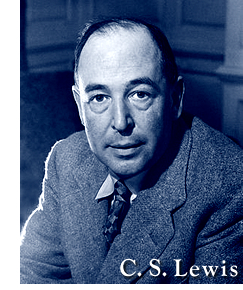
C.S. Lewis Daily – Today’s Reading


On goodness

It has sometimes been asked whether God commands certain things because they are right, or whether certain things are right because God commands them. . . . I emphatically embrace the first alternative. The second might lead to the abominable conclusion . . . that charity is good only because God arbitrarily commanded it—that He might equally well have commanded us to hate Him and one another and that hatred would then have been right. I believe, on the contrary, that “they err who think that of the will of God to do this or that there is no reason besides His will.” God’s will is determined by His wisdom which always perceives, and His goodness which always embraces, the intrinsically good. But when we have said that God commands things only because they are good, we must add that one of the things intrinsically good is that rational creatures should freely surrender themselves to their Creator in obedience. The content of our obedience—the thing we are commanded to do—will always be something intrinsically good, something we ought to do even if (by an impossible supposition) God had not commanded it. But in addition to the content, the mere obeying is also intrinsically good, for, in obeying, a rational creature consciously enacts its creaturely role, reverses the act by which we fell, treads Adam’s dance backward, and returns.

From The Problem of Pain

Compiled in Words to Live By

Charles Stanley – Strength Comes With Waiting


Psalm 25:4-5

Exhaustion is a by-product of overcommitted schedules and never-ending responsibilities. In an effort to accomplish all that is expected, we often try to move faster and cram in more by multitasking. But in the process, we end up emotionally and physically fatigued. The Lord offers a radically different mode of living and grants renewed strength and stamina.

Those who wait upon the Lord are promised His supernatural energy. In fact, Scripture says it will surpass the natural strength and endurance of the young. Access to this divine power is achieved not by moving faster but by going slower—stopping to take time to focus on the Father, seek His direction, and ask for His strength to accomplish what He is calling you to do.

Earlier in my life, I wore myself out by impatiently pushing ahead, trying to do ministry in my own way and my own time. Since then, I have learned that when I pause and humble myself, admitting that I have no strength without Him, the Lord sustains me with both emotional and spiritual energy. There is no earthly explanation for what God is willing and able to do in a yielded human being. His Holy Spirit is like the wind beneath our wings, enabling us to soar like eagles.

The next time you are at the point of exhaustion, take some time to focus on the Lord. Are you walking in step with Him, or have you gone ahead on your own? Align your pace with His, taking the time to rest when He wants you to, and receive the energy He freely offers to those who walk obediently in His will.

Bible in One Year: Acts 8-9

Our Daily Bread — Of Geese and Difficult People


Read: Romans 12:14-21

Bible in a Year: Jeremiah 51-52; Hebrews 9

If it is possible, as far as it depends on you, live at peace with everyone. —Romans 12:18

When we first moved into our present home, I enjoyed the beauty of the geese that nest nearby. I admired the way they cared for each other and the way they moved in straight lines in the water and in majestic V-formations in the air. It was also a joy to watch them raise their young.

Then summer came, and I discovered some less beautiful truths about my feathered friends. You see, geese love to eat grass, and they don’t really care if it ruins the look of the lawn. Worse, what they leave behind makes a stroll across the yard a messy adventure.

I think of these geese when I’m dealing with difficult people. Sometimes I wish I could simply shoo them out of my life. It’s then that God usually reminds me that there is beauty in even the most difficult person if we can get close enough to discover it, and the pain they’re giving out may be reflective of the pain they are feeling. The apostle Paul says in Romans, “If it is possible, as far as it depends on you, live at peace with everyone” (12:18). So I ask God to help me be patient with the “hard side” of others. This doesn’t always produce a happy outcome, but it is remarkable how often God redeems these relationships.

As we encounter difficult people, by God’s grace we can see and love them through His eyes. —Randy Kilgore

By Your grace, Lord, help me to live peaceably with others. And help me to recognize when I’m the difficult person in other people’s lives and need Your intervention. Give me the will and desire to change.

Peace can come if we respond with a gentle answer.

INSIGHT: When the apostle Paul instructs the Roman Christians to bless rather than curse those who persecute them, he’s not talking just about words. The biblical concept of blessing and cursing nearly always meant both words and actions. In today’s passage Paul is calling for radical acts of love, for—as Jesus showed us—true love is not just conveyed by what we say but also by what we do (John 15:13; 1 John 3:18). Dennis Moles

Ravi Zacharias Ministry – Cynicism and Hope


I must confess to a certain curiosity with why things turn out as they do. I read a lot of history, biographies, and stories of human successes and failures. Being a child of a particular age, I was raised with a certain degree of optimism. The bad times—World War II, the Korean War—were behind us, and once again we could get back to the normal business of pursuing happiness and success, which I was led to believe were easily within my reach.

Optimism is not hope, yet it is a recurring feature of life in good times. It is also a feature that all too quickly vanishes and reveals itself for what it is when bad times return. As a European, I lived through one of history’s great turning points, a turning point powerfully demonstrated in the tearing down of the Berlin Wall. The wall was not simply a physical reality, which had divided families, a nation, and a continent for decades; it was a symbol of the clash of visions and worldviews that battled for a season, not only for Europe, but for global dominance.

I can well remember the astonished newscasters as Germans embraced each other on top of the despised symbol of separation. Europe and the world seethed with the euphoria of change. The brave new world was being born, and optimism was the mood of the day (1989-1991). I heard breathless gurus of the age proclaim the dawn of unfettered freedom, and one even wrote shortly thereafter about “the end of history and the last man” in the sincere belief of the triumph of free market capitalism and liberal democracy.

Yet wisdom bids us to stop, look, and listen. In the first decade of the twenty-first century we have witnessed 9/11, bombings in Spain, Bali, and London. We have seen the debacles of Enron, WorldCom, and the fiascos of “Bear Stearns” (USA) and “Northern Rock” (UK). Optimism has met its match. Perhaps for some, they are seeing the collapse of hopes and the fulfillment of fears. The movie scene is reflectively filled with apocalyptic and nihilistic visions.

When hope fades, cynicism is often waiting in the wings. And this is indeed one of the great challenges of our time. Skepticism (there is nothing good and I know it) and cynicism (I can’t trust anybody or anything and I know this) seem reasonable choices. But is this a necessary outcome or orientation for us? I think not. Yet, if we have bought into a rationalist vision, if we have embraced the vision and values of our age uncritically, if faith is merely a part-time investment in an over cluttered life, then perhaps we don’t have the necessary orientation or resolve to face the issues and challenges of our time.

The Christian scriptures open up for us a view of the world that is very different: There is a God. This God is the creator, and God is personal, loving, willful, and particular. We see that despite being a good creation, a disruption and disorder has occurred and the drama of redemption unfolds. But the central character here is God! It is what God does, whom God appoints, and what God decides that makes the difference.

This is not to say that life according to Christian theology is pre-determined. I have seen too much, experienced too much, and read too much to believe that my choices are illusory. I believe they are real. I have also seen too much, experienced too much, read too much to believe that our choices are, as Lewis would say, “the whole show.” History is not a fatalist’s game. Humans do act, and often with serious and sad outcomes. The good news, I believe, is that we are not alone!

Writing to the Romans, the apostle Paul reminded them that hope is real because it is anchored in one who is able to carry it, sustain it, and fulfill it.(1) History is moving to an end, and Christ offers a good end. Thus, the difference between optimism, which is short term and easily overcome, and hope, which is eternal and anchored, is where they are rooted. One leans on human effort; the other rests in God and God’s promises.

Stuart McAllister is regional director for the Americas at Ravi Zacharias International Ministries in Atlanta, Georgia.

(1) Romans 8:24-25, 28-30.

Alistair Begg – The Benefits of Trials


The tested genuineness of your faith.

1 Peter 1:7

Untested faith may be true faith, but it is sure to be small faith, and it is likely to remain little as long as it is without trials. Faith never prospers so well as when all things are against her: Tempests are her trainers, and bolts of lightning are her illuminators.

When a calm reigns on the sea, spread the sails as you will, the ship does not move to its harbor; for on a slumbering ocean the keel sleeps too.

Let the winds rush and howl, and let the waters lift themselves, though the vessel may rock and her deck may be washed with waves and her mast may creak under the pressure of the full and swelling sail, it is then that she makes headway toward her desired haven.

No flowers are as lovely a blue as those that grow at the foot of the frozen glacier; no stars gleam as brightly as those that glisten in the midnight sky; no water tastes as sweet as that which springs up in the desert sand; and no faith is so precious as that which lives and triumphs in adversity.

Tested faith brings experience. You could not have believed your own weakness if you had not been compelled to pass through the rivers; and you would never have known God’s strength if you had not been supported in the flood.

Faith increases in quality, assurance, and intensity the more it is exercised with tribulation. Faith is precious, and its trial is precious too.

Do not let this, however, discourage those who are young in faith. You will have trials enough without seeking them: The full portion will be measured out to you in due course.

Meanwhile, if you cannot yet claim the result of long experience, thank God for what grace you have; praise Him for that degree of holy confidence you have now attained: Walk according to that rule, and you will still have more and more of the blessing of God, until your faith will remove mountains and conquer impossibilities.

The Family Bible Reading Plan

  • 2 Kings 25
  • Hebrews 7

Devotional material is taken from “Morning and Evening,” written by C.H. Spurgeon, revised and updated by Alistair Begg.

Charles Spurgeon – Self-sufficiency slain


“Without me ye can do nothing.” John 15:5

Suggested Further Reading: 2 Chronicles 32:20-31

You are not capable of performing the lowest act of the divine life, except as you receive strength from God the Holy Spirit. And surely, my brethren, it is generally in these little things that we find out most of all our weakness. Peter can walk the waves of the sea, but he cannot bear the derision of a little maid. Job can endure the loss of all things, but the upbraiding words of his false friends, though they be but words, and break no bones—make him speak far more bitterly than all the sore boils which were in his very skin. Jonah said he did well to be angry, even unto death, about a gourd. Have you not often heard that mighty men who have outlived hundreds of battles have been slain at last by the most trivial accident? And has it not been so with professed Christians? They stood uprightly in the midst of the greatest trials; they have outlived the most arduous struggles, and yet in an evil hour, trusting to themselves, their foot has slipped under some slight temptation, or because of some small difficulty. John Newton says: “The grace of God is as necessary to create a right temper in Christians on the breaking of a china plate as on the death of an only son.” These little leaks need the most careful stopping. The plague of flies is no more easy to be stayed than that of the destroying angel. In little as well as in great things the just must live by faith. In trifles as well as in nobler exercises the believer should be conscious of his own inability,—should never say of any act, “Now I am strong enough to perform this; I need not go to God in prayer about this; this is so little a thing.”

For meditation: We need to bring everything to God in prayer, not only the things which worry us (Philippians 4:6); the apostle Paul had learned how to face all situations and how to do all things in Christ who strengthened him (Philippians 4:13).

Sermon no. 345

12 November (Preached 11 November 1860)

John MacArthur – Seeking God’s Reward


“He who comes to God must believe that He is, and that He is a rewarder of those who seek Him” (Heb. 11:6).

All who come to God in faith will receive the reward of eternal life.

We’ve seen that without faith it’s impossible to please God. And the first step in faith is believing that God exists. In addition, we must also believe that He answers our prayers—more specifically, that He redeems those who come to Him in faith.

Scripture repeatedly tells us that God not only can be found, but also desires to be found. David said to his son Solomon, “If you seek Him, He will let you find Him; but if you forsake Him, He will reject you forever” (1 Chron. 28:9). The Lord says in Jeremiah 29:13, “You will seek Me and find Me, when you search for Me with all your heart.” Jesus said, “Everyone who asks, receives; and he who seeks, finds; and to him who knocks, it shall be opened” (Luke 11:10).

At first glance those verses may seem to contradict Paul’s teaching that “there is none who seeks for God; all have turned aside” (Rom. 3:11-12), and Jesus’ statement that no one can come to Him unless the Father draws him (John 6:44). But really they’re two sides of the same theological coin.

On one side you see man believing God and receiving Christ for salvation. On the other you see God enabling man to do so. Prior to salvation, a person is spiritually dead and utterly incapable of responding to the gospel. God must grant him or her saving faith. That’s why the Bible contains statements like, “To you it has been granted for Christ’s sake . . . to believe in Him” (Phil. 1:29); “As many as had been appointed to eternal life believed” (Acts 13:48); and “The Lord opened [Lydia’s] heart to respond to the things spoken by Paul” (Acts 16:14).

God is the Great Rewarder, extending His love and grace to all who call upon Him. “Whoever believes in Him will not be disappointed” (Rom. 10:11).

Suggestions for Prayer

If you’ve been praying for someone’s salvation, don’t become discouraged. Only God can grant saving faith, but He gives us the privilege of participating in His redemptive work through faithful prayer and evangelism (Rom 10:1).

For Further Study

Memorize Ephesians 2:8-9.

Joyce Meyer – God Lives In You


May Christ through your faith [actually] dwell (settle down, abide, make His permanent home) in your hearts!—Ephesians 3:17

For many years I believed in Jesus Christ as my Savior but did not enjoy close fellowship with God. I felt that I was always reaching for Him and coming short of my goal. One day, as I stood before a mirror combing my hair, I asked Him a simple question: “God, why do I consistently feel as though I am reaching for You and coming a little bit short of finding You?”

Immediately I heard these words inside my spirit: Joyce, you are reaching out, and you need to be reaching in. God’s Word says that He lives in us, but many people find this truth difficult to understand. I did, too, for a long time.

I recall a day when I was walking around my house with my head hanging down—I was downcast! I was murmuring and complaining, saying, “God, I’m so tired of all the struggles I have. When are You going to do something? When am I going to get a breakthrough?”

Just then God reminded me that He lived inside me, and that fact alone should keep me joyful.

If you are born again, then Jesus is dwelling in you through the power of the Holy Spirit. But is God comfortable in you, and does He feel at home there within you? It took me a long time to understand that God lives in me along with all the other stuff that’s going on in my inner life. Because many Christians are not willing to submit to the inner promptings of the Holy Spirit, they are not full of peace. Their inner lives are constantly in turmoil. If we want to be a comfortable home for the Lord, let’s learn to dwell in peace and joy, trusting Him to take care of us.

Trust in Him: Is God comfortable in you? If you want to be a comfortable home for the Lord, let go of everything you believe makes Him uncomfortable and fill yourself instead with gratitude, joy, and peace—and simply trust in Him.

From the book Trusting God Day by Day by Joyce Meyer.

Campus Crusade for Christ; Bill Bright – Wonderful Friendship


“God will surely do this for you, for He always does just what He says, and He is the one who invited you into this wonderful friendship with His Son, even Christ our Lord” (1 Corinthians 1:9).

You and I do not always prove faithful, but the apostle Paul wants us to know, by way of his letter to the believers in Corinth, that our God will surely do what He has promised; in this case, make us “blameless in the day of our Lord Jesus Christ” (verse 8).

The apostle wants the Corinthians to know that they can depend upon the faithfulness of God, who had begun a good work among them, and certainly would see them through to the end. He did the inviting; He would do the keeping.

Christians are able to participate with Christ in several ways. First in His trials and sufferings, for we are subjected to temptations and trials similar to His: “But rejoice, inasmuch as ye are partakers of Christ’s sufferings” (1 Peter 4:13, KJV).

Second, in His feelings and views (Romans 8:9).

Third, in His heirship to the inheritance and glory which awaits Him: “And if children, then heirs; heirs of God, and joint-heirs with Christ” (Romans 8:17, KJV).

Fourth, in His triumph in the resurrection and future glory: “Ye which have followed Me, in the regeneration when the Son of man shall sit on the throne of His glory, ye also shall sit upon twelve thrones, judging the twelve tribes of Israel” (Matthew 19:28, KJV).

Are you not glad for that kind of friendship?

Bible Reading: 2 Thessalonians 3:3-5

TODAY’S ACTION POINT: When I look for a faithful friend, my first thought will be of Christ Himself, who truly qualifies as my very best friend

Presidential Prayer Team; H.L.M. – Godly Principles


America has a unique heritage that is rooted in a dependence on God and His biblical principles. These principles for a godly nation were well understood by the late President Ronald Reagan when he wrote:

Keep the charge of the Lord your God, keeping his statutes…that you may prosper in all that you do.

I Kings 2:3

“To preserve our blessed land we must look to God. It is time to realize that we need God more than He needs us. Let us, young and old, join together, as did the First Continental Congress, in the first step, in humble heartfelt prayer. Let us do so for the love of God and His great goodness, in search of His guidance and the grace of repentance, in seeking His blessings, His peace and the resting of His kind and holy hands on ourselves, our nation, and our friends in the defense of freedom and all mankind, now and always.”

Take a moment to thank the Lord for the Godly leaders who have helped shape this nation. Pray that Christians will elect people who love and follow Him. Intercede for all of your national and local leaders to courageously uphold scriptural principles personally and publicly.

Recommended Reading: II Samuel 7:9-15

Greg Laurie – What a Waste!


Therefore judge nothing before the time, until the Lord comes, who will both bring to light the hidden things of darkness and reveal the counsels of the hearts. Then each one’s praise will come from God.—1 Corinthians 4:5

We may be able to evaluate what people do, but we cannot evaluate the motive of why they do it. Only God can.

Some believers give up certain pleasures and activities because they don’t want their spiritual lives dulled. Someone might look at them and say, “What a waste! They missed out big time!”

Or, when someone with a promising career ahead decides instead to go to a developing nation as a missionary, someone might say, “What a waste!”

Still others will decide to simply live for themselves and do whatever they want to do with their lives. And then God will say, “What a waste!”

Let’s not be so quick to judge another person’s heart. We can’t see his or her heart. Rather, let’s judge our own hearts and why we do things. The apostle Paul wrote to the believers at Corinth, “Therefore judge nothing before the time, until the Lord comes, who will both bring to light the hidden things of darkness and reveal the counsels of the hearts. Then each one’s praise will come from God” (1 Corinthians 4:5).

I think that one day, the people who took the time for God’s Word, for worship, and for serving the Lord will be glad they did. And I also think the people who didn’t take time for those things will realize how much they wasted their lives.

It has been said, “I am only one, but I am one. I cannot do everything, but I can do something. What I can do, I ought to do. And what I ought to do, by the grace of God, I will do.”

We can’t change the past. But we can decide what we are going to do in the present and how we are going to live in the future.

Max Lucado – Spill Your Heart Before God


As a member of God’s family, come to Him— not as a stranger, but as an heir. Earnestly make your requests known to him; not because of what you have achieved, but because of what Christ has done! Jesus spilled his blood for you. You can spill your heart before God.

Jesus said if you have faith, you can tell a mountain to go and jump into the sea (Mark 11:23). What is your mountain? What is the challenge of your life? Call out to God for help! Will he do what you want? I cannot say, but this I can say, “He will do what is best.” That includes any force that is seeking to drive you out of the Promised Land. “Ask and it will be given to you,” Jesus said in Matthew 7:7.  It is a battle, but you do not fight in vain. Call on God for great things!

From Glory Days

Night Light for Couples – Unrestrained Generosity


“How great is the love the Father has lavished on us…!” 1 John 3:1

It’s no coincidence that we started this week’s look at generosity with a story about a little boy. Children are often our best teachers.

Years ago during the week of my birthday, our family decided to go for a leisurely stroll through our local shopping center. Ryan, who was eight at the time, opened his piggybank and took out five dollars he had been saving for something special. As we walked along, window shopping and enjoying being together, Ryan announced that he wanted to have some time alone to go to the toy store and pet shop. We set a time and place where we would meet, and off he went. In about thirty minutes, he came walking up with a grin that stretched from ear to ear.

Ryan said, “Here, Mom, this is for your birthday. But you can open it right now!” By the look on his face, it was obvious that he felt strongly about my opening the gift right there in the middle of the mall. So we found a nearby bench. He announced his present had cost a lot of money. (He had spent the entire five dollars on it.)

As shoppers filed by, he watched excitedly while I carefully unwrapped the package. Gazing down at its contents, I was suddenly filled with emotion. His present wasn’t anything he could have found in a toy or pet store. It wasn’t even something you’d expect to receive from an eight‐year‐old boy. There in my lap was a lovely desk set. The ostrich‐feathered white pen looked like an old‐fashioned quill that Ben Franklin might have used to sign the Declaration of Independence. The stand was padded in matching white, with a spray of pink flowers delicately painted around the edges.

My eyes brimmed with tears as I hugged and thanked my son for such an extravagant gift. It has been many years since that day, and I still treasure that pen as a reminder of Ryan’s spontaneous gift of love.

Most of us are too inclined to keep our purses or wallets shut tight against the opportunities for giving that are all around. Or when we give, we give what’s convenient or interesting to us, not to the recipient.

In our marriages, we have so many chances to practice childlike, unrestrained generosity—with no ulterior motive, necessity, or expectation in mind. The more we give and receive that kind of love, the more we will experience the love of God in our homes. I think the apostle John had something like “unrestrained generosity” in mind when he wrote, “How great is the love the Father has lavished on us, that we should be called children of God! And that is what we are!” (1 John 3:1).

– Shirley M Dobson

From Night Light For Couples, by Dr. James & Shirley Dobson

Charles Stanley – When God Makes Us Wait?


Psalm 25:4-5

On the road of life, crucial decisions are like intersections that call for us to choose which way to go. If we barrel through without seeking the mind of Christ, the road we pick may lead to regret and heartache. Although the Lord is ready and willing to offer clear direction, He doesn’t always give it quickly. Knowing that He has good reason for withholding immediate instruction can help us wait patiently at the intersection for His guidance.

At times, God leaves us in our confusion because He wants to get our attention. When everything is running smoothly, we tend to forget the Lord. But uncertainty draws us back to Him like a magnet. By aligning our steps with His and walking in submission to the Spirit, we open our ears to hear His voice.

Our waiting period is God’s preparation time. In bringing about His sovereign purposes, He may put us on hold while He coordinates events to line up with His will. Sometimes the Lord has work to accomplish in us before we are ready to handle what He’s planned for our future. Also, waiting helps strengthen us spiritually. If we instantly received His direction, we would rarely have the opportunity to exercise our faith. Christian maturity becomes evident in the ability to wait in peaceful confidence, trusting that in God’s time, we will know what to do.

If impatience tempts you to jump ahead of the Lord’s timing, you risk stepping outside of His will and missing His blessings. But by waiting until He gives clear direction, you will walk in His peace with certainty, instead of stumbling around in anxiety and confusion.

Bible in One Year: Acts 5-7

Our Daily Bread — Crumbs of Time


Read: Daniel 6:10-23

Bible in a Year: Jeremiah 50; Hebrews 8

Three times a day he got down on his knees and prayed, giving thanks to his God, just as he had done before. —Daniel 6:10

A friend was coming to town. He is a very busy man and his schedule was tight, but after a difficult day in important meetings, he managed to see my family for half an hour for a quick and late dinner. We enjoyed his visit, but I remember looking at my plate and thinking, “We only got the crumbs of his time.”

Then I remembered how many times God gets the crumbs of my time—sometimes just the last minutes before I fall asleep.

Daniel was a busy man. He held a high government position in the ancient kingdom of Babylon, and I’m sure he had a full schedule. However, he had developed the habit of spending time with God—praying three times a day, praising God, and thanking Him. This routine helped him develop a strong faith that did not waver when he faced persecution (Dan. 6).

God desires a relationship with us. In the morning we can invite Him into our day, and then we can praise Him and ask Him for His help throughout the day. At other times we can treasure some time alone with Him and reflect on His faithfulness. As we spend time with God in prayer and in His Word, we grow in our relationship with Him and learn to become more and more like Him. As time with God becomes a priority, we enjoy His company more and more. —Keila Ochoa

Dear Father, I want to have an intimate relationship with You. I invite You to be part of my entire day—from the time I awake until I go to sleep.

Those who hope in the Lord will renew their strength. Isaiah 40:31

INSIGHT: The name Daniel means “God is my judge,” and Daniel lived a life that expressed that truth. He lived in captivity to the Babylonians, but his heart was surrendered to God. Bill Crowder