Tag Archives: Peace

John MacArthur – Leaving a Righteous Legacy


“By faith Abel offered to God a better sacrifice than Cain, through which he obtained the testimony that he was righteous, God testifying about his gifts, and through faith, though he is dead, he still speaks” (Heb 11:4).

The character of your life will determine the legacy you leave to others.

Bible scholar James Moffatt wrote, “Death is never the last word in the life of a . . . man. When a man leaves this world, be he righteous or unrighteous, he leaves something in the world. He may leave something that will grow and spread like a cancer or a poison, or he may leave something like the fragrance of perfume or a blossom of beauty that permeates the atmosphere with blessing.”

That’s illustrated in the lives of Adam and Eve’s first sons: Cain and Abel. Cain was an unrighteous man who sought to please God by his own efforts. God rejected him (Gen. 4:5). Abel was a righteous man who worshiped God in true faith. God accepted Him (v. 4).

In a jealous rage, Cain murdered Abel, becoming the first human being to take the life of another. He forever stands as a testimony to the utter tragedy of attempting to please God apart from true faith. For “without faith,” Hebrews 11:6 says, “it is impossible to please Him.” Cain tried and failed—as have millions who have followed in his footsteps.

Abel, on the other hand, was the first man of faith. Prior to the Fall, Adam and Eve had no need of faith in the same way as their descendants. They lived in the paradise of Eden and had direct contact with God. Their children were the first to have need of faith in its fullest sense.

Cain’s legacy is rebellion, heartache, and judgment. Abel’s is righteousness, justice, and saving faith. His life proclaims the central message of redemption: righteousness is by faith alone.

What legacy will you leave to those who follow? I pray they will see in you a pattern of righteousness and faithfulness that inspires them to follow suit.

Suggestions for Prayer

  • Praise God for righteous Abel and all who have followed his example.
  • Ask Him to guard you from ever rebelling against His Word.

For Further Study

Read Genesis 4:1-16 and 1 John 3:11-12.

  • What was God’s counsel to Cain after rejecting his offering?
  • Why did Cain kill Abel?
  • How did God punish Cain?

Joyce Meyer – God Will Never Give Up on You


…Yes, I have loved you with an everlasting love; therefore with loving-kindness have I drawn you and continued My faithfulness to you.—Jeremiah 31:3

What your life amounts to is directly connected to what you think of yourself. We need to learn to think like God thinks. We must learn to identify with Christ and the new person He has made us to be.

In Scripture, God uses words such as “beautiful,” “honored,” “valued,” and “precious” when He is speaking of His children. There is no doubt that we are far less than perfect, that we have faults and weaknesses, but God is God and He views us the way He knows we can be.


He sees us as a finished project while we are making the journey. He sees the end from the beginning and is not worried about what takes place in between. He is not pleased with our sin and bad behavior, but He will never give up on us and He always encourages us to press on. God believes in you!

Prayer of Thanks: I am grateful, Father, that You are a good Father who loves me unconditionally. Help me to see myself as You see me. Thank You that even though I am a work in progress, You already have the finished result in mind.

From the book The Power of Being Thankful by Joyce Meyer.

Campus Crusade for Christ; Bill Bright – How to Obey God’s Laws


“So now we can obey God’s laws if we follow after the Holy Spirit and no longer obey the old evil nature within us” (Romans 8:4).

Are you not glad that the Word of God make things so simple? If we really want to obey God’s laws, His resources are available to us. First and foremost, the Holy Spirit abides within to guide us. While it is true that we have all of the Holy Spirit at the time of conversion, we cannot expect the full blessing and power of God until the Holy Spirit has full control of all of us.

As we appropriate the fullness of His Holy Spirit by faith, we are supplied with supernatural power to obey God’s laws. That supernatural power, even, is contingent upon our cooperation in that we must not only commit ourselves to the Holy Spirit but we must also be familiar with the Word of God if we are indeed to obey its commands.

Obedience is a key word in the Christian life. This verse points it out quite clearly, for we either obey God’s laws or we obey the old evil nature. The choice is ours as we are controlled and empowered by the Holy Spirit.

Someone has well pointed out that all of life, really, is nothing more nor less than a series of choices. The secret of the successful Christian life is in making the right choices. And even the wisdom to make the right choices is available – as a gift from God.

That leaves us, you and me, without excuse. We can, if we choose, through the enabling of the Holy Spirit, obey God’s laws and thus accomplish His purpose for us as believers.

Bible Reading: Galatians 5:16-26

TODAY’S ACTION POINT: Drawing upon the supernatural resources of the Holy Spirit I choose to obey God’s laws rather than yield to the pull of my old evil nature

Presidential Prayer Team; C.H. – Light Therapy


Ancient Egypt, ancient Greece and ancient Rome were among those who practiced heliotherapy or the use of light as therapy to heal. That practice is still around today in a variety of forms – one being the bili light to treat jaundice in premature babies. In the presence of a special blue light, the infants are able to rid their bodies of too much bilirubin.

As many as touched it were made well.

Matthew 14:36

The presence of God, through Jesus, healed people, too. Christ said, “I am the light of the world.” (John 8:12) His light heals all sickness and pain. In today’s passage, the people of Gennesaret asked to touch the hem of Christ’s clothes. God’s presence was so mighty that even the garments on Jesus’ body were full of His power.

Every time you pray, you enter God’s throne room and are ushered into His presence…and in His presence, there is power. Remember when Moses returned from being with God on Mt. Sinai? His face glowed! Pray for God’s people to spend so much time with Him that their faces reflect His light and start a healing process for this nation and its leaders.

Recommended Reading: John 8:12-19

Greg Laurie – The Perspective of Eternity


So teach us to number our days, that we may gain a heart of wisdom.—Psalm 90:12

Have you ever wasted your time? Let me restate the question: Do you have a television or a smartphone?

There are so many television channels now. Yet I’ve sat with a remote control in hand and hardly found a single thing worth watching. I’ve also found myself wasting a lot of time. And now we have smartphones, which people can’t seem to stop looking at. They look at them while they’re driving. They look at them while they’re standing in line. They look at them while they’re walking down a crowded street. Everyone is sidetracked with this current technology, and I wonder how much time we waste.

It isn’t good to waste time, but it’s much worse to waste a life. In Matthew 26 we find the story of a woman who was accused of great waste. Interestingly, this accusation was made by a man whose life actually was a complete waste.

I’m convinced that when we get to Heaven, we’ll see things much differently. I think some things that we will have thought of as good during our lives on this earth may not be perceived as good in the same way. We think that good obviously means excellent health and having a lot of money. We think good means having a very successful career or ministry. I am not saying these things are bad. But maybe they won’t be as good as we once thought they were.

On the other hand, we may think of any kind of a setback, sickness, or failure in life as a horrible thing. But I think that when we get to Heaven, we will realize that some of those setbacks and failures actually produced more spiritual fruit in our lives than the so-called good things. Things are not always as they appear.

Max Lucado – How Bold Are Your Prayers?


As John Wesley was crossing the Atlantic Ocean, heavy winds came up. He was reading in his cabin when he became aware the winds were knocking the ship off course, and he responded in prayer. Adam Clarke, a colleague, wrote it down.

“Almighty and everlasting God. . .Thou holdest the winds in thy fists and sittest upon the water . . .command these winds and these waves that they obey thee, and take us speedily and safely to the haven whither we would go.”

Wesley stood up from his knees, took up his book, and continued to read. Dr. Clarke went on deck where he found calm winds and the ship on course. Wesley made no remark about the answered prayer. Clarke wrote, “So fully did he expect to be heard that he took it for granted that he was heard.”

How bold are your prayers?

From Glory Days

Night Light for Couples – Ragamuffin Brother

Night Light for Couples – Ragamuffin Brother

by Ron Mehl

Roy Angel was a dirt‐poor preacher with a millionaire brother. Back in the oil boom days of the late 1940s, Roy’s older brother happened to own the right piece of Texas prairie at the right time. When he sold, he became a multimillionaire overnight. Parlaying that good fortune, the elder Angel made some strategic investments in the stock market and then cashed in on several mushrooming business enterprises. He moved into the penthouse of a large apartment building in New York City and managed his investments from a posh Wall Street office.

A week before Christmas one year, the wealthy businessman visited his preacher‐brother in Chicago and presented him with a new car—a gleaming, top‐of‐the‐line Packard. Roy always kept his new car down the street in a parking garage, under the careful eye of an attendant. That’s why when he came to get his Packard one morning, he was surprised to see a ragamuffin ghetto boy with his face pressed up against one of the car windows. The little boy wasn’t doing anything suspicious; he was obviously just peering into the new car’s interior with wide, admiring eyes.

“Hello, son,” Roy said. The boy spun around and looked at him. “Is this your car, mister?” “Yes,” Roy replied, “it is.” “How much did it cost?” “Well, I really don’t know.” The boy’s face registered surprise. “You mean, you own this car, and you don’t know how much it cost?” “No, I don’t—because my brother gave it to me. As a present.” At this the boy’s eyes grew even wider. He thought for a moment, and then said wistfully, “I wish… I wish….” Roy thought he knew how the boy would finish the sentence. He

thought he was going to say, “I wish I had a brother like that.”

But he didn’t. The boy looked up at Roy and said, “I wish… I wish I could be a brother like that.”

That intrigued the minister, and because those were more innocent times, he said, “Well, son, would you like to take a ride?”

The boy immediately replied, “You bet!”

So they got in the car together, exited the parking garage, and drove slowly down the street. The little boy ran his hand across the soft fabric of the front seat, inhaled the new‐car smell, touched the shiny metal of the dashboard. Then he looked at his new friend and said, “Mister, would you—could you—take me by my house? It’s just a few blocks from here.”

Again, Roy assumed he knew what the lad had in mind. He thought the boy wanted to show off the car he was riding in to some of the neighborhood kids. He thought, Well, why not? So at his young passenger’s direction, Roy pulled up in front of an old, run‐down tenement building.

“Mister,” the boy said as they stopped at the curb, “would you stay here just a minute? I’ll be right back!”

Roy let the car idle as the boy rushed upstairs and disappeared.

After about ten minutes, the preacher began to wonder where the boy had taken himself. He got out of the car and looked up the unlighted stairwell. As he was looking up the dark stairs, he heard someone slowly coming down. The first thing he saw emerging from the gloom was two limp little legs. A moment later, Roy realized it was the little boy carrying an even smaller boy, evidently his younger brother.

The boy gently sat his brother down on the curb. “See?” he said with satisfaction. “It’s just like I told you. It’s a brand new car. His brother gave it to him, and someday I’m going to buy you a car just like that!”

Looking ahead…

In this story of two benevolent brothers, the millionaire certainly gave a nice present—but it’s the little boy who is the better example of a generous spirit. How many children dream of giving a new car to their brother or sister? Somehow I get the feeling that this little fellow wouldn’t squander a fortune if it came his way later in life.

During the coming week, we’ll be talking about the incredible power of generosity for good—both inside our marriage and in our relationships with others. Tonight I leave you with a question: Do you have a generous spirit?

– James C Dobson

From Night Light For Couples, by Dr. James & Shirley Dobson

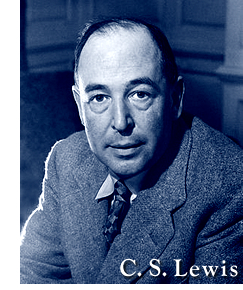
C.S. Lewis Daily – Today’s Reading


TO RHONA BODLE: On not forcing books on others; and on the providence of reading.

14 September 1953

I have had ‘Miss Bodle’s colleague’ in my daily prayers for a long time now: is that the same young man you mention in your letter of July 3rd, or do I now say ‘colleagues’? Yes: don’t bother him with my books if an aunt (it somehow would be an aunt—though I must add that most of my aunts were delightful) has been ramming them down his throat.

You know, The Pilgrim’s Progress is not, I find (to my surprise) everyone’s book. I know several people who are both Christians and lovers of literature who can’t bear it. I doubt if they were made to read it as children. Indeed, I rather wonder whether that ‘being made to read it’ has spoiled so many books as is supposed. I suspect that all the people who tell me they were ‘put off’ Scott by having Ivanhoe as a holiday task are people who would never have liked Scott anyway.

I don’t believe anything will keep the right reader and the right book apart. But our literary loves are as diverse as our human! You couldn’t make me like Henry James or dislike Jane Austen whatever you did. By the bye did Chesterton’s Everlasting Man (I’m sure I advised you to read it) succeed or fail with you?

From The Collected Letters of C.S. Lewis, Volume III

Compiled in Yours, Jack

Charles Stanley – Running the Race of Faith


Hebrews 12:1-3

The runners in a marathon must all follow a clearly marked course. Suppose one of the athletes decides to pick his own path. He keeps to the 26.2-mile race standard and sets his finish line in the same spot as the official one, but he runs through neighborhoods with fewer hills and across less crowded parks. His plan seems excellent to him, but when he crosses the finish line, there will be no medal or ribbon waiting.

That would certainly be a silly thing to do. Yet believers fall into this very trap when they decide the course for their lives instead of running the race God sets. By submitting to His will—doing what He says and going where He leads—we remain on the right path. But the moment we revert to our old habits and start making decisions based on our own wisdom, we go far afield.

Whether believers run the race God’s way or their way, the finish line is the same—namely, heaven. However, the difference is what we have to show for all the energy expended getting there. No one wants to look back and realize, I didn’t really accomplish anything of value. Regardless of how grand a legacy someone leaves, the only truly lasting and worthwhile deeds are those done for the Lord in the power of His Spirit.

Thankfully, no matter how far off course we veer, the Holy Spirit is still present. He reminds us of the right path—as well as the power available to get back on it and persevere. Your route is set; your choice clear. Run the race set before you and finish well.

Bible in One Year: John 12-13

Our Daily Bread — Angry Prayers


Read: Psalm 86:1-13

Bible in a Year: Jeremiah 34-36; Hebrews 2

Fools give full vent to their rage, but the wise bring calm in the end. —Proverbs 29:11

The neighbors probably didn’t know what to think as they looked out their windows at me one wintry day. I was standing in the driveway with a garden shovel clutched in my hands, whacking wildly and angrily at a clump of ice that had formed beneath a corner gutter. With each smack, I was uttering prayers that were variations on one theme: “I can’t do this.” “You can’t expect me to do this.” “I don’t have the strength to do this.” As a caregiver, with a long list of responsibilities to handle, I now had this ice to deal with, and I had had enough!

My anger was wrapped around a bundle of lies: “I deserve better than this.” “God isn’t enough after all.” “Nobody cares anyway.” But when we choose to cling to our anger, we become mired in the trap of bitterness, never moving forward. And the only cure for anger is truth.

The truth is that God does not give us what we deserve; He gives us mercy instead. “You, Lord, are forgiving and good, abounding in love to all who call to you” (Ps. 86:5). The truth is that God is more than enough, despite what we see. The truth is that His strength is sufficient (2 Cor. 12:9). Yet before we can find such reassurance, we may need to step back, lay down the shovel of our own efforts, and take Jesus’ hand that’s extended to us in mercy and grace.

God is big enough to listen to our anger and loving enough to show us, in His time, the path forward. —Shelly Beach

Loving God, forgive me for my outbursts of anger. Today I choose to lay down my sinful anger and accept Your mercy and grace. Thank You for forgiveness and for truth that leads to wisdom.

Shelly Beach is the author of several books, including Precious Lord, Take My Hand: Meditations for Caregivers.

Grace: Getting what we don’t deserve.Mercy: Not getting what we do deserve.

INSIGHT: The psalms are often read as windows to the soul—songs that reflect the reality of our emotions and struggles. They encourage us to understand that God can handle our honesty as we express ourselves to Him. Yes, God is big enough to absorb our anger and listen to our complaints, but we must not overlook the context in which the writers of the psalms expressed their feelings. In today’s passage, over and over David recognizes his place in relationship to God. He acknowledges that he is “poor and needy” (v. 1), he is faithful to God and trusts in Him (v. 2), and he is God’s “servant” (v. 4). It is important that we understand who we are in relationship to God when we bring our hurts and struggles to Him. J.R. Hudberg

Ravi Zacharias Ministry – Vapor and Hope


The last few years have been a time when many familiar things, many things we take for granted, have not only been shown to be fragile but have collapsed or disappeared. Great companies now come and go with a disturbing frequency and things seem to change at an ever-increasing rate. Whether this is real or perceived, the shrinking of space and the acceleration of time are issues felt by many, and they are regular social phenomena.

People generally do not like much change too fast. Yet old boundaries disappear; older values are doubted, questioned, or rejected. Familiar ways get moved or change. Our desire for stability, for security, for some degree of permanence is incessantly pressured by a culture addicted to novelty and the new for newness’ sake. We experience what a friend of mine calls “cultural vaporization.” As water evaporates with a pot of boiling water left on sustained heat, so the many cultural dimensions subjected to constant pressure or deconstruction, they too, evaporate.

The world of the present may not always feel like a human-friendly habitat. Often driven by visions of progress, beliefs in the efficacy of education, freedom, and technology as the means of liberation, the 20th and early 21st centuries appear to have reached the limits or limitations of our created systems. They are not all bad, but they are by definition, limited, a fact that many seem unable or unwilling to admit. Present responses are often important and necessary correctives to the grand strategies of the past, the arrogant sense of mastery, and the delusions fostered by unrealistic views of humanity and our potential, but do they possess the substance that makes for a sufficient response to the deepest issues?

Who and what are we? What is reality? What is the really real and who says so? If there is a transcendent God, if there is a Son who draws near, who has a purpose, a will, and a way for life and creation, then God’s will and way are central to how things operate and how they might operate at their best. The management of life and the path of wise living in Christian terms is called stewardship, and it’s based on a view of economics which implies following Christ as the way and truth and life.

The vision that humanity has built, particularly since the late 18th century unto the present, has been filled with great promises but less than thrilling outcomes. No one denies or devalues all the real and meaningful benefits in science, health, education, and technology, but they are insufficient in themselves to qualify as ultimate goods or sufficient explanations of the good. Their failures and limits are all too apparent.

Yet amidst uncertainty, cultural vaporization, and constant change, there is the promise of the one who said, “I will never leave you or forsake you.” When it seems like all that is solid is melting into air, Francis Schaeffer would remind us that God is there and God is not silent, for Christ has come. Our hopes can anchor onto this one who never changes and offers eternal rest, whose kingdom is eternal, unshakable, and secure. This is indeed a hope that brings new life.

Stuart McAllister is regional director for the Americas at Ravi Zacharias International Ministries in Atlanta, Georgia.

Alistair Begg – A Day For Remembering


No weapon that is fashioned against you shall succeed. Isaiah 54:17

The 5th of November is notable in English history for two great deliverances granted by God for us. On this day the plot of the Papists to destroy the Houses of Parliament was discovered, 1605.

While for our princes they prepare

In caverns deep a burning snare,

He shot from heaven a piercing ray,

And the dark treachery brought to day.

And secondly, today is the anniversary of the landing of King William III, at Torbay in 1688, which was crucial for the establishment of religious liberty.

This day should be celebrated not by the revelry of youth, but by the songs of saints. Our Puritan forefathers most devoutly made it a special time of thanksgiving. There is public record of the annual sermons preached by Matthew Henry on this day. Our convictions and our love of liberty should make us regard its anniversary with holy gratitude. Let our hearts and lips exclaim, “We have heard with our ears, our fathers have told us, what deeds you performed in their days, in the days of old.”1

You have made this nation the home of the Gospel; and when the enemy has risen against her, You have shielded her. Help us to offer repeated songs for repeated deliverances.

Grant us more and more a hatred of sin, and hasten the day of your coming. Till then and ever, we believe the promise, “No weapon that is fashioned against you shall succeed.” Should it not be laid upon the heart of every lover of the Gospel of Jesus on this day to plead for the overturning of false doctrines and the extension of divine truth? Would it not be well to search our own hearts and turn out any of the lumber of self-righteousness that may lie concealed within?

1) Psalm 44:1

The Family Bible Reading Plan

  • 2 Kings 18
  • Philemon 1

Devotional material is taken from “Morning and Evening,” written by C.H. Spurgeon, revised and updated by Alistair Begg.

Charles Spurgeon – Fast-day service: An exposition of Daniel 9:1-19


Taken from brief exposition of Daniel 9:1-19 (This comment is on vv 10-15)

Suggested Further Reading: Psalm 85

The prophet in his prayer pleads what God has done for them, as the reason why he should bare his arm; he tells how God delivered Israel out of Egypt; and he therefore prays that God would deliver them from their present trouble. And, my brethren, not Israel itself could boast a nobler history than we, measuring it by God’s bounties. We have not yet forgotten an armada scattered before the breath of heaven, scattered upon the angry deep as a trophy of what God can do to protect his favoured isle. We have not yet forgotten a fifth of November, wherein God discovered many plots that were formed against our religion and our commonwealth. We have not yet lost the old men, whose tales of even the victories in war are still a frequent story. We remember how God swept before our armies the man who thought to make the world his dominion, who designed to cast his shoe over Britain, and make it a dependency of his kingdom. God fought for us; he fought with us; and he will continue to do so. He has not left his people, and he will not leave us, but he will be with us even to the end. Cradle of liberty! Refuge of distress! Storms may rage around you, but not upon you, nor shall all the wrath and fury of men destroy you, for God has pitched his tabernacle in your midst, and his saints are the salt in your midst.

For meditation: These stirring words, spoken at the time of the Indian mutiny, are equally true of God’s faithfulness during the worldwide conflicts of the twentieth century. But do Spurgeon’s words “We have not yet forgotten” retain any ring of truth in a nation which appears intent on moving further away from God by the day? While we may “Remember, remember the fifth of November,” few could probably explain why we do so!

n.b. Read again the text for yesterday’s reading—pray that a forgetful nation will remember and turn back to its Creator and Judge.

Part of nos. 154-155

5 November (Given on 7 October 1857)

John MacArthur – Knowledge Through Faith


“By faith we understand that the worlds were prepared by the word of God, so that what is seen was not made out of things which are visible.”

God’s greatest truths are discovered by simple faith.

As a man or woman of faith, you have insights into life that unbelievers can’t know. You know how the physical universe began, where it is heading, and how it will end. You know Who governs the universe and how you fit into the total scheme of things. You know why you exist and how to invest your life in matters of eternal consequence.

Unbelievers can’t possibly appreciate those things because “a natural man does not accept the things of the Spirit of God; for they are foolishness to him, and he cannot understand them, because they are spiritually appraised” (1 Cor. 2:14).

Some of the most basic issues of life remain a mystery to most people because they refuse God’s counsel. For example, the most brilliant thinkers have never agreed on the origin of the universe. Theirs is a futile attempt to explain what is beyond the realm of scientific investigation.

But such things aren’t beyond the realm of knowing—if a person is willing to be taught by God’s Word. For the Bible clearly states that God spoke the physical universe into existence, creating visible matter from what was non-physical or invisible (Rom. 4:17). No humans observed that event. It cannot be measured or repeated. It must be taken by faith.

Any attempt to explain the origin of the universe or the nature of man apart from God’s Word is foolhardy. The unregenerate mind, no matter how brilliant it might be, cannot fathom such things.

So never feel you have to apologize for trusting God’s Word. Let the confidence of the psalmist be yours: “I have more insight than all my teachers, for Thy testimonies are my meditation. I understand more than the aged, because I have observed Thy precepts” (Ps. 119:99-100).

Suggestions for Prayer

Read Genesis 1-2 as a reminder of the power and wisdom of God in creating the universe. From those chapters select specific things to praise Him for.

For Further Study

Memorize Psalm 19:1. Can you think of ways that the natural creation brings glory to God? (See also Romans 1:18-20.)

Joyce Meyer – Trust God Completely


But when He was in Jerusalem during the Passover Feast, many believed in His name [identified themselves with His party] after seeing His signs (wonders, miracles) which He was doing. But Jesus [for His part] did not trust Himself to them, because He knew all [men]; and He did not need anyone to bear witness concerning man [needed no evidence from anyone about men], for He Himself knew what was in human nature. [He could read men’s hearts]. 
—John 2:23-25

How deeply can we trust others? How much of ourselves do we give to others, and how vulnerable are we to them? I suppose the answers to these questions are as varied as the different situations. But considering the questions is definitely food for thought. Those of us who have

been hurt by trusting too much tend to pull back when we get into certain situations. I was once involved with a group of women whom I dearly loved, but eventually I realized our relationship wasn’t healthy for them or for me. I had become too dependent on them, even placing a trust in them that belongs only to God.

All of us know we’re supposed to place our ultimate trust only in the Lord. But sometimes we encounter individuals or groups who mean so much to us that we give too much of ourselves, or we allow them authority in our lives that belongs only to the Lord. When this happens, our lives are out of balance. And when we get out of balance, we open a door for the devil.

The words from John’s gospel serve as an appropriate warning to us. He was speaking of the relationship Jesus had with His own beloved disciples. Jesus knew how much—and how little—He could trust even those who were closest to Him. He understood human nature—something all of us have.

Jesus knew that we, too, would need discernment about trusting others, so He sent His Holy Spirit to guide us and to let us know who we could trust. In 1 Corinthians 12:10, the apostle Paul referred to the spiritual gift called the discerning of spirits, and in verse 31, he urged us to “earnestly desire and zealously cultivate the greatest and best gifts….” One of these “great gifts” is discernment, and it helps us distinguish between good and bad, not just bad.

True spiritual discernment motivates us to pray when a problem is identified. A genuine problem being discerned by a genuine gift will follow the scriptural plan for dealing with it, not fleshly ways that only exaggerate the problem. As we walk closely with God and ask for His guidance, the Spirit will provide it.

As I mentioned earlier, some seem to have the “gift” of suspicion, and it comes out of an unrenewed mind. Discernment, on the other hand, is the fruit of a renewed spirit.

The book of Acts provides a good example of the discernment and trust issue. The Scriptures describe a couple named Ananias and Sapphira, who were members of the first church in Jerusalem. In those days, believers sold their possessions and shared them with others. This couple sold some land, kept part of the money, and brought the remainder to Peter. That was all right, because it was their money. But only giving part of the money and then leading Peter to believe it was all they had earned from the sale of their property, was not all right.

But Peter said, Ananias, why has Satan filled your heart that you should lie to and attempt to deceive the Holy Spirit, and should [in violation of your promise] withdraw secretly and appropriate to your own use part of the price from the sale of the land? (Acts 5:3). Peter pointed out that it was their land and their money. Their sin was in giving only part of the money and claiming it was everything. You have not [simply] lied to men [playing false and showing yourself utterly deceitful] but to God (v. 4b).

Both the husband and wife died for that deception. As terrible as that story is, it shows us clearly that the Holy Spirit knows our hearts. And it also shows us that the Spirit can show the intent of our hearts to faithful, committed servants such as Peter through discernment.

God wants us to love and trust others, but we need discernment to guide us. There is a line where our trust and commitment must be reserved only for the Lord. When we give that trust to others, not only will we be disappointed—for no human can live up to our expectations—but we disappoint God.

So don’t make that mistake. It is wise to use discernment in loving and trusting others, but you will never go wrong by loving and trusting God completely.

Lord, I trust You, but I want to trust You even more. When I’m tempted to give the trust to others that only You deserve, please help me to be true to You. Help me, through Jesus Christ, to be sensitive to the leading of Your Holy Spirit. Amen.

From the book Battlefield of the Mind Devotional by Joyce Meyer.

Campus Crusade for Christ; Bill Bright – You Can Trust Him

“So don’t worry at all about having enough food and clothing. Why be like the heathen? For they take pride in all these things and are deeply concerned about them. But your heavenly Father already knows perfectly well that you need them, and He will give them to you if you give Him first place in your life and live as He wants you to” (Matthew 6:31-33).

As a young businessman, I was strongly attracted to the material things of the world and worked very hard to achieve success. But when I became a Christian, I could not ignore the logic of Christ’s command, “Seek ye first the kingdom of God and His righteousness” (Matthew 6:33, KJV).

I made my commitment to obey His command. Since that day so many years ago, I have sought to be obedient to that command. The Lord has graciously and abundantly blessed me with the fulfillment of the promise of His supernatural provision which follows:

“You heavenly father already knows perfectly well (the things you need), and He will give them to you if you give Him first place in your life and live as He wants you to.”

God is trustworthy, and the obedient, faithful Christian soon learns that he, like the psalmist of old, can proclaim:

“I have never seen the Lord forsake a man who loves Him, nor have I seen the children of the godly go hungry” (Psalm 37:25).

Bible Reading: Matthew 6:25-30

TODAY’S ACTION POINT: Resting on the absolute certainties of the Word of God, I will refuse to worry about anything today (recognizing that concern involves others, while worry involves only myself). “All things work together for good to them that love God…” (Romans 8:28). “My God shall supply all your need…” (Philippians 4:19). By trusting these and other promises from God’s word, I have no reason to worry

Presidential Prayer Team; H.L.M.- Heart for Prayer


One of the most recognized women of the Old Testament, Deborah was known for her wisdom and her courage as a military leader. Faced with 900 chariots of iron, Deborah’s army of 10,000 Israelites rushed down from the hills and clashed with the Canaanite general Sisera near the Kishon River. The battle was a total victory and the army of Sisera was destroyed.

Now Deborah, a prophetess, the wife of Lappidoth, was judging Israel at that time.

Judges 4:4

Deborah also influenced the people to live for the Lord after the battle was over. She was a prophetess whose main role was to encourage the people to obey Him. Deborah was a mighty prayer warrior who aroused the people of Israel from their lethargy and despair.

Although the phrase is not found in Scripture, a “prayer warrior” is generally thought of as a Christian who prays continually for others. Prayer warriors have a heart for God, a heart for prayer, a heart for people, and a heart for this nation. Thank your Heavenly Father today for the Godly heritage He has given America. Intercede as a prayer warrior for those national and local leaders who love Him. Ask God to give them wisdom and courage to make righteous decisions every day.

Recommended Reading: I Timothy 2:1-8

Greg Laurie – Never a Hypocrite


He is the Rock, His work is perfect; for all His ways are justice, a God of truth and without injustice; righteous and upright is He.—Deuteronomy 32:4

Some parents are terrified when their children question the authority of the Scriptures or have questions about various things we believe as Christians. But I don’t think it’s a horrible thing when children start asking the hard questions. Skepticism isn’t necessarily a sign that a person is wrong; it may be a sign that he or she is thinking.

Christian parents need to answer their children’s questions and help them work through those things. Sooner or later, children will have to grow up. They will have to find out for themselves who God is.

If you were raised in a Christian home, thank God for that legacy. But some people have been raised in Christian homes where there was a lot of hypocrisy. Maybe their parents argued all the time, or there were other problems. This is very disillusioning to a young person, who may say, “My parents talked about God all the time and couldn’t live it out. It’s all a bunch of nonsense.” They base their views of God on their parents.

I am not excusing Christian parents who have not been good examples to their children. But I am saying that even if your mom or dad blew it, even if someone you looked up to blew it, don’t base your view of God on what that person did or did not do. You need to find out for yourself who God is.

Deuteronomy 32:4 says, “[The LORD] is the Rock, His work is perfect; for all His ways are justice, a God of truth and without injustice; righteous and upright is He.”

Don’t base your view of God on someone who may have misrepresented Him. God is who He is. He is faithful. He is perfect. He is flawless. And He never will be a hypocrite.

Max Lucado – Choose Obedience


Remember where you are! As a child of God, you are in the Promised Land. Not geographically but spiritually. This is the land of grace and hope…freedom and truth…love and life! The devil has no jurisdiction over you. He acts as if he does. He walks with a swagger and brings temptation, but as you resist him and turn to God, James 4:7 tells us, he must flee.

Voices await you today. In your cul-de-sac, at school, and on the Internet. They are waiting for you. You cannot eliminate their presence, but you can prepare for their invitation. You are indwelled by the Spirit of the living God. You are His! Decide now what you will say then. Choose obedience! And as you do you can expect blessings. The blessings of a clear conscience, a good night’s sleep, and the blessing of God’s favor.

From Glory Days

Night Light for Couples – A Little Girl, Hiding


“You are a chosen people, a royal priesthood, a holy nation, a people belonging to God.” 1 Peter 2:9

I see a little girl skipping home from school in the late afternoon sun. Her dress is a hand‐me‐down intended for someone two sizes larger. Her shoes are unpolished, and her socks no longer have elastic around the top. She crosses a barren yard to reach her destination—a small house badly in need of paint and repair.

The walls inside the home are patched with brown butcher paper and paint to conceal where the little girl’s father punched holes with his fist. The father frequently stumbles home in the middle of the night, smelling of alcohol, then wakes the little girl with shouts and threats against her mother. Sometimes the little girl hides from her father.

One day the little girl is driven home from a friend’s birthday party. She asks to be let out in front of a clean house with a well‐manicured lawn. She marches up the driveway and waves good‐bye to her friends— but as soon as the car rounds the corner, she turns and walks several blocks to her real home. She’s learned to hide her disgrace from others; on the inside, however, she feels ashamed, depressed, and worthless.

God, however, blesses the little girl. Her mother’s wisdom and love sustain her. The mother insists that she attend church, where the little girl learns about Jesus and invites Him into her heart and life. When the little girl grows up and goes to college, she falls in love with a man who promises to do his best to make her happy and build her up under God’s direction. And he does.

This story is deeply familiar to me because I was that little girl. Children who grow up in homes where they are loved and appreciated, where discipline and accountability are properly balanced with democracy and openness, develop a healthy sense of self‐worth that usually carries into adulthood. But those of us who didn’t experience this kind of childhood may need an extra dose of understanding from our marital partner. No matter what your spouse’s background is, I pray you’ll provide that support for the little boy or girl you’re married to.

– Shirley M Dobson

From Night Light For Couples, by Dr. James & Shirley Dobson