Tag Archives: Peace

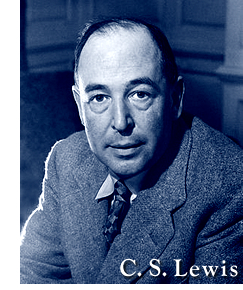
C.S. Lewis Daily – Today’s Reading On feeling


I think the thrill of the Pagan stories and of romance may be due to the fact that they are mere beginnings—the first, faint whisper of the wind from beyond the world—while Christianity is the thing itself: and no thing, when you have really started on it, can have for you then and there just the same thrill as the first hint. For example, the experience of being married and bringing up a family cannot have the old bittersweet of first falling in love. But it is futile (and, I think, wicked) to go on trying to get the old thrill again: you must go forward and not backward. Any real advance will in its turn be ushered in by a new thrill, different from the old: doomed in its turn to disappear and to become in its turn a temptation to retrogression. Delight is a bell that rings as you set your foot on the first step of a new flight of stairs leading upwards. Once you have started climbing you will notice only the hard work: it is when you have reached the landing and catch sight of the new stair that you may expect the bell again. This is only an idea, and may be all rot: but it seems to fit in pretty well with the general law (thrills also must die to live) of autumn & spring, sleep and waking, death and resurrection, and “Whosoever loseth his life, shall save it.”

From The Collected Letters of C.S. Lewis, Volume II

Compiled in Words to Live By

Charles Stanley – The Courage to Obey


Joshua 1:1-9

Most people would be pleased to accept the honor of leading a nation. Perhaps Joshua felt that way, too. But there’s no doubt that he was very aware that leading the Israelites out of the wilderness would be a daunting task and responsibility. Yet he was determined to obey God no matter what.

The Hebrew people were a difficult bunch. Not only did they grumble about food, water, safety, and rules; they also questioned Moses’ leadership and, almost as soon as his back was turned, rebelled against God. Now Joshua—a man they once threatened to stone (Num. 14:10)—was poised to lead these wayward desert nomads safely home. His was a God-sized task indeed.

Ultimately, however, Joshua took up the mantle of leadership with courage. Any uncertainty was replaced by boldness and resolve. He placed his faith in God, the One who had never let the people down. Joshua fully expected the Lord to be true to His word again and deliver them to the Promised Land.

I don’t know what challenge you are facing, but I do know that God will enable you to tackle it bravely, calmly, and victoriously. Whether you are a woman in a painful marriage, a family man contemplating a return to school, or a person in the clutches of a dreaded disease, God says to you, “Be strong and courageous” (Josh. 1:9).

Joshua’s courage was based upon years of seeing God’s faithfulness. Whether you’ve been a Christian for five minutes or 50 years, you can have the same confidence. The Bible promises that the Lord is sufficient to meet your needs and see you safely through your journey until you reach heaven (Phil. 4:19).

Bible in One Year: John 10-11


Our Daily Bread — Our Jealous God


Read: 2 Corinthians 11:1-4

Bible in a Year: Jeremiah 32-33; Hebrews 1

The Lord, whose name is Jealous, is a jealous God. —Exodus 34:14

In 2014 a University of California researcher used a stuffed dog to show that animals are capable of jealousy. Professor Christine Harris asked dog owners to show affection for a stuffed animal in the presence of their pet. She found that three-fourths of the dogs responded with apparent envy. Some tried to get attention with touch or a gentle nudge. Others tried to push between their owner and the toy. A few went so far as to snap at their stuffed rival.

In a dog, jealousy seems heartwarming. In people, it can lead to less admirable results. Yet, as Moses and Paul remind us, there is also another jealousy—one that beautifully reflects the heart of God.

When Paul wrote to the church at Corinth, he said he was “jealous for you with a godly jealousy” (2 Cor. 11:2). He didn’t want them to be “led astray from [their] sincere and pure devotion to Christ” (v. 3). Such jealousy reflects the heart of God, who told Moses in the Ten Commandments, “I, the Lord your God, am a jealous God” (Ex. 20:5).

God’s jealousy is not like our self-centered love. His heart expresses His protective zeal for those who are His by creation and salvation. He made us and rescued us to know and enjoy Him forever. How could we ask for anything more than a God who is so zealous—and jealous—for our happiness? —Mart DeHaan

Father, help me shun anything that distracts me from You, so that I may always find enjoyment in who You are and in Your plan for me.

God loves every one of us as if there were but one of us to love. Augustine

INSIGHT: Paul’s relationship with the church at Corinth was a turbulent one. Paul founded the Corinthian church and spent 18 months there (Acts 18:1-18). Then he returned for another 3 months at a later time (20:3). In spite of this significant investment of time and energy, the Corinthian believers appear to have struggled with Paul’s authority and position as an apostle, as well as his correction of them. His letters to the church at Corinth are filled with evidence of his disappointment over their testy relationship. Still, Paul’s love for them is evidenced by his desire that they not be led astray by false teachers. Bill Crowder

Ravi Zacharias Ministry – Lightening the Darkness


They told me to give it three weeks. “Your eyes and your brain are getting reacquainted again,” he said. “Your eyesight will fluctuate for the next few days.” But less than a week after eye surgery, I was tired of fluctuating. At times my vision was so crisp that it was almost too much for me—like I was somehow seeing more than I should. But this clarity came and went; I was sometimes far-sighted, sometimes near-sighted, sometimes neither very well. Perfect sight was not as immediate as I anticipated.

My experience of Christ is not so far from this. Fittingly, I was given the charge of retelling my story—my journey to faith and sight—the same week I was having trouble seeing. The reflective task of peering into my life, looking at patterns and history with the hope of illumination seemed ironic as I squinted to see my computer screen. But it served as a helpful metaphor. My vision of Christ has been far from immediate. It has been much closer to a fluctuating timeline of beholding and squinting, seeing, not-seeing, and straining to see. My experience has been something more like the blind man’s from Bethsaida. “Do you see anything?” Jesus asked after placing his hands on his eyes. The man looked up and said, “I see people; they look like trees walking around” (Mark 8:23-24). Once more Jesus put his hands on the man’s eyes. “Then his eyes were opened; his sight was restored, and he saw everything clearly” (8:25).

For those of us who want to relate to Jesus as the God of immediacy, two-staged miracles are cumbersome. I don’t want fluctuating vision. I am leery of winding roads and long journeys. I want to live knowing that he is the one who makes all things new—now. And he is. But Christ also makes us ready to handle it. God is working that we might be able to stand in the very midst of the one who makes all things new—and apparently we are not always ready.

Seeing apparently takes time and patience. Though undoubtedly, we are slow learners, all too often satisfied with walking trees. “Do you have eyes but fail to see?” It is another vision question Jesus placed before many he encountered. The blind man knew enough not to settle with people looking like evergreens. What he saw with his own eyes was something he fortunately knew was less than eyes could see. Though partial sight was itself a miracle, the one who touched him—and he himself—had in mind something more.

How interesting, then, that Jesus’s two-staged miracle takes place following an exchange with the Pharisees who were looking for a miraculous sign that Jesus wasn’t giving, as well as an exchange with the disciples who were in the presence of light itself and yet somehow kept failing to see. Mark seems to be telling us that seeing takes time, that learning to see is a process, but also, that Christ is ever-patient with those who do not see! In our best attempts to consider God, wrote Augustine, we are essentially asking the everlasting Light to “lighten our darkness.” Perhaps the miracle of sight is less like a light switch and more like a series of lights God strings together until we can finally see.

Vision, not unlike redemption, wholeness, or revelation, is at times a process by which Christ must dazzle gradually. Other times we may find ourselves moved nearly to blindness as we encounter more than we have eyes yet to see. But God is always at work in the process, even when all we might be seeing are walking tress. Yet, “do you see anything?” Jesus asks as often we need him, while holding near the well-lit miracle that one day we shall see him face to face.

Jill Carattini is managing editor of A Slice of Infinity at Ravi Zacharias International Ministries in Atlanta, Georgia.


Alistair Begg – Made Perfect in Weakness


“For my power is made perfect in weakness.”

2 Corinthians 12:9

A primary qualification for serving God with any amount of success, and for doing God’s work well and triumphantly, is a sense of our own weakness. When God’s warrior marches out to battle, strong in his own might, when he boasts, “I know that I will overcome-my own ability and my self-confidence will be enough for victory,” defeat is staring him in the face.

God will not enable the man who marches in his own strength. He who reckons on victory by such means has reckoned wrongly, for “not by might, nor by power, but by my Spirit, says the LORD of hosts.”1

Those who go out to fight, boasting of their ability, will return with their banners trailing in the dust and their armor stained with disgrace. Those who serve God must serve Him in His own way and in His strength, or He will never accept their service.

Whatever a man does, unaided by divine strength, God can never own. The mere fruits of the earth He casts away; He will only reap corn the seed of which was sown from heaven, watered by grace, and ripened by the sun of divine love.

God will empty out all that you have before He will put His own into you; He will first clean out your granaries before He will fill them with the finest of wheat.

The river of God is full of water; but not one drop of it flows from earthly springs. God will have no strength used in His battles but the strength that He Himself imparts.

Are you mourning over your own weakness? Take courage, for there must be a consciousness of weakness before the Lord will give you victory. Your emptiness is but the preparation for your being filled, and you are being humbled to prepare you for being lifted up.

When I am weak then am I strong,

Grace is my shield and Christ my song.

1) Zechariah 4:6

The Family Bible Reading Plan

  • 2 Kings 17
  • Titus 3

Devotional material is taken from “Morning and Evening,” written by C.H. Spurgeon, revised and updated by Alistair Begg.


Charles Spurgeon – Tender words of terrible apprehension


“The wicked shall be turned into hell, and all the nations that forget God.” Psalm 9:17

Suggested Further Reading: Ezekiel 8:5-18

How often do you forget his presence too! In the midst of a crowd, you are conscious every one of you of the presence of man, but perhaps this very moment you are ignoring the fact that God is here. In your shop on the morrow how carefully you will take heed that your conduct is circumspect if the eye of your fellow-man is observing you. But before the presence of God, with the Eternal eye upon you, you can presume to practice the paltry tricks of trade or to do that which you would not have revealed to mortals for all the world; careful to shut the door, and draw the curtain, and hide yourselves in secret from men; strangely forgetting that when the curtain is drawn and the door is shut, God is there still. No walls can shut him out; no darkness can conceal the deed from his eye; he is everywhere and sees us in all things. Why, my hearers, we are all guilty in this respect in a measure; we forget the actual presence and the overlooking eye of God. We talk as we dare not talk if we were thinking that he heard us. We act as we would not act if we were conscious that God was there. We indulge in thoughts which we should cast out if we could but bear in perpetual remembrance the abiding presence of God, the Judge of the whole earth. Forgetting God is so common a sin, that the believer himself needs to repent of it, and ask to have it forgiven, while the unbeliever may solemnly confess this to be his crying sin, a piece of guilt to which he dare not profess innocence.

For meditation: The Christian should make a positive effort to do everything to the satisfaction of his unseen but seeing Lord (Ephesians 6:5-7). This was the principle that Joseph adopted (Genesis 39:9).

Sermon no. 344

4 November (1860)

John MacArthur – Gaining God’s Approval


“By [faith] the men of old gained approval” (Heb. 11:2).

God makes His approval known to those who trust in Him.

The book Catch-22 tells of a squadron of World War II fliers stationed on the fictitious island of Pianos in the Mediterranean. Before a flier could transfer off the island, he had to complete 25 extremely dangerous missions over southern Europe.

One flier, Yosarian, was especially anxious to leave. After completing his twenty-fifth mission, his commanding officer began raising the number of qualifying missions. Insanity became the only justification for a transfer. But the commander decided that whomever feigned insanity to obtain a transfer simply proved his sanity by that sane act!

Realizing it was all a cruel game with no way out, Yosarian devised a plan to build a raft and float to Sweden. Even though there was a whole continent between him and Sweden and the ocean currents would take him in the opposite direction, he couldn’t be dissuaded. He took a leap into the absurd with a hopeless and impossible plan to escape a hopeless and impossible situation.

In their relentless quest for meaning in life, many people become spiritual Yosarians. Rejecting God, who is the only sure and rational answer to life, they jump headlong into alcohol, drugs, witchcraft, astrology, reincarnation, or countless other absurdities.

Many acknowledge God, but try to gain His approval through self-righteous deeds apart from true faith. In either case the results are the same: no faith, no salvation, no hope, no peace, and no assurance.

But those who take God at His word and approach Him in true faith receive His approval and enjoy His blessings. Theirs isn’t a blind leap into the absurd, but a living hope in the God who made man and who alone can fulfill man’s deepest longings. They know the joy and satisfaction of a life spent in service to Christ, and the peace and assurance that all is well—both now and for eternity.

Suggestions for Prayer

Pray for those you know who have rejected God or are trying to gain His approval on their own. Explain to them the meaning and purpose Christ alone can bring to their lives.

For Further Study

According to 2 Timothy 2:24-26, what is the spiritual state of those who oppose the gospel, and how are we to approach them?

Joyce Meyer – Pray with Boldness and Confidence


Let us then fearlessly and confidently and boldly draw near to the throne of grace…that we may receive mercy…and find grace to help in good time for every need [appropriate help and well-timed help, coming just when we need it]. —Hebrews 4:16

Prayer opens the windows of heaven and touches the heart of God. It is a beautiful and powerful privilege that brings many changes in both circumstances and people. Prayer is often the difference between confusion and clarity, hurt and healing, defeat and victory, and even between life and death.

There are many ways to pray, but the best way is to pray boldly and effectually. God loves you and He doesn’t want your communication with Him to be vague and unclear. He wants you to come to Him fearlessly and confidently, being specific in your prayers.

Exercise the liberty and privilege of prayer tonight, fully expecting to receive the promised help just when you need it.

From the book Ending Your Day Right by Joyce Meyer.

Campus Crusade for Christ; Bill Bright – Prayer Has Great Power


“Admit your faults to one another and pray for each other so that you may be healed. The earnest prayer of a righteous man has great power and wonderful results” (James 5:16).

“I can take my telescope and look millions and millions of miles into space,” said the great scientist Sir Issac Newton , “but I can lay it aside and go into my room, shut the door, get down on my knees in earnest prayer, and see more of heaven and get closer to God than I can assisted by all the telescopes and material agencies on earth.”

Among many other things, the carnal Christian is characterized by a poor prayer life. The spiritual Christian, on the other hand, is characterized by an effective fruitful prayer life.

Prayer is simply communicating with God by listening as well as talking. The acrostic ACTS is helpful in recalling the various components of effective prayer, though the order is not necessarily rigid.

“A” is for adoration – worship of God, first for who He is; and second for all of His benefits. He alone is worthy of our adoration and praise.

“C” stands for confession. “If we confess our sins, He is faithful and just to forgive us our sins, and to cleanse us from all unrighteousness.” Sometimes this component should take priority, especially for the unbeliever and the disobedient believer, because God does not hear the prayers of the disobedient until they confess. “If I regard iniquity in my heart, the Lord will not hear me” (Psalms 66:18, KJV).

“T” is for thanksgiving – gratitude to God for His blessings.

“S” represents supplication – expressing our petitions to God for individuals and specific things and events.

Bible Reading: James 5:13-18

TODAY’S ACTION POINT: I will claim great power and wonderful results for supernatural living by a righteous life and by giving priority to prayer. I will remember to bring my adoration, confession, thanksgiving and supplication to God throughout the day

Presidential Prayer Team; J.R. – Minimum Wage, Maximum Happiness


You’ve just landed a new job and are sitting down with Human Resources to work out an acceptable salary. “Now,” the H.R. manager says, “we have two annual salary options for this position. We can pay you either $39,156 or $7,308. Since we want you to be happy, we are offering you $7,308 per year. Welcome aboard!”

Accept my blessing…because God has dealt graciously with me, and because I have enough.

Genesis 33:11

If that sounds nonsensical, consider this: The average annual wage in the United States is $39,156. The average annual wage in Mexico is $7,308. Yet the “World Happiness Report,” which is a scientifically-based, expansive study conducted internationally, found that Mexicans rank higher in happiness than U.S. citizens. “Happiness” was measured by the ability to stay positive, recover from negative feelings, care about and spend time with family and friends, and allow one’s self to be “captured” by emotions like joy and awe.

After a long history of scheming, Jacob realized that all he really needed was the love of his family. With that, he said, “I have enough.” As you pray for America today, remember that peace and contentment will come not with more things…but from more love.

Recommended Reading: Matthew 6:19-34

Greg Laurie – A Second Look at Suffering


He has made everything beautiful in its time. Also He has put eternity in their hearts, except that no one can find out the work that God does from beginning to end. —Ecclesiastes 3:11

Sometimes we think that certain things in life are good, while other things are bad. But as we live a little longer, we have the advantage of being able to look back and see life in a different way. We begin to realize that certain things we thought were good were actually bad, and certain things we thought were bad were actually good.

This is one reason David was described as a man after God’s own heart (see 1 Samuel 13:14). He knew God was in control of His life. David reasoned that the things he was going through, even the hard times, were preparing him for what came next. And he was right. David was being prepared for the great responsibilities that would eventually rest on his shoulders.

Ecclesiastes 3:11 says, “He has made everything beautiful in its time. Also He has put eternity in their hearts, except that no one can find out the work that God does from beginning to end.” I’m convinced that when we get to heaven, we will have a completely different perspective on what happened to us in life. We will look back at some of the most difficult times in our lives and realize that God was at work, developing character, endurance, and, most importantly, Christlikeness in us.

Believers love to quote Romans 8:28, which says, “And we know that all things work together for good to those who love God, to those who are the called according to His purpose.” But very few people quote the verse that immediately follows: “For whom He foreknew, He also predestined to be conformed to the image of His Son, that He might be the firstborn among many brethren.”

God’s end game is to make us holy. God’s goal is to make us like Jesus.


Max Lucado – Obedience Leads to Blessing


Obedience leads to blessing. Disobedience leads to trouble. Remember Jesus’ parable of two builders who each built a house? One built on cheap, easy-to-access sand. The other built on costly, difficult-to-reach rock. The second construction project demanded more time and expense, but when spring rains turned the creek into a gulley washer, guess which builder enjoyed a blessing and which experienced trouble?

According to Jesus in Matthew 7:24, the wise builder is “whoever hears these sayings of mine and does them.” Both builders heard the teachings. The difference between the two wasn’t knowledge and ignorance, but obedience and disobedience. Security comes as we put God’s precepts into practice. We’re only as strong as our obedience.

From Glory Days


Night Light for Couples – Divine Decree


“God demonstrates his own love for us in this: While we were still sinners, Christ died for us.” Romans 5:8

We’ve talked about the powerful influence others have on the way we see ourselves. Yet we should always remember that true value is granted by the One who created us in the first place. There is no greater sense of self‐worth than knowing that He is acquainted with me personally; that He values me more than the possessions of the entire world; that He understands my fears and anxieties; that He reaches out to me when no one else cares; that He can turn my liabilities into assets and my emptiness into fullness; and that He has a place prepared for me—one where earthly pain and suffering will be but a dim memory.

Indeed, the Lord of the universe places so much value on us that He gave His life to save us. What a fantastic message of hope and encouragement for those who are broken and discouraged! This is self‐worth at its richest—dependent not on the whims of birth or physical attractiveness or social judgment, but on the decree of our loving Lord.

Just between us…

  • Do we base our self‐image on the Lord’s divine decree?
  • What is it that really makes you feel valuable?
  • Do I let you know often enough how much I value you?
  • How can I better show how much I appreciate you?
  • How can we remember that our worth as human beings is determined not by what we do or how we look or what we own, but by the fact that we are children of God?

Lord, we want so much to view ourselves and others from an eternal perspective. May we build our lives together on Your grand scheme, not on what is temporary and insignificant. Help us to live each day by the truth of Your divine decree. Amen.

From Night Light For Couples, by Dr. James & Shirley Dobson

Charles Stanley – Steps of Obedience


John 14:1, 15-17

Yesterday as we studied the necessity of increasing our trust in God, we were challenged to make waiting on Him a part of our daily lives. Today, we will look at three additional steps that are essential for the obedient life.

Meditate. If we want to know the mind of God, we must meditate upon His Word. We do not need to pick the “right” verses in order to know God’s will. He has the power to direct us from any portion of the Bible. Our part is to pursue wisdom through Scripture over a sustained period of time.

Listen. Learn to listen to the quiet prompting of the Holy Spirit, who is our Helper. The Word of God is the primary resource through which the Spirit works. If we are studying a passage of Scripture, He will illuminate our minds so that we can understand how God is directing us. Or He will bring to remembrance a passage we have learned and reveal how it applies to our situation.

Walk. Our final lesson to learn regarding obedience is that sometimes we must walk, even when the way is unclear. Abraham is a good example. God told Him to move out of his homeland but did not specify the destination. Abraham complied by faith (Heb. 11:8). We, too, can obey without a total understanding because God makes Himself responsible for the consequences. We are accountable only for obeying. This is good news!

As our class ends, consider the importance of obedience in the life of faith. Then ask God what He wants you to work on first—trusting, waiting, meditating, listening, or walking with Him?

Bible in One Year: John 8-9

Our Daily Bread — The Daily Grind


Read: Ephesians 6:5-9

Bible in a Year: Jeremiah 30-31; Philemon

Whatever you do, work at it with all your heart, as working for the Lord, not for human masters. —Colossians 3:23

The high school I attended required 4 years of Latin instruction. I appreciate the value of that discipline now, but back then it was a grind. Our teacher believed in drill and repetition. “Repetitio est mater studiorum,” she intoned over us several times a day, which simply means, “Repetition is the mother of learning.” “Repetitio est absurdum,” we muttered under our breath. “Repetition is absurd.”

I realize now that most of life is simply that: repetition—a round of dull, uninspiring, lackluster things we must do again and again. “Repetition is both as ordinary and necessary as bread,” said Danish philosopher Søren Kierkegaard. But he went on to say, “It is the bread that satisfies with benediction.”

It’s a matter of taking up each duty, no matter how mundane, humble, or trivial, and asking God to bless it and put it to His intended purposes. In that way we take the drudgeries of life and turn them into holy work, filled with unseen, eternal consequence.

The poet Gerard Manley Hopkins said, “To lift up the hands in prayer gives God glory, but a man with a [pitchfork] in his hand, a woman with a slop pail, give Him glory, too. God is so great that all things give Him glory if you mean that they should.”

If whatever we do is done for Christ, we’ll be amazed at the joy and meaning we’ll find in even the most ordinary tasks. —David Roper

Remind us today, Lord, that You are in the dull and ordinary tasks of life in a most extraordinary way. Let us not forget that we do even the smallest tasks for You.

A willing spirit changes the drudgery of duty into a labor of love.

INSIGHT: Historians say that slaves composed about one-third of the population of Ephesus. In today’s reading Paul teaches believing slaves and masters how to live in a Christlike way within the established structures of society. These instructions called for reciprocal attitudes and applied to both slaves and masters (v. 9). Because of their new relationship with Christ, believers were accountable to Him as their Master, and He would judge fairly regardless of one’s social or economic status. Both slaves and masters were to treat each other with respect, sincerity, justice, and fairness (vv. 5-9). Sim Kay Tee

Ravi Zacharias Ministry – Lost and Found


Growing up, I had a pathological fear of getting lost. It didn’t matter if it was in a nearby cornfield that bordered our burgeoning suburbia, or on the busy highways connecting the vast metropolis in which I lived. For me, getting lost was a fate worse than death. While I wish I could pinpoint the origin of this fear, I cannot. Sure, I had the normal mishaps in which I was separated from my family—and I certainly remember numerous times in which I got lost driving. In the days before GPS, I relied not only on hand-written directions, but also on my ability to interpret them when encountering the street-level reality. The twists and turns in the roads often seemed to contradict the directions I had been given! Even today, living in a world in which we have GPS and Google Maps, I can still be turned in the wrong direction. New construction and detours move cars around the city streets in ever changing patterns that conspire to make even the most sophisticated GPS system sputter and fail.

When I feel I am lost, there is a deep terror that seizes me. Gripped by a feeling of panic, I am prevented from anything like clear thinking. I feel constricted within, my mind swimming with all of the worst possibilities that will befall me because I am lost. I can only focus in on my terror and I lose all sense of perspective with regards to finding my way. Perhaps the deepest anxiety that accompanies those instances of feeling lost is that I am all alone. I am not only separated from my bearings, but also from anyone who knows me, loves me, or cares about me. In these moments of panic, I feel I will wander alone and wonder how or if I will ever be found.

In the life of people of faith, there is also the fear of being lost. What if believing the wrong thing leads one off course? What if wrong choices lead down a path from which one might never return? What if doubt separates one from all guidance and direction? Many times, we associate being lost with a deliberate turning away from faith by those who are rebellious, or who, like prodigal sons and daughters, desire escape to a far country away from the controlling gaze of those perceived to hinder freedom of movement in any way.

But what about those cases in which the directional equipment fails through no fault of those who seek their guidance? What about those unanticipated twists and turns in the road? What about the unexpected storm that arises and blows the ship far off course? There are certainly those times when disorientation, rather than rebellion obscures the path home.

Perhaps in these cases, ‘feeling’ lost is not the same thing as ‘being’ lost. The ancient Hebrew psalmist suggests that even while one might ‘feel’ lost, one is never lost to God. Where can I go from your presence? Where can I hide from your love? In the midst of his own disorienting experiences, the psalmist found comfort in the fact that even while feeling lost and submerged in the remotest parts of the sea, even there your right hand will lay hold of me. When encompassed by utter darkness, the psalmist believes that the night is as bright as the day. The psalmist felt lost—disoriented by the forces that would obstruct the clear way. Yet, in the midst of these feelings, the psalmist affirms the abiding presence of God even in the most desolate places.

This image of the ever-abiding presence of God is extended in the ministry and teaching of Jesus. Jesus expands this image of the God who is especially near, not only to those who ‘feel’ lost, but for those deemed ‘lost’ by others. When the religious leaders of his day grumbled over the tax-gatherers and sinners coming near to listen to him teach, Jesus offered three images of a God who relentlessly seeks the lost in Luke’s gospel narrative.(1) The shepherd leaves the ninety-nine sheep in order to go after the one which is lost; the woman who has ten silver coins turns her house upside down in order to find the one coin she has lost; and the father of the prodigal son is watching and waiting such that he sees his once wayward son while he is still a long way off. In fact, Jesus summarizes his ministry as one that seeks and saves that which was lost.(2)

This gives me great hope, both for the times when I feel lost, and as I wander alongside many others who have indeed lost their way home. Though some of the directions I’ve tried to follow are indiscernible, and even though I have been turned around and disoriented, I have always found the way home. But, more importantly, even when I feel I have lost my way, I am not lost to the God who pursues me. Like the servant Hagar affirmed when she was lost in the wilderness, you are the God who sees.

Margaret Manning Shull is a member of the speaking and writing team at Ravi Zacharias International Ministries in Bellingham, Washington.

(1) Luke 15

(2) Luke 19:10. Cf. Matt. 18:11

Alistair Begg – He Loves to Hear


Behold, he is praying. Acts 9:11

Prayers are instantly noticed in heaven. The moment Saul began to pray, the Lord heard him. Here is comfort for the distressed but praying soul. When our hearts are broken and we bow in prayer, we are often only able to employ the language of sighs and tears; still our groaning has made all the harps of heaven thrill with music.

That tear has been caught by God and treasured in the receptacle of heaven. “Put my tears in your bottle”1 implies that they are caught as they flow. The petitioner, whose fears prevent his words, will be well understood by the Most High. He may only look up with misty eye; but “prayer is the falling of a tear.”

Tears are the diamonds of heaven; sighs are a part of the music of Jehovah’s court and are numbered with “the sublimest strains that reach the majesty on high.” Do not think that your prayer, however weak or trembling, will be unregarded.

Jacob’s ladder is lofty, but our prayers shall lean upon the Angel of the covenant and so climb its starry rounds.

Our God not only hears prayer but also loves to hear it. He does not forget the cry of the humble. True, He does not regard high looks and lofty words; He does not care for the pomp and pageantry of kings; He does not listen to the drums of war; He does not regard the triumph and pride of man.

But wherever there is a heart enlarged with sorrow or a lip quivering with agony or a deep groan or a penitential sigh, the heart of Jehovah is open.

He marks it down in the registry of His memory; He puts our prayers, like rose leaves, between the pages of His book of remembrance, and when at last the volume is opened, there will be a precious fragrance springing from it.

Faith asks no signal from the skies,

To show that prayers accepted rise.

Our Priest is in His holy place,

And answers from the throne of grace.

1) Psalm 56:8

The Family Bible Reading Plan

  • 2 Kings 16
  • Titus 2

Devotional material is taken from “Morning and Evening,” written by C.H. Spurgeon, revised and updated by Alistair Begg.

Charles Spurgeon – The God of peace


“Now the God of peace be with you all. Amen.” Romans 15:33

Suggested Further Reading: Philippians 4:1-9

Let me briefly show you the appropriateness of this prayer. We indeed ought to have peace amongst ourselves. Joseph said to his brethren when they were going home to his father’s house, “See that ye fall not out by the way.” There was something extremely beautiful in that exhortation. You have all one father, you are of one family. Let men of two nations disagree; but you are of the seed of Israel; you are of one tribe and nation; your home is in one heaven. “See that ye fall not out by the way.” The way is rough; there are enemies to stop you. See that if you fall out when you get home, you do not fall out by the way. Keep together; stand by one another, defend each other’s character; manifest continual affection. The world hates you because you are not of the world. Oh! You must take care that you love one another. You are all going to the same house. You may disagree here, and not speak to one another, and be almost ashamed to sit at the same table, even at the sacrament; but you will all have to sit together in heaven. Therefore do not fall out by the way. Consider, again, the great mercies you have all shared together. You are all pardoned, you are all accepted, elected, justified, sanctified, and adopted. See that you fall not out when you have so many mercies. Joseph has filled your sacks, but if he has put some extra thing into Benjamin’s sack, do not quarrel with Benjamin about that, but rather rejoice because your sacks are full. You have all got enough, you are all secure, you have all been dismissed with a blessing.

For meditation: The God of love and peace will be seen to be present when his people live in peace with one another (2 Corinthians 13:11)

Sermon no. 49

3 November (Preached 4 November 1855)

John MacArthur – Having a Faith That Responds


“Faith is . . . the conviction of things not seen” (Heb. 11:1).

True faith goes beyond assurance to action.

When the writer said, “Faith is the assurance of things hoped for, the conviction of things not seen”, he used two parallel and almost identical phrases to define faith.

We’ve seen that faith is the assurance that all God’s promises will come to pass in His time. “The conviction of things not seen” takes the same truth a step further by implying a response to what we believe and are assured of.

James addressed the issue this way: “Someone may well say, ‘You have faith, and I have works; show me your faith without the works, and I will show you my faith by my works.’. . . But are you willing to recognize . . . that faith without works is useless? . . . For just as the body without the spirit is dead, so also faith without works is dead” (James 2:18, 26). In other words, a non-responsive faith is no faith at all.

Noah had a responsive faith. He had never seen rain because rain didn’t exist prior to the Flood. Perhaps he knew nothing about building a ship. Still, he followed God’s instructions and endured 120 years of hard work and ridicule because he believed God was telling the truth. His work was a testimony to that belief.

Moses considered “the reproach of Christ [Messiah] greater riches than the treasures of Egypt; for he was looking to the reward” (Heb. 11:26). Messiah wouldn’t come to earth for another 1,400 years, but Moses forsook the wealth and benefits of Egypt to pursue the messianic hope.

Shadrach, Meshach, and Abednego, when faced with a life- threatening choice, chose to act on their faith in God, whom they couldn’t see, rather than bow to Nebuchadnezzar, whom they could see all too well (Dan. 3). Even if it meant physical death, they wouldn’t compromise their beliefs.

I pray that the choices you make today will show you are a person of strong faith and convictions.

Suggestions for Prayer

  • Ask God to increase and strengthen your faith through the events of this day.
  • Look for specific opportunities to trust Him more fully.

For Further Study

Read Daniel 3:1-20. How was the faith of Shadrach, Meshach, and Abednego tested?

Campus Crusade for Christ; Bill Bright – He Welcomes You


“Come unto Me, all ye that labour and are heavy laden, and I will give you rest. Take My yoke upon you, and learn of Me; for I am meek and lowly in heart: and ye shall find rest unto your souls. For My yoke is easy, and My burden is light” (Matthew 11:28-30, KJV).

Several years ago I had the privilege of meeting with a world-famous theologian. This great scholar had denied the deity of Christ and had taught thousands of seminarians who had studied under him that Jesus was only a great man and a great teacher. He was not God incarnate, and surely could not forgive sin and provide rest to His followers. Yet, in a unique way God had created a hunger in his heart for truth and for two years he had done an in-depth study of the life of Jesus.

As we met together in his office, he asked, “What do you tell a student when he asks you how to become a Christian?”

When I realized he was sincere, I proceeded to explain why I believe Jesus Christ is the Son of God and why all men everywhere need Him as their Savior and Lord, and how anyone who wants to can receive Him.

“I am persuaded,” he said after a long while, “that no honest person who is willing to consider the overwhelming evidence for the deity of Christ can deny that He is the Son of God.”

This great scholar, who had denied the deity of Christ all his life and encouraged millions of others to think likewise, bowed in prayer and received Christ into his life as Savior and Lord.

Jesus Christ stands out clearly as the one supernaturally unique figure in all of history. He is incomparable. He invites all who will to experience His love and forgiveness. “Come unto Me.” He welcomes “all you that labour and are heavy laden, and I will give you rest…My yoke is easy and My burden is light.”

Bible Reading: Matthew 11:23-27

TODAY’S ACTION POINT: Through the enabling of the Holy Spirit, I will seek to make sure that every loved one, every friend, every contact I make today is fully aware of the fact that God loves him, that Jesus Christ died for him and will welcome him into His family through a simple act of faith. I will tell him that He offers peace and rest – from life’s burdens – to all who follow Him in faith and obedience