Tag Archives: Peace

Presidential Prayer Team; G.C. – Pray, Vote and Watch


The 1994 Wyoming race for House of Representatives ended in a tie. Republican Randall Luthi and Independent Larry Call agreed to a recount and the results were the same – dead even. Governor Mike Sullivan proposed a quick way to decide the race. He wrote each man’s name on a ping-pong ball, put them both in his cowboy hat, and pulled one out. Luthi’s name was drawn that day and he went on to serve for 13 years, eventually becoming Wyoming’s Speaker of the House.

The Lord said to Moses, “Now you shall see what I will do.”

Exodus 6:1

In Exodus, God sends Moses to the powerful Pharaoh over Egypt with a message to free His enslaved people…or else. Pharaoh’s advisers assured him no one had more power than he, and not to be concerned. Eventually, God speaks candidly to Moses the words of today’s verse – and the rest is familiar history.

As you cast your vote today, you are a faithful messenger. It’s not an elected official or chance drawing determining the future of America. God continues to unfold His providential plan to reveal His risen Son, Jesus Christ, and deliver people from darkness. Pray, vote, and then watch and see what He is doing.

Recommended Reading: Proverbs 8:12-17

Greg Laurie – The Power of Forgiveness


David and his men tore their clothes in sorrow when they heard the news. They mourned and wept and fasted all day for Saul and his son Jonathan, and for the Lord’s army and the nation of Israel, because they had died by the sword that day.—2 Samuel 1:11–12

If an enemy who had opposed you for years was finally dealt with, what would be your first thought? I doubt it would be how to show kindness to that person or to members of his or her family. Generally, we want to give the way that we get. If we get hit, we want to hit back—even harder. That is human nature.

But David had made a promise to Saul’s son Jonathan, and he was a man of his word. He would look out for Jonathan’s children and show mercy and kindness to his descendents.

After Saul and Jonathan were killed in battle, there was no king over Israel. David was the rightful king, but the battle continued between the house of David and the house of Saul. Saul had a son named Ishbosheth, and Abner, Saul’s general, made him king. He ignored the fact that God had chosen David as Saul’s successor.

Then Abner and Ishbosheth had an argument, and Abner threatened to defect. Sure enough, he went over to David’s side. But there were problems with that because Joab, David’s general, hated Abner. He couldn’t believe that David would allow Abner into their ranks. This escalated, and Joab ultimately hunted down Abner and killed him.

David was outraged. He was tired of the fighting and wanted it to end. He didn’t want to deal with his enemies in the way they had dealt with him. He wanted to forgive them. David could have engaged in some big-time payback. But he did the very opposite. Even before all of the experts figured it out, David knew the power of forgiveness.

Was David a perfect man? No. Did he have his flaws? Yes. But God loved David. And He uniquely described him as a man after His own heart.

Max Lucado – Obedience is the Key


Do you want a Promised Land life? Do you desire the fullness of Glory Days? Then obey God’s commands! What’s that? You expected something more mystical, exotic, or intriguing? You thought that the Promised Land level life was birthed from ecstatic utterances or angelic visions, mountaintop moments, or midnight messages from heaven? Sorry to disappoint you.

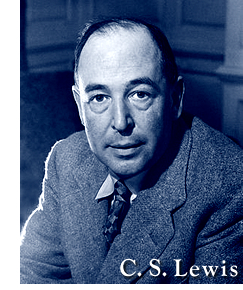
Obedience, wrote C.S. Lewis, is the key to all doors. Don’t think for a second you can heed the wrong voice, make the wrong choice, and escape the consequences. At the same time, obedience leads to a waterfall of goodness not just for you but for your children, your children’s children, and great-grandchildren.  It is God’s promise in Exodus 20:6 to “show love to a thousand generations of those who love me and keep my commandments.” As we obey God’s commands, we open the door for God’s favor!

From Glory Days

Night Light for Couples – The Greatest Gift


“Consider the ravens: They do not sow or reap… yet God feeds them. And how much more valuable you are than birds!” Luke 12:24

Although the battle for healthy self‐confidence is most often fought by women, many men also struggle with the issue. Unlike a woman, a man derives his sense of worth primarily from the reputation he earns in his job or profession. He draws emotional satisfaction from achieving in business, becoming financially independent, developing a highly respected skill, being the “boss,” or being loved and appreciated by his patients, clients, or business associates. When his career fails, however, look out.

His confidence often falters, and he becomes vulnerable. Depression, anger, and withdrawal are just some of his potential responses. Wives, here’s something to remember: More than anything, your man needs your respect. Compliment him on the qualities you most admire in him. Avoid comments that debase or embarrass him—especially in the eyes of others. As much as is reasonably possible, understand and support his career, but also create such an affirming atmosphere at home that he will be happy to leave career concerns at the office.

The better you understand your differences, the more you’ll appreciate the gift that is your mate.

Just between us…

  • (wife) What achievement are you proudest of?
  • (wife)
  • Are you satisfied with the current state of your career?
  • (wife) How can I help you with your career?
  • (wife) How can I show more respect for you and what you do?

(wife) Father, thank You for my husband—for the energy, skills, and ambitions you’ve placed in him. Help him to know that You love him no matter how he performs, and please help me show him the honor and respect I feel. Amen.

From Night Light For Couples, by Dr. James & Shirley Dobson

Charles Stanley – The School of Obedience


Proverbs 3:5-6

Welcome to God’s School of Obedience. Today and tomorrow we will be sitting in on a class called “Obedience 101.” For some of us, the lesson will be new material; for others, a good review. In this course, we are trying to master the essential elements of an obedient, God-honoring lifestyle. Here are a couple of things we must learn to do in order to achieve our goal:

Trust. A key requirement for obedience is trusting in God—this is something the Lord expects of us (Prov. 3:5). He knows obedient responses result from a foundation of faith, while most rebellion derives from a lack of it. Therefore, to live obedient lives, we must believe God is who He has revealed Himself to be. We must also accept His plans, methods, and timing. We can deepen our trust level by obeying and watching for the Lord’s response. Remember, God delights in blessing those who do what He says.

Wait. We seem to find the element of patience particularly challenging. When we don’t know what to do, we often rely on our own understanding, make a move, and then hope God will approve and bless it. That’s not scriptural. God is more than willing to show us what to do. He’s given us His Spirit as our teacher because He wants us to know how to proceed. We must wait in an attitude of trust until we are certain.

God assumes full responsibility for giving us direction in our lives. He desires to let us know each step along the way. But we must come to Him with a trusting heart and a willingness to wait before He reveals what to do next.

Bible in One Year: John 6-7

Our Daily Bread — Words of the Wise


Read: Ecclesiastes 9:13-18

Bible in a Year: Jeremiah 27-29; Titus 3

Words of the wise, spoken quietly, should be heard. nkjv —Ecclesiastes 9:17

My niece’s husband recently wrote these words on a social media site: “I would say a lot more online if it weren’t for this little voice that prompts me not to. As a follower of Jesus, you might think that little voice is the Holy Spirit. It isn’t. It’s my wife, Heidi.”

With the smile comes a sobering thought. The cautions of a discerning friend can reflect the wisdom of God. Ecclesiastes 9 says that the “words of the wise, spoken quietly, should be heard” (v. 17 nkjv).

Scripture warns us not to be wise in our own eyes or proud (Prov. 3:7; Isa. 5:21; Rom. 12:16). In other words, let’s not assume that we have all the answers! Proverbs 19:20 says, “Listen to advice and accept discipline, and at the end you will be counted among the wise.” Whether it is a friend, a spouse, a pastor, or a co-worker, God can use others to teach us more of His wisdom.

“Wisdom reposes in the heart of the discerning,” declares the book of Proverbs (14:33). Part of recognizing the Spirit’s wisdom is discovering how to listen and learn from each other. —Cindy Hess Kasper

Dear Lord, thank You for Your Word that teaches me how to love You and others. Thank You also for the people You place in my life to remind me of Your truth.

True wisdom begins and ends with God.

INSIGHT: The author of the book of Ecclesiastes is unknown. Many believe it to be Solomon, the legendary wise son of King David. However, we are only told that the author is “the Teacher, son of David, king in Jerusalem” (Eccl. 1:1). This description would fit King Solomon. J.R. Hudberg

Ravi Zacharias Ministry – My World


There is something about an inbox that subtly (and not so subtly) conveys the notion that we are important. With three missed calls on the cell phone, 18 unread e-mails, and two messages on the answering machine, we are pelted with the enticing idea: “Someone needs me!” The immediate ring, buzz, or pop-up note proclaiming the arrival of these new messages is somehow complimentary, even as it demands our attention—”Check your mailbox now! Someone is looking for you!”

The language of technology seems to further our sense of importance by bidding us to claim and personalize these worlds. I am only one click away from “my documents,” “my calendar,” “my favorites,” “my music,” “my pictures,” and “my shopping cart.” Anthropologist Thomas de Zengotita calls it “MeWorld.” In a book that examines the ways in which the world of media shapes our lives, de Zengotita portrays the technologically advanced, media-saturated West as a world filled with millions of individual “flattered selves,” each living in its own insulated, personalized world.(1) He believes the narcissism that comes from living in MeWorld has been fashioned and is constantly being fed by media representations in all areas of our lives, from those private representations that purport us the star (home videos, wedding photos, Facebook) to the public advertisements, television, and magazines that ever address us personally.

Subtle as it may be, the most precarious part of flattered living is that we gradually lose sight of both life and self. Despite all of the overt declarations on my computer, this is not, in fact, “my world.” Though I am flattered by the attention of MeWorld, I am not the center of all existence. French philosopher Rene Descartes outlined one reason why: “Now, if I were independent of all other existence, and were myself the author of my being…I should have given myself all those perfections of which I have some idea, and I should thus be God.” In other words, if I were truly independent, if the world truly revolved around me, why should I find in myself any imperfection at all? Is it not then irrational to live as if I am the center of the world?

The Christian worldview takes this inquiry one step further. Namely, how do I cultivate an awareness that this is God’s world in a world that reminds me at every turn that it is mine? The counter-cultural admission that we are not our own nor walking alone is certainly a starting point. A poem called “The Avowal” by Denise Levertov speaks to such an awareness:

As swimmers dare

to lie face to the sky

and water bears them,

as hawks rest upon air

and air sustains them,

so would I learn to attain

freefall, and float

into Creator Spirit’s deep embrace,

knowing no effort earns

that all-surrounding grace.

For the Christian, living both coherently and authentically involves an understanding of what truly undergirds us. Hence the fitting prayer of the hymnist: This is my Father’s world. O let me ne’er forget.

When Jesus looked to the disciples on one of his last nights with them on earth, he covered their hearts with a similar notion. “Do not let your hearts be troubled. Trust in God; trust also in me. In my Father’s house are many rooms; if it were not so, I would have told you. I am going there to prepare a place for you. And if I go and prepare a place for you, I will come back and take you to be with me that you also may be where I am. You know the way to the place where I am going… I am the way and the truth and the life.”(2)

As I Christian, there is some relief in confessing that my world is surely the Lord’s and all that is in it. It is also my starting point, the place where I begin the journey toward home. We are not flattered on our way to this house, but transformed by the very one who prepares the way.

Jill Carattini is managing editor of A Slice of Infinity at Ravi Zacharias International Ministries in Atlanta, Georgia.

(1) Thomas de Zengotita, Mediated: How the Media Shapes Your World and the Way You Live in It (New York: Bloomsbury Publishing, 2005), 21.

(2) John 14:1-4, 6.


Alistair Begg – Unaffected by Change


For I the Lord do not change Malachi 3:6

It is just as well for us that in all the variableness of life there is One whom change cannot affect, One whose heart can never alter, and on whose brow inconsistency can make no furrows.

All other things have changed-all things are changing. The sun grows dim with age; the world is growing old; the final chapter of the worn-out vesture has begun; the heavens and earth must soon pass away; they will perish-they shall grow old like a garment. But there is One who only has immortality, of whose years there is no end, and in whose person there is no change.

The delight that the sailor feels when, having been tossed about on the waves, he steps again upon the solid shore is the satisfaction of a Christian when, in all the changes of this distressing life, he rests the foot of his faith upon this truth-“I the LORD do not change.”

The stability that the anchor gives the ship when it has at last obtained a solid hold is like that which the Christian’s hope provides him when it fixes itself upon this glorious truth. With God “there is no variation or shadow due to change.”1

Whatever His attributes were in the past, they are now; His power, His wisdom, His justice, His truth are unchanged. He has forever been the refuge of His people, their stronghold in the day of trouble, and He is still their sure Helper.

He is unchanged in His love. He has loved His people with “an everlasting love”;2 He loves them now as much as ever He did, and when the creation itself is set free from its bondage to decay, His love will still endure.

Precious is the assurance that He does not change! The wheel of providence revolves, but its axle is eternal love.

Death and change are busy ever,

Man decays, and ages move;

But His mercy waneth never;

God is wisdom, God is love.

1) James 1:17

2) Jeremiah 31:3

The Family Bible Reading Plan

  • 2 Kings 15
  • Titus 1

Devotional material is taken from “Morning and Evening,” written by C.H. Spurgeon, revised and updated by Alistair Begg.

Charles Spurgeon – The exaltation of Christ


“Wherefore God also hath highly exalted him, and given him a name which is above every name: That at the name of Jesus every knee should bow, of things in heaven, and things in earth, and things under the earth; And that every tongue should confess that Jesus Christ is Lord, to the glory of God the Father.” Philippians 2:9-11

Suggested Further Reading: John 17:1-5

Look at him! Can your imagination picture him? Behold his transcendent glory! The majesty of kings is swallowed up; the pomp of empires dissolves like the white mist of the morning before the sun; the brightness of assembled armies is eclipsed. He in himself is brighter than the sun, more terrible than armies with banners. See him! See him! Oh! Hide your heads, you monarchs; put away your gaudy pageantry, you lords of this poor narrow earth! His kingdom knows no bounds; without a limit his vast empire stretches out itself. Above him all is his; beneath him many a step are angels, and they are his; and they cast their crowns before his feet. With them stand his elect and ransomed, and their crowns too are his. And here upon this lower earth stand his saints, and they are his, and they adore him; and under the earth, among the infernals, where devils growl their malice, even there is trembling and adoration; and where lost spirits, with wailing and gnashing of teeth for ever lament their being, even there, there is the acknowledgement of his Godhead, even though the confession helps to make the fire of their torments. In heaven, in earth, in hell, all knees bend before him, and every tongue confesses that he is God. If not now, yet in the time that is to come this shall be carried out, that every creature of God’s making shall acknowledge his Son to be “God over all, blessed for ever. Amen.” Oh! My soul anticipates that blessed day, when this whole earth shall bend its knee before its God willingly! I do believe there is a happy era coming, when there shall not be one knee unbent before my Lord and Master.

For meditation: For meditation: Those who refuse to acknowledge the Lord Jesus Christ in this life (2 John 7) will be forced to acknowledge him in the next—but it will be too late to do them any good. Those who trust in him now will enjoy praising him for ever.

Sermon no. 101

2 November (1856)

John MacArthur – The Hope That Assures


“Faith is the assurance of things hoped for” (Heb. 11:1).

Faith is the solid ground on which we stand as we await the fulfillment of God’s promises.

An elderly man who, on his seventy-fifth birthday, received an invitation to fly over the little West Virginia town in which he had spent his entire life. Although he had never before flown, the man accepted the gracious offer.

After circling the town for about twenty minutes, the pilot safely returned his passenger to the ground. The man’s grandson greeted him excitedly, asking, “Were you scared, Grandpa?” “No,” he replied sheepishly, “but I never did put my full weight down.”

Unlike that hesitant grandfather, true faith trusts fully in its object. For the Christian, that means resting in God and His promises. That’s the primary characteristic of each faithful individual listed in Hebrews 11. They all believed God and responded accordingly.

People often confuse faith with a wistful longing that something, however unlikely, will come to pass in the future. But “assurance” in Hebrews 11:1 speaks of essence and reality— the real thing, as opposed to mere appearance. Faith, then, involves absolute certainty.

For example, the Old Testament saints had the promise of a coming Messiah who would take away sin. They believed God, even though their understanding of Messiah was incomplete and somewhat vague. They knew their hopes would be fulfilled, and that assurance dominated their lives.

It’s the same for New Testament believers. Peter said, “Though you have not seen [Christ], you love Him, and though you do not see Him now, but believe in Him, you greatly rejoice with joy inexpressible and full of glory, obtaining as the outcome of your faith the salvation of your souls” (1 Pet. 1:8-9).

Man’s natural tendency is to trust only in the things he can see, hear, touch, or taste. But our physical senses may lie, whereas God cannot (Titus 1:2). Far better to believe God and trust in His promises.

Suggestions for Prayer

Which promises of God are especially meaningful to you today? Thank Him for them and reaffirm your commitment to living on the basis of His Word.

For Further Study

Skim Hebrews 11 and note all the divine promises you find there. To gain a fuller understanding of each one, find other Scripture references that mention the same promises.


Joyce Meyer – Let the Holy Spirit Guide You


For this God is our God forever and ever; He will be our guide [even] until death. —Psalm 48:14

Often when my husband, Dave, and I travel, we hire a guide to show us the best and most important sites to see. Once, however, we decided to explore by ourselves; that way we could do what we wanted to, when we wanted to.

We quickly found that our independent trips were nearly wasted. We often spent a large part of the day getting lost and then trying to find our way again. We have found it to be the best use of our time to follow a guide rather than wandering aimlessly to find places ourselves.

I believe this example relates to how we are in life. We want to go our own way so we can do what we want to do, when we want to do it, but we end up getting lost and wasting our lives. We need the Holy Spirit guiding us through every day of our time on this earth. God is committed to guide us even until we leave this life, so it seems important to learn how to hear what He is telling us.

The Holy Spirit knows both the mind of God and God’s individual plan for you. His road map for you is not necessarily like anybody else’s, so it doesn’t work to try to pattern your life after someone else or what he or she has heard from God. God has a unique plan for you, and the Holy Spirit knows what it is and will reveal it to you.

Perhaps you are like I was and have wasted many years walking your own way without seeking God’s guidance. The good news is that it’s not too late to turn and go in a new direction—toward God’s plan and purpose for your life. It is not too late to learn how to hear from God. If you are sincerely willing to obey God, He will guide you on an exciting journey of learning to hear from Him every day of your life.

Trust in Him: Following a guide requires trusting someone or something other than yourself to lead the way. God will never fail you, so you can trust Him to be your Guide in life.

From the book Trusting God Day by Day by Joyce Meyer

Campus Crusade for Christ; Bill Bright – Judging the World


“For He has set a day for justly judging the world by the man He has appointed, and has pointed Him out by bringing Him back to life again” (Acts 17:31).

Why does God command men and women to repent? And why does He expect you and me to relay His message to them?

The answer is simple: because “He has set a day for justly judging the world.” And if people refuse to be penitent and thus become pardoned, they must be condemned.

“Justly,” of course, can be interpreted: “according to the rules of strict justice.” And who will do the judging? The man God has appointed – His only Son, Jesus Christ; the one He has pointed out to us clearly by bringing Him back to life again.

Jesus, you will remember, declared that He would judge the nations (John 5:25,26and Matthew 25). God confirmed the truth of those declarations by raising Him from the dead – giving His sanction to what the Lord Jesus has said, for surely God would not work a miracle on behalf of an imposter.

What comfort and help can you and I receive from these truths today? Surely, this is a reminder that God is still on the throne; He is in control; nothing is going on in the world without His knowledge and consent.

Further, we are reminded of God’s justice, which assures us that He will always do right in behalf of His children. That falls right in line with Romans 8:28, of course, which concerns all things working together for our good.

Bible Reading: Psalm 9:7-10

TODAY’S ACTION POINT: World turmoil will not upset me, for I know the God who sits on the throne – and who rules over all

“For He has set a day for justly judging the world by the man He has appointed, and has pointed Him out by bringing Him back to life again” (Acts 17:31).

Why does God command men and women to repent? And why does He expect you and me to relay His message to them?

The answer is simple: because “He has set a day for justly judging the world.” And if people refuse to be penitent and thus become pardoned, they must be condemned.

“Justly,” of course, can be interpreted: “according to the rules of strict justice.” And who will do the judging? The man God has appointed – His only Son, Jesus Christ; the one He has pointed out to us clearly by bringing Him back to life again.

Jesus, you will remember, declared that He would judge the nations (John 5:25,26and Matthew 25). God confirmed the truth of those declarations by raising Him from the dead – giving His sanction to what the Lord Jesus has said, for surely God would not work a miracle on behalf of an imposter.

What comfort and help can you and I receive from these truths today? Surely, this is a reminder that God is still on the throne; He is in control; nothing is going on in the world without His knowledge and consent.

Further, we are reminded of God’s justice, which assures us that He will always do right in behalf of His children. That falls right in line with Romans 8:28, of course, which concerns all things working together for our good.

Bible Reading: Psalm 9:7-10

TODAY’S ACTION POINT: World turmoil will not upset me, for I know the God who sits on the throne – and who rules over all

Presidential Prayer Team; A.W. – Miracle Faith


The book Miracles in American History by Susie Federer tells 32 stories of answered prayers for the nation and its leaders during difficult circumstances. Desperate situations during the French and Indian War, the Revolution, the War of 1812, the Civil War, World Wars I and II and the Korean War all have amazing stories of God’s response to prayers. Dire situations were changed through His intervention.

Whatever you ask in prayer, believe that you have received it, and it will be yours.

Mark 11:24

This should not be surprising when you consider today’s verse. Jesus cursed a fig tree the day before and it withered. The disciples were amazed, but He told them they only needed to have faith. He instructed them to believe whenever they prayed, and they would receive. Miracles can happen with faith, belief and prayer.

Would you like to see an amazing turnaround in the situation of this nation? Start praying and believing for its leaders today. Pray also for your fellow citizens to come to know Christ and for a revival to begin in America.

Recommended Reading: Mark 11:11-14, 20-24

Greg Laurie – Dropped


One day David asked, “Is anyone in Saul’s family still alive–anyone to whom I can show kindness for Jonathan’s sake?”—2 Samuel 9:1

He was only five years old when his father and grandfather were killed in battle. His life of privilege and potential up to that point had not prepared him for the hard life he would face in the future. He was a little prince named Mephibosheth, and he was being raised by his godly father, Jonathan.

But dark clouds were gathering in his small world, and in a moment, through no fault of his own, his life would forever change.

Jonathan saw it coming. He knew that his father, Saul, was getting crazier by the day, so he started making preparations for the future. He made his friend David promise that he would take care of Jonathan’s descendents. David not only made that promise to Jonathan, but in doing so, he was making it to Saul as well.

When news hit the palace that Mephibosheth’s father and grandfather were killed in battle, his nurse was in a hurry to get Mephibosheth into hiding. She dropped him, and the little child was forever disabled. In fact, his name Mephibosheth means “a shameful thing,” although there is nothing shameful about having a disability. (The only thing shameful is giving a child a name like that.) Mephibosheth was looked down on and was thought of as less than others. He was dropped in life.

Maybe, like Mephibosheth, you have been dropped in life. Maybe as a child you were mistreated, neglected, or abused. Maybe you were forgotten. Maybe you weren’t given a lot of hope when you were growing up.

The good news is that God specializes in taking people who have been dropped in life and picking them up again. I was dropped in life, but God reached out and picked me up. And He can do that for you as well.

Max Lucado – A Rousing Ovation


Scott Norwood, a former NFL champion with the Buffalo Bills, walked off the field with his head down. He missed the kick and lost the game. In spite of the loss the team was honored with a turnout of thousands of people cheering them on. Scott stayed in the background but fans had something else in mind. “We want Scott!” The chant grew to a rousing ovation. He missed the kick, but they made sure he knew he was still a part of their community.

In Hebrews 12:1, the Bible says we are surrounded by a great cloud of witnesses. Thousands upon thousands of saved saints are looking down upon us. Abraham. Peter. David. Paul. Joshua. Your grandpa, your uncle, your neighbor, your coach. They have seen God’s great grace; and they are all pulling for you. Do you hear them? They are chanting your name. “Don’t quit!” “It’s worth it!” “Try again!”

From Glory Days

Night Light for Couples – Body and Spirit


“Don’t be afraid; you are worth more than many sparrows.” Matthew 10:31

In addition to society’s obsession with physical beauty, women face other obstacles to maintaining confidence, including disrespect for wives and mothers who have chosen the traditional homemaking role. Furthermore, many wives, especially mothers of small children, feel isolated at home. Their husbands are physically and emotionally “elsewhere,” pursuing careers, hobbies, or both. The result is often devastating, as women tend to derive their sense of self‐worth from the emotional closeness achieved through relationships.

So what’s the solution? We encourage you as the husband to be present with your wife in body and spirit. Set aside time for her. Listen to her. Romance her. Show her she’s still your one‐and‐only sweetheart. On the other hand, don’t expect to fill all of her emotional needs. Encourage her to develop meaningful friendships with other women and reach out to others in your community.

“Honor one another above yourselves.” This simple phrase from the Bible (Romans 12:10) is the key to affirming the infinite worth of your spouse.

Just between us…

  • (husband) When you’re with other people, do you sometimes think,

“They wouldn’t like me if they really knew who I am?”

  • (husband) Do you feel that I’m “present with you,” or do I often seem preoccupied?
  • (husband) What can I do to build your confidence this week?
  • (husband) How can I support you in establishing friendships?

(husband) Dear God, thank You for the great worth You see in my wife. I see it, too, and I want to honor and cherish her more every day. Help me to bless her and make her strong in this way. Amen.

From Night Light For Couples, by Dr. James & Shirley Dobson

C.S. Lewis Daily – Today’s Reading


On fasting

The problem about avoiding our own pain admits a similar solution. Some ascetics have used self-torture. As a layman, I offer no opinion on the prudence of such a regimen; but I insist that, whatever its merits, self-torture is quite a different thing from tribulation sent by God. Everyone knows that fasting is a different experience from missing your dinner by accident or through poverty. Fasting asserts the will against the appetite—the reward being self-mastery and the danger pride: involuntary hunger subjects appetites and will together to the Divine will, furnishing an occasion for submission and exposing us to the danger of rebellion. But the redemptive effect of suffering lies chiefly in its tendency to reduce the rebel will. Ascetic practices, which in themselves strengthen the will, are only useful in so far as they enable the will to put its own house (the passions) in order, as a preparation for offering the whole man to God. They are necessary as a means; as an end, they would be abominable, for in substituting will for appetite and there stopping, they would merely exchange the animal self for the diabolical self.

From The Problem of Pain

Compiled in Words to Live By

Marriage : A Family Affair – Dr Dobson

I have written you several times in recent months about the tragic assault on the institution of the family, emanating from the ruling by the U.S. Supreme Court that legalized same-sex marriage. The repercussions of that decision and the inevitable fallout from it are staggering.

This month, however, I won’t discuss the collapse of traditional marriage further. Instead, I want to address the marvelous institution itself. Who can comprehend the mysterious bonding that enables a man and woman to withstand the many storms of life and remain best friends “til death do us part?” This phenomenon is so remarkable that the Apostle Paul, writing under the inspiration of the Holy Spirit, described marriage as symbolizing Jesus Christ’s unfathomable love for His bride, the Church. We could spend a month or two just thinking about the implications of that relationship. It also makes us shudder at the audacity of five arrogant Justices daring to undermine and redefine that divine plan for humanity. We read in Matthew 19:6: “Therefore, what God has joined together, let man not separate.”

As wonderful as marriage is, too many of today’s families end on a less inspirational note. I’ve seen a flurry of these wounded, dying relationships in recent months, and I’ve witnessed anew the agony that divorce inflicts on its victims. Everyone loses when a marriage turns sour. In fact, I read recently that the parents of divorcing children typically suffer as much as their grown sons and daughters. In-laws can do nothing but stand and watch as two people they love systematically claw one another to pieces, leaving their broken grandchildren in their wake. Certainly, there are no winners when a marriage begins to unravel.

I came across a secular book a few years ago that expressed the pain associated with divorce more dramatically than anything I’ve read. It is entitled, Death of a Marriage, by Pat Conroy. I’ve obtained permission to quote a short passage from this book in the hope of helping someone who is contemplating a divorce. If you are such a person, and you’ve been asking the Lord for guidance, perhaps this is His answer. If you know someone who is considering that decision, you might give him or her a copy of this letter. Urge that person to beware! There is pain down that well-trodden road, as Mr. Conroy states so eloquently. This is what he wrote:


Each divorce is the death of a small civilization. Two people declare war on each other, and their screams and tears infect their entire world with the bacilli of their pain. The greatest comes from the wound where love once issued forth. I find it hard to believe how many people now get divorced, how many submit to such extraordinary pain. For there are no clean divorces. Divorces should be conducted in surgical wards. In my own case, I think it would have been easier if Barbara had died. I would have been gallant at her funeral and shed real tears – far easier than staring across a table, telling each other it was over. It was a killing thing to look at the mother of my children and know that we would not be together for the rest of our lives. It was terrifying to say goodbye, to reject a part of my own history.

When I went through my divorce I saw it as a country, and it was treeless, airless; there were no furloughs and no holidays. I entered without passport, without directions and absolutely alone. Insanity and hopelessness grew in that land like vast orchards of malignant fruit. I do not know the precise day that I arrived in that country. Nor am I certain that you can ever renounce your citizenship there.

Each divorce has its own metaphors that grow out of the dying marriage. One man was inordinately proud of his aquarium. He left his wife two weeks after the birth of their son. What visitors noticed next was that she was not taking care of the aquarium. The fish began dying. The two endings became linked in my mind.

For a long time I could not discover my own metaphor of loss – until the death of our dog, Beau, became the irrefutable message that Barbara and I were finished.

Beau was a feisty, crotchety dachshund Barbara had owned when we married. It took a year of pained toleration for us to form our alliance. But Beau had one of those illuminating inner lives that only lovers of dogs can understand. He had a genius for companionship. To be licked by Beau when you awoke in the morning was a fine thing.

On one of the first days of our separation, when I went to the house to get some clothes, my youngest daughter, Megan, ran out to tell me that Beau had been hit by a car and taken to the animal clinic. I raced there and found Ruth Tyree, Beau’s veterinarian. She carried Beau in to see me and laid him on the examining table.

I had not cried during the terrible breaking away from Barbara. I had told her I was angry at my inability to cry. Now I came apart completely. It was not weeping; it was screaming; it was despair.

The car had crushed Beau’s spine, the X-ray showing irreparable damage. Beau looked up at me while Dr. Tyree handed me a piece of paper, saying that she needed my signature to put Beau to sleep.

I could not write my name because I could not see the paper. I leaned against the examining table and cried as I had never cried in my life, crying not just for Beau but for Barbara, the children, myself, for the death of a marriage, for inconsolable loss. Dr. Tyree touched me gently, and I heard her crying about me. And Beau, in the last grand gesture of his life, dragged himself the length of the table on his two good legs and began licking the tears as they ran down my face.

I had lost my dog and found my metaphor. In the X-ray of my dog’s crushed spine, I was looking at a portrait of my broken marriage. But there are no metaphors powerful enough to describe the moment when you tell the children about divorce. Divorces without children are minor-league divorces. To look into the eyes of your children and to tell them that you are mutilating their family and changing all their tomorrows is an act of desperate courage that I never want to repeat. It is also their parents’ last act of solidarity and the absolute sign that the marriage is over. It felt as though I had doused my entire family with gasoline and struck a match.

The three girls entered the room and would not look at me or Barbara. Their faces, all dark wings and grief and human hurt, told me that they already knew. My betrayal of these young, sweet girls filled the room.

They wrote me notes of farewell, since it was I who was moving out. When I read them, I did not see how I could ever survive such excruciating pain. The notes said, “I love you, Daddy. I will visit you.” For months I would dream of visiting my three daughters locked in a mental hospital. The fear of damaged children was my most crippling obsession.

For a year, I walked around feeling as if I had undergone a lobotomy. There were records I could not listen to because of their association with Barbara, poems I could not read from books I could not pick up. There is a restaurant I will never return to because it was the scene of an angry argument between us. It was a year when memory was an acid.

I began to develop the odd habits of the very lonely. I turned the stereo on as soon as I entered my apartment. I drank to the point of not caring. I cooked elaborate meals for myself, then could not eat them.

I had entered into the dark country of divorce, and for a year I was one of its ruined citizens. I suffered. I survived. I studied myself on the edge, and introduced myself to the stranger who lived within.

Barbara and I had one success in our divorce, and it is an extraordinarily rare one. As the residue of anger and hurt subsided with time, we remained friends. We saw each other for lunch occasionally, and I met her boyfriend, Tom.

Once, when I was leaving a party, I looked back and saw Barbara and Tom holding hands. They looked very happy together, and it was painful to recognize it. I wanted to go back and say something to Tom, but I mostly wanted to say it to Barbara. I wanted to say that I admired Tom’s taste in women.

************************************************************************

These powerful words bring tears to my eyes every time I read them. They become vivid reminders of the pain expressed by families as they are disintegrating. As Conroy wrote so eloquently, there is no agony like this one, especially for a husband or wife who has been rejected, betrayed, and utterly abandoned. Self-worth is shattered and life loses its meaning. Seeing one’s children cry themselves to sleep night after night is unbearable. Sorrow sweeps over him or her like a tidal wave.

As I wrote in one my books, Love Must Be Tough, a divorce usually involves one partner who is desperately trying to hang on and another who wants out. It often begins with another lover who appears to offer exhilaration and unconditional love. That promise is usually an illusion because the thrill of infidelity is always temporary. But one doesn’t think clearly at such a time. Make no mistake about it: divorce is a tragedy for both parties involved.

Conroy’s description of his divorce helps to explain why Family Talk is so thoroughly committed to the concept of lifelong marriage. That’s the way it was intended by the Creator when He laid out the blueprint for the family. Of course, we must acknowledge that divorces do occur and many of my readers have gone through this experience. In those cases, we must do all we can to care for couples that are going through divorces and to pray for them and help them deal with the fallout.

Marital conflicts are not the only problems that are brought to Family Talk, of course. We hear about almost every kind of difficulty in the period of a single month. I am thankful, however, for the privilege of serving people in distress. Conroy wrote that to be licked by his dog, Beau, in the morning, was a fine thing. I say that to be available for desperate human beings in their hour of greatest need is the finest of experiences.

Thank you for making it possible through your contributions for us to reach out to families in crisis. We will continue to offer our meager fishes and loaves to those who seek our help as long as you stand with us.

Meanwhile, may I urge those of you who are married to cling tightly to each other? I’ll end with one last illustration that may be helpful to those whose marriages are in trouble. I used to enjoy fishing with my elderly father-in-law during the last five years of his life. My own dad had gone on to heaven by that time, and Joe and I had become great friends. On one occasion, we went to a scenic lake in the Sierras early one morning and rented rowboats. He was in one craft and I in another. We began paddling our separate boats side by side while simultaneously trolling our lines. It was a large lake and the wind was blowing briskly, making the waters choppy. Before long, Joe and I realized we were drifting apart. After about an hour, he wound up on the west bank and I had drifted a mile away to the east. We couldn’t even hear each other shouting. I sat there thinking about what had happened to us, and it occurred to me how relevant our situation was to many married couples.

Often, two people who are deeply in love stand side by side at an altar and pledge before God to remain committed to each other for the rest of their lives. But when the honeymoon is over and they return to a daily routine, they get in separate rowboats and begin bouncing along a choppy sea. The pace at which they run, the pressures of living and the lack of money, cause them to drift in opposite directions. Before they know it, they are far apart and can’t even hear each other’s voices. It happens ever so quickly! They had wanted to remain close, and they miss the romantic relationship that was once so precious to them. The wife is especially vulnerable to the changes that have occurred. But the wind and the waves take them in opposite directions.

That is what happened to Shirley and me in our first years together. Early on, we were both teaching school, and I was carrying a heavy load in graduate school. I was studying at night and Shirley was preparing for the next day. I suddenly realized that we were drifting away from each other. There was no danger to the marriage, but we were not as close as we had once been. That night, I asked my wife to take a walk with me. There, under a bright moon, I told Shirley that we were too busy for each other, and I didn’t like it. I announced that I was going to take a semester off from my professional training so that we could spend those months reconnecting. It was one of the wisest decisions I ever made. By putting Shirley first, we bonded in a way that rekindled the romantic fires. On August 27th of this year, we celebrated our 55th wedding anniversary, and yes, our boats are still sailing side by side. I would rather spend an evening with Shirley than any other human being in the world!

As you know, the culture in which we live is more hostile to marriage and the family than ever before. If you don’t nurture and water your relationship, the delicate little flower will die. That is a preventable tragedy if there ever was one. How can you keep your rowboats in proximity? By rowing like crazy. ROW! ROW! ROW!

Let me hear from you when time permits.

Sincerely,

James C. Dobson, Ph.D.

President and Founder

Family Talk

Charles Stanley – Responding to God’s Love


John 3:16-21

God is love. Most likely, we have heard these wonderful words from 1 John 4:8. But do we really understand what they mean? John 3:16 sums up the truth they convey—namely, that because God deeply loved vile, sinful, rebellious humanity, He came to earth in human flesh and died a gruesome death to save us. This is no shallow love.

Some people question Jesus’ sacrifice, though. They think, Certainly the Lord could have come up with a different way to offer salvation. He is God, after all, so shouldn’t He be able to do all things? They fail to consider two of His unchangeable attributes.

First, the Lord is holy by nature. This means that He cannot look upon sin with approval, so He must condemn transgression. Second, God is just. As a result, all wrongdoing—without exception—must be punished (Rom. 6:23). The Lord’s every action must be consistent with His nature.

We all fall short of God’s perfect holiness, and He is unable to fellowship with us in our fallen state (3:23). But our heavenly Father desires an ever- lasting relationship with us. So He provided the solution by sending His Son Jesus to earth—to live as a man and die on the cross. This is the ultimate expression of love. As 1 John 4:10 states, “In this is love, not that we loved God, but that He loved us and sent His Son to be the propitiation for our sins.”

The wise will accept the free gift of salvation. That is, they will receive Jesus as their personal Lord and Savior and commit to follow Him. How do you choose to respond to His amazing love?

Bible in One Year: John 4-5

Our Daily Bread — Water and Life


Read: John 4:1-15

Bible in a Year: Jeremiah 24-26; Titus 2

Jesus answered, “Everyone who drinks this water will be thirsty again, but whoever drinks the water I give them will never thirst.” —John 4:13-14

As Dave Mueller reached down and turned the handle, water rushed from the spigot into a blue bucket. Around him people applauded. They celebrated as they saw fresh, clean water flowing in their community for the first time. Having a clean source of water was about to change the lives of this group of people in Kenya.

Dave and his wife, Joy, work hard to meet people’s needs by bringing them water. But they don’t stop with H2O. As they help bring people clean water, they also tell them about Jesus Christ.

Two thousand years ago, a man named Jesus stood at a Samaritan well and talked with a woman who was there to get clean drinking water for her physical health. But Jesus told her that what she needed even more than that was living water for her spiritual health.

As history has marched on and humanity has become more sophisticated, life still filters down to two truths: Without clean water, we will die. More important, without Jesus Christ, the source of living water, we are already dead in our sins.

Water is essential to our existence—both physically with H2O and spiritually with Jesus. Have you tasted of the water of life that Jesus, the Savior, provides? —Dave Branon

Thank You, Jesus, for being our living water. Thank You for Your willingness to die on the cross and for Your power to rise from the dead in order to provide us that water.

Only Jesus has the living water to quench our spiritual thirst.

INSIGHT: First-century Jews avoided traveling through Samaria. Making the journey from Galilee to Judea meant crossing the Jordan River and following the east side before re-crossing toward Jerusalem to circumvent Samaria. Why? Because Samaritans were seen as ceremonially unclean. Jesus, however, had no such qualms and broke tradition to meet a Samaritan woman in need. Bill Crowder