Tag Archives: Prayer

Presidential Prayer Team; C.P. – Sonlight


A scientific website says, “The sun is as bright as four trillion 100-watt light bulbs.” But the sun has nothing on the Son of God. How beautiful that eternal city will be, with the glory of God lighting up the place!

The city has no need of sun or moon to shine on it, for the glory of God gives it light.

Revelation 21:23

Revelation 21 describes wonderful things about the New Jerusalem: made of pure gold with walls of precious jewels, no night, nothing unclean. But the most marvelous thing of all is the very presence of God. “He will dwell with them, and they will be his people, and God himself will be with them as their God. He will wipe away every tear from their eyes, and death shall be no more, neither shall there be mourning, nor crying, nor pain anymore, for the former things have passed away.” (Revelation 21:3-4)

No one likes to think of the fate of the unsaved (Revelation 21:8), but they need prayer. Intercede for all those who have yet to yield to Jesus as Lord – the true light of this world and the one to come.

Recommended Reading: I Peter 5:1-11

Greg Laurie – Distorting God’s Word


Now the serpent was more cunning than any beast of the field which the Lord God had made. And he said to the woman, “Has God indeed said, ‘You shall not eat of every tree of the garden’?” —Genesis 3:1

A story is told of the comedian W. C. Fields and how, shortly before he died, he was flipping through the pages of a Bible. When asked what he was doing, Fields replied, “Looking for loopholes.”

In the same way, I think the Devil has been reading the Bible for a long time, looking for loopholes. In the Garden of Eden, he twisted the Scriptures. He took God’s words to Adam, which invited him to eat from every tree in the Garden (with one exception), and he twisted them into a prohibition designed to cast doubt on God’s goodness.

He said to Eve, in effect, “If God really loved you, He would let you eat from any tree you want. But because He is saying that you can’t eat from that tree, He clearly doesn’t love you.”

The Devil’s first words to Eve ended in a question mark, designed to cast doubt on God’s love: Has God indeed said . . . ? He was quoting God, yet he completely twisted what God said.

The same was true of Satan’s temptation of Jesus, where he said, “If You are the Son of God, throw Yourself down [from the temple]. For it is written: ‘He shall give His angels charge over you,’ and, ‘In their hands they shall bear you up, lest you dash your foot against a stone’ ” (Matthew 4:6). How interesting. The Devil was quoting the Scriptures, though he left out part of the original text.

Notice that with Eve, he questioned God’s Word. He didn’t deny that God had spoken; he simply questioned whether God had really said what Eve thought He had said. That is what the Devil will do with God’s Word. He will misquote it. He will mischaracterize it. And he will distort it.

Max Lucado – A Trashy World


We live in a trashy world. Unwanted garbage comes our way on a regular basis. Haven’t you been handed a trash sack of mishaps and heartaches? Surely you have. What are you going to do with it?

You have several options. You could take the trash bag and cram it under your coat and pretend it isn’t there. But you and I know you won’t fool anyone. Besides, sooner or later it’ll start to stink. Or you could disguise it. Paint it green, put it on the front lawn and tell everyone it’s a tree. Again, no one will be fooled. So what will you do?

If you follow the example of Christ, you’ll learn to see tough times differently. God loves you the way you are, but he refuses to leave you that way. He wants you to have a hope-filled heart—just like Jesus!

From Just Like Jesus

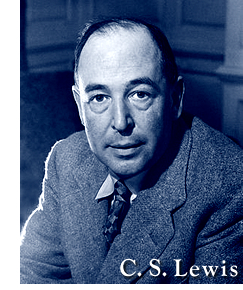
C.S. Lewis Daily – On kindness


Love is something more stern and splendid than mere kindness. For about a hundred years we have so concentrated on one of the virtues—“kindness” or mercy—that most of us do not feel anything except kindness to be really good or anything but cruelty to be really bad. Such lopsided ethical developments are not uncommon, and other ages too have had their pet virtues and curious insensibilities. And if one virtue must be cultivated at the expense of all the rest, none has a higher claim than mercy. . . . The real trouble is that “kindness” is a quality fatally easy to attribute to ourselves on quite inadequate grounds. Everyone feels benevolent if nothing happens to be annoying him at the moment. Thus a man easily comes to console himself for all his other vices by a conviction that “his heart’s in the right place” and “he wouldn’t hurt a fly,” though in fact he has never made the slightest sacrifice for a fellow creature. We think we are kind when we are only happy: it is not so easy, on the same grounds, to imagine oneself temperate, chaste, or humble. You cannot be kind unless you have all the other virtues. If, being cowardly, conceited and slothful, you have never yet done a fellow creature great mischief, that is only because your neighbour’s welfare has not yet happened to conflict with your safety, self-approval, or ease. Every vice leads to cruelty.

From The Problem of Pain

Compiled in Words to Live By

Night Light for Couples – Black Sunday


“If he sins against you seven times in a day, and seven times comes back to you and says, ‘I repent,’ forgive him.” Luke 17:4

Every family has moments they’d rather forget—moments that later call for understanding and forgiveness. When our children lived at home, we found that Sunday was often the most frustrating day of the week, especially during the “get ’em ready for church” routine. But Black Sunday was uniquely chaotic!

Jim and I began the day by getting up late, which meant that everyone had to rush to prepare for church. Then there was the matter of spilled milk at breakfast and the black shoe polish on the floor. Finally, Ryan, who was dressed first, managed to slip out the back door and get himself dirty from head to toe. As these irritations mounted, the criticism and accusations flew back and forth. At least one spanking was delivered and another three or four were promised.

After the Sunday evening service we called the family together. We described the day we’d had and asked each person to forgive us for our part in it. We also gave each member of the family a chance to express his or her feelings. Ryan was given his first shot, and he fired it at me. “You’ve been a real grouch today, Mom!” he said with feeling. “You’ve blamed me for everything all day long.” Danae then poured out her hostilities and frustrations. Finally, Jim and I had an opportunity to explain the tensions that had caused our overreaction. It was a valuable time of ventilation and honesty that drew us together once more. We then had prayer as a family and asked the Lord to help us live and work together in love and harmony.

No matter how hard we try, we will experience times when we fail to live up to our Christian principles. When those times arrive, discussion and forgiveness are the best methods for soothing wounded relationships. I urge you at those moments to actively seek forgiveness from each other and from God and freely offer forgiveness in return.

While you’re at it, forgive yourself. If God can post a “No Fishing” sign by the sea where your sins are thrown, then so can you and I. –  Shirley M Dobson

From Night Light For Couples, by Dr. James & Shirley Dobson

Charles Stanley – The Peace of Wisdom


Proverbs 3:13-26

Godly wisdom can be defined as the capacity to see things the way the Lord sees them and to respond according to His principles. One of the great benefits of this mindset is peace. Generally, when life’s running smoothly and all is well with us and our loved ones, we have no trouble experiencing contentment. But often when situations become difficult, God’s perspective eludes us, and our peace is rapidly replaced with stress, anxiety, and fear.

To view a difficult circumstance from the Lord’s perspective, we need to see it encompassed by the boundaries of His character and attributes. Even when the particulars of life are beyond our control, the One who rules the universe remains sovereign over all things—down to the smallest details. He loves us unconditionally and always works for our best interest. Therefore, if He has allowed a situation, there is a divine plan and reason, and the outcome will be for our good and His glory.

That wise perspective will lead to a godly response—complete confidence and trust in the Lord despite any pain or hardship. Because of the indwelling Spirit, we have the assurance that He is more than adequate for whatever comes our way, which means we are sufficient in Him.

When difficulty hits, don’t let sound wisdom vanish from your sight. Keep your eyes on the Lord. By seeing every situation through His eyes, you can rest in His wisdom and good purposes. Then stress will lift, anxiety will be replaced with peace, and confidence in the Lord will silence your fears.

Our Daily Bread — Access To God


Read: 1 John 5:6-15
Bible in a Year: 1 Kings 6-7; Luke 20:27-47

Let us therefore come boldly to the throne of grace, that we may obtain mercy and find grace to help in time of need. —Hebrews 4:16

Technology is a blessing in so many ways. Need a bit of information about a health problem? All you have to do is access the Internet where you instantaneously get a list of options to guide your search. Need to contact a friend? Just send a text, email, or Facebook post. But technology can also be frustrating at times. The other day I needed to access some information in my bank account and was asked a list of security questions. Unable to recall the exact answers, I was blocked from my own account. Or think of the times when an important conversation is cut off because of a dead cellphone battery, with no way to reconnect until you find a plug to recharge it.

All of this makes me delighted with the reality that when I need to access God in prayer, there are no security questions and no batteries required. I love the assurance that John gives when he says, “Now this is the confidence that we have in Him, that if we ask anything according to His will, He hears us” (1 John 5:14).

God is always accessible, for He never slumbers nor sleeps! (Ps. 121:4). And thanks to His love for us, He is waiting and ready to listen. —Joe Stowell

Lord, thank You for desiring communication with me and for the reassurance that You are indeed listening and ready to help in time of need. Teach us to come to You with confidence in Your attentive love for us.

God is always accessible in our time of need.

INSIGHT: In this letter John refutes false teachers who deny that Jesus is the Christ (2:22). He says, “Jesus Christ was revealed as God’s Son by his baptism in water and by shedding his blood on the cross” (5:6 NLT).

Ravi Zacharias Ministry – Truly Human


“What does it mean to be human?” has been the inquiring theme of more than a few journals, conferences, and special reports. It is a question that is considered from anthropological, theological, and biological perspectives, from within medical, ethical, social, and spiritual circles. Yet regardless of the examiner, any plumbing of the depths of the nature of humanity is a discovery that the implications are as far-reaching and intricate as the subject itself.

Generation after generation, voices that have spoken to the question of human nature often reflect something of the paradoxical character of humanity. Plato described human life in terms of the dualistic qualities he observed. While the mind is representative of the intellectual soul, the stomach is an appetitive beast that must be tamed. In terms less dividing of mind and body, Aleksandr Solzhenitsyn wrote of the human propensity for both compassion and cruelty at once. “The line dividing good and evil cuts through the heart of every human being.”(1) Speaking in the 17th century, Blaise Pascal made note of further dueling extremes present within humanity. “For after all, what is man in nature? A nothing in relation to infinity, all in relation to nothing, a central point between nothing and all—and infinitely far from understanding either… He is equally incapable of seeing the nothingness out of which he was drawn and the infinite in which he is engulfed.”(2)

What does it mean to be human? The seeming paradoxes in and around us make the question difficult to answer. We may sense at times within us contradiction and inconsistency—a desire to be a good friend beside the wherewithal to manipulate, the intention to be a good neighbor beside the tendency to walk away without helping. I find it quite reminiscent of Aslan’s response to the children in Prince Caspian: “‘You come of the Lord Adam and the Lady Eve,’ said Aslan. ‘And that is both honour enough to erect the head of the poorest beggar, and shame enough to bow the shoulders of the greatest emperor in earth.’”(3)

As a Christian, I hold my own inconsistencies in the merciful hope of Christ as mediator. The Christian story presents Christ as the truly human Son of God in whom and for whom all creation was made. Stepping into creation, Christ has come to restore the image of true humanity, drying the tears of a broken world, reviving the image of God within us, overcoming the enemies of sin and death.

In the company of Pascal and Solzhenitsyn, I find Christ to provide the only grounding that offers hope for the contradictions within. Far more than a hope merely for the future or an escape vehicle from present reality, Christ redeems the tension within us, the tension between my reductionistic imagination of my human identity and the imaginative hope of living into my identity as a redeemed child of God. We are assured that the promise is ours: “Just as we have borne the image of the man of dust, we will also bear the image of the man of heaven.” For Christ is not only at work redeeming a fallen humanity, resuscitating our nature with his own, standing as the mediator who lifts us to God. Christ came to unite humanity with God so that we can be truly human as he is human.

This is far more hopeful news than many other worldviews and self-help plans impart. For if true humanity is a humanity fully united to its creator, then the possibility is ours. Acting on our own power and authority, independent of God, we merely expose our alienation from God and from our true selves. We fail to know what it means to be most fully human. But united to Christ through faith we are united to another nature entirely. Writes one disciple, “[God] has given us his very great and precious promises, so that through them you may participate in the divine nature and escape the corruption in the world.”(4)

While Christ is the one who makes our resuscitation possible, the one who restores in us the image of God, the process of reviving is also something we actively take hold of as human beings united to the Son. In other words, to live as children made in God’s image and united to Christ is not a static hope, but an active calling made possible by the one who mediates the very hope of what it means to be human. “So then,” in the words of Paul, “live in Christ, rooted and built up in him, strengthened in the faith as you were taught, and overflowing with thankfulness.”(5)

What does it mean to be human? Perhaps we only begin to answer this immense inquiry when we turn to the one who shows us the very meaning of the word.

Jill Carattini is managing editor of A Slice of Infinity at Ravi Zacharias International Ministries in Atlanta, Georgia.

(1) Aleksandr Solzhenitsyn, The Gulag Archipelago: 1918-1956 (New York: Harper Collins, 2002), 75.

(2) Blaise Pascal, Pensess (New York: Penguin, 1995), 61.

(3) C.S. Lewis, Prince Caspian (New York: Collier Books, 1970), 152.

(4) 2 Peter 1:4.

(5) Colossians 2:6-7, emphasis mine.

Alistair Begg – An Explanation of Trials


You are my refuge in the day of disaster.Jeremiah 17:17

The path of the Christian is not always bright with sunshine; he has his seasons of darkness and of storm. It is true that God’s Word says, “Her ways are ways of pleasantness, and all her paths are peace”;1 and it is a great truth that faith is calculated to give a man happiness below as well as bliss above. But life confirms that if the experience of the righteous is “like the light of dawn, which shines brighter and brighter until full day,”2 sometimes that light is eclipsed. At certain periods clouds cover the believer’s sun, and he walks in darkness and sees no light.

There are many who have rejoiced in the presence of God for a season; they have basked in the sunshine in the early stages of their Christian life; they have walked along the “green pastures” by the side of the “still waters.” But suddenly they find that the glorious sky is clouded; instead of the promised land they have to endure the wilderness; in place of sweet waters, they find troubled streams, bitter to their taste, and they say, “Surely, if I were a child of God, this would not happen.” Do not say that if you are walking in darkness. The best of God’s saints must drink the bitter potion; the dearest of His children must bear the cross. No Christian has enjoyed perpetual prosperity; no believer can always keep his heart in constant tune.

Perhaps the Lord gave you in the beginning a smooth and unclouded path because you were weak and timid. He moderated the wind on account of your weakness, but now that you are stronger in the spiritual life, you must enter upon the riper and rougher experience of God’s full-grown children. We need winds and tempests to exercise our faith, to tear off the rotten branches of self-reliance, and to root us more firmly in Christ. The day of evil reveals to us the value of our glorious hope.

1) Proverbs 3:17   2) Proverbs 4:18

Devotional material is taken from “Morning and Evening,” written by C.H. Spurgeon, revised and updated by Alistair Begg.

Charles Spurgeon – Christ’s people—imitators of him


“Now when they saw the boldness of Peter and John, and perceived that they were unlearned and ignorant men, they marvelled; and they took knowledge of them, that they had been with Jesus.” Acts 4:13

Suggested Further Reading: Ephesians 4:11-16

I will ever maintain—that by grace we are saved, and not by ourselves; but equally must I testify, that where the grace of God is, it will produce fitting deeds. To these I am ever bound to exhort you, while you are ever expected to have good works for necessary purposes. Again, I do not, when I say that a believer should be a striking likeness of Jesus, suppose that any one Christian will perfectly exhibit all the features of our Lord and Saviour Jesus Christ; yet my brethren, the fact that perfection is beyond our reach, should not diminish the ardour of our desire after it. The artist, when he paints, knows right well that he shall not be able to excel Apelles; but that does not discourage him; he uses his brush with all the greater pains, that he may at least in some humble measure resemble the great master. So the sculptor; though persuaded that he will not rival Praxiteles, will hew out the marble still, and seek to be as near the model as possible. Just so the Christian man; though he feels he never can mount to the height of complete excellence, and perceives that he never can on earth become the exact image of Christ, still holds it up before him, and measures his own deficiencies by the distance between himself and Jesus. This will he do, forgetting all he has attained, he will press forward, crying, Excelsior! Going upwards still, desiring to be conformed more and more to the image of Christ Jesus.

For meditation: Christians are fellow-pupils in the masterclass of the supreme Master (John 13:12-15).

n.b: Apelles (4th century BC) Court painter to Alexander the Great.

Praxiteles (mid 4th century BC) Athenian sculptor. Regarded as one of the greatest Greek sculptors of his day.

Sermon no. 21
29 April (1855)

John MacArthur – Receiving Christ’s Wounds-


“Blessed are those who have been persecuted for the sake of righteousness, for theirs is the kingdom of heaven. Blessed are you when men cast insults at you, and persecute you, and say all kinds of evil against you falsely, on account of Me” (Matt. 5:10-11).

The persecution you receive for proclaiming Christ is really aimed at Christ Himself.

Savonarola has been called the Burning Beacon of the Reformation. His sermons denouncing the sin and corruption of the Roman Catholic Church of his day helped pave the way for the Protestant Reformation. Many who heard his powerful sermons went away half-dazed, bewildered, and speechless. Often sobs of repentance resounded throughout the entire congregation as the Spirit of God moved in their hearts. However, some who heard him couldn’t tolerate the truth and eventually had him burned at the stake.

Jesus said, “‘A slave is not greater than his master.’ If they persecuted Me, they will also persecute you” (John 15:20). Sinful people will not tolerate a righteous standard. Prior to Christ’s birth, the world had never seen a perfect man. The more people observed Christ, the more their own sinfulness stood out in stark contrast. That led some to persecute and finally kill Him, apparently thinking that by eliminating the standard they wouldn’t have to keep it.

Psalm 35:19 prophesies that people would hate Christ without just cause. That is true of Christians as well. People don’t necessarily hate us personally but resent the holy standard we represent. They hate Christ, but He isn’t here to receive their hatred, so they lash out at His people. For Savonarola that meant death. For you it might mean social alienation or other forms of persecution.

Whatever comes your way, remember that your present sufferings are not worthy to be compared with the glory you will one day experience (Rom. 8:18). Therefore, “to the degree that you share the sufferings of Christ, keep on rejoicing” (1 Pet. 4:13).

Suggestions for Prayer; When you suffer for Christ’s sake, thank Him for that privilege, recalling how much He suffered for you.

For Further Study; Before his conversion, the apostle Paul (otherwise known as Saul) violently persecuted Christians, thinking he was doing God a favor. Read Acts 8:1-3, 9:1-31, and 1 Timothy 1:12-17, noting Paul’s transformation from persecutor to preacher.

Joyce Meyer – As We Focus


For as he thinks in his heart, so is he. Proverbs 23:7 (NKJV)

Years ago, I learned an invaluable lesson: Whatever we focus on, we become. That simple statement taught me a great deal.

Wherever we put our energies or our attention, those things will develop. Another way I like to say it is, “Where the mind goes, the man follows!”

If I begin to think about ice cream, I will soon find myself in my car pursuing ice cream. My thought will stir my desires and emotions, and I will make the decision to follow them.

If we focus only on the negative things in our lives, we become negative people. Everything, including our conversation, becomes negative. We soon lose our joy and live miserable lives and it all started with our own thinking.

You might be experiencing some problems in life-not realizing that you are creating them yourself by what you’re choosing to think about. I challenge you to think about what you’re thinking about!

You might be discouraged and even depressed and wonder what caused it. Yet if you will examine your thought life, you will find that you are feeding the negative emotions you are feeling. Negative thoughts are fuel for discouragement, depression, and many other unpleasant emotions.

We should choose our thoughts carefully. We can think about what is wrong with our lives or about what is right with them. We can think about what is wrong with all the people we are in relationship with or we can see the good and meditate on that. The Bible teaches us to always believe the best. When we do that, it makes our own lives happier and more peaceful.

I have a great life and a loving husband and children. And I am privileged to be used by God to bless millions of people around the world through the wonderful ministry He has given me. But life isn’t perfect, and if I had allowed the devil to fill my mind with negative thoughts as he once did long ago, I would have been defeated.

I want to focus on God’s grace and give thanks for all the good things in my life. I don’t want to focus on what I don’t have.

An old friend used to quote this saying: “As you wander on through life, brother, whatever be your goal, keep your eye upon the donut and not upon the hole.” Too many people focus on what’s not there and what’s not right.

All of this is to say that our thoughts largely determine our destiny. Our thoughts also determine our happiness. Proverbs 23:7 is one of my favorite verses. Thoughts are powerful. They aren’t just words that flow through our minds. So it is very important for us to decide what we will allow to rest inside our minds.

We must not forget that the mind is a battlefield. We must always remember that our adversary will use it in any way he possibly can to trap us.

I’m reminded of a man who came to one of our meetings.

He wanted deliverance from viewing pornography. He said that one time he had seen something on the Internet after accidentally logging on to a site that was filled with explicitly sexual pictures. The next day he laughed about it to one of his coworkers. “Who wants to watch that stuff?” he asked.

The next night he was back at the site again. And many nights after that. He purchased sexual material and had it sent to his office. He kept his stash of pornography hidden from his family. “What’s a little thing like that going to do?” he reasoned.

He confessed that the more he saw the images, the more he thought of women as objects, objects for his pleasure. One day his wife said, “I don’t know what’s happened to you, but you can either deal with your attitude or I’m leaving.” His life was rapidly going downhill before he asked for prayer. “I never thought just watching a couple of porno sites like that could be so addictive,” he said. To put it another way, we can’t have a positive life and a negative mind. Our thoughts our focus is what determines where we end up.

Jesus, our friend and Savior, wants our minds to be filled with positive, beautiful, and healthy thoughts. The more we focus on those things, the more readily we defeat Satan’s attacks.

Dear patient and loving God, ask You to forgive me for focusing my thoughts on things that are not pleasing to You. I pray that You will help me fill my mind with thoughts that are clean and pure and uplifting. In Jesus’ name. Amen.

Campus Crusade for Christ; Bill Bright – He Protects Worshipers


“He protects all those who love Him, but destroys the wicked” (Psalm 145:20).

Throughout Scripture one is reminded over and over again that when a person obeys Him, God blesses that person. And when a person – or a nation – disobeys Him, God disciplines, just as a loving father disciplines his disobedient child because he loves him, not because of his wrath or any evil intent.

The Israelites, though warned many times that if they disobeyed God He would destroy them, finally had to be destroyed – after numerous warnings and disciplinings (including grievous plagues) – because of their disobedience (Deuteronomy, chapters 8 and 28; Amos, chapter 4). God still disciplines men and nations. It is a sobering thing to disobey God.

Someone has said, “We do not break God’s laws, but God’s laws break us.” If we obey them, we are blessed. If we disobey them, we must suffer the consequences.

Scripture suggests that what applies to individuals and to nations also applies to Christian movements or organizations such as the one with which I have the privilege of serving our Lord. So long as I and the now more than 16,000 full-time and associate staff members continue to obey God, His hand of blessing will remain upon our worldwide efforts. If we disobey Him, He will not only withhold His blessings, but will discipline us as individuals and as a movement.

I pray daily that each one of us may determine to obey God implicitly.

Bible Reading: Psalm 45:14-17

TODAY’S ACTION POINT:  Recognizing that the laws of God in the spiritual realm are just as inviolate as the laws of the physical realm, and that God blesses those who obey Him and disciplines those who are disobedient, with the enabling of the Holy Spirit I will seek to express my love for God by living a life of faith and obedience for His glory.

Presidential Prayer Team; J.K. – He Waits


A company may celebrate its grand opening by giving prizes to its first 100 customers or awarding the one millionth customer many gifts. Have you ever thought what will happen when that last person on Earth accepts Jesus as Lord and Savior? At that very moment, Christ will come for His church. “And the dead in Christ will rise first. Then we who are alive, who are left, will be caught up together with them in the clouds to meet the Lord in the air.” (I Thessalonians 4:16-17)

May the Lord direct your hearts to the love of God and to the steadfastness of Christ.

II Thessalonians 3:5

An awful period of tribulation will follow…one in which you would hope that those you love would not be a part. The apostle Paul makes it clear that those who do not believe will be deceived even more “because they refused to love the truth and so be saved.” (II Thessalonians 2:10)

Examine your own heart. Have your really trusted in Christ and been born again through faith in Him? If not, now is the time. Secondly, feel the urgency to tell people about Christ and His love. Intercede for this nation. God is still waiting for lost people to come to Him.

Recommended Reading: II Thessalonians 2:1-4, 9-17


Greg Laurie – A Subtle Snare


And no wonder! For Satan himself transforms himself into an angel of light. —2 Corinthians 11:14

When I was a kid, I collected snakes. I am not really sure why, but I used to be fascinated by them. I had all kinds. I would read books about snakes. I would go out looking for them and bring them home. And I was bitten by snakes many times. I discovered that you never really know what a snake is thinking. Snakes aren’t expressive creatures; they are cold-blooded reptiles.

Snakes are nothing like dogs. You know where you are with a dog at any given moment. When a dog looks at you with his tongue hanging out and his tail wagging, you know he is a friendly dog. But if the dog shows his teeth and the hair on his back is standing up, then you know he isn’t happy. You always know where you stand with a dog.

But you never know with a snake. A snake has the same expression all the time. A snake will suddenly bite you, and you won’t even see it coming.

In Genesis we’re told that “the serpent was more cunning than any beast of the field which the Lord God had made” (3:1). Notice that he didn’t show up and say, “Hi, I’m the Devil. Maybe you have heard of me? I hate God, I hate you, and I want to destroy you. I was wondering if you wanted to hang out. I have some ideas.”

The Bible does say that Satan was a serpent, but it doesn’t say that he slithered. He slithered after he was cursed (see Genesis 3:14). We don’t know what he looked like, but there was something fascinating, interesting, and appealing about him. He was somehow attractive, and sin is always attractive.

The Devil may be wicked, but he isn’t stupid. He comes with subtlety.

Max Lucado – Guarding Our Hearts


For most of us, thought management is, well, un-thought of! We think much about time management, weight management, personnel management. But what about thought management?  Shouldn’t we be as concerned about managing our thoughts as we are managing anything else?

Jesus was. Proverbs 4:23 says, “Be careful what you think, because your thoughts run your life.” Jesus guarded his heart. If he did, shouldn’t we do the same? When Peter was about to question the necessity of Calvary, Christ blocked the doorway. Jesus says in Matthew 16:23, Peter, get out of my way. Satan, get lost. You have no idea how God works.

Jesus wants you to have a heart like his. That is God’s goal for you. He wants you to think and act like Christ Jesus. But how? We can be transformed if we make one decision…submit our thoughts to the authority of Jesus!

From Just Like Jesus

Charles Stanley – The Privilege of Knowing God


Philippians 3:7-11

It is a tragedy that many people go through life without ever becoming acquainted with their Creator. To overlook that relationship is to miss the purpose for their existence and the greatest privilege available to mankind: knowing God. Even Christians can undervalue the honor of getting to know Christ more intimately.

Paul’s all-consuming passion to know God caused him to count everything else as worthless in comparison to that tremendous blessing. Though believers can accept Christ as their Savior, faithfully serve Him, and anticipate being with Him in heaven, many have no hunger to know Him right now. How can we be satisfied with simply being saved and have so little interest in the most gratifying relationship available to us? Pursuing Christ with passion requires sacrifice—spending time with the Lord, surrendering our will, and knowing Him through suffering. Although salvation is a free gift, intimacy with God is a costly process, but the rewards are invaluable and eternal.

Our culture floods us with distractions that can fill our minds and hearts, leaving us indifferent about developing a deeper relationship with Christ. Some people even substitute learning facts about the Lord for knowing Him relationally.

Find what is hindering your passion for God. Consider ways to carve out time each day to be alone with Him. As you go about your routine, seek His guidance and listen for His voice. You, too, will eventually count everything else as rubbish compared to knowing Christ.

Our Daily Bread — In The Same Boat


Read: Matthew 8:23-27
Bible in a Year: 1 Kings 3-5; Luke 20:1-26

When He got into a boat, His disciples followed Him. —Matthew 8:23

When the cruise ship pulled into port, the passengers got off as quickly as possible. They had spent the last few days enduring an outbreak of a virus, and hundreds of people had been sickened. One passenger, interviewed as he disembarked, said: “Well, I don’t mean to complain so much. I mean I know everybody was in the same boat.” His seemingly unintentional pun made the reporter smile.

In Matthew 8, we read about another trip on the water (vv.23-27). Jesus got into the boat and the disciples followed Him (v.23). Then a terrible storm arose, and Jesus’ disciples feared for their lives. They awakened a sleeping Jesus, who they assumed was unaware of the crisis.

While Jesus was literally in the same boat as His followers, He was unconcerned about the weather. As the all-powerful Creator, He had no fear of a storm. “He arose and rebuked the winds and the sea, and there was a great calm” (v.26).

But we are not all-powerful, and we are oh-so-prone to fear. So what are we to do when the storms of life rage around us? Whether they quickly blow over or last for a long time, we can be confident in this: We are in the same boat with the One whom even the winds and the sea obey. —Cindy Hess Kasper

Heavenly Father, this life is full of uncertainty. But You have promised us Your unfailing presence. May we see You today—especially when we are tempted to panic or to do things in our own strength.

No danger can come so near the Christian that God is not nearer.

INSIGHT: Today’s passage contains a beautiful story of Jesus’ power when He commands the winds and the waves to obey Him, giving further evidence that He is the Creator (see Col 1:16). Jesus’ question in Matthew 8:26 may seem harsh, but the disciples had been with Jesus long enough now that they should have had a better understanding of who He was. Immediately following the account of the calming of the wind and waves is the account of Jesus’ power over demons (vv. 28-34). This would have been another reminder that the disciples should have faith in Him.

Ravi Zacharias Ministry – A Human Circumference


French existentialist Jean Paul Sartre closes his play Huis Clos (“No Exit”) with the pronouncement, “Hell is other people.” The play offers a sardonic vision of hell as the place in which one must spend eternity with individuals one would barely seek to spend five minutes with in real life. As one writer notes, “The most terrible, exasperating torment, in Sartre’s eyes, is the agony of soul caused by having to live forever alongside someone who drives you up the wall. Their annoying habits, their pettiness or cynicism or stupidity, their disposition and tastes that so frustratingly conflict with yours and require, if you are to live in communion with them, some sort of accommodation or concession of your own likes and desires—that, says Sartre, is Hell.”(1) Living in a world in which tolerance is the highest value, most readers find Sartre’s vision highly narcissistic or the logical conclusion of an exclusively individualistic, existentialist philosophy.

For many others, however, Sartre’s sentiments are not so easily dismissed. Living, working and interacting with other people can indeed create a hellish existence for many. And most of us, if we are honest, can quickly think of the names of several individuals whose personal habits or grating personalities makes relating to them very difficult at best. Sartre’s honesty, albeit through a cynical lens, also exposes a truth about the realities of human tolerance. On the one hand, we generally base our capacity for tolerance on loving those who are easy to love or who are broadly similar to our own way of living and viewing the world. On the other hand, we are easily tolerant of external causes, ideals, and principles, which are quickly lost when we come into contact with individuals who shatter that ideal image.

I was reminded of Sartre’s insight while serving at my church’s hospitality ministry dinner. Homelessness and hunger for the working poor is a perennial issue where I live. While homelessness remains an abstract idea, it is easy for me to ‘love’ the broad category of people who are poor or homeless. Yet, every month at my church dinner for the homeless—the full-range of humanity on display right in front of me-I often see the ways in which my ‘love’ is merely a form of patronage. Eating with individuals who have not showered in weeks (or months), who suffer from mental illness or chemical dependency tests my love of humanity in ways that the abstract category of homelessness never will. A preference for categories makes it very hard for me to love the real people seated all around me.

A contemporary of Sartre, C.S. Lewis wrote about this tendency to love causes and ideals more than real people in his novel The Screwtape Letters. He saw this hellish tendency as a carefully constructed diabolical strategy. The demon, Wormwood, was advised to “aggravate that most useful human characteristic, the horror and neglect of the obvious.”(2) The obvious, Lewis notes through his character Screwtape, is the human capacity for both benevolence and malice. Their misdirection and exploitation is not as obvious to us. Diabolical Uncle Screwtape explains to his nephew Wormwood:

“The great thing is to direct the malice to his immediate neighbors whom he meets every day and to thrust his benevolence out to the remote circumference, to people he does not know. The malice thus becomes wholly real and the benevolence largely imaginary…but you must keep on shoving all the virtues outward till they are finally located in the circle of fantasy.”(3)

If benevolence, tolerance, or love are simply attached to remote ideals involving people we never have any direct contact with in the day-to-day, how can that really be benevolence? In the same way, how can we say we love our neighbor when our malice towards particular habits or personality quirks is on full display? How quickly we lose our temper with family members; how easily we show offense at those who do not see it our way; how readily we devise strategies to withhold love, or to punish our ever-present offenders?

Lewis highlights a predominant theme in the teaching of Jesus. Throughout the gospels, Jesus corrects the prevailing notion that the neighbor is one just like me, who agrees with me, and sees the world as I see it. The “neighbor” is other people—not an abstraction, but a living, breathing person with habits, views, and quirks that will not only get on our nerves, but also tempt us toward contempt. And love is only a real virtue when it is lived out among real, human relationships. As Lewis’s character Screwtape notes wryly:

“All sorts of virtues painted in the fantasy or approved by the intellect or even, in some measure, loved and admired, will not keep a man from [Satan’s] house: indeed they may make him more amusing when he gets there.”(4)

Sartre was honest in revealing the often hellish reality of living with other people. We would much rather love an ideal, a concept (the homeless, or starving children across the world) than the people right in front of us, in our lives right now. In the life of Jesus, we see a man who loved those individuals directly in front of him; he gathered around him a group of disparate people from tax-collectors on the left, to zealot revolutionaries on the right. He delayed arrival at a temple official’s home because an unknown woman touched the hem of his garment. He delivered a man so out of his mind that he had been driven from his community to live in desolate caves. In front of the most important religious officials of his day, he allowed a woman of questionable reputation to anoint his feet with perfume and use her tears and hair to wash them.

The love of Jesus is not a pie in the sky ideal for people he never knew; it was tangible, messy, and ultimately cost him his life. In Jesus, we see heaven on display in the hell of individual lives. If we seek to follow him, vague ideals about tolerance must give way to flesh and blood reality—loving the all-too-human in front of us.

Margaret Manning Shull is a member of the speaking and writing team at Ravi Zacharias International Ministries in Bellingham, Washington.

(1) Lauren Enk, “Hell is Other People; Or is It?” Catholicexchange.com, August 12, 2012, accessed July 10, 2013.

(2) C.S. Lewis, The Screwtape Letters, Rev. ed., (New York: Collier Books, 1982), 16.

(3) Ibid., The Screwtape Letters, 30.

(4) Ibid., 31.

Alistair Begg – Claiming God’s Promises


Remember your word to your servant, in which you have made me hope.Psalm 119:49

Whatever your particular need may be, you will find some promise in the Bible related to it. Are you faint and feeble because your way is rough and you are weary? Here is the promise–“He gives power to the faint.”1 When you read such a promise, take it back to the great Promiser and ask Him to fulfill His own word. Are you seeking for Christ and thirsting for closer communion with Him? This promise shines like a star upon you–“Blessed are those who hunger and thirst for righteousness, for they shall be satisfied.”2 Take that promise to the throne continually; do not plead anything else, but go to God over and over again with this–“Lord, You have said it; do as You have said.”

Are you distressed because of sin and burdened with the heavy load of your iniquities? Listen to these words–“I, I am he who blots out your transgressions for my own sake, and I will not remember your sins.”3 You have no merit of your own to plead why He should pardon you, but plead His written promises and He will perform them. Are you afraid that you might not be able to hold on to the end and that after having thought yourself a child of God you should prove a castaway? If that is your condition, take this word of grace to the throne and plead it: “The mountains may depart and the hills be removed, but my steadfast love shall not depart from you.”4

If you have lost the sweet sense of the Savior’s presence and are seeking Him with a sorrowful heart, remember the promises: “Return to me . . . and I will return to you.”5 “For a brief moment I deserted you, but with great compassion I will gather you.”6 Feast your faith upon God’s own Word, and whatever your fears or wants, take them to the Bank of Faith with your Father’s note, which reads, “Remember your word to your servant, in which you have made me hope.” 7

1) Isaiah 40:29   2) Matthew 5:6   3) Isaiah 43:25   4) Isaiah 54:10   5) Zechariah 1:3   6) Isaiah 54:7   7) Psalm 119:49

Devotional material is taken from “Morning and Evening,” written by C.H. Spurgeon, revised and updated by Alistair Begg.