Tag Archives: religion

Joyce Meyer – Your Source of Security

“Let the beloved of the Lord rest secure in him, for he shields him all day long, and the one the Lord loves rests between his shoulders.” —Deuteronomy 33:12 NIV

One way to know whether you really love yourself in a healthy, bal¬anced way or not is to ask yourself whether you are a relatively secure person or whether you struggle with insecurity. Simply put, insecurity is a feeling that you really aren’t “good enough,” or needing others’ approval in order to be confident. It has to do with whether your life is built on the unshakable foundation of God’s love or the faulty founda¬tion of what others think of you.

Your security does not depend on your bank account, your job, the way you look, other people’s opinions of you or even the way others treat you. I know this can be tempting in today’s world, but I urge you not to base your security on your educational or professional achieve¬ments, the labels inside your clothes, your car, or the house you live in. Don’t base it on whether you are married or single, or whether you have children or not. Don’t look for your security anywhere but in Jesus Christ and in Him alone. He is the only one whose opinion matters, and He is the only one who will love you forever and never change His thoughts toward you.

Re-read the scripture for today and be encouraged. You are the beloved of the Lord and you can rest secure in Him.

Love Yourself Today: Start working with God to develop a rock-solid sense of security. He loves you, and through Him you can do whatever you need to do in life.

From the book Love Out Loud by Joyce Meyer.


http://www.joycemeyer.org

Campus Crusade for Christ; Bill Bright – His Rich Storehouse 

“However, Christ has given each of us special abilities – whatever He wants us to have out of His rich storehouse of gifts” (Ephesians 4:7).

Roger and Len read a popular book on spiritual gifts. Instead of being blessed, they were distressed. They came for counsel.

“What is our gift?” they pleaded, as though I had the ability to immediately discern God’s supernatural provision for them.

“First of all,” I explained, “you should not be exercised over the undue emphasis on gifts, which has been of somewhat recent origin. For centuries, until recent times, men did not make a great deal of that particular emphasis in the Word of God.

“The emphasis was on the authority of the Scripture, the lordship of Christ, the fullness of the Holy Spirit. Great servants of God were mightily used as preachers, missionaries, teachers and godly laymen, without ever being made particularly aware that spiritual gifts were something that needed to be emphasized. The feeling was, ‘Whatever God calls me to do, He will enable me to do, if I am willing to surrender my will to Christ, study the Word of God, obey the leading of the Holy Spirit, work hard and trust God to guide me.'”

I gave them my own testimony of how, though I had been a Christian for more than 30 years and God had graciously used my life in many ways – sometimes my preaching, other times my teaching or administrative gifts, or in the area of helps – I quite honestly did not know my spiritual gift nor did I seek to “discover” my gift. I was very content to know, with the apostle Paul, that I could do all things through Christ who strengthened me, who keeps pouring His power into me. I showed them a quotation from a book on gifts, in which a famous Christian leader declared that for 25 years he had believed he had a particular gift but recently had cause to question whether he possessed it, and concluded finally that he did not.

My word to you, then, as to Roger and Len, is not to be distressed if you do not know your gift. Simply continue to walk in faith and obedience, make Christ the Lord of every part of your life, be sure you are filled with the Spirit, and hide the Word of God in your heart daily.

Bible Reading: Ephesians 4:1-6

TODAY’S ACTION POINT:  For the rest of my life I shall seek the Giver and not the gift, depending upon Him to give me the necessary wisdom and ability and whatever else is needed to accomplish the task which He has called me to do. I shall share this concept with other Christians who are confused over the matter of spiritual gifts.


http://www.cru.org

Moody Global Ministries – Today in the Word – RAYING AGAINST TEMPTATION

Read Luke 22:31-46

A segment of the BBC series Human Planet depicts two fishermen harvesting rare goose barnacles from dangerous rocks along Spain’s northern coast. The men are attached to one another by ropes and take turns descending to the base of the rocks between onslaughts of violent waves. As one man gathers barnacles, he depends on the other to shout a warning when a particularly large breaker approaches and to pull him to safety if necessary.

Our calling as Christians often brings us into potentially dangerous situations. We struggle not against flesh and blood—or waves and rocks—but against spiritual forces of evil that seek to destroy our souls (see Eph. 6:12). To survive unhurt, we too must be constantly vigilant, both for ourselves and for others.

Jesus knew the vulnerabilities of His disciples. Earlier He had taught them to pray, “And lead us not into temptation, but deliver us from the evil one” (Matt. 6:13). Now, on the Mount of Olives hours before His death on the cross, He reminded them that they would face a renewed onslaught of spiritual danger for which they must be prayerfully alert.

They failed at watchfulness, however. The evening advanced, and fatigue won. Thankfully, they were not alone. While their prayerful vigilance faltered, Christ’s never does. He is so alert and earnest in His prayers that His anguished sweat was “like drops of blood” as it fell (v. 44). While Peter failed to consider his danger, Jesus was praying for his spiritual safety (vv. 31–32). While the disciples snored, their intercessor was pleading for them.

Temptation presses us, but today’s passage strengthens us. We have been given warning of danger and help to escape it. We have someone who joins us in prayer.

APPLY THE WORD

Puritan theologian John Owen wrote, “Be killing sin, or it will be killing you.” Are you aware of the danger of sin? What sins are particular temptations for you, your family, your church, or your community? Take a few moments today to pray for the Lord’s help to escape these temptations, and be encouraged by the thought that Jesus is praying alongside you.


http://www.todayintheword.org

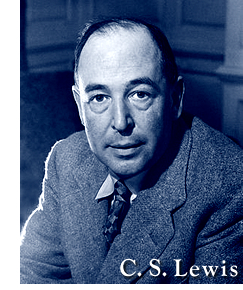
C.S. Lewis Daily – Today’s Reading – On Forgiveness

On forgiveness

I find that when I think I am asking God to forgive me I am often in reality (unless I watch myself very carefully) asking Him to do something quite different. I am asking Him not to forgive me but to excuse me. But there is all the difference in the world between forgiving and excusing. Forgiveness says “Yes, you have done this thing, but I accept your apology, I will never hold it against you and everything between us two will be exactly as it was before.” But excusing says “I see that you couldn’t help it or didn’t mean it, you weren’t really to blame.”. . .

Real forgiveness means looking steadily at the sin, the sin that is left over without any excuse, after all allowances have been made, and seeing it in all its horror, dirt, meanness and malice, and nevertheless being wholly reconciled to the man who has done it.

From The Weight of Glory

Compiled in Words to Live By

The Weight of Glory: And Other Addresses.

Streams in the Desert for Kids – Don’t Fret


Psalm 37:1

What in the world does “fret” mean? Here is a little word that doesn’t have any positive definitions. It means “to worry, to be discontent, to have something be eaten away by something else.” It means, “to torment or irritate or upset someone or yourself.” So when the Bible says not to “fret” it means “quit worrying about it.” That’s not always easy to do, is it?

Here’s another little word with a negative definition: Envy. Envy is a kind of jealousy. The dictionary defines it as the “resentful or unhappy feeling of wanting somebody else’s success, good fortune, qualities, or possessions.” We can envy someone else’s clothes, their looks, their friendships, their talents, or their achievements. For example, when a friend does well on an exam, instead of being happy for her, you feel jealous and you wish it could have been you instead. That’s envy.

The Bible says that we shouldn’t fret about or envy the apparent success of people who do wrong. Do you know someone who got rewarded for cheating? How did it make you feel? Did you fret and feel envious? Unfortunately, fretting and envy don’t change the situation, but they do make us miserable. That’s why the Bible says not to fret or envy. And although people who cheat to get ahead appear to be getting away with it, they’re losers in the long run.

Dear Lord, I admit I have both fretted and been envious. Please help me to be content with doing honest work and to trust you with the rest. Amen.

Charles Stanley – What Really Happened at Calvary


Hebrews 10:10-14

If asked what took place on Good Friday, many people could list the events of Calvary. Some might explain that Christ was nailed to the cross, Roman soldiers gambled for His garments, and darkness covered the land. Others would mention the crown of thorns, an earthquake, and Jesus’ mother watching with what must have been heartbreak and horror.

But no matter how many visible details one could mention, far more was going on than the eye could see: At the cross, sin was judged.

In giving His very first command in the garden of Eden, God warned that disobedience carried the death penalty (Gen. 2:17). So from the start, His judgment of sin was prophesied, and later it was also pictured in the elaborate sacrificial system He established. Under this system, each transgression required an animal’s blood to be sprinkled on the altar. The severity of the penalty—payment of a life—was a graphic way for our holy God to communicate how offensive and grievous sin actually is. It was also a foreshadowing of the Lamb of God, who would come to take away the sin of the world (John 1:29).

Jesus Christ was, on the cross, what that lamb was on the altar—but with a significant difference: Under the old covenant, every time sin was committed, another animal had to die. Jesus, however, willingly offered Himself once for all to atone for the sin of the entire world (Heb. 7:27).

Refusing to personally accept Christ’s substitutionary atonement leaves a person with the responsibility of paying his or her own sin debt. Won’t you thank the Savior for your amazing free gift—or receive it from Him now?

Bible in One Year: 1 Kings 3-5


http://www.intouch.org/

Our Daily Bread — Remember the Cross

Read: Mark 15:19–20, 33–39

Bible in a Year: 1 Samuel 25–26; Luke 12:32–59

“Surely this man was the Son of God!”—Mark 15:39

In the church I attend, a large cross stands at the front of the sanctuary. It represents the original cross where Jesus died—the place where our sin intersected with His holiness. There God allowed His perfect Son to die for the sake of every wrong thing we have ever done, said, or thought. On the cross, Jesus finished the work that was required to save us from the death we deserve (Rom. 6:23).

The sight of a cross causes me to consider what Jesus endured for us. Before being crucified, He was flogged and spit on. The soldiers hit Him in the head with sticks and got down on their knees in mock worship. They tried to make Him carry His own cross to the place where He would die, but He was too weak from the brutal flogging. At Golgotha, they hammered nails through His flesh to keep Him on the cross when they turned it upright. Those wounds bore the weight of His body as He hung there. Six hours later, Jesus took His final breath (Mark 15:37). A centurion who witnessed Jesus’s death declared, “Surely this man was the Son of God!” (v. 39).

The next time you see the symbol of the cross, consider what it means to you. God’s Son suffered and died there and then rose again to make eternal life possible. —Jennifer Benson Schuldt

Dear Jesus, I can’t begin to thank You enough for taking care of my sin when You died on the cross. I acknowledge Your sacrifice, and I believe in the power of Your resurrection.

The cross of Christ reveals our sin at its worst and God’s love at its best.

INSIGHT: In the two cameos provided in our reading today, we witness the injustice and horrors of the crucifixion of Jesus Christ. Verses 19-20 reveal the terrible indignity Jesus endured before going to the cross. Roman soldiers mocked, struck, and spit on Him. Next, a supernatural darkness came over the world (vv. 33-39). Many theologians believe it was then that the eternal fellowship of the Trinity—Father, Son, and Holy Spirit—was disrupted as God the Son was made sin for us so that we might have right standing and relationship with God. The Father turned away from Him and in anguish Christ cried out: “My God, my God, why have you forsaken me?” But because of God’s redeeming love, we will never be forsaken. How does this give you greater confidence in facing the future? Dennis Fisher


http://www.odb.org

Ravi Zacharias Ministry – The Absence of Beauty

I stood in front of the painting long enough that my neck hurt from craning upward, long enough to make the connection that onlookers that day likely held a similar stance as they watched Jesus of Nazareth on the cross. Francisco de Zurbarán’s massive 1627 painting The Crucifixion hangs in gallery 211 of the Chicago Art Institute. Viewers must stand back from the piece and gaze upward in order to take it all in. Zurbarán depicts the point just before Christ takes his last breath. His body leans forward from exhaustion; his head hangs downward. All details of any background activity are absent, the black backdrop a jarring juxtaposition beside his pale, bruised skin. The artist’s use of light intensifies the stark pull of sympathy towards a body that is both clearly suffering and yet somehow beautiful. At the time, I wasn’t sure what I believed about Christianity. But there was something about the painting I couldn’t stop trying to grasp.

There is indeed something about beauty that for many of us is intensely spiritual. Whether peering into the natural beauty of a majestic waterfall or the exquisite lights of the Eiffel Tower, many describe a connection between beauty and the transcendent in religious terms—at times, even contradictingly so, our own theories of the world either undercutting or cutting off the very possibilities we want to espouse. For many of the minds I admire today, beauty is both a compelling part of their faith and compelling evidence for God’s existence. A blind and mechanistic universe cannot answer for the longings stirred by earthly beauty. Stated more personally, I could not account for the longings stirred by the beauty of a suffering God in person. Staring at Jesus in The Crucifixion, I could not explain the quality of beauty that seemed distinctive of his very soul—choosing even in pain and death to forgive tirelessly, though surrounded by people who do not. As a hen uses her wings to gather her chicks, there are indeed times I suspect the Spirit uses beauty to bring us quietly before the Son.

Continue reading Ravi Zacharias Ministry – The Absence of Beauty

Joyce Meyer – Our Best Help

I will lift up my eyes to the hills—from whence comes my help? My help comes from the Lord, Who made heaven and earth.—Psalm 121:1-2 NKJV

We should be maturing in our faith to the point that we don’t run to someone else every time we need to know what to do. I am not implying that asking for a word of counsel from people we feel are wiser than we are is wrong, but I do believe asking for people’s opinions excessively and relying on them too heavily is wrong and insulting to God.

As you can tell from today’s verse, David sought God first and knew God was his only help. The same is true for us, so we must be like David and always look to God first. We need to develop a habit of seeing God as our “first choice” for advice, not as our last resort.

God may use a person of His choice to clarify things, offer additional insight, or confirm what He has already told us, so seek Him first and if He leads you to a person, follow His leading.

In Numbers 22:20-28, God even used a donkey to speak to someone. He wants to speak to us so much that He will use whatever means is necessary. You can be assured that if you are trusting God to speak that He will find a way to get His message through to you.

From the book Hearing from God Each Morning: 365 Daily Devotions by Joyce Meyer.


http://www.joycemeyer.org

Campus Crusade for Christ; Bill Bright – Destroying the Devil’s Works 

“But if you keep on sinning, it shows that you belong to Satan, who since he first began to sin has kept steadily at it. But the Son of God came to destroy these works of the devil” (1 John 3:8).

A young Christian came to inquire of me one day, “How do you account for the fact that so many Christian leaders, many of them famous personalities, pastors and heads of Christian organizations are involved in moral and financial scandals?”

He named several well-known pastors and Christian leaders to illustrate his point.

Sadly I acknowledged his statement to be true. It seems there is an all-out attack of Satan to destroy the credibility of the Christian message. My explanation to him was that our Lord and the apostle Paul dealt with the same problem because, even though the disciples had been with the Lord Jesus three years or more, Judas betrayed Him and the others deserted Him.

The apostle Paul spoke of several who had deserted him. Those included Demas, who loved the present world, and Hymenaeus, Alexander and Philetus, who strayed from the truth.

Only one person can help us live holy lives that will honor our Lord, who came to destroy the works of the devil, and that is the third person of the Trinity – God the Holy Spirit. As long as we cast our ballot for the Spirit in our warfare against the flesh, we can live supernaturally every day in the joy, the wonder, the adventure and the power of the resurrection. It is simply a matter of our will; the decision is ours.

Bible Reading: I John 3:4-10

TODAY’S ACTION POINT:  “Oh, God, thank You that You sent Your Son to destroy the works of the devil. I will claim the supernatural power of the Holy Spirit so that I may live victoriously and never bring scandal or disgrace to Your name.”


http://www.cru.org

Max Lucado – Reconciliation

The most notorious road in the world is the Via Dolorosa, “the Way of Sorrows.” According to tradition, it’s the route Jesus took from Pilate’s hall to Calvary. The path is marked by stations frequently used by Christians for their devotions—each one a reminder of the events of Christ’s final journey. No one actually knows the exact route Jesus followed that Friday. But we do know where the path began. In heaven. Jesus began his journey when he left his home in search of us.

The Bible has a word for this quest: reconciliation. “God was in Christ reconciling the world to Himself” (2 Corinthians 5:19 NKJV). Reconciliation restiches the unraveled, reverses the rebellion, and rekindles the cold passion. Reconciliation touches the shoulder of the wayward and woos him homeward. The path to the cross tells us exactly how far God will go to call us back.

From He Chose the Nails

For more inspirational messages please visit Max Lucado.

Home

Denison Forum – Inspiring insight from United Airlines firestorm

The daughter and attorney of Dr. David Dao held a news conference yesterday morning. The attorney told reporters that when his client was forcibly evicted from the United flight last Sunday, he suffered a concussion and broken nose and lost two front teeth. Dr. Dao’s daughter stated, “What happened to my dad should’ve never happened to any human being.”

As the United firestorm continues, a dear friend shared an insight with me that I asked his permission to share with you. Dr. David Dykes is the longtime pastor of the amazing Green Acres Baptist Church in Tyler, Texas. Regarding the man pulled from the flight, his first thought was, “When they are dragging this bleeding man off the plane, why didn’t someone stand up and say, ‘Let him go. I’ll take his place. Take me instead’?

“I suppose all the passengers were shocked and stunned into silence. I’m just glad that 2,000 years ago when I should have been the one rejected and bloodied, Jesus stepped forward and said, ‘Let him go. I’ll take his place. Take me instead!'”

St. Melito, bishop of Sardis (died AD 180), described well what Jesus experienced on Good Friday: he “endured every kind of suffering in all those who foreshadowed him. In Abel he was slain, in Isaac bound, in Jacob exiled, in Joseph sold, in Moses exposed to die. He was sacrificed in the Passover lamb, persecuted in David, dishonored in the prophets.”

How should we respond to such sacrificial grace?

In Psalm 101, David vowed: “I will not set before my eyes anything that is worthless” (v. 3). After a long discussion of foods that are suitable for eating, the Lord concludes: “Consecrate yourselves therefore, and be holy, for I am holy” (Leviticus 11:44). Paul encouraged us to “cleanse ourselves from every defilement of body and spirit, bringing holiness to completion in the fear of God” (2 Corinthians 7:1). He added that “God has not called us for impurity, but in holiness” (1 Thessalonians 4:7). Job testified, “I have made a covenant with my eyes; how then could I gaze at a virgin?” (Job 31:1).

Continue reading Denison Forum – Inspiring insight from United Airlines firestorm

Charles Stanley –Recognize Your Vulnerability


1 Corinthians 10:12-13

Some Christians see a fellow believer fall into sin but fail to acknowledge that they, too, could stumble. That’s dangerous. Satan has them right where he wants them: deceived by a false sense of confidence. Three enemies are constantly at work trying to bring us down—namely, the devil, his world system, and our own treacherous flesh.

Even though believers have a righteous standing before God, we must each, like Paul, acknowledge an internal problem: “sin which dwells in me” (Rom. 7:20). Satan takes full advantage of this weakness, luring us with fleshly and worldly temptations. He stokes our pride so we become unaware of our own vulnerability.

Christians need to be continually on guard. Since ignorance—of the nature of sin, the strategies of the enemy, and our own areas of weakness—sets us up for failure, we cannot afford to be careless in our thinking. Anytime we find ourselves excusing, redefining, or rationalizing sin, we’ve lost our sensitivity to God. His Word must always fill our minds and direct our steps.

If you’ve drifted from the Lord, turn back to Him by acknowledging your sin and accepting responsibility for it. Repentance means changing your mind and going in a different direction—toward God instead of away from Him.

The next step is harder: Respond with gratitude for God’s chastisement. Every time we fall into sin, our Father lovingly works to bring us back into fellowship with Him. His discipline may be painful, but it’s always good because it brings us to our senses and reconnects us with God.

Bible in One Year: 1 Kings 1-2


http://www.intouch.org/

Our Daily Bread — Forsaken for Our Sake

Read: Matthew 26:36–46

Bible in a Year: 1 Samuel 22–24; Luke 12:1–31

God has said, “Never will I leave you; never will I forsake you.”—Hebrews 13:5

Does having a friend nearby make pain more bearable? Researchers at the University of Virginia conducted a fascinating study to answer that question. They wanted to see how the brain reacted to the prospect of pain, and whether it behaved differently if a person faced the threat of pain alone, holding a stranger’s hand, or holding the hand of a close friend.

Researchers ran the test on dozens of pairs, and found consistent results. When a person was alone or holding a stranger’s hand while anticipating a shock, the regions of the brain that process danger lit up. But when holding the hand of a trusted person, the brain relaxed. The comfort of a friend’s presence made the pain seem more bearable.

Jesus needed comfort as He prayed in the Garden of Gethsemane. He knew what He was about to face: betrayal, arrest, and death. He asked His closest friends to stay and pray with Him, telling them that His soul was “overwhelmed with sorrow” (Matt. 26:38). But Peter, James, and John kept falling asleep.

Jesus faced the agony of the garden without the comfort of a hand to hold. But because He bore that pain, we can be confident that God will never leave or forsake us (Heb. 13:5). Jesus suffered so that we will never have to experience separation from the love of God (Rom. 8:39). His companionship makes anything we endure more bearable. —Amy Peterson

Jesus, thank You for bearing the pain and isolation of the Garden of Gethsemane and the cross for us. Thank You for giving us a way to live in communion with the Father.

Because of God’s love, we are never truly alone.

INSIGHT: The circumstances that took place on the night of Jesus’s betrayal seemed to be confused, chaotic, and out of control. But our Lord’s measured words in facing His betrayer showed His understanding of the big picture of God’s sovereign plan. Without the cross we could not be redeemed. Dennis Fisher


http://www.odb.org

Ravi Zacharias Ministry – Scars of New Creation

One of the most terrifying and deeply troubling news stories for me of the past few years has been one that has escaped broad notice by the Western media. It is the story of extreme and widespread violence against women in Eastern Congo. Raped and tortured by warring factions in their country, women are the victims of the most horrific crimes. As one journalist reported, “Many have been so sadistically attacked from the inside out, butchered by bayonets and assaulted with chunks of wood, that their reproductive and digestive systems are beyond repair.”(1) They bear their wounds in their own bodies, permanent scars of violence and oppression.

In this holiest week for Christians around the world, the broken and wounded body of Jesus is commemorated in services of Maundy Thursday and Good Friday. The broken body and spilled blood of Jesus is remembered in the symbols of bread and wine on Maundy Thursday, and in the black draping of curtains and cloths on Good Friday. Jesus suffered violence in his own body, just as many do around the world today.

Even as Christian mourning turns to joy with Easter resurrection celebrations, it is important to note that Jesus bore the wounds of violence and oppression in his body—even after his resurrection. When he appeared to his disciples, according to John’s gospel, Jesus showed them “both his hands and his side” as a means by which to identify himself to them. Indeed, the text tells us that once the disciples took in these visible wounds “they rejoiced when they saw the Lord” (John 20:20).

The resurrection body of Jesus contained the scars from nail and sword, and these scars identified Jesus to his followers. And yet, the wounds of Jesus took on new significance in light of his resurrection. While still reminders of the violence of crucifixion his wound-marked resurrection body demonstrates God’s power over evil and death.

But his wounds reveal something else. God’s work of resurrection—indeed of new creation—begins in our wounded world. His resurrection is not a disembodied spiritual reality for life after the grave; it bears the marks of his wounded life here and now, yet with new significance.

Continue reading Ravi Zacharias Ministry – Scars of New Creation

Joyce Meyer – Sufficient Grace


…My grace (My favor and loving-kindness and mercy) is enough for you [sufficient against any danger and enables you to bear the trouble manfully]; for My strength and power are made perfect (fulfilled and completed) and show themselves most effective in [your] weakness.… —2 Corinthians 12:9

Do you ever wonder why God does not always deliver you from your bondage and problems immediately? The reason is because only the Lord knows everything that needs to be done in the lives of His children—and the perfect timing for it to be done.

You are not always delivered from your distress at the precise moment you call on the name of the Lord. Sometimes you must endure for a while, be patient and continue in faith. Thank God, during those times in which the Lord decides for whatever reason not to deliver you right away, He always gives the grace and strength you need to press on toward eventual victory.

From the book Ending Your Day Right by Joyce Meyer.


http://www.joycemeyer.org

Campus Crusade for Christ; Bill Bright – Inner Strengthening 

“That out of His glorious, unlimited resources He will give you the mighty inner strengthening of His Holy Spirit” (Ephesians 3:16).

In Christ are all the attributes and characteristics promised to His children as the fruit of the Spirit. And the Holy Spirit was given to glorify Christ.

  • Do you need love?

The Lord Jesus Christ is the incarnation of love. Paul prays that our roots may “go down deep into the soil of God’s marvelous love; and may you be able to feel and understand, as all God’s children should, how long, how wide, how deep and how high His love really is; and to experience this love for yourselves (though it is so great that you will never see the end of it, or fully know or understand it”) (Ephesians 3:17-19).

  • Do you need peace?

Christ is the “Prince of Peace.” “I am leaving you with a gift,” said Jesus, “peace of mind and heart! And the peace I give isn’t fragile like the peace the world gives” (John 14:27).

  • Do you need joy?

Christ is joy.

  • Do you need patience?

Christ is patience.

  • Do you need wisdom?

Christ is wisdom.

  • Are you in need of material possessions so that you can better serve Christ?

They are available in Him, for God owns “the cattle on a thousand hills,” and He promised to supply all our needs (Philippians 4:19).

All that we need is to be found in Christ and nowhere else. The supernatural life is Christ, for in Him dwells all the fullness of the Godhead bodily.

Bible Reading: Ephesians 3:17-21

TODAY’S ACTION POINT:  Knowing that God’s unlimited resources make possible the mighty inner strengthening in my life, I shall focus my attention upon Him through reading His inspired Word and obeying His commands.


http://www.cru.org

Max Lucado – God So Loved the World

Can a holy God overlook our mistakes? Should a kind God punish our mistakes? From our perspective there are only two equally unappealing solutions. But from God’s perspective there’s a third. It’s called “the Cross of Christ.” The cross is where God forgave his children without lowering his standards.

How could he do this? In a sentence: God put our sin on his Son and punished it there. “God put on him the wrong who never did anything wrong, so we could be put right with God” (2 Corinthians 5:21 MSG). Why did he do it? Because “God so loved the world that he gave his only son” (John 3:16 NLT). Aren’t you glad the verse doesn’t read: “For God so loved the rich”? Or “For God so loved the famous?” No we simply (and happily) read: “For God so loved the world!” And you are included in that love!

From He Chose the Nails

For more inspirational messages please visit Max Lucado.

Home

Denison Forum – 7-year-old leukemia patient inspires athletes

This tweet caught my eye: “7-year-old Brody Stephens has leukemia, but that hasn’t stopped him from playing basketball and inspiring NBA stars like Steph Curry.” The tweet was accompanied by a video of Brody dribbling and shooting, along with a gallery of athletes he has met with and encouraged.

When someone chooses courage in the face of overwhelming obstacles, their decision inspires the rest of us. I believe that’s one reason why Jesus’ prayer in the Garden of Gethsemane on Maundy Thursday is recorded in Scripture. We don’t need to know about his prayer to know that he was arrested and then executed. His disciples were asleep and did not hear his agonizing surrender to God; either Jesus or the Holy Spirit revealed to them his decision.

Our Father wants us to know of his Son’s faithfulness so we can choose to follow his example. Jesus’ prayer is our model: “Father, if you are willing, remove this cup from me. Nevertheless, not my will, but yours, be done” (Luke 22:42).

The word “nevertheless” is found 245 times in the Bible (in thirteen translations). For instance, the Jebusites “said to David, ‘You will not come in here'” (2 Samuel 5:6). “Nevertheless, David took the stronghold of Zion, that is, the city of David” (v. 7). The psalmist testified, “When my soul was embittered, when I was pricked in heart, I was brutish and ignorant; I was a beast toward you. Nevertheless, I am continually with you; you hold my right hand” (Psalm 73:21–24).

Continue reading Denison Forum – 7-year-old leukemia patient inspires athletes

Charles Stanley –Learning in Troubled Waters


Psalm 34:1-19

God promises that when we face challenging times, He will keep His divine eye upon us. He wants to be our teacher and guide through the difficulty, but we must position ourselves to respond to His signals. That is, we need to:

Have a longing to follow God’s way and His way only. Scripture compares such yearning to a deer panting for water (Psalm 42:1). The same should be true of us each time we wait for God’s direction instead of acting on our own.

Be willing to be taught by God. He will transform trials into times of learning when we look to Him for guidance. Such was the case with Hannah as she pleaded for a child (1 Samuel 1:1-20, 1 Samuel 2:1-10). It was also true for Mary and Martha when their brother Lazarus died (John 11:17-27). We need willing spirits if we are to learn what God wants to teach us in the “classroom” of His choice. Most of us would opt for a comfortable, pleasurable setting in which to gain understanding. But God knows the best way to instill wisdom and may choose pain and trouble as the place of instruction.

Yield to His will. Before we know God’s solution, He asks us to commit ourselves to His way. The Lord calls us to walk by faith, not by sight (2 Corinthians 5:7) and to acknowledge that we are helpless without Him (John 15:5). To declare commitment to His way is always best.

Troubles are an unwelcome fact of life, but they can have value. Often what we wanted to avoid turns out to be the very thing we needed. God asks that we have a tender heart, a teachable spirit, and a yielded will. Does this describe you?

Bible in One Year: 2 Samuel 23-24


http://www.intouch.org/