Tag Archives: theology

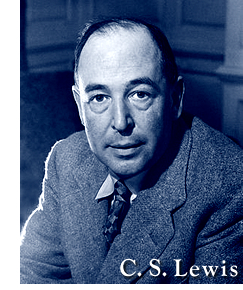
C.S. Lewis Daily – Today’s Reading


TO MRS. JOHNSON: On God’s unique way with each soul, even in the pattern of conversion; and on various Christian nonessentials.

2 March 1955

It is right and inevitable that we should be much concerned about the salvation of those we love. But we must be careful not to expect or demand that their salvation should conform to some ready-made pattern of our own. Some Protestant sects have gone very wrong about this. They have a whole programme of ‘conviction’, ‘conversion,’ et cetera, marked out, the same for everyone, and will not believe that anyone can be saved who doesn’t go through it ‘just so’. But (see the last chapter of Problem of Pain) God has His own unique way with each soul.

There is no evidence that St. John even underwent the same kind of ‘conversion’ as St. Paul. It’s not essential to believe in the devil; and I’m sure a man can get to Heaven without being accurate about Methuselah’s age. Also, as MacDonald says, ‘the time for saying comes seldom, the time for being is always there.’ What we practice, not (save at rare intervals) what we preach, is usually our great contribution to the conversion of others.

From The Collected Letters of C.S. Lewis, Volume III

Charles Stanley – Obstacles to Forgiving Ourselves


Psalms 51:10-12

Every human being on earth has a sin problem. We all lose our temper, make mistakes, and do things that seem completely out of character. Sin is a universal problem, but the Lord has provided forgiveness for everyone who will accept it. And yet, many believers find it impossible to forgive themselves. Why?

First, we struggle with self-forgiveness at times because we find it difficult to accept God’s forgiveness. Guilt can be so strong that it may seem to overshadow the enormous gift of pardon and restoration that our Father has freely provided. We may think, What I’ve done is just too terrible. I doubt God could ever forgive me for this. That’s a tragic error.

Second, personal disappointment can prevent us from forgiving ourselves. We often have ridiculously high self-imposed standards for our behavior and achievements. When we fail to live up to them, we are all but crippled by disappointment, which can make self-forgiveness seem impossible.

Third, seeing the results of our sin can become an obstacle. That is, if our wrong actions produce a tangible negative consequence, we may become so blinded by the outcome that we can’t forgive ourselves. Seeing the aftermath of our sin day after day keeps guilt alive in our minds, and we may simply refuse to let it go.

Are you harboring guilt and remorse for a sin from your past? God’s forgiveness is available now (1 John 1:9). Christ gave His life to make you free. So do not willingly stay in chains because you’re unwilling to forgive yourself for what God has already pardoned (Galatians 5:1).

Our Daily Bread — The Best Wedding Ever


Read: Revelation 21:1-8
Bible in a Year: 1 Kings 16-18; Luke 22:47-71

The marriage of the Lamb has come, and His wife has made herself ready. —Revelation 19:7

Within the last 800 or so years, a new custom has been added to the Jewish wedding ceremony. At the very end, the groom crushes a wine glass under his foot. One explanation of this is that the shattering of the glass symbolizes the destruction of the temple in ad 70. Young couples are encouraged to remember, as they establish their own homes, that God’s home had been destroyed.

God is not homeless, however. He has just chosen a new place to live—in us, His followers. In the metaphors of Scripture, believers are both the bride of Christ and the temple in which God lives. God is fitting His people together to build a new home that will be His permanent dwelling place. At the same time, He is preparing the bride and planning a wedding that will include all of God’s family from the beginning of time.

Our part is easy though sometimes painful. We cooperate with God as He is at work in us to make us more like His Son Jesus. Then some day, at the best wedding ever, our Lord will present us to Himself without spot or wrinkle. We will be holy and without blemish (Eph. 5:27). This wedding will bring an end to all sorrow and suffering. —Julie Ackerman Link

Finish then Thy new creation; Pure and spotless let us be; Let us see Thy great salvation Perfectly restored in Thee. —Wesley

The return of Jesus is sure.

INSIGHT: Our eternal home is so different from our current earthly home that it is described by what is missing rather than by what is present—no tears, sorrow, death, crying, or pain. “The former things” (v. 4) of this earth will be no more.

Ravi Zacharias Ministry –   Super Heroes and Humanity


Nothing quite grips us as much as a good novel or movie where some really sinister characters are finally confronted by a brave hero or heroine, who then rises up to face down tyranny, resist oppression, fight the bad guys, and establish justice.

During the 60s and 70s there was still enough residual optimism around that sci-fi movies brimmed with optimism about humanity and our future. We were explorers in search of brave new worlds. We were ambassadors seeking out strange new civilizations. We were friends seeking the harmony of all in a shared, friendly Galaxy. Yet, the writers needed to add adventure and flavor, so various enemies were encountered and often reasoned with into an eventual accommodation.

The mood shifted however. We believed we were more informed, less naïve, less gullible, and less willing and able to embrace ideals. They all seemed strangely utopian, inauthentic, and a denial of what life is really like. Enter sci-fi 2.0, the upgrade.

The writing is now more realistic, gritty, and dark, and the sheer hardships to be faced are more front and center. Our heroes are more human. Their flaws, their fears, and their unique temperaments are very much in vogue. Yet, they still have a mission, by and large, and that mission is to ‘save’ us. Ironic, isn’t it? We see the continuous recycling of the theme of redemption or the struggle with good and evil, despite our antipathy to such things. It looks like an ingrained quest for some kind of answer, some kind of salvation, some hope that there is a better life, somewhere or some way.

I wonder if we are able to stop and think of Jesus in terms of the heroic. We hear that “he emptied himself” and “took on the form of a bond-servant.” Not only did he accept being made in the likeness of men, but “he humbled himself” even to the point of “death on a cross.”(1) As Dorothy Sayers put so well, the drama is the doctrine. In this story, we see a universe that descends into the grip of an evil power, humanity enslaved and targeted for death and misery, and the creeping control of dark passion as the powers invade, infect, subvert, and seek control.

We are not left to the whims of Han Solo, the skills of James T. Kirk, the powers of the Dark Knight, or the courage of John Connor for help or assistance. But we are confronted by the “Word became flesh,” who in his amazing condescension dwelt among us and whose qualities are such that he is “full of grace and truth.”(2) Grace and truth may not seem like the necessary weapons or equipment needed to take on an enemy of such power, malevolence, or hate. But they are exactly what is needed indeed!

The truth is vital, in that here the true nature of the story is revealed. This is a God-ordered and God-ordained world. It is God’s good creation. It is, nonetheless, also corrupted, damaged, and occupied. However, and this is a big however, the grace of God appears.(3) What a great phrase. He did not appear as a revolutionary, as an idealist, as a highly skilled Ninja, or as some kind of weapons specialist! He appeared as human, and in his mission, he came as a savior, the only rescuer. These redemptive actions, completed by the human Christ, have on-going impact and eternal consequences. Jesus is not an ideal or an icon or a mere image. He is the risen Christ, the Messiah, the human hope of the ages.

Now, all of life is his story. He knows the plot, the players, the parts, the sequence, and when the final act will come with all that this entails. The end will be a good end because it will be his ending. The Batman, Captain Kirk, and all the other miniature heroes offer nothing in comparison. With Peter of old, I want ask, To whom else can we go? You have the words of eternal life.

Stuart McAllister is regional director of the Americas at Ravi Zacharias International Ministries in Atlanta, Georgia.

(1) Philippians 2:7-8.

(2) John 1:16-18.

(3) Titus 2:11-14.

Alistair Begg – Tempted by Idols?


Can man make for himself gods? Such are not gods! Jeremiah 16:20

One great besetting sin of ancient Israel was idolatry, and the church is vexed with a tendency to the same folly. The ancient gods of man’s invention have mostly disappeared, but the shrines of pride are not forsaken, and the golden calf still stands. Self makes an empty display, and the flesh sets up its altars wherever it can find space for them. Favorite children are often the cause of much sin in believers; the Lord is grieved when He sees us doting upon them beyond measure; they will live to be as great a curse to us as Absalom was to David, or they will be taken from us to leave our homes desolate. If Christians desire to grow thorns with which to stuff their sleepless pillows, let them dote on their children.

It is accurate to say that “such are not gods,” for the objects of our foolish love are very doubtful blessings, the solace that they yield us now is dangerous, and the help that they can give us in the hour of trouble is small indeed. Why, then, are we so bewitched with vanities? We pity the poor heathen who worships a god of stone, and yet we worship a god of gold. Where is the vast superiority between a god of flesh and one of wood? The principle, the sin, the folly is the same in either case; the only difference is that our crime is more aggravated because we have more light, and sin in the face of it. The heathen bows to a false deity, but the true God he has never known; we commit two evils, inasmuch as we forsake the living God and turn to idols. May the Lord purge us all from this grievous iniquity!

The dearest idol I have known,

Whate’er that idol be;

Help me to tear it from Thy throne,

And worship only Thee.

Devotional material is taken from “Morning and Evening,” written by C.H. Spurgeon, revised and updated by Alistair Begg.

Charles Spurgeon – Divine sovereignty


“Is it not lawful for me to do what I will with mine own?” Matthew 20:15

Suggested Further Reading: Luke 19:11-27

There is no attribute of God more comforting to his children than the doctrine of divine sovereignty. Under the most adverse circumstances, in the most severe troubles, they believe that sovereignty has ordained their afflictions, that sovereignty overrules them, and that sovereignty will sanctify them all. There is nothing for which the children of God should more earnestly contend than the dominion of their Master over all creation—the Kingship of God over all the works of his own hands—the throne of God, and his right to sit upon that throne. On the other hand, there is no doctrine more hated by unbelievers, no truth which they have kicked about so much, as the great, stupendous, but yet most certain doctrine of the sovereignty of the infinite Jehovah. Men will allow God to be everywhere except on his throne. They will allow him to be in his workshop to fashion worlds and to make stars. They will allow him to be in his treasury to dispense his alms and bestow his bounties. They will allow him to sustain the earth and bear up its pillars, or light the lamps of heaven, or rule the waves of the ever-moving ocean; but when God ascends his throne, his creatures then gnash their teeth; and when we proclaim an enthroned God, and his right to do as he wills with his own, to dispose of his creatures as he thinks well, without consulting them in the matter, then it is that we are ridiculed, and then it is that men turn a deaf ear to us, for God on his throne is not the God they love. They love him anywhere better than they do when he sits with his sceptre in his hand and his crown upon his head.

For meditation: Do you have to think twice before addressing Jesus as Lord? Judas Iscariot could never bring himself to do it—the other disciples could say “Lord” (Matthew 26:22); Judas could only say “Rabbi/Master/Teacher” (Matthew 26:25,49).

Sermon no. 77
4 May (1856)

John MacArthur – Chosen to be Sent


“Having summoned His twelve disciples, [Jesus] gave them authority over unclean spirits, to cast them out, and to heal every kind of disease and every kind of sickness. Now the names of the twelve apostles were these” (Matt. 10:1-2).

Every disciple must also be a discipler.

Have you ever met someone who constantly absorbs what the church has to offer, yet never seems to plug into a ministry where he can give to others? I’ve met many people like that. Some have attended church for many years, and have even taken evangelism and other special training classes. But they never quite feel qualified to minister to others or even to share their testimony. Eventually that has a crippling effect on their spiritual lives and on the life of the church in general.

When Jesus called the disciples to Himself, He did so to train them for ministry. We see that in Matthew 10:1-2. The Greek word translated “disciples” means “learners.” “Apostles” translates a Greek word meaning “to dispatch away from” or “send.” In classical Greek it refers to a naval expedition dispatched to serve a foreign city or country. Disciples are learners; apostles are emissaries. Jesus called untrained disciples, but dispatched trained apostles. That’s the normal training process.

In Matthew 28:18-20 Jesus says, “Go . . . and make disciples of all the nations, baptizing them in the name of the Father and the Son and the Holy Spirit, teaching them to observe all that I commanded you.” Paul said to Timothy, “The things which you have heard from me in the presence of many witnesses, these entrust to faithful men, who will be able to teach others also” (2 Tim. 2:2).

As wonderful and important as it is to learn of Christ, you must never be content to be a disciple only. You must also be a discipler!

Suggestions for Prayer; Memorize Matthew 28:18-20. If you aren’t currently discipling someone, ask the Lord for an opportunity to do so.

For Further Study; An important part of discipleship is spending time with Christ. One way to do that is to read through the gospels on a regular basis. You might want to obtain a harmony of the gospels to help in your study. Tell a friend of your plan so he or she can encourage you and hold you accountable.

Joyce Meyer – Find Real Freedom by Embracing Real Truth


God loves you and He has an amazing plan for your life. He wants you to be happy and He wants to bless you, but there’s so much more to His plans and purposes for you than that.

First and foremost, God wants a personal relationship with each of us. And He wants us to partner with Him in sharing His love and the Gospel of Jesus Christ with those who don’t know Him. He wants us to care about them…to pray for them…and to show them His love and what it means to really be a Christian.

I remember a time years ago when I wanted to serve God and witness for Him, telling others about Him, but I didn’t have His power in my life to BE a witness. I was going to church every week and was part of the group that went out in the city and handed out Gospel tracts about how you can become a Christian to people on the street. But I didn’t enjoy it, and I was just doing it to fulfill an obligation to witness for God.

Then, in 1976, God touched my life in a major way when I was crying out to Him for something more. I knew there had to be more than what I was experiencing in my relationship with Him at that point. God heard my prayer and He did a work in my heart that actually changed my desires so that more than anything else, I wanted to be what He had created me to be.

This is when I got really serious about studying the Bible, and I discovered the key to having true freedom in Christ.

No Freedom in Wishing

In John 8:31-32 (AMP), Jesus said, “If you abide in My word [hold fast to My teachings and live in accordance with them], you are truly My disciples. And you will know the Truth, and the Truth will set you free.” These verses clearly show us that it’s not possible to be free without facing the truth.

It’s important for us to understand what truth really is. Truth is the way things really are—not the way we think they are or would like them to be or wish they were. It’s reality from God’s point of view and it is a central theme in His Word. Jesus is the Word of Truth (John 1:14, 17). The Holy Spirit is the Spirit of Truth, and He guides us into all the Truth (John 16:13). And as children of God, we belong to the Truth (John 8:31).

It Starts with You

But if you want to have the freedom to be who God has created you to be and have the life Jesus died for you to have, then you have to face the truth. And it starts by facing the truth about yourself. I know about this from personal experience, because when I started studying the Word, the Holy Spirit went to work in my life.

I remember one day when I was praying for Dave to change. God spoke to my heart and said, “Joyce, Dave is not the problem.” I thought, “Well then, who is? There’s just me and him, so if it’s not Dave, then who is it?” Isn’t that amazing?! I was so self-deceived that it didn’t even occur to me that I could be the problem.

For the next three days, God showed me what it was like to live with me. I was so sorry for the attitudes I had, the way I behaved, the anger I displayed every time I didn’t get my way…and it was so hard! But I needed to face the truth about myself so I could have freedom from sin and the things that were keeping me from the love, peace, wisdom and joy that God had for me in Christ.

Transformed into His Image

It took time for me to change; 2 Corinthians 3:18 says that as we look into God’s Word, we “are constantly being transfigured into His very own image…from one degree of glory to another…” (AMP). But each day as I spent time with God in prayer and studying His Word, I made progress little by little.

You know, sometimes we hide things in our heart that are hard to face or deal with. And when we don’t deal with them, they cause problems in our relationships and steal the joy from our daily lives. But God wants us to invite Him—the Spirit of Truth—into our hearts to deal with us…to reveal the truth so we can be set free.

Psalm 51:6 says, “Behold, You desire truth in the inner being; make me therefore to know wisdom in my inmost heart” (AMP). And Psalm 26:2 says, “Examine me, O Lord, and prove me; test my heart and my mind.”

I want to encourage you not to settle for anything less than the best life Christ has for you. If you’re ready to do that, then pray this with me: “Lord, in Jesus’ name, I pray that You would examine me, prove me and test me, so that Your Spirit can lead me into all truth.” Now get ready, because God wants to reveal Truth to you and make you everything He’s created you to be!

Campus Crusade for Christ; Bill Bright – Ways That Are Right and Best


“He will teach the ways that are right and best to those who humbly turn to Him” (Psalm 25:9).

A guide, taking some tourists through Mammoth Cave, reached a place called “The Cathedral.”

Mounting a rock called “The Pulpit,” he said he wanted to preach a sermon, and it would be short.

“Keep close to your guide,” he said.

The tourists soon found it was a good sermon. If they did not keep close to the guide, they would be lost in the midst of pits, precipices and caverns.

It is hard to find one’s way through Mammoth Cave without a guide. It is harder to find one’s way through the world without the lamp of God’s Word.

“Keep your eye on the Light of the World (Jesus) and use the Lamp of God’s Word” is a good motto for the Christian to follow.

Humbly turning to God is one of the most meaningful exercises a person can take. We come in touch with divine sovereignty, and we become instant candidates to discern God’s will for our lives.

Humbling ourselves is clearly in line with God’s formula for revival:

“If my people, which are called by my name, shall humble themselves, and pray, and seek my face, and turn from their wicked ways; then will I hear from heaven, and will forgive their sin, and will heal their land” (2 Chronicles 7:14, KJV).

Bible Reading: Psalm 25:1-8

TODAY’S ACTION POINT: With the enabling of the Holy Spirit, I will fix my heart and mind on Jesus first and others second, which is true humility.

Presidential Prayer Team; J.R.- Flood Warnings


If you have watched presidential debates in recent years, you’ve undoubtedly noticed an inevitable trend in which one candidate – and it’s usually the incumbent president or candidate who is leading in the polls – loses the first debate due to overconfidence. Alarmed and battered by the media, the candidate then bounces back in the next debate with a stronger performance. Veteran politicians and even occupants of the White House learn the hard way that there is no substitute for preparation.

For in seven days I will send rain on the earth forty days and forty nights.

Genesis 7:4

The biblical flood did not arrive like a tsunami. God gave everyone plenty of warning that it was on the way – 120 years to be exact and, near the end, a final seven day alert. Noah was prepared…and good thing he didn’t wait until the last minute to build the ark because there would be no second chances. Genesis 6:22 says that long before the flood, Noah “did all that God commanded him.”

Don’t allow your life to become an endless cycle of extinguishing one crisis after another. Today is the day to pray, plan and – yes – prepare for America’s future…and for the purposes He has for you!

Recommended Reading: Proverbs 24:27-34

Greg Laurie – Where Are You?


Then the LORD God called to Adam and said to him, “Where are you?” —Genesis 3:9

When I play hide-and-seek with my granddaughters, I will show them a new hiding place. Then, when it is my turn to find them, they will go to the place I just showed them.

That is what it’s like when we try to hide from God. In the Garden of Eden, God called out to Adam, “Where are you?” But God knew exactly where Adam was. And He knew exactly what Adam had done. God wasn’t asking Adam this question because He was clueless and looking for information.

By asking “Where are you?” God was saying, in effect, “Well, Adam, how is it going? How did that work out for you—the whole sin thing? Was I right on this, or was I wrong? How are you feeling about it? Is this good? Did I tell you the truth, or did the Devil lie to you?”

God wanted Adam and Eve to confess what they had done so He could set it right, because God cannot forgive a sin that has not been confessed.

The Bible says in 1 John 1:9, “If we confess our sins, [God] is faithful and just to forgive us our sins and to cleanse us from all unrighteousness.” What does it mean to confess our sin? The word confess used in this verse means “to agree with.”

And what is God’s opinion of sin? He hates it. What else does God think of sin? It offends Him. So we have to see sin that way, stop rationalizing it and justifying it, and start saying, “God, Your opinion of sin is right. I agree with You. I hate it. It was wrong for me to do. I am sorry for it.” Until we come to this conclusion about our sin, it will separate us from God.

Max Lucado – God Will Lighten Your Load


If we let him, God will lighten our loads. Why don’t you try traveling light? Jesus says, “Come to me, all you who are weary and carry heavy burdens, and I will give you rest.” Try it! Try it for the sake of those you love. How do you embrace someone if your arms are full of bags? For the sake of those you love, learn to set them down.

And for the sake of the God you serve, do the same. God has a great race for you to run. But you have to drop some stuff. How can you share grace if you’re full of guilt? How can you offer comfort if you’re disheartened? God is saying, “Set it down, child. I’ll carry that one.” What do you say we take God up on his wonderful offer? We just might find ourselves traveling a little lighter.

From Traveling Light

Charles Stanley – Discerning the Source of Our Trials


There are some lessons that can only be learned through hardship. Finding God’s reasoning for our suffering can be a daunting task, but when we view our trials from His eternal perspective, we can begin to understand them more clearly.

What was the last painful or stressful trial you experienced? Was it a struggle for you physically, emotionally, and spiritually? No one has ever lived a life completely free from pain, uncertainty, stress, and trials. The Bible makes this point abundantly clear. Jesus, Moses, Job, Peter, Paul, and all of the heroes of Scripture are portrayed as men and women who, at one time or another, underwent trying times of hardship and heartache. Now, thousands of years later, God’s servants are still undergoing hard times. Therefore, it is important that you learn how to cope with these harsh patches in life.

James 1:2 is a rather short verse, but it contains tremendous insight into the issue of life’s trials. The phrase “when you encounter various trials” includes three key words that demonstrate the universality of man’s hardships. First, it is significant that James uses the word “when.” This defines the issue; undergoing trials is not a matter of if but rather when. Second, when he says that you will “encounter” misfortune, he is stating that difficulties will arise unexpectedly; there may be no time to prepare for these dilemmas. Third, he uses the adjective “various” to denote the ever-changing, often-surprising forms in which trials appear.

There are lessons that can only be learned through hardship. Therefore, God will allow difficulties to enter into our lives for His purposes.

As you begin to examine the issue of life’s persistent difficulties, a reasonable question to ask is, “Where do these hard times come from?” There are, in fact, some specific sources of trials. The primary cause is simply making wrong decisions ourselves. Our God-given free will allows us the opportunity and responsibility of making our own choices. Unfortunately, though, even the most committed Christian will make mistakes when making decisions, and the result will be a period of hardship.

Another cause of trials is persecution by other people. This is certainly an impediment with which the early church was familiar. Writing to the suffering Christians scattered throughout the ancient world, Peter says, “But even if you should suffer for the sake of righteousness, you are blessed. And do not fear their intimidation, and do not be troubled” (1 Peter 3:14). Whether it is on account of your faith or for some other reason altogether, a sad fact of life is that the world is full of people who have the ability and desire to hurt you. This is certainly a challenge for Christians seeking to respond to their oppressors in a Christ-like manner.

A third source of trials is the fallen world in which we live. Sin has so permeated the earth that God’s original concept of paradise seems impossible. Tornadoes, earthquakes, floods, sickness, war, bloodshed, and crime are all the results of sin’s impact upon the world. Clearly, there is no way to escape the trials that seem to appear out of nowhere.

Not surprisingly, many trials often come straight from the Devil. After all, Satan is interested in ways in which he can torment us, and each attempt he makes has but one purpose—to draw us further away from God.

A final source of trials is the Lord. Many people resist this idea, believing that God desires only happiness for them. However, the truth is that God is more concerned with our maturity and development than He is our general happiness. That is difficult for some to accept, but our relationships with Him are far more important than our temporary well-being here on earth.

Often, there are lessons that can only be learned through hardship. Therefore, God will allow difficulties to enter into our lives for His purposes. Finding God’s reasoning for our suffering can be a daunting task, but when we view our hardships from our Father’s eternal perspective, we can begin to understand them more clearly. Therefore, the best starting point for understanding the rationale behind our trials is to prayerfully consider their source. The better we understand where these problems come from, the better we will be able to work through them.

Adapted from “The Charles F. Stanley Life Principles Bible,” 2008.

Our Daily Bread — One Who Serves


Read: Luke 22:24-27
Bible in a Year: 1 Kings 14-15; Luke 22:21-46

Yet I am among you as the One who serves. —Luke 22:27

“I’m nobody’s servant!” I cried out. That morning the demands of my family seemed too much as I frantically helped to find my husband’s blue tie, while feeding the crying baby and recovering the lost toy from under the bed for our 2-year-old.

Later on that day, as I was reading the Bible, I came across this verse: “For who is greater, he who sits at the table, or he who serves? Is it not he who sits at the table? Yet I am among you as the One who serves” (Luke 22:27).

Jesus didn’t have to wash His disciples’ feet, yet He did (John 13:5). There were servants who did that job, but Jesus chose to serve them. Today’s society insists that we should aim to “be somebody.” We want the best-paying job, the highest position in the company, the top leadership in church. Yet whatever position we are in, we can learn from our Savior to serve.

We hold different roles as parents, children, friends, workers, leaders, or students. The question is this: Do we carry out those roles with an attitude of service? Even though my everyday routine is sometimes tiring, I’m thankful the Master will help me because I do want to follow His steps and willingly serve others.

May God help us to do this each day. —Keila Ochoa

Dear Lord, I know that You did not come to be served, but to serve. Sometimes I fail to think of others, but I want to be like You. Please give me a heart like Yours.

We need a servant’s attitude to be like Jesus.

INSIGHT: Verse 24 says that the disciples argued about who was the greatest. This was an ongoing dispute because on two earlier occasions they had displayed their desire to be first. They fought while returning to Capernaum (Matt. 18:1-5; Mark 9:33-37; Luke 9:46-48) and again on one of their trips into Jerusalem (Matt. 20:17-28; Mark 10:32-45). Now here, just hours before Jesus was crucified, while the disciples were observing one of their most sacred feasts, the Passover meal, they quarreled over who was the greatest (Luke 22:14-24). Rebuking them, Jesus said that true greatness is determined not by hierarchical authority (v. 25) but by service and humility (v. 26).

Alistair Begg – Expect Trouble


In the world you will have tribulation.

John 16:33

Are you asking why this should be, believer? Look upward to your heavenly Father, and behold Him pure and holy. Do you know that you are one day to be like Him? Will you easily be conformed to His image? Will you not require much refining in the furnace of affliction to purify you? Will it be an easy thing to get rid of your corruptions and make you perfect even as your Father in heaven is perfect?

Next, Christian, turn your eye downward. Do you know what foes you have beneath your feet? You were once a servant of Satan, and no king will willingly lose his subjects. Do you think that Satan will leave you alone? No, he will always be at you, for he “prowls around like a roaring lion, seeking someone to devour.”1 Expect trouble, then, Christian, when you look beneath you.

Then look around you. Where are you? You are in enemy country, a stranger and an alien. The world is not your friend. If it is, then you are not God’s friend, for whoever is the friend of the world is the enemy of God. Be certain that you will find enemies everywhere. When you sleep, remember that you are resting on the battlefield; when you travel, suspect an ambush in every hedge. As mosquitoes are said to bite strangers more than natives, so the trials of earth will be sharpest to you.

Lastly, look within you, into your own heart, and observe what is there. Sin and self are still within. If you had no devil to tempt you, no enemies to fight you, and no world to ensnare you, you would still find in yourself enough evil to be a sore trial to you, for “the heart is deceitful above all things, and desperately sick.”2 Expect trouble then, but do not despair on account of it, for God is with you to help and to strengthen you. He has said, “call upon me in the day of trouble; I will deliver you, and you shall glorify me.”3

1) 1 Peter 5:8   2) Jeremiah 17:9    3) Psalm 50:15

Devotional material is taken from “Morning and Evening,” written by C.H. Spurgeon, revised and updated by Alistair Begg.

Charles Spurgeon – Regeneration


“Except a man be born again, he cannot see the kingdom of God.” John 3:3

Suggested Further Reading: Luke 13:22-30

“Angels, principalities, and powers, would you be willing that men who love not God, who believe not in Christ, who have not been born again, should dwell here?” I see them, as they look down upon us, and hear them answering, “No! Once we fought the dragon, and expelled him, because he tempted us to sin! We must not, and we will not, have the wicked here. These alabaster walls must not be soiled with black and lustful fingers; the white pavement of heaven must not be stained and rendered filthy by the unholy feet of ungodly men. No!” I see a thousand spears bristling, and the fiery faces of a myriad seraphs thrust over the walls of paradise. “No, while these arms have strength, and these wings have power, no sin shall ever enter here.” I address myself moreover to the saints of heaven, redeemed by sovereign grace: “Children of God, are you willing that the wicked should enter heaven as they are, without being born again? You say you love men, but are you willing that they should be admitted as they are?” I see Lot rise up, and he cries, “Admit them into heaven! No! What! Must I be vexed by the conversation of Sodomites again, as once I was!” I see Abraham; and he comes forward, and he says, “No; I cannot have them here. I had enough of them whilst I was with them on earth—their jests and jeers, their silly talkings, their vain conversation, vexed and grieved us. We want them not here.” And, heavenly though they be, and loving as their spirits are, yet there is not a saint in heaven who would not resent, with the utmost indignation, the approach of any one of you to the gates of paradise, if you are still unholy, and have not been born again.

For meditation: Matthew 13:41-43; Luke 16:23-26 — at best the unsaved will have a distant view of heaven which will only add to their torment.

Sermon no. 130
3 May (1857)

John MacArthur – Overcoming Spiritual Inadequacies


“Having summoned His twelve disciples” (Matt. 10:1).

Jesus can overcome any inadequacy you might have.

Most people think of the disciples as stained-glass saints who didn’t have to struggle with the faults and frailties of normal people. But they had inadequacies just like we all do. Seeing how Jesus dealt with them gives us hope that He can use us too.

One inadequacy common to all the disciples was their lack of understanding. For example, Luke 18 tells us Jesus gave them details about His future suffering, death, and resurrection, but they didn’t understand anything He said (vv. 31-34). Jesus overcame their lack of understanding by constantly teaching them until they got it right.

Another inadequacy was their lack of humility. More than once they argued among themselves about who would be the greatest in the kingdom of heaven (e.g., Mark 9:33-37). Jesus dealt with their lack of humility by His own example. He likened Himself to a servant, and even washed their dirty feet.

In addition to their lack of understanding and humility, they also lacked faith. Jesus often said to them, “O men of little faith.” In Mark 16:14 He rebuked them for not even believing the reports of His resurrection.

They also lacked commitment. Just prior to Christ’s death Judas betrayed Him, Peter denied Him, and the others deserted Him. Jesus dealt with their lack of commitment by praying for them (e.g., John 17:15; Luke 22:31-32).

Finally, they lacked spiritual power, which Christ overcame by giving them the Holy Spirit.

Those are significant inadequacies, but despite all that, the book of Acts records that the disciples turned the world upside down with their powerful preaching and miraculous deeds. They were so much like Christ that people started calling them Christians, which means “Little Christs.”

Jesus still transforms inadequacies into victories. He does it through the Spirit, the Word, and prayer. Don’t be victimized by your inadequacies. Make those spiritual resources the continual focus of your life.

Suggestions for Prayer

  • Thank the Lord for your inadequacies because they help you realize your dependence on Him.
  • Ask for grace always to rely on your spiritual resources rather than human abilities.

For Further Study

Read Matthew 20:20-28.

  • Who spoke to Jesus on behalf of James and John?
  • What was His response?
  • How did the other disciples respond?
  • What was Jesus’ concluding principle?

Joyce Meyer – Be Prepared


Study and be eager and do your utmost to present yourself to God approved (tested by trial), a workman who has no cause to be ashamed, correctly analyzing and accurately dividing [rightly handling and skillfully teaching] the Word of Truth. 2 Timothy 2:15

Preparation equips us to move confidently. Many women lack confidence because they are not properly prepared for what they attempt to do. There could be a variety of reasons for this lack of preparation. They don’t realize the importance of preparation, they are lazy, or they are too busy doing things that don’t help them accomplish their goals and then have no time to do what would help them. Imagine a doctor trying to be confident if he never had any training or preparation. Anyone who is serious about playing a sport always practices and gets prepared.

As a teacher of God’s Word, I never go to the pulpit without being thoroughly prepared. I study, pray, and go over and over my notes. Quite often I don’t even look at the notes while preaching, because by the time I stand up to teach, they have become such a part of me that they flow out with ease. Knowing I have done my best to be prepared helps me minister with confidence.

Lord, whether or not anyone else notices, I will do everything in my power to prepare myself for what You have called me to do. I want to be confident that I am always being the best I can be and that I’m ready for more. Amen.

Campus Crusade for Christ; Bill Bright – Perfect Harmony


“Most of all, let love guide your life, for then the whole church will stay together in perfect harmony” (Colossians 3:14).

Martha had a very poor self-image. The distress she felt because of her physical appearance was compounded by the guilt of being grossly overweight. She hated herself and was despondent to the point of seriously considering suicide.

I counsel many students and older adults who are not able to accept themselves. Some are weighted down with guilt because of unconfessed sins. Others are not reconciled to their physical handicaps or deformities. Still others feel inferior mentally or socially.

My counsel to such people is this: God loves you and accepts you as you are. The love of God which is shed abroad in our hearts by the Holy Spirit enables us to love ourselves as God made us. We can be thankful for ourselves, loving ourselves unconditionally as God does, and we can love others unconditionally, too.

It is Satan who is the great accuser, causing us to hate ourselves and others. God, having commanded us to love Him with all of our heart, soul, mind and strength, and our neighbor as ourselves, and our enemies, will enable us to do what He commands us to do as we claim His promise.

The great tragedy of many families is that resentment, bitterness and hate overtake their members like an all-consuming cancer, ultimately destroying the unity among husband, wife and children. Love of the husband and wife for each other, and of parents and children for one another, is so basic that it should not need to be mentioned. Yet, sadly and alarmingly, children are alienated from their parents, and even many Christian marriages are ending in divorce – in fact, in greater numbers today than at any other time in history.

God’s kind of love is a unifying force. Paul admonishes us to “put on love, which is the perfect bond of unity.”

Bible Reading: Colossians 3:18-25

TODAY’S ACTION POINT: Since God commands us to love Him, our neighbors, our enemies and ourselves, today I will claim that supernatural love by faith on the basis of God’s command to love and the promise that if I ask anything according to His will, He will hear and answer me.

Presidential Prayer Team; C.P. – Mercy Plea


God is not a stone idol. He sees, hears and speaks. He looks upon the good and the bad done on Earth. Like He saw the evil in Noah’s time, He sees the wickedness in present times as well. Jesus said His return will happen in days similar to those of Noah (Matthew 24:37).

The Lord saw how great the wickedness of the human race had become on the earth.

Genesis 6:5

Everyone sins and falls short of God’s glory (Romans 3:23), so He provided the gift of righteousness in Christ (Ephesians 2:4-6). Those who put their trust in Jesus are forgiven, cleansed, and have the hope of eternal life (Acts 10:43, I John 1:9, John 3:16). Yet everyone’s actions will be judged; though their works may perish, their souls will live.

The word “sin” is rarely used now because so much of what the Bible describes as sin has become acceptable and even encouraged. Pray for God to have mercy on this nation and to cause a great spiritual revival among this country’s citizens and leaders. Then thank God for your salvation and set your heart to do the good works He has called you to do (Ephesians 2:10).

Recommended Reading: I Corinthians 3:10-17