Tag Archives: theology

Campus Crusade for Christ; Bill Bright – The Lord Forgave You


“Since you have been chosen by God who has given you this new kind of life, and because of His deep love and concern for you, you should practice tenderhearted mercy and kindness to others. Don’t worry about making a good impression on them but be ready to suffer quietly and patiently. Be gentle and ready to forgive; never hold grudges. Remember, the Lord forgave you, so you must forgive others” (Colossians 3:12,13).

J. C. Penney, a devout Christian whom I knew personally, built one of America’s leading businesses on the principle of the Golden Rule, taught by our Lord:

“Do unto others as you would have them do unto you.”

He and other gentle men have developed tenderness and sensitivity to others through their years of maturing, often through many difficult and trying experiences. So should we as Christians seek to develop gentle spirits through the trials and tribulations that God permits us to go through.

Do you lack gentleness in your life?

Do you have a tendency to be arrogant, proud, boastful?

Are you overbearing or even coarse and rude with others?

By faith you can become a gentle person. By faith you can confess your sins and know that they have been forgiven. By faith you can appropriate the filling of the Spirit of Christ. By faith you can practice tenderhearted mercy and kindness to others.

The Lord has commanded us to be gentle people, so by faith we can ask for that portion of the fruit of the Spirit, gentleness and love, and know that He is changing us for the better.

As I have cautioned with regard to other Christlike traits, this is one which usually develops over an extended period of time, usually through the maturing process that comes only with time and trials and sometimes tribulation. Pray that God will give you patience with yourself as you mature into the gentle and humble person He wants you to be.

Bible Reading: Colossians 3:14-17

TODAY’S ACTION POINT:  God’s promise to me is that He forgives; with His help I will forgive and practice tenderhearted mercy and kindness to others, with the prayer that I may be more and more conformed to the image of my Lord.

Greg Laurie – If Only . . .


“Only an evil, adulterous generation would demand a miraculous sign; but the only sign I will give them is the sign of the prophet Jonah.” —Matthew 12:39

Have you ever thought, If someone were raised from the dead, I know people would believe? Or, If I could do a miracle for my friends, I know they would believe?

Remember the story of the rich man and the beggar named Lazarus? They both died and went into eternity. The rich man had no place for God, but Lazarus was a believer. At that time before the death and resurrection of Jesus, Hades was divided into a place of comfort and a place of torment. Lazarus went to the place of comfort on the heart and bosom of Abraham. The nonbelieving rich man went to the place of torment.

The rich man called out to Abraham, wanting to go back and warn his family about the horrible place he was in. But Abraham told him, “They have Moses and the prophets; let them hear them” (Luke 16:29 NKJV).

But the rich man persisted. He thought if someone were to rise from the dead, they surely would believe.

Here is what Abraham told him: “If they do not hear Moses and the prophets, neither will they be persuaded though one rise from the dead” (verse 31).

Maybe, like the rich man, you think that if only your friends and family could witness a miracle, they would believe.

Jesus said, “Only an evil, adulterous generation would demand a miraculous sign; but the only sign I will give them is the sign of the prophet Jonah. For as Jonah was three days and three nights in the belly of the great fish, so will the Son of Man be three days and three nights in the heart of the earth” (Matthew 12:39). Jesus was saying, “You want a sign for a nonbelieving world? Here it is: My death and resurrection from the dead.”

Here is our message to lost humanity: Christ died. He rose. He can forgive you of your sin. That is the message we have to share.

Charles Stanley – Telling It like It Is


John 9:13-25

The blind man was willing to answer questions about his healing, regardless of who was asking. Responses to his testimony varied. The neighbors argued over the genuineness of his story and demanded to know how he came to see. The man explained what had happened, with no embellishments: he’d met a man named Jesus, who gave him some instructions. When he obeyed, he was healed. Though the neighbors couldn’t deny what had happened, they had trouble accepting the account, because they could not understand it. The world still does the same thing—what they can’t explain, they try to deny.

The Pharisees also questioned how he had received his sight. Again the man reported, “He applied clay to my eyes, and I washed, and I see” (John 9:15). These leaders refused to believe him because they didn’t want to accept the One responsible for the healing. When they questioned the man a second time, he simply repeated his testimony: “I was blind, now I see” (v. 25). Again they rejected his words, because they refused to change their beliefs. Many people reject God’s truth and instead cling to their own interpretation of the facts.

A third response is seen in the man’s parents, whom the Pharisees asked to verify his testimony. They refused because they were afraid of the authorities. Fear of someone’s reaction can keep us from speaking about our transformed life.

Next time you have an opportunity to talk about the Lord, share something that has changed since you met Him. Say, “I was ___ , and now I am ___ because of Jesus.”

Our Daily Bread — Fantastic Offers


1 Peter 1:3-9

[God’s] abundant mercy has begotten us again to a living hope through the resurrection of Jesus. —1 Peter 1:3

I am amazed at the unbelievable offers that flood my e-mail box every day. Recently, I added up the offers of free money that came to me in a week, and my “take” totaled $26 million. But each of those offers was a fraud. Every one—from a $1 million prize to a $7 million offer—was nothing but a lie sent by unscrupulous people to squeeze money from me.

We’re all vulnerable to fantastic offers—to scams that in reality pay off with nothing but trouble. We are offered false hope that ends in dashed dreams.

There is one offer, however, that is genuine, though fantastic beyond belief. It’s the offer God makes to us—salvation through faith in Jesus’ finished work on the cross: “Believe on the Lord Jesus Christ, and you will be saved” (Acts 16:31). It is an offer that cost Him greatly—and we get the benefits. The book of Romans tells us, “He was delivered over to death for our sins and was raised to life for our justification” (4:25 NIV).

By saying yes to salvation, we can have hope (Titus 1:2), peace (Rom. 5:1), forgiveness (Eph. 1:7), incomparable riches (2:7), and redemption (4:30). This is the real deal. Jesus’ death and resurrection guarantees it. —Dave Branon

Amazing love! How can it be

That Thou, my God, shouldst die for me?

Amazing love! How can it be

That Thou, my God, shouldst die for me?

—John Wesley. © 1951 Singspiration

Our salvation was infinitely costly to God, but it is absolutely free to us.

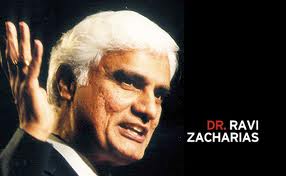
Ravi Zacharias Ministry – What Is Fair?


“Instead of giving a firm foundation for setting the conscience of man at rest forever, Thou didst choose all that is exceptional, vague and enigmatic” rails Ivan Karamazov against God in Dostoyevsky’s classic work The Brothers Karamazov.(1) Those who encounter—or are encountered by—the parables and stories of Jesus often feel a similar sentiment. For the parables of Jesus are often exceptional in upsetting religious sensibilities, are sometimes vague, and are many times enigmatic in their detail and content.

The parable of the laborers, as told in Matthew’s gospel, serves as a case in point. A landowner hires laborers to work in his vineyard. They are hired throughout the work day and all the workers agree to the wage of a denarius for a day’s work. The enigmatic and exceptional punch line to this story occurs when those who are hired at the very end of the day—in the last hour—are paid the same wage as those who worked all day long. The long-suffering laborers cry out, “These last men have worked only one hour, and you have made them equal to us who have borne the burden and the scorching heat of the day.” Those workers that were hired first are not paid any additional wage. The first are not first, in this story. Instead, the landowner replies with a radical reversal: The last shall be first, and the first last.

Not only is the conclusion to this story exceptional and enigmatic, it also seems wholly unfair. For how could those who worked so little be paid the full day’s wage? Yet, this upending of any sense of fairness is a recurring theme in other parables of Jesus as well. Indeed, the parable of the prodigal son in Luke 15, while a familiar story for many, functions in a similar manner and upsets all expectations of what is fair and right, just as in the parable of the laborers. A careful reading presents an extravagant display of grace towards all wayward sons and daughters, even as it illuminates a human frugality with grace.

Jesus presented this story as a crowd of tax-collectors, sinners, and religious leaders gathered around him. All who listened had a vested interest in what Jesus might say. Some hoped for grace, while others clamored for judgment. “A certain man had two sons,” Jesus begins. The younger of the man’s two sons insists on having his share of the inheritance, which the father grants though the request violated the Jewish custom that allotted a third of the inheritance to the youngest son upon the death of the father.(1) With wasteful extravagance, the son squanders this inheritance and finds himself desperately poor, living among pigs, ravenous for the pods on which they feed. “But when he came to his senses” the text tells us, he reasons that even his father’s hired men have plenty to eat. Hoping to be accepted as a mere slave, he makes his way home. And while he was still a long way off, his father saw him, and felt compassion for him, and ran and embraced him.

The Pharisees in the crowd might have gasped at this statement. How could the father extend such grace towards a son so wasteful and wanton? Yet, this father is the true prodigal, extending grace in an extravagant way. His prodigal heart compels him to keep looking for his son—he saw him while he was still a long way off. And despite being disowned by his son, the father feels compassion for him. With wasteful abandon, he runs to his son to embrace him and welcome him home. The father orders a grand party for this son who has been found, “who was dead and has begun to live.”

The older brother in Jesus’s story provocatively gives voice to a deep sense of outrage.(2) In many ways, his complaint intones the same complaint of the laborers in the vineyard. “For so many years, I have been serving you and I have never neglected a command of yours… But when this son of yours came, who has devoured your wealth with harlots; you killed the fattened calf for him.”  We can hear the implicit cry, “It’s not fair!” The text then tells us that the older son was not willing to join the celebration. He will not hear the entreaty of his gracious father both to come into the celebration and to recognize that “all that is mine is yours.” Thus again, the last shall be first, and the first last.

While not vague in their detail or content, these two parables of Jesus are both exceptional and enigmatic. If we are honest, they disrupt our sense of righteousness and our sense of fairness. Both portraits of the prodigal father and of the landowner present the radical fairness of God. God lavishes grace freely on those we often deem the least deserving. But perhaps we feel the exceptional and enigmatic aspects of these parables most keenly when it is we who are seeing ourselves beyond the need of grace.

Margaret Manning is a member of the writing and speaking team at Ravi Zacharias International Ministries in Seattle, Washington.

(1) Cited in Mary Gordon, Reading Jesus: A Writer’s Encounter with the Gospels (New York: Pantheon, 2009), x.

(2) Fred Craddock, Interpretation: A Bible Commentary for Teaching and Preaching (Louisville: John Knox Press, 1990), 187.

Alistair Begg – Are You a Grumbler?


And all the people of Israel grumbled. Numbers 14:2

There are grumblers among Christians now, just as there were in the camp of Israel of old. There are those who, when punished, cry out against the affliction. They ask, “Why am I afflicted? What have I done to be chastened in this manner?”

A word with you, grumbler! Why should you grumble against the dealings of your heavenly Father? Can He treat you more severely than you deserve? Consider what a rebel you once were, but He has pardoned you! Surely, if He in His wisdom considers it necessary to chasten you, you should not complain. After all, are you punished as severely as your sins deserve? Consider the corruption that is in your heart, and then will you wonder that so much of the rod is necessary to root it out? Weigh yourself, and discern how much dross is mingled with your gold; and do you think the fire is too hot to purge away the amount of dross you have? Doesn’t your proud rebellious spirit prove that your heart is not thoroughly sanctified? Aren’t those grumbling words contrary to the holy, submissive nature of God’s children? Isn’t the correction necessary?

But if you will grumble against the chastening, pay attention, for it will go hard with grumblers. God always chastises His children twice if they do not respond properly the first time. But know this–“He does not willingly afflict or grieve the children of men.” All His corrections are sent in love, to purify you and to draw you nearer to Himself. Surely it must help you to bear the chastening with submission if you are able to recognize your Father’s hand. “For the Lord disciplines the one he loves, and chastises every son whom he receives.” “. . . nor grumble the way some of them did and were destroyed by the Destroyer.”

Charles Spurgeon – The beginning, increase, and end of the divine life


“Though thy beginning was small, yet thy latter end should greatly increase.” Job 8:7

Suggested Further Reading: 2 Corinthians 13:5-9

If thou art saved—though the date be erased—yet do thou rejoice and triumph evermore in the Lord thy God. True, there are some of us who can remember the precise spot where we first found the Saviour. The day will never be forgotten when these eyes looked to the cross of Christ and found their tears all wiped away. But thousands in the fold of Jesus know not when they were brought in; be it enough for them to know they are there. Let them feed upon the pasture, let them lie down beside the still waters, for whether they came by night or by day they did not come at a forbidden hour. Whether they came in youth or in old age, it matters not; all times are acceptable with God, “and whosoever cometh,” come he when he may, “he will in no wise cast out.” Does it not strike you as being very foolish reasoning if you should say in your heart, “I am not converted because I do not know when?” Nay, with such reasoning as that, I could prove that old Rome was never built, because the precise date of her building is unknown; nay, we might declare that the world was never made, for its exact age even the geologist cannot tell us. We might prove that Jesus Christ himself never died, for the precise date on which he expired on the tree is lost beyond recovery; nor doth it signify much to us. We know the world was made, we know that Christ did die, and so you—if you are now reconciled to God, if now your trembling arms are cast around that cross, you too are saved—though the beginning was so small that you cannot tell when it was. Indeed, in living things, it is hard to put the finger upon the beginning.

For meditation: An ongoing Christ-experience in the present without a crisis experience in the past is far more valid than an isolated crisis experience in the past without the evidence of an ongoing Christ-experience in the present.

Sermon no. 311

30 April (Preached 29 April 1860)

John MacArthur – Realizing Your Reward


“Blessed are you when men cast insults at you, and persecute you, and say all kinds of evil against you falsely, on account of Me. Rejoice, and be glad, for your reward in heaven is great, for so they persecuted the prophets who were before you” (Matt. 5:11-12).

God’s promise for those who are persecuted for His sake is that their reward in heaven will be great (Matt. 5:11). Jesus said, “Everyone who has left houses or brothers or sisters or father or mother or children or farms for My name’s sake, shall receive many times as much, and shall inherit eternal life” (Matt. 19:29).

Focusing on that promise instead of your present circumstances is how you can experience happiness amid suffering. That was Paul’s great confidence even as he faced certain death. In 2 Timothy 4:8 he declares, “In the future there is laid up for me the crown of righteousness, which the Lord, the righteous Judge, will award to me on that day; and not only to me, but also to all who have loved His appearing.”

Another source of joy in trials is knowing that you share the fate of the prophets themselves (Matt. 5:12). Those godly men suffered untold hardships for proclaiming God’s message. That’s a noble group to be identified with!

One final word of encouragement from Matthew 5:11: persecution will not be incessant! Jesus said, “Blessed are you when. . . .” The Greek word translated “when” means “whenever.” You won’t always be persecuted, but whenever you are, you will be blessed. In addition, God will govern its intensity so you will be able to bear it (1 Cor. 10:13). He knows your human weaknesses and will supply the necessary grace and peace to get you through. That’s why you can rejoice when otherwise you might be devastated and filled with grief.

If you are willing to make sacrifices now, you will receive incomparable rewards in the future. How shortsighted are those who protect themselves now by denying Christ or compromising His truth rather than sacrificing the present for the sake of eternal blessing and glory!

Suggestions for Prayer:

Thank God for the example of the prophets and others who have suffered for Him.

For Further Study:

Read Matthew 21:33-39 and Hebrews 11:32-38.

How did Jesus illustrate the persecution of God’s prophets?

What is Scripture’s commendation to those who suffered.

Campus Crusade for Christ; Bill Bright – Self-Control Is Better


“It is better to be slow-tempered than famous; it is better to have self-control than to control an army” (Proverbs 16:32).

You and I know from experience that it is not easy to discipline our emotions, our passions or our self-will. In fact, apart from God’s help, it is an impossibility.

A lustful person who does not control his thoughts quenches and grieves the Spirit.

An overweight person, because he cannot control his appetite, quenches and grieves the Spirit.

A Christian who places undue emphasis on material possessions quenches and grieves the Holy Spirit.

A gossip who cannot control his tongue quenches and grieves the Spirit.

A husband, wife, or child who fails to live according to the commands of Ephesians chapter 5 quenches and grieves the Holy Spirit.

A student who fails to study adequately because of poor discipline quenches and grieves the Spirit.

Many pages would be required to list all the ways in which lack of self-control quenches and grieves the Holy Spirit.

The spirit, mind and body are the three aspects of our being over which we are told to practice self-control.

What is man’s spirit?

It is his immaterial being – man without his body, if you will. The Bible gives many characteristics of the spirit of man. It is that which communicates with the Spirit of God.

Man’s spirit is the center of emotions (1 Kings 21:5), the source of passions (Ezekiel 3:14) and the seat of volition or exercise of the will (Proverbs 16:32). Our spirit is subject to divine influence while housed in our mortal body (Deuteronomy 2:30 and Isaiah 19:14), and leaves the body at the time of physical death (Ecclesiastics 12:7 and James 2:26).

Bible Reading: Proverbs 15:1-5

TODAY’S ACTION POINT:  Drawing upon this enabling power of the Holy Spirit, I will practice the vital discipline of self-control.

Presidential Prayer Team; J.R. – Beyond Willpower


Jesus says that as a Christian you are “not of the world” and if you want to make an impact then you must draw upon resources that are also not of the world. The Founding Fathers understood this. When news reached the Continental Congress that war with Britain had begun, the very first thing they did was to pray together for God’s guidance. Later, when the Congress was gridlocked in debate, Benjamin Franklin rose to urge them to consult a Higher Power. “I believe that without His concurring aid we shall succeed in this political building no better than the builders of Babel,” Franklin said.

Sanctify them in the truth; your word is truth. John 17:17

To fulfill God’s purpose in your life, you need more than your own strength or discipline. That’s why Jesus prayed for His followers to be sanctified – that is, to be set apart for a holy purpose, and to be free from sin. You cannot be sanctified by good works or willpower. This is strictly the work of God in your life that follows your total devotion to Him and your submission to His perfect will.

Today, pray that America’s leaders will seek God’s “concurring aid” in every decision, and that He will sanctify you as you share His truth with others.

Recommended Reading: Romans 15:14-21

Ravi Zacharias Ministry – My Brother’s Shoes


In 1969 Simon Wiesenthal penned his thought-provoking book, The Sunflower, which captured the agony he personally experienced in one of history’s darkest moments. Relating one encounter with the Holocaust, Wiesenthal described how he had been taken from a Nazi death-camp to a makeshift army hospital. He was ushered by a nurse to the side of a Nazi soldier who had asked to have a few private moments with a Jew. Wiesenthal warily entered the room and was brought face to face with a fatally wounded man, bandaged from head to toe. The man struggled to face him and spoke in broken words. Wiesenthal nervously endured the anxious monologue, finding himself numbed by the encounter. At the hands of Nazi soldiers like the one now dying before him, Wiesenthal had lost 89 of his own relatives. Here, the soldier confessed to the heinous act of setting ablaze an entire village of Jews; at his whim, men, women, and children were burned to death. With great anxiety, he described his inability to silence from his mind the screams of those people. Now on a deathbed himself, the man was making a last desperate attempt to seek the forgiveness of a Jew. The man begged him to stay, repeating his cry for forgiveness, but Wiesenthal could only walk away.

Yet even years later he wondered if he had done the right thing. Should he have accepted the man’s repentance and offered the forgiveness so earnestly sought? Had he neglected a weighted invitation to speak or was silence the only appropriate reply? Seeking an answer, Wiesenthal wrote to thirty-two men and women of high regard—scholars, noble laureates, psychologists, and others. Twenty-six of the thirty-two affirmed his choice to not offer the forgiveness that was sought. Six speculated on the costly, but superior, road of pardon and mercy.

I don’t know what it would take to absolve anyone of so monumental a crime. I don’t know if it is possible to offer forgiveness for something so far beyond our moral categories. But I know that even in the most unfathomable places, the God of Scripture somehow carries the burden of prodigal grace. Who can fathom the Son of God on the cross pleading with the Father to forgive the guilty for killing him? Who can conceive of a God who comes among his people, trusting himself to the hands of a fallen world, even knowing the troubling outcome? Who can grasp the heart of a God who chooses to love an undeserving people? To live as one marked by this disruptive grace is not easy. It is easier to forget that the command to forgive is thoroughly unsettling; in fact, sometimes haunting. To persist in love when we are tired or overwhelmed, or even rightfully angered by injustice, is a massive and costly request.

I have often found it easier to fit into shoes of the prodigal son than the shoes of the remaining older brother.  Yet in this well-known parable of Jesus, both sons are invited to celebrate and rejoice. To the prodigal child who has squandered and defamed, God’s grace is lavish. It is extravagant and poured out on those who neither expect it nor deserve it. The celebration is thrown in the honor of the run-away, in honor of the return of just one lost sheep. When these shoes are ours, we are both humbled by the Father’s attention and compelled by God’s mercy.

Yet to the child on the other side of justice, the Father’s grace is jarring and disruptive. It is lavish, but wastefully so. His invitation to the feast is both awkward and demanding, a seeming call to overlook the potential of our reckless brother to strike again at our expense. These shoes are much harder to walk in. The Father’s call to forgive the one whose sincerity is questionable is often agonizing; his command to love the habitual prodigals in our midst is both costly and exhausting.

But it is Christ’s request. “Lord, how many times shall I forgive my brother when he sins against me? Up to seven times?” asked Peter. But Jesus answered, “I tell you, not seven times, but seventy times seven” (Matthew 18:21-22).  God’s grace disrupts our sense of righteousness and summons us to respond in similar kind. Whether we find ourselves in the shoes of the prodigal or treading the difficult ground of the older brother there is good reason to rejoice and celebrate the unveiling love of the Father. God’s unfathomable grace and mercy shatters our sense of who is worthy to enjoy the benefits of God’s kingdom, inviting us to the celebration regardless of where, and in whose shoes, we stand.

Jill Carattini is managing editor of A Slice of Infinity at Ravi Zacharias International Ministries in Atlanta, Georgia.

Charles Spurgeon – Christ’s people—imitators of him


“Now when they saw the boldness of Peter and John, and perceived that they were unlearned and ignorant men, they marvelled; and they took knowledge of them, that they had been with Jesus.” Acts 4:13

Suggested Further Reading: Ephesians 4:11-16

I will ever maintain—that by grace we are saved, and not by ourselves; but equally must I testify, that where the grace of God is, it will produce fitting deeds. To these I am ever bound to exhort you, while you are ever expected to have good works for necessary purposes. Again, I do not, when I say that a believer should be a striking likeness of Jesus, suppose that any one Christian will perfectly exhibit all the features of our Lord and Saviour Jesus Christ; yet my brethren, the fact that perfection is beyond our reach, should not diminish the ardour of our desire after it. The artist, when he paints, knows right well that he shall not be able to excel Apelles; but that does not discourage him; he uses his brush with all the greater pains, that he may at least in some humble measure resemble the great master. So the sculptor; though persuaded that he will not rival Praxiteles, will hew out the marble still, and seek to be as near the model as possible. Just so the Christian man; though he feels he never can mount to the height of complete excellence, and perceives that he never can on earth become the exact image of Christ, still holds it up before him, and measures his own deficiencies by the distance between himself and Jesus. This will he do, forgetting all he has attained, he will press forward, crying, Excelsior! Going upwards still, desiring to be conformed more and more to the image of Christ Jesus.

For meditation: Christians are fellow-pupils in the masterclass of the supreme Master (John 13:12-15).

n.b: Apelles (4th century BC) Court painter to Alexander the Great.

Praxiteles (mid 4th century BC) Athenian sculptor. Regarded as one of the greatest Greek sculptors of his day.

Sermon no. 21

29 April (1855)

John MacArthur – Receiving Christ’s Wounds


“Blessed are those who have been persecuted for the sake of righteousness, for theirs is the kingdom of heaven. Blessed are you when men cast insults at you, and persecute you, and say all kinds of evil against you falsely, on account of Me” (Matt. 5:10-11).

Savonarola has been called the Burning Beacon of the Reformation. His sermons denouncing the sin and corruption of the Roman Catholic Church of his day helped pave the way for the Protestant Reformation. Many who heard his powerful sermons went away half-dazed, bewildered, and speechless. Often sobs of repentance resounded throughout the entire congregation as the Spirit of God moved in their hearts. However, some who heard him couldn’t tolerate the truth and eventually had him burned at the stake.

Jesus said, “‘A slave is not greater than his master.’ If they persecuted Me, they will also persecute you” (John 15:20). Sinful people will not tolerate a righteous standard. Prior to Christ’s birth, the world had never seen a perfect man. The more people observed Christ, the more their own sinfulness stood out in stark contrast. That led some to persecute and finally kill Him, apparently thinking that by eliminating the standard they wouldn’t have to keep it.

Psalm 35:19 prophesies that people would hate Christ without just cause. That is true of Christians as well. People don’t necessarily hate us personally but resent the holy standard we represent. They hate Christ, but He isn’t here to receive their hatred, so they lash out at His people. For Savonarola that meant death. For you it might mean social alienation or other forms of persecution.

Whatever comes your way, remember that your present sufferings are not worthy to be compared with the glory you will one day experience (Rom. 8:18). Therefore, “to the degree that you share the sufferings of Christ, keep on rejoicing” (1 Pet. 4:13).

Suggestions for Prayer:

When you suffer for Christ’s sake, thank Him for that privilege, recalling how much He suffered for you.

For Further Study:

Before his conversion, the apostle Paul (otherwise known as Saul) violently persecuted Christians, thinking he was doing God a favor. Read Acts 8:1-3, 9:1-31, and 1 Timothy 1:12- 17, noting Paul’s transformation from persecutor to preacher.


Campus Crusade for Christ; Bill Bright – He Protects Worshipers


“He protects all those who love Him, but destroys the wicked” (Psalm 145:20).

Throughout Scripture one is reminded over and over again that when a person obeys Him, God blesses that person. And when a person – or a nation – disobeys Him, God disciplines, just as a loving father disciplines his disobedient child because he loves him, not because of his wrath or any evil intent.

The Israelites, though warned many times that if they disobeyed God He would destroy them, finally had to be destroyed – after numerous warnings and disciplinings (including grievous plagues) – because of their disobedience (Deuteronomy, chapters 8 and 28; Amos, chapter 4). God still disciplines men and nations. It is a sobering thing to disobey God.

Someone has said, “We do not break God’s laws, but God’s laws break us.” If we obey them, we are blessed. If we disobey them, we must suffer the consequences.

Scripture suggests that what applies to individuals and to nations also applies to Christian movements or organizations such as the one with which I have the privilege of serving our Lord. So long as I and the now more than 16,000 full-time and associate staff members continue to obey God, His hand of blessing will remain upon our worldwide efforts. If we disobey Him, He will not only withhold His blessings, but will discipline us as individuals and as a movement.

I pray daily that each one of us may determine to obey God implicitly.

Bible Reading: Psalm 45:14-17

TODAY’S ACTION POINT:  Recognizing that the laws of God in the spiritual realm are just as inviolate as the laws of the physical realm, and that God blesses those who obey Him and disciplines those who are disobedient, with the enabling of the Holy Spirit I will seek to express my love for God by living a life of faith and obedience for His glory.

Greg Laurie – Under His Care


“No weapon formed against you shall prosper, and every tongue which rises against you in judgment You shall condemn. This is the heritage of the servants of the Lord, and their righteousness is from Me,” says the Lord. —Isaiah 54:17

In Mark’s gospel, Jesus made a fascinating statement that some have misunderstood. Speaking of believers, He said, “They will take up serpents; and if they drink anything deadly, it will by no means hurt them; they will lay hands on the sick, and they will recover” (Mark 16:18). Some, of course, have misunderstood this and have held snake-handling services. But that is not trusting the Lord; it is testing the Lord.

Here is what this statement does mean: If you are a Christian, then you are indestructible until God is done with you. There is a day appointed for your death. And you really have nothing to say about when that day is.

Case in point: Paul the apostle was shipwrecked on an island, and as he was warming himself by the fire, a venomous snake bit him. So he simply picked it up and threw it into the fire. Everyone was waiting for Paul to die, but he didn’t die. Why? His time was not up. But when your time is up, it’s up. And Paul’s day eventually came.

Before that day, “No weapon formed against you shall prosper,” as Isaiah 54:17 says. That means God will keep you and protect you. Even if there is some plot against you, it will not succeed if that is not your time.

So stop worrying about when you will die because you have nothing to say about it. It isn’t up to you. The Bible says, “And as it is appointed for men to die once, but after this the judgment” (Hebrews 9:27).

Does that mean you can eat anything you want? I think you should exercise and eat properly. That will improve the quality of your life. But ultimately, the quantity is up to God.

Responding to Suffering By Charles F. Stanley


A hurricane wreaks havoc and devastation on a coastal town. Economic hardship pushes families out of their homes. Yet another school shooting leaves young people dead. Perhaps you’ve wondered, “God, why don’t You prevent these tragedies? Why all this suffering?”

The truth is that God could intervene. The Bible teaches that He is sovereign, no matter what happens. But many times, He chooses to allow people the freedom to destroy life, or He lets nature devastate an entire region. As believers, what should our response be when adversity, unexpected tragedy, or suffering comes?

Reaffirm your position in Christ. Remind yourself of who you are and what you have in Him. It helps to do this out loud. You can say something like this:

I know that I am a child of God. I am saved. I have become united with Christ. I am sealed with the Holy Spirit. My eternal destiny is determined, and nothing can change that. The Lord will never leave me nor forsake me. Nothing can touch me apart from what my heavenly Father allows. All things will work together for my good since I love God and have been called according to His purpose in Christ.

The truths listed in the paragraph above are essential to maintaining the right perspective on adversity. Self-esteem and confidence in God are usually the two things most affected by tragedy. In moments of despair, you need a strong dose of truth to relieve your troubled heart and set your feet on the immovable foundation of scriptural reality. Then you are ready to . . .

•Ask God to remove adversity from your life. This is where we usually begin, but it is best to ask after we have gained perspective. In 2 Corinthians 12:8-9, Paul pleaded for his struggle to be removed. Although God did not answer that request, He didn’t chastise the apostle for it. Neither will He be displeased by your request. Even your prayer for mercy is an expression of dependence and faith.

•Reaffirm the promise of God’s sustaining grace. The Lord may not choose to remove adversity from your life immediately. In that case, it’s important for you to rely on His grace—not your own abilities. People who try to endure suffering in their own strength collapse under the weight of it all. Admit from the start that you do not have the power to withstand the pressure. Cry out to God for mercy. He will hear you. His grace will be sufficient moment by moment to get you through.

•Thank God for this unique opportunity to grow spiritually. You must look for the Lord’s part in your adversity, or you’ll miss it. You are not simply to endure suffering; you are to grow and mature through it. The best way to develop this attitude is to thank Him every day for the spiritual growth in your life.

•Receive adversity as if it were from God. Most of the time, you don’t know for sure who’s behind your suffering, and believe it or not, the source of your adversity makes little difference. God has a purpose for each difficulty He allows.

When you respond to adversity as if it were from Satan, the tendency is to fight it. When trouble lingers, you may begin to doubt God. So, as long as the Lord accomplishes His purpose through adversity in your life, receive it as from Him. And remember, God’s grace is sufficient for you (2 Cor. 12:9).

•Read and meditate on passages of scripture that describe adversity faced by God’s servants. Read the story of Joseph, or look at the way God provided for Abraham when he was left with undesirable land. Imagine how foolish Noah felt while building the ark. The Bible contains illustration after illustration of God’s faithfulness in adverse circumstances.

Fill your mind with these truths. Ask God to open your eyes to the human side of these characters so you can identify with their pain and sorrow. Then, dwell on Christ’s promise to care for those who love Him (Matt. 6:25-34.) Just as He was faithful to men and women in the Bible, He will also demonstrate His faithfulness to you.

Suffering is unavoidable. It comes without warning and can shatter or strengthen us. The outcome hinges on our response, not the nature of our adversity. If your heart’s desire is to see God glorified through you, hard times will not leave you without hope.

—Adapted from “How to Handle Adversity,” by Charles F. Stanley

Alistair Begg – Claiming God’s Promises


Remember your word to your servant, in which you have made me hope. – Psalm 119:45

Whatever your particular need may be, you will find some promise in the Bible related to it. Are you faint and feeble because your way is rough and you are weary? Here is the promise–“He gives power to the faint.” When you read such a promise, take it back to the great Promiser and ask Him to fulfill His own word. Are you seeking for Christ and thirsting for closer communion with Him? This promise shines like a star upon you–“Blessed are those who hunger and thirst for righteousness, for they shall be satisfied.” Take that promise to the throne continually; do not plead anything else, but go to God over and over again with this–“Lord, You have said it; do as You have said.”

Are you distressed because of sin and burdened with the heavy load of your iniquities? Listen to these words–“I, I am he who blots out your transgressions for my own sake, and I will not remember your sins.” You have no merit of your own to plead why He should pardon you, but plead His written promises and He will perform them. Are you afraid that you might not be able to hold on to the end and that after having thought yourself a child of God you should prove a castaway? If that is your condition, take this word of grace to the throne and plead it: “The mountains may depart and the hills be removed, but my steadfast love shall not depart from you.”

If you have lost the sweet sense of the Savior’s presence and are seeking Him with a sorrowful heart, remember the promises: “Return to me . . . and I will return to you.” “For a brief moment I deserted you, but with great compassion I will gather you.” Feast your faith upon God’s own Word, and whatever your fears or wants, take them to the Bank of Faith with your Father’s note, which reads, “Remember your word to your servant, in which you have made me hope.”

Charles Spurgeon – The desolations of the Lord, the consolations of his saints.


“Come, behold the works of the Lord, what desolations he hath made in the earth. He maketh wars to cease unto the end of the earth; he breaketh the bow, and cutteth the spear in sunder; he burneth the chariot in the fire.” Psalm 46:8-9

Suggested Further Reading: 1 Samuel 5:1-7

Jehovah still standeth, “the same yesterday, to-day, and for ever.” One generation of idols has passed away, and another comes, and the desolations stand—memorials of the might of God. Turn now your eyes to Assyria, that mighty empire. Did she not sit alone? She said she should see no sorrow. Remember Babylon, too, who boasted with her. But where are they, and where are now their gods? With ropes about their necks they have been dragged in triumph by our archaeologists; and now in the halls of our land, they stand as memorials of the ignorance of a race that is long since extinct. And then, turn to the fairer idolatries of Greece and Rome. Fine poetic conceptions were their gods! Theirs was a grand idolatry, one that never shall be forgotten. Despite all its vice and lust, there was such a high mixture of the purest poetry in it, that the mind of man, though it will ever recollect it with sorrow, will still think of it with respect. But where are their gods? Where are the names of their gods? Are not the stars the last memorials of Jupiter, Saturn, and Venus? As if God would make his universe the monument of his destroyed enemy! Where else are their names to be found? Where shall we find a worshipper who adores their false deity? They are past, they are gone! To the moles and to the bats are their images cast, while many an unroofed temple, many a dilapidated shrine, stand as memorials of that which was, but is not—and is passed away for ever. I suppose there is scarce a kingdom of the world where you do not see God’s handiwork in crushing his enemies.

For meditation: The gods created by man can be destroyed by man, but the Lord made the heavens (Psalm 96:5; Isaiah 37:15-20). The false religions of today become the museum pieces of tomorrow.

Sermon no. 190

28 April (1858)

John MacArthur – Three Kinds of Persecution


“Blessed are those who have been persecuted for the sake of righteousness, for theirs is the kingdom of heaven. Blessed are you when men cast insults at you, and persecute you, and say all kinds of evil against you falsely, on account of Me” (Matt. 5:10-11).

Jesus mentioned three broad categories of suffering that Christians will experience. The first is persecution. “Persecuted” (Matt. 5:10) and “persecute” (v. 11) both come from the same Greek root meaning “to pursue” or “chase away.” Over time it came to mean “to harass” or “treat in an evil manner.” Verse 10 literally reads, “Blessed are those who have been allowing themselves to be persecuted.” You are blessed when people harass you for your Christian stance and you willingly accept it for the sake of your Lord.

The second form of suffering is “insults” (v. 11), which translates a Greek word that means “to reproach,” “revile,” or “heap insults upon.” It speaks of verbal abuse–attacking someone with vicious and mocking words. It is used in Matthew 27:44 of the mockery Christ endured at His crucifixion. It happened to Him and it will happen to His followers as well.

The final category Jesus mentioned is slander–people telling lies about you. That’s perhaps the hardest form of suffering to endure because our effectiveness for the Lord is directly related to our personal purity and integrity. Someone’s trying to destroy the reputation you worked a lifetime to establish is a difficult trial indeed!

If you’re going through a time of suffering for righteousness’ sake, take heart: the Lord went through it too and He understands how difficult it can be. He knows your heart and will minister His super-abounding grace to you. Rejoice that you are worthy of suffering for Him and that the kingdom of heaven is yours.

Suggestions for Prayer:

Pray for those who treat you unkindly, asking God to forgive them and grant them His grace.

Pray that you might always treat others with honesty and fairness.

For Further Study:

Throughout history God Himself has endured much mocking and slander. Read 2 Peter 3:3-9, then answer these questions:

What motivates mockers?

What do they deny?

Why doesn’t God judge them on the spot?

Charles Stanley – A Lifetime of Holiness


Romans 12:1-3

By placing faith in Jesus Christ, a new believer is sanctified—that is, he is set apart for God’s purpose. Unlike salvation, which takes place in a single moment, sanctification is a lifelong process. We who have trusted in Christ as Savior and allow His Holy Spirit to control our lives are currently being sanctified, no matter what we may feel or how our actions appear to others. We are progressively maturing in our faith.

If we are progressing, then we must be working our way toward something. The apostle Paul explained the Christian’s mission this way: “For those whom [God] foreknew, He also predestined to become conformed to the image of His Son” (Rom. 8:29). The character, conduct, and conversation of a believer are to reflect Christ, who lives within through His Spirit.

On our own, we would place too much emphasis on conduct and get caught up following rules and rituals that look Christian but do not actually reflect Christ. God, however, has given each believer His Spirit as a teacher and guide. The Holy Spirit’s work is to transform our minds and hearts so our character is markedly different from that of our unsaved peers. Only when we are under the Spirit’s control can we speak and act according to who we truly are: God’s sons and daughters.

Our heavenly Father wants His children to be living examples and reflections of who He is. He doesn’t expect perfection from us—He knows that we cannot be totally sinless as long as we remain in our human body. Rather, He shows us how to think and act so we may “walk in a manner worthy of the calling to which [we] have been called” (Eph. 4:1).