Our Daily Bread — Now Go!


Read: Exodus 4:10-17
Bible in a Year: 2 Samuel 16-18; Luke 17:20-37

Now go; I will help you speak and will teach you what to say. —Exodus 4:12 (niv)

More than 10,000 evangelists and Christian leaders sat in a giant auditorium in Amsterdam in 1986 listening to world-renowned evangelist Billy Graham. I sat among them, listening as he narrated some of his experiences. Then, to my surprise, he said, “Let me tell you: every time I stand before the congregation of God’s people to preach, I tremble and my knees wobble!”

What! I wondered. How can such a great preacher who has enthralled millions with his powerful sermons exhibit trembling and wobbling knees? Then he went on to describe not fear and stage fright, but intense humility and meekness as he felt inadequate for the daunting task to which God had called him. He relied on God for strength, not on his own eloquence.

Moses felt inadequate when God sent him to deliver the enslaved Israelites from their 400-year captivity in Egypt. Moses pleaded with the Lord to send someone else, with the excuse that he had never been a good speaker (see Ex. 4:10,13).

We may have similar fears when God calls us to do something for Him. But His encouragement to Moses can also spur us on: “Now go; I will help you speak and will teach you what to say” (v.12 niv).

As Billy Graham said that day, “When God calls you, do not be afraid of trembling and wobbling knees, for He will be with you!” —Lawrence Darmani

What task does God have for you to do today? Depend on Him by asking for His help.

Wherever God sends us, He comes alongside us.

INSIGHT: When God called Moses to deliver His people from Egyptian bondage, Moses was reluctant to obey, giving various reasons why he was not qualified. He questioned his own identity and worthiness (3:11), his lack of authority (3:13), his credibility and acceptability (4:1), and his incapacities (v.10). Although God answered each of Moses’s excuses, God was angry with Moses for resisting what He had asked him to do (v. 14).


Ravi Zacharias Ministry –  Discordant Intersections


The dissonance that comes when personal experience and belief contradict is a painful discord. What do you do, for example, when you have believed that God heals, and yet you watch helplessly as a loved one dies of cancer? How do you affirm the goodness of humanity to a woman who was sexually abused as a young girl? How do you respond when you believe that hard work pays off, and yet you cannot square that formula with a series of professional and personal failures?

The fortress of beliefs we sometimes hold as impenetrable can come crashing down as life’s experiences crush us. In the aftermath, the alternative shelters of cynical doubt or blind faith beckon us to take refuge with them. For most of us, we run perilously between both extremes, without the sense of security that the fortress once provided.

The Bible is replete with stories about individuals who faced the difficult conflict between what they held as truth and what they experienced in their lives. Joseph was told by God through a sequence of dreams that he would one day be a great ruler and that even his family would bow down to him. He had been given a glimpse of his destiny, and he could have easily concluded that the road would soon lead him to the landscape God described. Instead, he was almost murdered by his brothers, sold into slavery, falsely accused by his master’s wife, and spent much of his life in jail. I highly doubt this was the path to glory Joseph imagined for himself.

Surely, Joseph believed in a God who watched over him and ruled the world with justice and mercy. But what was he to do with this demonstration of justice and sovereignty? Sitting in a jail cell falsely accused doesn’t align with our ideas about justice, nor does it seem to point to a merciful sovereign.

Yet despite the contradiction between his life experience and the dreams God had once given him, Joseph seemed to affirm his trust in God. He confirmed God as the provider of dreams and interpretations; he acknowledged God as the one who makes all things known. In every position Joseph found himself in, he found favor with God and prospered. Though in slavery, he was put in charge of Potiphar’s household. Though in prison, he was put in charge of the rest of the prisoners.

Even wrestling through belief and experience, contradiction and discord, God can give new perspective and a deeper understanding. Even in loss, God can alter our understanding of gain. In the words of Craig Barnes:

“The deep fear behind every loss is that we have been abandoned by the God who should have saved us. The transforming moment in Christian conversion comes when we realize that even God has left us. We then discover it was not God, but our image of God that abandoned us…. Only then is change possible.”

Sometimes it is through loss of vision that God restores sight. Indeed, Joseph later tells the very brothers who betrayed him, “It was not you who sent me here, but God.” Elsewhere he insists, “You intended to harm me, but God intended it for good to accomplish what is now being done, the saving of many lives.” Life doesn’t always go as planned, but the plans of God are sufficient. Joseph witnessed the sovereign hand of God, though probably not in the way he first imagined it. Perhaps we, too, need to look again at our discordant intersections of faith and experience. Often it is God Himself who stands at the crossroads.

Stuart McAllister is regional director for the Americas at Ravi Zacharias International Ministries in Atlanta, Georgia.

Alistair Begg – How Are You Fighting Sin?


No, in all these things we are more than conquerors through him who loved us.

Romans 8:37

We go to Christ for forgiveness, and then too often look to the law for power to fight our sins. Paul issues this rebuke: “O foolish Galatians! Who has bewitched you? . . . Let me ask you only this: Did you receive the Spirit by works of the law or by hearing with faith? Are you so foolish? Having begun by the Spirit, are you now being perfected by the flesh?”1 Take your sins to Christ’s cross, for the flesh can only be crucified there: We are crucified with Him. The only weapon to fight sin with is the spear that pierced the side of Jesus.

To give an illustration–if you want to overcome an angry temper, how do you go about it? It is very possible that you have never tried the right way of going to Jesus with it. How did I get salvation? I came to Jesus just as I was, and I trusted Him to save me. I must kill my angry temper in the same way. It is the only way in which I can ever kill it. I must go to the cross with it and say to Jesus, “Lord, I trust You to deliver me from it.” This is the only way to give it a deathblow.

Are you covetous? Do you feel the world entangle you? You may struggle against this evil as long as you please, but if it is your besetting sin, you will never be delivered from it in any other way than by the blood of Jesus. Take it to Christ. Tell Him, “Lord, I have trusted You, and Your name is Jesus, for You save Your people from their sins. Lord, this is one of my sins; save me from it!”

Ordinances are nothing without Christ as a means of mortification. Your prayers, and your repentances, and your tears–the whole of them put together–are worth nothing apart from Him. Only Jesus can do helpless sinners good, and helpless saints too. You must be conquerors through Him who has loved you if you will be a conqueror at all. Our laurels must grow among His olives in Gethsemane.

  1. Galatians 3:1-3

Devotional material is taken from “Morning and Evening,” written by C.H. Spurgeon, revised and updated by Alistair Begg.


Charles Spurgeon – A divine challenge


“Thus saith the Lord, let my people go, that they may serve me.” Exodus 8:1

Suggested Further Reading: James 3:3-6

Moses goes to Pharaoh yet again, and says, “Thus saith the Lord, let my people go, that they may serve me.” And at one time the haughty monarch says he will let some go; at another time he will let them all go, but they are to leave their cattle behind. He will hold on to something; if he cannot have the whole he will have a part. It is wonderful how content the devil is if he can but nibble at a man’s heart. It does not matter about swallowing it whole; only let him nibble and he will be content. Let him but bite at the fag ends and be satisfied, for he is wise enough to know that if a serpent has but an inch of bare flesh to sting, he will poison the whole. When Satan cannot get a great sin in he will let a little one in, like the thief who goes and finds shutters all coated with iron and bolted inside. At last he sees a little window in a chamber. He cannot get in, so he puts a little boy in, that he may go round and open the back door. So the devil has always his little sins to carry about with him to go and open back doors for him, and we let one in and say, “O, it is only a little one.” Yes, but how that little one becomes the ruin of the entire man! Let us take care that the devil does not get a foothold, for if he gets but a foothold, he will get his whole body in and we shall be overcome.

For meditation: Beware of giving Satan a window of opportunity (Ephesians 4:27), it is amazing how much damage can be caused by something apparently little (1 Corinthians 5:6; Hebrews 12:15).

Sermon no. 322
23 April (Preached 22 April 1860)

John MacArthur – Hindrances to Peace


“Blessed are the peacemakers, for they shall be called sons of God” (Matt. 5:9).

Sin and falsehood hinder true peace.

Just as righteousness and truth are the noble companions of peace, so sin and falsehood are its great hindrances. The prophet Jeremiah said, “The heart is more deceitful than all else and is desperately [evil]; who can understand it?” (Jer. 17:9). Jesus said, “Out of the heart of men, proceed the evil thoughts, fornications, thefts, murders, adulteries, deeds of coveting and wickedness, as well as deceit, sensuality, envy, slander, pride and foolishness. All these evil things proceed from within and defile the man” (Mark 7:21-23).

People with sinful hearts create a sinful society that resists true peace. Ironically, many who talk of peace will also pay huge sums of money to watch two men beat the daylights out of each other in a boxing ring! Our society’s heroes tend to be the macho, hard-nosed, tough guys. Our heroines tend to be free-spirited women who lead marches and stir up contention. Psychologists and psychiatrists tell us to stand up for our rights and get everything we can for ourselves. That breeds strife and conditions people to reject the peace of the gospel.

Beyond that, the unbelieving world has never tolerated God’s peacemakers. Christ Himself often met with violent resistance. His accusers said, “He stirs up the people” (Luke 23:5). Paul’s preaching frequently created conflict as well. He spent much time under house arrest and in filthy Roman prisons. On one occasion his enemies described him as “a real pest . . . who stirs up dissension among all the Jews throughout the world” (Acts 24:5).

All who proclaim the gospel will eventually meet with opposition because sin and falsehood have blinded people’s hearts to true peace. That’s why Paul warned us that all who desire to be godly will suffer persecution (2 Tim. 3:12). You can avoid strife by remaining silent about the Lord, but a faithful peacemaker is willing to speak the truth regardless of the consequences. Let that be true of you.

Suggestions for Prayer

  • Thank God for Christ, who is the solution for the world’s problem of sin and falsehood.
  • Follow Paul’s example by praying for boldness to proclaim God’s truth at every opportunity (Eph. 6:19).

For Further Study

Read Matthew 10:16-25, noting the kind of reception the disciples were to expect from unbelievers.

Joyce Meyer – Learn from Mistakes


I will praise and give thanks to You with uprightness of heart when I learn [by sanctified experiences] Your righteous judgments [Your decisions against and punishments for particular lines of thought and conduct]. I will keep Your statutes. Psalm 119:7–8

I believe people give their mistakes more power than they need. We should admit them, repent, and ask God to forgive us for them. We should also learn from our mistakes because by doing so, they can add value to our lives. Instead of allowing mistakes to make you feel guilty and bad, let them be your teacher, and always remember that just because you make a mistake does not mean you are a mistake. Just as God has promised in His Word (John 16:13), trust Him to lead you by His Holy Spirit into all truth.

Dave and I have four grown children, and I can assure you that over the years they have made many mistakes, but I love them just as much as if they had never made the mistakes. Some parents never allow their children to make any of their own decisions or mistakes. This is the biggest mistake of all. To grow we must step out and try things. We learn what works and what doesn’t. Learning from firsthand experience is a much better teacher than a textbook.

Lord, I’ve made my share of mistakes, but I refuse to let them rule over me. I take them as lessons that I am learning from, and I know You will lead me into all truth by Your Spirit. Amen.

Campus Crusade for Christ; Bill Bright – Abounding Therein


“As ye have therefore received Christ Jesus the Lord, so walk ye in Him: Rooted and built up in Him, and established in the faith, as ye have been taught, abounding therein with thanksgiving. Beware lest any man spoil you through philosophy and vain deceit, after the tradition of men, after the rudiments of the world, and not after Christ” (Colossians 2:6-8, KJV). 

Some years ago, while speaking at the University of Houston, I was told about a brilliant philosophy major. He was much older than most of the other students, having spent many years in the military before he returned to do graduate work.

He was so gifted, so brilliant, so knowledgeable that even the professors were impressed by his ability to comprehend quickly and to debate rationally. He was an atheist, and he had a way of embarrassing the Christians who tried to witness to him.

During one of my visits to the university, I was asked to talk with him about Christ. We sat in a booth in the student center, contrasting his philosophy of life with the Word of God. It was an unusual dialogue. He successfully monopolized the conversation with his philosophy of unbelief in God.

At every opportunity, I would remind him that God loved him and offered a wonderful plan for his life. I showed him various passages of Scripture concerning the person of Jesus Christ (John 1, Colossians 1, Hebrews 1). He seemed to ignore everything I said; there appeared to be no communication between us whatsoever.

A couple of hours passed, and it was getting late. I felt that I was wasting my time and there was no need to continue the discussion. He agreed to call it a day. A friend and staff member who was with me suggested to this student that we would be glad to drop him off at his home on the way to my hotel.

As we got into the car, his first words were, “Everything you said tonight hit me right in the heart. I want to receive Christ. Tell me how I can do it right now.” Even though I had not sensed it during our conversation, the Holy Spirit – who really does care – had been speaking to his heart through the truth of God’s Word which I had shared with him.

Bible Reading: Colossians 2:1-10

TODAY’S ACTION POINT:  I will not depend upon my own wisdom, my personality or even my training to share Christ effectively with others, but I will commit myself to talk about Him wherever I go, depending upon the Holy Spirit to empower me and speak through me to the needs of others.

Presidential Prayer Team; P.G. – Personal and Shared


For years, Oprah Winfrey would occasionally give gifts of her favorite things to her studio audience. Many will recall when she surprised a group of military wives with gifts so astounding it brought them to tears. Some gifts were personal: spa visits or lingerie; but others were meant to be shared, like trips and truffles.

Thanks be to God for his inexpressible gift!

II Corinthians 9:15

If you’ve received God’s inexpressible gift of salvation through Jesus Christ the risen Lord, then you know it is both personal and to be shared. Abounding, immeasurable grace is God’s promise to you when you open your sharing heart. His intent is not only that you share the gift of salvation, but that you generously give financially to others who are in need or are in the business of pointing others toward Christ. Giving is a responsibility to be pursued with cheer.

As you pray today, thank God for His abundance toward you, then inquire about your giving efficiency to your local ministries and for your Prayer Team. Intercede boldly for President Obama and America’s leaders to find that favorite gift for themselves – the best and greatest gift ever given and at so great a cost – Jesus!

Recommended Reading: II Corinthians 9:6-15


Greg Laurie – Be a Friend


So we tell others about Christ, warning everyone and teaching everyone with all the wisdom God has given us. We want to present them to God, perfect in their relationship to Christ. —Colossians 1:28

Somewhere along the line, we have separated evangelism from discipleship. We preach the gospel, but we don’t disciple. We don’t get people on their feet spiritually. But the two go together.

The conversion of Saul of Tarsus, one of the most notorious nonbelievers ever, was so unexpected that a lot of people didn’t think it was true. So God spoke to a Christian named Ananias and told him to visit Saul. After some initial resistance, Ananias obeyed and found Saul (who later changed his name to Paul), prayed for him, and took the time to encourage him. Then God brought another man into Paul’s life, and his name was Barnabas. He introduced Paul to the apostles and vouched for his conversion.

A lot of people want to be an apostle Paul, but would someone please be an Ananias or a Barnabas—a person who works behind the scenes? You may not be the next Billy Graham, but you may the best person who helps to nurture the next Billy Graham.

You can show that person what a Christian family, a Christian man, or a Christian woman looks like. You can befriend that individual who has no friends and bring him or her into your group. You don’t know what God can do in the life of that person.

Discipling someone is not just talking to that person about Jesus; it is also being a friend. And that is what a lot of people need: a friend. That is what I needed as a brand-new believer. Thankfully, someone named Mark saw that I came to Christ and very persistently said, “You’re going to church with me.” I was resistant at first. But he won me over and ended up helping me get grounded in the faith. That is what discipling is.

Max Lucado – They are Watching


Seekers may not understand all that happens in a house of worship. They may not understand the meaning of a song or the significance of communion, but they know joy when they see it. By the way, wouldn’t the opposite be equally true? What happens when a seeker sees boredom on your face? Others are worshiping and you’re scowling? Others are seeking God’s face while you’re seeking the face of your watch?

As long as I’m getting personal—parents, what are your children learning from your worship? Do they see the same excitement as when you go to a baseball game? Do they see you hungry to see the face of your Father? Or do they see you content to leave the way you came? They’re watching. Believe me…they are watching! May I urge you to be just like Jesus…and prepare your heart for worship.

From Just Like Jesus

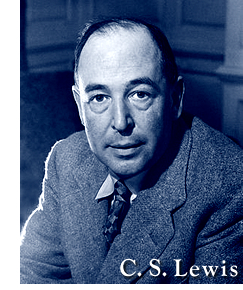
C.S. Lewis Daily – Today’s Reading


TO MRS. JOHNSON: On the good the dead do by dying well and by comforting us (in the Holy Spirit) afterward; and on how heaven and earth are better than we can imagine.

7 August 1956

Would you believe it!—I had recently felt anxious as to how you were getting on and in praying for you (as of course I do for all who correspond with me on religious matters) I had added a prayer that I might soon hear some good news of you. And also at once your letter . . . arrived.

All you tell me is good and very good. Your mother-in-law has done good to the whole circle by the way she died. And where she has gone I don’t doubt she will do you more still. For I believe that what was true of Our Lord Himself (‘It is expedient for you that I go, for then the Comforter will come to you’ [John 16:7]) is true in its degree (of course, an infinitesimal degree in comparison, but still true) of all His followers. I think they do something for us by dying and shortly after they have died which they couldn’t do before—and sometimes one can almost feel it happening. (You are right by the way: there is a lot to be said for dying—and being born—at home.)

No, I don’t wish I knew Heaven was like the picture in my Great Divorce, because, if we knew that, we should know it was no better. The good things even of this world are far too good ever to be reached by imagination. Even the common orange, you know: no one could have imagined it before he tasted it. How much less Heaven.

From The Collected Letters of C.S. Lewis, Volume III – Compiled in Yours, Jack

Charles Stanley – Jesus Is Lord

Philippians 2:5-11

What does it mean when we say that Jesus is Lord? We hear the word used so frequently that we are in danger of losing the significance of its sheer power and magnitude.

Lord is far more than a mere title that Scripture bestows on Jesus. The second chapter of Philippians emphasizes this fact by repeatedly mentioning the word name. We see that God gave Jesus the “name which is above every name, so that at the name of Jesus,” all of heaven and earth will bow down and “confess that Jesus Christ is Lord, to the glory of God the Father” (vv. 9-11).

In that passage, the name given to Jesus is none other than “Lord.” You see, that word is not used to describe what Jesus does; it’s simply who Jesus is. He is, and will always be, the sovereign ruler of everything in heaven and on the earth.

Therefore, if we echo the confession, “Jesus is Lord,” then our lives must reflect that confidence. Is there anything in your life that you attempt to hide from Christ? Have you refused to do something that He has called you to do? These are acts of rebellion, and they simply demonstrate our lack of faith in Jesus as Lord of our lives.

One day everyone will recognize that Christ is Lord of lords (1 Tim. 6:15). We who are His children should show our faith by inviting Him into any dark areas of our life and allowing Him to conform us to His image. We can begin with the simple yet profound confession: “Jesus is Lord.” And when we confess those words, we should be mindful of their meaning.

Our Daily Bread — A Happy Ending


Read: Ephesians 4:20-32
Bible in a Year: 2 Samuel 14-15; Luke 17:1-19


Be kind to one another, tenderhearted, forgiving one another, even as God in Christ forgave you. —Ephesians 4:32

A friend told me about the time he was watching football on TV as his young daughter played nearby. Angered by his team’s bad play, he grabbed the closest thing and threw it down. His little girl’s favorite toy was shattered, along with her heart. My friend immediately embraced his daughter and apologized. He replaced the toy and thought all was well. But he didn’t know how much his fury had frightened his 4-year-old, and she didn’t know the depth of her pain. In time, however, forgiveness came.

Years later he sent an identical toy to his daughter when she was expecting a baby. She posted a photo of the toy on Facebook with the words, “This gift has a very long story going back to my childhood. It wasn’t a happy story then, but it has a happy ending now! Redemption is a beautiful thing. Thanks, Grandpa!”

The Bible urges us to avoid angry outbursts by putting on the new self, “which was created according to God, in true righteousness and holiness” (Eph. 4:24). And if we are the victim of anger, God asks us to “be kind to one another, tenderhearted, forgiving one another, even as God in Christ forgave you” (v.32).

Restored relationships are not easy, but they are possible by the grace of God. —David McCasland

Lord, my temper can sometimes run hot. Grant me the grace to stop and think before I act or speak and the grace to apologize when I’ve hurt someone. Thank You for the gift of forgiveness.

Repentance and forgiveness are the glue that can repair a broken relationship.

INSIGHT: In today’s passage the apostle Paul brackets his words of challenge with the phrases “putting away” (v. 25) and “put away” (v. 31). Though they are translated as similar expressions in English, they are two different words in Greek and speak of an increasing intensity of action. The word in verse 25 tells us to put off lying, as if taking off a garment and replacing it with a new one (integrity and truthfulness). In verse 31, however, it is the challenge to “put away” or to get rid of certain things once and for all.

Ravi Zacharias Ministry –   The Labor of Sight


Levi Yitzchok of Berditchev was a nineteenth-century rabbi known for his mastery of an unwieldy Mishnaic teaching. To carry one’s self with the ayin tovah, or the “good eye,” is to see in a certain light the world and everyone in it. One scholar describes it as the choice “to intentionally focus on what is most pure in each person—to see their highest and holiest potential.”(1) Rabbi Yitzchok was beloved for his good eye, utilized even in cases where virtue seemed entirely wanting and holiness altogether deficient. As one author describes, “He’d roust the local drunk from his stupor on High Holy Days, seat him at the head of the table, and respectfully ask for his wisdom… He extended his caring to all, whether powerful or impoverished, scholarly or simple, righteous or reprobate.”(2) In minds often besieged by warring sides, opinions ad nauseam, and defensive or disparaging thoughts, the good eye is indeed a shift of perception.

I appreciate stories that remind me to keep my eyes opened for all that can be seen but can just as easily be missed. How we learn to see the world, how we labor to see and know the world, is profoundly important. Despite the perseverance of goodness, beauty, and truth around us, the collective wisdom of sociologists, philosophers, historians, and artists all indicates that contemporary culture is structurally estranged from the transcendent.

Learning to see with the good eye may well be a difficult feat without mindful effort and practice. But could it not be an entirely transformative art for both the seer and the world being seen?

Without such effort, consider all that is lost. An article from the Washington Post chronicles a jarring exhibition of our propensity for estrangement—seeing with eyes that are not really seeing, hearing but not hearing. The report describes an experiment they called “Pearls Before Breakfast: Can one of the nation’s great musicians cut through the fog of a D.C. rush hour?”(3) Violin virtuoso Joshua Bell, one of the finest classical musicians in the world, was hired to perform several classical masterpieces at a Metro station during the morning rush hour. Three days prior to his debut at the Metro, Bell had filled Boston’s prestigious Symphony Hall, where only average seats sold for over $100. As he preformed with the same fervor on his handcrafted 1713 Stadivari for nearly an hour at the Metro, however, he took in a total of $32 and change from the 27 people who noticed him. The other thousand people hurried by, altogether unaware, though only three feet away from brilliance. “There was never a crowd, not even for a second.”(4)

Christian scripture is replete with stories that hint that it is always possible to pass over the gifts and grace in front of us, whether a glimpse of beauty or a lifetime of knowing the present glory of the human Son of God. In the words of poet Francis Thompson:

The angels keep their ancient places:-

Turn but a stone, and start a wing!

Tis ye, ’tis your estranged faces,

That miss the many-splendour’d thing.

“All human nature vigorously resists grace because grace changes us and the change is painful,” wrote Flannery O’Connor to a friend lamentably, including herself in that resistance. There are indeed times when God woos us slowly with beauty, grace, and grandeur, moving among us in a manner that busy or critical lives readily miss while focusing elsewhere. Other times it is we who find ourselves moved nearly to blindness, as we labor to take in the glory of God in a startling moment like Moses or Isaiah. Sometimes, like commuters in the Metro station oblivious of the work of art before us, our estranged faces miss the signs of a many-splendored God entirely. But still other times, we labor intentionally to see with good eyes, and find the world around us transformed with the splendor of the one who first called the world good.

Jill Carattini is managing editor of A Slice of Infinity at Ravi Zacharias International Ministries in Atlanta, Georgia.

(1) Marc Ian Barasch, The Compassionate Life: Walking the Path of Kindness (San Francisco: Berrett-Koehler Publishers, 2009), 87.

(2) Ibid.

(3) Gene Weingarten, “Pearls Before Breakfast” The Washington Post, Sunday April 8, 2007.

(4) Ibid.

Alistair Begg – Exalted with Him


God exalted him. Acts 5:31

Jesus, our Lord, who once was crucified, dead, and buried, now sits upon the throne of glory. The highest place that heaven affords is His by undisputed right. It is vital and helpful to remember that the exaltation of Christ in heaven is a representative exaltation. He is exalted at the Father’s right hand, and though as Jehovah He had eminent glories, in which finite creatures cannot share, yet as the Mediator, the honors that Jesus wears in heaven are the heritage of all the saints.

It is delightful to think of how close Christ’s union is with His people. We are actually one with Him; we are members of His body; and His exaltation is our exaltation. He will allow us to sit upon His throne, even as He has overcome and is seated with His Father on His throne. He has a crown, and He gives us crowns too. He has a throne, but He is not content with having a throne to Himself; on His right hand there must be His queen, dressed in fine gold. He cannot be glorified without His bride.

Look up, believer, to Jesus now. Let the eye of your faith see Him with many crowns upon His head; and remember that one day you will be like Him, when you will see Him as He is. You shall not be as great as He is, you will not be as divine; but you will, in some measure, share the same honors and enjoy the same happiness and the same dignity that He possesses. Be content to live unknown for a little while and to walk your weary way through the fields of poverty or up the hills of affliction; for soon enough you will reign with Christ, for He has “made [us] a kingdom and priests to our God,” and we shall reign forever and ever.1

What a wonderful thought for the children of God! We have Christ for our glorious representative in heaven’s courts right now, and soon He will come and receive us to Himself, to be with Him there, to see His glory and to share His joy.

  1. Revelation 5:10

Devotional material is taken from “Morning and Evening,” written by C.H. Spurgeon, revised and updated by Alistair Begg.

Charles Spurgeon – Full redemption

“There shall not an hoof be left behind.” Exodus 10:26

Suggested Further Reading: Revelation 20:1-10

A man once wrote a book to prove the devil a fool. Certainly, when all matters shall come to their destined consummation, Satan will prove to have been a magnificent fool. Folly, magnified to the highest degree by subtlety, shall be developed in Satan. Ah! Thou trailing serpent, what hast thou now after all? I saw thee but a few thousand years ago, twining around the tree of life, and hissing out thy deceptive words. Ah! how glorious was the serpent then—a winged creature, with his azure scales. Yes, and thou didst triumph over God. I heard thee as thou didst go hissing down to thy den. I heard thee say to thy brood,—vipers in the nest as they are,—“My children, I have stained the Almighty’s works: I have turned aside his loyal subjects; I have injected my poison into the heart of Eve, and Adam hath fallen too; my children let us hold a jubilee, for I have defeated God.” Oh, my enemy; I think I see thee now, with thy head all broken, and thy jaw-teeth smashed, and thy venom-bags all emptied, and thou thyself a weary length of agony, rolling miles afloat along a sea of fire, tortured, destroyed, overcome, tormented, ashamed, hacked, hewed, dashed in pieces, and made a hissing, and a scorn for children to laugh at, and made a scoff throughout eternity. Ah! well, brethren, the great Goliath hath gained nothing by his boasting: Christ and his people have really lost nothing by Satan. All they lost once, has been re-taken. The victory has not simply been a capture of that which was lost, but a gaining of something more. We are in Christ more than we were before we fell. “Not a hoof shall be left behind.”

For meditation: Victory over Satan will be celebrated with joy (Revelation 12:10-12; Romans 16:20) but for the moment we must remain on our guard against him (1 Corinthians 7:5; 2 Corinthians 2:11; Ephesians 4:27; 6:11; 1 Timothy 3:6,7; 1 Peter 5:8,9).

Sermon no. 309
22 April (1860)

Joyce Meyer – Praying God’s Prayers


For from of old no one has heard nor perceived by the ear, nor has the eye seen a God besides You, Who works and shows Himself active on behalf of him who [earnestly] waits for Him. Isaiah 64:4

The Holy Spirit will lead us into amazing exploits in prayer if we will simply ask Him what to pray, wait for Him to answer, and then obey. We are unwise if we say we don’t have time to wait on God and allow Him to speak to us and lead us as we pray. We will wait forty-five minutes for a table at a restaurant, but say we do not have time to wait on God. When we wait on God, turning our hearts toward Him for direction, we honor Him. By our willingness to wait He knows that we want His will and that we are dependent upon Him for guidance. We save a lot of time by turning our hearts toward God and waiting on Him. As the verse for today says, God shows Himself active on behalf of those who wait on Him. Start your prayers by simply saying, “I love you Lord and I wait on you for direction in my prayers today.” Then begin to pray what is in your heart rather than what is in your own mind or will. I was recently praying for someone to do a certain thing that I knew they needed to do, but God showed me that I needed to pray for them to develop discipline because the lack of it was affecting many areas of their life. I would have prayed for the one area I saw, but God saw much more deeply than I did.

Another time I was praying for someone concerning some problem behavior that I saw, but God showed me that the root of their problem was self-rejection and that I needed to pray for them to know how much God loved them. You can see that we often pray for what we see, but God will lead us deeper if we will wait on Him.

Presidential Prayer Team; G.C. – Outcomes


Millennials, the generation born between 1980 and 2000, have been accused of being lazy – but what generation hasn’t? By nature and through readily accessible technology, Millennials expect “efficiency of effort for maximum impact”…in other words, the best outcome with the least work.

No one can say “Jesus is Lord” except in the Holy Spirit.

I Corinthians 12:3

Robert A. Heinlein’s story, “The Man Who Was Too Lazy to Fail,” tells of an enterprising hero charged with milking cows. He didn’t enjoy being up at dawn, but he’d been told it was the time of day cows required milking. This Millennial-thinking guy soon discovered cows didn’t actually care about the time of day; they cared only about frequency and results. Ultimately, he had the cows’ schedule and a successful business on his terms.

Coming generations will have to overcome a cultivated tendency to do things in their own way to understand God’s plan for their salvation – because there is no other way to know God than through His risen Son, the Lord Jesus Christ. Today, pray that Holy Spirit will move upon America’s future leaders so they will be open to welcoming God’s way to know Him, submitting their lives and the nation they will lead to the power of the risen Lord…the very best outcome of all.

Recommended Reading: Isaiah 60:1-5

Greg Laurie – Great Commission or Great Omission?


Therefore, to him who knows to do good and does not do it, to him it is sin.—James 4:17

If someone on his deathbed was giving his final words, would you pay attention? I hope so. If someone wrote down her last wishes in a will, would you take the time to read it? I think you would.

In Matthew 28 we have Jesus’ final will and testament, so to speak, which is known as the Great Commission. Jesus said, “All authority has been given to Me in heaven and on earth. Go therefore and make disciples of all the nations, baptizing them in the name of the Father and of the Son and of the Holy Spirit, teaching them to observe all things that I have commanded you; and lo, I am with you always, even to the end of the age” (Matthew 28:18–20).

This is the message of Christ to each of us. But how many of us are actually doing it? Some might find the following statement a bit controversial, but I think it is true: if you are not seeking to fulfill the Great Commission, it actually can be a sin.

There are different kinds of sin identified in the Bible: the sins of commission and the sins of omission. A sin of commission is doing what you should not do. A sin of omission is not doing what you should do.

The Bible tells us in James 4:17, “To him who knows to do good and does not do it, to him it is sin.” Yet for many, the Great Commission has become the Great Omission. Research has shown that 95 percent of Christians have never led another person to Christ.

The full concept of going into the world and making disciples is to share your faith, lead people to Christ, and then, to the best of your ability, help them mature spiritually.

Max Lucado – A Big View of God


Exactly what is worship? I like King David’s definition in Psalm 34:3, “O magnify the Lord with me, and let us exalt his name together.” Worship is the act of magnifying God, enlarging our vision of him, and observing how he works.

Of course his size doesn’t change, but our perception of him does. As we draw nearer, he seems larger. Isn’t that what we need? A big view of God? Don’t we have big problems, big worries, and big questions? Of course we do. Hence, we need a big view of God. Worship offers that. How can we sing, “Holy, Holy, Holy” and not have our vision expanded? How can we sing these words and not have our countenance illuminated? A vibrant, shining face is the mark of one who has stood in God’s presence. God is in the business of changing the face of the world!  Let him begin with yours!

From Just Like Jesus