Presidential Prayer Team; H.L.M.- He Said “Yes”


Dr. Francis Collins, director of the National Institute of Health, grew up in a family of agnostics. By the time Francis graduated from medical school, he described himself as a full-fledged atheist. Yet during his medical residency, Francis watched people suffering from terminal disease without blaming God. In fact, their faith seemed to give them strength and even improve their symptoms.

I have trusted in the Lord without wavering.

Psalm 26:1

Then a patient questioned Francis about his faith. Realizing he had rejected any faith view without doing any research, Francis turned to the C.S. Lewis book Mere Christianity. As he read, his assumptions about faith in God were shaken. Finally, after months of wrestling over the question of God, he finally broke down. While hiking in the Cascade Mountains and admiring the grandeur of God’s creation, Francis said “yes” to the Lord. “I’ve never turned back,” Francis said. “That was the most significant moment of my life.”

Jesus said, “You will know the truth, and the truth will set you free.” (John 8:32) Christ has promised salvation and freedom from death for all who receive Him as Savior and Lord. That promise became a reality for Francis. Pray that it will for America’s leaders as well.

Recommended Reading: John 8:24-32

 

Greg Laurie – Is All Killing Wrong?


“You shall not murder.”—Exodus 20:13

We live in a violent and murderous culture today, a culture that is awash in fighting and killing, a culture where nearly two million people are violent crime victims each year. Yet the sixth commandment says, “You shall not murder” (Exodus 20:13).

ll murder is wrong, but all killing isn’t necessarily wrong. That is an important distinction to make. All murder is killing, but all killing is not necessarily murder. We are never to take the life of another human being for no justifiable reason. But the Bible does not condemn all killing. If you study Numbers 35, you will see that God established a difference between killing and murder.

So when is killing right? One example is self-defense. You have the right to defend yourself. A country also has a right, and really the responsibility, to defend itself. God has even established authority, such as the military and the police. Romans 13 says, “For rulers are not a terror to good works, but to evil. Do you want to be unafraid of the authority? Do what is good, and you will have praise from the same. For he is God’s minister to you for good. But if you do evil, be afraid; for he does not bear the sword in vain; for he is God’s minister, an avenger to execute wrath on him who practices evil” (verses 3-4).

When Paul made that statement, the authority was the Roman government. Was the Roman government a pure, moral, godly force on the earth? Hardly. But even with the problems of the Roman government and the Caesars, Paul recognized that God is ultimately in control.

There is a place for authority, for the military and the police. It doesn’t mean they always do the right thing. But God has established the authority.

Max Lucado – God Never Gives Up


God moves us forward by healing our past! Can he really? Can God heal this ancient hurt in my heart? Of course He can. In fact, God cares more about justice than we do. Paul reminds us in Romans 12:17-19, “Never pay back evil for evil. . .never avenge yourselves. Leave that to God, for He has said that He will repay those who deserve it.”

We fear the evildoer will slip into the night, unknown and unpunished. Escape to Fiji and sip mai tais on the beach. Not to worry. Scripture says, “God will repay,” not “God might repay.” God will execute justice on behalf of truth and fairness.

Unlike us, God never gives up on a person. Never. Long after we’ve moved on, God is still there, probing the conscience, stirring conviction, always orchestrating redemption. Fix your enemies? That’s God’s job.

From You’ll Get Through This

Night Light for Couples – Happily Ever After?


“Are you married? Do not seek a divorce.” 1 Corinthians 7:27

What you have observed by looking around your social circles is born out by the numbers: According to nearly every relevant statistic, the institution of marriage is in serious trouble. The Council on Families in America reports that half of first marriages are likely to end in divorce. The National Center for Health Statistics tells us that the number of Americans choosing to marry is declining. And Brent Barlow, professor of family sciences at Brigham Young University, says that if cohabitation and divorce trends continue, “married” could become a minority status within ten years.

Obviously, millions of couples who were once deeply in love and believed they were wonderfully suited for each other are seeing their marriages fall apart. If you and your spouse are going to beat the odds, you will need to bring dedication and hard work to your relationship.

Does this challenge seem more like a threat than a promise? We have good news. First, couples who are willing to invest in their relationship will find the greatest fulfillment and meaning that life has to offer. That is the promise of a godly marriage. Statistics bear this fact out too! Second, you need not try to beat the odds alone. In fact, you were never meant to. But more on that tomorrow…

Just between us…

  • What, specifically, does having a “happy marriage” mean to you?
  • Are you happy? Why or why not?
  • What can I do to bring more happiness to your life?

Heavenly Father, You designed the covenant of marriage from the beginning, and our marriage belongs to You. So bless our union with Your best! Draw us together, and draw us to You. Amen.

From Night Light For Couples, by Dr. James & Shirley Dobson

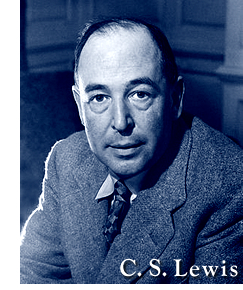
C.S. Lewis Daily – Today’s Reading


On love

There are two kinds of love: we love wise and kind and beautiful people because we need them, but we love (or try to love) stupid and disagreeable people because they need us. This second kind is the more divine because that is how God loves us: not because we are lovable but because He is love, not because He needs to receive but He delights to give.

From The Collected Letters of C.S. Lewis, Volume III

Compiled in Words to Live By

Charles Stanley – The Consequences of Compromise


Titus 2:11-14

Stuck again. Is that an apt description of your life? It is for many Christians. Even when they know exactly why they are stalled, some are unable to move past the sin that trips them up. Others feel blind to the source of their troubles but perceive that all they do is run in place. It can be a very discouraging situation.

Israel, the Lord’s chosen nation, had a history of defeat from yielding to temptation instead of obeying God’s commands. Compromise defeats us, too. God calls His children to live obedient lives, but instead, we are usually occupied with our own self-centered needs. At the same time, we are influenced by both the world and the devil. The truth is that our selfish side prefers reinterpreting God’s commands to suit ourselves. The world clamors for us to join its way of thinking but shows little or no inclination to follow God’s way. Satan seeks to gain a foothold in our lives through our disobedience and compromise of God’s laws.

The Lord commands us to rid our lives of ungodliness (Titus 2:11-12), and He provides the Holy Spirit’s power, which enables us. When we compromise, the effectiveness of His power is diminished. But God wants us not to yield.

To fight compromise, begin with your thinking. Have you agreed with God that your attitude or action is displeasing to Him? Have you set your mind on obedience, whatever the cost? Only foolish people think they can compromise and still live a victorious Christ-centered life.

Bible in One Year: Psalms 132-138

Our Daily Bread — Come to Me


Read: John 6:30-40

Bible in a Year: Job 30-31; Acts 13:26-52

I am the bread of life. He who comes to Me shall never hunger. —John 6:35

When Jesus lived on this earth, He invited people to come to Him, and He still does today (John 6:35). But what do He and His Father in heaven have that we need?

Salvation. Jesus is the only way to have forgiveness of sin and the promise of heaven. “Whoever believes in Him should not perish but have eternal life” (John 3:15).

Purpose. We are to give all of our heart, soul, mind, and strength to following Jesus. “Whoever desires to come after Me, let him deny himself, and take up his cross, and follow Me” (Mark 8:34).

Comfort. In trial or sorrow, the “God of all comfort . . . comforts us in all our tribulation” (2 Cor. 1:3-4).

Wisdom. We need wisdom beyond our own for making decisions. “If any of you lacks wisdom, let him ask of God, . . . and it will be given to him” (James 1:5).

Strength. When we’re weary, “the Lord will give strength to His people” (Ps. 29:11).

Abundant life. The fullest life is found in a relationship with Jesus. “I have come that they may have life, and that they may have it more abundantly” (John 10:10).

Jesus said, “The one who comes to Me I will by no means cast out” (John 6:37). Come! —Anne Cetas

How can I grow closer to God today?

Jesus invites us to come to Him for life.

INSIGHT: The day after Jesus performed the miracle of feeding thousands of people with just five loaves of bread and two fish, the crowd asked Him, “What sign then will you give that we may see it and believe you? What will you do? Our ancestors ate the manna in the wilderness; as it is written: ‘He gave them bread from heaven to eat’ ” (John 6:30-31 niv). This question is significant because it was the same group of people (or at least part of that group) that Jesus fed the day before who were now asking for a sign. They claimed their ancestors believed because they ate the bread from heaven. They had just seen Jesus miraculously provide bread for them, but they lacked faith to believe Jesus was who He said He was.

Alistair Begg – Called to be Saints


Called to be saints. Romans 1:7

We are very apt to regard the apostolic saints as if they were “saints” in a more special manner than the other children of God. All are “saints” whom God has called by His grace and sanctified by His Spirit; but we are apt to look upon the apostles as extraordinary beings, scarcely subject to the same weaknesses and temptations as ourselves.

Yet in doing so we forget this truth, that the nearer a man lives to God, the more intensely has he to mourn over his own evil heart; and the more his Master honors him in His service, the more the evil of the flesh vexes and teases him day by day. The fact is, if we had seen the apostle Paul, we would have thought him remarkably like the rest of the chosen family: And if we had talked with him, we would have said, “We find that his experience and ours are much the same. He is more faithful, more holy, and more deeply taught than we are, but he has the selfsame trials to endure. Actually, in some respects he is more sorely tried than ourselves.”

Do not, then, look upon the ancient saints as being exempt either from infirmities or sins; and do not regard them with that mystic reverence that will almost make us idolaters. Their holiness is attainable even by us. We are “called to be saints” by that same voice that constrained them to their high vocation. It is a Christian’s duty to force his way into the inner circle of saintship; and if these saints were superior to us in their attainments, as they certainly were, let us follow them; let us emulate their passion and holiness. We have the same light that they had, the same grace is accessible to us, and why should we rest satisfied until we have equaled them in heavenly character? They lived with Jesus, they lived for Jesus, therefore they grew like Jesus. Let us live by the same Spirit as they did, “looking to Jesus,”1 and our saintship will soon be apparent.

1) Hebrews 12:2

Devotional material is taken from “Morning and Evening,” written by C.H. Spurgeon, revised and updated by Alistair Begg.

Charles Spurgeon – Christ lifted up


“And I, if I be lifted upfrom the earth, will draw all men unto me.” John 12:32

Suggested Further Reading: 1 Corinthians 2:1-5

Christ preached his own truth, and the common people heard him gladly, and the multitude flocked to listen to him. My good ministering brother, have you got an empty church? Do you want to fill it? I will give you a good recipe, and if you will follow it, you will, in all probability, have your chapel full to the doors. Burn all your manuscripts, that is number one. Give up your notes, that is number two. Read your Bible and preach it as you find it in the simplicity of its language. And give up all your latinized English. Begin to tell the people what you have felt in your own heart, and beseech the Holy Spirit to make your heart as hot as a furnace for zeal. Then go out and talk to the people. Speak to them like their brother. Be a man amongst men. Tell them what you have felt and what you know, and tell them heartily with a good, bold face; and, my dear friend, I do not care who you are, you will get a congregation. But if you say, “Now, to get a congregation, I must buy an organ.” That will not serve you a bit. “But we must have a good choir.” I would not care to have a congregation that comes through a good choir. “No,” says another, “but really I must alter my style of preaching a little.” My dear friend, it is not the style of preaching, it is the style of feeling. People sometimes begin to mimic other preachers, because they are successful. Why, the worst preachers are those who mimic others, whom they look upon as standards. Preach naturally. Preach out of your hearts just what you feel to be true, and the old soul-stirring words of the gospel will soon draw a congregation.

For meditation: Are we brave enough to do it? We ought not to expect the world to be attracted to Christ when we obscure him by our reliance on gimmicks and by being second-rate mimics of things they can find done better elsewhere. But the unbeliever cannot find the true Gospel and a crucified Christ anywhere else!

Sermon no. 139
5 July (1857)

John MacArthur – Union with Christ


“You also, as living stones, are being built up as a spiritual house” (1 Pet. 2:5).

Christ is your life, and you are an integral part of what He is accomplishing in the world.

The Jewish culture of Peter’s time centered on the Temple in Jerusalem. Apparently drawing from that picture, Peter used vivid language to teach that God no longer dwells in an earthly, material, temporal house, but in a spiritual house. Christ is the cornerstone, and the spiritual house He is building is comprised of individual believers.

That analogy introduces us to the first spiritual privilege Christians enjoy: union with Christ Himself. That makes Christianity utterly unique among religions. Buddhists are not said to be in Buddha. Muslims are not in Muhammad. A Confucianist is not in Confucius. Only Christians are united with and receive their spiritual life from the object of their worship.

When you came to Christ, the living stone, you also became a living stone yourself. You possess His resurrection life and draw from His spiritual resources. That’s what Peter meant when he said that God “has granted to us His precious and magnificent promises, in order that by them you might become partakers of the divine nature” (2 Pet. 1:4).

Ephesians 2:19-22 adds, “You are no longer strangers and aliens, but you are fellow citizens with the saints, and are of God’s household, having been built upon the foundation of the apostles and prophets, Christ Jesus Himself being the corner stone, in whom the whole building, being fitted together is growing into a holy temple in the Lord; in whom you also are being built together into a dwelling of God in the Spirit.” Christ is the cornerstone of the church, built on the foundation of biblical truth, which is the divine revelation given through the apostles and prophets. Rejoice in the privilege of being united with Christ and learning from His Word!

Suggestions for Prayer

Thank God for selecting you as one of His spiritual stones. Seek His wisdom and grace in living each day to His glory.

For Further Study

Read Acts 17:24, 1 Timothy 3:15, and Hebrews 3:6, noting what they teach about God’s spiritual house.


Joyce Meyer – Confidence Leads to Reward


Do not, therefore, fling away your fearless confidence, for it carries a great and glorious compensation of reward.- Hebrews 10:35

Anytime I talk about fear, I think back to my first really sizable speaking engagement. I actually got to stand in front of what would now be a small group of people, but then looked like a million people to me. One of the workshop leaders for this event canceled and because somebody knew somebody who knew somebody who knew somebody who knew me—I was asked to speak at the event. I was not their first choice, but God opened a door of opportunity and I gladly took it.

On opening night all of the speakers were sitting together. It was Dr. So-and-So, and Bishop So-and-So, and Reverend So-and-So, and Joyce. The devil was screaming in my ears, “What are you doing here? Why don’t you go back to Fenton where you came from? You are going to make a fool out of yourself!” I listened so much to what the devil was telling me that when it was my time to go up front and introduce myself and tell everybody what my workshop was going to be about, all I got out was a squeak. I was so scared; I was a mess. And I’m not even a really fearful person! But I let the fearful thoughts in.

Think about how much calmer you can be by just stopping your thinking about some of the things you’re thinking about. If you believe you’re doing what God wants you to do, then just do it. Now I just show up and trust God. Recently I spoke to nearly half a million people in India and I wasn’t nervous at all. It gets easier when you have more experience trusting God; there is no doubt about that.

I remember having to make a decision the night of that first speaking engagement, to either open my mouth and try again or to run. Obviously, I tried again because here we are. What makes me sad is wondering how many people never try again.

Trust in Him Conquer your fear by trusting God and doing what He tells you to do, even if you have to do it again and again and again before you succeed.


Campus Crusade for Christ; Bill Bright – Rescue from Temptation


“So also the Lord can rescue you and me from the temptations that surround us, and continue to punish the ungodly until the day of final judgement comes” (2 Peter 2:9).

Charles G. Finney was one of America’s most outstanding evangelists. One day while he was still a young lawyer, he sat in his village law office in the state of New York. It was early in the day, and the Lord began to deal with him.

“Finney,” an inner voice asked, “what are you going to do when you finish your course?”
“Put out a shingle and practice law.”
“Then what?” the voice persisted.
“Get rich.”
“Then what?”
“Retire.”
“Then what?”
“Die.”
“Then what?”
This time the words came tremblingly, “The judgement.”

Young Finney ran for the woods half a mile away. As he prayed, he vowed that he would not leave until he had made his peace with God. After a long struggle, he discovered that he could not resist God’s call, and he came out of the woods that evening with the high purpose of living the remainder of his life to the glory of God, enjoying Him forever.

Like that great preacher and evangelist you and I can be rescued from the temptations of the world so that we will not resist any clear call from God.

Bible Reading: II Peter 2:10-17

TODAY’S ACTION POINT: When the world tries to squeeze me into its mold, I’ll not resist the clear call from our Lord Jesus Christ to follow Him.

Presidential Prayer Team; J.R. – Modified Memory


There is a movement afoot to completely secularize the United States, led by revisionists who would argue that the Founding Fathers were hostile to Christianity. Thomas Jefferson’s description of a “separation of church and state,” for example, has been twisted to ban prayer in public schools and force the removal of crosses from public property.

O God…our fathers have told us, what deeds you performed in their days, in the days of old.

Psalm 44:1

Though their beliefs varied and not all were Christians, the Founding Fathers were firmly committed to biblical morality, to public prayer and praise, and to the conviction that God is the Creator of liberty. When the Revolutionary War was won, for example, George Washington ordered the military’s chaplains to “render thanks to almighty God for all his mercies, particularly for his overruling the wrath of man to his own glory, and causing the rage of war to cease amongst the nations.”

As you celebrate your freedom in God as a praying American this weekend, do not allow others to rewrite for you the true history of the deeds performed in the “days of old.” It is God who wins the battles and accomplishes His purposes. The Founders acknowledged this. May we never forget it!

Recommended Reading: I Samuel 17:41-51

C.S. Lewis Daily – Today’s Reading


TO MARY VAN DEUSEN: On the resolution to her question about joining a religious order; on the impermanence of feelings, good and bad; and on the need for the natural love in marriage to die into divine love.

23 July 1953

I think your decision ‘a rule of life, without membership’ is a good one. It is a great joy to be able to ‘feel’ God’s love as a reality, and one must give thanks for it and use it. But you must be prepared for the feeling dying away again, for feelings are by nature impermanent. The great thing is to continue to believe when the feeling is absent: and these periods do quite as much for one as those when the feeling is present.

It sounds to me as if Genia had a pretty good husband on the whole. So much matrimonial misery comes to me in my mail that I feel those whose partner has no worse fault than being stupider than themselves may be said to have drawn a prize! It hardly amounts to a Problem. I take it that in every marriage natural love sooner or later, in a high or a low degree, comes up against difficulties (if only the difficulty that the original state of ‘being in love’ dies a natural death) which force it either to turn into dislike or else to turn into Christian charity. For all our natural feelings are, not resting places, but points d’appui, springboards. One has to go on from there, or fall back from there. The merely human pleasure in being loved must either go bad or become the divine joy of loving. But no doubt Genia knows all this. It’s all quite in the ordinary run of Christian life. See I Peter iv, 12 ‘Think it not strange et cetera.’

From The Collected Letters of C.S. Lewis, Volume III

Compiled in Yours, Jack

The Collected Letters of C. S. Lewis

Charles Stanley – Freedom in Christ


John 8:36

Throughout this day, Americans everywhere will celebrate freedom, as well they should. It’s one of the defining principles of their nation. Yet one might ask, Of those celebrating freedom, how many are truly experiencing it?

Certainly, many men and women are living what has been called the “American dream”: They enjoy well-paying careers, wonderful homes, and interesting hobbies. But meanwhile, their “pursuit of happiness” has yet to be satisfied. The reason is that lots of people remain prisoners internally, despite their apparent success. They are bound to anxiety and depression, or a fear of losing what they’ve worked hard to possess. However liberating circumstances may seem externally, we eventually learn that freedom must be realized within. But how?

The answer is Jesus Christ. Isaiah 61:1 prophesied a key aspect of Jesus’ ministry, which continues to this day: He has come to heal the brokenhearted and set captives free. When we trust Him as Savior, the chains holding us back from joy are broken. We are liberated from lies that have been programmed in our minds from an early age, and we begin to see things from God’s point of view. Then we discover that our needs, desires, and overall well-being rest securely in the arms of a loving heavenly Father.

Are you feeling the weight of anxiety or anger? Look to Jesus, the author and perfecter of your faith (Heb. 12:2). And remember the promise of 2 Corinthians 6:2: “Now is the day of salvation” (NIV). The day you trust in Christ is the day He delivers you from fear and bondage.

Bible in a Year: Psalms 120-131

Our Daily Bread — The Cyrus Cylinder


Read: Ezra 1:1-4

Bible in a Year: Job 28-29; Acts 13:1-25

The Lord stirred up the spirit of Cyrus king of Persia. —Ezra 1:1

In 1879, archaeologists discovered a remarkable little item in an area now known as Iraq (biblical Babylon). Just 9 inches long, the Cyrus Cylinder records something that King Cyrus of Persia did 2,500 years ago. It says that Cyrus allowed a group of people to return to their homeland and rebuild their “holy cities.”

It’s the same story told in Ezra 1. There we read that “the Lord stirred up the spirit of Cyrus king of Persia” to make a proclamation (v. 1). And in that proclamation, Cyrus said he was releasing the captives in Babylon to go home to Jerusalem, re-establish their homes, and rebuild their temple (vv. 2-5).

But there’s more to the story. Daniel confessed his sins and his people’s sins and pleaded with God to end the Babylonian captivity (Dan. 9). In response to Daniel’s prayer, God sent an angel to speak to Daniel (v. 21). Later He moved Cyrus to release the Hebrews. (See also Jer. 25:11-12; 39:10.)

Together, the Cyrus Cylinder and God’s Word combine to show us that the king’s heart was changed and he allowed the exiled Hebrews to go home and worship.

This story has great implications for us today. In a world that seems out of control, we can rest assured that God can move the hearts of leaders. We read in Proverbs 21:1 that “the king’s heart is in the hand of the Lord.” And Romans 13:1 says that “there is no authority except from God.”

The Lord, who is able to change our own hearts as well as the hearts of our leaders, can be trusted for He is in control. Let’s ask Him to work. —Dave Branon

Dear Father, the world so often seems out of control. We know You are sovereign over everything. We pray that Your will be done in our homeland and in the hearts of our leaders.

Rather than complain, pray.

INSIGHT: Ezra is one of the Old Testament books that deals with the Israelites’ return to the land of promise after their exile in Babylon. Along with the books of Nehemiah and Haggai, it focuses on rebuilding Jerusalem, the once proud capital of the southern kingdom. Ezra’s role as a scribe was to rebuild the religious life of the Israelites through the law of Moses. In Nehemiah, the focus is on rebuilding the walls of Jerusalem to once again make it a safe haven for the people. Haggai’s focus some years later was on the importance of rebuilding the temple, the center of the Israelites’ national life.


Alistair Begg – The Tool of Sanctification


Sanctify them in the truth. John 17:17

Sanctification begins in regeneration. The Spirit of God implants in man that new living principle by which he becomes “a new creation”1 in Christ Jesus. This work, which begins in the new birth, is carried on in two ways-mortification, whereby the lusts of the flesh are subdued and kept under, and vivification, by which the life that God has put within us is made to be a well of water springing up unto everlasting life.

This is carried on every day in what is called perseverance, by which the Christian is preserved and continued in a gracious state and is made to abound in good works unto the praise and glory of God; and it culminates or comes to perfection in glory, when the soul, being thoroughly purged, is caught up to dwell with holy beings at the right hand of the Majesty on high.

But while the Spirit of God is thus the author of sanctification, yet there is a visible agency employed that must not be forgotten. “Sanctify them,” said Jesus, “in the truth; your word is truth.” The passages of Scripture that prove that the instrument of our sanctification is the Word of God are numerous. The Spirit of God brings to our minds the precepts and doctrines of truth and applies them with power. These are heard in the ear, and being received in the heart, they work in us to will and to do God’s good pleasure.

The truth is the sanctifier, and if we do not hear or read the truth, we shall not grow in sanctification. We only progress in sound living as we progress in sound understanding. “Your word is a lamp to my feet and a light to my path.”2 Do not say of any error, “It is a mere matter of opinion.” No man indulges an error of judgment without sooner or later tolerating an error in practice. Hold fast the truth, for by doing so you shall be sanctified by the Spirit of God.

1) 2 Corinthians 5:17

2) Psalm 119:105

Devotional material is taken from “Morning and Evening,” written by C.H. Spurgeon, revised and updated by Alistair Begg.

Charles Spurgeon – The sympathy of the two worlds


“There is joy in the presence of the angels of God over one sinner that repenteth.” Luke 15:10

Suggested Further Reading: Luke 1:5-23

Our text tells us that the angels of God rejoice over repenting sinners. How is that? They are always as happy as they can be; how can they be any happier? The text does not say that they are any happier; but perhaps that they show their happiness more. A man may have a Sabbath every day, as he ought to if he is a Christian; and yet on the first day of the week he will let his Sabbatarianism come out plainly; for then the world shall see that he rests. “A merry heart hath a continual feast;” but then even the merry heart has some special days on which it feasts well. To the glorified, every day is a Sabbath, but of some it can be said, “and that Sabbath was an high day.” There are days when the angels sing more loudly than usual; they are always harping God’s praise, but sometimes the gathering hosts who have been flitting far through the universe, come home to their centre; and round the throne of God, standing in close ranks, marshalled not for battle but for music, on certain set and appointed days they chant the praises of the Son of God, “who loved us and gave himself for us.” And do you ask me when those days occur? I tell you, the birthday of every Christian is a sonnet day in heaven. There are Christmas days in paradise, where Christ’s high mass is kept, and Christ is glorified not because he was born in a manger, but because he is born in a broken heart. There are days—good days in heaven; days of poetry, red letter days, of overflowing adoration. And these are days when the shepherd brings home the lost sheep upon his shoulder, when the church has swept her house and found the lost piece of money.

For meditation: The Lord Jesus Christ keeps his angels informed about us (Luke 12:8,9). Have they received good news about you?

Sermon no. 203
4 July (1858)

John MacArthur – Christ: The Precious Cornerstone


“Coming to [Christ] as to a living stone, rejected by men, but choice and precious in the sight of God” (1 Pet. 2:4).

God’s view of Christ is the only accurate standard by which to measure Christ’s worth.

I once read about a conversation in the Louvre Museum in Paris. One of the curators of the museum, a man with great appreciation for art, overheard two men discussing a masterpiece. One man said to the other, “I don’t think much of that painting.” The curator, feeling obliged to reply to the man’s statement, said to him, “Dear sir, if I may interrupt, that painting is not on trial; you are. The quality of that painting has already been established. Your disapproval simply demonstrates the frailty of your measuring capability.”

Similarly, Jesus is not on trial before men; men are on trial before Him. He has already been approved by the Father. Those who arrogantly dismiss Him as unworthy of their devotion simply demonstrate their inability to recognize the most precious treasure of all.

Peter said, “This is contained in Scripture: ‘Behold I lay in Zion a choice stone, a precious corner stone, and he who believes in Him shall not be disappointed.’ This precious value, then, is for you who believe. But for those who disbelieve, ‘The stone which the builders rejected, this became the very corner stone,’ and, ‘a stone of stumbling and a rock of offense'” (1 Pet. 2:6-8). By God’s standards, Jesus is the perfect cornerstone. But the leaders of Israel had faulty standards of measurement. They inspected Him closely but rejected Him because He didn’t fit their concept of a Savior. Sadly, millions of men and women throughout history have followed their lead.

As you tell others about Christ, many will evaluate Him by the wrong standard and reject Him. Others will evaluate Him according to God’s standard and find Him precious beyond measure. In either case be a faithful witness, knowing that someday His full value will be proclaimed by all (Phil. 2:10-11).

Suggestions for Prayer

Make a list of Christ’s attributes that are especially meaningful to you. Use each attribute as a focal point of prayer and worship.

For Further Study

Read Acts 4:1-13, noting how Peter applied the principles found in 1 Peter 2:4-8 to the Jewish leaders.

Joyce Meyer – Undeveloped fruit


I am the Vine; you are the branches. Whoever lives in Me and I in him bears much (abundant) fruit. – John 15:5

Have you ever responded unbecomingly to a situation (with anger or impatience, for example) and thought, Who is this person? I thought I was nice and sweet!

Sometimes we think we already have the fruit of the Spirit fully developed in us simply because we are Christians (see Galatians 5:22–23). But when we are caught off guard, or our fruit is “squeezed,” we find out just how undeveloped the fruit in us actually is. These incidents are tests that are actually very good for us because they help us know the areas where we are weak and still need to grow.

The more you practice displaying the fruit of self-control in your thoughts, words, and actions, the riper the fruit will become. I encourage you to depend on God’s grace (underserved favor and blessing) to work through you to produce the fruit needed. If we “try” outside of Him, we will fail, but when we partner with Him, we see His will come to pass. Stay attached to the Vine (see John 15), and your fruit will appear at the right time.

Power Thought: I have self-control over my thoughts, words, and actions.