Charles Stanley – The Holiness of God


Revelation 4:1-11

God is without sin. There’s no evil in His thoughts, motives, or actions. Because of His holy character, He is against all iniquity. He truly loves the sinner, but He despises sin.

The heavenly Father’s holiness is revealed not only in His moral purity, but also in His separateness from all evil. Because of His righteous character, He cannot tolerate or ignore sin. His justice requires that wrongdoing be paid for, and the only acceptable payment is death (Rom. 6:23).

Only faith in Jesus Christ bridges the gap between holy God and sinful man. The Son of God, having lived a perfect life, died to pay our sin debt in full and provide a way for each of us to have a relationship with righteous God. The heavenly Father, having accepted Jesus’ payment for sin, invites all people to become His children.

First, we must acknowledge we cannot pay for our own sins. Then we must confess our wrongdoing and ask Him to pardon us, based on the fact that Christ fully paid the penalty for our sins after suffering God’s wrath, condemnation, and judgment in our place. God justifies us the moment we receive Jesus as our personal Savior—the Judge of all humanity declares we are no longer guilty. He accepts the transfer of our guilt to His Son, who stood as our substitute.

Pardoned of all our sin. Clothed in Jesus’ righteousness. Made a child of holy God. These are the free gifts the Father gives us once we have accepted Jesus as our Savior through faith in Him. When we give Him our lives, He gives us His. Can you think of a better trade off?

Bible in One Year: Matthew 11-12

Our Daily Bread — Playing with Fire


Read: John 15:10-20

Bible in a Year: Isaiah 26-27; Philippians 2

Whoever has my commands and keeps them is the one who loves me. . . . And I too will love them and show myself to them. —John 14:21

When I was a young boy, my mom warned me that I should never play with fire. Yet one day I decided to see what would happen if I did. Taking a book of matches and some paper, I went out into the backyard to experiment. With heart beating fast, I knelt on the ground, struck the match, and set the paper aflame.

Suddenly I saw my mother approaching. Not wanting to get caught, I put my legs over the flames to hide what I was doing. But Mom shouted, “Denny, move your legs! There’s a fire underneath them!” Fortunately, I moved my legs quickly enough and was not burned. I realized then that my mother’s rule about not playing with fire was not to spoil my fun but because of her concern to keep me safe.

Sometimes we don’t understand the reasons behind God’s commands. We may even think He is a cosmic killjoy, setting up rules and regulations to keep us from enjoying ourselves. But God asks us to obey Him because He has our best interests at heart. As we obey, we “remain in his love” and are filled with joy (John 15:10-11).

So when God warns us not to sin, He does it for our own good. He really wants to protect us from “playing with fire” and getting burned. —Dennis Fisher

Dear heavenly Father, may Your Holy Spirit empower us to obey Your Word. We thank You for the protection Your precepts provide and the love and joy we find in obeying You.

God gives us loving warnings in His Word to protect us.

INSIGHT: Jesus used the words servants and friends to show the level of intimacy and the great privileges and responsibilities believers have with Him (v. 15). A true friend is “one in spirit” with you (see 1 Sam. 18:1) and would sacrifice his life for you (John 15:13). A friend of Jesus does whatever He commands (v. 14), but “a friend of the world” is an enemy of God (James 4:4). Sim Kay Tee

Ravi Zacharias Ministry – Love, Lover, and Beloved


“The following dissertation concerning the Trinity, as the reader ought to be informed, has been written in order to guard against the sophistries of those who disdain to begin with faith, and are deceived by a crude and perverse love of reason.”(1) Thus begins Augustine’s dissertation on the Trinity, written for those whose perverse love of reason prevents a heart of faith. Perhaps this is a warning for all of us who work so hard to logically make sense of something as ineffable and mysterious as the divine nature of God. Writing over a thousand years later, Leonardo Boff intoned a similar warning: “We should never forget that the New Testament never uses the expressions ‘trinity of persons’ and ‘unity of nature.’ To say God is Father, Son and Holy Spirit is revelation; to say that God is ‘one substance and three Persons’ is theology, a human endeavor to fit the revelation of God within the limitations of reason.”(2)

If reason is conscribed by logic, then at our best, we must speak of the Trinity in analogical terms. In other words, we look for analogies from our human experience, analogical images, pictures, or descriptions that offer an analogous explanation for that which is unexplainable. For Augustine, love best illustrated the nature of the Trinity. “Now when I, who am asking about this, love anything, there are three things present: I myself, what I love, and love itself. For I cannot love love unless I love a lover; for there is no love where nothing is loved. So there are three things: the lover, the loved and the love.”(3) From this analogy, Augustine argues that God’s nature is indeed relational and personal as it is expressed in a divine community of love. It cannot be said that God is love (1 John 4:8) if God is alone and monadic. Instead, love resides both in God’s nature as a personal being and in relationship to the beloved (Jesus Christ) by love (Holy Spirit).

While at best an analogy, Augustine’s definition communicates two key scriptural truths about God: God is both personal and relational in God’s very nature. God is not a distant being, removed from Creation, but God is personally involved in creation. Indeed, God is so personally involved that God even participated in our humanity through Jesus Christ. This is what the theological doctrine of the Incarnation communicates. As a personal God, therefore, God is relational. God is love, as the Epistle of John tells us, and that love is shared in the divine community of Father, Son, and Holy Spirit. Indeed, through love God reaches out to the creation and calls it back into relationship through the redeeming work of Jesus Christ by the transformational work of the Holy Spirit.

While this analogy isn’t intended to answer all of our logical reasoning concerning the nature of God as Trinity, it does lead us to a vital application for the Christian life. We too, as image-bearers of God, do not reflect that image solely in our own persons by ourselves. Instead, to bear the image of God as personal, relational Trinity is to be in community with one another. Relationships, as they image God, are intended to reflect the divine community of love, redemptive and reflective of the very love of God as Father, Son, and Holy Spirit. Therefore, we might ask, as a redeemed community of love, how ought we to reflect the reality of the Trinity in our world? How might we draw others into redeemed community and away from loneliness, isolation, and self-destruction?

To understand the Trinity is not simply to analyze it logically “through a crude and perverse love of reason.” Rather, to understand the Trinity is to live in the light of its implications for human communities. Far more than a logical construct of a paradoxical nature, the Trinity is to be the way in which we image God in this world through the community of believers—and not as isolated individuals. We are to call others into that community enfolded in the life of the Trinity—Father, Son, and Holy Spirit—love, lover, and beloved in divine community.

Margaret Manning Shull is a member of the speaking and writing team at Ravi Zacharias International Ministries in Bellingham, Washington.

(1) St. Augustine, “On the Trinity,” Basic Writings of St. Augustine, Volume 2, Ed. Whitney J. Oates (Grand Rapids: Baker Books, 1992), 687.

(2) Leonardo Boff, Trinity and Society (Maryknoll, NY: Orbis Books, 1988), 156.

(3) St. Augustine, “On the Trinity,” Basic Writings of St. Augustine, Volume 2, Ed. Whitney J. Oates (Grand Rapids: Baker Books, 1992), 790.

Alistair Begg – Never Be Thirsty


But whoever drinks of the water that I will give him will never be thirsty forever. John 4:14

The person who believes in Jesus finds enough in his Lord to satisfy him now and to content him forevermore. The believer is not the man whose days are weary for lack of comfort and whose nights are long on account of the absence of heart-cheering thought. The believer finds in faith such a spring of joy, such a fountain of consolation that he is content and happy. Put him in a dungeon, and he will find good company; place him in a barren wilderness, and he will eat the bread of heaven; drive him away from friendship, and he will meet the “friend who sticks closer than a brother.”1 Destroy all his shade, and he will find shadow beneath the Rock of Ages; erode the foundation of his earthly hopes, but his heart will still be fixed, trusting in the Lord.

The heart is as insatiable as the grave until Jesus enters it, and then it becomes a cup full to overflowing. There is such a fullness in Christ that He alone is the believer’s sufficiency. The true saint is so completely satisfied with the provision of Jesus that he no longer thirsts-except perhaps to drink more deeply at the living fountain.

In that sweet manner, believer, you will thirst; it will not be a thirst of pain, but of loving desire; you will find it a sweet thing to be longing for a deeper enjoyment of Jesus’ love. An old saint once declared, “I have been lowering my bucket into the well so often, but now my thirst for Jesus has become so insatiable, that I long to put the well itself to my lips and drink right out of it.”

Is this the feeling of your heart now, believer? Do you feel that all your desires are satisfied in Jesus and that you have no need now except to know more of Him and to have closer fellowship with Him? Then come continually to the fountain, and take the water of life freely. Jesus will never think you take too much but will always welcome you, saying, “Drink; yes, drink abundantly, loved one.”

1) Proverbs 18:24

The Family Bible Reading Plan

  • 1 Kings 9
  • Ephesians 6

Devotional material is taken from “Morning and Evening,” written by C.H. Spurgeon, revised and updated by Alistair Begg

Charles Spurgeon – Fast-day service


“Hear ye the rod, and who hath appointed it.” Micah 6:9

Suggested Further Reading: Nehemiah 1

This world is not the place of punishment for sin; not the place; it may sometimes be a place, but not usually. It is very customary among religious people, to talk of every accident which happens to men in the indulgence of sin, as if it were a judgment. The upsetting of a boat upon a river on a Sunday is assuredly understood to be a judgment for the sin of Sabbath-breaking. In the accidental fall of a house, in which persons were engaged in any unlawful occupation, the inference is at once drawn that the house fell because they were wicked. Now, however some religionists may hope to impress the people by such childish stories as those; I, for one, renounce them all. I believe what my Master says is true, when he declared, concerning the men upon whom the tower of Siloam fell, that they were not sinners above all the sinners that were upon the face of the earth. They were sinners; there is no doubt about it; but the falling of the wall was not occasioned by their sin, nor was their premature death the consequence of their excessive wickedness. Let me, however, guard this declaration, for there are many who carry this doctrine to an extreme. Because God does not usually visit each particular offence in this life upon the transgressor, men are apt to deny altogether the doctrine of judgments. But here they are mistaken. I feel persuaded that there are such things as national judgments, national chastisements for national sins—great blows from the rod of God, which every wise man must acknowledge to be, either a punishment of sin committed, or a premonition to warn us to a sense of the consequences of sins, leading us by God’s grace to humble ourselves, and repent of our sin.

For meditation: Reflect and pray over the state of the nation and its standing before God (Proverbs 14:34).

Part of nos. 154-155

6 October (Preached 7 October 1857)

John MacArthur – Preparing for Spiritual Service


“All Scripture is inspired by God and profitable . . . that the man of God may be adequate, equipped for every good work” (2 Tim. 3:16-17).

Scripture equips you for spiritual service.

Each week I have the privilege of interacting with more than one hundred students at The Master’s Seminary. One of my greatest joys is seeing their determination to do God’s work in God’s way.

That attitude is the key to success in ministry, as Joshua learned when he assumed leadership over the Israelites after Moses’ death. At that point, God said to him, “This book of the law shall not depart from your mouth, but you shall meditate on it day and night, so that you may be careful to do according to all that is written in it; for then you will make your way prosperous, and then you will have success” (Josh. 1:8).

This is how Paul described spiritual success to Timothy: “In pointing out [the things I have said] to the brethren, you will be a good servant of Christ Jesus, constantly nourished on the words of the faith and of the sound doctrine which you have been following” (1 Tim. 4:6).

“Servant” speaks of one who oversees and dispenses the goods and property of another. A good spiritual servant is one who knows and dispenses God’s Word. Whatever level of ministry you pursue, you must conform to biblical teaching. To do that, you must know what God says about ministering to His people.

I’ve met many people who love the Lord and want desperately to serve Him effectively, but haven’t taken time to learn the principles that govern spiritual ministry. Consequently they’re ill-prepared and in some cases unwittingly participating in activities that actually violate God’s Word.

Don’t let that happen to you. God’s Word supplies all the strength, instruction, and comfort you need to serve Christ properly. Study it thoroughly and follow it closely.

Suggestions for Prayer

  • Thank God for every ministry opportunity He gives you.
  • Ask Him to help you see any areas of your service that might need to be corrected, and then respond accordingly.

For Further Study

According to Philippians 1:12-18, is it possible to minister with impure motives? Explain.


Joyce Meyer – Nothing But Christ


For I resolved to know nothing (to be acquainted with nothing, to make a display of the knowledge of nothing, and to be conscious of nothing) among you except Jesus Christ (the Messiah) and Him crucified. And I was in (passed into a state of) weakness and fear (dread) and great trembling [after I had come] among you. And my language and my message were not set forth in persuasive (enticing and plausible) words of wisdom, but they were in demonstration of the [Holy] Spirit and power. – 1 Corinthians 2:2-4

I’ve tried to imagine what it would have been like to go to Corinth or other Greek cities at the time of Paul and try to speak to those wise, brilliant thinkers. After studying every parchment given to me, and gaining knowledge of all their arguments, I would have prayed for God to help me overcome their objections.

We don’t know what Paul did, but his answer is astounding. Instead of going after them with great reasoning and sharp logic, he went in exactly the opposite direction. He stayed in Corinth a year and a half, and many came to Christ because of him. Later, when he wrote 1 Corinthians, he said, For I resolved to know nothing…among you except Jesus Christ (the Messiah) and Him crucified (2:2). That’s amazing. If any man had the ability to reason with those Greeks and could show them the fallacies of their logic, surely that man was Paul. But, being led by the Holy Spirit, he chose a defenseless presentation—to let God speak through him and touch the hearts of the people.

Now, centuries later, I appreciate his approach—although I didn’t always feel this way. For a long time, I wanted to explain and reason out everything, but when that didn’t work, I ended up feeling miserable.

I’ve always been curious, always wanted to know, and always wanted to figure out the answer. Then God began to work in my life. He showed me that my constant drive to figure it out caused me confusion and prevented me from receiving many of the things He wanted me to have. He said, You must lay aside carnal reasoning if you expect to have discernment.

I didn’t like loose ends, so I felt more secure when I figured things out. I wanted to be in control of every detail of every situation. When I didn’t understand or was unable to figure things out, I felt out of control. And that was frightening to me. Something was wrong—I was troubled and had no peace of mind. Sometimes, frustrated and exhausted, I would just give up.

It was a long battle for me because I finally admitted something to myself (God knew it all along): I was addicted to reasoning. It was more than a tendency or desire to figure out things. It was a compulsion. I had to have answers—and had to have them right now. When God was finally able to convince me of my addiction, I was able to give it up.

It wasn’t easy. Like people who withdraw from drugs or alcohol, I had withdrawal symptoms. I felt lost. Frightened. Alone. I had always depended on my ability to figure things out. Now, like Paul, I had to depend on God.

Too many people assume that relying only on God is something we do easily and naturally. It didn’t work that way with me. But God was gracious and patient with me. It was as if He’d whisper, You’re not there yet, Joyce, but you’re making progress. It’s uncomfortable because you’re learning a new way to live.

God wants us to be victorious—and I knew that all along. Now I walk in greater victory than ever before—and I no longer try to reason out everything before I act.

Heavenly Father, thank You for being so patient with me and people like me who feel we must have all the answers before we can act or trust. In the name of Jesus, help me to simply trust in You, knowing that You will give me what is best for my life. Amen.

From the book Battlefield of the Mind Devotional by Joyce Meyer.

Campus Crusade for Christ; Bill Bright – He Honors the Humble


“For everyone who tries to honor himself shall be humbled: and he who humbles himself shall be honored” (Luke 14:11).

At times I am respectfully amused at the repetition of certain themes in the Word of God – repeated over and over again so that you and I will not forget the importance of the message. This is one of those principles.

Many missionaries have given up honor, acclaim, and success at home in obedience to God’s call upon their lives. Perhaps to their surprise, God has honored them in many ways despite the fact that they purposely gave up all rights to such honor.

In every field of endeavor, the principle is true. Most men who seek genuine acclaim are thoroughly humbled along the way. Conversely, most people who humble themselves as a part of their commitment to Jesus Christ and His service are eventually honored.

I have seen this truth fulfilled on numerous occasions in the work of Campus Crusade for Christ to which the Lord has called me. Many young people have stepped into unsung roles of service for their Master. God has honored them not only with fruit for their hire, but also with a measure of acclaim they never would have achieved otherwise.

It is part of God’s plan to abase the proud and raise up the humble. Our goal should be committed service for the Savior. We should let Him take care of the honoring and the humbling.

Bible Reading: Matthew 23:5-12

TODAY’S ACTION POINT: I’ll recognize anew today that the only good thing about me – and about any believer – is the reality of my relationship with the Lord Jesus Christ through the indwelling person of the Holy Spirit.

Presidential Prayer Team; G.C. – Prayer Pose


According to Harvard researcher Amy Cuddy, assuming a dominant posture can actually increase levels of testosterone and decrease cortisol. She says something as simple as standing hands-on-hips for a few moments will incline you towards greater confidence. Her research correlates a measurable relationship between physical stances and biochemical reactions.

When you pray, go into your room and shut the door and pray to your Father who is in secret.

Matthew 6:6

Jesus taught His disciples how to pray with confidence. He told them to avoid religious showmanship. Grabbing attention and praying long loud prayers apparently doesn’t impress God – at all. He knows it’s a performance. Instead, Jesus encouraged His followers to pull away from others in order to be alone and open their hearts in honesty and intimacy before the Lord. It’s in solitude where you best experience God’s presence.

Steal away for a few moments today to be alone and focus your thoughts upon God and His goodness. Pray for America and for God’s people across the land. Strike a pose in your heart, humbly bowing your will in worship and adoration. Be assured, whatever your outward posture, God will see a soul on its knees.

Recommended Reading: Psalm 95:3-7


Greg Laurie – The People God Uses


So as David stood there among his brothers, Samuel took the flask of olive oil he had brought and anointed David with the oil. And the Spirit of the Lord came powerfully upon David from that day on. Then Samuel returned to Ramah. —1 Samuel 16:13

Imagine David for just a moment, out watching his family’s sheep just like any other day. Then he gets a message: “David, they want you back at the house.”

“Why?”

“I don’t know. There is some prophet in town, and you have to come right away.”

David wasn’t dressed for the occasion. His brothers probably had taken a shower and put on their finest robes and were looking good. But David came bounding in from the field with youthful energy, probably smelling like a pasture.

When Samuel looked at him, God said, “This is the one; anoint him” (1 Samuel 16:12).

The next thing David knew, the old prophet was pouring oil on his head and saying, “This is the next king of Israel.” People were probably standing around watching, thinking Samuel had finally gone senile. Are you kidding me? That is the next king of Israel?

But David was God’s choice, reminding us that God sees things differently than we do. God raises up His own men and women to blow the world’s mind and to confound everyone and say, “This is Me at work. This is Me changing lives.”

It gives hope to people who are ordinary and are often overlooked. God looks on the heart.

One of the greatest evangelists who ever lived was Dwight Lyman Moody. Moody was a shoe salesman when God called him. A man named Edward Kimball had a leading of the Holy Spirit to go and talk to Moody about the Lord. He came to faith and then became a powerful evangelist who impacted the world. Moody went from selling soles to saving souls. He was just an ordinary guy—they didn’t come any more ordinary than him. But he was used by God in a powerful way.

God uses ordinary people.

Max Lucado – From Glory to Glory


Do you sense a disconnect between the promises of the Bible and the reality of your life? Jesus offers abundant joy, yet you live with oppressive grief. Romans 8:37 promises we are more than conquerors—yet you are commonly conquered by temptations or weaknesses.  Paul says in 2 Corinthians 3:18 you can live from glory to glory. The deed to your new life is already signed. From dry land to the Promised Land; from manna to feasts.

Joshua 21:43-45 says, “So the Lord gave to Israel all the land of which he had sworn to give to their fathers, and they took possession of it and dwelt in it.”  You can personalize that promise! You can realize your Glory Days! I invite you to join me in a Glory Days Scripture Memory Challenge and take to heart Joshua 21: 43-45. Let’s memorize these verses together at GloryDaysToday.com!

Night Light for Couples – You Can’t Outgive God


“See if I will not throw open the floodgates of heaven and pour out so much blessing that you will not have room enough for it.” Malachi 3:10

My (jcd’s) dad, an evangelist, was the original soft touch. I remember him once going off to speak in a tiny church and coming home ten days later. Eventually my mother asked about the offering. I can still see my father’s face as he smiled and looked at the floor. “You gave the money away again, didn’t you?” she asked. “Myrt,” he said, “the pastor there is going through a hard time. His kids are so needy. I felt I should give the entire fifty dollars to them.” My good mother looked at my father for a few moments and then smiled. “You know, if God told you to do it, it’s okay with me.” A few days later, we ran completely out of money, so my father gathered us for a time of prayer. He said, “Lord, you told us that if we would honor you in our good times, that you would take care of us when things are difficult. We need a little help at this time.” The next day we received an unexpected check for $1,200. That’s the way it happened— not once, but many times. No matter what you give, you’ll find you can never outgive God.

Just between us…

Are we trusting God with our giving? What blessings, material and nonmaterial, have we seen from our gifts? Do we know someone now who needs a helping hand? Should we share what we have with them? Do we really believe “God owns it all”?

Heavenly Father, You promised to pour out blessings on those who tithe in Your name. Help us to take You at Your word and to trust in Your provision as we give back to You and share our abundance with others. Amen.

From Night Light For Couples, by Dr. James & Shirley Dobson


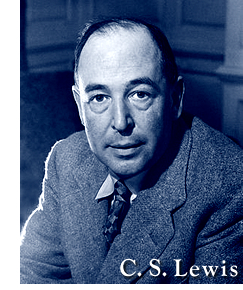
C.S. Lewis Daily – Today’s Reading


Screwtape advises Wormwood on using time to wear down a soul:

The Enemy has guarded him from you through the first great wave of temptations. But, if only he can be kept alive, you have time itself for your ally. The long, dull, monotonous years of middle-aged prosperity or middle-aged adversity are excellent campaigning weather. You see, it is so hard for these creatures to persevere. The routine of adversity, the gradual decay of youthful loves and youthful hopes, the quiet despair (hardly felt as pain) of ever overcoming the chronic temptations with which we have again and again defeated them, the drabness which we create in their lives and the inarticulate resentment with which we teach them to respond to it—all this provides admirable opportunities of wearing out a soul by attrition. If, on the other hand, the middle years prove prosperous, our position is even stronger. Prosperity knits a man to the World. He feels that he is ‘finding his place in it’, while really it is finding its place in him. His increasing reputation, his widening circle of acquaintances, his sense of importance, the growing pressure of absorbing and agreeable work, build up in him a sense of being really at home in earth, which is just what we want. You will notice that the young are generally less unwilling to die than the middle- aged and the old.

From The Screwtape Letters

Compiled in A Year with C.S. Lewis