Charles Stanley – Praying With Impact


1 John 5:14-15

Since praying is such a common practice for believers, over time it’s easy to fall into habits that result in a lifeless and empty prayer life. Instead of a dynamic conversation with thoughtful requests and active listening for God’s response, our prayers can seem more like grocery lists. Because communication with the Lord is such a vital part of the Christian life, we occasionally need to examine how we’re doing. Begin by asking yourself these questions:

  • How effective are my prayers? Is the Lord answering your petitions, or does it seem as if they never go past the ceiling?
  • Who am I praying for? Are most of your requests for yourself or are they for others?
  • What am I asking God to do? Have you looked in the Word to see what He wants, or are you praying according to your plans and desires?
  • When do I pray? Is it only when you need something?

If you discovered any selfishness in your answers, you’re not alone. Most of us struggle to enter God’s presence with our eyes focused on Him instead of our needs. But the only way we’ll be able to pray with impact is to fill our minds with Scripture so we can find out what the Lord wants to do.

Your prayer life can become effective and dynamic if you’ll approach the Lord with a clean heart (Ps. 66:18), align your requests with His will, and believe He will do what He says (Num. 23:19; John 14:13). Then you’ll be able to pray with absolute confidence, knowing that He will hear and answer your petitions.

Bible in One Year: Mark 6-7


Our Daily Bread — God’s Direction


Read: Proverbs 3:1-8

Bible in a Year: Isaiah 45-46; 1 Thessalonians 3

In all your ways acknowledge Him, and He shall direct your paths. —Proverbs 3:6

A century ago, 41-year-old Oswald Chambers arrived in Egypt to serve as a YMCA chaplain to British Commonwealth troops during World War I. He was assigned to a camp at Zeitoun, six miles north of Cairo. On his first night there, October 27, 1915, Chambers wrote in his diary, “This [area] is absolutely desert in the very heart of the troops and a glorious opportunity for men. It is all immensely unlike anything I have been used to, and I am watching with interest the new things God will do and engineer.”

Chambers believed and practiced the words of Proverbs 3:5-6: “Trust in the Lord with all your heart, and lean not on your own understanding; in all your ways acknowledge Him, and He shall direct your paths” (Prov. 3:5-6 nkjv).

This is both a comfort and a challenge. There is security in knowing that the Lord will lead us each day, but we must not become so attached to our plans that we resist God’s redirection or His timing.

“We have no right to judge where we should be put, or to have preconceived notions as to what God is fitting us for,” said Chambers. “God engineers everything. Wherever He puts us, our one great aim is to pour out a whole-hearted devotion to Him in that particular work.” —David McCasland

Lord, may I love and serve You with all my heart where You have placed me today.Read more of Oswald Chambers’ work at utmost.org

As we trust in God, He directs our steps.

INSIGHT: The book of Proverbs is a collection of wise sayings, advice, instructions, and warnings. It is structured as a life manual from a father to his son—an encouragement to live wisely and in a way that obeys and honors God. Solomon, who spoke about 3,000 proverbs (1 Kings 4:32), is the main author (see Prov. 1:1-6; 10:1; 25:1). Other authors include unnamed Jewish wise men (22:17-24:34), Agur (ch. 30), and Lemuel (ch. 31). In today’s reading Solomon admonishes us not to neglect God’s Word but to obey it (3:1). A wise person is faithful (v. 3), trusts and depends on God (vv. 5-6), is not proud and avoids evil (v. 7), puts God first in everything (v. 9), and learns from God’s discipline (v. 11). Sim Kay Tee


Ravi Zacharias Ministry – In Pursuit of Justice


A story is told of Diogenes, the Greek philosopher, who was famous for two things.(1) First, it is rumored that he lived in a bathtub and took it with him wherever he went. And second, he possessed a lamp. It was said that with his lamp he went throughout Athens, looking for a man who was honest. Legends say that before he could attain success, his lamp went out. His search ended in futility.

Diogenes’ search reflects modern humanity’s search for true justice. As C.S. Lewis says, “Justice means much more than the sort of thing that goes on in Law courts. It is the old name for everything we should now call ‘fairness;’ it includes honesty, give and take, truthfulness, keeping promises, and all that side of life.”(2) Even children at a very early age learn to speak this language of ‘fairness’ whenever they are not treated equally, be it among their peers or between their siblings. We seem to be wired with that strong desire for this world to be in order. Or, in other words, our desire for justice seems to be intrinsic to who we are. Yet with the prevailing injustices that we see all around us, the longing for justice seems to be a far-away reality, if not an exercise in futility.

What kind of world are we in? Is this an evil world? Well, one may object and say ‘no’ because not everything that we see is evil. There are also things in this world that we see that are manifestations of goodness. Is this an all-good world? Again, some may object and say, ‘No, not everything that we see is good.’ Good seems to co-exist alongside evil. So is this then an all-bad world that is becoming good? A naturalist may agree to this by means of science and technology, while a theist may strongly disagree with this. Conversely, we may ask ourselves if this is an all-good world that has gone from bad to worse.

Attempting to answer these questions, one must deal with the ultimate questions of life—such as the origin, meaning, and the purpose of life. Furthermore, critically analyzing these questions, one would inevitably face the question of whether this world is designed by a creator, as the Bible describes it, or whether it is a world that is a result of an accident, as the naturalist would put it. If it is designed, then God is the reference point for all true justice. On the contrary, if it is merely an accident, then humanity becomes the ultimate reference point for all judgments. True justice in any society is one that is anchored on objective moral values, which do not change either on the basis of time or culture.(3)

It is only after basing on such a foundation of an objective moral frame work that one can meaningfully judge between a right and a wrong action, or for that matter between justice and injustice. Ultimately, the objective moral frame work goes only to point to the existence of a moral law-giver, who is holy and righteous in his character. In fact, Fyodor Dostoevsky, a renowned thinker and writer, commented on this point rather bluntly when he said, “If there is no God then all things are permissible.” The Bible declares that the entire human race is guilty of having broken God’s law and hence none is righteous. Even if there were many Diogenes equipped with an equal number of lamps and commissioned to search the entire world, none would be successful in finding a just, impartial, or perfectly righteous person. Our only hope is to point our lamps toward heaven, the only place where the just one dwells.

Balajied Nongrum is a member of the speaking team with Ravi Zacharias International Ministries in Shillong, India.

(1) R.C. Sproul, One Holy Passion, (Nashville: Thomas Nelson, 1987), 105.

(2) C.S. Lewis, Mere Christianity, (New York: Macmillan, 1960), 76.

(3) Charles W. Colson, Justice that Restores, (Secunderabad: OM Books, 2001), 23.

 

Alistair Begg – Who Can Endure?


But who can edure the day of his coming…? Malachi 3:2

Christ’s first coming was without external pomp or display of power, and yet in truth there were few who could endure its test. Herod and all Jerusalem with him were stirred at the news of the wondrous birth. Those who supposed themselves to be waiting for Him showed the fallacy of their professions by rejecting Him when He came. His life on earth was like a winnowing fan that sifted the great heap of religious profession, and only a few could survive the process.

But what will His second coming be? What sinner can endure to think of it? “He shall strike the earth with the rod of his mouth, and with the breath of his lips he shall kill the wicked.”1 In Gethsemane when He said to the soldiers, “I am he,” they fell backward. What will happen to His enemies when He will reveal Himself more fully as the “I Am”?

His death shook earth and darkened heaven. What will be the dreadful splendor of that day when as the living Savior He will summon the living and the dead before Him? O that the terrors of the Lord would persuade men to forsake their sins and kiss the Son in case He is angry!

Though a lamb, He is still the lion of the tribe of Judah, tearing the prey in pieces; and though He does not break the bruised reed, yet He will break His enemies with a rod of iron and dash them to pieces like a potter’s vessel. None of His foes shall stand before the tempest of His wrath or hide themselves from the sweeping hail of His indignation.

But His beloved blood-washed people look for His appearing with joy; in this living hope they live without fear. To them He sits as a refiner even now, and when He has tested them they shall come forth as gold. Let us examine ourselves this morning and make our calling and election sure, so that the coming of the Lord may not be the cause of fearful expectations. O for grace to discard all hypocrisy, and to be found of Him sincere and without rebuke on the day of His appearing.

1) Isaiah 11:4

The Family Bible Reading Plan

  • 1 Kings 18
  • 1 Thessalonians 1

Devotional material is taken from “Morning and Evening,” written by C.H. Spurgeon, revised and updated by Alistair Begg.


Charles Spurgeon – Magnificat


“Awake, awake, Deborah; awake, awake, utter a song; arise, Barak, and lead thy captivity captive, thou son of Abinoam.” Judges 5:12

Suggested Further Reading: Psalm 108:1-5

Wake up, my love, for thou must strike the key-note and lead the strain. Awake and sing unto thy beloved a song touching thy well-beloved. Give unto him choice canticles, for he is the fairest among ten thousand, and the altogether lovely. Come forth then with thy richest music, and praise the name which is as ointment poured forth. Wake up, my hope, and join hands with thy sister—love; and sing of blessings yet to come. Sing of my dying hour, when he shall be with me on my couch. Sing of the rising morning, when my body shall leap from its tomb into its Saviour’s arms! Sing of the expected advent, for which thou lookest with delight! And, O my soul, sing of that heaven which he has gone before to prepare for thee, “that where he is, there may his people be.” Awake my love—awake my hope—and thou my faith, awake also! Love has the sweetest voice, hope can thrill forth the higher notes of the sacred scale; but thou, O faith—with thy deep resounding bass melody—thou must complete the song. Sing of the promise sure and certain. Rehearse the glories of the covenant ordered in all things, and sure. Rejoice in the sure mercies of David! Sing of the goodness which shall be known to thee in all thy trials yet to come. Sing of that blood which has sealed and ratified every word of God. Glory in that eternal faithfulness which cannot lie, and of that truth which cannot fail. And thou, my patience, utter thy gentle but most gladsome hymn. Sing today of how he helped thee to endure in sorrows’ bitterest hour. Sing of the weary way along which he has borne thy feet, and brought thee at last to lie down in green pastures, beside the still waters.

For meditation: The songs of the Christian should arise from a thankful heart (Colossians 3:16) stirred up by the word of Christ.

Sermon no. 340

15 October (Preached 14 October 1860)

John MacArthur – Trusting God’s Word


“The law of the Lord is perfect. . . . The commandment of the Lord is pure. . . . The judgments of the Lord are true; they are righteous altogether” (Ps. 19:7-9).

God’s Word is infallible.

Infallibility refers to the truth of Scripture as a whole, whereas inerrancy focuses on the accuracy of every single word. Like inerrancy, infallibility is grounded in the character of God. God cannot lie and does not change (1 Sam. 15:29). He is thoroughly consistent in everything He does, and His Word reflects those characteristics. The psalmist wrote, “The sum of Thy word is truth, and every one of Thy righteous ordinances is everlasting” (Ps. 119:160). Paul said, “The Law is holy, and the commandment is holy and righteous and good” (Rom. 7:12).

Jesus said He didn’t come to abolish the law or the prophets (sections of the Old Testament) but to fulfill them. He promised that everything in Scripture will be fulfilled (Matt. 5:17-18). John 10:35 declares that the authority of Scripture “cannot be broken.” It is binding and cannot be destroyed, abolished, or done away with. God’s Word is indestructible, authoritative, and infallible.

On a practical level, infallibility means that you can trust the Bible. It will never deceive you or give you counsel that will later prove to be erroneous. That was the confidence of the psalmist when he wrote, “Establish Thy word to Thy servant, as that which produces reverence for Thee. Turn away my reproach which I dread, for Thine ordinances are good. Behold, I long for Thy precepts; revive me through Thy righteousness. May Thy lovingkindnesses also come to me, O Lord, Thy salvation according to Thy word; so I shall have an answer for him who reproaches me, for I trust in Thy word. And do not take the word of truth utterly out of my mouth, for I wait for Thine ordinances. So I will keep Thy law continually, forever and ever. And I will walk at liberty, for I seek Thy precepts. I will also speak of Thy testimonies before kings, and shall not be ashamed. And I shall delight in Thy commandments, which I love” (Ps. 119:38-47).

Suggestions for Prayer

Praise God that His Word is utterly trustworthy.

For Further Study

Memorize Psalm 119:165 as a reminder of the infallibility of God’s Word.

Joyce Meyer – Holy Ground


And Moses said, I will now turn aside and see this great sight, why the bush is not burned. And when the Lord saw that he turned aside to see, God called to him out of the midst of the bush and said, Moses, Moses! And he said, Here am I. God said, Do not come near; put your shoes off your feet, for the place on which you stand is holy ground.—Exodus 3:3-5

Moses removed his sandals because he was standing on holy ground. Just moments before, it was ordinary ground—now it was holy. God’s presence made it holy!

You are God’s tabernacle. Your body is the temple of the Holy Spirit. He lives in you! Wherever you go, He goes. If you go to the grocery store; if you go play golf; if you go to work—He goes. Ordinary things and places are not holy in themselves, but when we go and do them God has promised to be with us. And any place God is becomes holy.

From the book Ending Your Day Right by Joyce Meyer.


Campus Crusade for Christ; Bill Bright – Still Present With You


“In just a little while I will be gone from the world, but I will still be present with you. For I will live again – and you will too” (John 14:19).

In this one verse the whole gospel story is expressed, for Jesus is speaking on the day before His death, foretelling just what will happen then and thereafter.

And what He has to say should bring renewed joy and comfort and peace to our hearts in the midst of a chaotic world that perhaps includes an element of chaos even in the home or at the office or in the classroom.

Yes, He was gone from the world to assume His rightful position at the right hand of His heavenly Father – after His death and resurrection. Now He is present with us in the person of His indwelling Holy Spirit, who lives within every believer. And to the extent we give Him control of our hearts and lives, He empowers and enables us to live a supernatural, abundant life.

He prophesies His resurrection – “I will live again” – the joyous truth of which makes possible His final promise to His disciples, “You will live too.”

Jesus is saying, in effect that the life of the Christian depends on that of Christ. They are united, and if they were separated, the Christian could not enjoy spiritual life here nor eternal joy hereafter. But He lives! And because He lives, we too shall live – forever, with Him throughout the endless ages of eternity!

Bible Reading: Romans 5:6-11

TODAY’S ACTION POINT: Because Jesus died, arose and now lives at God’s right hand while at the same time living in me, I can live the abundant, supernatural life today, and forever!

Presidential Prayer Team; C.H. – Sagging Foundation


In older homes, a common problem is an uneven floor. The sag results from carrying more weight over time than the supports can hold. The solution is simple – add more support beams to help distribute the weight.

The mystery was revealed to Daniel in a vision of the night. Then Daniel blessed the God of heaven.

Daniel 2:19

In today’s passage, when King Nebuchadnezzar threatened to kill all of the wise men of Babylon if they couldn’t interpret his dream, Daniel knew he needed more support. He told the king’s advisor he would interpret the dream. “Then Daniel went to his house and made the matter known to Hananiah, Mishael, and Azariah, his companions, and told them to seek mercy from the God of heaven concerning this mystery.” (Daniel 2:17-18) Daniel gathered with friends to pray, and God answered his specific prayer.

When your circumstances cause you to doubt and fear, seek more support. Gather together with friends and take your concerns about this country to the God of the Universe. Email prayers for the nation to your leaders in Washington D.C. and band together to provide more support for this country’s sagging spiritual foundation.

Recommended Reading: Ecclesiastes 4:7-12


Greg Laurie – Becoming New


Therefore, if anyone is in Christ, he is a new creation; old things have passed away; behold, all things have become new.—2 Corinthians 5:17

Have you ever looked at your life and felt that you always would be a victim of your circumstances? Maybe your parents neglected or abandoned you. Maybe there is a family history of alcohol and drug abuse.

You may feel as though your course is fixed, that you don’t have a say-so, and that it’s just the way it goes. But that isn’t true. God can intervene. I know from experience.

I didn’t have a father growing up. It wasn’t that he mistreated me; he just wasn’t there. I was left to myself a lot. My mother was an alcoholic, and I could have gone that direction. I could have followed that course. But God took hold of me, and the cycle was broken. He can do that for anyone. I am just an ordinary person who took God at His word.

Maybe you are trapped in some lifestyle, some pattern of sin, or some addiction. God can break that cycle. The question is whether you want Him to break it.

The Bible tells the story of a man who had been paralyzed for a long time. Jesus said to him, “Do you want to be made well?” (John 5:6). We may wonder what kind of question that is to ask someone who can’t even move. It’s a very good question, actually.

Not everyone who is addicted wants to be delivered. Not everyone who is living a certain lifestyle wants to get out of that lifestyle. The question is do you really want to change? Do you really want to be free? Jesus can do that for you.

We read in 2 Corinthians 5:17, “Therefore, if anyone is in Christ, he is a new creation; old things have passed away; behold, all things have become new.” God can change you.

Max Lucado – He is in Charge · October 15


We need to know that God is near. We are never alone. In our darkest hour, in our deepest questions, the Lord never leaves us!

When my daughters were small, they would occasionally cry out in the middle of the night. They would hear a noise on the street. They would shout, “Daddy!” I would do what all daddies do—tell their mother. (Just kidding). I would get up, walk down the hall, and step into their room. When I did the atmosphere changed. Strange noises didn’t matter. Daddy was here.

You need to know this– your Father is here. Do you face a diagnosis, difficulty or defeat that keeps you from entering your Promised Land? Paul says in Romans 8:31, “If God is for us, who can be against us?” All authority has been given to him. He is in charge of it all. He has the final word on everything!

From Glory Days

Night Light for Couples – Behind Every Success…


“Let us encourage one another.” Hebrews 10:25

It’s been said that behind every successful man is a great woman. The wife of one of the most famous names in literature, Nathaniel Hawthorne, was probably one such woman. Sophia Hawthorne secretly set aside a few dollars each week, a savings that eventually grew large enough to support them both for a year. You see, Sophia believed that her husband would one day be a great writer. When Hawthorne came home and announced in disgrace that he’d been fired from his job in a customhouse, Sophia presented him with the money, saying, “Now you can write your book!” Her confidence and encouragement led to one of America’s classic novels, The Scarlet Letter.

Then there was the corporate chief who, while traveling with his wife, pulled their car into a rundown gas station. They discovered that his wife had dated the gas station attendant in high school. “Boy, are you lucky I came along,” bragged the husband after they left. “If you had married him, you would be the wife of a gas station attendant.”

“My dear,” replied the wife, “if I had married him, he would be the chief executive officer, and you would be the gas station attendant.”

It’s certainly true that one spouse has tremendous influence on the success of the other. Jim has supported me in my spiritual life, in the raising of our children, and in so many other areas. Likewise, I have attempted to bolster him however I could and have seen God’s blessing on his work and ministry. And Jim lets me know he appreciates my encouragement. He has said more than once that I believed in him before he believed in himself. Of course, we’ve fallen short of this supportive ideal on more than one occasion—and you probably will, too. But if you consistently strive to bring strong and steady encouragement to your mate, you’ll both reap lasting rewards.

– Shirley M Dobson

From Night Light For Couples, by Dr. James & Shirley Dobson

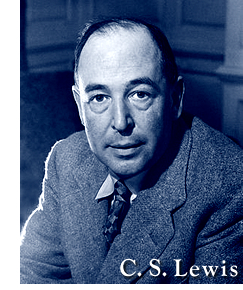
C.S. Lewis Daily – Today’s Reading


TO Mrs. JESSUP, who seems to have written Lewis about the difficulties of being in a marriage in which one of the spouses is a Christian and one is not: On the slow process of being remade and how difficult we must be to live with after conversion as before; and on not concealing but not flaunting our conversion.

15 October 1951

I agree with everything you say (except that I should publish anything on the subject: a bachelor is not the man to do it—there is such an obvious answer to anything he says!).

Our regeneration is a slow process. As Charles Williams says there are three stages: (1.) The Old Self on the Old Way. (2.) The Old Self on the New Way. (3.) The New Self on the New Way.

After conversion the Old Self can of course be just as arrogant, importunate, and imperialistic about the Faith as it previously was about any other interest. I had almost said ‘Any other Fad’—for just as the loveliest complexion turns green in a green light, so the Faith itself may have at first all the characteristics of a Fad and we may be as ill to live with as if we had taken up Nudism or Psychoanalysis or Pure Wool Clothing. You and I, clearly, both know all about that: one makes blunders.

About obedience, the principle is clear. Obedience to man is limited by obedience to God and, when they really conflict, must go. But of course that gives one very little guidance about particulars. The converted party must pray: I suppose it is not often necessary to pray in the presence of the other! Especially if the converted party is the woman, who usually has the house to herself all day. Of course there must be no concealment, in the sense that if the question comes up one must say frankly that one does pray. But there is a difference between not concealing and flaunting. For the rest (did I quote this before?) MacDonald says ‘the time for speaking seldom arrives, the time for being never departs.’ Let you and me pray for each other.

From The Collected Letters of C.S. Lewis, Volume III

Compiled in Yours, Jack