Charles Stanley – Our Financial Security


2 Corinthians 8:1-7

Sharing is a learned quality; it simply is not a natural characteristic. Observe what young children do. They squabble over who goes first, whose piece of cookie is bigger, and who plays with their toys. As adults, we struggle as well, especially when it comes to our finances. We demand to have our “rightful share” and keep what is ours. The choices we make with our finances—how much we hold, how much and how often we give—reveal where we place our trust.

God calls Christians to a lifestyle of generous giving, not of accumulating and hoarding. He tells us to find security in our relationship with Him rather than in our assets. Why? Because for most of us, no matter how much we have, it never feels like enough. Also, when we focus on money, we open the door to uncertainty and anxiety. What if we lose our job, miss the promotion, get a long-term illness, or witness a stock market decline? When our finances suffer, our sense of security decreases.

But if our security is in our relationship with God through Christ, then we’ll be thankful for what we have and will trust Him for the future. We’ll keep finances in their proper perspective: They are given to us by God to be used for His purposes, not ours.

One of God’s purposes is that we support the local church. How generously do you contribute to your congregation? Do you look for additional opportunities to give? Do you have a positive attitude when you hear financial appeals? Let your giving pattern reveal that you’ve placed your security in God rather than money.

Bible in One Year: Mark 15-16

Our Daily Bread — Waiting for an Answer


Read: Psalm 9:1-10

Bible in a Year: Isaiah 56-58; 2 Thessalonians 2

Those who know your name trust in you, for you, Lord, have never forsaken those who seek you. —Psalm 9:10

When our daughter was 15, she ran away. She was gone more than 3 weeks. Those were the longest 3 weeks of our lives. We looked everywhere for her and sought help from law enforcement and friends. During those desperate days, my wife and I learned the importance of waiting on God in prayer. We had come to the end of our strength and resources. We had to rely on God.

It was on a Father’s Day that we found her. We were in a restaurant parking lot, on our way to dinner, when the phone rang. A waitress at another restaurant had spotted her. Our daughter was only three blocks away. We soon had her home, safe and sound.

We have to wait on God when we pray. We may not know how or when He will answer, but we can put our hearts constantly before Him in prayer. Sometimes the answers to our prayers don’t come when we would hope. Things may even go from bad to worse. But we have to persevere, keep believing, and keep asking.

Waiting is never easy, but the end result, whatever it is, will be worth it. David put it this way: “Those who know your name trust in you, for you, Lord, have never forsaken those who seek you” (Ps. 9:10). Keep seeking. Keep trusting. Keep asking. Keep praying. —James Banks

What’s on your heart that you need to talk to God about today? Will you trust Him and keep praying?James Banks is an author who has written several books, including Prayers for Prodigals.

Time spent in prayer is always time well spent.

INSIGHT: Psalm 9 is a song of David that captures the stress and pressure he was under at the time he composed it. While we are not given the specific incidents that triggered the writing of these words, we can feel the heat of the trials he was experiencing. In the first section of the song (vv. 1-12), David is praising God for His rescue and protection. These are words of faith directed to the listener of the song. The second half of the psalm (vv. 13-20), however, shows a heart filled with fear and speaks directly to God Himself. Bill Crowder

Ravi Zacharias Ministry – God Unobscure


In the book Megatrends 2000, authors Naisbitt and Aburdene outlined trends they anticipated would be transformational as we moved into the new millennium. Among their calculations was the New Age movement, which in 1990 was quickly gaining momentum. They wrote: “In turbulent times, in times of great change, people head for the two extremes: fundamentalism and personal, spiritual experience… With no membership lists or even a coherent philosophy or dogma, it is difficult to define or measure the unorganized New Age movement. But in every major U.S. and European city, thousands who seek insight and personal growth cluster around a metaphysical bookstore, a spiritual teacher, or an education center.”(1) This is all the more an accurate picture for today.

New Age devotees, who today are unlikely to call themselves by this name, may not share a cohesive focus or an organizational center, but there are certainly consistent and underlying tenets of thought among them. The movement is syncretistic, in that it incorporates any number of spiritual and religious ideologies at one time, but it is consistently monistic and pantheistic. New Age seekers are informed by the belief that all of reality is essentially one. Thus, everything is divine, often including themselves; for if all is one, and there are no distinctions, then all is God. Or, in the words of Shirley Maclaine in Dancing in the Light, “I am God, because all energy is plugged in to the same source…. We are individualized reflections of the God source. God is us and we are God.”(2)

Seven hundred years earlier, medieval Christian mystic Julian of Norwich spoke in what some may consider a similar tone: “[O]ur substance is our Father, God almighty… [O]ur substance is whole in each person of the Trinity, who is one God.”(3) Early Christian mystics are known for their fervent seeking and spiritual awareness of the oneness of life. Thus, there are certainly similar melodies to be found within the songs of Christian mysticism and the growing chorus of New Age spirituality. But so there are marked differences among them.

Within its historical context, mysticism, like many other Christian movements, was an expression of faith in response to faithless times. In this regard, New Age seekers are not entirely different. Some New Age seeking is, I think, a legitimate reaction to the comfortable and shallow religious life we find within our society. But as New Age seekers long for the depth and freedom to believe in everything, the result is often contrary to what they seek. Their theology and spirituality are entirely segregated. The quest for illumination is a quest that can begin and end anywhere; thus, they find neither depth nor freedom. On the contrary, Julian of Norwich and other early Christian mystics sought an authentic experience of faith as a result of an already dynamic understanding of that faith. Their theology in and of itself is what led them to spirituality.

For the Christian today, illumination still begins with Light itself, God unobscured, though incomprehensible, revealed through the glory of the Son. Starting with light and standing beside Christ, the Christian begins his or her journey as a seeker knowing there is one unique being who hears our prayers and cries and longings. There is a source for all illumination, and that God is light of the world.

Those for whom New Age thought seems attractive would perhaps be helped to know there is a great tradition of seeking within Christianity, a tradition that began with the recognition that we could not fix what is wrong, and a tradition that continues because there is one who can, one who also longs to find and to be found. The human heart is ever-seeking, showing the longing of a soul to be known. In the words of Julian of Norwich, “We shall never cease wanting and longing until we possess [Christ] in fullness and joy… The more clearly the soul sees the Blessed Face by grace and love, the more it longs to see it in its fullness.”(4) For the Christian seeker, communion with God is far more than self-discovery or personal freedom; it is theology that has become doxology, which in turn becomes life.

Jill Carattini is managing editor of A Slice of Infinity at Ravi Zacharias International Ministries in Atlanta, Georgia.

(1) J. Naisbitt and P. Aburdene, Megatrends 2000: Ten New Directions Transforming Our Lives (New York: William Morrow & Company, 1990), 11.

(2) Shirley Maclaine, Dancing in the Light (New York: Bantam Doubleday, 1991), 339.

(3) Julian of Norwich, Showings, ed. and trans. by James Walsh in “The Classics of Western Spirituality” (New York: Paulish Press, 1978), 129.

(4) Ibid.

Alistair Begg – Equal to the Greatest Christian


Infants in Christ. 1 Corinthians 3:1

Are you mourning, believer, because your spiritual life is so weak, because your faith is so small, your love so feeble?

Cheer up because you have reason to be grateful. Remember that in some things you are equal to the greatest and most mature Christian.

  • You are as much purchased with blood as he is.
  • You are just as much an adopted child of God as any other believer. An infant is as truly a child of its parents as is the full-grown man. You are as completely justified, for your justification is not a matter of degree: Your little faith has made you clean every bit.
  • You have as much right to the precious things of the covenant as the most advanced believers, for your right to covenant mercies does not lie in your growth but in the covenant itself; and your faith in Jesus is not the measure but the token of your inheritance in Him.
  • You are as rich as the richest-if not in enjoyment, yet in real possession. The smallest star that gleams is set in heaven; the faintest ray of light has affinity with the sun. In the family register of heaven, the small and the great are written with the same pen.
  • You are as dear to your Father’s heart as the greatest in the family. Jesus is very tender toward you.


You are like the faintly burning wick; a rougher spirit would say, “Put out that useless flame; it fills the room with an offensive odor!” But the feeble wick He will not quench. You are like a bruised reed, and any less tender hand than that of the Chief Musician would tread upon you or throw you away; but He will never break the bruised reed. So instead of being downcast by reason of what you are, you should rejoice in Christ. Am I but small and feeble in the vast company of believers? Yet in Christ I am made to sit in heavenly places. Am I poor in faith? Yet in Jesus I am heir of all things. I do not need to boast or elevate myself; even as an infant in Christ I will rejoice in the Lord and glory in the God of my salvation.

The Family Bible Reading Plan

  • 1 Kings 22
  • 1 Thessalonians 5

Devotional material is taken from “Morning and Evening,” written by C.H. Spurgeon, revised and updated by Alistair Begg.

Charles Spurgeon – Memento mori


“Oh that they were wise, that they understood this, that they would consider their latter end.” Deuteronomy 32:29

Suggested Further Reading: Ecclesiastes 12:1-7

I know not when, nor where, nor how I shall breathe out my life. Into that sacred ark I cannot look—that ark of the secrets of God. I cannot pry between the folded leaves of that book which is chained to the throne of God, wherein is written the whole history of man. When I walk by the way I may fall dead in the streets; an apoplexy may usher me into the presence of my Judge. Riding along the road, I may be carried as swiftly to my tomb. While I am thinking of the multitudes of miles over which the fiery wheels are running, I may be in a minute, without a moment’s warning, sent down to the shades of death. In my own house I am not safe. There are a thousand gates to death, and the roads from earth to Hades are innumerable. From this spot in which I stand there is a straight path to the grave; and where you sit there is an entrance into eternity. Oh, let us consider then, how uncertain life is. Talk we of a hair; it is something massive when compared with the thread of life. Speak we of a spider’s web; it is ponderous compared with the web of life. We are but as a bubble; nay, less substantial. As a moment’s foam upon the breaker, such are we. As an instant spray—nay, the drops of spray are enduring as the orbs of heaven compared with the moments of our life. Oh, let us, then, prepare to meet our God, because when and how we shall appear before him is quite unknown to us. We may never go out of this hall alive. Some of us may be carried hence on young men’s shoulders, as Ananias and Sapphira of old. We may not live to see our homes again.

For meditation: The New Park Street Pulpit contains no sermons from October 1856. On the 19th a congregation of some 7,000 assembled for the first time at the Royal Surrey Gardens Music Hall. As Spurgeon prayed some troublemakers cried out “Fire” and in the ensuing panic seven people were trampled to death. Spurgeon never forgot it. “Memento mori”—“Remember you must die.”

Sermon no. 304

19 October (Preached 18 March 1860)

John MacArthur – Gaining True Wisdom


“The testimony of the Lord is sure, making wise the simple” (Ps. 19:7).

God’s Word imparts wisdom and knowledge beyond the realm of mere human understanding.

David’s characterization of God’s Word as “the testimony of the Lord” (Ps. 19:7) speaks of its role as God’s witness to who He is and what He requires of us. In addition, it’s a “sure” witness. That means it’s unwavering, immovable, unmistakable, reliable, and trustworthy.

Peter made the same point when, after recounting his incredible experience with Christ on the Mount of Transfiguration (2 Pet. 1:16-18), he said, “but we have a testimony more sure than that—the prophetic word” (v. 19, literal translation). The testimony of God’s written Word is a surer and more convincing confirmation of God’s truth than even apostolic experiences with Christ Himself!

Perhaps that’s why our Lord prevented the two disciples on the Emmaus Road from recognizing Him as He gave them a biblical basis for the things they had seen and heard (Luke 24:27). Their faith and preaching were to be based on Scripture, not merely on their own personal experiences—no matter how profound or moving those experiences may have been.

The benefit of God’s sure Word is that it makes the simple wise (Ps. 19:7). It takes undiscerning, ignorant, and gullible people and teaches them profound truth from God that they can apply to their lives. As they do, they become skilled in the art of godly living.

That was the psalmist’s joy when he wrote, “Thy commandments make me wiser than my enemies, for they are ever mine. I have more insight than all my teachers, for Thy testimonies are my meditation. I understand more than the aged, because I have observed Thy precepts” (Ps. 119:98-100).

Applying that principle to New Testament believers, Paul prayed that we would be “filled with the knowledge of [God’s] will in all spiritual wisdom and understanding” (Col. 1:9). As that occurs, we’re enabled to walk in a manner worthy of the Lord and please Him in every respect (v. 10). That’s the outworking of godly wisdom, and the key to holy living.

Suggestions for Prayer

Pray that God’s wisdom will increase and abound in your life today and every day.

For Further Study

Read Luke 24:13-35, noting how Jesus ministered the Word to the disciples on the Emmaus Road.

Joyce Meyer – The Holy Spirit Is a Gentleman


To the end that through [their receiving] Christ Jesus, the blessing [promised] Abraham might come upon the Gentiles, so that we through faith might [all] receive [the realization of] the promise of the [Holy] Spirit. – Galatians 3:14

I have written a great deal about the Holy Spirit and about being filled with the Spirit, and I want to make sure you have an opportunity to know the Holy Spirit in this way.

The Holy Spirit is a gentleman. He will not force Himself into your life in His fullness uninvited. He will fill you, but only if you ask Him to do so. In Luke 11:13, Jesus promises that God will give the Holy Spirit to those who ask Him. And James 4:2 tells us that the reason we do not have certain things is that we do not ask for them.

I encourage you to go boldly before God and daily ask Him to fill you with the Holy Spirit. Ask expecting to receive. Don’t be doubleminded or allow doubt to fill your heart, but ask in faith. Believe you receive, and thank God that He lives in you. God is not a man, that He should lie (see Numbers 23:19). He is faithful to fulfill His Word whenever anyone steps out on it in faith, so ask and receive that your joy might be full (see John 16:24).

Today’s verse says that we receive the promise of the Spirit through faith. Gifts cannot be forced on anyone; they must be offered by the giver and then received by those to whom they are given. God makes the offer of His Spirit, so all you need to do is relax and receive by faith.

From the book Hearing from God Each Morning: 365 Daily Devotions by Joyce Meyer.

Campus Crusade for Christ; Bill Bright – God’s Word Works


“As the rain and snow come down from heaven and stay upon the ground to water the earth, and cause the grain to grow and to produce seed for the farmer and bread for the hungry, so also is My Word. I send it out and it always produces fruit. It shall accomplish all I want it to, and prosper everywhere I send it” (Isaiah 55:10-11).

An angry student leader confronted me at the conclusion of my message to a student meeting at UCLA. “You have no right to impose your views on these students,” he exclaimed. “You will confuse them. They are easily influenced and might respond to some of your religious views which I totally reject.”

I learned that he was the Communist leader on the campus and did not believe in God or the Scriptures. I invited him to our home for dinner and as we ate, we talked about many things of a general nature, nothing controversial. After we had finished our dessert, I reached over and picked up my Bible and said that I would like to read something very important to him. He resisted, saying, “I don’t want to hear anything from the Bible. I don’t believe it. It is a ridiculous book filled with all kinds of myths, contradictions and exaggerations.”

I would have made similar statements during my years of agnosticism. Not because I knew such statements to be true, but because I was simply parroting what others had told me – I did not really know the facts.

I said, “If you don’t mind, I would like to read you something anyway,” and I turned to John 1:1. “In the beginning was the Word, and the Word was with God, and the Word was God” (KJV). I continued through the 14th verse. Then I turned to Colossians 1 and Hebrews 1, reading similar portions identifying Christ as the Creator, the visible expression of the invisible God. I concluded with 1 John 2:22,23.

As I read each passage, he asked if he could read for himself. The initial flash of anger soon turned to interest and then to acceptance and finally he was like a repentant child experiencing the love of the Father’s embrace. He surrendered all resistance. As he stood to leave that evening, I asked him to sign our guest book. He wrote his name, address and these words: “The night of decision.”

Bible Reading: Isaiah 55:6-13

TODAY’S ACTION POINT: Today I will share a portion of God’s word with someone who does not know our Savior with the prayer that he, too, will come to know Him and experience with me the supernatural life which is our heritage in Christ.


Presidential Prayer Team; C.H. – Hide and Seek


One of the earliest known records of the game Hide and Seek was described by the second century Greek writer Julius Pollux – only this Greek game was called Apodidraskinda. Over the years, children in different countries have created variations, but it’s still one of the widest known kid’s activities.

So he paid the fare and went down into it…away from the presence of the Lord.

Jonah 1:3

Jonah wasn’t playing a game when he ran from God, but he hid nevertheless. And the Lord sought him. God asked Jonah to share His Word with the Ninevites, but the prophet ran away. He questioned the Lord’s calling, but God pursued him.

There may be times where you’ll doubt the Lord’s plans for your life. Instead of going to Him in prayer, you’ll run the other way. Your Heavenly Father will look for you. “Many are the plans in the mind of a man, but it is the purpose of the Lord that will stand.” (Proverbs 19:21) If you’re questioning God, ask Him to reveal His will. Then pray for national leaders who doubt God’s existence to feel His presence…so that those who are hiding from their Creator will be found.

Recommended Reading: Romans 8:26-30

Greg Laurie – Three Steps Down


But Israel violated the instructions about the things set apart for the Lord. A man named Achan had stolen some of these dedicated things, so the Lord was very angry with the Israelites. Achan was the son of Carmi, a descendant of Zimri son of Zerah, of the tribe of Judah.—Joshua 7:1

I can think of only a couple of occasions in my four decades of ministry when someone has voluntarily come forward and said they had done something wrong. People usually come forward and admit their wrongdoing only when they are caught.

That was the case with Achan. There was sin in the Israelites’ camp, and it had been committed by him. God had given strict instructions when they attacked Jericho that “everything made from silver, gold, bronze, or iron is sacred to the Lord and must be brought into his treasury” (Joshua 6:19). Achan took some of those things and kept them for himself, and God was fully aware of it.

It was proven beyond a shadow of a doubt that Achan was the culprit, the reason for Israel’s defeat at Ai. When he eventually came clean, Achan said, “Among the plunder I saw a beautiful robe from Babylon, 200 silver coins, and a bar of gold weighing more than a pound. I wanted them so much that I took them. They are hidden in the ground beneath my tent, with the silver buried deeper than the rest” (Joshua 7:21, emphasis added).

That sums it up: I saw . . . I wanted . . . I took. This is how most sins happen. First Achan saw. It isn’t the first look that gets us into trouble; it is always the second one. Then Achan wanted, or coveted, what he saw. Coveting is a greedy desire to have something, no matter what it costs you or anyone else. And lastly, Achan took action.

The Bible says, “Your sin will find you out” (Numbers 32:23). It found Achan out, and it will find us out as well. It is not a matter of if; it is only a matter of when.

Max Lucado – Here’s What You Need to Know


Here’s what you need to know about the walls of Jericho. They were immense. They wrapped around the city like a suit of armor. Here’s what you need to know about Jericho’s inhabitants. They were ferocious and barbaric. They withstood all sieges and repelled all invaders. Until the day Joshua showed up. Until the day his army marched in. Until the day everything shook. Until mighty Jericho crumbled.

But here’s what you need to know about Joshua. He didn’t bring the walls down. The shaking, quaking of the thick, impervious walls? God did that for him. And God will do that for you! Your Jericho is your fear, your anger, your bitterness, your guilt about the past. It stands between you and your Glory Days. And its walls must fall! Life will always bring challenges. But God will always give strength to face them.

From Glory Days

Night Light for Couples – The Line of Respect


“Show proper respect to everyone.” 1 Peter 2:17

Conflict can often play a positive role in marriage—especially when it helps maintain lines of respect. Suppose I (jcd) work at my office two hours later than usual on a particular night. I know that Shirley is preparing a candlelight dinner, yet I don’t call to let her know I’ll be late. As the evening wears on, Shirley wraps the cold food in foil and puts it in the refrigerator. When I finally get home, I don’t apologize. Instead, I sit down with the newspaper and abruptly tell Shirley to get my dinner ready. You can bet there would be fireworks in the Dobson household that night! Shirley would rightfully interpret my insensitive behavior as insulting and would move to defend the “line of respect” between us. Her strong feelings would be totally justified.

Let’s put the shoe on the other foot. Suppose Shirley knows I need the car at 2:00 P.M. for some important purpose, but she deliberately keeps me waiting. Perhaps she sits in a restaurant with a friend, drinking coffee and talking. Meanwhile, I’m pacing the floor at home wondering where she is. It is very likely that she will hear about my dissatisfaction when she gets home. Even though the offense was minor, the line of respect has been violated.

Some things are worth defending. At the top of the list is the “line of respect” between husbands and wives.

Just between us…

  • When was the last time we had a fight that was good for our relationship?
  • Have I crossed your line of respect recently?
  • How will upholding the line of respect improve our marriage?

Dear Lord, we want to show respect for each other, but we confess that we’re too often self-centered and insensitive. Forgive us, Lord. Grant us Your grace as we defend the mutual rights that are the foundation of our affection. Amen.

From Night Light For Couples, by Dr. James & Shirley Dobson

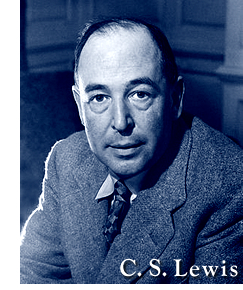
C.S. Lewis Daily – Today’s Reading


TO GENIA GOELZ: On the reality of our individuality in the body of Christ; and on the five sources of discernment: the scripture, the church, Christian friends, books, and meditation.

20 June 1952

Thanks for yours of the 10th. I would prefer to combat the ‘I’m special’ feeling not by the thought ‘I’m no more special than anyone else’ but by the feeling ‘Everyone is as special as me.’ In one way there is no difference, I grant, for both remove the speciality. But there is a difference in another way. The first might lead you to think, ‘I’m only one of the crowd like anyone else’. But the second leads to the truth that there isn’t any crowd. No one is like anyone else. All are ‘members’ (organs) in the Body of Christ [I Corinthians 12:27]. All different and all necessary to the whole and to one another: each loved by God individually, as if it were the only creature in existence. Otherwise you might get the idea that God is like the government which can only deal with the people as the mass.

About confession, I take it that the view of our Church is that everyone may use it but none is obliged to. I don’t doubt that the Holy Spirit guides your decisions from within when you make them with the intention of pleasing God. The error would be to think that He speaks only within whereas, in reality, He speaks also through Scripture, the Church, Christian friends, books et cetera.

From The Collected Letters of C.S. Lewis, Volume III

Compiled in Yours, Jack