Charles Stanley – Grace: God’s Second Chance


Romans 5:1-6

Scripture records a grim picture of mankind: dead in our sins, under God’s wrath, and subject to eternal separation from Him (Eph. 2:1-3). Through the cross, He gives us a second chance to be in a loving relationship with Him. When we place our faith in Christ, He pours out His unconditional love—His grace—upon us.

Because of grace, we have been justified by faith. Justification is a declaration by God that we are not guilty in His sight. At salvation, Jesus’ death on the cross is counted as payment for our sins. All our disobedience—past, present, and future—is fully forgiven.

The means of obtaining this pardon is through genuine faith in Jesus Christ. What does that look like? It’s a faith that accepts the Lord’s judgment that we are sinners who are unable to rescue ourselves and in need of a Savior. It believes that Jesus paid for our sins through His death, that God accepted His payment on our behalf, and that we are forgiven and made part of His family. If we have true faith, we’ll give Him our allegiance and wholeheartedly seek to serve Him.

Grace also gives us peace with the Lord. Before salvation, we were His enemies, under a sentence of eternal death. But after trusting in Christ, we were adopted into God’s family and have His favor forever.

Through grace, we have been given a second chance. Instead of receiving the eternal punishment we deserved, we’re given acceptance through faith in Christ (Rom. 15:7) and have become members of God’s family (8:15). Make full use of this second opportunity by passionately pursuing Him.

Bible in One Year: Luke 2-3

Our Daily Bread — Pride at the Core


Read: Ezra 9:1-9

Bible in a Year: Isaiah 62-64; 1 Timothy 1

Ezra . . . was a teacher well versed in the Law of Moses. —Ezra 7:6

“He thinks he’s really something!” That was my friend’s assessment of a fellow Christian we knew. We thought we saw in him a spirit of pride. We were saddened when we learned that he soon was caught in some serious misdeeds. By elevating himself, he had found nothing but trouble. We realized that could happen to us as well.

It can be easy to minimize the terrible sin of pride in our own hearts. The more we learn and the more success we enjoy, the more likely we are to think we’re “really something.” Pride is at the core of our nature.

In Scripture, Ezra is described as “a teacher well versed in the Law of Moses” (Ezra 7:6). King Artaxerxes appointed him to lead an expedition of Hebrew exiles back to Jerusalem. Ezra could have been a prime candidate to succumb to the sin of pride. Yet he didn’t. Ezra didn’t only know God’s law; he lived it.

After his arrival in Jerusalem, Ezra learned that Jewish men had married women who served other gods, defying God’s express directions (9:1-2). He tore his clothes in grief and prayed in heartfelt repentance (vv. 5-15). A higher purpose guided Ezra’s knowledge and position: his love for God and for His people. He prayed, “Here we are before you in our guilt, though because of it not one of us can stand in your presence” (v. 15).

Ezra understood the scope of their sins. But in humility he repented and trusted in the goodness of our forgiving God. —Tim Gustafson

Lord, fill us with such a love for You that we think first of what will please You, not ourselves. Free us from the subtle captivity of our own pride.

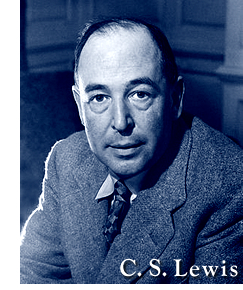
Pride leads to every other vice: It is the complete anti-God state of mind. C. S. Lewis

Ravi Zacharias Ministry – The Beginning of Words


It is a question I ask when I find myself in a defeated place of miscommunication, when I see two parties completely misunderstanding one another, or when I am studying Greek: Is language really worth the trouble? Of course, even in a defeated place, most of us recognize the irony of the question itself. To voice the trouble of communication is still to utilize the form of communication. But if it is difficult to imagine a world without the presence of language, it is altogether sobering to imagine a world without its benefits and joys—a conversation with a friend, the power of the written word, the importance of banter, reasoning, and debate.

Though many religions recognize the power of words, I believe it is inherently Christian to recognize the weight of language. The first chapter of the Gospel of John echoes the first pages in all of Scripture—namely, that out of silence the universe was brought to order, for in the beginning was the Word. The Greek word logos means not only “word” but “reason,” hastening the notion that there is not only meaning at the heart of all things but there is one who speaks and bestows this meaning. The Christian worldview interprets all of life and time through this medium. We live within a story of words, reason, and meaning in which there is an author telling us what it means to be human, what it means to be here.

The presence of language among us, therefore, is itself a subtle apologetic. That is to say, we speak because there is one who first spoke. There is meaning and order among us because in the beginning was the Word. Author Steve Talbott fluently articulates the significance of a speaking world:

“The intimate relation between the meaning of our words and the meaning we find in the world may be so obvious as to seem almost trivial, yet its implications are so profound as to have mostly escaped the notice of working scientists. If we took the fact of the world’s speech seriously—the world speaks!—there would be none of the usual talk about a mechanistic and deterministic science, about a cold, soulless universe, or about an unavoidable conflict between science and the spirit.”(2)

The evidence of a speaking world is a wonder the scientist cannot explain away with mechanistic words. But what if language is the gift of a speaking, personal God to a creation holding God’s image? The world speaks and God listens. Will we, in turn, stop and take notice of the one who spoke first?

In July of 2004, the people of Ranonga, a small, remote island in the Solomon Islands, read the words of Christ for the first time in their own language. The arrival of the New Testament in Lungga, the local language, followed more than twenty years of fundraising efforts by the local people. When the finished copies were finally made available and the people held before them the written words of Christ, a local pastor declared: “Today God has arrived in Ranonga. God has arrived in our own culture and is speaking to us in our own language.”(3)

Into a world of souls, some listening, many preoccupied, Jesus embodies a word for all: “Here I am! I stand at the door and knock. If anyone hears my voice and opens the door, I will come in.”(4) To recognize a voice and a face speaking in a language we understand is so much more than acknowledging a string of inanimate, recognizable words or cold information. We recognize a person beyond the sounds, image and meaning within the language, an invitation in the face that speaks. How much more so this is true of the voice that first spoke into the silence and called creation forth by name.

Jill Carattini is managing editor of A Slice of Infinity at Ravi Zacharias International Ministries in Atlanta, Georgia.

(1) This piece by Stephen Watson, entitled <i>Creation</i>, was installed at Georgia Institute of Technology, Atlanta, in June 2014. It was inspired by imagery of the DNA molecule and a rose window, and is comprised of cayenne, curry, mint, onion, paprika, and rosemary. For further information: http://stephenwatson.squarespace.com/

(2) Steve Talbott, “The Language of Nature” The New Atlantis, Number 15, Winter 2007, 41-76.

(3) “God Arrived,” Bible Society, 2004.

(4) Revelation 3:20.

Alistair Begg – How Much Do You Owe?


For the love of Christ controls us.

2 Corinthians 5:14

How much do you owe to my Lord? Has He ever done anything for you? Has He forgiven your sins? Has He covered you with a robe of righteousness? Has He set your feet upon a rock? Has He established your goings? Has He prepared heaven for you? Has He prepared you for heaven? Has He written your name in His Book of Life? Has He given you countless blessings? Has He laid up for you a store of mercies, which eye has not seen nor ear heard?

Then do something for Jesus that is worthy of His love. Do not give a mere wordy offering to a dying Redeemer. How will you feel when your Master comes if you have to confess that you did nothing for Him but kept your love shut up, like a stagnant pool, neither flowing out to the poor nor to His work? Be done with that kind of love! What do men think of a love that never shows itself in action? Why, they say, “Better is open rebuke than hidden love.”1 Who will accept a love so weak that it does not stir you to a single act of self-denial, generosity, heroism, or zeal?

Consider how He has loved you and given Himself for you! Do you know the power of that love? Then let it be like a rushing, mighty wind to your soul to sweep out the clouds of your worldliness and clear away the mists of sin. For Christ’s sake let this be the tongue of fire that sits upon you: For Christ’s sake let this be the divine excitement, the heavenly empowerment to bear you up from earth, the divine spirit that will make you bold as lions and swift as eagles in your Lord’s service. Love should give wings to the feet of service and strength to the arms of industry. Fixed on God with a constancy that is not to be shaken, determined to honor Him with a zeal that is not to be turned aside, and pressing on with a passion that doesn’t waver, let us display the constraints of love for Jesus. May the divine magnet draw us toward heaven itself.

1) Isaiah 40:27

The Family Bible Reading Plan

  • 2 Kings 2
  • 2 Thessalonians 2

Devotional material is taken from “Morning and Evening,” written by C.H. Spurgeon, revised and updated by Alistair Begg.


Charles Spurgeon – Pray for Jesus


‘Prayer also shall be made for him continually.’ Psalm 72:15

Suggested Further Reading: Matthew 6:9–13

‘Lo, I am with you alway, even unto the end of the world,’ is the blessed assurance that Jesus is our Captain in the great fight of faith, and is still present in the battle field. His great cause is here, his enterprise and business are here below. The work which he undertook to accomplish is not yet accomplished in the person of every one of his elect. His blood has been fully shed and his atonement has been perfected, but those for whom the atonement was made are not yet all ingathered. Many sheep he has which are not yet of his fold. We are therefore to pray for him, that the good work which he has undertaken may be prospered, and that one by one those whom his Father gave him may be brought to reconciliation and to eternal life. Brethren, the Lord Jesus Christ describes himself as being still persecuted and still suffering. He said to Saul, ‘Saul, Saul, why persecutest thou me?’ He calls his people himself; they are his mystical body; and in praying for the church we pray for Christ. He is the head of the body, and you cannot pray for the body except you pray for the head. We must put them all into one prayer. He is still struggling with the hosts of darkness in his church, still striving for the victory over sin in his people, and his people are waiting and longing for his second advent, which shall fulfil their brightest hopes. We must still pray for him, not personally, but relatively; for his cause, for his kingdom, for his gospel, for his people, for his blood-bought ones who as yet are in the ruins of the fall, for his second coming, and glorious reign. In this sense, I take it, the text is meant that ‘prayer also shall be made for him continually.’

For meditation: In the first half of the Lord’s Prayer, the Lord teaches us to pray for the Lord (thy name, thy kingdom, thy will—Matthew 6:9–10); after that we pray for ourselves. Do you pray for him? If you are one of his people, don’t forget that he is continually interceding for you (Hebrews 7:25).

Sermon no. 717

21 October (1866)

John MacArthur – Obeying God’s Commands


“The commandment of the Lord is pure, enlightening the eyes” (Ps. 19:8).

Obedience to the Word is the hallmark of a true believer.

It isn’t popular these days to speak of God’s Word as a book of commandments. Commands imply law and we’re accustomed to grace. But the fact is, both the Old and New Testaments contain many commandments that all God’s people are to obey.

The apostle John said, “By this we know that we have come to know Him, if we keep His commandments. The one who says, ‘I have come to know Him,’ and does not keep His commandments, is a liar, and the truth is not in him; but whoever keeps His word, in him the love of God has truly been perfected” (1 John 2:3-5). John equated the commandments of God with the Word of God.

Jesus Himself said, “If you love Me, you will keep My commandments” (John 14:15) and “He who has My commandments and keeps them, he it is who loves Me; and he who loves Me shall be loved by My Father” (v. 21). If you truly love Christ, your life will be characterized by a pattern of obedience to His Word.

Every commandment of God is “pure”, the psalmist said (Ps. 19:8). Its effect is “enlightening the eyes.” God’s Word brings spiritual truth into clear focus. Not every passage of Scripture is easy to understand, but taken as a whole, the message of the Bible is clear to the regenerate mind.

But as clear as the Bible is to believers, unredeemed people can’t understand it. To them it’s foolishness because their minds are unenlightened (1 Cor. 2:14). In their spiritual blindness they choose humanistic philosophical speculations over God’s Word. But as a believer, you are continually being enlightened by the truths of God’s Word as the Holy Spirit enables you to understand and apply them to your life.

Your ability to understand the Word is a priceless gift. Take advantage of it daily by expanding your Bible knowledge and increasing your obedience.

Suggestions for Prayer

  • Thank the Lord for opening your mind to the truths of His Word.
  • Commit yourself to discovering at least one additional truth from Scripture each day.

For Further Study

Read 1 Corinthians 2:14-16. What comparison did Paul make between the natural (unregenerate) man and the spiritual (regenerate) man?

Joyce Meyer – Praise Has Power


But You are holy, enthroned in the praises of Israel. – Psalm 22:3 NKJV

Many people are familiar with the statement: “There’s power in praise.” It’s true, and when we praise God from our hearts, we exert power in the spiritual realm. God Himself inhabits the praises of His people, according to our scripture for today.

When our ministry holds conferences, I make sure to be in the service as soon as the praise and worship begins because I love to be in God’s presence. In fact, before I speak to an audience, I make sure I have entered into praise and worship—not because God needs it, but because I need it. I need to express my joy over everything He has done for me and everything He is going to do; I need to engage my heart to focus on Him and my mouth to speak about Him; I need to tap into the power that is released through praise and make sure I have a clear connection with heaven. I do all this because I love God, but also because praise creates an opening in the spiritual atmosphere, which enables people to hear the Word clearly, receive it and hold on to it through faith.

Think about how this applies to your life. How many times have you walked into a church service or a conference and felt “blah” when you first arrived, but then felt better after a few minutes of praising God? You see, praise brings a release of our burdens; it takes our focus off of ourselves and our problems and puts it on God—and that always makes us feel better.

You don’t have to wait for a church service or a conference to praise God and experience the power of praise in your life. I encourage you to praise at home, in the car—and everywhere you possibly can. Live every day with praise on your lips and you’ll find that your power for living everyday life just keeps increasing.

Love God Today: “Thank You, Lord, that there is power in my praise.”

From the book Love Out Loud by Joyce Meyer.

Campus Crusade for Christ; Bill Bright – A Greater Harvest


“He has already tended to you by pruning you back for greater strength and usefulness by means of the commands I gave you” (John 15:3).

My friend was in the process of pruning his vineyard, and it appeared to me – in my limited knowledge of vineyards – that the pruning was too severe. Only the main stump remained. I inquired, “Why have you pruned the vine back to just the main stump?”

“Because,” he said, “that is the way to ensure that it will produce a greater harvest. Otherwise the nourishment flowing up through the roots would be dissipate in keeping the vines alive. It could not produce the maximum number of grapes.”

It is my regular prayer that God will keep both me as an individual and the movement of which I am a part well pruned that we may not waste time, energy, talent and money producing beautiful foliage with no fruit. Our subjection to that pruning can be either voluntary or reluctant. How much better is it for us to invite the Lord to do the pruning than to have the pruning forced upon us over our protests.

The best possible way to cooperate in God’s pruning is to study His Word. Memorize and meditate upon His truths, obey His commandments and claim His promises. Jesus taught the disciples personally, by word and model, over a period of more than three years. Yet, Judas betrayed the Lord and committed suicide and the others denied Him and deserted Him at the cross. It was not until the Holy Spirit came upon them at Pentecost that their lives were really transformed and the things He had taught them became a reality to them.

The same Holy Spirit who transformed their lives and gave them the courage to die as martyrs proclaiming God’s truth dwells within you and me. He wants to bear much fruit through us and He did through them. I encourage you to make that time, when you study the commands that Jesus gave us and apply His truths to your heart, the most important part of your day.

Bible Reading: John 15:1-5

TODAY’S ACTION POINT: I will cooperate with the Holy Spirit in the pruning process of my life by spending much time studying, memorizing and meditating on the Word of God, applying its truths to my life as I claim the supernatural resources of the living Christ for supernatural living.

Presidential Prayer Team; H.L.M. – Be Influential


When she was four, Kimberly Dawn dreamed of becoming a famous country singer. But there were several challenges along the way: shyness, loss of her family home to a fire, and caring for an ailing family member. Yet with God’s help, Kimberly overcame the barriers that held her from her dreams. In 2013, she began releasing music and playing at bigger venues. In fact, last year Kimberly was named “one of the most influential voices of this generation of country/gospel music.” Now she wants to minister to others who are struggling.

And when the king saw Queen Esther standing in the court, she won favor in his sight.

Esther 5:2

“As a society we sometimes find ourselves trapped in certain ideas or beliefs; God is a merciful God and He wants our love and trust,” Kimberly says. “Whatever circumstance you are going through, know that you can overcome any obstacle. God has already given His children favor and grace.”

God extends His blessings to those who choose to believe Him even when evidence says otherwise – and often positions them to influence others through their faith in Him. Choose to live by His Word and listen to His Holy Spirit. Pray also that your leaders will seek to know Him in a deeper way so they can have more impact for Him.

Recommended Reading: Genesis 39:1-6

Greg Laurie – Be Careful What You Ask For


And He gave them their request, but sent leanness into their soul.—Psalm 106:15

Sometimes we pray for something with such passion and fervency. But I’m so glad that God overrules our requests at times. Have you ever prayed for something and God said no, only to later say, “Lord, thank You for not answering my prayer in the affirmative”?

At times God will overrule our requests. That is why Jesus taught us to pray, “Our Father in heaven, hallowed be Your name. Your kingdom come. Your will be done on earth as it is in heaven” (Matthew 6:9–10).

Really, what Jesus was saying is that when we bring our requests before God, we can effectively say, “Lord, if this thing I’ve just prayed for is outside of Your will, please overrule it, because You know better than me.”

You can ask God for something and plead with Him about something, and He just might give it to you—sometimes to teach you a lesson.

We don’t always know what’s best for us, just like my grandchildren don’t know what’s best for them at times. If they had their way, they would eat candy all day long. But they don’t realize what it would do to them. Adults have to provide some oversight and tell them what they can and can’t do for their own good. In the same way, God will put roadblocks in our paths to stop us from exercising our free will and going in the wrong direction.

Don’t take for granted what God has given you: your husband . . . your wife . . . your children . . . your career . . . your health . . . your church. Don’t say, “I’m tired of this. I want something else.” God just may give you what you want—and you may not like it one bit.

Max Lucado – Keep Praising and Walking


Yell a loud NO to the Devil and watch him scamper! He must retreat. He is not allowed in the place where God is praised. Just keep praising and walking.

“But, Max, I’ve been walking a long time,” you say. Yes, it seems like it. It must have seemed that way to the Hebrews too. Joshua didn’t tell them how many trips they’d have to make around the city of Jericho. God told Joshua the walls would fall on the seventh day but Joshua didn’t tell the people. They just kept walking.

Our Joshua [Jesus] didn’t tell us either. Through the pen of Paul in 1 Corinthians 15:58, Jesus urges us to “be steadfast, immovable, always abounding in the work of the Lord, knowing that your labor is not in vain in the Lord.” Keep walking! For all you know, this may be the day the walls come down.

From Glory Days

Night Light for Couples – Holy Motives


“If you obey my commands, you will remain in my love, just as I have obeyed my Father’s commands and remain in his love.” John 15:10

During Jesus’ time on earth, He was the epitome of love and compassion—yet He was also surrounded by conflict. He didn’t hesitate to set the Pharisees straight when they spoke or acted against God’s will. Jesus even rebuked Peter when His disciple rejected the prophecy that Christ would suffer and die (Mark 8:31–33). But Jesus’ motives were pure and perfect. He never intended His words to harm His listeners; rather, He spoke from a heart of love for His children.

We urge you to consider your motives when the temptation arises to do battle with your mate. Is your aim to lovingly enlighten, or to prove you are “right”? Are you reacting to another problem that has nothing to do with your partner? Is this really an important issue, or are you just blowing off steam at the expense of your spouse?

As long as we remember Christ’s motives for conflict and follow His example, we will “remain in his love,” and our marriages will move down the right path.

Just between us…

  • During our last dispute, did you feel that my goal was to “lovingly enlighten,” or to win the battle?
  • During conflicts in our marriage, how can we be more like Jesus?
  • Have I wounded your spirit during times of disagreement? If so, will you forgive me?

Lord Jesus, You were no stranger to the challenges of conflict, and we thank You for Your inspiring example. How much we want to be like You and to do Your will. Show us Your wisdom in new ways as we seek to mature in this area. Amen.

From Night Light For Couples, by Dr. James & Shirley Dobson

C.S. Lewis Daily – Today’s Reading


Here is another thing that used to puzzle me. Is it not frightfully unfair that this new life should be confined to people who have heard of Christ and been able to believe in Him? But the truth is God has not told us what His arrangements about the other people are. We do know that no man can be saved except through Christ; we do not know that only those who know Him can be saved through Him. But in the meantime, if you are worried about the people outside, the most unreasonable thing you can do is to remain outside yourself. Christians are Christ’s body, the organism through which He works. Every addition to that body enables Him to do more. If you want to help those outside you must add your own little cell to the body of Christ who alone can help them. Cutting off a man’s fingers would be an odd way of getting him to do more work.

From Mere Christianity

Compiled in A Year with C.S. Lewis