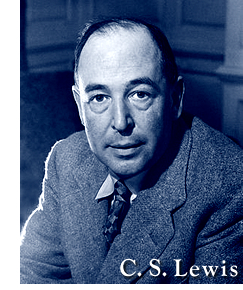
Charles Stanley – When Others Fail Us


Matthew 18:21-35

You’re in a difficult situation, and one by one, friends have fallen away and lost contact. Now the pain is worse because you’re suffering alone.

Why did these people desert you? There are many possible reasons. For example, they might have left because they felt inadequate. Or maybe they couldn’t stand to watch you suffer. Perhaps, though, some had their own best interests in mind and feared falling into similar trouble or being associated with a socially unacceptable situation.

You might wonder how to respond to them. Whatever the reason was for desertion, there is only one appropriate biblical response—forgiveness. The reason is that as forgiven people, it makes no difference what someone has done to us; we never have the right to withhold forgiveness.

After being left alone during his Roman imprisonment, Paul wrote this about those who had abandoned him: “May it not be counted against them” (2 Tim. 4:16). In other words, he forgave them. The apostle probably remembered what happened when Stephen was stoned. Paul had been present as one of the persecutors, after all, and he heard the dying man cry out, “Lord, do not hold this sin against them!” (Acts 7:60).

But it is probable that Paul had an even greater act of forgiveness in mind: Christ’s atoning death and His attitude toward the crucifiers (Luke 23:34). Because God forgives us (and all who turn to Him) of all sins, we don’t have the right to withhold forgiveness from anyone, and that certainly includes our friends. Is there someone you need to forgive? If so, do it today.

Bible in One Year: Luke 12-13

Our Daily Bread — Hidden in My Heart


Read: Psalm 119:9-16

Bible in a Year: Jeremiah 9-11; 1 Timothy 6

I have hidden your word in my heart. —Psalm 119:11

I’m getting used to reading digital magazines, and I feel good that I’m saving trees. Plus, I don’t have to wait for the magazines to come in the mail. I do, however, miss the print editions because I like to run my fingers through the glossy pages and cut out my favorite recipes.

I also have a digital edition of the Bible on my reading device. But I still have my favorite printed Bible—the one I have underlined and read many times. We don’t know the future of the printed page, but one thing we do know: The best place for God’s Word is not on our cell phones, electronic reading devices, or bedside table.

In Psalm 119 we read about treasuring the Scriptures in our hearts: “I have hidden your word in my heart” (v. 11). Nothing compares to pondering God’s Word, learning more of Him, and putting it into practice in our daily lives. The best place for His Word lies deep in our souls.

We may have many excuses for not reading, meditating, or memorizing, but we need God’s Word. I pray that God will help us store His Word in the best place possible—our hearts. —Keila Ochoa

Lord, give me the desire to read Your Word. Then implant it in my heart and thoughts and help me live it out.

The best place for God’s Word is our hearts.

INSIGHT: Psalm 119 is the longest chapter in the Bible, celebrating God’s law and its importance. Today’s passage is one of the most well known in Scripture. Verse 11 is often quoted and memorized and spells out the outcome of knowing the Bible: “I have hidden your word in my heart that I might not sin against you.” Having knowledge about God is not enough. Knowing and meditating on God’s law is what leads to changed behavior. J.R. Hudberg

Ravi Zacharias Ministry –   Call of Curiosity


In an interview with Mars Hill Review producer Ken Myers, historian John Lukacs spoke of what surprised him most when he first arrived in America to teach at the university. He noticed in the students he taught a total lack of curiosity—and he claims it has only grown worse in passing years. Anything we learn, says Lukacs, is compelled by the curiosity which first caused us to pursue it, to follow a topic where it leads, and in so doing, find out how very little we know.(1) This principle is highlighted in the French 16th century term for an intellectual historian. Such a scholar was called a “curieux,” notes Lukacs. That is, one who is curious.

Sometimes I wonder if curiosity has been replaced by a fascination with the current scandal, gossip, or mystery plastered about the media. Television ratings remind us that there is always something fantastic about a new revelation, a long-lost document, or some controversial new evidence. We are quickly pulled in by the promise of a scandal. We are easily taken with a good mystery. And we are compelled to be up on the latest public frenzy. But I’m afraid such fascination shows not an attitude of curiosity towards knowledge, but an attitude of passivity that eagerly waits to consume the next new thing.

It is not surprising then to watch whatever latest media revelation become a public fascination. Such was the case with James Cameron’s documentary called “The Lost Tomb of Jesus,” as he claimed there was new evidence that a tomb in Jerusalem held the remains of Jesus, his wife, and their son. “It doesn’t get bigger than this,” Cameron said at the press release. “We’ve done our homework; we’ve made the case; and now it’s time for the debate to begin.”(2) The foundations of Christianity were hardly devastated, as some of the headlines promised. But the heads of the masses were indeed turned, if only for a moment. Before the premiere of the documentary, the film’s companion book jumped to the top five best selling books online. The coming and going of May 21, 2011 and Harold Camping’s failed prediction of the end of the world presently held a similar attention. Searches related to his false predictions were top trends on both Google and Twitter for weeks. Not surprising, many used the story as further reason to laugh off religion in general.(3)

When it comes to faith, the novelty of “evidence” that promises to hold our curiosity seems to capture the minds of many. But it is almost always a fleeting fascination based on fantastic speculation, intellectual biases, and poor scholarship. In this sense, neither Cameron nor Camping have produced anything new at all. The end of the world has had no shortage of predictors, despite the fact that even Jesus himself claimed not to know the hour. And of new evidence against belief, there is always a new story. New Testament professor Ben Witherington articulates the state of our culture as it pertains to the latest “findings” that promise to undermine Christianity: “We are a Jesus-haunted culture that is so historically illiterate that anything can now pass for knowledge of Jesus.”(4) And as such, we are easily excited.

But curiosity is bigger than the latest scandal. The claims of Christ will continue to be buried in new doubt and evidence, and Christ will continue to rise above the tombs that claim to hold him. Whether or not you believe this, it is admirable to want an honest investigation, a curious pursuit of history, knowledge, and truth.

The shadows of mystery and suspense are indeed captivating, and the latest findings and failings offer a ready labyrinth to explore. But here we are not meant to reside. The mysteries of Christ and the decisive events of history are best explored not with a love of the newest speculation but with a mind and heart for true mystery. Christ has come into the world; we need not look to the latest scandal to find ourselves standing in awe.

Jill Carattini is managing editor of A Slice of Infinity at Ravi Zacharias International Ministries in Atlanta, Georgia.

(1) Mars Hill Audio Journal, Issue 75.

(2) “Jesus Tomb Found, says Film-maker,” BBC News, February 26, 2007.

(3) Darrell Dawsey, “The Atheist Perspective: Laughing off the ‘Rapture’ when we should be laughing off religion,” MLive.com, May 23, 2011.

(4) Ben Witherington, “Tomb of the (Still) Unknown Ancients,” Opinion Journal, March 2, 2007.

Alistair Begg – Giving Generously


You looked for much, and behold, it came to little. And when you brought it home, I blew it away. Why? Declares the Lord of Hosts. Becasuse of my house that lies in ruins, while each of you busies himself with his own house. Haggai 1:9

Grudging souls limit their contributions to the ministry and missionary operations and call such saving good economy; little do they dream that in doing so they are impoverishing themselves. Their excuse is that they must care for their own families, and they forget that to neglect the house of God is a sure way to bring ruin upon their own houses. Our God has a method in providence by which He can cause our endeavors to succeed beyond our expectation, or He can defeat our plans to our confusion and dismay; by a turn of His hand He can steer our vessel in a profitable channel or run it aground in poverty and bankruptcy. It is the teaching of Scripture that the Lord enriches the generous and leaves the miserly to discover that withholding leads to poverty.

In a very wide sphere of observation, I have noticed that the most generous Christians of my acquaintance have always been the happiest, and almost invariably the most prosperous. I have seen the generous giver rise to financial levels of which he never dreamed; and I have as often seen the mean, ungenerous soul descend to poverty by the very stinginess by which he thought to rise. Men trust good stewards with larger and larger sums, and so it frequently is with the Lord; He gives by cartloads to those who give by bushels. Where wealth is not bestowed, the Lord makes a little much by the contentment that the sanctified heart feels in his portion from which a tithe has been dedicated to the Lord.

Selfishness looks first at home, but godliness seeks first the kingdom of God and His righteousness; yet in the long run selfishness is loss, and godliness is great gain. It requires faith to act toward our God with an open hand, but surely He deserves it from us; and all that we can do is a very poor acknowledgment of our amazing indebtedness to His goodness.

The Family Bible Reading Plan

  • 2 Kings 7
  • 1 Timothy 4

Devotional material is taken from “Morning and Evening,” written by C.H. Spurgeon, revised and updated by Alistair Begg.

Charles Spurgeon – The wounds of Jesus


“He showed them his hands and his feet.” Luke 24:40

Suggested Further Reading: Isaiah 25:6-9

There are three things in Christ that death never met with before, all of which are fatal to it. There was in Christ, innocence. Now, as long as man was innocent, he could not die. Adam lived as long as he was innocent. Now, Christ was about to die; but death sucked in innocent blood; he sucked in his own poison and he died. Again, blessedness is that which takes away the sting of death. Now Christ, even when he was dying, was “God over all, blessed for ever.” All that death had ever killed before was under the curse; but this man was never by nature under the curse, because for our sakes he was not born into this world a cursed man. He was the seed of woman it is true, but still not of carnal generation. He did come under the curse when he took upon himself our sins, but not for his own sins. He was in himself blessed. Death sucked in blessed blood; he had never done that before—all others have been under the curse—and that slew death. Yet another thing. Death had never met before with any man who had life in himself. But when death drank Christ’s blood it drank life. For his blood is the life of the soul, and is the seed of life eternal. Wherever it goes, does it not give life to the dead? And death, finding that it had drunk into its own veins life in the form of Jesus’ blood, gave up the ghost; and death itself is dead, for Christ has destroyed it, by the sacrifice of himself; he has put it away; he has said, “Oh death, where is thy sting? Oh grave, where is thy victory?”

For meditation: On the cross Jesus was making the arrangements for death’s own funeral (1 Corinthians 15:26; Revelation 20:14).

Sermon no. 254

26 October (Preached 30 January 1859)

John MacArthur – Passing on a Godly Heritage


“From childhood you have known the sacred writings which are able to give you the wisdom that leads to salvation through faith which is in Christ Jesus” (2 Tim. 3:15).

Planting and nurturing the seed of God’s Word in a child’s mind can produce an abundant spiritual harvest.

Not long ago I met with a group of Christian leaders to consider several candidates for a significant ministry position. During our meeting it dawned on me that each candidate’s father was a prominent pastor. Each candidate had grown up in a family that daily taught and exemplified biblical truth.

That illustrates the enormous impact a Christian heritage can have on a person—whether he pursues the pastorate or not. And by no means is it fathers only who influence their children toward righteousness. Quite the contrary: A godly mother usually has far more opportunity to do so.

Dr. G. Campbell Morgan had four sons—all of whom followed his example by becoming ministers. It’s reported that at a family reunion a friend asked one of the sons, “Which Morgan is the greatest preacher?” “That’s easy,” the son replied, “Mother!”

Timothy knew the benefits of a spiritual heritage like that. His mother, Eunice, and grandmother, Lois (2 Tim. 1:5) taught him the sacred writings, which give the wisdom that leads to salvation (2 Tim. 3:15). Even as a child, Timothy was being equipped for the ministry God would later call him to. The spiritual training he received as a child—and the reservoir of biblical knowledge he accumulated in those early years—were crucial elements in his adult ministry.

If you are a parent, the most precious gift you can give your child is a godly upbringing that will serve as the foundation for his or her future ministries.

Suggestions for Prayer

  • Praise God for those who have instructed you in the Word and encouraged you in righteousness.
  • If you are a parent, pray that your children will exceed you in the faith.
  • Be faithful to pray for the young people around you and set a godly example for them to follow.

For Further Study

Read 1 Samuel 1:1—2:10. What characteristics of a godly mother did Hannah display?


Joyce Meyer – Casting Our Cares Upon God


Therefore humble yourselves [demote, lower yourselves in your own estimation] under the mighty hand of God, that in due time He may exalt you, casting the whole of your care [all your anxieties, all your worries, all your concerns, once and for all] on Him, for He cares for you affectionately and cares about you watchfully. – 1 Peter 5:6-7

It is important that we learn to humble ourselves and cast our care on the Lord. We shouldn’t struggle to believe that God wants us to lay all of our concerns at the foot of the cross, when He so clearly has told us in His Word to do exactly that.

The word casting refers to throwing, hurling, arising, sending, striking, thrusting, driving out, or expelling—all rather forceful terms. It seems to be difficult for some of us to believe that God considers worry or care a sin. So we may actually have to become spiritually violent about casting our care upon the Lord and abiding in the secret place of the Most High, under the shadow of the Almighty.

It literally took me years to be set totally free from the ¬burden of guilt and condemnation. I knew mentally and ¬spiritually that I had been made the righteousness of God in Christ because of what He had done for me on Calvary, but I still had a hard time accepting it and living in it emotionally. The devil kept attacking my feelings, making me feel guilty and condemned. I worried about my past—how could I ever overcome it? I fought against those thoughts for years until finally I got fed up. I told the devil, “No! I am not going to believe your lies! Jesus has made me the righteousness of God, and I have made up my mind that I am going to have what He died to give me!”

I knew from the Bible that I had been made right with God through the shed blood of His Son, Jesus Christ. I was doing my best to keep my mind set on all that Jesus had sacrificed for me. I confessed scriptures, but the enemy still attacked my mind and my feelings until there arose in me a holy anger that finally set me free.

I became angry enough to rise up against the principalities, powers, and wickedness in high places that tried to keep me from enjoying all the blessings God intended for me. Too often, we get mad at other people when our anger should be directed to the source of the problem—the devil and his demons.

Just as anger at Satan can be a form of righteous violence, so can casting our care on the Lord. We can resist Satan, worry and anxiety, and guilt and condemnation, until we get so fed up that we react with a holy anger. When he tries to force us to carry a burden of care, we can stop him in his tracks and say, “No! I will not carry that care. I am casting it upon the Lord!”

Every one of us has certain spiritual issues that must be settled once and for all. We need to cast on the Lord whatever issues we may have that hinder us from walking in the fullness of joy, peace, and rest the Lord intends for us.

Peter says to cast your cares on God. The Greek word translated care in 1 Peter 5:7 means “to draw in different directions; to distract.” Why does the devil give us care? His whole purpose is to distract us from our fellowship with God. When the enemy tries to lay problems on us, we have the privilege of taking those problems and casting them on God. If you throw them, God catches them and takes them away. God knows how to wipe away the cares that Satan lays on you.

God has provided two wonderful weapons you can use to overcome the devil’s plan. First, you humble yourself, turning yourself totally over to God. Then when the devil tries to burden you with worry or some other heavy load, you cast it on God—who is happy to take it away because He cares for you.

As I’ve thought about worry, I’ve also figured out that it’s an act of pride on our part. Those who worry still think they can solve their own problems. Isn’t that pride? Aren’t we saying, “I can work this out by myself”? Those who are proud or full of themselves still think they are strong and can defeat their problems themselves. The truly humble are those who know their weaknesses, but in their weaknesses, they know their strength is in Jesus Christ.

Paul understood that and wrote to the Corinthians: But He said to me, My grace (My favor and loving-kindness and mercy) is enough for you [sufficient against any danger and enables you to bear the trouble manfully]; for My strength and power are made perfect (fulfilled and completed) and show themselves most effective in [your] weakness. Therefore, I will all the more gladly glory in my weaknesses and infirmities, that the strength and power of Christ (the Messiah) may rest (yes, may pitch a tent over and dwell) upon me! (2 Corinthians 12:9).

We fail God when we insist on shouldering our burdens instead of giving them to the Lord. Only God can deliver us, and He wants us to know that. In every situation, He wants us to first humble ourselves and then throw off the cares and worries the devil tries to lay on us. It is possible—in fact, it’s an order. I want to encourage you to place yourself totally into God’s hands and allow Him to be the Manager of your life.

Dear Lord Jesus, I thank You. Even before the problems come, You have told me how to defeat the enemy of my mind. You have also given me Your own example of defeating him. In Your name, Lord Jesus, teach me to humble myself and to cast all my cares and concerns on You. Amen.

From the book Battlefield of the Mind Devotional by Joyce Meyer.

Campus Crusade for Christ; Bill Bright – You Will Be Saved


“For if you tell others with your own mouth that Jesus Christ is your Lord, and believe in your own heart that God has raised Him from the dead, you will be saved” (Romans 10:9).

Many years ago, God clearly led me in the preparation, planning and production of a little booklet called the Four Spiritual Laws. Still widely used today, its volume of copies to date might well be second only to the Bible itself. More than a billion copies have been distributed and one can reasonably conclude that many millions have received Christ as a result of reading its message.

In something so succinct, it of course was impossible to include all of the appropriate Scriptures under each of the four laws. This verse for today, Romans 10:9, is one of those that might have been used with the Law Four, for it fits in well with the wording:

“We must individually receive Jesus Christ as Savior and Lord; then we can know and experience God’s love and plan for our lives.”

The three passages used (John 1:12; Ephesians 2:8,9; Revelation 3:20) clearly direct the seeker after God. And of course this verse in Romans clearly confirms all that the other passages affirm.

Two conditions precede salvation, the apostle Paul is saying to the church in Rome: (1) “Tell others with your own mouth that Jesus Christ is your Lord,” and (2) “Believe in your own heart that God has raised Him from the dead.” Simple, yet significant and meaningful, are these two preparatory steps.

As you share your faith with others today and in the days to come, recall with joy these two simple conditions that must be met.

Bible Reading: Romans 10:8-13

TODAY’S ACTION POINT: “Dear Lord, I thank You with all of my heart for the simplicity of the gospel and, with the enabling of the Holy Spirit, I will share this good news with all who will listen.”

Presidential Prayer Team; J.K. – Faithful Patience


Many have said that you should never pray for patience…it will encourage the Lord to test your faith in many ways. But steadfastness, described as a life of faithfulness amid troubles and afflictions, may require a great deal of patience. The Rev. George Horne, an English churchman in the 1700s, provided this definition: “Patience is the guardian of faith, the preserver of peace, the cherisher of love, the teacher of humility. Patience governs the flesh, strengthens the spirit, sweetens the temper, stifles anger, extinguishes envy, subdues pride; she bridles the tongue, restrains the hand, tramples upon temptations, endures persecutions, consummates martyrdom.”

Let steadfastness have its full effect, that you may be perfect and complete, lacking in nothing.

James 1:4

The apostle Paul tells us as Christians “to present your bodies as a living sacrifice, holy and acceptable to God…Do not be conformed to this world, but be transformed by the renewal of your mind, that by testing you may discern what is the will of God.” (Romans 12:1-2) James says to “count it all joy” when you are tested (James 1:2) so that you gain the full effect of God’s plan for you.

Be faithful. Pray for others enduring trials – and for this nation’s leaders facing impossible decisions, that they may never doubt God’s goodness and grace.

Recommended Reading: James 1:2-8, 12-17

Greg Laurie – Perspective from Prayer


Now it came to pass, as He was praying in a certain place, when He ceased, that one of His disciples said to Him, “Lord, teach us to pray, as John also taught his disciples.”—Luke 11:1

Prayer changes everything. In prayer I am reminded of the greatness of God and, thus, the comparable smallness of my problems. When I pray, my problems don’t go away. But I get perspective.

Jesus taught what we call the Lord’s Prayer (even though it isn’t called that anywhere in the Bible). It would be better described as the Disciple’s Prayer because Jesus never prayed it. But He taught that prayer in response to the disciples’ request, “Lord, teach us to pray” (Luke 11:1).

There’s nothing wrong with praying the Lord’s Prayer verbatim. But the disciples said, “Lord teach us to pray” not “Teach us a prayer.”

Jesus said, “When you pray, say:

‘Our Father in heaven,

Hallowed be Your name.

Your kingdom come.

Your will be done

On earth as it is in heaven.

Give us day by day our daily bread.

And forgive us our sins,

For we also forgive everyone who is indebted to us.

And do not lead us into temptation,

But deliver us from the evil one.’ ” (Luke 11:2–4)

That is a template for prayer. The idea is to first contemplate the awesomeness of God. Get things in perspective. You are talking to the Creator of the universe, who is in Heaven. “Hallowed be Your name” means “Praise to Your name. Honor to Your name. Glory to Your name. Set apart is Your name. Hallowed be Your name.”

Effectively, we are saying, “Lord, before I offer a single request, I want to first say that I want Your will more than I want my own.” See how that can change your prayer? You don’t just start off with demands. You start off with worship and praise so that you see God in His glory. Thus, you see your problems for what they really are.

Max Lucado – The Currency of Heaven


Imagine you were living in the South during the Civil War and had accumulated large amounts of Confederate currency. Through a series of events you became convinced that the South was going to lose and your money would soon be worthless. What would you do? If you had any common sense you would put every penny into the currency that is to come and prepare yourself for the end of the war.

Are you investing in the currency of heaven? The currency of this world will be worth nothing when you die or when Christ returns. Whom do you trust? God or King More? King More is a rotten ruler. He never satisfies. He rusts. He loses his value. For all the promises he makes, he cannot keep a single one. King More will break your heart. But the King of Kings? He will catch you every single time!

From Glory Days

Night Light for Couples – “I Choose to Forgive”


“Forgive as the Lord forgave you.” Colossians 3:13

C S. Lewis pointed out that “forgiving does not mean excusing… if that were so, there would be nothing to forgive.” The people of Paducah, Kentucky, understood this. A few years ago, fourteen‐year‐old Michael Carneal opened fire on a group of students who had gathered in prayer. In seconds, ten were wounded, three fatally. Yet the students and people from the community showed a remarkable willingness to forgive. Placards appeared at the high school reading, “We Forgive You, Mike.” Kelly Carneal, Michael’s sister, was not only embraced by her peers, but was also asked to sing in the choir at the slain girls’ funeral.

During the town’s annual Christmas parade, the people lifted up a moment of silent prayer on behalf of Michael and his family. One young girl said it best: “I can hate Michael and bear the scars of what he did for the rest of my life. But I choose to forgive him and get beyond it.”

Dr. Arch Hart, a Christian psychologist says, “Forgiveness is giving up my right to hurt you for hurting me.” Forgiving is a decision, not an emotion. In our marriages we’ll often need to choose to have a right attitude before our wounded heart has healed. Even when we can’t control how we feel, we can determine how we act and what we do with our pain.

Just between us…

  • How did Jesus model forgiveness for us?
  • Is there someone in our family, our community, or our circle of acquaintances who has committed a widely known injustice?
  • How can we show this person forgiveness?
  • Is it necessary to forget in order to forgive?

Lord, thank You for showing us how to forgive. May we choose to forgive in our marriage—even when we don’t feel like it. We trust You to bring healing in our feelings and memories in Your time. Amen.

From Night Light For Couples, by Dr. James & Shirley Dobson

C.S. Lewis Daily – Today’s Reading


‘Charity’ now means simply what used to be called ‘alms’—that is, giving to the poor. Originally it had a much wider meaning. (You can see how it got the modern sense. If a man has ‘charity’, giving to the poor is one of the most obvious things he does, and so people came to talk as if that were the whole of charity. In the same way, ‘rhyme’ is the most obvious thing about poetry, and so people come to mean by ‘poetry’ simply rhyme and nothing more.) Charity means ‘Love, in the Christian sense’. But love, in the Christian sense, does not mean an emotion. It is a state not of the feelings but of the will; that state of the will which we have naturally about ourselves, and must learn to have about other people.

From Mere Christianity

Compiled in A Year with C.S. Lewis