Charles Stanley -Free From Guilt


1 Peter 2:22-25

Guilt can be defined as anxiety in one’s spirit over a deliberate, willful sin. We can trace this emotion all the way back to the Garden of Eden. After Adam and Eve tasted the forbidden fruit, they felt ashamed of their nakedness and hid themselves. During Old Testament times, people would bring a special offering to the temple in order to “pay” for their wrong. Today, we no longer have such a tangible way to release our guilt.

Actually, we have something better. The heavenly Father sent His Son Jesus—who was fully God as well as fully man—to live a sinless life. He took upon Himself the penalty for all of our wrongs by dying a criminal’s death through crucifixion. Praise God, Jesus rose to life again, conquering death and sin. Ephesians 1:7 states, “In Him we have redemption through His blood, the forgiveness of our trespasses, according to the riches of His grace.”

The truth is, every one of us has sinned and therefore deserves to be separated from God (Rom. 3:23). However, we can be liberated from death and guilt by accepting Jesus’ free gift and committing our lives to Him. Of course, in our imperfect human state, we will continue to sin. But our loving heavenly Father will continue to forgive His children (Luke 11:3-4).

Jesus’ sacrifice gives us freedom from shame and death—plus the promise of eternity with God. But that in no way means we have license to sin knowingly. Though we are promised forgiveness, our gratitude and love for our Savior should spur us on to obey and serve the Lord. And, surely, to live a life free from guilt.

Bible in One Year: Luke 20-22

Our Daily Bread — Don’t Touch the Fence!


Read: Jeremiah 18:1-12

Bible in a Year: Jeremiah 18-19; 2 Timothy 3

The Lord . . . sent word to them . . . again and again, because he had pity on his people. —2 Chronicles 36:15

As a young girl I went with my parents to visit my great-grandmother, who lived near a farm. Her yard was enclosed by an electric fence, which prevented cows from grazing on her grass. When I asked my parents if I could play outside, they consented, but explained that touching the fence would result in an electric shock.

Unfortunately I ignored their warning, put a finger to the barbed wire, and was zapped by an electrical current strong enough to teach a cow a lesson. I knew then that my parents had warned me because they loved me and didn’t want me to get hurt.

When God saw the ancient Israelites in Jerusalem crafting and worshiping idols, He “sent word to them . . . again and again, because he had pity on his people” (2 Chron. 36:15). God spoke through the prophet Jeremiah, but the people said, “We will continue with our own plans” (Jer. 18:12). Because of this, God allowed Nebuchadnezzar to destroy Jerusalem and capture most of its inhabitants.

Maybe God is warning you today about some sin in your life. If so, be encouraged. That is proof of His compassion for us (Heb. 12:5-6). He sees what’s ahead and wants us to avoid the problems that will come. —Jennifer Benson Schuldt

Lord, give me the ability to hear not just Your words but also Your heart. Help me to learn from the mistakes of those whose stories You have given us. Help me to honor You with my life.

God’s warnings are to protect us, not to punish us.

INSIGHT: We sometimes wonder whether God can change His mind. Today’s passage in the book of Jeremiah helps us answer this question. God tells Jeremiah that sometimes His actions are affected by our actions. God has decided to act in certain ways depending on how we act. This is God’s freedom. He is not changing His mind; He has simply determined how He will respond to our stubbornness or our repentance. We don’t determine what God will do; in His goodness He has told us how He will respond to us. J.R. Hudberg

Ravi Zacharias Ministry –  God Speaks


Some time ago I found myself speaking at a church in Shrewsbury, the birth place of Charles Darwin. At the end of the message a visitor came up to me. “I have a question that no one has been able to answer to my satisfaction,” he said. “What did Jesus mean when he said, ‘My God, my God, why have you forsaken me?’”

Some questions take you by surprise, and this was certainly not what I was expecting. I began to explain what was happening on the cross and as I came to explain that Jesus had actually taken sin for us and become a curse for us in order to win our pardon, the man broke down into tears.

“Would you like for me to pray with you so that you might receive Christ and follow him?” I enquired.

“Of course,” came his immediate reply.

It was a joy to pray with him, and as I left I couldn’t help but remember that it is the Holy Spirit “who convicts as to sin, righteousness, and judgment.” I am sure that many people had given a proper answer to him before, but that day was the day when the veil was lifted from his eyes.

Whenever we think about sharing the gospel, two issues immediately present themselves. The first has to do with content: What is it that needs to be said? The second has to do with communication: How will I say it? Sometimes we also talk about motivation: Why should I say anything at all? The last question becomes increasingly relevant as more and more Christians fear that evangelism is not worth losing one’s friends. All of these issues are important. All of them must be addressed. For the words of the Great Commission are clear: “Therefore go and make disciples of all nations, baptizing them in the name of the Father and of the Son and of the Holy Spirit, and teaching them to obey everything I have commanded you.”(1)

However, there is one part of sharing the gospel that we rarely hear about. The command to go and make disciples was given to us by a person, by Christ himself. The gospel was not given to us based on our ability to share it. In fact, the Great Commission is sandwiched between two such reminders. Before Jesus tells us to go, he says, “All authority in heaven and on earth has been given to me” (28:18). And then after he tells us to go he powerfully reminds us, “And surely I am with you always, to the very end of the age” (28:20). Thus, communicating the gospel is first about remembering the authority, power, and presence of the one who calls us to speak.

Not long ago I was across the globe speaking to almost 5,000 people, most of whom were not interested in what I had to say. This was because I had been asked to give a talk to one audience, but I was presented with a completely different context. About half of the audience was made up of children under twelve, which I was not at all expecting. The audience was completely disengaged with me. Twice I stopped the meeting to pray and ask for silence. I have never before felt so inadequate. In the end, I abandoned the message, read a large passage of Scripture, offered a call to repentance, and then closed in prayer. I came down from the podium wanting to hide my embarrassment. My head hung in defeat. But as I looked up, I found myself lost in a sea of over 1000 faces—young and old—many of whom were in tears as they came to pray at the altar.

If the gospel is about God, this shouldn’t surprise us. God is the one who calls and convicts; God is the one who pardons and makes all things new.

Maybe the questions we often ask about evangelism call for a shift in focus. Communicating the gospel as we go about our lives is a command that we have been given. But it is a command given by the one who longs most that the world will hear. It is God who speaks, God who convicts, and God who makes disciples of broken lives. Our gospel has come to us not simply with words, but also with power, with the Holy Spirit, and with deep conviction. Thus, we do well to ask: Who is it we dare and yet long to speak of? How are we describing this God who is like no other? And most significantly, who are we relying on to do so?

Michael Ramsden is international director of Ravi Zacharias International Ministries in the United Kingdom.

Alistair Begg – How Do We Pray?


Pray then like this: “Our Father in heaven…” Matthew 6:9

This prayer begins where all true prayer must start, with the spirit of adoption: “Our Father.” There is no acceptable prayer until we can say, “I will arise and go to my Father.”1 This childlike spirit soon perceives the grandeur of the Father “in heaven” and ascends to devout adoration, “hallowed be your name.” The child lisping, “Abba, Father” grows into the cherub crying, “Holy, holy, holy.” There is but a step from rapturous worship to the glowing missionary spirit, which is a sure expression of filial love and reverent adoration-“your kingdom come, your will be done, on earth as it is in heaven.”

Next follows the heartfelt expression of dependence upon God-“Give us this day our daily bread.”

Being further illuminated by the Spirit, the one praying discovers that he is not only dependent but sinful; so he cries for mercy, “Forgive us our debts, as we also have forgiven our debtors”; and being pardoned, having the righteousness of Christ imputed, and knowing his acceptance with God, he humbly prays for holy perseverance, “Lead us not into temptation.” The man who is really forgiven is anxious not to offend again; the possession of justification leads to an anxious desire for sanctification. “Forgive us our debts”-that is justification; “Lead us not into temptation, but deliver us from evil”-that is sanctification in its negative and positive forms.

As the result of all this, there follows a triumphant ascription of praise, “For yours is the kingdom and the power and the glory, forever. Amen.” We rejoice that our King reigns in providence and shall reign in grace, from the river even to the ends of the earth, and of His dominion there shall be no end. So from a sense of adoption, up to fellowship with our reigning Lord, this short model of prayer conducts the soul. Lord, teach us then to pray.

1) Luke 15:18

The Family Bible Reading Plan

  • 2 Kings 10
  • 2 Timothy 1

Devotional material is taken from “Morning and Evening,” written by C.H. Spurgeon, revised and updated by Alistair Begg.

Charles Spurgeon – A basket of summer fruit


“Thus hath the Lord God shewed unto me: and behold a basket of summer fruit. And he said, Amos, what seest thou? And I said, A basket of summer fruit. Then said the Lord unto me, The end is come upon my people of Israel; I will not again pass by them any more.” Amos 8:1,2

Suggested Further Reading: 2 Peter 3:1-10

For thousands of years the Lord came not, although sin was rampant and the darkness dense, nothing could excite the Lord to an unwise haste. Nor on the other hand did he stay beyond the proper hour; for when the fulness of time was come, God sent forth his Son, born of a woman, made under the law. In heaven we shall probably discover that Christ came to die for our sins precisely at the only fitting moment, that in fact redemption’s work could not have been so wisely accomplished at the gates of the garden of Eden as on Calvary; and that the reign of Herod and the Roman Caesar afforded the most fitting era for the sacrifice of the Cross. And so shall it be with regard to the second advent of our blessed Lord and Master. We are apt to say, “Why are his chariots so long in coming? Do not the virgins sleep because the bridegroom tarries, the wise as well as the foolish, have they not all slumbered and slept?” And many are the servants who say in their heart, “My Lord delayeth his coming,” and are ready therefore to beat their fellow-servants, to drink and to be drunken; but cheer your hearts, you who look for his appearing. He will not come too hastily, for why should the sun arise until darkness has had its hour? Nor will he delay his appearing one moment beyond the proper time, for should not the sun beam forth in the morning? We know and are persuaded that when he shall stand a second time upon the earth, it shall be as much the fulness of time for him to come, as it was the fulness of time when he came at first.

For meditation: We know that Christ was born at the right time (Galatians 4:4) and that he died for us at the right time (Romans 5:6). We cannot tell when he will come again, but it will be at the right time (Acts 17:31). The right time to trust in him is now (2 Corinthians 6:2).

Sermon no. 343

29 October (Preached 28 October 1860)

John MacArthur – Reproving Sinful Conduct


“All Scripture is . . . profitable for . . . reproof” (2 Tim. 3:16).

People who aren’t interested in holy living will avoid being exposed to sound doctrine.

Paul instructed Timothy to “preach the word; be ready in season and out of season; reprove, rebuke, exhort, with great patience and instruction” (2 Tim. 4:2). He knew a time was coming when many people would reject sound doctrine, and “wanting to have their ears tickled, [would] accumulate for themselves teachers in accordance to their own desires; and . . . turn away their ears from the truth, and will turn aside to myths” (vv. 3-4).

That’s certainly true of our day. Many who profess to love Christ seem intolerant of His Word. Often they fall into spiritual complacency and surround themselves with teachers who tell them exactly what they want to hear. If they can’t find a comfortable message, they drift from church to church or simply abandon it altogether.

Such people have exchanged conviction for comfort, and need to examine themselves to see if they are genuine believers (2 Cor. 13:5). Their attitude toward the Word is in stark contrast to those who truly love Christ and come to the Word with an earnest desire to learn its truths and live accordingly.

But even true believers can fall into the trap of negligence and compromise. Perhaps you’ve noticed how sinning Christians often try to avoid exposure to God’s Word. Sometimes they’ll temporarily stop attending church or Bible studies. They also try to avoid other believers—especially those who will hold them accountable to what they know to be true.

But like any loving parent, God won’t allow His children to remain in sin for long without disciplining them (Heb. 12:5-11). Sooner or later they must repent and be reconciled to Him.

An important element in reconciling sinning Christians to God is the faithful prayers of other believers. God may choose to use you in that way, so always be ready to pray, and eager to restore others in a spirit of gentleness (Gal. 6:1).

Suggestions for Prayer

Do you know a Christian who is being disobedient to God’s Word? If so, ask God to bring him or her to repentance. Assure the person of your prayers and concern, and be available to be further used in the restoration process if the Lord wills.

For Further Study

What does Matthew 18:15-20 say about how to confront a sinning Christian?

Joyce Meyer – How to Be Happy


Having gifts (faculties, talents, qualities) that differ according to the grace given us, let us use them. – Romans 12:6

We are all gifted and graced differently to operate in the gifts God has given us. Today’s verse says we are to use our gifts according to the grace that is upon us.

Two people can be gifted to teach, yet one may be a stronger teacher than the other because he or she has more grace from God for that particular calling. One person may be anointed by the Holy Spirit to lead a huge, successful company, while another may be anointed and given grace to lead a thriving small business. Why? Because the Holy Spirit distributes gifts to whomever He wills (see 1 Corinthians 12:11). He has His reasons for what He does, and we need to trust Him in that. We should be thankful for what He gives us and not allow pride to cause us to become jealous of someone else’s gift. We cannot walk in love with people and envy their gifts at the same time.

My husband could be jealous because God has given me a preaching gift that He did not give him. Dave realized a long time ago that he would not be happy if he tried to operate outside of the grace that has been given to him. If he tried to be who I am, he would lose his joy. Dave is anointed in administration and finances, and his part in our ministry is just as important as mine.

If you want to be really happy, give yourself to what you are called and graced to do. The Holy Spirit will speak to you about what you are to do and help you understand the grace you have been given. Don’t be jealous of others, but walk in love toward them and in faithfulness to the calling and grace on your life.

From the book Hearing from God Each Morning: 365 Daily Devotions by Joyce Meyer.

Campus Crusade for Christ; Bill Bright – A Prosperous Land


“If my people who are called by My name humble themselves and pray, and seek My face and turn from their wicked ways, then I will hear from heaven, will forgive their sin, and will heal their land” (2 Chronicles 7:14).

On April 29, 1980, 500,000 men and women gathered on the Washington Mall to fast and pray and claim this promise of God.

For years, I have had a growing conviction in my heart that, because the Supreme Court ruled that Bible reading and prayer in our schools is unconstitutional, our nation has turned more and more away from God – immorality has become the “new morality”; homosexuality has become the “alternative life-style”; drug addiction and alcoholism are no longer treated as evil; even violent criminals are being declared “not guilty by reason of insanity.” The decaying of our society is evident on all sides.

One of the more alarming, documented facts is that the Soviet Union has been accelerating its production of armaments of war, including nuclear weapons. And through a massive move toward peace through disarmament and through neglect on the part of our leaders, we have allowed our military power to disintegrate to the point of vulnerability.

During the late 60’s and 70’s I genuinely believed that unless God supernaturally met with us and we repented as a nation and turned from our sin, the boast of Nikita S. Khrushchev, former head of the Soviet Union, “We will bury you!” could well come true. For this reason I agreed, along with Pat Robertson, founder and president of Christian Broadcasting Network, and John Gimenez, to cosponsor that great gathering on the Washington Mall.

As 500,000 people spent the day from early in the morning until late in the afternoon, praying, fasting and crying out to God, I sensed that God lifted my load. And, as I sat on the platform joining with my brothers and sisters from all over America, including millions who were joining us in prayer over radio and television, God lifted the burden that had been on my heart for at least fifteen years. he gave me the assurance that the promise of 2 Chronicles 7:14 would be fulfilled as a direct result of our gathering on that day.

Since that time, there has been no question in my mind but what God heard our prayers and laid the groundwork for a dramatic turnaround in our nation.

Bible Reading: Leviticus 23:3-12

TODAY’S ACTION POINT: Claiming the promise of 2 Chronicles 7:14, I will pray for God’s supernatural release of blessing and power upon this nation, that we might experience a continuous revival from each individual in the smallest community of America to our leaders in the halls of Congress, the Supreme Court and the White House.

Presidential Prayer Team; H.L.M.  – Weak Yet Strong


Ten years ago, Brian Nichols went on a murderous rampage at the Fulton County Courthouse in downtown Atlanta. He killed four people and injured others. Hours later, Nichols took Ashley Smith, a widowed young mother, hostage in her apartment. Smith was struggling with life and with a drug addiction. Yet God gave her the courage to remain calm during the ordeal. After several hours, she asked Nichols if she could read the book, The Purpose Driven Life. Nichols conceded and told her to read it out loud. Eventually, Ashley was able to leave the apartment and Nichols was arrested.

He gives power to the faint, and to him who has no might he increases strength.

Isaiah 40:29

“I really believe that God spared my life because He wanted me to go around the world and tell people that He changed me,” said Smith. “You know, I didn’t do anything in my apartment that night but lay down my brokenness to God and He’s brought me to a very different place in my life in the last 10 years.”

As you spend time with the Lord, ask Him for His unlimited strength during your times of weakness. Pray also that your nation’s leaders will depend on God for their needs.

Recommended Reading: II Corinthians 12:2-10

Greg Laurie –Reasons to Forgive


Get rid of all bitterness, rage, anger, harsh words, and slander, as well as all types of evil behavior. Instead, be kind to each other, tenderhearted, forgiving one another, just as God through Christ has forgiven you. —Ephesians 4:31–32

Without even knowing you, I know this about you: You have been hurt in life. You have had people say unkind things to you. You have had people do mean things to you. There have been incidents in your life where you’ve been treated unfairly.

Some want to rationalize that there is no need to forgive those who have wronged them because they don’t deserve forgiveness. But they have to ask themselves whether they deserve forgiveness themselves. As C. S. Lewis pointed out, “Everyone says forgiveness is a lovely idea, until they have something to forgive.”

Here is what the Bible has to say about forgiving those who have wronged us:

And do not bring sorrow to God’s Holy Spirit by the way you live. Remember, he has identified you as his own, guaranteeing that you will be saved on the day of redemption.

Get rid of all bitterness, rage, anger, harsh words, and slander, as well as all types of evil behavior. Instead, be kind to each other, tenderhearted, forgiving one another, just as God through Christ has forgiven you. (Ephesians 4:30–32)

God’s command to forgive should be enough. But let me offer another reason why we should learn to be forgiving: it might actually extend our lives. Recent studies have suggested that those who do not forgive are more likely to experience high blood pressure, bouts of depression, and problems with anger, stress, and anxiety. Dr. Charlotte van Oyen Witvliet, a researcher at Hope College, said “If you are willing to exert the effort it takes to be forgiving, there are benefits both emotionally and physically.”

People who have been studying the medical benefits of forgiveness have come to the same conclusion that the Bible came to long ago: it is a good thing to forgive others.


Max Lucado – Leave the Past Behind


Remember the story of the prodigal son? He squandered his inheritance on wild living and bad choices. He lost every penny. His trail dead-ended in a pigpen. One day he was so hungry he leaned over the pig trough, took a sniff, and drooled. He was just about to dig in when something within him awoke. Wait a second. What am I doing wallowing in the mud?Then he made a decision that changed his life forever. “I will arise and go to my father.”

You can do that. You can’t undo all the damage you’ve done. But you can arise and go to your Father. Even the apostle Paul had to make this choice. He said, “I leave the past behind and with hands outstretched to whatever lies ahead, I go straight for the goal” (Philippians 3:13-14).

Landing in a pigpen stinks. But staying there…is just plain stupid.

From Glory Days

Night Light for Couples –Black Sunday


“If he sins against you seven times in a day, and seven times comes back to you and says, ‘I repent,’ forgive him.” Luke 17:4

Every family has moments they’d rather forget—moments that later call for understanding and forgiveness. When our children lived at home, we found that Sunday was often the most frustrating day of the week, especially during the “get ’em ready for church” routine. But Black Sunday was uniquely chaotic!

Jim and I began the day by getting up late, which meant that everyone had to rush to prepare for church. Then there was the matter of spilled milk at breakfast and the black shoe polish on the floor. Finally, Ryan, who was dressed first, managed to slip out the back door and get himself dirty from head to toe. As these irritations mounted, the criticism and accusations flew back and forth. At least one spanking was delivered and another three or four were promised.

After the Sunday evening service we called the family together. We described the day we’d had and asked each person to forgive us for our part in it. We also gave each member of the family a chance to express his or her feelings. Ryan was given his first shot, and he fired it at me. “You’ve been a real grouch today, Mom!” he said with feeling. “You’ve blamed me for everything all day long.” Danae then poured out her hostilities and frustrations. Finally, Jim and I had an opportunity to explain the tensions that had caused our overreaction. It was a valuable time of ventilation and honesty that drew us together once more. We then had prayer as a family and asked the Lord to help us live and work together in love and harmony.

No matter how hard we try, we will experience times when we fail to live up to our Christian principles. When those times arrive, discussion and forgiveness are the best methods for soothing wounded relationships. I urge you at those moments to actively seek forgiveness from each other and from God and freely offer forgiveness in return.

While you’re at it, forgive yourself. If God can post a “No Fishing” sign by the sea where your sins are thrown, then so can you and I.

– Shirley M Dobson

From Night Light For Couples, by Dr. James & Shirley Dobson

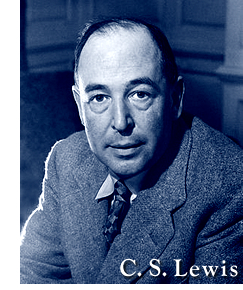
C.S. Lewis Daily – Today’s Reading


On The Fall

The doctrine of the Fall (both of man and of some “gods,” “eldils” or “angels”) is the only satisfactory explanation. Evil begins, in a universe where all was good, from free will, which was permitted because it makes possible the greatest good of all. The corruption of the first sinner consists not in choosing some evil thing (there are no evil things for him to choose) but in preferring a lesser good (himself) before a greater (God). The Fall is, in fact, Pride. The possibility of this wrong preference is inherent in the v. fact of having, or being, a self at all. But though freedom is real it is not infinite. Every choice reduces a little one’s freedom to choose the next time. There therefore comes a time when the creature is fully built, irrevocably attached either to God or to itself. This irrevocableness is what we call Heaven or Hell. Every conscious agent is finally committed in the long run: i.e., it rises above freedom into willed, but henceforth unalterable, union with God, or else sinks below freedom into the black fire of self-imprisonment. That is why the universe (as even the physicists now admit) has a real history, a fifth act with a finale in which the good characters “live happily ever after” and the bad ones are cast out. At least that is how I see it.

From The Collected Letters of C.S. Lewis, Volume II

Compiled in Words to Live By