Charles Stanley – God Works Within Us


Ephesians 3:20-21

Let the words from today’s reading slowly sink into your understanding: “able to do far more abundantly beyond all that we ask or think” (v. 20). What an amazing description of the Lord’s ability to work within us. Yet so often our focus is mainly on what we want Him to do around us: If He would change this situation or fix that problem, then my life would be better. But He invites us to think and ask bigger—He wants to change us!

The Holy Spirit has more than enough power to transform lives from the inside out, but working change within is usually a slow process. Spiritual fruit takes time to grow and mature. That’s why we need patience and faith to believe He is working even when we don’t see the results right away. God is never in a hurry and will never give up on us.

The Lord has a purpose for your life, and He is constantly working to achieve it. Although He has an individualized plan for each one of His children, He also has an overarching goal—to conform every believer to the image of His Son Jesus Christ. In order to accomplish this, He may have to bring us through some struggles and heartaches. It might not make sense to us, but God knows exactly what He’s doing.

What would you like to see the Lord do within you? As you read the Scriptures, look for qualities that God considers precious, and ask Him to work them out in your life. Then rely on His wonderful promise to do even more than you have asked or imagined.

Bible in One Year: John 1-3

Our Daily Bread — Repair or Replace?


Read: 2 Corinthians 5:14-21

Bible in a Year: Jeremiah 22-23; Titus 1

If anyone is in Christ, he is a new creation. —2 Corinthians 5:17

It was time to fix the trim on the windows of our house. So I scraped, sanded, and applied wood filler to get the aging trim ready for paint. After all of my efforts—including a coat of primer and some too-expensive paint—the trim looks, well, pretty good. But it doesn’t look new. The only way to make the trim look new would be to replace the old wood.

It’s okay to have weather-damaged window trim that looks “pretty good” to our eye. But when it comes to our sin-damaged hearts, it’s not enough to try to fix things up. From God’s point of view, we need all things to become new (2 Cor. 5:17).

That is the beauty of salvation through faith in Jesus. He died on the cross as a sacrifice for our sin and rose from the dead to display His power over sin and death. The result is that in God’s eyes, faith in Christ’s work makes us a “new creation” (2 Cor. 5:17) and replaces the old with a “new life” (Acts 5:20). Looking through Jesus and His work on the cross for us, our heavenly Father sees everyone who has put his or her faith in Him as new and unblemished.

Sin has caused great damage. We can’t fix it ourselves. We must trust Jesus as Savior and let Him give us a brand-new life. —Dave Branon

Heavenly Father, I understand that sin has damaged my heart. I put my trust in the Savior’s sacrifice and ask You to wash away my sins and make me a new person. Thank You for what Jesus did for me.

Only Jesus can give you a new life.

INSIGHT: Paul, the author of 2 Corinthians, had founded the church at Corinth during his second missionary journey (Acts 18:1-17) and spent 18 months there in ministry. This was a church that was struggling with a number of problems. Paul had addressed many of those problems in his first letter to them (1 Cor.). Now, some within the assembly—egged on by false apostles—were attacking his authority as an apostle. This letter was written to defend his apostleship and to provide a level of pastoral correction to the continuing problems at Corinth. His defense is most clearly seen in his transparent record of his own suffering for the message of the cross (2 Cor. 11:16-12:10). Bill Crowder

Ravi Zacharias Ministry – Wasteful Love


In 1969 Simon Wiesenthal penned his thought-provoking book, The Sunflower, which captured the agony he personally experienced in one of history’s darkest moments. Relating one encounter with the Holocaust, Wiesenthal described how he had been taken from a Nazi death-camp to a makeshift army hospital. He was ushered by a nurse to the side of a Nazi soldier who had asked to have a few private moments with a Jew. Wiesenthal warily entered the room and was brought face to face with a fatally wounded man, bandaged from head to toe. The man struggled to face him and spoke in broken words. Wiesenthal nervously endured the anxious monologue, finding himself numbed by the encounter. At the hands of Nazi soldiers like the one now dying before him, Wiesenthal had lost 89 of his own relatives. Here, the soldier confessed to the heinous act of setting ablaze an entire village of Jews; at his whim, men, women, and children were burned to death. With great anxiety, he described his inability to silence from his mind the screams of those people. Now on a deathbed himself, the man was making a last desperate attempt to seek the forgiveness of a Jew. The man begged him to stay, repeating his cry for forgiveness, but Wiesenthal could only walk away.

Yet even years later he wondered if he had done the right thing. Should he have accepted the man’s repentance and offered the forgiveness so earnestly sought? Had he neglected a weighted invitation to speak or was silence the only appropriate reply? Seeking an answer, Wiesenthal wrote to thirty-two men and women of high regard—scholars, noble laureates, psychologists, and others. Twenty-six of the thirty-two affirmed his choice to not offer the forgiveness that was sought. Six speculated on the costly, but superior, road of pardon and mercy.

I don’t know what it would take to absolve anyone of so monumental a crime. I don’t know if it is possible to offer forgiveness for something so far beyond our imaginable moral categories. But I know that even in the most unfathomable places, the God of Scripture somehow carries the burden of prodigal grace. Who can fathom the Son of God on the cross pleading with the Father to forgive the guilty for killing him? Who can conceive of a God who comes among his people, trusting himself to the hands of a fallen world, even knowing the troubling outcome? Who can grasp the heart of a God who chooses to love an undeserving people? To live as one marked by this disruptive grace is not easy. It is easier to forget that the command to forgive is thoroughly unsettling—in fact, sometimes haunting. To persist in love when we are tired or overwhelmed, or even rightfully angered by injustice, is a massive and costly request.

I have often found it easier to fit into shoes of the prodigal son than the shoes of the remaining older brother. Yet in this well-known parable of Jesus, both sons are invited to celebrate and rejoice. To the prodigal child who has squandered and defamed, God’s grace is lavish. It is extravagant and poured out on those who neither expect it nor deserve it. The celebration is thrown in the honor of the run-away, in honor of the return of just one lost sheep. When these shoes are ours, we are both humbled by the Father’s attention and compelled by God’s mercy.

Yet to the child on the other side of justice, the Father’s grace is jarring and disruptive. It is lavish, but wastefully so. His invitation to the feast is both awkward and demanding, a seeming call to overlook the potential of our reckless brother to strike again at our expense. These shoes are much harder to walk in. The Father’s call to forgive the one whose sincerity is questionable is often agonizing; his command to love the habitual prodigals in our midst is both costly and exhausting.

But it is Christ’s request. “Lord, how many times shall I forgive my brother when he sins against me? Up to seven times?” asked Peter. But Jesus answered, “I tell you, not seven times, but seventy times seven” (Matthew 18:21-22). God’s grace disrupts our sense of righteousness and summons us to respond in similar kind. Whether we find ourselves in the shoes of the prodigal or treading the difficult ground of the older brother there is good reason to rejoice and celebrate the unveiling love of the Father. God’s unfathomable grace and mercy shatters our sense of who is worthy to enjoy the benefits of God’s kingdom, inviting us to the celebration regardless of where, and in whose shoes, we stand.

Jill Carattini is managing editor of A Slice of Infinity at Ravi Zacharias International Ministries in Atlanta, Georgia.

Alistair Begg – Hope for the Backslider


Renew a right spirit within me. Psalm 51:10

A backslider, if there is a spark of life left in him, will groan for restoration. In this renewal the same exercise of grace is required as at our conversion. We needed repentance then; we certainly need it now. We required faith that we might come to Christ at first; only the same grace can bring us to Jesus now. We needed a word from the Most High, a word from the lip of the loving One, to end our fears then; we shall soon discover, when under a sense of present sin, that we need it now. No man can be renewed without as real and true a manifestation of the Holy Spirit’s energy as he felt at first, because the work is as great, and flesh and blood are as much in the way now as they ever were.

Let your personal weakness, Christian, be an argument to make you pray sincerely to your God for help. Remember, David when he felt himself to be powerless did not fold his arms or close his lips, but he hurried to the mercy-seat crying, “renew a right spirit within me.” Do not allow the doctrine that you, unaided, can do nothing make you sleep; but let it be a goad in your side to drive you with an awful earnestness to Israel’s strong Helper. O that you may have grace to plead with God, as though you pleaded for your very life-“renew a right spirit within me.” He who sincerely prays to God to do this will prove his honesty by using the means through which God works.

Be much in prayer; live constantly on the Word of God; kill the lusts that have driven your Lord from you; be careful to watch over the future uprisings of sin. The Lord has His own appointed ways; sit by the wayside, and you will be ready when He passes by. Continue in all those blessed ordinances that will foster and nourish your dying graces; and knowing that all the power must proceed from Him, do not cease to cry, “Renew a right spirit within me.”

The Family Bible Reading Plan

  • 2 Kings 13
  • 2 Timothy 3

Devotional material is taken from “Morning and Evening,” written by C.H. Spurgeon, revised and updated by Alistair Begg.

Charles Spurgeon – The Shulamite’s choice prayer


“Set me as a seal upon thine heart, as a seal upon thine arm; for love is strong as death; jealousy is cruel as the grave; the coals thereof are coals of fire, which hath a most vehement flame. Many waters cannot quench love, neither can the floods drown it.” Solomon’s Song 8:6-7

Suggested Further Reading: Ephesians 3:14-21

“Set me as a seal upon thine heart, as a seal upon thine arm. Love me, Lord. Help me, Lord. Let thy heart move towards me; let thine arm move for me too. Think of me, Lord; set me on thy heart. Work for me, Lord, set me on thine arm. Lord, I long to have thy love, for I hear it is as strong as death, and thou knowest I am chained by Satan, and am his bond-slave. Come and deliver me: thou art more than a match for my cruel tyrant. Come with thy strong love and set me free. I hear that thy love is as firm as hell itself. Lord, that is such a love as I want. Though I know I shall vex thee and wander from thee, come and love me with a love that is firm and everlasting. O Lord, I feel there is nothing in me that can make thee love me. Come and love me, then, with that love which finds its own fuel. Love me with those coals of fire which have a ‘vehement flame.’ And since many waters cannot quench thy love, prove that in me; for there are many waters of sin in me, but Lord, help me to believe that thy love is not quenched by them; there are many corruptions in me, but Lord, love me with that love which my corruptions cannot quench. Here, Lord, I give myself away; take me; make me what thou wouldst have me to be, and keep and preserve me even to the end.” May the Lord help you to pray that prayer, and then may he answer it for his mercy’s sake.

For meditation: Omnipotent God loves his people with an omnipotent, all-conquering love (Romans 8:35-39) which surpasses all knowledge and imagination. Can you say with assurance that he “so” loves you (John 3:16; 1 John 4:11)?

Sermon no. 364

31 October (Preached 24 February 1861)

John MacArthur – Training in Righteousness


“All Scripture is . . . profitable for . . . training in righteousness” (2 Tim. 3:16).

God’s Word nourishes your spiritual life.

We conclude our study of the character and benefits of God’s Word by focusing on the benefit that ties all the others together: training in righteousness. Everything the Word accomplishes in you through teaching, reproof, and correction is aimed at increasing your righteousness so you’ll “be thoroughly equipped for every good work” (2 Tim. 3:17, NIV).

“Training” refers to training or educating a child. The New Testament also uses the term to speak of chastening, which is another important element in both child rearing and spiritual growth (Heb. 12:5-11). The idea is that from spiritual infancy to maturity, Scripture trains and educates believers in godly living.

Scripture is your spiritual nourishment. Jesus said, “Man shall not live on bread alone, but on every word that proceeds out of the mouth of God” (Matt. 4:4). Peter exhorted us to be like newborn babes, longing “for the pure milk of the word, that by it [we] may grow in respect to salvation” (1 Pet. 2:2).

You should crave the Word just like a baby craves milk. But Peter prefaced that statement with an exhortation to put “aside all malice and all guile and hypocrisy and envy and all slander” (v. 1). That’s the prerequisite. James taught the same principle: “Putting aside all filthiness and all that remains of wickedness, in humility receive the word” (James 1:21). Attempting to feast on Scripture without confessing your sin is like attempting to eat a meal while wearing a muzzle.

Either the Word will keep you from sin or sin will keep you from the Word. Deal with sin immediately so it doesn’t spoil your appetite for God’s Word. And even if you know the Bible well, be regularly refreshed by its power and reminded of its truths. That’s the key to enjoying spiritual health and victory.

Suggestions for Prayer

  • Thank God for the nourishment His Word provides.
  • Seek His wisdom and grace in dealing with personal sin. Don’t ignore it, for it will diminish your desire for biblical truth.

For Further Study

Read Philippians 3:1 and 2 Peter 1:12-15.

  • What did Paul and Peter say about the importance of being reminded of biblical truths you’ve already learned?
  • Do you follow that advice?

Joyce Meyer – Love Yourself, Discipline Yourself


For the time being no discipline brings joy, but seems grievous and painful; but afterwards it yields a peaceable fruit of righteousness to those who have been trained by it. – Hebrews 12:11

I believe discipline is one of the most important character traits a person can have. We know that God disciplines those He loves (see Proverbs 3:12), and if we love ourselves, we will require ourselves to be disciplined. Without discipline, we miss much of the enjoyment life has to offer, but when we do discipline ourselves, we have the time, energy, and resources to enjoy our lives.

Generally speaking, I believe disciplined people feel better about themselves and enjoy more self-respect than undisciplined people do. Undisciplined people tend to want “the perks without the works.” In other words, they want the benefits and advantages life has to offer without making any effort.

Today’s scripture teaches us that discipline is something we do for ourselves; it does not bring immediate joy or results, but later on it produces good things for those who submit to it. Discipline is a tool we can use for our good—not a taskmaster for us to resent or despise.

Don’t think of discipline as difficult, but see it as a vehicle that brings blessings, peace, fun, and great enjoyment to your life. Don’t see discipline as your enemy, but as a good friend that will help you become everything God wants you to be and empower you to do everything He wants you to do.

Love Yourself Today: In what specific area of your life do you need discipline? Make a commitment to God and to yourself to work on it with His help.

From the book Love Out Loud by Joyce Meyer.


Campus Crusade for Christ; Bill Bright – You Will Have Life


“But these are recorded so that you will believe that He is the Messiah, the Son of God, and that believing in Him you will have life” (John 20:31).

What a message you and I have to share. That is why John wrote this entire Gospel, so that we, first of all, might believe, but then also that we might share the good news with all who will listen.

“These are recorded” – the miracles presented in this gospel – so that we might believe. The goal of the book is two-fold: (1) to prove that Jesus was (is) Messiah and (2) that all those who look at the proof might be convinced and thus find eternal life.

The miracles, facts, arguments, instructions and conversations – all are directed toward that end. John’s goal (to demonstrate that Jesus is the Messiah), if kept steadily in view will throw much light on the book. The argument is unanswerable, framed after the strictest rules of reasoning, infinitely beyond the skill of man, and having throughout the cleared evidence of demonstration.

All Scripture is given to us for a purpose. The purpose of this particular passage is crystal clear; hence it demands some kind of response from those of us who truly believe. To know the truth is not enough. We must act on it, trusting the Lord of the harvest to make us sensitive and alert to the spiritual needs of those around us.

Bible Reading: John 3:9-15

TODAY’S ACTION POINT: I will seek to be sensitive to the spiritual needs of all with whom I have contact.

Presidential Prayer Team; A.W. – Simple Solution


Doubt and anxiety go hand in hand and there is no shortage of it in America. Nearly 40 million people suffer from an anxiety disorder. People in biblical times suffered from doubt and anxiety, too. Elijah doubted God’s protection and fled from Jezebel (I Kings 19:3), Zechariah doubted the angel’s news of a son (Luke 1:18), John the Baptist doubted who Christ was (Matthew 11:3), Peter doubted on the water and almost sank (Matthew 14:30), and Thomas doubted Christ was risen (John 20:25). But in all these situations, God overcame their doubt.

Do not be anxious about anything, but in everything…let your requests be made known to God.

Philippians 4:6

Today’s verse gives instructions for facing doubt. Paul says not to be anxious but with thanksgiving, pray to the Lord. The outcome will always be that “the peace of God, which surpasses all understanding, will guard your hearts and your minds in Christ Jesus.” (Philippians 4:7)

Are you struggling with doubt and fear? You can experience unexplainable peace if you take it to Christ in prayer. Thank Him for His blessings, ask for what you need, and then trust Him to take care of it. Pray, too, for the leaders of this country to come to this simple solution to experiencing peace.

Recommended Reading: Matthew 6:25-34

Greg Laurie – What Do You Want Written On Your Tombstone?


“The wise shall inherit glory, but shame shall be the legacy of fools.”—Proverbs 3:35

Parents, today you are leaving a legacy by your life, words, and actions. This will affect your children, your grandchildren, your great grandchildren, and beyond.

  1. H. Spurgeon said, “A good character is the best tombstone. Those who loved you, and were helped by you, will remember you. So carve your name on hearts and not on marble.”

We need to think about the legacy we are leaving. Because when your last day on earth comes, you will not be remembered for what you may be making the focus of your life today.

When someone passes, foremost in their eulogy is who they are survived by. We talk about them as a spouse, a parent, a son or daughter, as a person who did good for others.

We don’t celebrate the wealth they acquired or how attractive they were, because when they are gone, we collectively realize those things don’t matter.

Socrates said, “Could I climb to the highest place in Athens, I would lift my voice and proclaim: Fellow citizens, why do you turn and scrape every stone to gather wealth and take so little care of your children to whom one day you must relinquish it all?”

Our goal as parents is to lead our children to Christ and get them to heaven.

We are all leaving a legacy. The question is, is it a good or a bad one?


Max Lucado – Don’t Waste Your Failures 


My wife and I spent some years as missionaries in Brazil. Our first two years felt fruitless and futile. More often than not I went home frustrated. So we asked God for another plan. We prayed and reread the Epistles, especially focused on Galatians. It occurred to me I was preaching a limited grace. When I compared our gospel message with Paul’s, I saw a difference. His was high-octane good news. Mine was soured legalism. We focused on the gospel, proclaiming forgiveness of sins and resurrection from the dead. We baptized forty people in twelve months! God wasn’t finished with us. We just needed to put the past in the past and God’s plan in place.

Don’t waste your failures by failing to learn from them. Rise up! God hasn’t forgotten you. Keep your head up. You never know what good awaits you.

From Glory Days

Night Light for Couples – Fickle Values


“I am fearfully and wonderfully made; your works are wonderful, I know that full well.” Psalm 139:14

I f I (jcd) were to draw a caricature of an adult experiencing a lifelong crisis of confidence, I would depict a bowed, weary traveler. Over his shoulder, I would place the end of a mile‐long chain attached to tons of garbage. Inscribed on each piece of junk would be the details of some humiliation—a failure, a rejection, an embarrassment from the past. The traveler could let go of the chain, but he is convinced that he must drag that heavy load throughout life.

If this describes your own self‐concept, realize that you can free yourself from the weight of your chain. You have judged yourself inferior based on shifting standards. In the 1920s, women asked plastic surgeons to reduce their breast size—now many women undergo surgery to do just the opposite. In King Solomon’s biblical love song, the bride asked her groom to overlook her dark, well‐tanned skin—but in our country today, she’d be the pride of the beach. Rembrandt painted overweight ladies, but now, “thin is in.”

To be content with who we are as God’s creations, we must base our self‐image on His values, not on the fickle notions of human worth.

Just between us…

  • Do you ever feel like the weary traveler described above?
  • Do you sometimes feel that even God couldn’t love you?
  • What feelings of inferiority or inadequacy do you carry around? What would God say about your “junk”?
  • Do I help to elevate your opinion of yourself, or am I part of the problem?

Lord, open our eyes to the half-truths and lies about ourselves that keep us in chains. We are made in Your image. May we affirm that beautiful truth in each other daily. Amen.

From Night Light For Couples, by Dr. James & Shirley Dobson

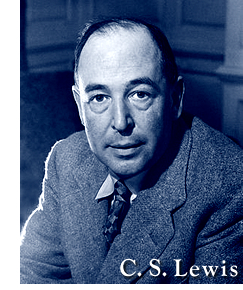
C.S. Lewis Daily – Today’s Reading


Some writers use the word charity to describe not only Christian love between human beings, but also God’s love for man and man’s love for God. About the second of these two, people are often worried. They are told they ought to love God. They cannot find any such feeling in themselves. What are they to do? The answer is the same as before. Act as if you did. Do not sit trying to manufacture feelings. Ask your- self, ‘If I were sure that I loved God, what would I do?’ When you have found the answer, go and do it.

On the whole, God’s love for us is a much safer subject to think about than our love for Him. Nobody can always have devout feelings: and even if we could, feelings are not what God principally cares about. Christian Love, either towards God or towards man, is an affair of the will. If we are trying to do His will we are obeying the commandment, ‘Thou shalt love the Lord thy God.’ He will give us feelings of love if He pleases. We cannot create them for ourselves, and we must not demand them as a right. But the great thing to remember is that, though our feelings come and go, His love for us does not. It is not wearied by our sins, or our indifference; and, therefore, it is quite relentless in its determination that we shall be cured of those sins, at whatever cost to us, at whatever cost to Him.

From Mere Christianity

Compiled in A Year with C.S. Lewis