Greg Laurie –Do the Next Thing


But David said to Saul, “Your servant used to keep his father’s sheep, and when a lion or a bear came and took a lamb out of the flock, I went out after it and struck it, and delivered the lamb from its mouth; and when it arose against me, I caught it by its beard, and struck and killed it.”—1 Samuel 17:34–35

When David was anointed as the next king of Israel, his job description at the time was watching sheep. Now, sheep are not the most interesting animals on earth. Maybe when David was sitting around watching them, he thought, They are dumb, but I love them. They really need me, because if I don’t come through for them and defend them, they are leg of lamb for a predator.

There were times when David took on lions and bears and killed them. I don’t think David knew he was being tested or prepared, but he was. And that is how God always works. He preps us. He gets us in shape for what is yet to come.

There was no timeline given after Samuel showed up and poured oil on David, anointing him as the next king. So what did David do? He went back to the last thing.

In his excellent book on David, Chuck Swindoll wrote, “[David] did not go down to the nearest department store and try on crowns. . . . He went right back to the sheep.”

God’s selection of David was so unexpected that we should pay careful attention to it. In choosing David, God is showing us what kind of person He is looking for. David was faithful.

Joseph had visions of grandeur as a young man, but he wasn’t ready yet. God was preparing Joseph for the next thing, and he didn’t realize it. God would allow him to go through some suffering first. Joseph was a dreamer, but God was getting him ready for reality.

When you don’t know what to do, go back to the last thing God showed you. Work hard. Be faithful in what God has set before you, and He will show you what to do next.

Max Lucado – God Has a Place for You


Jericho’s shady lady found God—or better worded, God found Rahab the harlot. He spotted a tender heart in the hard city of Jericho and reached out to save her. He would have saved the entire city, but no one else made the request. Then again, Rahab the harlot had an advantage. She had nothing to lose. She was at the bottom of the rung. She had already lost her reputation. She was at the bottom of the pit.

Perhaps that’s where you are as well. You may or may not sell your body, but you’ve sold your allegiance, affection, attention, and talents. You’ve sold out. Glory days? Perhaps for him or for her. But not for me. I’m too soiled, dirty. I’ve sinned too much. No Glory Days for me!

God’s one-word reply for such doubt? Rahab! God has a place for the Rahabs of the world! He has a place for you!

From Glory Days

Night Light for Couples – Sticks and Stones


“The poison of vipers is on their lips.” Psalm 140:3

The old adage “sticks and stones may break my bones, but words will never hurt me” simply isn’t true. Anyone who has felt the stinging barb of criticism knows that words can deeply wound. Lewis Yablonsky, author of Fathers and Sons, observed the effect such negative comments had on his own father. At the dinner table, Lewis’s mother would say things like, “Look at your father! His shoulders are bent down; he’s a failure.

He doesn’t have the courage to get a better job or make more money. He’s a beaten man.” Yablonsky’s father never defended himself. He just kept staring at his plate.

Psychologist and author Abraham Maslow once said, “It takes nine affirming comments to make up for each critical comment we give to our children.” Adults aren’t immune to criticism and put‐downs either. Let’s focus on the positive traits our partner brings to our marriage. Why not list them? Then point them out—daily and lovingly—to our mate.

Just between us…

  • Is there a negative comment from your childhood that stays with you? How did it make you feel?
  • Do we need to be more affirming and less critical? How can we improve?
  • How did Jesus affirm others? (For examples, look at Matthew 16:17–19; 26:6–13; Luke 7:44–48; and John 1:47–48.)
  • In what areas of your life are you discouraged? How can I lift you up?

Dear Father, we’re deeply sorry for any harmful words we’ve aimed at each other lately. Please forgive us, and help us to forgive each other. We long to do better at using only words that build, heal, encourage, and affirm. Help us, we pray. Amen.

From Night Light For Couples, by Dr. James & Shirley Dobson

Charles Stanley – Listening Through Restlessness


Esther 6:1-11

When we’re too preoccupied to hear God’s voice, He will often get our attention by giving us a restless spirit. The book of Esther gives us a wonderful example of this. In the sixth chapter, we see that King Ahasuerus “could not sleep so he gave an order to bring the book of records, the chronicles, and they were read before the king” (v. 1). As a result, the king became aware of an assassination plot against him that had been foiled by a man named Mordecai. Filled with gratitude for this act of service and loyalty, the ruler made plans to honor him.

What the king could not have known, though, is that Haman, one of his royal advisors, had targeted the hero Ahasuerus wanted to celebrate. Not only had Haman plotted to hang Mordecai the Jew (5:14); he was also planning to exterminate the entire Jewish population. As a result of Esther’s request, the king intervened, and Mordecai and all the other Jews were saved.

Now, what started this process? It was a restless night. The king did not know why he couldn’t sleep, but we know—he had insomnia because God was trying to get his attention. The Lord had something important to say to Ahasuerus, and His way of getting through to him was an unpleasant night of sleeplessness.

How often has this happened to you? You go about your career and activities, but restlessness seems to hang over you, often causing sleepless nights. In such moments, dare to bow and pray, “Lord, what is it that You want to tell me?” You’ll discover that God can and will speak in your unrest.

Bible in One Year: Matthew 25-26

Our Daily Bread — Spiritual Checkup


Read: Colossians 3:1-14

Bible in a Year: Isaiah 37-38; Colossians 3

Love the Lord your God with all your heart and with all your soul and with all your mind and with all your strength. —Mark 12:30

To detect health problems before they become serious, doctors recommend a routine physical exam. We can do the same for our spiritual health by asking a few questions rooted in the great commandment (Mark 12:30) Jesus referred to.

Do I love God with all my heart because He first loved me? Which is stronger, my desire for earthly gain or the treasures that are mine in Christ? (Col. 3:1). He desires that His peace rule our hearts.

Do I love God with all my soul? Do I listen to God telling me who I am? Am I moving away from self-centered desires? (v. 5). Am I becoming more compassionate, kind, humble, gentle, and patient? (v. 12).

Do I love God with all my mind? Do I focus on my relationship with His Son or do I let my mind wander wherever it wants to go? (v. 2). Do my thoughts lead to problems or solutions? To unity or division? Forgiveness or revenge? (v. 13).

Do I love God with all my strength? Am I willing to be seen as weak so that God can show His strength on my behalf? (v. 17). Am I relying on His grace to be strong in His Spirit?

As we let “the message of Christ dwell among [us] richly . . . with all wisdom” (v. 16), He will equip us to build each other up as we become spiritually fit and useful to Him. —Julie Ackerman Link

Heavenly Father, when I rely on anything other than love in my efforts to initiate change in people, I am neglecting to love You with all my heart, soul, mind, and strength. I choose today to exchange my strength for Yours.

To be spiritually fit, feed on God’s Word and exercise your faith.

INSIGHT: We may find it difficult at times to motivate ourselves in Christian living and service to God and others. However, Paul reminds the church in Colossae that the reason we are to focus on God and serve Him well is that we have been “raised with Christ” (3:1). Because of what Jesus accomplished for us, we are to serve Him faithfully. J.R. Hudberg

Alistair Begg – The Praying Believer


Let us lift up our hearts and our hands to God in heaven. Lamentations 3:41

The act of prayer teaches us our unworthiness, which is a very salutary lesson for proud people like us. If God gave us favors without constraining us to pray for them, we would never know how poor we are, but a true prayer is an inventory of wants, a catalog of necessities, a revelation of hidden poverty.

While prayer is an application to divine wealth, it is also a confession of human emptiness. The most healthy state of a Christian is always to be empty of self and constantly depending upon the Lord for provision; to be consistently poor in self and rich in Jesus; to be weak as water personally, but mighty through God to do great exploits. This is where prayer comes in, because while it adores God, it puts the creature where it should be-in the dust.

Prayer is in itself, apart from the answer that it brings, a great benefit to the Christian. As the runner gains strength for the race by daily exercise, so for the great race of life we acquire energy by the holy exercise of prayer. Prayer thins the feathers of God’s young eaglets, so that they can learn to soar above the clouds. Prayer readies God’s warriors and sends them out to combat with their sinews braced and their muscles firm. The praying believer comes out of his closet, even as the sun rises from the chambers of the east, rejoicing like an athlete about to race. Prayer is the uplifted hand of Moses that defeats the Amalekites more than the sword of Joshua; it is the arrow shot from the prophet’s chamber announcing defeat to the Syrians. Prayer equips human weakness with divine strength, turns human folly into heavenly wisdom, and gives the peace of God to troubled souls.

We do not know what prayer cannot do! We thank You, great God, for the mercy-seat, a wonderful evidence of your marvelous loving-kindness. Help us to use it properly throughout this day!

The Family Bible Reading Plan

  • 1 Kings 14
  • Colossians 1

Devotional material is taken from “Morning and Evening,” written by C.H. Spurgeon, revised and updated by Alistair Begg.


Charles Spurgeon – Instability


“Unstable as water, thou shalt not excel.” Genesis 49:4

Suggested Further Reading: 2 Peter 3:14-18

Who are these unstable ones? When they were boys they could never complete a game; they must always be having something fresh; and now they are just as childish as when they were children. Look at them in doctrine: you never know where to find them. You meet them one day, and they are very full of some super doctrine; they have been to some strong Calvinist place, and nothing will suit them except the very highest doctrine, and that must be spiced with a little of the gall of bitterness, or they cannot think it is the genuine thing. Very likely next week they will be Arminians; they will give up all idea of a fixed fate, and talk of free-will, and man’s responsibility like the most earnest Primitive Methodist. Then they steer another way. “Nothing is right but the Church of England. Is it not established by law? Ought not every Christian to go to his parish church?” Let them alone; they will be at the most schismatical shop in the metropolis before long. Or if they do not change their denomination they are always changing their minister. A new minister starts up; there is no one, since the apostles, like him; they take a seat and join the church; he is everything to them. In three months they have done with him; another minister rises up some distance off, and these people are not particular how far they walk; so they go to hear him. He is the great man of the age; he will see every man’s candle out, and his will burn on. But a little trouble comes on the church, and they leave him. They have no attachment to anything; they are merely feathers in the wind, or corks on the wave.

For meditation: Do you recognise yourself here? If not, guard your own stability carefully. But if you do, realise that we are not supposed to remain babes in Christ, but are to grow up (Ephesians 4:14,15). Perhaps you are not sure whether Spurgeon is describing you; one question may help you decide—who has the rule over you? (Hebrews 13:7,17).

Sermon no. 158

11 October (1857)

John MacArthur – God’s Self-Disclosure


“God, after He spoke long ago to the fathers in the prophets in many portions and in many ways, in these last days has spoken to us in His Son” (Heb. 1:1-2).

Scripture is the storehouse of divine revelation.

For decades liberal theologians have misrepresented the Bible as merely a collection of man’s religious thoughts and aspirations. But Scripture is much more than that. It is in fact divine revelation—God’s self disclosure through His Spirit to the human authors. Man could never know God’s identity, attributes, perspectives, or commands if God hadn’t revealed them to him. Nor could man know his own origin, purpose, or destiny.

Paul said, “‘Things which eye has not seen and ear has not heard, and which have not entered the heart of man, all that God has prepared for those who love Him.’ For to us God revealed them through the Spirit” (1 Cor. 2:9-10). In 2 Timothy 3:16 he adds, “All Scripture is inspired by God and profitable for teaching, for reproof, for correction, for training in righteousness.” God inspired every word of Scripture and speaks on every page.

Hebrews 1 speaks of two general means by which God revealed Himself: Old Testament revelation (“long ago,” v. 1) and New Testament revelation (“in His Son,” v. 2). First He spoke to the Jewish fathers through the Old Testament prophets “in many portions.” That refers to all the books of the Old Testament. “In many ways” speaks of the specific means by which He communicated: visions, prophecies, parables, types, symbols, ceremonies, theophanies, and audible voice.

From the close of the Old Testament to the arrival of John the Baptist, there were approximately 400 years during which God was silent. But that silence was shattered when John announced the coming of Christ. From that time on, God spoke through His Son. The gospels record His life and teachings, the book of Acts shows the propagation of His teachings through the apostles and early church, the epistles apply His teachings to everyday life, and Revelation tells of His triumphant return and the consummation of divine revelation.

Isn’t it wonderful to know God’s perspective on life and history?

Suggestions for Prayer

Thank God that His Word is a lamp to your feet and a light to your path (Ps. 119:105).

For Further Study

According to Deuteronomy 29:29, what is the purpose of divine revelation?


Joyce Meyer – Don’t Put It Off


Do not say to your neighbor, Go and come again; and tomorrow I will give it. —Proverbs 3:28

Many people struggle with procrastination. As we see in the verse for today, we can easily say, “I’ll do it tomorrow.” We can have the best intentions, but if we don’t act on them we will still be disobedient. Procrastination is very deceptive. We don’t see it as disobedience because we intend to obey God; it’s just that we are going to do it when—when we have more money, when we are not so busy, when Christmas is over, or when the children go back to school.

There is no point in saying, “I will be a giver when I have more money or more possessions to give away.” If you aren’t giving out of what you already have, you’re not likely to do it when you have more.

Dave and I tithed from the beginning of our life together, but it never occurred to us to “live to give,” to excel in giving. But, the closer we got to God, the more we wanted to give. We learned that true giving often means sacrificing something that we really would like to keep. We were not in a financial position to give more money than our 10 percent tithe, but strong desire caused us to search for ways to give more. So we gave away personal possessions, extra clothes, household items, and an old car we decided to pass on to a needy friend.

In the process of giving, we discovered that we did not have to have money to be a blessing to others. We could start with what we did have, and as we did God increased us and enabled us to give even more.

Love Others Today: What acts of love or kindness have you been putting off? Do them today.

From the book Love Out Loud by Joyce Meyer.

Campus Crusade for Christ; Bill Bright – You Will Be Different


“Therefore if any man be in Christ, he is a new creature; old things are passed away; behold all things are become new” (2 Corinthians 5:17, KJV).

A prominent businessman, elder in a prestigious church, was impatient with “narrow-minded, born-again Christians.” “I am a Christian,” he said, “but I have never been born again, and frankly I’m not interested. We emphasize more important issues in my church.”

When I read the third chapter of John with him and explained that there is only one kind of biblical Christian, the one who is “born-again,” and that no other kind of “Christian” can enter into the kingdom of God according to the words of Jesus, the light suddenly went on. With this new insight he readily received Christ as his Savior and Lord.

A caterpillar is an ugly, hairy, earthbound worm – until it weaves a cocoon about its body. Then an amazing transformation takes place. Out of that cocoon emerges a beautiful butterfly – a new creature, able to live on another plane, to soar in to the heavens. So it is with man.

John 3 records Jesus’ explanation of how one becomes a new creature. Nicodemus, a ruler of the Jews who tried to adhere meticulously to every detail of the law, had come to Jesus for counsel.

“‘Rabbi, we know that You have come from God as a teacher; for no one can do these signs that You do unless God is with him.’ Jesus answered and said to him, ‘Truly, truly, I say to you, unless one is born again, he cannot see the kingdom of God.” (John 3:2,3, NAS).

Puzzled, Nicodemus asked, “How can a man be born when he is old? He cannot enter a second time into his mother’s womb and be born, can he?” (John 3:4, NAS). Then Jesus explained that physical birth alone does not qualify anyone to enter the kingdom of God. Since His is a spiritual kingdom, we must experience spiritual birth.

Bible Reading: Romans 6:4-14

TODAY’S ACTION POINT: I will read John’s gospel, chapter three, meditating especially on the first eight verses, and will consider again my relationship with the Lord. If I should die today, I want to be sure I would go to heaven, and through the enabling of the Holy Spirit I want to begin living the supernatural life.

Presidential Prayer Team; C.P. – Prayer or Consequences


In the early church, James had been recently martyred and Peter was imprisoned. Fearing the same thing could happen to Peter, Christians got together and prayed. When a servant girl Rhoda told them Peter was at the door, they thought she was crazy. She insisted – and they went to see the answer to their prayers for themselves.

So Peter was kept in prison, but earnest prayer for him was made to God by the church.

Acts 12:5

Just before the crucifixion, Jesus said to Peter, “Simon, Simon, behold, Satan demanded to have you, that he might sift you like wheat, but I have prayed for you that your faith may not fail. And when you have turned again, strengthen your brothers.” (Luke 22:31-32). Can you imagine what would’ve happened if Jesus hadn’t prayed?

If you believe God answers prayers, make it a priority to intercede, believing that God’s ears are attentive to your prayers and will save, heal, protect, lead, and cause the gospel to be spread. Avoid unimportant arguments and inane distractions. Remain focused and humble. After all, so much depends on your prayers…including the welfare of this nation.

Recommended Reading: James 4:1-10

Night Light for Couples – Transforming Love


“In all our distress and persecution we were encouraged…” 1 Thessalonians 3:7

When I (jcd) was thirteen, we adopted the most wonderful dog in the world. Penny, as we called him, was smart and obedient. He loved everybody, and everybody loved him. But when I went off to college and my parents moved, our family reluctantly decided to give Penny away to another family. After a while, Penny decided that my father wasn’t coming back. The dog began to grieve. In fact, he seemed to give up on life, and before long, arthritis and other problems left him paralyzed. When my father heard about

Penny’s sad state, he drove seven hundred miles to bring him home. He found our dog curled up in a little ball, unable to move. But Penny’s tiny stub of a tail thrashed wildly when he saw his master. Remarkably, with the love and attention my parents began to shower on him, Penny recovered. Within two weeks of returning home, he was running and jumping. He lived eleven more years without another sign of arthritis!

This story about our family dog reminds me that if even a mutt needs love and encouragement to stay alive, then so does every human being on the face of the earth. We are social beings, designed to depend on God and each other. Yet some of us are curled up in a pitiful little ball of discouragement. Every day we have the power to bring life by giving encouragement to others—or we can ignore their needs and think only of ourselves. The choice is ours.

Just between us…

  • Has my encouragement ever made you feel transformed or “healed”?
  • Who might be transformed by a little encouragement from us?

Lord, open our eyes to others’ need for attention, affection, and encouragement. May we never withhold what is our duty and privilege to give. Amen.

From Night Light For Couples, by Dr. James & Shirley Dobson

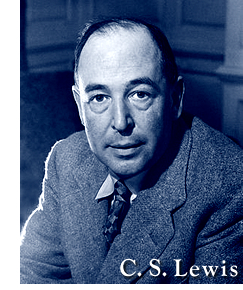
C.S. Lewis Daily – Today’s Reading


No Christian and, indeed, no historian could accept the epigram which defines religion as “what a man does with his solitude.” It was one of the Wesleys, I think, who said that the New Testament knows nothing of solitary religion. We are forbidden to neglect the assembling of our- selves together. Christianity is already institutional in the earliest of its documents. The Church is the Bride of Christ. We are members of one another.

In our own age the idea that religion belongs to our private life— that it is, in fact, an occupation for the individual’s hour of leisure—is at once paradoxical, dangerous, and natural. It is paradoxical because this exaltation of the individual in the religious field springs up in an age when collectivism is ruthlessly defeating the individual in every other field. . . . . There is a crowd of busybodies, self-appointed masters of ceremonies, whose life is devoted to destroying solitude wherever solitude still exists. They call it “taking the young people out of themselves,” or “waking them up,” or “overcoming their apathy.” If an Augustine, a Vaughan, a Traherne, or a Wordsworth should be born in the modern world, the leaders of a youth organization would soon cure him. If a really good home, such as the home of Alcinous and Arete in the Odyssey or the Rostovs in War and Peace or any of Charlotte M. Yonge’s families, existed today, it would be denounced as bourgeois and every engine of destruction would be levelled against it. And even where the planners fail and someone is left physically by himself, the wire- less has seen to it that he will be—in a sense not intended by Scipio— never less alone than when alone. We live, in fact, in a world starved for solitude, silence, and privacy, and therefore starved for meditation and true friendship.

From The Weight of Glory

Compiled in A Year with C.S. Lewis

Charles Stanley – Defend Against Temptation


James 1:12-16

To build a defense against temptation, we must understand how it works. Every sin originates as a thought, often the result of a flaming arrow Satan shoots our way (Eph. 6:16). If a believer holds on to the thought, it becomes a fantasy—the chance to imagine what it would be like to pursue that notion, without actually doing so. The problem with fantasies is that they can easily become entangled with a person’s emotions. This creates a desire, which brings the believer to the point where a choice must be made. And he or she must either consent to the sin or refuse. This process is quite dangerous, as the progression from thought to choice can be almost instantaneous.

Wise believers determine ahead of time to resist temptation—before it enters their consciousness. There are two cornerstones to a good defense: the commitment to obey God, and the recognition that He is in control and has limited what Satan can do (1 Cor. 10:13).

We can further fortify our defense when temptation actually comes. Satan has a way of spotlighting the pleasure of sin until it’s all we see. But with conscious effort, we can retrain our focus to take in the bigger picture: Is this choice a violation of God’s Word? What are the consequences? Am I prepared to pay that price?

No defense against temptation is complete without Scripture and prayer. Every moment spent meditating on the Word and communicating with God builds our faith. As the bulwark around our mind and heart strengthens, we are ever more prepared to douse Satan’s flaming arrows.

Bible in One Year: Matthew 22-24

Our Daily Bread — Love Comes First


Read: 1 John 4:7-19

Bible in a Year: Isaiah 34-36; Colossians 2

We love [God] because he first loved us. —1 John 4:19

One evening my friend showed me one of the three decorative plaques that would be part of a wall arrangement in her living room. “See, I’ve already got Love,” she said, holding up the plaque with the word written on it. “Faith and Hope are on order.”

So Love comes first, I thought. Faith and Hope soon follow!

Love did come first. In fact, it originated with God. First John 4:19 reminds us that “We love [God] because he first loved us.” God’s love, described in 1 Corinthians 13 (known as the “love chapter”), explains a characteristic of real love when it says, “Love never fails” (v. 8).

Faith and hope are essential to the believer. It is only because we are justified by faith that “we have peace with God through our Lord Jesus Christ” (Rom. 5:1). And hope is described in Hebrews 6 as “an anchor for the soul, firm and secure” (v. 19).

One day we will have no need of faith and hope. Faith will become sight and our hope will be realized when we see our Savior face to face. But love is eternal, for love is of God and God is love (1 John 4:7-8). “Now these three remain: faith, hope and love. But the greatest of these is love”—it’s first and last (1 Cor. 13:13). —Cindy Hess Kasper

Thank You, Lord, for Your faithful love and for the love of family and friends. Please help me find ways to show Your love to others today.

We love because God first loved us.

INSIGHT: John’s gospel carries the themes of light (1:5; 8:12) and truth (1:14; 18:38) throughout his record of Christ’s earthly ministry. In 1 John, he revisits both of those themes (1:5-6). Today’s reading focuses primarily on the character of God’s great love. Bill Crowder

Alistair Begg – Blameless


Jude 24

Let your mind revolve around that wonderful word “blameless”! We are far from it now; but since our Lord never stops short of perfection in His work of love, we will reach it one day. The Savior who will keep His people to the end will also present them finally to Himself as “the church . . . in splendor, without spot or wrinkle or any such thing.”1 All the jewels in the Savior’s crown are pure and without a single flaw. All the maids of honor who assist the Lamb’s wife are pure virgins without spot or stain.

But how will Jesus make us blameless? He will wash us from our sins in His own blood until we are as white and fair as God’s purest angel; and we will be clothed in His righteousness, that righteousness that makes the saint who wears it positively blameless-yes, perfect in the sight of God. We will be unblameable and unreprovable even in His eyes. Not only will His law have no charge against us, but it will be magnified in us. Moreover, the work of the Holy Spirit within us will be altogether complete. He will make us so perfectly holy that we will have no lingering tendency to sin. Judgment, memory, will-every power and passion will be set free from the tyranny of evil. We will be holy even as God is holy, and in His presence we will dwell forever. Saints will not be out of place in heaven; their beauty will be as great as that of the place prepared for them.

Oh, the intense delight of that hour when the everlasting doors will be lifted up, and we, being made fit for the inheritance, will dwell with the saints in light. Sin gone, Satan shut out, temptation past forever, and ourselves “blameless” before God-this will be heaven indeed!

Let us be joyful now as we rehearse the song of eternal praise that will soon sound forth in full chorus from all the blood-washed host; let us copy David’s exultings before the ark as a prelude to our ecstasies before the throne.

1 Ephesians 5:27

Family Bible reading plan

1 Kings 13

Phillipians 4

Charles Spurgeon – Self-examination


“Examine yourselves, whether ye be in the faith; prove your own selves. Know ye not your own selves, how that Jesus Christ is in you, except ye be reprobates?” 2 Corinthians 13:5

Suggested Further Reading: 1 Corinthians 11:23-32

“Examine:” that is a scholastic idea. A boy has been to school a certain time, and his master puts him through his paces—questions him, to see whether he has made any progress,—whether he knows anything. Christian, catechise your heart; question it, to see whether it has been growing in grace; question it, to see if it knows anything of vital godliness or not. Examine it: pass your heart through a stern examination as to what it does know and what it does not know, by the teaching of the Holy Spirit. Again: it is a military idea. “Examine yourselves,” or renew yourselves. Go through the rank and file of your actions, and examine all your motives. Just as the captain on review-day is not content with merely surveying the men from a distance, but must look at all their equipment, so look well to yourselves; examine yourselves with the most scrupulous care. And once again, this is a legal idea. “Examine yourselves.” You have seen the witness in the box, when the lawyer has been examining him, or, as we have it, cross-examining him. Now, mark: never was there a rogue less trustworthy or more deceitful than your own heart, and as when you are cross-examining a dishonest person—you set traps for him to try and find him out in a lie, so do with your own heart. Question it backward and forward, this way and that way; for if there be a loophole for escape, if there be any pretence for self-deception, rest assured your treacherous heart will be ready enough to avail itself of it. And yet once more: this is a traveller’s idea. I find in the original Greek, it has this meaning: “Go right through yourselves.”

For meditation: Is self-examination a foreign concept to you? It should be done as least as regularly as we observe the Lord’s Supper (1 Corinthians 11:28); God is able to assist us in our self-examination (Psalm 26:2; 139:23,24).

Sermon no. 218

10 October (1858)

John MacArthur – Searching for Truth


“Thy law is truth. . . . And all Thy commandments are truth. . . . The sum of Thy word is truth” (Ps. 119:142, 151, 160).

Scripture is the source of divine truth.

It amazes me how people can spend so much time searching for truth but ignore the Bible. In his poem Miriam, John Greenleaf Whittier reflected on the same conundrum:

We search the world for truth. We cull

The good, the pure, the beautiful,

From graven stone and written scroll,

From all old flower-fields of the soul;

And, weary seekers of the best,

We come back laden from the quest,

To find that all the sages said

Is in the Book our mothers read.

God never intended for truth to be mysterious or unattainable. His Word is a repository of truth, containing every principle we need for life and thought.

But knowing truth begins with knowing God, who is its author. First John 5:20 says, “We know that the Son of God has come, and has given us understanding, in order that we might know Him who is true, and we are in Him who is true, in His Son Jesus Christ. This is the true God and eternal life.”

The psalmist proclaimed, “The works of His hands are truth and justice; all His precepts are sure. They are upheld forever and ever; they are performed in truth and uprightness” (Ps. 111:7-8).

As Christians, we are those who walk in truth. That’s how Jesus described us when He prayed to the Father, “Sanctify them in the truth; Thy word is truth” (John 17:17). Similarly John said, “I have no greater joy than this, to hear of my children walking in the truth” (3 John 4). In contrast, unbelievers “suppress the truth in unrighteousness,” thus making themselves targets for the wrath of God (Rom. 1:18).

To love God is to love truth; to love truth is to love the Word. May you walk in the truth of God’s Word today and every day.

Suggestions for Prayer

Thank God for the privilege of knowing Him and being able to walk in His truth.

For Further Study

How does Jesus describe the Holy Spirit in John 14:17, 15:26, and 16:13?

Joyce Meyer – Looking Forward


Listen to and obey My voice, and I will be your God and you will be My people…But they would not listen to and obey Me or bend their ear [to Me], but followed the counsels and the stubborn promptings of their own evil hearts and minds, and they turned their backs and went in reverse instead of forward. —Jeremiah 7:23-24

I believe you are going to act on these devotional readings and begin living boldly and fearlessly as a confident woman. It doesn’t matter how you lived before now; this is a new beginning. Every day God’s mercy is new, and it is available for all of us today. Don’t look back; look forward!

Be decisive, follow your heart, and don’t be overly concerned about what other people think of you and your decisions. Most of them are not thinking about you as much as you might imagine that they are anyway.

Don’t live constantly comparing yourself with others; be your unique self. (See 2 Corinthians 10:12.) Celebrate who God has made you to be. There is only one who has the unique traits and skills that make up who you are. Enjoy the fact that God knew what He was doing, and rely on the thought that surely God said the same thing about you as He did when He called the world into creation: “And it was good.”

Lord, I will look forward today, and I will follow Your voice and obey. I take hold of Your mercy and rejoice in who You’ve made me to be. Amen.

From the book The Confident Woman Devotional: 365 Daily Devotions by Joyce Meyer.

Campus Crusade for Christ; Bill Bright – He Has Not Deserted Me


“And He who sent Me is with Me – He has not deserted Me – for I always do those things that are pleasing to Him” (John 8:29).

If we have a conscience free of offense, and if we have evidence that we please God, it matters little if men oppose us or what others may think of us. “Enoch, before his translation, had this testimony – that he pleased God.”

It would not be fair for you or me to profess ignorance in this matter of pleasing God. If we had never known before, we know now that it comes from doing always those things He commands – which of course are the things that please Him.

Jesus is saying here, among other things, that God is with Him in the working of miracles. Though men had forsaken and rejected Him, yet God stayed by Him and worked in and through Him.

In the same way, God has made it possible for us to please Him by giving us His Holy Spirit to indwell, enable and empower us for service. With the available enablement, we are without excuse in the matter of doing the “greater things” He has promised for those who love and serve Him.

What better goal for today, tomorrow and all our coming days than to seek to please Him?

Bible Reading: John 8:25-28

TODAY’S ACTION POINT: So that Christ might be magnified in my body, whether by life or by death, I will seek to do only those things today which please Him.