Campus Crusade for Christ; Bill Bright – Yours Is the Kingdom


“So don’t be afraid, little flock. For it gives your Father great happiness to give you the Kingdom” (Luke 12:32).

Do you like the picture, as I do, of being a part of God’s little flock? That makes Him our shepherd, of course, and it makes us His sheep. How apt a picture!

Often, I am sure, most of us must seem to wander like lost sheep – not knowing which way to turn. It is at such times, in particular, that I need to see the Lord Jesus Christ as my great Shepherd, tenderly watching over me in the midst of every kind of heartache and burden.

In Judea, it was common to see men tending sheep, looking over the flocks by day and night. The shepherd watched over them, defended them, provided for them, led them to green pastures and beside still water.

Jesus was – and is – the Good Shepherd. His flock was relatively small. Few really followed Him, compared to the multitude who ignored Him. Though small in number, they were not to fear because God was their Friend. He would provide for them. He purposed to give them the kingdom and they had nothing to fear.

Today, we are part of a large and growing flock with a great and loving Shepherd. Just to know that He watches over us – cares for us – is joy supreme.

Bible Reading: Luke 12:28-34

TODAY’S ACTION POINT: During the day I will deliberately look up into God’s heaven several times to see that great Shepherd of the sheep, the Lord Jesus Christ.


Presidential Prayer Team; C.H. – Small But Great


Christian Thomas, a five-year-old also known as Buddy Backpacker, is officially the youngest person to ever hike the 180-mile Appalachian Trail. With his parents, Christian hiked and learned math, science and languages along the way. The trail is daunting for a hiker of any age, which makes Buddy’s trek all the more incredible. Sometimes small people can do great things.

And it was so…he wrung enough dew from the fleece to fill a bowl with water.

Judges 6:38

In today’s passage, Gideon, “the least” in his family (Judges 6:15), felt really small, too. But God had big plans. When Gideon doubted the Lord’s instructions, he asked for specific confirmation. “If there is dew on the fleece alone, and it is dry on all the ground, then I shall know that you will save Israel by my hand, as you have said.” (Judges 6:37) God did just as Gideon asked.

Do you question what small acts of faith God can use in your life? Size doesn’t matter when it comes to the Almighty. Pray for God to confirm His plans for you. Then intercede for America and its leaders to move mountains with their faith – no matter the size.

Recommended Reading: Judges 6:33-40

Greg Laurie – One Step at a Time


Now the Lord said to Samuel, “You have mourned long enough for Saul. I have rejected him as king of Israel, so fill your flask with olive oil and go to Bethlehem. Find a man named Jesse who lives there, for I have selected one of his sons to be my king.”—1 Samuel 16:1

I wish I could say that throughout my life, I have always had a detailed blueprint of everything I should do. But it hasn’t been like that at all. I have never started a day with the theme from Mission Impossible playing in the background and a voice saying, “Good morning, Greg. This is God. Here is your mission for today.”

For the most part, it has been a matter of taking steps of faith based on what I’ve read in the Scriptures. God has led me one step at a time.

Interestingly, when God told Samuel that He had chosen a new king to reign over Israel, the Lord had not revealed to Samuel exactly whom it was. God basically said to him, “Go to Bethlehem. I will tell you what to do after that.” And that is exactly what Samuel did.

When the Lord told Philip to go to the desert, he had been preaching the gospel in Samaria. People were coming to faith. Revival was breaking out. Yet God told him to go to the desert, and He didn’t tell him anything else. How easily Philip could have asked why: And preach to whom? Camels? Lizards? But Philip did exactly what the Lord told him to do. Philip shared the gospel with the man he found there, and he came to the Lord.

God led Samuel and Philip one step at a time, and that is typical of how God leads us. God’s way becomes plain when we start walking in it. If God already has shown you to do something and you haven’t done it, then don’t ask Him to show you something new to do. Go back and do what you were already supposed to do.

Obedience to revealed truth guarantees guidance in matters unrevealed.

Max Lucado – The Life God Has Given You


In the schoolroom of ancient societies Israel was the kid with the black eye, bullied and beat up. Except for the Glory Days of Israel—seven years between the difficult days of Exodus and the dark days of the judges. Seven years in which the Jordan River opened up and the Jericho walls fell down. Joshua 21:43-45 are verses I invite you to memorize in our Glory Days Scripture Memory Challenge this week.

“So the Lord gave Israel all the land He had sworn to give their ancestors, and they took possession of it and settled there. The Lord gave them rest on every side just as He had sworn to their ancestors. Not one of their enemies withstood them; the Lord handed all their enemies over to them. Not one of the Lord’s good promises to Israel failed. Every one was fulfilled.”

From Glory Days

Night Light for Couples – Hitting the Jackpot


“It is easier for a camel to go through the eye of a needle than for a rich man to enter the kingdom of God.” Matthew 19:24

Do you ever dream of winning the lottery? It may interest you to know that about a third of all lottery winners go bankrupt within five years and that another quarter of these instant millionaires wind up selling their remaining payments at a discounted rate to pay off debts. People who are reckless with ordinary paychecks are just as reckless with bigger ones.

Rather than fantasize about hitting the jackpot, we should strive to be better stewards of what we have. Handle credit cards—if you must use them at all—with great care, and do everything you can to stay out of debt, one of the foremost marriage destroyers. Make purchases with cash when possible. Establish a family budget and stick to it.

Remember to give at least 10 percent of your earnings to the Lord—after all, everything is His, anyway.

Above all, make sure you spend less than you earn each month. It takes discipline, but this simple formula will go a long way toward establishing a worry‐free atmosphere in your home.

Just between us…

  • Most people around the world would consider the average American income a jackpot. Do you?
  • Are we saving money instead of falling into debt?
  • Would we benefit from establishing a family budget or revising the one we have?
  • Are we tithing?

Heavenly Father, You bless us with so much. Even when money is tight, we know You care for us. But we often fail to be responsible and to honor You with how we manage money. Help us to know and live by Your wisdom. Amen.

From Night Light For Couples, by Dr. James & Shirley Dobson

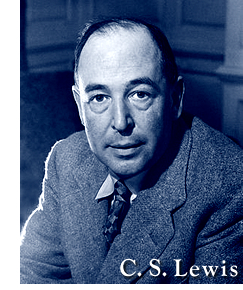
C.S. Lewis Daily – Today’s Reading


TO RHONA BODLE, who had written Lewis of her upcoming confirmation: On not expecting remarkable sensations connected to holy activities.

9 November 1949

Congratulations. You are daily in my prayers.

Caveat [let her beware!]—don’t count on any remarkable sensations, either at this or your first (or fifty first) Communion. God gives these or not as He pleases. Their presence does not prove that things are especially well, nor their absence that things are wrong. The intention, the obedience, is what matters.

From The Collected Letters of C.S. Lewis, Volume II

Compiled in Yours, Jack

Charles Stanley – Understood by Jesus


Hebrews 4:14-15

Whenever disaster happens in your friends’ lives, it is natural to try to comfort them in any way you can. But how many times do you feel as if you’ve said the wrong thing? Sometimes expressions of consolation create even more pain. For example, the well-intentioned words “I understand” feel empty if the speaker has never actually experienced the situation.

Yet we all long to feel understood. And it helps to know individuals who have endured circumstances similar to ours. Today’s passage reassures us that Jesus truly understands because He experienced struggles like ours.

The writer of Hebrews refers to Jesus as our High Priest. Each year the man who was chosen to serve in this capacity would enter the Holy of Holies and there, in God’s presence, offer a sacrifice for sin (Lev. 16). The priest was the Jewish people’s bridge to God. Christ not only took on this role, but He Himself also became the sacrifice when He died on the cross. By doing so and dying in our place, Jesus endured every possible sin. Now He sits at the right hand of the Father in heaven and intercedes on our behalf.

That in itself is encouraging. But even more than that, we know Jesus truly understands our pain and our weakness. For example, a single parent who has suffered greatly can be assured that Christ also knew betrayal (when Judas turned against Him), loneliness (when Peter denied knowing Him), and depression (when facing separation from His heavenly Father).

If you feel alone in the hardships you’re facing, recall Jesus’ trials, hurts, and temptations. You’ll find comfort in His understanding.

Bible in One Year: Matthew 5-7


Our Daily Bread — Miracle Rain


Read: 1 Kings 18:1,41-45

Bible in a Year: Isaiah 20-22; Ephesians 6

I am God, and there is no other. —Isaiah 46:9

Life is hard for the villagers who live on a hilly terrain in the Yunnan Province of China. Their main source of food is corn and rice. But in May 2012 a severe drought hit the region and the crops withered. Everyone was worried, and many superstitious practices were carried out as the people attempted to end the drought. When nothing worked, people started blaming the five Christians in the village for offending the spirits of the ancestors.

These five believers gathered to pray. Before long, the sky darkened and thunder was heard. A heavy downpour started and lasted the whole afternoon and night. The crops were saved! While most of the villagers did not believe God sent the rain, others did and desired to find out more about Him and Jesus.

In 1 Kings 17 and 18 we read of a severe drought in Israel. But in this case, we are told, it was a result of God’s judgment on His people (17:1). They had begun to worship Baal, the god of the Canaanites, believing that this deity could send the rain for their crops. Then God, through His prophet Elijah, showed that He is the one true God who determines when rain falls.

Our all-powerful God desires to hear our prayers and answer our pleas. And though we do not always understand His timing or His purposes, God always responds with His best for our lives. —Poh Fang Chia

In what ways have you seen God answer prayer in the past? What needs do you have to bring before Him today? What do you want to thank Him for?Share your comments at odb.org.

Through prayer, we draw upon the power of the infinite God.

INSIGHT: The Old Testament prophet Elijah was a man whose name mirrored his mission and message. Sent by God to a generation that had embraced Baal as their god, Elijah, whose name means “Jehovah is my God,” was sent to remind them of the God of their fathers. Along the way, Elijah experienced evidence of God’s greatness through the miraculous provision of food at Kerith and Zarephath, the resurrection of a widow’s young son, and the supernatural demonstration of His power on Mount Carmel as fire fell from heaven (1 Kings 17-18). All these miracles bore witness to the reality that Jehovah is God. Bill Crowder

Alistair Begg – The Altar of Age


At evening time there shall be light. Zechariah 14:7

We often look forward with anxiety to the time of old age, forgetting that at evening time it shall be light. To many saints, old age is the choicest season in their lives. A warmer breeze fans the sailor’s face as he nears the shore of immortality; fewer waves ruffle his sea; quiet reigns, deep, still and solemn. From the altar of age the flashes of the fire of youth are gone, but the deepening flame of sincere feeling remains. The pilgrims have reached the promised land, the happy country, whose days are as the days of heaven upon earth. Angels visit it, celestial gales blow over it, flowers of paradise grow in it, and the air is filled with heavenly music. Some live here for years, and others arrive only a few hours before their departure, but it is an Eden on earth.

We may begin to long for the time when we can recline in its shady groves and be satisfied with hope until the time of fruition comes. The setting sun seems larger than when it is high in the sky, and a splendor of glory tinges all the clouds that surround its going down. Pain does not break the calm of the sweet twilight of age, for strength is made perfect in weakness and endures it all patiently. Ripe fruits of choice experience are gathered as the rare food of life’s evening, and the soul prepares itself for rest.

The Lord’s people will also enjoy light in the hour of death. Unbelief bemoans the evening shadows, the darkening night, the end of existence. But no, cries faith, the night is almost over and the true day is at hand. Light has come, the light of immortality, the light of the Father’s countenance. Gather your feet up in the bed; see the waiting throng of angels ready to bear you away. Farewell, loved one, you are gone. You wave your hand; now it is light! The pearly gates are open; the golden streets shine in the jasper light. We cover our eyes, but you behold the unseen; adieu, dear friend, you have light at evening time that we have not yet.

The Family Bible Reading Plan

  • 1 Kings 7
  • Ephesians 4

Devotional material is taken from “Morning and Evening,” written by C.H. Spurgeon, revised and updated by Alistair Begg.

Charles Spurgeon – Fear not


“Fear not, thou worm Jacob, and ye men of Israel; I will help thee, saith the Lord, and thy redeemer, the Holy One of Israel.” Isaiah 41:14

Suggested Further Reading: Psalm 8

Behold the heavens, the work of God’s fingers; behold the sun guided in his daily march; go ye forth at midnight, and behold the heavens, consider the stars and the moon; look upon these works of God’s hands, and if ye be men of sense and your souls are attuned to the high music of the spheres, ye will say, “What is man that thou art mindful of him, and the son of man that thou visitest him?” My God! When I survey the boundless fields of heaven, and see those ponderous orbs rolling therein—when I consider how vast are thy dominions—so wide that an angel’s wing might flap to all eternity and never reach a boundary—I marvel that thou shouldst look on insects so obscure as man. I have taken the microscope and seen the insect upon the leaf, and I have called him small. I will not call him so again; compared with me he is great, if I put myself into comparison with God. I am so little, that I shrink into nothingness when I behold the almightiness of Jehovah—so little, that the difference between the microscopic creature and man dwindles into nothing, when compared with the infinite chasm between God and man. Let the mind rove upon the great doctrines of the Godhead; consider the existence of God from before the foundations of the world; behold him who is, and was, and is to come, the Almighty; let the soul comprehend as much as it can of the Infinite, and grasp as much as possible of the Eternal, and I am sure if you have minds at all, they will shrink with awe. The tall archangel bows himself before his Master’s throne, and we shall cast ourselves into the lowest dust when we feel what base nothings, what insignificant specks we are, when compared with our all-adorable Creator.

For meditation: Nothing is too big for God (Proverbs 30:4); nothing is too small for God (Proverbs 30:24-28). What is man? Both weak and wicked (Proverbs 30:2,3,32). But God still cares (Proverbs 30:5).

Sermon no. 156

4 October (1857)

John MacArthur – Why Study the Bible?


“Be diligent to present yourself approved to God as a workman who does not need to be ashamed, handling accurately the word of truth” (2 Tim. 2:15).

The Holy Spirit protects you from false doctrine, but that doesn’t eliminate the need for diligent Bible study.

For the next few days we’ll consider several benefits of Bible study. Today we’ll address the broader question of why Bible study is necessary at all.

Perhaps you know believers who think Bible study is unnecessary. Bible reading, they say, is sufficient because we have the Holy Spirit, who teaches us all things. Often they cite 1 John 2:27 in support of their view: “As for you, the anointing [the Holy Spirit] which you received from [God] abides in you, and you have no need for anyone to teach you; but as His anointing teaches you about all things, and is true and is not a lie, and just as it has taught you, you abide in Him.”

That passage, however, isn’t implying that Bible study or Bible teachers aren’t necessary. On the contrary, John was exhorting his readers to abide in what they’d already learned (v. 24) and shun only those teachers who deny Christ and try to deceive believers.

The Holy Spirit is the believer’s resident lie detector, granting discernment to shield him or her from false doctrine. Although a Christian may be temporarily confused by false teachers, ultimately he can never drift into apostasy or deny Christ. If anyone does depart from the faith, his departure is proof that he was never a true believer in the first place (v. 19).

The Spirit protects you from error, but you must fulfill your responsibility as a student of the Word. Even a man of Timothy’s spiritual stature needed to study the Word diligently and handle it accurately (2 Tim. 2:15).

I pray that the psalmist’s attitude toward Scripture will be yours as well: “O how I love Thy law! It is my meditation all the day” (Ps. 119:97).

Suggestions for Prayer

  • Thank God for His precious Word.
  • Ask Him to give you a deeper love for its truths.

For Further Study

Read Titus 1:7-16 and 2 Timothy 2:2.

  • What skills must an overseer have regarding God’s Word?
  • Why are those skills necessary?
  • Do those skills apply to church leaders only? Explain.
  • Are you skilled in handling God’s Word?


Joyce Meyer – Enjoy the Good Life


You have put more joy and rejoicing in my heart than [they know] when their wheat and new wine have yielded abundantly. In peace I will both lie down and sleep, for You, Lord, alone make me dwell in safety and confident trust. —Psalm 4:7-8

God has prearranged and made ready a good life for you, but that good life is a choice. You have to decide to follow God’s leading in order to walk in it.

The Bible contains guidelines for that good life. It is not a book of laws; it is about the liberty and freedom to live the life that reaps good things. It is a book of wisdom that will lead you to peace and joy. If you do what the Word says to do, blessings will chase you and find you wherever you are (See Deuteronomy 28:1-2).

From the book Starting Your Day Right by Joyce Meyer.

Campus Crusade for Christ; Bill Bright – He Gives Special Abilities


“Now God gives us many kinds of special abilities, but it is the same Holy Spirit who is the source of them all. ” (1 Corinthians 12:4).

The late Dr. William Evans, famous Bible teacher and pulpit orator, was one of the most eloquent preachers I have ever heard. He serves as an example of a person who developed his spiritual gift.

Dr. Evans shared with me how he believed as a young man that he had been called of God to be a preacher. But he spoke in a high, squeaky, English cockney accent that was not particularly pleasant to the ear and certainly not conducive to preaching the most “joyful news ever announced.”

So when young Evans told Dwight L. Moody (under whose ministry he had been influenced for Christ) about his calling to be a preacher. Moody unhesitatingly advised him, “Forget it! You don’t have the ability to speak, and no one would listen to you.”

But William Evans determined that he would become a great preacher for the glory of God. So, like Demosthenes of old, he began to practice speaking with pebbles in his mouth and to practice deep diaphragmatic breathing.

After several years, he developed a deep, resonant, bass voice – one of the most beautiful speaking voices I have ever heard. Wherever he went, congregations would pack the pews to hear him preach.

William Evans was an example of Philippians 2:13 in action. Did he have the spiritual gift of preaching? Of course he did! But it did not come to him overnight. He had to work long and hard, by faith and in the power of the Holy Spirit, to develop his spiritual gift.

Philippians 2:13 reminds us that whatever God calls us to do He will enable us to do. Be assured that you do not need to depend on your own abilities to serve Him.

Bible Reading: I Corinthians 12:5-11

TODAY’S ACTION POINT: Instead of spending fruitless time searching for my spiritual gifts, I will depend on the Holy Spirit to guide me, apply myself diligently to excel in whatever He leads me to do and trust God for a fruitful life and witness.

Presidential Prayer Team; C.P. – Labor in Prayer


Currently, young people are waiting well into their thirties to get married. After the age of thirty, fertility rates go down. They may find themselves like Isaac and Rebekah, wondering if they will ever have kids. Isaac didn’t marry Rebekah until he was forty and they didn’t have their twins, Jacob and Esau, until he was sixty.

And Isaac prayed to the Lord for his wife, because she was barren. And the Lord granted his prayer.

Genesis 25:21

Isaac and Rebekah were probably desperate as they prayed for children. God had promised Isaac’s father, Abraham, ancestors that were more numerous than the stars. Perhaps Isaac thought those ancestors would not come from him, but from his father’s concubines. In the end, Isaac prayed for twenty years before receiving the promise – and he remained faithful to keep trusting in the word of His God.

The Lord answers the persevering prayer. Do not tire of praying for your family, friends and nation. Just like Rebekah birthed Jacob and Esau, this nation will birth God’s blessings if believers pray and not give up.

Recommended Reading: Luke 18:1-8

Night Light for Couples – The Tin Monster


“A man’s life does not consist in the abundance of his possessions.” Luke 12:15

At least my intentions were good. I (jcd) once ordered a swing set for my children identical to a shiny display model I’d seen at the store. What arrived, however, was a long box containing roughly 6,324 pipes, 28,487,651 bolts, 28,487,650 screws, and a set of instructions that would have befuddled Albert Einstein. For the next two days, I sweated to assemble bent parts, missing parts, and parts from a 1948 Ford thrown in just to confuse me.

Finally, the wobbly construction stood upright. I got another shock when I read the final line printed on the back of the instructions: “Please retighten all the bolts on this apparatus every two weeks to ensure safety and durability.” I now had to devote every other Saturday to this tin monster or it would gobble up my children!

Everything you own will eventually own you! Unchecked materialism becomes your master, both when you make the purchase and when you must sweat to maintain it. That’s why I heartily encourage you to decide together to own less… and enjoy life more.

Just between us…

  • Do we have a “tin monster”—something new and supposedly valuable that’s more trouble than it’s worth—in our lives?
  • What do we have that we don’t need and could simply give or throw away?
  • What guidelines could we agree on to avoid the trap of materialism?
  • How can fewer possessions bring us closer to God?

Dear Lord, we are so easily driven by the desire to own more things. We want to live with less. Change us with Your truth about lasting value. We want to hold all our income and possessions in trust for You, the real owner. Amen.

From Night Light For Couples, by Dr. James & Shirley Dobson


Charles Stanley – How to Foster True Friendships


1 Samuel 18:1-3

We all long to be in genuine relationships. God created us with this need, as we were not meant to live in isolation.

Our world is so driven by technology that many people today try to ease their loneliness through computer interactions. However, we cannot deny that if a friendship relies solely on social media, it doesn’t compare to the human fellowship. But healthy friendships don’t just happen. They require intentional effort.

Yesterday, in looking to Jonathan and David for a biblical model of godly companions, we saw how mutual respect is vital in a healthy friendship. Now, let’s look at two more aspects of their relationship. These men had an emotional love for one another; their hearts were knit together (1 Sam. 18:1). When one man experienced joy or sadness, the other man felt it too.

They also had genuine devotion to each other, which is a type of commitment that involves giving: To show loyalty, Jonathan gave his friend material items—his robe and weapon. But both of these men selflessly offered more. Jonathan even risked his life and future kingship in order to save David from execution. Notice, too, that Jonathan was often the initiator and the one who gave more. He was a prince, whereas David was a lowly shepherd. Social status shouldn’t interfere with cultivating a true friendship.

We were designed for true companionship based on mutual respect, genuine love, and commitment. This requires time, selfless devotion, and transparency—which means being real, even about our faults. Taking such a risk requires trust, but genuine relationships are well worth the effort.

Bible in One Year: Matthew 1-4

Our Daily Bread — Better Than Waking Up


Read: Luke 23:33-43

Bible in a Year: Isaiah 17-19; Ephesians 5:17-33

Today you will be with me in paradise. —Luke 23:43

Have you ever felt that your life was ruined as a result of having done something embarrassing, shameful, or even criminal—only to wake up and realize it was just a dream? But what if it wasn’t just a nightmare? What if the situation was all too real—either for yourself or someone you love?

This is the situation confronted in George MacDonald’s 19th-century novel The Curate’s Awakening. It’s the story of a parish minister who discovers that he’s been speaking for a God he’s not even sure he believes in. Later, he is called to the bedside of a young man who is losing his mind and dying, haunted by a murder he has committed.

In the heart-rending struggle that follows, the minister discovers what we all need to see. The relief of waking up from a bad dream is nothing compared to waking to the reality of God’s forgiveness, which we once thought was too good to be true.

Where will we find the mercy we need? It is found in Jesus, who, from His own cross said to a dying criminal who turned to Him for help, “Today you will be with me in paradise” (Luke 23:43). —Mart DeHaan

Father in heaven, please help us to believe that our forgiveness is as real as the price You paid for our rescue.For further study, read The Forgiveness of God at discoveryseries.org/q0602

We are saved by God’s mercy, not by our merit.

INSIGHT: According to Mark 15:25, Jesus was crucified at 9:00 in the morning. While on the cross, Jesus spoke three times before noon: He prayed for forgiveness for His enemies (Luke 23:34), He entrusted His mother into the care of John (John 19:26-27), and He granted salvation to the believing criminal (Luke 23:43). Beginning at noon, and for the next three hours, darkness engulfed the whole land, “for the sun stopped shining” (vv. 44-45). This period was largely marked by silence. Then just before He died at 3:00 in the afternoon, Jesus spoke four more times, revealing the anguish of His soul as He bore our sins and proclaiming the completion of the work of salvation (Matt. 27:46; Luke 23:46; John 19:28,30). Sim Kay Tee

Alistair Begg – Angels – The Unseen Attendants


Are they not all ministering spirits sent out to serve for the sake of those who are to inherit salvation? Hebrews 1:14

Angels are the unseen attendants of the children of God; they carry us in their hands and keep us from calamity. Loyalty to their Lord leads them to take a deep interest in the children of His love; they rejoice over the return of the prodigal to his father’s house below, and they welcome the arrival of the believer to the King’s palace above.

In ancient times the children of God were able to actually see the angels. Today, although we do not see them, heaven is still open, and the angels of God ascend and descend upon the Son of man, so that they may visit the heirs of salvation. Seraphim still fly with live coals from the altar to touch the lips of men greatly loved.

If our eyes could be opened, we would see horses and chariots of fire surrounding the servants of the Lord; for we have come to an innumerable company of angels, who are all watchers and protectors of the King’s family. Spenser’s line is not poetic fiction, where he sings–

How oft do they with golden pinions cleave

The flitting skies, like flying pursuivant

Against foul fiends to aid us militant!

To what dignity are the chosen elevated when the brilliant courtiers of heaven become their willing servants! Into what communion are we raised since we have communion with spotless celestials! How well are we defended since all the twenty thousand chariots of God are armed for our deliverance!

To whom do we owe all this? The Lord Jesus Christ who must be forever dear to us, for through Him we are made to sit in heavenly places far above principalities and powers. It is He whose camp is around those that fear Him; He is the true Michael whose foot is upon the dragon. All hail, Jesus! Angel of Jehovah’s presence, to You this family offers its morning vows.

The Family Bible Reading Plan

  • 1 Kings 6
  • Ephesians 3

Devotional material is taken from “Morning and Evening,” written by C.H. Spurgeon, revised and updated by Alistair Begg.

Charles Spurgeon – Confession and absolution


“And the publican, standing afar off, would not lift up so much as his eyes unto heaven, but smote upon his breast, saying, God be merciful to me a sinner.” Luke 18:13

Suggested Further Reading: 1 John 1:5-2:2

The Greek explains more to us than the English does; and the original word here might be translated—“God be propitiated to me a sinner.” There is in the Greek word a distinct reference to the doctrine of atonement. It is not the Unitarian’s prayer—“God be merciful to me;” it is more than that—it is the Christian’s prayer, “God be propitiated towards me, a sinner.” There is, I repeat it, a distinct appeal to the atonement and the mercy-seat in this short prayer. Friends, if we would come before God with our confessions we must take care that we plead the blood of Christ. There is no hope for a poor sinner apart from the cross of Jesus. We may cry, “God be merciful to me,” but the prayer can never be answered apart from the victim offered, the Lamb slain from before the foundation of the world. When thou hast thine eye upon the mercy-seat, take care to have thine eye upon the cross too. Remember that the cross is, after all, the mercy-seat; that mercy never was enthroned, until she hung upon the cross crowned with thorns. If thou wouldst find pardon, go to dark Gethsemane, and see thy Redeemer sweating blood in deep anguish. If thou wouldst have peace of conscience, go to Gabbatha, the pavement, and see thy Saviour’s back flooded with a stream of blood. If thou wouldst have the last best rest to thy conscience, go to Golgotha; see the murdered victim as he hangs upon the cross, with hands and feet and side all pierced, as every wound is gaping wide with misery extreme. There can be no hope for mercy apart from the victim offered—even Jesus Christ the Son of God. Oh, come; let us one and all approach the mercy-seat, and plead the blood.

For meditation: Confession of sins is a totally useless practice unless we go straight to God, the only one who can forgive us, pleading Christ crucified, the only valid reason for us to be forgiven. But when we come in God’s way, we can come to him confidently (Hebrews 10:19-22).

Sermon no. 216

3 October (1858)

John MacArthur – The Ministry of the Word


“My Word . . . shall not return to Me . . . without accomplishing what I desire” (Isa. 55:11).

“Man does not live by bread alone, but . . . by everything that proceeds out of the mouth of the Lord” (Deut. 8:3).

God’s Word is both productive and nourishing.

The Bible contains many precious promises, two of which relate specifically to itself. First, the prophet Isaiah said that the Word is productive: “As the rain and the snow come down from heaven, and do not return there without watering the earth, and making it bear and sprout, and furnishing seed to the sower and bread to the eater; so shall My word be which goes forth from My mouth; it shall not return to Me empty, without accomplishing what I desire, and without succeeding in the matter for which I send it” (Isa. 55:10-11).

As you administer the Word, it may encourage a fellow Christian, bring a sinner to repentance, or even confirm an unbeliever in his sin. Whatever the response, be assured that the Word always accomplishes its intended purpose.

The Word is like a messenger that runs to do God’s work: “He sends forth His command to the earth; His word runs very swiftly. He gives snow like wool; He scatters the frost like ashes. He casts forth His ice as fragments; who can stand before His cold? He sends forth His word and melts them; He causes His wind to blow and the waters to flow. He declares His words to Jacob, His statutes and His ordinances to Israel” (Ps. 147:15-19). Just as God sends the natural elements to accomplish His purposes, He also sends His Word.

The Word is also nourishing. Moses wrote, “Man does not live by bread alone, but man lives by everything that proceeds out of the mouth of the Lord” (Deut. 8:3). God’s Word feeds believers, causing spiritual growth.

How should you respond to such a powerful and productive Word? Trust it, so you can live each day in confidence. Proclaim it, so others will come to know its author. Obey it, so it can continue its transforming work in you, making you more like Christ each day.

Suggestions for Prayer

God’s promises are intended to bring you great joy and encouragement. List seven promises that are especially meaningful to you. Use one each day for one week as a focal point for prayer and praise.

For Further Study

What promises does Jesus make in John 14:1-14?