Alistair Begg – Past, Present, Future


“Do you want to go away as well?” John 6:67

Many have forsaken Christ and have walked no more with Him; but what reason do you have to make a change? Has there been any reason for it in the past? Has Jesus not proved Himself all-sufficient? He asks you this morning, “Have I been a wilderness to you?” When your soul has simply trusted Jesus, have you ever been defeated? Have you not until now found your Lord to be a compassionate and generous friend to you, and has simple faith in Him not given you all the peace your spirit could desire? Can you even dream of a better friend than He has been to you? Then do not change the old and tried for the new and false.

As for the present, can that compel you to leave Christ? When we are hard-pressed with this world or with the severer trials within the church, we find it a most blessed thing to rest our head upon the shoulder of our Savior. This is the joy we have today-that we are saved in Him; and if this joy is satisfying, why would we think of changing? Who trades gold for dross? We will not renounce the sun until we find a better light, nor leave our Lord until a brighter lover shall appear; and since this can never be, we will hold Him with an immortal grasp and bind His name as a seal upon our arm.

As for the future, can you suggest anything that can arise that will render it necessary for you to mutiny or desert the old flag to serve under another captain? We think not. If life be long, He doesn’t change. If we are poor, what better than to have Christ who can make us rich? When we are sick, what more do we want than Jesus to comfort and to heal? When we die, is it not written that “neither death, nor life, nor angels, nor rulers, nor things present nor things to come . . . will be able to separate us from the love of God in Christ Jesus our Lord.”1 And so we say with Peter, “Lord, to whom shall we go?”2

1) Romans 8:38-392) John 6:68

The Family Bible Reading Plan

  • 2 Kings 4
  • 1 Timothy 1

Devotional material is taken from “Morning and Evening,” written by C.H. Spurgeon, revised and updated by Alistair Begg.

Charles Spurgeon – The chaff driven away


“The ungodly are not so: but are like the chaff which the wind driveth away.” Psalm 1:4

Suggested Further Reading: 1 Peter 2:11-17

Christian habits are the best business habits, if men would but believe it. When a man mixes his religion with his business and allows every act of his life to be guided by it, he stands the best chance in this world, if I may be allowed such a secular expression, for “Honesty is the best policy” after all, and Christianity is the best honesty. The sharp cutting competition of the times may be called honesty—it is only called so on earth, it is not called so by God, for there is a good deal of cheating in it. Honesty in the highest sense—Christian honesty—will be found after all to be the best policy in everything, and there will ordinarily be a prosperity, even worldly prosperity, attending a good man in the patient industrious pursuit of his calling. But if he does not have that success he craves, still there is one thing he knows, he would have it if it were best for him. I often know Christian men talk in this fashion; “Well I do but very little business,” says one, “but I have enough coming in to live upon comfortably and happy. I never cared much for push and competition; I never felt that I was fit for it, and I sometimes thank God that I never thrust myself out into the rough stream, but that I was content to keep along shore.” And I have marked this one thing, and as a matter of fact I know it cannot be disproved, that many such humble-minded men are the very best of Christians, they live the happiest lives, and whatsoever they do certainly does prosper, for they get what they expected though they did not expect much, and they get what they want though their wants are not very large.

For meditation: Honesty honours God, and God honours those who honour him (1 Samuel 2:30). Dishonesty in the early church was strikingly exposed (Acts 5:1-11).

Sermon no. 280

23 October (1859)

John MacArthur – The Source of Righteousness


“The judgments of the Lord are true; they are righteous altogether” (Ps. 19:9).

God’s Word is true and produces righteousness in the believer’s life.

The inability of human wisdom to produce right living was reaffirmed in my thinking as I read a contemporary psychiatrist’s book on how to overcome depression. The doctor’s first suggestion was to shout “Cancel!” every time you have a negative thought. She also recommended playing a tape recording of positive messages while you sleep at night, and listening to positive music during the day.

Cultivating a meaningful spiritual philosophy was another of her suggestions. She said any will do—as long as it works for you—but cautioned against those that speak of sin and guilt. Her final point was to find the spiritual light within yourself.

That kind of advice is foolish because it has no basis in truth. The best it can do is mask a few symptoms. It cannot cure the illness.

Jesus illustrated the hopelessness of searching for truth through such means when He said to a group of unbelievers, “Why do you not understand what I am saying? It is because you cannot hear My word. You are of your father the devil . . . [who] does not stand in the truth, because there is no truth in him. Whenever he speaks a lie, he speaks from his own nature; for he is a liar, and the father of lies. But because I speak the truth, you do not believe Me. . . . He who is of God hears the words of God; for this reason you do not hear them, because you are not of God” (John 8:43-47).

Unbelievers don’t see the truth of God’s Word for what it is. But believers hear the truth and receive it. Like David, they acknowledge that “the judgments of the Lord are true; they are righteous altogether” (Ps. 19:9).

“Judgments” in that context speaks of ordinances or divine verdicts from the Supreme Judge. “Righteous altogether” implies that Scripture produces comprehensive righteousness in all who receive it. Together they emphasize that true righteousness originates from God’s Word and flows through His people.

Suggestions for Prayer

Praise God for giving you the truth that produces righteousness.

For Further Study

What do the following verses say about God’s righteous Word: Psalm 119:89, 128, 137-38, and 142?

Joyce Meyer – God Even Cares About Remotes and Car Keys


But the Counselor, the Holy Spirit, whom the Father will send in my name, will teach you all things and will remind you of everything I have said to you.- John 14:26 NIV 1984

Countless times over the years the Holy Spirit has reminded me where things are that I have misplaced and to do things I have forgotten to do. He has also kept me on the right track by reminding me of what God’s Word says about certain issues at key times of decision in my life.

I learned I could trust God to help with big decisions by taking small needs to Him too. One time we had some family members over and wanted to watch a movie, but we couldn’t find the remote control. We searched everywhere for it, but nothing was producing the remote control. I decided to pray. So silently in my heart I said, Holy Spirit, show me where the remote control is, please. Immediately in my spirit I thought of the bathroom and, sure enough, that’s where it was.

The same thing happened to me concerning my car keys one day when I needed to leave. I was in a time crunch and couldn’t find my keys. I searched frantically to no avail and then decided to pray. In my spirit I saw the keys on the front seat of my car, and that is exactly where they were.

One of the gifts of the Holy Spirit discussed in 1 Corinthians 12 is the word of knowledge. God gave me a word of knowledge about the remote control, as well as the misplaced keys. We can count on the Holy Spirit to remind us of things we need to be reminded of. If we needed no help, we would always perfectly remember everything and never need to be reminded; but if we are honest, we all know that is not the case.

If the Lord cares enough to speak to us about remote controls and lost keys, think how eager He must be to talk to us about more intimate things.

Trust in Him: If you need help learning to trust God with the big decisions in your life, as I did, start by taking your small needs to Him. He cares about all your needs, no matter how insignificant they may seem!

From the book Trusting God Day by Day by Joyce Meyer.

Campus Crusade for Christ; Bill Bright – He Can Be Found


“And ye shall seek Me, and find Me, when ye shall search for Me with all your heart” (Jeremiah 29:13, KJV).

Halfhearted efforts, I have found from personal experience, seldom bring success and victory. The difference between a successful person and a failure is that the successful person is always willing to do more than the unsuccessful person is willing to do.

In spiritual matters, in particular, this is true, as evidenced scores of times in the Word of God. This is one of the most expressive of those passages that major on this theme.

Another is: “Blessed are they that hunger and thirst after righteousness, for they shall be filled” (Matthew 5:6, KJV).

But one point needs to be made abundantly clear: This promise is not only to the unbeliever, though it is often taken that way. It applies equally to the believer, who may be searching after God for a variety of reasons.

The key word here, of course is heart. “As [a man] thinketh in his heart,so is he” (Proverbs 23:7, KJV). “Out of the abundance of the heartthe mouth speaketh” (Matthew 12:34, KJV).

What do you need from God today? Wisdom? Peace? Courage? Love? To find God in such a real way that you know He is meeting that need for you, you must really mean business with Him. Then He will indeed do business for you.

A doubter, or an unbeliever, reading this has a wonderful assurance: He can find God if he truly seeks Him with his whole heart.

Bible Reading: Jeremiah 29:10-14

TODAY’S ACTION POINT: I’ll begin right at home by personally seeking God for myself with my whole heart,and I will remind others how God can be real to them.


Presidential Prayer Team; J.R. – Wisdom in Waiting


What good is waiting? For one thing, it makes for a better president. At least that’s what America’s Founding Fathers believed when they set the minimum age of 35 as a requirement for the White House occupant. This rule, wrote founder and statesman John Jay, “confines the electors to men of whom the people have had time to form a judgment, and with respect to whom they will not be liable to be deceived by those brilliant appearances of genius and patriotism, which, like transient meteors, sometimes mislead as well as dazzle.”

The Lord is good to those who wait for him, to the soul who seeks him.

Lamentations 3:25

Age and experience, of course, don’t guarantee wisdom, but they usually help. If you think about some of the prayers you prayed 10 or 20 years ago, you likely will realize in retrospect that some of them were misguided. You may even thank God now that He chose in His infinite wisdom not to answer them affirmatively.

Today, as you intercede for America and approach God with your needs, do so with a willingness to wait…recognizing it may be what you need to do, even if it may not be what you want to do. Waiting – and seeking God in the process – will make for a better Christian.

Recommended Reading: I Corinthians 2:1-10

Greg Laurie – Steps of Faith


Two of the men who had explored the land, Joshua son of Nun and Caleb son of Jephunneh, tore their clothing. They said to all the people of Israel, “The land we traveled through and explored is a wonderful land! And if the Lord is pleased with us, he will bring us safely into that land and give it to us. It is a rich land flowing with milk and honey.”—Numbers 14:6–8

When I first began preaching, I was told that I wasn’t qualified to preach. I had been a Christian for two years and had no proper theological training. I started a Bible study and was preaching around Orange County, California, when an opportunity opened up in Riverside. And pretty soon, it turned into a church. Then I was told that I wasn’t qualified to be a pastor. People told me it would never work and that I would surely fail.

When we started the Harvest Crusades, we were told, “That won’t work. Crusades are over with. Crusades will die with Billy Graham.” (By the way, Billy Graham was told that crusades would die with Billy Sunday.) When we went to the Pacific Amphitheatre and then to Angel Stadium, people said, “That’s good for California, but it won’t work anywhere but California.” We’ve since held crusades in such places as Hawaii, the Pacific Northwest, the East Coast, the South, the Midwest, and Australia.

Sometimes we want to put God in a box. That is how it was when the Lord commanded Moses to send twelve men to spy out the Promised Land. Ten men came back and reported obstacles, challenges, giants, and defeat. But the other two saw the challenges for what they were. Joshua and Caleb saw that God would give them the victory if they would obey Him.

There always will be people who are very small in their thinking. There always will be people who will discourage us from what God might be calling us to do. Even so, we need to take bold steps of faith. So what if everything isn’t a complete success? We learn lessons from partial failures—and even outright failures.

Joshua and Caleb saw God for who He is. And so should we.

Max Lucado – Don’t Put Your Trust in Stuff


Don’t put your trust in stuff! Paul told Timothy in 1 Timothy 6:17, “Command those who are rich in this present world not to be arrogant nor to put their hope in wealth, which is so uncertain, but to put their hope in God, who richly provides us with everything for our enjoyment.”

The rich in this world—that’s you…that’s me…and that’s okay. Prosperity is a common consequence of faithfulness. Paul didn’t tell the rich to feel guilty about being rich; he just urged caution. The abundance or lack of money will only be felt for one life. Don’t get tangled up in it. If you and I stockpile earthly treasures and not heavenly treasures, what does that say about where we put our trust? Glory Days happen to the degree that we trust God. Whom do you trust? God or King More?

From Glory Days

Night Light for Couples – “The Face of My Enemy”


by Corrie ten Boom

It was in a church in Munich that I saw him—a balding, heavy‐set man in a gray overcoat, a brown felt hat clutched between his hands. People were filing out of the basement room where I had just spoken and moving along the rows of wooden chairs to the door at the rear. The year was 1947, and I had come from Holland to defeated Germany with the message that God forgives.

This was the truth they needed most to hear in that bitter, bombed‐out land, and I gave them my favorite mental picture. Maybe because the sea is never far from a Hollander’s mind, I liked to think that that’s where forgiven sins were thrown. “When we confess our sins,” I said, “God casts them into the deepest ocean, gone forever. And even though I cannot find a Scripture for it, I believe God then places a sign out there that says, ‘NO FISHING ALLOWED.’”

The solemn faces stared back at me, not quite daring to believe. There were never questions after a talk in Germany in 1947. People stood up in silence, collected their wraps in silence, left the room in silence.

And that’s when I saw him working his way forward against the others. One moment I saw the overcoat and the brown hat; the next, a blue uniform and a visored cap with its skull and crossbones. It came back with a rush: the huge room with its harsh overhead lights, the pathetic pile of dresses and shoes in the center of the floor, the shame of walking naked past this man. I could see my sister’s frail form ahead of me, ribs sharp beneath the parchment skin. Betsie, how thin you were!

The place was Ravensbruck, and the man who was making his way forward had been a guard—one of the cruelest guards.

Now he was in front of me, hand thrust out: “A fine message, Fräulein! How good it is to know that, as you say, all our sins are at the bottom of the sea!”

And I, who had spoken so glibly of forgiveness, fumbled in my pocketbook rather than take that hand. He would not remember me, of course—how could he remember one prisoner among those thousands of women?

But I remembered him and the leather crop swinging from his belt. I was face‐to‐face with one of my captors, and my blood seemed to freeze. “You mentioned Ravensbruck in your talk,” he was saying. “I was a guard there.” No, he did not remember me. “But since that time,” he went on, “I have become a Christian. I know that God has forgiven me for the cruel things I did there, but I would like to hear it from your lips as well. Fräulein”—again the hand came out—“will you forgive me?”

And I stood there—I whose sins had again and again needed to be forgiven—and could not forgive. Betsie had died in that place—could he erase her slow, terrible death simply by the asking?

It could not have been many seconds that he stood there—hand held out—but to me it seemed hours as I wrestled with the most difficult thing I had ever had to do.

For I had to do it—I knew that. The message that God forgives has a prior condition: that we forgive those who have injured us. “If you do not forgive men their trespasses,” Jesus says, “neither will your Father in Heaven forgive your trespasses.”

I knew it not only as a commandment of God, but as a daily experience. Since the end of the war I had had a home in Holland for victims of Nazi brutality. Those who were able to forgive their former enemies were also able to return to the outside world and rebuild their lives, no matter what the physical scars. Those who nursed their bitterness remained invalids. It was as simple and horrible as that.

And still I stood there with the coldness clutching my heart. But forgiveness is not an emotion—I knew that, too. Forgiveness is an act of the will, and the will can function regardless of the temperature of the heart. Jesus, help me! I prayed silently. I can lift my hand. I can do that much. You supply the feeling.

So, woodenly and mechanically, I thrust my hand into the one stretched out to me. And as I did, an incredible thing took place. The current started in my shoulder, raced down my arm, and sprang into our joined hands. And then this healing warmth seemed to flood my whole being, bringing tears to my eyes.

“I forgive you, brother!” I cried. “With all my heart.”

For a long moment, we grasped each other’s hands—the former guard and the former prisoner. I had never known God’s love so intensely as I did then. But even so, I realized it was not my love. I had tried and did not have the power. It was the power of the Holy Spirit as recorded in Romans 5:5: “Because God has poured out his love into our hearts by the Holy Spirit, whom he has given us.”

Looking ahead…

I can’t imagine any situation or circumstance in which the obligation to forgive would be more difficult than the one Corrie faced. She had lived with routine murder, humiliation, cruelty, and starvation at the hands of the man who now faced her. Every natural impulse—every angry emotion—would cry out for revenge against her former tormentor. She still carried with her the images of her father, emaciated sister, and other family members who died at the hands of the Nazis. I wonder if I could have had the moral strength to forgive this guard and release the passion for revenge and retribution. Yet, Corrie ten Boom was able to do just that and thereby show the world what Jesus meant by His commandment to “turn the other cheek.”

Here’s the question of the hour: If Corrie ten Boom could forgive her captors—and if Jesus could forgive the Roman soldiers and you and me for killing Him on the cross—can’t we find it in our hearts to forgive the mistakes and hurtful actions of our imperfect mate? We absolutely must, or we’ll become pathetic invalids trapped by bitterness and hate.

– James C Dobson

From Night Light For Couples, by Dr. James & Shirley Dobson

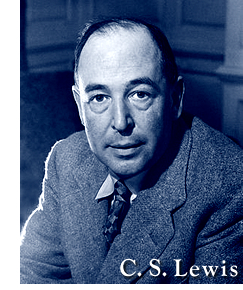
C.S. Lewis Daily


TO MARY WILLIS SHELBURNE: On being overconcerned about the past of others and of our own.

5 June 1961

We must beware of the Past, mustn’t we? I mean that any fixing of the mind on old evils beyond what is absolutely necessary for repenting our own sins and forgiving those of others is certainly useless and usually bad for us. Notice in Dante that the lost souls are entirely concerned with their past. Not so the saved. This is one of the dangers of being, like you and me, old. There’s so much past, now, isn’t there? And so little else. But we must try very hard not to keep on endlessly chewing the cud. We must look forward more eagerly to sloughing that old skin off forever—metaphors getting a bit mixed here, but you know what I mean.

From The Collected Letters of C.S. Lewis, Volume III

Compiled in Yours, Jack

Charles Stanley – The Miracle of Grace


Romans 5:15-17

Paul wrote extensively about grace —God’s favor given to the undeserving. And wherever the apostle traveled, he spoke about the gospel of grace (Acts 20:24). He knew firsthand sin’s controlling power and the freedom that comes through faith in Christ. He described himself as the worst of sinners because he persecuted and imprisoned many believers prior to his conversion (1 Tim. 1:15).

Once we accept Christ’s death on our behalf, the penalty for our sin is considered to be paid in full, and the power of sin over us is broken. When the Holy Spirit indwells us, we become spiritually alive. What’s more, we are then given a new family and purpose for living. Scripture compares our conversion experience to receiving a heart transplant (Ezek. 36:26; 2 Cor. 5:17), changing citizenship (Phil. 3:20), and moving to a new country (Col. 1:13).

Paul exhorts everyone who has been saved to continue in the grace of God (Acts 13:43; Eph. 2:8)—our heavenly Father’s desire and will is that we relate to Him on this basis alone. Just as we needed to rely upon Christ’s substitutionary death for salvation, we are to live a life of dependence upon Him. It’s our faith, expressed through obedience, that pleases Him (Heb. 11:6).

Grace is the most powerful, life-changing force in the world. God freely offers His unconditional love to whoever receives His Son. At salvation, our life is placed upon the immovable Rock—Jesus Christ (1 Cor. 10:4)—whose favor is extended over us. And from then on, He sees us through the everlasting grace He has provided us. What’s your response to this miracle of grace?

Bible in One Year: Luke 4-5

Our Daily Bread — The Joy of Your Presence


Read: Psalm 145:1-18

Bible in a Year: Isaiah 65-66; 1 Timothy 2

Great is the Lord and most worthy of praise; he is to be feared above all gods. —Psalm 96:4

“Man’s chief end is to glorify God and enjoy Him forever,” says the Westminster Catechism. Much of Scripture calls for joyful gratitude and adoration of the living God. When we honor God, we celebrate Him as the Source from which all goodness flows.

When we praise God from our heart we find ourselves in that joyful state for which we were created. Just as a beautiful sunset or a peaceful pastoral scene points to the majesty of the Creator, so worship draws us into a close spiritual union with Him. The psalmist says, “Great is the Lord and most worthy of praise . . . . The Lord is near to all who call on him” (Ps. 145:3,18).

God does not need our praise, but we need to praise God. By basking in His presence we drink in the joy of His infinite love and rejoice in the One who came to redeem and restore us. “In your presence there is fullness of joy,” the psalmist says. “At your right hand are pleasures forevermore” (Ps. 16:11 esv). —Dennis Fisher

Dear Lord, You are the great and mighty God, the Creator of the universe. I will praise Your name always. There is no God besides You.

Worship is a heart overflowing with praise to God.

INSIGHT: Psalm 145 is a declaration of David’s praise. While some psalms recall God’s past deliverances, this psalm focuses entirely on God’s help in the present. Bill Crowder

Ravi Zacharias Ministry – The Good Story


In publishing his godless Bible for those with no faith, A. C. Grayling may have expected a mixed reception. The ‘religious Bible’ (as he calls the Christian original) often sparks controversy, so one might have assumed that his would prompt a powerful reaction.(1)

But although eyebrows were certainly raised, support given, and criticism leveled, I couldn’t help feeling that there is something a little flat about it all. Perhaps it was because we were in the midst of celebrating the 400-year anniversary of the King James translation of the Bible with its majestic impact on the English language, that one struggled to muster any strong reaction to this book. One of the repeated observations made about Grayling’s moral guide for atheists is that it just doesn’t seem to be as good or interesting as the original.

Jeannette Winterson, author of Oranges Are Not the Only Fruit, had this to say:

“I do not believe in a sky god but the religious impulse in us is more than primitive superstition. We are meaning-seeking creatures and materialism plus good works and good behaviour does not seem to be enough to provide meaning. We shall have to go on asking questions but I would rather that philosophers like Grayling asked them without the formula of answers. As for the Bible, it remains a remarkable book and I am going to go on reading it.”

Perhaps it has something to do with what seems to be a fundamental misunderstanding on Grayling’s part: the Bible is not merely a book containing moral guidance, as he seems to think it is. While Christians would say that it does contain the moral law of God and shows us how to live our lives, the actual text of the Bible is much more besides.

It is the history of a people and a grand narrative of redemption for all people. At its heart, it is the story of a relationship, and not a collection of platitudes. As the New Testament opens with God coming in human form, we encounter Jesus walking the earth, not simply to restate a moral code, but to offer us peace with God through himself. It’s about a personal God to encounter, not a set of propositions to understand or laws to follow. This is drama with a capital D.

The Bible also contains narrative history, at its most fascinating with well-preserved accounts recording personal perspectives on historical events. Whether it be a prophet like Jeremiah, writing in the 7th century BC, or the gospel writer Mark in the 1st century AD, this is compelling writing whatever our religious convictions. Who could not notice the honesty and detail of Mark’s turn of phrase when he recounts that “Jesus was in the stern sleeping on a cushion, the disciples woke him and said to him ‘Teacher don’t you care if we drown?’” (Mark 4:38). As history alone the Bible is compelling.

In as much as Grayling’s ‘Good Book’ cobbles together some of the finest moral teaching from our history, it will surely be useful to some. But from an atheist perspective is this really a legitimate task? Without God what is morality other than personal perspective or social contract? Do we need Grayling’s personal perspective any more than our own? And is he really in a position to tell us what a socially agreed set of morals should be? Great atheists of the past, like Bertrand Russell, rejected religious moral values arguing against overarching morality—do they really want Grayling to reconstruct one? “I don’t think there is a line in the whole thing that hasn’t been modified or touched by me,” he says. While his own confidence in his wisdom is clearly abundant, will others feel the same way? Readers might also note that from the 21st century, his is the only voice to make the cut and be included in the work.

In calling his worthy tome The Good Book, Grayling, perhaps unwittingly, references the story about a rich young ruler found in the Gospel of Mark. The man approaches Jesus and addresses him as “Good teacher.” “Why do you call me good?” Jesus answered. “No one is good—except God alone.” Jesus preempts centuries of philosophical debate about the nature of morality and locates goodness as an absolute in the being of God. We are challenged to question: “Without God, what is goodness?” As the debate over his book continues it will be intriguing to find out how Grayling knows his godless Bible to be a benchmark of “goodness.”

In the meantime, no doubt the Bible will continue to top best-seller lists, and engage audiences spanning all ages, backgrounds, and cultures. I for one will keep reading it.

Amy Orr-Ewing is EMEA Director for Ravi Zacharias International Ministries and Director of Programmes for the Oxford Centre for Christian Apologetics (OCCA).

(1) Originally printed in Pulse Magazine, Issue 8, Summer 2011, 10-11.

Alistair Begg – The Body of Divinity in Miniature


I will love them freely. Hosea 14:4

This sentence is a body of divinity in miniature. Whoever grasps its meaning is a theologian, and whoever is able to dive into its fullness is a learned professor! It is a summary of the glorious message of salvation that was delivered to us in Christ Jesus our Redeemer.

The sense hinges upon the word “freely.” This is the glorious, the suitable, the divine way by which love streams from heaven to earth, a spontaneous love flowing out to those who neither deserved it, purchased it, nor sought after it. It is, indeed, the only way in which God can love such as we are.

The text is a death-blow to all sorts of fitness: “I will love them freely.”

Now, if there were any fitness necessary in us, then He would not love us freely; at least, this would be a hindrance and a drawback to the freeness of it. But it stands: “I will love them freely.”

We complain, “Lord, my heart is so hard.”

“I will love them freely.”

“But I do not feel my need of Christ as I ought to.”

“I will not love you because you feel your need; I will love you freely.”

“But I do not feel that softening of spirit that I should desire.”

Remember, the softening of spirit is not a condition, for there are no conditions; the covenant of grace has no conditionality whatever. So we without any fitness may rest upon the promise of God that was made to us in Christ Jesus when He said, “Whoever believes in him is not condemned.”1 It is blessed to know that the grace of God is free to us at all times, without preparation, without fitness, without money, and without price!

“I will love them freely.” These words invite apostates to return: Indeed, the text was specially written for such- “I will heal their apostasy; I will love them freely.”

Apostate, surely the generosity of the promise will immediately break your heart, and you will return and seek your injured Father’s face.

1) John 3:18

The Family Bible Reading Plan

  • 2 Kings 3
  • 2 Thessalonians 3

Devotional material is taken from “Morning and Evening,” written by C.H. Spurgeon, revised and updated by Alistair Begg.

Charles Spurgeon – The High Priest standing between the dead and the living


“And Aaron took as Moses commanded, and ran into the midst of the congregation; and behold, the plague was begun among the people: and he put on incense, and made an atonement for the people. And he stood between the dead and the living; and the plague was stayed.” Numbers 16:47, 48

Suggested Further Reading: Hebrews 4:14-5: 10

Jesus, the propitiator, is to be looked upon as the ordained one—called of God as was Aaron. Settled in eternity as being the predestined propitiation for sin, he came into the world as an ordained priest of God; receiving his ordination not from man, neither by man; but like Melchisedec, the priest of the most high God, without father, without mother, without descent, having neither beginning of days nor end of life, he is a priest for ever after the order of Melchisedec. Stand back, sons of Korah, all of you who call yourselves priests. I can scarce imagine that any man in this world who takes to himself the title of a priest, unless he takes it in the sense in which all God’s people are priests,—I cannot imagine that a priest can enter heaven. I would not say a thing too stern or too severe; but I do most thoroughly believe that an assumption of the office of priest is so base an assumption of the priestly office of Christ, that I could as well conceive of a man being saved who called himself God, as conceive of a man being saved who called himself a priest; if he really means what he says, he has so trampled upon the priestly prerogative of Christ, that it seems to me he has touched the very crown jewels, and is guilty of a blasphemy, which, unless it be repented of, shall surely bring damnation on his head. Shake your garments, you ministers of Christ, from all priestly assumption; come out from among them; touch not the unclean thing. There are no priests now specially to minister among men. Jesus Christ and he only is the priest of his Church. He has made all of us priests and kings unto our God.

For meditation: Because the Christian has a Father in heaven, he is not to call any man his spiritual father on earth (Matthew 23:9); because the Christian has a great High Priest in heaven (1 Timothy 2:5), he is not to regard any man as his priest on earth. We are no longer living in Old Testament times!

Sermon no. 341

22 October (Preached 21 October 1860)

John MacArthur – Fearing God


“The fear of the Lord is clean, enduring forever” (Ps. 19:9).

Fearing God leads to reverential attitudes and actions.

In the Old Testament, to fear God was to view Him with reverential awe and bow to His sovereign authority. In Psalm 34 David wrote, “Come, you children, listen to me; I will teach you the fear of the Lord. Who is the man who desires life, and loves length of days that he may see good? Keep your tongue from evil, and your lips from speaking deceit. Depart from evil, and do good; seek peace, and pursue it” (vv. 11- 14). His son Solomon added, “The fear of the Lord is the beginning of knowledge. . . . Fear the Lord and turn away from evil” (Prov. 1:7; 3:7).

The concept of fearing God isn’t limited to the Old Testament. Paul said, “Work out your salvation with fear and trembling” (Phil. 2:12), “Let us cleanse ourselves from all defilement of flesh and spirit, perfecting holiness in the fear of God” (2 Cor. 7:1) and, “Be subject to one another in the fear of Christ” (Eph. 5:21).

Our fear of God compels us to worship Him and conform our lives to His will. If you fear Him, pleasing Him will be your greatest delight and displeasing Him, your greatest disappointment.

In Psalm 19:9 David uses “fear” as a synonym for God’s Word, implying that Scripture is God’s manual on how to worship Him. “Clean” (v. 9) is a comprehensive term that speaks of the absence of sin, corruption, filthiness, defilement, imperfection, and error. The message Scripture conveys is always “flawless, like silver refined in a furnace of clay, purified seven times” (Ps. 12:6, NIV).

Because it is so perfect, Scripture endures forever (Ps. 19:9). That’s why Jesus said, “Heaven and earth will pass away, but my words will not pass away” (Mark 13:31). It never needs to be updated to accommodate contemporary thinking. It stands forever as authoritative and unyielding. Those who judge it, slander it, or ignore it are in grave peril. Far better to fear God and bow to His revealed will.

Suggestions for Prayer

Read Psalm 33 as a prayer of praise to the Lord.

For Further Study

Memorize Proverbs 3:5-7 as a reminder always to seek God’s will and approval.

Joyce Meyer – Pray


Do not fret or have any anxiety about anything, but in every circumstance and in everything, by prayer and petition (definite requests), with thanksgiving, continue to make your wants known to God. Philippians 4:6

Far too many times we treat prayer as a last-ditch effort. The reasons vary—we try to fix a problem on our own, we assume God is too busy with other things, or we feel God is mad at us and won’t listen to our prayers. But when we fail to pray the result is the same: We carry burdens we do not need to bear.

For many believers, life is much harder than it has to be because we do not realize how powerful prayer is. If we did, we would pray about everything, not as a last resort, but as a first response.

In James 5:13, the apostle James offers a simple, three-word solution to some of life’s challenges: “He should pray.” The message to us in this verse is that no matter what happens over the course of a day, we can go to God in prayer. There is a great benefit in this decision—the more you pray, the closer to God you will be.

Anytime you have a problem, make prayer your first response. If you have a need, don’t hesitate to tell God what it is. When you are discouraged or feel like giving up, let God be the first person you talk to about how you are feeling. He loves you, and when you go to Him in prayer, you will be amazed at what a difference it will make in your life.

Whatever situation you find yourself in, make prayer your first response not your last resort.

From the book Closer to God Each Day by Joyce Meyer.

Campus Crusade for Christ; Bill Bright – No Longer Slaves


“And you are My friends if you obey Me. I no longer call you slaves, for a master doesn’t confide in slaves; now you are My friends, proved by the fact that I have told you everything the Father told Me” (John 15:14,15).

How many really close friends do you have? Not many, I think you will agree, for a close friend is one in whom you confide regularly. who knows you just as you are and loves you just the same.

So it is with our heavenly Friend, the one who “sticks closer than a brother.” And how do we earn the right to become that kind of intimate friend? Simply by obeying His commands, “which are not grievous,” but really are necessary to keep us in the straight and narrow path and to give us a happy, blessed life.

In a sense, of course, we are still His bondslaves, His servants, but He deigns to call us His friends if we love Him enough to obey His commands. And He proves His friendship by sharing with us all that the Father has shared with Him. What greater friend could we have?

Jesus not only called His disciples friends, but He also treated them as friends. He opened His mind to them, made known His plans and acquainted them with the plan of His coming. His death, His resurrection and ascension. He followed this proof of His friendship with the actual title of friend.

Oh, that you and I might see Him today truly as our friend – one who sticks closer than a brother or sister or mother or father.

Bible Reading: John 15:11-17

TODAY’S ACTION POINT: As I take inventory of my real friends today, I will especially include the one Friend above all friends, the Lord Jesus Christ, the source of the supernatural life which God has commanded me to live.

Presidential Prayer Team; G.C. – Prayer Return


What happens in Heaven when you pray for America, or the world, or even your neighbor next door? Sometimes it doesn’t seem like very much. Do you ever wonder if those prayers are actually getting through?

The smoke of incense, with the prayers of the saints, rose before God.

Revelation 8:4

Here is the word picture of your prayers as described in the book of Revelation. In the future, when it’s time, God will reveal Himself to mankind in strength and holiness. Until then, your prayers and those of every saint from all of history are accumulating on an altar before the throne of God. Take a moment and imagine all of those prayers mingling together to make a brightly burning fire reminding God of His love for mankind and His promise to deliver us from sin.

Those prayers will be returned to Earth as an instrument of God’s judgment. It’s astonishing, and somewhat terrifying, to think every faithful prayer to God for the redemption of the world will be answered all at once! Scripture say’s not one will be lost or go unaddressed. Don’t stop praying for God’s mercy on America.

Recommended Reading: Revelation 12:7-12

Greg Laurie – Beware the Good Ol’ Days


And when people escape from the wickedness of the world by knowing our Lord and Savior Jesus Christ and then get tangled up and enslaved by sin again, they are worse off than before.—2 Peter 2:20

After you’ve been a Christian for a number of years, the Devil will say, Remember the good ol’ days? . . . Remember those parties? . . . Remember that one girl (or that one guy)? . . . Remember that one night?

But what he won’t say is, Remember that time you were throwing up everywhere? . . . Remember that time you got that DUI? . . . Remember that time you actually contemplated suicide? He will take a few good times and bring them to your memory, and then he’ll say, Wouldn’t it be fun to do that one more time?

The first step toward going back is looking back. That is what the children of Israel were doing after God delivered them from their slavery in Egypt. They said, “Oh, for some meat!” . . . “We remember the fish we used to eat for free in Egypt. And we had all the cucumbers, melons, leeks, onions, and garlic we wanted. But now our appetites are gone. All we ever see is this manna!” (Numbers 11:4–6).

That is one reason we need to study the book of Numbers. Believers who are living in the last days will face many of the same temptations and challenges as the children of Israel did. The Scriptures warn us that if we go back to those things of the past as the Israelites did, it will be worse than it ever was (see 2 Peter 2:20). It will turn bitter in our mouths.

When you go back to your old life before Christ, it is like a dog that returns to its vomit (see Proverbs 26:11). It will be worse than it was before. Don’t go there—either in person or mentally. Don’t look back. Put it behind you.