
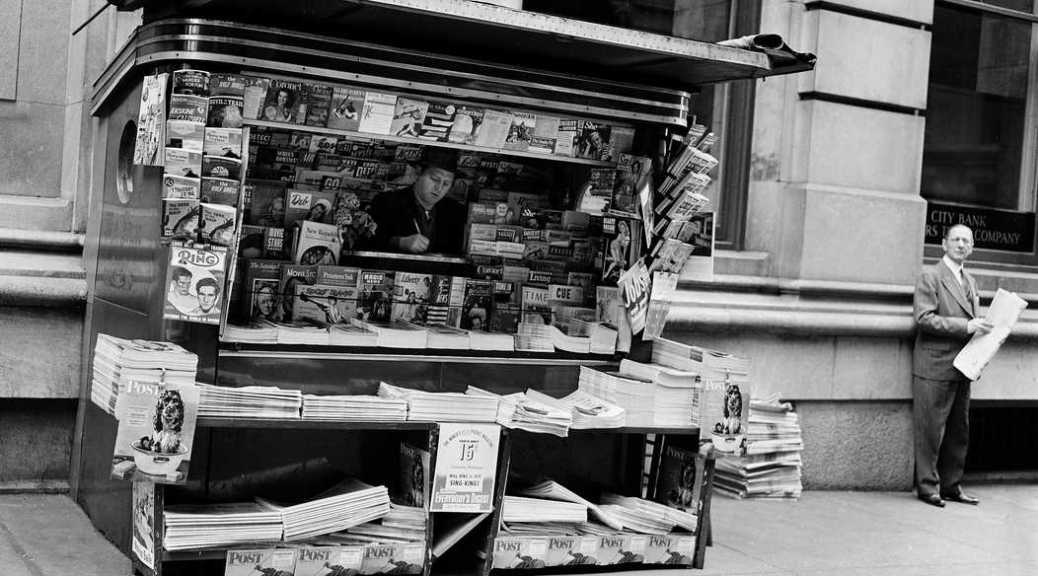
The Derrick, a historic small-town newspaper in Oil City, PA, ceases publication after 150 years amid industry decline.
OIL CITY, Pennsylvania — The Derrick will be no more.
Derrick Publishing Company, publisher of The Derrick and The News-Herald, announced on Feb. 5 that it will cease publication. Employees were told the decision was driven by the long-term decline in support for newspapers, along with regional losses in employment, retail activity, advertising revenue and readership.
The last day of publication of both newspapers will be March 20.
Founded in 1871 as the Daily Derrick by C.E. Bishop & Company, The Derrick earned an international reputation for the quality of its reporting. Its correspondents’ dispatches and wire stories were circulated around the world, including its authoritative publication of oil spot prices — set in Oil City — as well as widely used annual statistical compendiums.
By 1871, this region was firmly established as oil country, a transformation that began just 13 years earlier when Edwin Drake struck oil in what had been the rugged wilderness of western Pennsylvania, a land of dense forests and more bears than people.
People who lived here in the mid-18th century always noticed the green-black oil that lingered on the top of Oil Creek. Aside from using it for a primitive medical salve, locals mostly ignored its presence.
At the time, the nation stood on the cusp of the Industrial Revolution, but meeting the growing demand for reliable illuminating oil posed a major challenge. Whale oil had become prohibitively expensive, and whaling was rapidly depleting the population. Alternatives such as lard oil, tallow oil and coal oil distilled from shale existed, but none were yet abundant or affordable enough to meet the country’s needs.
The shortage of affordable lighting fuel was slowing both industrial expansion and urban growth. Without reliable light after dark, factories stood idle, and businesses closed their doors at sunset.
That changed when Drake successfully drilled for oil — the first person to deliberately extract it from beneath the earth’s surface. His breakthrough sparked the oil boom and made kerosene a practical, widely available commodity.
Land prices soared, and boomtowns such as Pithole City sprang up almost overnight. Speculators drilled wells wherever they could, sometimes erecting derricks directly beside, or even atop, one another. Fortunes were chased at a fever pitch, with little regard for the toll on the land or on rival workers. Conditions in the fields were perilous, and accidents were frequent, often fatal.
Fortunes were won, lost, won again, and lost sometimes forever as these wildcatters would try to make sense of the fluctuations of the price of oil.
At the time, nowhere else in the world was drilling for oil. The region’s economy exploded with growth, but the boom came at a steep cost as vast stretches of lush, green wilderness were cleared and scarred in the rush for petroleum.
And until The Daily Derrick began reporting on it, there was little sustained coverage of the industrial engine transforming the region — the oil trade that fueled the rising steel centers of Pittsburgh and Cleveland. There was also scant attention paid to a Cleveland bookkeeper named John D. Rockefeller, whose financial discipline and business instincts would eventually allow him to dominate the industry as founder of Standard Oil.
As energy author Bob McNally put it in his 2017 book “Crude Volatility: The History and the Future of Boom-Bust Oil Prices,” “The Derrick’s the sole source for continuous reporting on prices, news, and fundamentals for the early decades of the modern oil industry.”
The Derrick’s reporting, research and daily documentation of the oil industry became an essential source for Ida Tarbell, the famed muckraking journalist, as she chronicled the “oil wars” of the 1870s.
Tarbell, whose family life was affected by the domination of the industry because her father had been an independent oil man, is known by journalists for her 19-part series “The History of the Standard Oil Company,” published from November 1902 through October 1904 in McClure’s Magazine and published as a book in 1904.
Her work brought national attention to the untapped impact industrial monopolies would have on American businesses and was considered a catalyst to the Supreme Court’s decision to break up the Standard Oil monopoly.
Without the reporting of The Derrick, she may have never been able to write her serial or her book.
In a month, it will be gone. Its passing will likely draw less attention than the possible closure of the Pittsburgh Post-Gazette 90 miles to the south, the 300 jobs recently cut at The Washington Post 300 miles away, or the 50 positions eliminated at the Atlanta Journal-Constitution 800 miles from here.
It is part of a crisis no one seems able to solve. Last year alone, more than 135 newspapers across the country shut their doors, the latest chapter in a two-decade decline. Since 2005, the number of newspapers published in the United States has fallen from 7,325 to fewer than 4,500.
Today’s front page of the Derrick featured a story on tempers flaring at a Sugarcreek Borough meeting, alongside coverage of township council sessions and local school board debates. It also included reporting on the everyday issues shaping life in the region — snow removal, flooding, road closures and legislation in Harrisburg that could affect residents’ lives.
That kind of coverage will now disappear. So will the ability to speak truth to power. The power here may not be what it was in the 1870s, but someone still needs to hold water authorities, county commissioners and school boards accountable — and soon, no one will be left to do it.
It’s troubling when a major city such as Pittsburgh or a powerful hub like Washington, D.C., loses local journalism. But it may matter even more in a small community such as Oil City, where the loss creates a true news desert, weakening the region’s social fabric, eroding its sense of connection, and leaving those in power with no guardrails at all.
In small towns especially, the loss can depress local voter engagement and open the door to government corruption and incompetence when no one is left to hold officials accountable.
There are no easy answers. Newspapers, long sustained by benevolent — and often wealthy — owners, have seen the revenue streams that once supported them evaporate: legal notices, classifieds, major retail advertising and paid print subscriptions have all declined in the internet era.
But the loss of local newspapers doesn’t just affect the journalists who worked there. It harms residents too — people who may never learn that a water authority decision could raise their taxes, or that there was even a public meeting where they could have voiced objections.
Salena Zito is a staff reporter and columnist for the Washington Examiner. She reaches the Everyman and Everywoman through shoe-leather journalism, traveling from Main Street to the beltway and all places in between. To find out more about Salena and read her past columns, please visit the Creators Syndicate webpage at http://www.creators.com.
Salena Zito 2:00 PM | February 21, 2026
Source: One of the Most Important Small-Town Papers of the Industrial Age Closing – HotAir






 DAILY DEVOTIONS, NEWS AND INFORMATION