Tag Archives: Bible

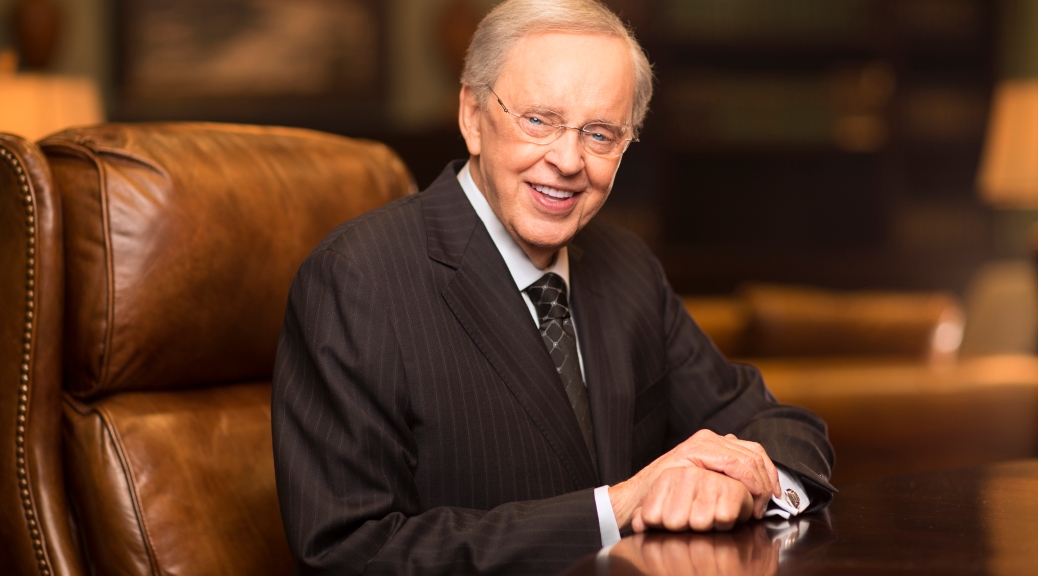
Charles Stanley – The Christian’s Walk


Ephesians 4:1-2

After placing trust in Jesus, a person should begin to walk in a new direction. Believers are indwelt by the Holy Spirit and therefore have real purpose; it isn’t fitting for Christians to live aimlessly. The apostle Paul presents a dramatic contrast between who we once were and who we’re to be after coming to faith. (See Eph. 4:15-24.) Formerly, we might not have felt too bad about sin, but now that we are one with Jesus Christ, our mind is being renewed and our behavior should become increasingly God-pleasing.

As God’s children, we’re also to walk weighty—that is, leaving an imprint and an influence wherever we go. When we understand who we are in Christ and commit to walking in holiness, we begin to reflect the Lord Jesus to others. The joy we have in Him becomes an expression of His presence in our life and evidence of our relationship with Him.

So think of all the people you cross paths with each day. You might be reflecting Jesus to some who have been blind to the truth of God. In addition, your oneness with the Lord and your unity with other believers make you an asset and an encouragement to the body of Christ, too. You have no idea how many lives might be touched by yours.

I’m certainly one who believes in the value of sermons, but God’s people must do more than simply sit and listen. Our life must change so that everybody who meets us will meet Christ in us. Our old life—how we lived before meeting the Lord—was self-centered; our new life is Christ-centered. Is that becoming more evident in you?

Bible in One Year: Jeremiah 18-21


http://www.intouch.org/

Our Daily Bread — Riding the Rapids


Read: Isaiah 43:1–7 | Bible in a Year: Psalms 89–90; Romans 14

When you pass through the rivers, they will not sweep over you. Isaiah 43:2

The rafting guide escorted our group to the river’s edge and directed us all to put on life jackets and grab paddles. As we climbed into the boat, he assigned us seats to balance the boat’s weight, providing stability when we encountered rapids. After highlighting the thrills the watery voyage ahead would hold for us, he detailed a series of directions we could expect to hear—and would need to follow—to effectively steer the boat through the white water. He assured us that even though there might be tense moments on the way, our journey would be both exciting and safe.

Sometimes life feels like a white-water rafting trip, one that contains more rapids than we might like. God’s promise to Israel, through the prophet Isaiah, can guide our feelings when we fear the worst is happening: “When you pass through the rivers, they will not sweep over you” (Isaiah 43:2). The Israelites faced an overwhelming fear of rejection by God as they went into exile as a consequence of their sin. Yet instead, He affirms them and promises to be with them because He loves them (vv. 2, 4).

God won’t abandon us in the rough waters. We can trust Him to guide us through the rapids—our deepest fears and most painful troubles—because He also loves us and promises to be with us.

Thank You, Lord, for being my guide through troubled waters. Help me to trust You even when the journey is wild and scary.

Has the Lord guided you through a difficult time? Share your story at Facebook.com/ourdailybread.

God steers us through difficult times.

By Kirsten Holmberg

INSIGHT

In today’s passage, God declares, “When you pass through the waters, I will be with you” (Isaiah 43:2). In the New Testament, we see this promise of God’s care displayed in two stories of literal storms. In one, Jesus is sound asleep in a boat when awakened by His disciples who are frightened by a sudden storm. He calms the storm and the disciples’ fears (Matthew 8:23-27; Mark 4:35-41; Luke 8:22-25). In a similar story, the disciples are alone in a boat when a furious squall begins. Jesus walks out to them on the water (Matthew 14:22-33; John 6:16-21) and assures them, “It is I; don’t be afraid” (v. 20). The Lord “commands even the winds and the water, and they obey Him” (Luke 8:25).

Alyson Kieda


http://www.odb.org

Ravi Zacharias Ministry – The Constancy of Change

Not much is known about the pre-Socratic philosopher Heraclitus who lived in ancient Ephesus approximately five hundred years before Jesus was born. What is known about him is his belief that the fundamental essence of the universe is change. The source of change, Heraclitus believed, was that fire was the central element of the universe; fire alters everything continuously and as a result nothing is fixed or permanent in the world. The aphorism “No one steps in the same river twice” gives a concise image for his philosophical views.(1) Perhaps it might not surprise the modern reader of Heraclitus to learn that those who wrote about him characterized him as the “weeping philosopher.” His contemporaries noted that he suffered such bouts with melancholy that he couldn’t finish many of his philosophical writings.(2)

While a direct intellectual link cannot be drawn from Heraclitus to the Buddha, the belief that everything is changing is also a central part of Buddhist teachings. There is no underlying substance that is not subject to the impermanent nature of existence. Instead, everything is in flux.(3) The doctrine of impermanence or anicca, applies even to human nature. Simple observation shows that the human body, for example, develops and changes from infancy to adulthood and into old age—continually changing. All living beings change as cells develop, die, and then are replaced by new cells. On a cognitive level, most humans have had the experience of fleeting mental events, or have thoughts come and go dissolving into memories that cannot easily be accessed. And all know how time seems to slip through our fingers: the future becomes the present, which becomes the past. As Nobel Laureate Bob Dylan penned over fifty years ago, “The order is rapidly fadin’ and the first one now will later be last for the times they are a-changin’.”(4)

Friedrich Nietzsche drew upon both of these traditions as he looked out onto what he considered to be a crumbling foundation of Judeo-Christianity—a foundation taken down in part by continual change. He wrote:

“The eternal and exclusive process of becoming, the utter evanescence of everything real, which keeps      acting and evolving but never is, as Heraclitus teaches us, is a terrible and stunning notion. Its impact is most closely related to the feeling of an earthquake, which makes people relinquish their faith that the earth is firmly grounded. It takes astonishing strength to transpose this reaction into its opposite, into sublime and happy astonishment.”(5)

Continue reading Ravi Zacharias Ministry – The Constancy of Change

Joyce Meyer – Truth Will Set You Free


I will hear [with expectant hope] what God the Lord will say, for He will speak peace to His people, to His godly ones….  — Psalm 85:8 (AMP)

Adapted from the resource Hearing from God Each Morning Devotional – by Joyce Meyer

When God speaks, He gives us a deep sense of internal peace to confirm that the message we are hearing is truly from Him. Even if He speaks to chastise us, His Spirit of Truth leaves a calming sense of comfort in our souls.

When our enemy, the deceiver, speaks to us, he cannot give peace. When we try to solve things with our own reasoning, we cannot get peace because the mind of the flesh [which is sense and reason without the Holy Spirit] is death [death that comprises all the miseries arising from sin, both here and hereafter]. But the mind of the [Holy] Spirit is life and [soul] peace [both now and forever] (Romans 8:6 AMPC).

Whenever you believe you hear God speak or make a decision based on something you believe He has said, use the scale of peace. If peace cannot hold its weight against the guidance you have heard, then don’t proceed with it. You don’t have to explain to others why you don’t have peace about it; you may not even know that yourself. You can simply say, “I do not have peace about this right now; therefore, it’s not wise for me to go ahead with it.”

Always wait until peace about doing what you think God has instructed you to do fills your soul. Peace is confirmation that you are truly hearing from God and that your timing is right to take action. Peace gives us confidence and faith, which enable us to be obedient to God’s instructions.

Prayer Starter: Father, thank You for leading us by Your peace. Help me to continually be more sensitive to You and learn to follow Your peace in every area of life. In Jesus’ Name, Amen.


http://www.joycemeyer.org

Campus Crusade for Christ; Bill Bright – Whatsoever You Desire 


“For verily I say unto you, That whosoever shall say unto this mountain, Be thou removed, and be thou cast into the sea; and shall not doubt in his heart, but shall believe that those things which he saith shall come to pass; he shall have whatsoever he saith. Therefore I say unto you, What things soever ye desire, when ye pray, believe that ye receive them, and ye shall have them” (Mark 11:23,24, KJV).

How big is your God? If the Holy Spirit were to withdraw from your life and from the fellowship of your local church, would he be missed? In other words, is there anything supernatural about your life or the local church where you have fellowship with other believers?

A skeptic, contrasting the actor and Christian worker, gave this evaluation: The actor presents fiction as though it were true. The Christian worker all too often presents truth as though it were fiction.

A militant atheist attacked Christians with this accusation: “You say that your God is omnipotent, that He created the heavens and the earth. You say that He is a loving God who sent His only Son to die on the cross for the sins of man and on the third day was raised from the dead. You say that through faith in Him one could have a whole new quality of life, of peace, love and joy; a purpose and meaning plus the assurance of eternal life. I say to you that is a lie and you know it, because if you really believe what you say you believe, you would pay whatever price it took to tell everyone who would listen. What you claim is without question the greatest news the world has ever heard, but it couldn’t be true or you would be more enthusiastic about it. If I believed what you believe, I would sell everything I have and use every resource at my command to reach the largest possible number of people with this good news.”

Unfortunately, the critics and the skeptics have good reason to find fault with us. It is true that, if we really believed what we say we believe, we would be constrained, as the apostle Paul, to tell everyone who would listen about Christ, mindful that there is nothing more important in all the world that we could do. At the same time we would claim our rights as children of God, drawing upon the supernatural resources of God.

Bible Reading:Mark 11:20-26

TODAY’S ACTION POINT: I will seek to know God better by studying His Word and meditating upon his attributes so that His supernatural qualities will become more and more a part of my life for the glory and praise of His name.


http://www.cru.org

Max Lucado – Define Yourself in God’s Truth


Listen to Today’s Devotion

Every person you see was created by God to bear his image and deserves to be treated with dignity and respect. Imagine the impact this promise would have on the society that embraced it.  What civility it would engender.  What kindness it would foster.  Racism will not flourish when people believe their neighbors bear God’s image.  Will society write off the indigent, the mentally ill, the inmate or the refugee?  Not if we believe, truly believe, that every human being is God’s idea. And he has no bad ideas.

High IQ or low standing—doesn’t matter.  First string or cut from the squad—doesn’t matter. You are a diamond, a rose, and a jewel; purchased by the blood of Jesus Christ.  And because his promises are unbreakable, our hope is unshakable!

Read more Unshakable Hope

For more inspirational messages please visit Max Lucado.

Home

Denison Forum – “I’ve become the bionic padre”

Father Esequiel Sanchez is Rector of the Shrine of Our Lady of Guadalupe in Des Plaines, Illinois, a suburb of Chicago. He was one of 103 survivors of an Aeromexico plane crash outside Durango, Mexico, on July 31, 2018.

Father Sanchez suffered multiple fractures to his left arm, requiring surgery and the insertion of a metal plate. He said in response, “I’ve become the bionic padre.”

In his sermon last Sunday, Father Sanchez declared that the real miracle was not that everyone survived the plane crash, but that so many went back into the burning plane to rescue others.

A powerful metaphor

Survivors helping others survive is a powerful metaphor for the work of Christians in a post-Christian culture.

Jesus called his first disciples to be his witnesses in Jerusalem, where they would confront the very authorities who executed him (Acts 1:8). They were to bring his message to “all Judea and Samaria,” where they would encounter Jews who opposed them and Samaritans who rejected them.

They were ultimately to go to “the end of the earth,” probably a reference to Rome, the capital of the pagan Empire. Along the way, they learned to relate their message to their culture so effectively that they “turned the world upside down” (Acts 17:6).

How can we follow their example?

The “love and teach” circle Continue reading Denison Forum – “I’ve become the bionic padre”

Charles Stanley – The Throne of Grace


Romans 10:4-13

On a popular television show, the final contestant has an opportunity to win the grand prize, which is hidden behind one of three doors. The contestant, pulled from the audience, calls out the door number and discovers whether he or she has won the prize. Many leave disappointed.

Our God doesn’t work that way. He doesn’t hide the gift of salvation behind one of many doors and make us guess where to find it. He clearly tells us which door to open and gives us the faith to open it, promising that all who believe in Christ will not be disappointed (Rom. 10:11).

What a wonderful God we have! Our past sins don’t keep us from receiving His grace, because all that matters is believing in Jesus Christ to save us. Then the door of grace opens, bringing the free gift of forgiveness, salvation, and new life. Hymn writer Charitie Bancroft described grace this way:

      Because the sinless Savior died,
      My sinful soul is counted free.
      For God the just is satisfied,
      To look on Him and pardon me.

Confidently we may now approach God, knowing that we are accepted. When we draw near to Him, we come to a throne of grace where “we may receive mercy and find grace to help in time of need” (Heb. 4:16). Forgiveness will be granted, and our prayers will be heard. And most wonderful of all, our relationship with God will deepen. Why would we ever neglect such a gracious opportunity?

Bible in One Year: Jeremiah 15-17


http://www.intouch.org/

Our Daily Bread — The Gift of Time


Read: Luke 6:37–38 | Bible in a Year: Psalms 87–88; Romans 13

A generous person will prosper; whoever refreshes others will be refreshed. Proverbs 11:25

I headed into the post office in a big hurry. I had a number of things on my to-do list, but as I entered I was frustrated to find a long line backing up all the way to the door. “Hurry up and wait,” I muttered, glancing at my watch.

My hand was still on the door when an elderly stranger approached me. “I can’t get this copier to work,” he said, pointing to the machine behind us. “It took my money and I don’t know what to do.” Immediately I knew what God wanted me to do. I stepped out of line and was able to fix the problem in ten minutes.

The man thanked me and then left. As I turned to get back in line, it was gone. I walked straight to the service counter.

My experience that day reminds me of Jesus’s words: “Give, and it will be given to you. A good measure, pressed down, shaken together and running over, will be poured into your lap. For with the measure you use, it will be measured to you” (Luke 6:38).

My wait seemed shorter because God interrupted my hurry. By turning my eyes to others’ needs and helping me give of my time, He gave me a gift. It’s a lesson I hope to remember, next time I look at my watch.

Heavenly Father, all of the time I have is in Your hands, a gift from You. Please show me how to use it to bring glory and honor to You.

Sometimes our to-do list needs to wait.

By James Banks

INSIGHT

Time is a precious commodity that we can waste, spend, or invest. Moses prayed, “Teach us to number our days, that we may gain a heart of wisdom” (Psalm 90:12). In a sense, nothing more clearly requires—or displays—a heart of wisdom than the way we use our time. This may be why Jesus—pressed by the crowds, confronted by the needs around Him, and threatened by the religious establishment—is never described in the Gospels as being in a hurry. Instead, He saw time as having a part in the Father’s purposes. At the wedding feast in Galilee, He said to His mother, “My hour has not yet come” (John 2:4). As He drew ever closer to the cross, however, He saw that time coming to culmination. In John 12:27 He affirmed, “Now my soul is troubled, and what shall I say? ‘Father, save me from this hour’? No, it was for this very reason I came to this hour.” Living wisely is rooted in understanding that our loving Father has a purpose behind our seconds, minutes, hours, and days.

Bill Crowder


http://www.odb.org

Ravi Zacharias Ministry – There Is More to See

If you want to investigate whether Sherlock Holmes was a real or fictional person, you can’t believe everything you read on the Internet. His “biography” is as easy to find as Winston Churchill’s (and there seems to be some fact/fiction confusion on both counts).(1) Between the years of 1887 and 1927, Sir Arthur Conan Doyle wrote prolifically of the famous detective known for his heightened skills of observation and eccentric personality. Holmes was both memorable and beloved—and entirely fictional. It is a strange irony indeed that there are a great number of people who would claim the clues suggest otherwise. As Holmes himself once said, “The temptation to form premature theories upon insufficient data is the bane of our profession.”

The process of gathering and interpreting information is never ending. From childhood we learn patterns of life around us and create theories on how it all works and how we must live. Not knowing whether it is insufficient data or fast truth, children readily form theories. For instance: pans on the stove burn fingers. This is one theory a child might conclude having learned the hard way. But as data becomes more sufficient, a child’s theories are readily adjusted—namely, certain parts of a pan on a hot stove burn fingers. Though memory of the sting may last, there seems an unconscious acknowledgment that their theories are the means to understanding and relating to the world. This is very different then theorizing the end they might want, need, or hope to be true.

Strangely, the temptation Sherlock Holmes describes—forming theories upon insufficient data—seems to grow with age. As the questions we seek answers for become more difficult, so the ante for interpreting accurately increases as we grow older. And yet, as adults we are often less willing to adjust our theories. The biases we bring into investigating often prevent us from recognizing data as insufficient or even faulty. We also more readily remember the sting of being burned and hold onto it in our interpretation, so that even for some of life’s deepest questions we are responding with predisposed theories. For instance, God cannot exist because if God did exist my mother wouldn’t have died so young, or tsunamis and hurricanes wouldn’t kill people, or I wouldn’t still be struggling with my finances. But how would we respond to a child who insisted that if broccoli were good for her, it would taste like candy?

In one of his essays, F.W. Boreham writes of his grade school difficulties with geography class. When the teacher spoke of life in a far-off land, he found himself drifting off to scenes in that land and remaining there long after they had switched to another destination. One day, catching him in the midst of a daydream, the teacher called on Boreham and asked, “What part of the world are we studying?” Recognizing a fellow student in distress, a friend scribbled the correct rejoinder on the paper beside them. “Java is the answer,” said Boreham. “Good,” the teacher noted, “Now tell me, what was the question?”

Continue reading Ravi Zacharias Ministry – There Is More to See

Joyce Meyer – Seek the Truth


The sower sows the word. And these are the ones along the path, where the word is sown: when they hear, Satan immediately comes and takes away the word that is sown in them. — Mark 4:14-15

Adapted from the resource Ending Your Day Right Devotional – by Joyce Meyer

If you hear or study the Word, the devil will immediately attempt to steal it from you. He does not want the Word to take root in your heart and begin to produce good fruit in your life. When you learn the truth, deception is uncovered and you are set free. Satan hates and fears the Word. He will do anything possible to prevent you from learning God’s Word.

The reason Satan works so hard to keep you from the Word is simple: He knows the Word of God is a powerful weapon against him. It assures his defeat! That is why it is imperative that you learn to wield the spiritual sword. Reading, hearing, believing, meditating on, and confessing the Word cancels Satan’s evil plan. Today, determine to make the Word of God a priority in your life.

Prayer Starter: Father, help me to make Your Word a priority. Help me to take the necessary time to read it, meditate on it, and apply it to my life. In Jesus’ Name, Amen.


http://www.joycemeyer.org

Campus Crusade for Christ; Bill Bright – A Matter of the Will 


“If any man will do His will, he shall know of the doctrine, whether it be of God, or whether I speak of Myself” (John 7:17, KJV).

At the conclusion of an address I gave at M.I.T., a skeptical young man approached me. He said, “I am a scientist. I can’t believe anything that I can’t see. I must be able to go into the laboratory and test a proposition or a theory. I must prove its authenticity before I will believe and accept.

“Religion,” he said, “is a matter of faith. It has no substance and, as far as I’m concerned, no validity.”

I turned to the seventh chapter of John, verse 17 – our Scripture portion for today – and asked him to read it aloud.

“Do you understand what Jesus is saying here?” I asked.

“Well, I’m not sure,” he replied. “What is your point?”

“Your problem is not your intellect, but your will. Are you willing to do what God wants you to do? Are there relationships in your life that you’re not willing to surrender in order to do the will of God? Are there moral problems, problems of integrity that you are not willing to relinquish?”

An odd expression came over his countenance.

“How did you know?” Then he said, “I’d like to talk to you privately.” Later, as we sat together alone, he poured out his heart to me. He said, “I know that what you’re saying is true. I know that there’s a God in heaven, and I know that Jesus Christ is His Son and that He died on the cross for me.

“But,” he said, “there is sin in my life. I have been living with a young woman without the benefit of marriage for the last couple of years. Today you have exposed me for what I really am – a fraud, a sham, a hypocrite, and I want with God’s help to terminate my present relationship with this young woman and receive Christ into my life.”

I am happy to report that, soon after, he and the young woman both surrendered their lives to Christ and were married. Together they are making their lives count for the glory of God.

Bible Reading:John 7:14-18

TODAY’S ACTION POINT: Today I will confess – and turn from – all known sin that keeps me from knowing and doing the will of God. I will also share this message with others.


http://www.cru.org

Max Lucado – It’s Time to Grow Up


Listen to Today’s Devotion

Children have a tendency to say, “Look at me!” On the tricycle: “Look at me go!” On the trampoline: “Look at me bounce!” On the swing set: “Look at me swing!” Such behavior is acceptable for children. Yet many adults spend their grown-up years saying the same thing.  “Look at me drive this fancy car!”  “Look at me make money!”  “Look at me wear provocative clothes, or use big words, or flex my muscles. Look at me!”

Isn’t it time we grew up?  We were made to live a life that says, “Look at God!” People are to look at us and see not US but the image of our Maker.  This is God’s plan.  2 Corinthians 3:18 says, “We. . .are being transformed into his image with ever-increasing glory, which comes from the Lord, who is the Spirit.” Because God’s promises are unbreakable, our hope is unshakable!

Read more Unshakable Hope

For more inspirational messages please visit Max Lucado.

Home

Denison Forum – A “mission to touch the sun”

“I believe in Christianity as I believe that the sun has risen; not only because I see it, but because by it I see everything else” (C. S. Lewis).

NASA launched a spacecraft yesterday that will get seven times closer to the sun than previous spacecraft. One NASA scientist called it a mission to “touch the sun.”

The Parker Solar Probe will cover 96 percent of the 93 million miles between us and our closest star. It will make twenty-four close approaches to the sun over the next seven years.

We’re obviously interested in the sun since life on our planet depends on it. But frankly, our sun is nothing special in the larger universe. While it would take one million Earths to fill it, the sun is just average compared to other stars in our galaxy. Betelgeuse, for instance, is about seven hundred times bigger and about 14,000 times brighter.

In total, scientists estimate that there are one billion trillion stars in the known universe. And God “gives to all of them their names” (Psalm 147:4).

“The heavens declare the glory of God, and the sky above proclaims his handiwork” (Psalm 19:1). How is this declaration in the heavens relevant to the hard choices we must make on earth?

The true test of faith

It’s easy to obey God when we understand why we should. The test of faith comes when we are called to step beyond what we understand or even want to be true.

Continue reading Denison Forum – A “mission to touch the sun”

Charles Stanley –A Lifestyle of Obedience


Genesis 6:9-22

A lifestyle of obedience requires commitment and perseverance. Noah needed both as he obeyed the Lord’s instructions to build a large boat with a roof, doors, and three decks. God spelled out the exact measurements, the type of wood to use, and the way to make the vessel watertight. It was essential that Noah adhere to every detail if the ark was to house all the animals and stay afloat.

Scripture does not describe reactions to the project, but knowing human nature, we can imagine the disbelief and rejection Noah probably experienced. Yet he worked faithfully to the end and “did everything just as God commanded Him” (Gen. 6:22 NIV).

The Lord wants us to follow His instructions precisely. Unfortunately, we like to add some of our desires and preferences to His plan. We are like a child whose parent assigns three chores. The first is done satisfactorily, the second is put off until another day, and the third is skipped because the child deems it unnecessary. This is not obedience. In our case, we know we’re called to show compassion and kindness, forgiving others as the Lord forgave us (Col. 3:13). However, our human nature wants to pick and choose which parts of Scripture we’ll obey. As believers, we should keep in mind that God honors those who wholeheartedly follow Him (John 12:26).

Many people in the Bible saw obedience as their goal. Abraham determined to go wherever God led. Moses felt inadequate but still carried out the Lord’s plan. Paul did an about-face to become Christ’s disciple. Ask the Holy Spirit to empower you to follow the path of righteousness.

Bible in One Year: Jeremiah 12-14


http://www.intouch.org/

Our Daily Bread — Help from Heaven


Read: Joshua 10:6–15 | Bible in a Year: Psalms 84–86; Romans 12

Surely the Lord was fighting for Israel! Joshua 10:14

SOS, the Morse code signal, was created in 1905 because sailors needed a way to indicate extreme distress. The signal gained notoriety in 1910 when used by the sinking ship Steamship Kentucky, saving all forty-six people aboard.

While SOS may be a more recent invention, the urgent cry for help is as old as humanity. We hear it often in the Old Testament story of Joshua, who faced opposition from fellow Israelites (Joshua 9:18) and challenging terrain (3:15–17) for more than fourteen years as the Israelites slowly conquered and settled the land God had promised them. During this struggle “the Lord was with Joshua” (6:27).

In Joshua 10, the Israelites go to the aid of the Gibeonites, allies of Israel who were being attacked by five kings. Joshua knew that he needed the Lord’s help to defeat so many powerful enemies (v. 12). God responded with a hailstorm, even stopping the sun in the middle of the sky to give Israel more time to defeat the enemy. Joshua 10:14 recounts, “Surely the Lord was fighting for Israel!”

If you are in the midst of a challenging situation, you can send out an SOS to God. Although help will look different than the assistance Joshua received, perhaps help comes through an unexpected job, an understanding doctor, or peace in the midst of grief. Be encouraged that these are ways He is responding to your call for help and fighting for you.

Thank You, Father, for walking with me on this difficult journey and hearing me when I cry out to You.

As we cry out to God for help, we can trust that He will be with us.

By Lisa Samra

INSIGHT

The Gibeonites feared Israel’s God, so they tricked Joshua and the Israelites into becoming their allies (Joshua 9). So when Gibeon called Israel for help (10:6), they were ultimately calling on God.

Do we wait for a crisis to turn to Him?

Tim Gustafson


http://www.odb.org

Words of Hope – Daily Devotional – Favored Ones

Read: Luke 1:26-38

Greetings, O favored one, the Lord is with you! (v. 28)

Before my first chemotherapy treatment, I cried out fearfully and desperately to the Lord. I had watched my 46-year-old father succumb to the side effects of chemotherapy by contracting a fungal infection that took his life. I wondered if death in my 40s would be my destiny too. That day I opened up my Bible to the daily reading, “The eternal God is your dwelling place, and underneath are the everlasting arms” (Deut. 33:27). The assignment ahead of me did not change. However, through his Word, God assured me he was with me. When God sees fear, he favors.

God drops a life-altering assignment into Mary’s life. Gabriel assures Mary, not once, but twice, of God’s favor. God knows Mary needs this assurance: when she tells Joseph and her parents; when stares of condemnation fly her way; when the Law cries, “Stone her”; when she and Joseph flee to Egypt with baby Jesus; when she loses the boy Jesus at the Passover Feast; when she mourns at the foot of the cross. To favor means to grace or to endue with special blessing. When Mary’s assignment feels unlike favor, she will ever remember the words spoken over her, “The Lord is with you!”

Life’s hard assignments cause us to wonder about God’s presence with us. Yet as with Mary, God delights to reveal he is with us and that his favor rests upon us. “If God is for us, who can be against us?” (Rom. 8:31). —Michelle Christy

Prayer: Open our eyes and hearts to see and hear your favor, O Lord!


https://woh.org/

Joyce Meyer – Preparing for the Best


Shout for joy in the Lord, O you righteous! Praise befits the upright. — Psalm 33:1

Adapted from the resource Closer to God Each Day Devotional – by Joyce Meyer

How we approach each new day and each new situation makes a huge difference. If we decide ahead of time that we won’t be happy or peaceful unless we get exactly what we want, then we will rarely be at peace.

I have heard people say things like, “If it rains tomorrow I am not going to be happy,” or “If I don’t get the job, I am going to be so upset.” When we think thoughts such as this, we are setting ourselves up to be unhappy and to lose our peace and joy before we even have a problem.

Instead of preparing to be upset, we can prepare to be at peace. We can think and speak things like, “I really hope the weather is nice tomorrow, and I hope I get this new job. But my joy comes from my relationship with Jesus, so I choose to be happy and have rest in my soul no matter what I come up against tomorrow. Whether it’s rainy or sunny, whether I get the job or not, I choose the joy of the Lord!”

The way we approach our lives makes all the difference in the quality of life we can have. When we can’t fix life, let’s remember that we can fix our approach toward it.

Prayer Starter: Father, help me to approach life today with a godly attitude—positive and full of faith. Help me to make a habit of preparing for the best in every situation. In Jesus’ Name, Amen


http://www.joycemeyer.org

Campus Crusade for Christ; Bill Bright – A Blameless Watchman


“If you refuse to warn the wicked when I want you to tell them, You are under the penalty of death, therefore repent and save your life – they will die in their sins, but I will punish you. I will demand your blood for theirs. But if you warn them and they keep on sinning, and refuse to repent, they will die in their sins, but you are blameless – you have done all you could” (Ezekiel 3:18-19).

One of the most sobering messages I find in all the words of God is this terrible warning found in the book of Ezekiel. God commanded Ezekiel to warn the people of Israel to turn from their sins. Some would argue that this has no application for the Christian. I would disagree. In principle this is exactly what our Lord commands us to do – to go and make disciples of all nations, to preach the gospel to all men, to follow Jesus and He will make us to become fishers of men.

It is a sobering thing to realize that all around us there are multitudes of men and women, even loved ones, who do not know the Savior. Many of them have never received an intelligent, Spirit-filled, loving witness concerning our Savior. Who will tell them? There are some people whom you and I can reach whom nobody else can influence.

I am writing this day’s devotion while in Amsterdam where I am speaking at an international gathering of Christian evangelists. During the course of my days here I have talked with many taxi drivers, maids, waiters and other employees of the hotel. Only one professed to be a believer and we had good fellowship together. Some were openly defiant, even angry at the name of Jesus. But in each case I have shared the gospel, constrained by the love of Christ out of a deep sense of gratitude for all that He has done for me, and as an act of obedience to His command to be His witness.

I pray that God will give me a greater sense of urgency to warn men that unless they turn to Christ they will die in their sins. I do not want to be responsible because I failed to warn them. They must know that there is a heaven and a hell and that there is no other name under heaven given among men whereby we must be saved but the name of our Lord Jesus Christ.

Bible Reading:Ezekiel 3:15-21

TODAY’S ACTION POINT: I will ask the Holy Spirit to quicken within my heart, out of a deep sense of gratitude for all He has done for me and from a desire to obey our Lord’s commands, a greater sense of urgency to be His witness and to warn men to turn from their wicked ways and receive Christ, the gift of God’s love


http://www.cru.org

Charles Stanley –The Priority of Obedience


Luke 6:46-49

The Creator gave Adam and Eve two commands—first, to fill the earth and rule over it, and second, not to eat from a certain tree in the Garden (Gen. 1:28; Gen. 2:17). Because they chose to disobey, their relationship with God was broken, and they had to leave Eden.

Not only did the first couple’s rebellion impact their own lives but it also had far broader implications: All future generations would suffer. In Romans 5:12-19, the apostle Paul explains why. Through the trespass of one man, Adam, sin made its entrance into the world, and death resulted for all mankind. Because Adam was the head of the human race, his disobedience affected everyone born after him. Every person starts out with a bent away from the Lord and a desire for self-rule.

By contrast, Jesus Christ made conformity to the Lord’s will the priority of His life. He obeyed God in both word and deed. (See John 8:28-29.) Having lived a perfect life—one entirely without sin—He qualified to be our Savior (2 Corinthians 5:21). Through the death of one man, Christ Jesus, payment was made for the transgressions of all mankind. God’s acceptance of the Son’s sacrifice brought us forgiveness and freedom from sin’s power.

Adam’s disobedience brought judgment and death, whereas Jesus’ obedience resulted in new life for all who believe in Him (Rom. 6:4). Our Savior calls us to deny selfish desires, live sacrificially, and follow Him (Matt. 16:24). A believer’s godly life will bring Jesus honor and point others to Him.

Bible in One Year: Jeremiah 9-11


http://www.intouch.org/