Tag Archives: Bible

Greg Laurie – Are There Stairs in Heaven?

“And this is the plan: At the right time He will bring everything together under the authority of Christ–everything in heaven and on earth.”—Ephesians 1:10

I was carrying my five-year-old granddaughter Lucy some time ago. We were upstairs in our house, and I tucked her under my arm, walking in an exaggerated way that shook her up and down. She loves that. I always give her a choice,

“Do you want to go down the stairs the regular way, or the fun way?” Of course she always picks the fun way. At the bottom of the stairs I set her down, and she looked up at me. “Papa,” she said, “will there be stairs in heaven?”

“Well,” I said, “I don’t know. Why do you ask?”

“Because,” she replied, “I want you to carry me down the steps of heaven the fun way.” Will I be carrying Lucy up and down heavenly stairs someday? Will she be carrying me? I don’t know. But I do know we’ll be having fun together, as Lucy grows up and places her faith in Jesus Christ, and we both look forward to heaven. God’s ultimate plan is to bring heaven and earth together. He will not abandon His creation; He will restore it.

In Acts 3:19–21 (NIV), in the midst of an impromptu evangelistic sermon in the temple courtyard, Peter declared: “Repent, then, and turn to God, so that your sins may be wiped out, that times of refreshing may come from the Lord, and that he may send the Messiah, who has been appointed for you—even Jesus. Heaven must receive him until the time comes for God to restore everything, as he promised long ago through his holy prophets.”

He will restore the lives of His sons and daughters.

He will restore our bodies. He will restore our very planet. He will bring all things in heaven and earth together under one head, even Christ, according to Ephesians 1:10.


Harvest.org | Greg Laurie

Kids 4 Truth International – God Is Our Source of Strength

“Hast thou not known? hast thou not heard, that the everlasting God, the LORD, the Creator of the ends of the earth, fainteth not, neither is weary?” (Isaiah 40:28a)

Tired and sleepy! Has your mom ever described you that way, or warned you that you will be tired and sleepy if you do not get your nap for the day? Many people are tired and sleepy all the time because they do not sleep enough! Some people seem to need less sleep than others. But everybody – firefighters, nurses, teachers, football players, preachers, moms, dads, kids, and even the President – has to get at least some sleep! No matter where people live – in America, Mexico, the UK, Australia, China – everybody sleeps. Why? Because God made us that way.

Do you think God ever gets tired and needs to sleep?

Well, let’s think about it. When people do a lot of things like working outside or shopping all day, they get tired and fall asleep right away at night. God does do a lot of work every day. So it might make sense to us to think of Him to getting tired and needing to sleep. But there really is only one way to find out whether or not God has to sleep, and that is to see what the Bible says about it. And guess what? The Bible does say something about it. Let’s take a close look at today’s verse:

“Hast thou not known? hast thou not heard, that the everlasting God, the LORD, the Creator of the ends of the earth, fainteth not [in other words, He doesn’t get tired], neither is weary?” (Isaiah 40:28a)

The next verse says:

“He giveth power to the faint [those who get weary]; and to them that have no might he increaseth strength.”

So, the Bible says God does not get tired. That’s right. God never sleeps. And on top of that, He gives strength to the weary! That is amazing. How does He do that? He is God; and, because He is God, He is very powerful. In fact, He is the Source of all strength.

Continue reading Kids 4 Truth International – God Is Our Source of Strength

Moody Global Ministries – Today in the Word – THE TRINITY AND SPIRITUAL REBIRTH

Read JOHN 3:1–8

Seventeenth-century Puritan pastor John Owen noted that the Bible teaches with regard to the Holy Spirit “that he will come unto us, that he will be our comforter, that he will teach us, lead us, guide us; that he spoke of old in and by the prophets, that they were moved by him, acted by him; [and] that he ‘searcheth the deep things of God.’” Therefore, “we must acknowledge the Holy Ghost to be a substance, a person, God; yet distinct from the Father and the Son.”

Spiritual rebirth is a work of the Holy Spirit, made possible by the Son, and planned and presided over by the Father. The entire Trinity is integrally involved in the work of salvation. We’ll conclude our study with five days to focus on this topic, beginning with today’s reading in John 3 and then moving beyond the Gospels to explore more fully the Trinity’s roles in redemption.

Jesus spoke to Nicodemus of the necessity of being “born again” or “born from above” or “born of the Spirit” (vv. 3, 5). His explanation of what this means involved the entire Trinity. Spiritual rebirth is a requirement for entering the Father’s kingdom. It is a work of the Holy Spirit (vv. 5–8). And the Son knows how it all works because He accomplished it via His death and resurrection.

The phrase “born of water and the Spirit” likely indicates a natural birth (water) then a supernatural birth (Spirit). In verse 6, “Flesh gives birth to flesh” (natural) but “the Spirit gives birth to Spirit” (supernatural). He, as only God can, changes death (where natural birth inevitably leads) into life. The wind metaphor in verse 8, in addition to highlighting God’s glorious sovereignty and mystery, reminds us of His creation and life-giving breath (see Gen. 2:7).

APPLY THE WORD

The Gospel of John intentionally echoes and builds on the opening chapters of the book of Genesis to reveal more of God the Father, God the Son, and God the Holy Spirit. When you have time for additional Bible study, read the first three chapters of Genesis and the first three chapters of John, and make notes about themes you see repeated.


http://www.todayintheword.org

Streams in the Desert for Kids – I Know You


Psalm 119:42

Have you ever met someone who you are sure you’ve met before, but you can’t remember when or where? Then all of a sudden, it comes to you and you say, “I know you!” You recognize the person. You remember where you met. That’s a little bit like it is with God. You go along living your life day after day, then something happens that seems familiar. All at once you know. This is God at work. God has come to help.

What do you know about God? Where have you learned what you know? God’s Word is the best place to learn about God. When we know God’s Word, we get to know him too. We learn he is a good, kind, loving God who expects certain things from us. His Word also builds our faith and strength in him. It’s not hard to trust and believe in him when we know him. So get acquainted with God in the pages of his Book today.

Dear Lord, I want to know more about you. I want to recognize you when you speak to me. I want my faith in you to grow stronger. I want to love you more. Amen.

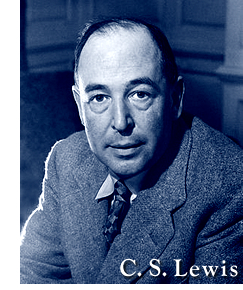
C.S. Lewis Daily – Today’s Reading

TO GENIA GOELZ, who had asked Lewis for a prayer in her struggle to believe: Lewis’s prayer for a daily increase in obedience and faith.

18 March 1952

Don’t bother at all about that question of a person being ‘made a Christian’ by baptism. It is only the usual trouble about words being used in more than one sense. Thus we might say a man ‘became a soldier’ the moment that he joined the army. But his instructors might say six months later ‘I think we have made a soldier of him’. Both usages are quite definable, only one wants to know which is being used in a given sentence. The Bible itself gives us one short prayer which is suitable for all who are struggling with the beliefs and doctrines. It is: ‘Lord I believe, help Thou my unbelief.’6 Would something of this sort be any good?: Almighty God, who art the Father of lights and who has promised by thy dear Son that all who do thy will shall know thy doctrine: [John 7:17] give me grace so to live that by daily obedience I daily increase in faith and in the understanding of thy Holy Word, through Jesus Christ our Lord. Amen.

From The Collected Letters of C.S. Lewis, Volume II

Compiled in Yours, Jack

Charles Stanley – God’s Tools for Making Us Holy

1 Thessalonians 5:23-24

Sanctification is the process God uses to conform believers to the image of His Son. The writers of Scripture used word pictures that speak of the Father’s shaping work in the life of His saints. Isaiah, for example, compared the Lord to an artist making pottery: “We are the clay and You our potter; and all of us are the work of Your hand” (Isa. 64:8). These are some of the tools He utilizes to mold and perfect His creations:

The Bible. The psalmist described God’s Word as “a lamp to my feet and a light to my path” (Ps. 119:105). The Holy Spirit illuminates what we read so that we can come under conviction and grow in our faith.

The Church. As part of Christ’s body, we learn of God’s ways from the pastors and teachers who have been called to minister. The Father also calls His children to fellowship together (Heb. 10:25), in part so He can use them in each other’s sanctification process. Not only that, but there are Christians at church who will encourage their brothers and sisters in times of trouble or hold them accountable when they miss the mark.

Suffering. God freely offers us solace and help during times of difficulty, but He also uses our painful circumstances to shape us. When we submit to Him, we emerge from our struggles looking more Christlike than ever before.

From the moment a person places trust in the Lord Jesus Christ, God’s transforming work of sanctification will be ongoing throughout his or her life. As children of the King, we should long to glorify our Father by faithfully reflecting Him. To do that, we must yield to His tools of sanctification.

Bible in One Year: Lamentations 3-5


http://www.intouch.org/

Our Daily Bread — Honorable Living

Read: 1 Peter 2:9–12 | Bible in a Year: Psalm 119:89–176; 1 Corinthians 8

You are a chosen people, a royal priesthood, a holy nation, God’s special possession. 1 Peter 2:9

While delivering a well-publicized speech, a respected leader and statesman got the attention of his nation by declaring that most of his country’s honorable Members of Parliament (MPs) were quite dishonorable. Citing lifestyles of corruption, pompous attitudes, unsavory language, and other vices, he rebuked the MPs and urged them to reform. As expected, his comments didn’t go well with them and they dispatched counter-criticisms his way.

We may not be public officials in positions of leadership, but we who follow Christ are a “chosen people, a royal priesthood, a holy nation, God’s special possession” (1 Peter 2:9). As such, our Lord calls us to lifestyles that honor Him.

We honor God’s name when we call Him our Father and live like His children.

The disciple Peter had some practical advice on how to do this. He urged us to “abstain from sinful desires, which wage war against your soul” (v. 11). Although he didn’t use the word honorable, he was calling us to behavior worthy of Christ.

As the apostle Paul phrased it in his letter to the Philippians, “Whatever is pure, whatever is lovely, whatever is admirable—if anything is excellent or praiseworthy—think about such things” (Phil. 4:8). Indeed, these are the characteristics of behavior that honor our Lord.

Lord, when we are honest with You, we understand how often we fall far short of honorable behavior. We know how much we need You. By Your Spirit, help us replace any selfish thoughts, words, and actions with things that please You and draw others to You.

We honor God’s name when we call Him our Father and live like His children.

INSIGHT:

The apostle Peter wrote this letter to encourage Jewish and Gentile Christians in Asia Minor (modern Turkey) who were going through severe trials and suffering because of their faith in Jesus. Peter says that for the Christian, trials and suffering are inevitable and to be expected (1 Peter 4:12), although often unreasonable, unjust, and inexplicable (2:19–20). But these difficulties can be valuable to the believer and therefore glorifying to God (1:6–7). Although they are universal, they are certainly temporal (5:9–10). Peter calls us to rejoice in our trials because we participate not only in Christ’s suffering but also in His glory (1:7; 4:13).


http://www.odb.org

Ravi Zacharias Ministry – In a Word

Noah Webster was a crusading editor, essayist, and orator well-acquainted with the soapboxes of the early 1800s. He was deeply troubled at the state of language in America and certain that the current system of instruction would eventually arrest the spread of literacy. Rules for spelling, punctuation, and pronunciation—if at all present in the classroom—were incongruous with everyday spoken language. Many words were spelled in different ways, utilized with different meanings, and pronounced with great disparity—all of which were considered acceptable. “[W]hile this is the case,” Webster warned, “every person will claim a right to pronounce most agreeably to his own fancy, and the language will be exposed to perpetual fluctuation.”(1)

In this mess of word and meaning, Noah Webster set out to write an expanded and comprehensive dictionary of the English language, hoping to standardize American speech, spelling, and comprehension. In order to document the etymology of each word, he learned twenty-six languages and studied in various countries. His dictionary contained seventy thousand words, twelve thousand of which had never appeared in any earlier published dictionary. The project took twenty-six years to complete.

Though he never lived to see even a fraction of the impact, Webster’s influence on the study and reform of language in America was profound. For a nation in want of grammatical consistency, Webster illumined the great substance of words and the import of preserving their meaning and heritage. It is perhaps a light we should more often fear to lose; the meaning of words can be darkened in obscurity even to the point of being lost, though still uttered.

In his work, Simply Christian, N.T. Wright traces the etymology of the name of God. He mentions a confusion not unlike the muddle that troubled Webster, and he calls for a return to understanding the words oft on our lips. Wright explains, “[A]ncient Israelite scruples, medieval mistranslation, and fuzzy eighteenth century thinking have combined to make it hard for us today to recapture the vital sense of what a first-century Jew would understand when thinking of YHWH, what an early Christian would be saying when speaking of Jesus or ‘the Lord,’ and how we might now properly reappropriate this whole tradition.”(2)

Continue reading Ravi Zacharias Ministry – In a Word

Joyce Meyer – Being Spirit Led

And when he was about to enter into Egypt, he said to Sarai his wife, . . . when the Egyptians see you, they will say, This is his wife; and they will kill me, but they will let you live. Say, I beg of you, that you are my sister, so that it may go well with me for your sake and my life will be spared because of you.- Genesis 12:11-13

Are you so afraid of displeasing people that you say yes to a lot of things you know you should be saying no to? If so, your stress is not caused by all the things you have to do, it is because you are afraid of disapproval.

We are afraid to be different, so we desperately try to keep up with all the other people in our lives, and it wears us out. The truth is we just want to go home and sit in a chair, but we don’t want people to think we are a dud, so we keep pushing ourselves to do things we don’t want to do.

Take a minute to stop and look closely at the reasons you are doing the things you currently do. If any of them are being done out of fear, then eliminate them. You will be amazed at how much time you may have if you have a Spirit-led schedule rather than a people-driven one.

Lord, it’s so easy to succumb to the intimidation we feel from others. Help me to be true to myself and live for Your approval alone. Amen.

From the book The Confident Woman Devotional: 365 Daily Devotions by Joyce Meyer


http://www.joycemeyer.org

Girlfriends in God – Living in the Now

Today’s Truth

I will instruct you and teach you in the way you should go; I will counsel you with my loving eye on you.

Psalm 32:8

We hope you are enjoying the Girlfriends in God daily devotions. We (Mary, Sharon, and Gwen) would like to introduce you to some of our special friends. From time-to-time, the Friday devotions will be written by one of our friends in ministry. We call them our “Friday Friends.” So grab your Bible and a fresh cup of coffee and drink in the words from our “Friday Friend,” Kelly Balarie.

Friend to Friend

My mind has been set on a future dream. I can almost see it coming to life. It will be fantastic, magnificent and more than I ever dreamed.

I assure myself of this.

I will sip an iced tea on a screened in porch. I will have the ability to lay back a bit easier. I will head to the beach within a split-second drive. The weather will make me warm both inside and out. Friends will be abundant and hospitable.

I assure myself of this. Now God, you need to come through.

But, He hasn’t. He hasn’t answered my request. He hasn’t run to my rescue to move my dwelling place somewhere warm and somewhere south. He has been silent. He has been inactive, or so it seems.

Where did you go, God?

Like me, do you feel God has gone silent on a dream, a hope, or a prayer request that you’re confident will bring you life, joy or peace?

Continue reading Girlfriends in God – Living in the Now

Campus Crusade for Christ; Bill Bright – Anyone Who Calls 

“Anyone who calls upon the name of the Lord will be saved” (Romans 10:13).

I have been privileged to counsel personally thousands of people – men, women, young people, children – about their spiritual needs. The experiences that remain uppermost in my heart and mind have a direct bearing on this verse.

Helping people to see their truly desperate plight outside of saving faith in Jesus Christ is sometimes difficult, but what a reward awaits those who become aware of their condition. No matter what their background – criminal, alcoholic, self-righteous, or whatever – uninformed people need to recognize the fact that they are lost without Christ.

Accomplishing that purpose is a long step toward their genuine conversion, for I have heard many thousands come to the place where they do indeed “call upon the name of the Lord” and they are saved.

If you can help your loved one, neighbor or friend – or even a total stranger – to become sufficiently alarmed about their eternal welfare that they call on the name of the Lord, you have come a long way toward bringing that person to Christ in a saving relationship.

Some people are bothered by the simplicity of the gospel. I am grateful that it is so simple that anyone can understand, believe, and receive. The promise of this verse is emphatic: “Anyone who calls upon the name of the Lord will be saved.” Let’s believe and share it.

Bible Reading: Romans 10:14-17

TODAY’S ACTION POINT: I will not let the utter simplicity of the gospel keep me from sharing the Good News that we need only call upon the name of the Lord to be saved.


http://www.cru.org

Ray Stedman -Profaning His name

Read: Jeremiah 34:1-22

Recently you repented and did what is right in my sight: Each of you proclaimed freedom to your own people. You even made a covenant before me in the house that bears my Name. But now you have turned around and profaned my name; each of you has taken back the male and female slaves you had set free to go where they wished. You have forced them to become your slaves again. Jeremiah 34:15-16

The remarkable phrase in this passage is, you profaned my name. This was a serious charge to any Jew. They had been brought up to revere and respect the name of God. The scribes did not even dare to write the name of God without taking a bath and changing their clothes. And they never pronounced it. The four Hebrew letters used for the name of God they called The Ineffable Tetragrammaton — the unpronounceable or unspeakable four letters. They never spoke the name of God. Yet God’s charge against this king is, You have profaned my name. The Hebrew word translated profane, means wound, pierce, or deface. God’s charge is, You have defaced me. How did they do it? By failing to respect the human rights of slaves. It is an act of blasphemy against God to treat another person as somewhat less than a person. That is what God holds a nation to account for.

As we think of our own national history, we can see what a heavy charge must be leveled against us. How have we treated the American Indians, the original inhabitants of this land, or the Africans we brought forcibly into our midst? We have despised them, treated them as less than human. The God of the nations says, That is a profanation of my name. You have profaned my name when you have done a thing like that. It is always healthy for me to remember that God’s view of my spirituality, his judgment of whether I am a spiritual-minded person or not, is based not upon how I treat my friends and those I like, but how I treat the waiter at the table, or the clerk in the store, or the yardman. This is the mark of spirituality. In other words, God requires of a people that they respect the rights of all humanity. And when there is a violation of that, God takes it to account.

Father, we pray that we continue to respect humanity as we live spiritual-minded lives.

Life Application

Are we compelled by God’s love, seeing others through his eyes? How does this differ from the worldly point of view? Do we claim to represent Christ but dishonor his name by mistreating and demeaning others?


http://www.raystedman.org/

Words of Hope – Daily Devotional – Time-telling Trees

Read: Mark 13:28-31

From the fig tree learn its lesson: as soon as its branch becomes tender and puts out its leaves, you know that summer is near. (v. 28)

What time is it? I don’t mean time on your watch, what the Greeks called chronos, but time that is out of the ordinary, that is memorable and significant, what the Greeks named kairos. December 7, 1941, Pearl Harbor Day, is one such kairos moment. So is July 21, 1969, the day when Neil Armstrong walked on the moon. And September 11, 2001, is a kairos moment. Whether for good or for ill, certain times stand out for their life-changing significance.

In Mark 13 Jesus is concerned about whether his followers could discern the times. The present age was coming to an end. Jerusalem would be destroyed and the temple laid waste—inconceivable events for the Jews to believe. But Jesus persisted, like Isaiah and Amos, in spreading the not-so-good news of coming judgment.

To make his point, Jesus turned to the fig tree. From careful observation of this tree, one can learn that summer is coming. If the fig sprouts leaves, then summer is near. So by analogy Jesus stated: when you see certain things, e.g., false prophets and fake messiahs (Mark 13:22), then you will know that the kingdom of God (see Luke 21:31) is near. God’s reign can be perceived by those attentive to the signs of the times.

Jesus is bringing the kingdom of shalom in its fullness. Do we know what time it is?

Prayer:

Redeemer of all things, help us to bear faithful witness to your kingdom.

Author: Steven Bouma-Prediger


https://woh.org/

Greg Laurie – An Essential of Evangelism

Live wisely among those who are not believers, and make the most of every opportunity. Let your conversation be gracious and attractive so that you will have the right response for everyone. —Colossians 4:5–6

Jesus, the master evangelist, used something that many Christians seriously lack today, which is tact. Tact has been defined as diplomacy, sensitivity. One definition of it is skill and grace in dealing with others. Isaac Newton defined tact as “the art of making a point without making an enemy.”

There is a built-in offense to the essential message of the gospel, but we don’t have to make it worse by being insensitive to people. And far too often this happens. I have watched it. You probably have too. A Christian will walk up to an unbeliever and start the conversation with something like this: “Hey, heathen. Did you know you are going to hell?” That is not the way to build a bridge.

When Jesus approached the woman at the well in Samaria, He asked her a question. He drew her out. He engaged her. Evangelism is a dialogue, not a monologue. And the best way to engage a person in a conversation is to listen. In starting a conversation, the objective is to build a bridge. That is what we want to do. Ask people about themselves. Everyone’s favorite subject is themselves. And as they talk, engage them. Ask them questions. You don’t have to cut people off. You don’t have to contradict them. You don’t have to insult them. Just listen.

Sure, there is a place for point and counterpoint. Sure, we need to defend our beliefs. But no one has ever been argued into the kingdom of God. And I have seen Christians win the argument and lose the soul. But I would rather win the soul and listen and engage and give and take. As you do this, you will know from the conversation how to respond with the gospel message. Listen patiently. And then respond appropriately.


Harvest.org | Greg Laurie

Kids 4 Truth International – God Created Peace

“Now the Lord of peace himself give you peace always by all means. The Lord be with you all.” (2 Thessalonians 3:16a)

“Stop it!” Erin shouted. Her older brother Collin was running around the room with her favorite doll in his hands, held high above her head so she could not reach it.

“Not until you give me back my remote-controlled car!” Collin yelled back.

“I was just looking at it,” Erin said defensively. “There’s nothing wrong with that, is there?”

“Yes!” shouted Collin. “I never gave you permission to mess with it. I don’t want you to break it. Give it back NOW!”

Have you ever been in an argument like that before? It may have been with a brother, sister, parent, or friend. Because you both wanted your own way, the disagreement and hard feelings went on and on until someone finally gave in.

God has another plan for you. In Romans 12:18, He commands you to “live peaceably with all men.” That is hard to do sometimes! Your siblings and friends do not always want to be peaceful. Sometimes they purposefully do things to annoy you or to start fights with you. But you must remember to turn to God – the Creator of true peace. Peace was God’s idea in the first place, and He brought peace to the world through His Son. Jesus, “the Prince of Peace,” said that He gives peace to all those who choose to follow after Him (John 14:27). If you are a peacemaker, then you will help people see what your heavenly Father is like.

God’s peace is perfect because He created peace.

My Response:

» Am I keeping peace with others?

» Am I looking to the Creator of Peace for the strength to do that?


http://kids4truth.com/home.aspx

BreakPoint – Redefining the First Freedom: More Than Worship

For some time now, I’ve been warning you about the various threats to religious freedom. We’ve talked about the gay-rights movement, which insidiously insists that religious believers and organizations bow before the altar of sexual freedom. We’ve talked about the so-called health care reform bill, which does not protect freedom of conscience of medical practitioners.

But now I’m seeing the threat to religious freedom in its most pernicious and dangerous form ever. I speak about this today on my Two Minute Warning video commentary. I urge you to go to ColsonCenter.org and watch it, and download the other resources.

In a nutshell, here’s what happened. In a speech at Georgetown University, Secretary of State Hillary Clinton delivered a speech on human rights. Not only did she talk about the right “to love in the way you choose,” (an obvious attempt at making protecting gay rights a top priority for the U.S. government), she also talked about “freedom of worship.”

But she never mentioned freedom of religion. Only freedom of worship–a big change.

In the First Amendment, the founders (whose work we celebrate this weekend) wisely ensured that government could not prohibit the “free exercise” of religion. And that means so much more than freedom of worship. It guarantees that we’re not restricted just to living out our faith in the privacy of our homes or church sanctuaries. It means we’re free to exercise our religion—and contend for faith—in every area of life.

Just this clever dissembling of words is an apparent attempt to restrict freedom of religion to freedom of worship only. Do you see the implications? Sure, I’m free to attend church, sing hymns, pray over meals, offer thanks to God for my children and grandchildren. That’s my own private affair.

But should the government succeed in redefining freedom of religion, how much longer can I practice my faith in public? See my Two Minute Warning to understand what this really means.

If you read history, you will see that that the first act of a tyrant is to suppress religion, which means of course, religious practice. Our Founders knew this. They knew the first English settlers came to these shores precisely so they could practice their faith.

Continue reading BreakPoint – Redefining the First Freedom: More Than Worship

Moody Global Ministries – Today in the Word – THE TRINITY AND THE GREAT COMMISSION

Read MATTHEW 28:16–20

In the late 1700s, many Christians saw world evangelism as God’s business, not theirs. In response, a young English minister named William Carey wrote a tract arguing that all Christians in all eras of history should obey the Great Commission. He then sailed for India, where he spent his life in the service of the gospel. Today he is credited with launching the modern missionary movement.

The Great Commission makes clear the missionary responsibility of the church, and it puts it clearly in the context of our Triune God. The disciples were commanded to “go and make disciples of all nations, baptizing them in the name of the Father and of the Son and of the Holy Spirit, and teaching them to obey everything I have commanded you” (vv. 19–20). This divine, authori- tative mandate came directly from God the Father via God the Son.

Realistically, the disciples were not represented in this passage as a crack team of evangelists. Very properly, they worshiped the risen Christ, but it also says that “some doubted” (v. 17). Faith isn’t instantaneous; it takes time to grow. Making disciples, not just converts, is a time-consuming process. The faith that saves is just the start of how God wants to transform our lives!

Most significantly, Jesus promised, “I am with you always, to the very end of the age.” The tone is reminiscent of Moses addressing the Israelites before his death: “Be strong and courageous . . . for the LORD your God goes with you; he will never leave you nor forsake you” (Deut. 31:6). Though ascending to the Father, Jesus—God the Son and “God with us”—did not leave His church alone. He has promised to be with us throughout this present age!

APPLY THE WORD

Consider how you can be involved with missions. The Lord might call you to serve Him in a different cultural context, or perhaps share your gifts of financial or prayer support. Missionaries appreciate gifts of encouragement through email and remembered birthdays. And mission organizations need the gifts of organization.


http://www.todayintheword.org

Denison Forum –  ISIS MARTYR KAYLA MUELLER’S AMAZING FAITH          

“She was always considerate of others, even though she herself was in a very difficult situation. She was always concerned for other prisoners. She never stopped being concerned for the Syrian population living through just horrible things in this war and still are. She never stopped caring for others.”

This is how a former ISIS hostage describes Kayla Mueller in a remarkable story on this morning’s ABC News website. Four former hostages will tell about their shared ordeal on tonight’s “20/20” broadcast.

We knew that Mueller was tortured and assaulted sexually by Abu Bakr al-Baghdadi, leader of ISIS. But we are only now hearing remarkable accounts of her unfailing Christian commitment and character. Former hostages describe her sense of humor and unwavering faith. They testify that she defended her Christian commitment to “Jihadi John,” the infamous ISIS executioner, and inspired them all with her courage.

At one point she refused a chance to escape so that some teenage girls with her would have a better chance at freedom. “I am an American. If I escape with you, they will do everything to find us again,” she explained. One girl who escaped said Mueller “was praying for us to escape, to survive. I will never forget this sacrifice. She was very good to us. I will never forget.”

Mueller died in February 2015. ISIS stated that a Jordanian airstrike in Syria killed her, a claim the White House has denied. According to another former ISIS hostage, she was killed by the terrorists, perhaps by al-Baghdadi himself.

Scripture says, “To do righteousness and justice is more acceptable to the Lord than sacrifice” (Proverbs 21:3). For Kayla Mueller, her righteousness was her sacrifice. She is now numbered among “those who had been slain for the word of God and the witness they had borne” (Revelation 6:9).

You and I are not likely to face anything like Kayla Mueller endured, but we will encounter our own temptations and challenges today. John Maxwell noted, “Your integrity is the foundation for lasting achievement. If you build it, success and significance will come. And you’ll be able to enjoy them for a long time.” Conversely, we all know what happens to a house with a flawed foundation: cracks hidden beneath the house produce cracks visible in its walls that only get worse over time.

The best time to choose character is before it is tested. At the start of this day, ask the Holy Spirit to manifest the fruit of “faithfulness” and “self-control” in your life (Galatians 5:22, 23). Decide that you will face temptation with integrity and opposition with grace. Remember that “whoever walks in integrity walks securely, but he who makes his ways crooked will be found out” (Proverbs 10:9). And know that in a day of moral confusion and deception, your character is your most indispensable witness.

Thinking about Kayla Mueller this morning, I am reminded of martyred missionary Jim Elliott’s now-famous observation, “He is no fool who gives what he cannot keep to gain what he cannot lose.” Jesus told his persecuted followers, “Be faithful until death, and I will give you the crown of life” (Revelation 2:10).

Kayla Mueller is wearing her crown today.


Denison Forum

Charles Stanley – Set Apart for God

Romans 12:1-3

By placing faith in Jesus Christ, a person becomes a new believer and is sanctified—that is, set apart for God’s purposes. Unlike salvation, which takes place in a single moment, sanctification is a lifelong process. We who are followers of the Savior should be letting the Holy Spirit control our lives. If that’s the case, we are currently being sanctified, regardless of what we may feel or how our actions appear to those around us. In other words, we are progressively maturing in our faith.

And if we are progressing, we must be working our way toward something. The apostle Paul explained the Christian’s mission: “For those whom [God] foreknew, He also predestined to become conformed to the image of His Son” (Rom. 8:29). A believer’s character, conduct, and conversation should be reflections of Jesus, who lives within. On our own, we might place too much emphasis on behavior and get caught up in following rules and rituals that look Christian without truly reflecting Christ. But God has given each believer His Holy Spirit as a teacher and guide. The Spirit works to transform our minds and hearts so that we are markedly different from our unsaved peers. When we allow the Spirit to control us, we speak and act in accordance with our true identity: God’s sons and daughters.

Our Father wants His children to be living examples of who He is. He doesn’t expect perfection—He knows we can’t be totally sinless in our human body. But He shows us how to think and act so we may “walk in a manner worthy of the calling with which [we] have been called” (Eph. 4:1).

Bible in One Year: Lamentations 1-2


http://www.intouch.org/

Our Daily Bread — Remembering . . .

Read: Psalm 119:17–19, 130–134 | Bible in a Year: Psalm 119:1–88; 1 Corinthians 7:20–40

I have hidden your word in my heart. Psalm 119:11

One difficult part of growing older is the fear of dementia and the loss of short-term memory. But Dr. Benjamin Mast, an expert on the topic of Alzheimer’s disease, offers some encouragement. He says that patients’ brains are often so “well worn” and “habitual” that they can hear an old hymn and sing along to every word. He suggests that spiritual disciplines such as reading Scripture, praying, and singing hymns cause truth to become “embedded” in our brains, ready to be accessed when prompted.

In Psalm 119:11, we read how the power of hiding God’s words in our heart can keep us from sinning. It can strengthen us, teach us obedience, and direct our footsteps (vv. 28, 67, 133). This in turn gives us hope and understanding (vv. 49, 130). Even when we begin to notice memory slips in ourselves or in the life of a loved one, God’s Word, memorized years earlier, is still there, “stored up” or “treasured” in the heart (v. 11 esv, nasb). Even as our minds lose the keen edge of youth, we know that God’s words, hidden in our hearts, will continue to speak to us.

I have hidden your word in my heart. Psalm 119:11

Nothing—not even failing memories—can separate us from His love and care. We have His word on it.

Lord, You are such an amazing comfort to us. Thank You that our salvation and spiritual well-being does not depend on our failing minds and bodies, but on You and Your faithfulness to Your Word.

God’s promises never fail.

INSIGHT:

Psalm 119 is well known as the longest chapter in the Bible. It is an acrostic (each section beginning with a consecutive letter of the Hebrew alphabet) that praises the goodness and value of God’s law. While it may be tempting to ignore the significance of what the writer of this psalm says and consider it mere poetic license, Scripture repeatedly praises the law of God as good and valuable. Jesus Himself affirmed the value and benefit of the law on numerous occasions. Most notably in His Sermon on the Mount when He said, “Do not think that I have come to abolish the Law or the Prophets; I have not come to abolish them but to fulfill them” (Matt. 5:17).


http://www.odb.org