
Tag Archives: Bible

Night Light for Couples – Do You Want Me?


by Park York

I rise early on this Friday, as I do every day, to prepare coffee and mix a protein shake. The television news plays quietly in the corner. Flossie, my wife, is still asleep.

Sometime after eight, she begins floating out of slumber. I bring the shake to her bedside, put the straw in her mouth, and give her cheek a little pat as she begins to drink. Slowly the liquid recedes.

I sit there holding the glass, thinking about the past eight years. At first, she asked only an occasional incoherent or irrelevant question; otherwise she was normal. I tried for two years to find out what was wrong. She grew agitated, restless, defensive; she was constantly tired and unable to hold a conversation.

At last, a neurologist diagnosed Alzheimer’s disease. He said he wasn’t sure—a firm diagnosis could come only from examining brain tissue after death. There is no known cause for this malady. And no known cure.

I enrolled Flossie in a day care center for adults. But she kept wandering off the property. We medicated her to keep her calm. Perhaps from receiving too much of one drug, she suffered a violent seizure that left her immeasurably worse: lethargic, incontinent, and unable to speak clearly or care for herself. My anguish gradually became resignation. I gave up all plans of retirement travel, recreation, visits to see grandchildren—the golden era older people dream about.

The years have passed, and my days have become routine, demanding, lonely, seemingly without accomplishment to measure. Flossie has gradually dropped in strength and weight, from 125 pounds to 86. I take some time to work with a support group and to attend church, but the daily needs keep me feeding, bathing, diapering, changing beds, cleaning house, fixing meals, dressing and undressing her, and doing whatever else a nurse and homemaker does, morning to night.

Occasionally, a word bubbles up from the muddled processes of Flossie’s diseased brain. Sometimes relevant, sometimes the name of a family member, or the name of an object. Just a single word.

On this Friday morning, after she finishes her shake, I give her some apple juice, then massage her arms and caress her forehead and cheeks. Most of the time her eyes are closed, but today she looks up at me, and suddenly her mouth forms four words in a row.

“Do you want me?” Perfect enunciation, softly spoken. I want to jump for joy. “Of course I want you, Flossie!” I say, hugging and kissing her. And so, after months of total silence, she has put together the most sincere question a human being can ask. She speaks, in a way, for people everywhere: those shackled by sin, addiction, hunger, thirst, mental illness, physical pain—frightened, enervated people afraid of the answer, but desperate enough to frame the question anyway.

And, Flossie, I can answer you even more specifically. It may be difficult for you to understand what’s happening. That’s why I’m here, to minister God’s love to you, to bring you wholeness, comfort, and release. Mine are the hands God uses to do His work, just as He uses others’ hands in other places. In spite of our shortcomings, we strive to make people free, well, and happy, blessing them with hope for the future while bringing protein shakes every morning.

Looking ahead…

Unlike so many people today, this gentleman who so gently cared for his wife clearly understood the meaning of commitment. As her mind and body deteriorated with no hope for a cure, he willingly abandoned the hopes and dreams he had worked to achieve. She needed him desperately, and he would be there for her, even though she could give nothing back—not even a rational “thank you.” This, in all its magnificence— and sorrow—is the meaning of love.

No doubt you have dreams of your own for the rest of your married life. Just remember that God may have other plans that depend on your unswerving commitment to each other—no matter what.

– James C Dobson

From Night Light For Couples, by Dr. James & Shirley Dobson
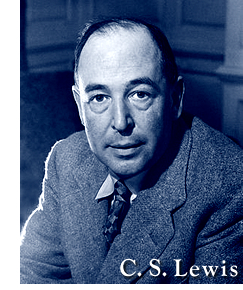
C.S. Lewis Daily – Today’s Reading


On the lord’s prayer

We believe that God forgives us our sins; but also that He will not do so unless we forgive other people their sins against us. There is no doubt about the second part of this statement. It is in the Lord’s Prayer; it was emphatically stated by our Lord. If you don’t forgive, you will not be forgiven. No part of His teaching is clearer, and there are no exceptions to it. He doesn’t say that we are to forgive other people’s sins provided they are not too frightful, or provided there are extenuating circumstances, or anything of that sort. We are to forgive them all, however spiteful, however mean, however often they are repeated. If we don’t, we shall be forgiven none of our own.

From The Weight of Glory

Compiled in Words to Live By C.S. Lewis

Charles Stanley – Avoiding Obstacles to Effective Prayer


James 1:5-8

Some of King David’s prayers are recorded in the Psalms. There we read how he praised the Lord, confessed sin, and cried out about his troubles. He also asked God to hear his prayers and not be silent.

We all want to pray effectively like David. To do so, we must avoid certain hindrances, such as:

Wavering faith. Doubts about God’s character or dependability diminish our trust in Him. Therefore, we must not allow feelings to dictate what we believe.

Wrong motives (James 4:3). Petitions motivated by selfish desires won’t receive an affirmative answer. God wants us to pray for His will to be done—not ours.

Conflict in relationships. Being resentful or argumentative with others will affect communication with the Father.

Lack of generosity (Prov. 21:13). God is displeased when we ignore people’s needs or give begrudgingly to the church. He hears us asking for a blessing yet sees us refusing to obey Him in our giving (1 Tim. 6:17-19).

Indifference (Prov. 28:9). Apathy to the Scriptures is another stumbling block. God has given us the Bible so that we might know Him and serve Him wholeheartedly. Failure to read and apply His Word consistently will diminish our ability to maintain a godly lifestyle.

It takes effort and commitment to develop a strong prayer life, but the rewards are great. If your prayers have not been answered, consider which, if any, of the above issues may need correction. Then, start by personalizing the prayers you read in the Psalms or elsewhere in God’s Word.

Bible in One Year:Isaiah 4-7

Our Daily Bread — Miracle Material


Read: Isaiah 46:1-10

Bible in a Year: Psalms 33-34; Acts 24

To whom will you compare me? Or who is my equal? —Isaiah 40:25

CNN calls a derivative of graphite a “miracle material” that could revolutionize our future. Only one atom thick, graphene is being hailed as a truly two-dimensional material in a 3-D world. One hundred times stronger than steel, it is harder than diamond, conducts electricity 1,000 times better than copper, and is more flexible than rubber.

In and of themselves, such technological advances are neither moral nor evil. But we are wise to remember the limitations of anything we make for ourselves.

Isaiah spoke to a generation who found themselves carrying into captivity gods they had made with their own hands. The prophet wanted the Israelites to see the irony of needing to care for the silver and gold idols they had crafted to inspire, help, comfort, and protect them.

What was true of Israel holds true for us as well. Nothing we have made or bought for ourselves can meet the needs of our heart. Only God, who has been carrying us “from the womb” (Isa. 46:3-4), can carry us into the future. —Mart DeHaan

Father, thank You for the miracle of relationship with You. Help us not to rely on our own efforts, strength, or possessions but instead sense Your loving care for us.

An idol is anything that takes God’s rightful place.

INSIGHT: Isaiah assured the discouraged Jewish nation in exile in Babylon that God would come to their rescue and punish their enemies (Isa. 40-55). The Babylonian conquerors and their gods (represented by their chief deity, Bel, and his son Nebo) would be defeated and destroyed (46:1-2). Unlike these false gods, who were crafted by human hands and were incapable of protecting or saving anyone (vv. 6-7), God asserted that He alone was God and there was none like Him (v. 9). He reminded His people that He had faithfully cared for them since birth (vv. 3-4) and He alone had the power to save them (v. 10).

Ravi Zacharias Ministry –  Faith and the Whole Picture


I’ve been trying to avoid using the word ‘faith’ recently. It just doesn’t get the message across. ‘Faith’ is a word that’s now misused and twisted. ‘Faith’ today is what you try to use when the reasons are stacking up against what you think you ought to believe. Greg Koukl sums up the popular view of faith, “It’s religious wishful thinking, in which one squeezes out spiritual hope by intense acts of sheer will. People of ‘faith’ believe the impossible. People of ‘faith’ believe that which is contrary to fact. People of ‘faith’ believe that which is contrary to evidence. People of ‘faith’ ignore reality.” It shouldn’t therefore come as a great surprise to us, that people raise their eyebrows when ‘faith’ in Christ is mentioned. Is it strange that they seem to prefer what seems like reason over insanity?

It’s interesting that the Bible doesn’t overemphasize the individual elements of the whole picture of faith, like we so often do. But what does the Bible say about faith? Is it what Simon Peter demonstrates when he climbs out of the boat and walks over the water towards Jesus? Or is it what Thomas has after he has put his hand in Jesus’s side? Interestingly, biblical faith isn’t believing against the evidence. Instead, faith is a kind of knowing that results in action. The clearest definition comes from Hebrews 11:1. This verse says, “Faith is the assurance of things hoped for, the conviction of things not seen.” In fact, when the New Testament talks about faith positively it only uses words derived from the Greek root [pistis], which means ‘to be persuaded.’ In those verses from Hebrews, we find the words, “hope,” “assurance,” “conviction” that is, confidence. Now, what gives us this confidence?

Christian faith is not belief in the absence of evidence. It is the proper response to the evidence. Koukl explains that, “Christian faith cares about the evidence…the facts matter. You can’t have assurance for something you don’t know you’re going to get. You can only hope for it. This is why the resurrection of Jesus is so important. It gives assurance to the hope. Because of a Christian view of faith, Paul is able to say in 1 Corinthians 15 that when it comes to the resurrection, if we have only hope, but no assurance—if Jesus didn’t indeed rise from the dead in time/space history—then we are of most men to be pitied. This confidence Paul is talking about is not a confidence in a mere ‘faith’ resurrection, a mythical resurrection, a story-telling resurrection. Instead, it’s a belief in a real resurrection. If the real resurrection didn’t happen, then we’re in trouble. The Bible knows nothing of a bold leap-in-the-dark faith, a hope-against-hope faith, a faith with no evidence. Rather, if the evidence doesn’t correspond to the hope, then the faith is in vain, as even Paul has said.”

So in conclusion, faith is not a kind of religious hoping that you do in spite of the facts. In fact, faith is a kind of knowing that results in doing, a knowing that is so passionately and intelligently faithful to Jesus Christ that it will not submit to fideism, scientism, nor any other secularist attempt to divert and cauterize the human soul by hijacking knowledge.

Tom Price is an academic tutor at the Oxford Centre for Christian Apologetics and a member of the speaking team at Ravi Zacharias International Ministries in Oxford, England.

Alistair Begg – One of Them?


You were like one of them. Obadiah 11

Brotherly kindness was due from Edom to Israel in the time of need, but instead of showing kindness, the men of Esau joined with Israel’s enemies. Special stress in the sentence before us is laid upon the word you, as when Caesar cried to Brutus, “and you, Brutus.” A bad action may be all the worse because of the person who has committed it.

When we sin, who are the chosen favorites of heaven, we sin with an emphasis; ours is a crying offense because we are so peculiarly indulged. If an angel should lay his hand upon us when we are doing evil, he need not use any other rebuke than the question, “What, you? What are you doing here?” Having been gloriously forgiven, delivered, instructed, enriched, blessed, do we dare give ourselves to evil? God forbid!

A few minutes of confession may be beneficial to you, gentle reader, this morning. Have you never been like the wicked? At an evening party certain men laughed at uncleanness, and the joke was not altogether offensive to your ear – even you were as one of them. When hard things were spoken concerning the ways of God, you were bashfully silent; and so, to onlookers, you were as one of them. When worldlings were bartering in the market and driving hard bargains, were you not as one of them? When they were pursuing vanity without restraint, were you not as greedy for gain as they were? Could any difference be discerned between you and them? Is there any difference?

Here we come to close quarters. Be honest with your own soul, and make sure that you are a new creature in Christ Jesus; but when this is sure, walk carefully in case anyone should again be able to say, “You also are one of them.”1 You would not desire to share their eternal doom. Why then be like them here? Do not enter into their secret, in case you enter into their ruin. Side with the afflicted people of God, and not with the world.

1) Luke 22:58

The Family Bible Reading Plan

  • Judges 6
  • Acts 10

Devotional material is taken from “Morning and Evening,” written by C.H. Spurgeon, revised and updated by Alistair Begg.

Charles Spurgeon – Continental tour H4


Suggested Reading: Job 38:22-30

We went up the Mer de Glace on mules. I had the great satisfaction of hearing three or four avalanches come rolling down like thunder. In descending, I was alone and in front, I sat down and mused, but I soon sprang up, for I thought the avalanche was coming right on me, there was such a tremendous noise and rushing. We crossed many places where the snow, in rushing down from the top, had swept away every tree and every stone, and left nothing but the stumps of the trees, and a kind of slide from the top of the mountain to the very valley. What extraordinary works of God there are to be seen here! We have no idea of what God is. As I went among these valleys, I felt like a little creeping insect, wondering what the world could be, but having no idea of its greatness. I sank lower and lower, and growing smaller and smaller, while my soul kept crying out “Great God, how infinite art thou! What worthless worms are we!”

For meditation: (Spurgeon): If you cannot travel, remember this sweet verse:-

“But in his looks a glory stands,

The noblest labour of thine hands;”

Get a view of Christ, and you have seen more than mountains, cascades, and valleys, and seas can ever show you. Thunders may bring their sublimest uproar, and lightnings their awful glory; earth may give its beauty, and stars their brightness; but all these put together can never rival HIM;

“God in the person of his Son,

Has all his mightiest works outdone.”

Part of nos. 331-332

23 July

John MacArthur – God’s Motive for Your Inheritance


“According to His great mercy” (1 Pet. 1:3).

Every dimension of life, whether physical or spiritual, is a testimony to God’s mercy.

When God saved you and granted you an eternal inheritance, it wasn’t because you were special or more deserving of His love and grace than others. It was because He sovereignly chose to love you and extend His great mercy to you. That’s why Paul said, “God, being rich in mercy, because of His great love with which He loved us, even when we were dead in our transgressions, made us alive together with Christ (by grace you have been saved)” (Eph. 2:4-5). He “saved us, not on the basis of deeds which we have done in righteousness, but according to His mercy” (Titus 3:5).

Because of His great mercy, God addresses the pitiful condition of mankind. Unregenerate people are totally depraved, dead in trespasses, enslaved to sin, cursed to eternal damnation, unable to help themselves, and in desperate need of someone to show them mercy and compassion. That’s the good news of the gospel: God loves sinners and extends mercy to anyone willing to trust in Him.

Mercy tempers God’s justice. The Puritan writer Thomas Watson said, “Mercy sweetens all God’s other attributes . . . . When the water was bitter, and Israel could not drink, Moses cast a tree into the waters, and then they were made sweet. How bitter and dreadful were the other attributes of God, did not mercy sweeten them! Mercy sets God’s power [at] work to help us; it makes his justice become our friend; it shall avenge our quarrels” (A Body of Divinity [Edinburgh: The Banner of Truth Trust, 1978], p. 94).

The very fact that God permits us to live at all speaks of His mercy. Lamentations 3:22-23 says, “It is because of the Lord’s mercies that we are not consumed, because his compassions fail not. They are new every morning; great is thy faithfulness” (KJV).

No matter what your situation is, God’s mercy is more than sufficient for you. It “is great above the heavens” (Ps. 108:4, KJV). So be encouraged and look to Him always.

Suggestions for Prayer

Praise God for His great mercy, for by it you have received eternal life and an eternal inheritance.

For Further Study

Read Mark 10:46-52. How did Jesus’ healing ministry demonstrate God’s mercy?

Joyce Meyer – Need Some Help?


Behold, God is my helper and ally; the Lord is my upholder and is with them who uphold my life.- Psalm 54:4

There are many people who have received Jesus as their Savior and Lord who will live their Christian lives and go to heaven without ever drawing on the power of the Holy Spirit available to them, never expe¬riencing the true success God intends for them. People can be on their way to heaven, yet not enjoying the trip.

We often look at people who have wealth, position, power, fame, and consider them to be totally successful. But many people who are viewed as successful still lack good relationships, peace, joy, content¬ment, and other true blessings that are available only in the context of a personal relationship with God through Jesus Christ.

Self-sufficient people often think it is a sign of weakness to depend on God. But by drawing on the ability of the Holy Spirit, they could accomplish more in their lives than they could by working in their own strength.

There are countless things we struggle with when we could be receiving help from the Holy Spirit. Many people never find the right answers to their problems because they seek out the wrong sources for advice and counsel instead of asking the Divine Counselor who lives within them for guidance.

I encourage you to lean on God for everything, and that means little things as well as big things.

Love God Today: The only way to experience the success God intends for you is to become totally dependent on the Holy Spirit.

Campus Crusade for Christ; Bill Bright – We are His Friends


“And since, when we were his enemies, we were brought back to God by the death of His Son, what a blessing He must have for us now that we are His friends, and He is living within us!” (Romans 5:10).

Marilyn had a very poor self-image. She hated the way she looked and felt that her personality was so bad that she could never expect to have true friends. She was concerned especially about marriage. How could she ever find a man to love her since she was so unattractive (in her thinking).

I was able to help her see how much God loved her, and how great was His blessing for her as a child of God. The supernatural life-style was available to her, and she was the one to determine whether or not she would measure up, as an act of the will by faith, to what God had called and enabled her to be. Her part was simply to trust and obey Him.

With God’s help, she determined to be that kind of person, the kind of person God created her to be.

We who are Christians can see ourselves as God sees us and through the enabling of the Holy Spirit become what we are in His sight. With the eyes of love, He sees us covered with the blood of Christ, which was shed on the cross for our sins, and, as expressed in Hebrews 10, He sees us as holy, righteous and totally forgiven. He holds nothing against us. The penalty for our sins has been paid – once and for all. There is nothing which we can add.

Now we have the privilege of becoming in our experience what we are already in God’s sight.

Bible Reading: Romans 5:11-15

TODAY’S ACTION POINT: Through the enabling of the Holy Spirit, I will begin to see myself as God sees me: loved, forgiven, holy, righteous, spiritually mature, aggressive and fruitful for the glory of God. Today I will live by faith the supernatural life which is my heritage in Christ.

Presidential Prayer Team; J.R. – Grub Gratitude


In his entertaining memoir Roughing It, writer Mark Twain described the meal he received while traveling by stagecoach through the old west. “The station-keeper upended a disk of last week’s bread…and carved some slabs from it which were as good as Nicholson pavement, and tenderer. He sliced off a piece of bacon for each man, but only the experienced old hands made out to eat it, for it was condemned army bacon which the United States would not feed to its soldiers in the forts…then he poured for us a beverage which he called ‘Slum gullion,’ and it is hard to think he was not inspired when he named it. It really pretended to be tea, but there was too much dish-rag, and sand, and old bacon-rind in it to deceive the intelligent traveler.”

He provides food for those who fear him; he remembers his covenant forever.

Psalm 111:5

Though you may “say grace” before meals, it is easy to forget what a blessing it is to have plentiful and good food – a luxury far from certain in most of the world.

As you pray for America and celebrate your freedom today, take the time to express sincere and thoughtful gratitude to God for His generous and continuous provision in your life.

Recommended Reading: I Corinthians 10:23-33

Greg Laurie – God Is Looking for Intercessors


Then the Lord said, “I have seen how stubborn and rebellious these people are. Now leave me alone so my fierce anger can blaze against them, and I will destroy them. Then I will make you, Moses, into a great nation.” —Exodus 32:9–10

Moses had many frustrations with the Israelites. He had complained to God on multiple occasions about them. But when God told Moses that He was going to wipe them out, Moses pleaded with God to relent.

God never was going to wipe these people out; He was testing Moses to see whether he would learn what it meant to be an intercessor. Would Moses stand in the gap and pray for the people, or would he throw them under the bus?

In John’s gospel we find someone who faced a similar test. A desperate father whose son was at death’s door heard about Jesus, humbled himself, and bowed before the Lord, asking Him to touch his dear son. Jesus answered, “Unless you people see signs and wonders, you will by no means believe” (John 4:48 NKJV).

What kind of thing is that to say to someone with a dying child? But just as God did with Moses, Jesus was testing this man. Really, He wasn’t directing the words to the child’s father at all. He was saying them to the fickle crowds who wanted to be impressed.

The man just stood there, patiently waiting for Jesus to finish His sermon. Then he came right back to Jesus and said, “Sir, come down before my child dies!” He was an intercessor praying for his son.

Jesus told him, “Go your way; your son lives.”

He stood in the gap. He pressed on.

God is still looking for intercessors today. Sometimes we will pray for something, and we won’t get an answer right away. So we think that God is obviously saying no. But maybe God wants you to step up your game. Maybe He wants you to pray a little bit more. Maybe He wants you to not give up so easily.

Max Lucado – God’s Project


Some years ago a Rottweiler attacked our golden retriever puppy at a kennel. The animal climbed out of its run and into Molly’s and nearly killed her. I wrote a letter to the dog’s owner, urging him to put the dog to sleep. But when I showed the letter to the kennel owner, she begged me to reconsider. “What the dog did was horrible, but I’m still training him. I’m not finished with him yet.”

God would say the same about the Rottweiler who attacked you. “What he did was unacceptable, inexcusable, but I’m not finished yet.” Your enemies still figure into God’s plan. Their pulse is proof. God hasn’t given up on them. They may be out of His will, but not out of His reach. You honor God when you see them, not as His failures, but as His projects!

From Facing Your Giants

Night Light for Couples – Persistent Prayer


“They should always pray and not give up.” Luke 18:1

When I was only eight years old, I began praying for my dysfunctional family while alone in my bedroom. It still brings tears to my eyes to think that Jesus Christ was listening to me—a little child from a poor family—in those quiet moments. I had no status or influence in the community—no particular skills or talent that the Lord needed. And yet He accepted and blessed me in the years that followed. Those early prayers for a loving family, and later for a Christian husband, were answered beyond my greatest hopes and dreams.

Some of you reading this tonight, however, have also prayed unceasingly for what you believe is God’s will—yet you’ve seen no evidence that He has even heard your prayers. I know of one husband and wife who have prayed for the salvation of their children for more than twenty‐five years, with no hint of change. To those in a similar situation: I understand your discouragement. I don’t know why the Lord chooses to grant some of our petitions more quickly than others—but I do know that He honors the prayers of His righteous followers, and that we should stay on our knees before Him.

Luke 18 records the parable Jesus told about the widow who approached a judge, day after day, asking for justice against her adversary. For some time the judge refused. Finally, however, he gave in, “so that she won’t eventually wear me out with her coming!” Jesus was telling us to not give up, but to pray persistently for the desires of our hearts.

I have based my life on my belief in the power and importance of prayer. That’s why I agreed to chair the National Day of Prayer Task Force. And it is why Jim and I have made prayer the cornerstone of our marriage. Consistent prayer can also undergird and sustain your marital relationship through the years. We encourage the two of you to bow before our great, loving God—tonight and every night.

Shirley M Dobson

From Night Light For Couples, by Dr. James & Shirley Dobson

Charles Stanley – Softening Your Heart


Psalm 25

When you are continually on your face before God, seeking Him in His Word, His presence will saturate your heart, making it sensitive and teachable. Just as a marriage relationship can begin to grow cold unless proactive steps are taken daily to keep it warm, your heart can gradually harden when you aren’t seeking intimacy with God. You must also obediently—and promptly—respond to whatever He tells you to do so that your heart will stay soft and receptive. Then it won’t take much for the Lord to get your attention, and when He convicts you of sin, you will want to deal with the problem right away. This is why we must walk in the Spirit moment by moment.

If you believe that God might be leading you in a certain direction, take the time to earnestly seek His mind on the matter, and open your heart to listen to Him. Be careful about getting busy with a substitute for what He originally called you to do.

It would be tragic to work extra hard doing what you and others consider good, only to discover that your effort was expended in accomplishing something that was not God’s intention. Resisting the Lord often amounts to putting your life on the shelf, which leaves you feeling that something is missing. There is no substitute for God’s will, even when His plan might seem difficult or impossible. But when you trust Him with a cooperative heart, there is no limit to what God can do through your life. Step out in obedience today and say, “Lord, I want Your will—no matter what.”

Bible in One Year:Isaiah 1-3

Our Daily Bread — An Exchange


Read: Psalm 32

Bible in a Year: Psalms 31-32; Acts 23:16-35

I said, “I will confess my transgressions to the Lord,” and you forgave the guilt of my sin. —Psalm 32:5

Jen sat on her patio pondering a scary question: Should she write a book? She had enjoyed writing a blog and speaking in public but felt God might want her to do more. “I asked God if He wanted me to do this,” she said. She talked with Him and asked for His leading.

She began to wonder if God wanted her to write about her husband’s pornography addiction and how God was working in his life and their marriage. But then she thought that it might publicly disrespect him. So she prayed, “What if we wrote it together?” and she asked her husband Craig. He agreed.

While he didn’t say what sin he committed, King David engaged in a public conversation about his struggles. He even put them into song. “When I kept silent, my bones wasted away,” he wrote (Ps. 32:3 niv). So he said, “I will confess my transgressions to the Lord” (v. 5). Not everyone should go public with their private battles. But when David confessed his sin, he found peace and healing that inspired him to worship God.

Craig and Jen say that the process of writing their deeply personal story has brought them closer than ever. How like God, who loves to exchange our guilt, shame, and isolation for His forgiveness, courage, and community! —Tim Gustafson

Do you need to make an exchange with God of guilt for forgiveness? He is listening.

God forgives those who confess their guilt.

INSIGHT: Like many psalms, Psalm 32 was written after a time of struggle and hardship. That is why it begins with such a wonderful and comforting affirmation: “Blessed is the one . . .” (vv. 1-2 niv). But we must not overlook the path David took to be able to make that statement. David had gone through anxiety and depression while hiding his sin. The blessing came only when he acknowledged and confessed it to the Lord (v. 5).

Ravi Zacharias Ministry – Scandalous Windows


Christian theologians often speak of the “scandal of particularity” that surrounds the gospel. The absurdity of God becoming incarnate in Christ within human history is hard to escape. In other words, it is a scandal to suggest that God somehow stepped into a particular moment in time, the heavens somehow opening like a window. It is scandalous that an unknowable God should somehow become so particularly known.

The prayer of Isaiah conveyed in chapter 64 is one that boldly confronts us with this very scandal. The particularity of the moment in which God, prophet, and the people of Israel are speaking is unmistakable: “Oh that you would tear open the heavens and come down! That the mountains would quake at your presence” (64:1). This cry of longing and remembrance is one wrought out of a great and terrible history, the storied and convoluted relationship of a God called Yahweh and his chosen, wandering people. And yet, there are certainly many who, when reading these words, feel as if Isaiah has torn out their own storied and convoluted hearts and placed them upon the page: Oh that you would tear open the heavens and come nearer! Multiplying the scandal of this particular ancient longing is this Father who is as able to speak to a particular post-exilic people as He is to you and me, here and now.

Adding to this picture, Isaiah’s words strike me as those a person in Bethlehem could likely have been uttering on the night Christ was born (or you or me hundreds of years later). In the days of Mary and Joseph, Elizabeth and Zechariah, the people of Israel were living in a period of silence. It had been over four hundred years since God had spoken of a coming redeemer and his forerunner through the prophet Malachi. Malachi had called the people again to anticipate and to be prepared for the day that was coming. But in the quiet nights of four hundred years, even the faithful stumble and doubt. How long had devoted pilgrims been repeating to themselves: “From ages past no one has heard, no ear has perceived, no eye has seen any God besides you, who acts on behalf of those who wait for him” (64:4). Yet on doubt-ridden nights, the waiting was no doubt for them as wearying as it is today, the silence daunting, the longing unsilenceable, convinced it is we who are foul and repelling. “[Y]ou have hidden your face from us, and have melted us into the hand of our iniquity,” laments Isaiah (64:7).

Whether uttered aloud or groaned silently, how often our longings convey something of the same convoluted emotions—trust and fear, hope and dejection, frustration and guilt. Ours, too, are the cries of a desperate people, wrought with a sense of longing, burdened by a sense of shame. Isaiah’s next question—”How then can we be saved?”—is one we, too, might utter, at times cynically, accusingly; while other times whispered as a prayer or burdened confession (64:5).

Regardless, it is precisely here, in the darkness of post-exilic Jerusalem, in the night of God’s silence, or in the cry of one who is all too aware of the rift of sin, that the very particular cry for God to come down is met with the scandalous assurance of radical and particular belonging. Indeed, Isaiah concludes to God, “[E]ven if no one is calling your name, bestirring himself to take hold of you, because you have hidden your face from us, and melted us down by means of our iniquities, now, Yahweh, you are still our father! We are the clay, and you are our potter. All of us are the work of your hand!” (64:7-8). It is reminiscent of Bonhoeffer’s description of a mining accident and the hope of the Incarnation as the distinct sound of knocking to those trapped beneath the weight of the earth. There is someone coming whether we want him or not, and he is calling your name.

The great window of a torn-open heavens and the massive ladder of a God who descends are the expectant images that tell us the hopeful story of a God who is scandalously near—whether we want God to be near or not. Picturing this hope, our imaginations can run wild at the thought of quaking mountains, awesome deeds, and great reversals we did not expect. But so these windows and ladders are the stirring and expectant vessels of smaller and seemingly insignificant glimpses of a God among us. Even in the soul who can only partially admit that he is a wandering child is something of the radical reach of a Father’s love. In the company of a friend through cancer or the sting of death is the image of the one who is nearer than a friend.

In Isaiah’s particular cry is an invitation to pay attention to the unlikely and the unexpected in the great windows of history and the small windows of daily life. Isaiah’s particular cry is an invitation to hear the cries of those before us as well as the cries of our hearts, which may just be answered by the cry of a God who hears particularly. Indeed, how scandalous is the image of the infant Christ looking up at his young mother, his own cries joining humanity’s own? There was a particular moment in history when humanity heard God weep. And there will be a day in history when this same Christ will dry every tear from our eyes.

Jill Carattini is managing editor of A Slice of Infinity at Ravi Zacharias International Ministries in Atlanta, Georgia.

Alistair Begg – Heaven’s Marriage


I am your master. Jeremiah 3:14

Christ Jesus is joined unto His people in marriage-union. In love He espoused His Church as a chaste virgin, long before she fell under the yoke of bondage. Full of burning affection He toiled, like Jacob for Rachel, until the whole of her purchase-money had been paid; and now, having sought her by His Spirit and brought her to know and love Him, He awaits the glorious hour when their mutual bliss shall be consummated at the marriage-supper of the Lamb.

The glorious Bridegroom has not yet presented His betrothed, perfected and complete, before the Majesty of heaven; she has not yet actually entered upon the enjoyment of her dignities as His wife and queen. She is as still a wanderer in a world of woe, a dweller in the tents of Kedar;1 but she is even now the bride, the spouse of Jesus, dear to His heart, precious in His sight, written on His hands, and united with His person.

On earth He exercises toward her all the affectionate offices of Husband. He makes rich provision for her wants, pays all her debts, allows her to assume His name and to share in all His wealth. Nor will He ever act otherwise to her. The word divorce He will never mention, for He hates it. Death inevitably severs the conjugal tie between the most loving mortals, but it cannot divide the links of this immortal marriage. In heaven they marry not but are as the angels of God; yet there is this one marvelous exception to the rule, for in Heaven Christ and His Church shall celebrate their joyous nuptials.

This affinity, as it is more lasting, so is it more near than earthly marriage. The love of husband, no matter how pure and fervent, is but a faint picture of the flame that burns in the heart of Jesus. Passing all human union is that mystical cleaving unto the Church, for which Christ left His Father and became one flesh with her.

1) Psalm 120:5

The Family Bible Reading Plan

  • Judges 5
  • Acts 9

Devotional material is taken from “Morning and Evening,” written by C.H. Spurgeon, revised and updated by Alistair Begg.

Charles Spurgeon – Continental tour H3


Suggested Reading: 1 Corinthians 9:19-23

I was allowed to stand in the pulpit of John Calvin. I am not superstitious, but the first time I saw this medal bearing the venerated effigy of John Calvin I kissed it, imagining that no one saw the action. I was very greatly surprised when I received this magnificent present, which shall be passed round for your inspection. On the one side is John Calvin with his visage worn by disease and deep thought, and on the other side is a verse fully applicable to that man of God. “He endured, as seeing him who is invisible.” That is the very character of the man. That glorious man, Calvin! I preached in the cathedral. I do not think half the people understood me in the Cathedral of St. Peter’s; but they were very glad to see and join in heart with the worship in which they could not join with understanding. I did not feel very happy when I came out in full clergyman’s dress, but the request was put to me in such a beautiful way that I could have worn the Pope’s tiara, if by so doing I could preach the gospel more freely. They said,—“Our dear brother comes to us from another country. Now, when an ambassador comes from another country, he has a right to wear his own costume at Court; but, as a mark of very great esteem, he sometimes condescends to the manners of the country which he visits, and wears the Court dress.” “Well,” I said—“yes, that I will, certainly, if you do not require it, but merely ask it as a token of my Christian love. I shall feel like running in a sack, but it will be your fault.” But it was John Calvin’s cloak, and that reconciled it to me very much. I do love that man of God, suffering all his life long, enduring not only persecutions from without but a complication of disorders from within; and yet serving his Master with all his heart.

For meditation: The advice “When in Rome do as the Romans do” may lead the believer into unhealthy compromise. When in Geneva Spurgeon willingly became as a Genevan for the sake of the gospel. Does the same thought motivate us to be adaptable, without compromise, in order to win all sorts and conditions of men?

Part of nos. 331-332

22 July

John MacArthur – Praising God for Your Eternal Inheritance


“Blessed be the God and Father of our Lord Jesus Christ” (1 Pet. 1:3).

God has blessed you richly and is worthy of your praise.

The source of your eternal inheritance is God, whom Peter described in several ways. First, He is our blessed God (1 Pet. 1:3). The Greek word translated “blessed” in that verse speaks of that which is worthy of blessing, adoration, praise, or worship. Peter’s praise for God is an example for us to follow. Our God is especially worthy of our praise in light of the glorious inheritance He has granted us in His Son (v. 4).

“Father” to the Jewish people of Peter’s day was one designation for God. The most common Jewish blessings emphasized God as Creator of all things and Redeemer of His people from Egypt, but not as Father (e.g., Gen. 14:20; 24:27; Ex. 18:10). Yet now through Christ, we “have received a spirit of adoption as sons by which we cry out, ‘Abba! [Daddy!] Father!'” (Rom. 8:16).

As wonderful a reality as the fatherhood of God is, Peter’s reference was not primarily to God as our Father, but as Christ’s Father. Their unique relationship affirms Christ’s deity (cf. John 10:30-33). God is the Father of believers in a secondary sense because He has redeemed us through Christ and adopted us into His family (Gal. 4:4-6).

In referring to Christ as “our Lord Jesus Christ” (1 Pet. 1:3), Peter amplifies His redemptive work. “Lord” speaks of His sovereign rulership; “Jesus” is His name as God in human flesh; and “Christ” identifies Him as the Messiah, the anointed King.

Peter’s final description of God is seen in the pronoun “our.” He is “our Lord Jesus Christ,” a personal Lord and Savior—not some distant, impersonal deity. He created and redeemed you because He loves you and wants to be intimately involved in every aspect of your life.

What a glorious God we serve! Worship Him today as He deserves to be worshiped.

Suggestions for Prayer

Bless God, who is your Father, your Redeemer, your constant companion, and the source of your eternal inheritance.

For Further Study

Read John 4:1-26. What did Jesus say about the fatherhood of God?


