Tag Archives: faith

Our Daily Bread — Bright Lights


Bible in a Year:Judges 7–8; Luke 5:1–16

You are the light of the world.

Matthew 5:14

Today’s Scripture & Insight:Philippians 2:12–18

In the summer of 2015, a group from our church was sobered by what we saw in Mathare, one of the slums in Nairobi, Kenya. We visited a school with dirt floors, rusting metal walls, and wooden benches. But against the backdrop of extremely humble surroundings, one person stood out.

Her name was Brilliant, and the name couldn’t have fit her better. She was an elementary school teacher who possessed joy and determination that matched her mission. Colorfully dressed, her appearance and the joy with which she instructed and encouraged the children were stunning.

The bright light Brilliant brought to her surroundings resembles the way Christians in Philippi were to be positioned in their world when Paul wrote to them in the first century. Against the background of a spiritually needy world, believers in the Lord Jesus were to shine “like stars in the sky” (Philippians 2:15). Our assignment hasn’t changed. Bright lights are needed everywhere! How encouraging it is to know that through the One “who works in you to will and to act in order to fulfill his good purpose” (v. 13) believers in Jesus can sparkle in ways that fit Jesus’s description of those who follow Him. To us He still says, “You are the light of the world. . . . Let your light shine before others, that they may see your good deeds and glorify your Father in heaven” (Matthew 5:14–16).

By Arthur Jackson

Today’s Reflection

How can you reveal the light of Christ to others? What can you do to bring His joy to those who desperately need it?


http://www.odb.org

Ravi Zacharias Ministry – Resonate Gifts


There are a few poetic lines I know by memory simply because my boss is fond of repeating them. Ravi Zacharias often quotes a song titled The Lost Chord, which was penned by Adelaide Proctor and later set to music by Arthur Sullivan. It is a hymn that describes a moment of transcendence, a hint of wonder that appeared momentarily and left the narrator yearning for more. The song tells her story:

Seated one day at the organ
I was weary and ill at ease,
and my fingers wandered idly
over the noisy keys.
I know not what I was playing
or what I was dreaming then,
but I struck one chord of music
like the sound of a great “Amen.”

It flooded the crimson twilight
like the close of an angel’s psalm,
and it lay on my fevered spirit
like the touch of infinite calm.
It quieted pain and sorrow
like love overcoming strife;
it seemed the harmonious echo
of our discordant life.

It linked all perplexed meanings
into one perfect peace,
and it trembled away into silence
as if it were loathe to cease.
I have sought but I seek it vainly—
that one lost chord divine—
that came from the soul of the organ
and entered into mine.

It may be that death’s bright angel
will speak in that chord again;
it may be that only in heaven
I shall hear that grand “Amen.”

The wonder of this world is amplified by the fact that it ends, that it “trembles away into silence.” But what are these fleeting moments, which touch us with an infinite calm, and link perplexed meanings with peace? In our lost chords, something comes and vanishes. But it creates a hunger for more, a longing for something that we can almost taste, a thirst that points us to what we were ultimately made to hold and know and be. God has set eternity in our hearts, Solomon said; in moments such as these, we seem to know it.

Tellingly, Arthur Sullivan actually tried to set Proctor’s words to music for years, but he was unsuc­cessful un­til he faced the death of his brother. Painfully aware of the fragility of life, grieving the untimely death of one he dearly treasured, Sullivan was able to pen the magnificent music to words that were undoubtedly of great comfort. Through tears he looked toward a God preparing many rooms, and it quieted pain and sorrow like love overcoming strife.

Through music, his grief found expression; the possibilities in the words he loved were finally enacted for him. Love overcoming strife. This is the certain and resonating song of God in our lives: one who values creation so much that he joins it, hence, enabling possibilities, signaling signs of the kingdom, embodying new life, cultivating life’s flourishing. In his place, the very particular past in the life, death, and resurrection of Jesus meets us very presently. The vicariously human Son meets us as strength and peace for today, hope for what is to come.

The psalmist says of God, “You show me the path of life. In your presence there is fullness of joy; in your right hand are pleasures for evermore.”(1) There are few analogies in language that lend a hand in our comprehending of eternal pleasures and fullness of joy. But there are sounds and glimpses all around us, the resounding gifts of life re-made by the God who comes near even in death.


Jill Carattini is managing editor of A Slice of Infinity at Ravi Zacharias International Ministries in Atlanta, Georgia.


(1) Psalm 16:11.


http://www.rzim.org/

Joyce Meyer – Know Your Source


I am the vine; you are the branches. Whoever abides in me and I in him, he it is that bears much fruit, for apart from me you can do nothing. — John 15:5

It’s so important for us to remember that God is our Source and the key to winning life’s battles. He wants to fight our battles, but the choice is ultimately up to us. So, how do we let God fight our battles? Well, first, it means you don’t take matters into your own hands and do what you feellike doing.

For example, when someone hurts or offends me, what I feel like doing is retaliating—doing something to “make them pay” for what they did. But our way and God’s way are completely different!

We are in a spiritual battle, and it goes much deeper than what we see on the surface. That’s why knowing His Word is so incredibly important. The Bible clearly outlines God’s strategies for overcoming the enemy, and it contains His wisdom and the direction we need for every problem we face. Because knowing what God’s Word says—and then doing what it says—is the greatest weapon we have to winning life’s battles!

God’s Word shows us who we are in Christ and teaches us how to defeat the enemy through His strength. His Word has the power to renew our mind, heal our brokenness and change our lives (see Romans 12:2Hebrews 4:12). Simply put, God’s Word is our protection. We must know it, love it, obey it…and use it against the enemy when he comes against us.

Prayer Starter: Father, You are my Source and Strength. Teach me through Your Word how to depend on You completely. Help me to renew my mind daily. In Jesus’ Name, Amen.


http://www.joycemeyer.org

Campus Crusade for Christ; Bill Bright – As a Man Thinketh


“For as he thinketh in his heart, so is he…. (Proverbs 23:7, KJV).

“Every day in every way I am becoming better and better,” declared the French philosopher Emile Coue. But it is said that he committed suicide.

Positive thinking by a nonbeliever without a biblical basis is often an exercise in futility. Though I agree with the basic concept of positive thinking, so long as it is related to the Word of God, there is a difference between positive thinking and supernatural thinking. We do not think positively so that we can know Christ better; we come to know Christ better, which results in supernatural thinking. The basis of our thinking is God’s Word; supernatural thinking is based upon the attributes of God.

When a man says, “I am going to be enthusiastic, by faith, as an act of the will,” or “I am going to rejoice, by faith, as an act of the will,” he is simply drawing upon his rights as a child of God, according to the promises of God.

In supernatural thinking, we apply the promises of God, knowing with certainty that if we ask anything according to His will, He will hear and answer us.

Some well-known Christian leaders emphasize “positive thinking” and “possibility thinking.” They are men whom I admire and with whom I agree basically in this regard because the Christian life is a positive life. “As a man thinketh in his heart, so is he.”

But I prefer to use what I believe to be the more scriptural definition of the Christian life – supernatural thinking, which includes – but goes far beyond – both positive thinking and possibility thinking.

Bible Reading: Proverbs 23:1-6

TODAY’S ACTION POINT:  Today I will claim by faith a promise or promises from God’s Word which will help me to live a supernatural life.


http://www.cru.org

Max Lucado – He Still Moves Stones


Listen to Today’s Devotion

Why did God leave us one tale after another of wounded lives being restored?  It isn’t to tell us what Jesus did.  It’s to tell us what Jesus does.  Paul says in Romans 15:4, “Everything that was written in the past was written to teach us.  The Scripture gives us patience and encouragement so that we can have hope.”

Reflect on your own journey.  What was it like before you met Christ?  And share your story; not with everyone necessarily, but with someone.  Your honest portrayal of your past may be the courage for another’s future.  But don’t just depict the past.  Depict the present.  Describe his touch and the difference Jesus has made in your life.  He’s not finished with you yet!   Ah, but look how far you’ve come!  What God begins, God completes.  The God who spoke still speaks.  The God who forgave still forgives.  He still moves stones.

Read more He Still Moves Stones

For more inspirational messages please visit Max Lucado.

Home

Denison Forum – ‘Unplanned’: A movie about abortion that changes everything


If you’re like most of us, you’d rather not read another article about abortion this morning.

The subject is divisive, the debate vitriolic. If you haven’t had an abortion, if you don’t love someone who has, or if you’re not considering an abortion personally, it can be tempting to ignore the issue.

Then comes a movie that changes everything.

Startling abortion statistics

Unplanned is being released today. My wife and I were invited to attend an advance screening of the film a few weeks ago. It makes the issue of abortion so real and relevant that everyone should see the film.

Here’s what I mean.

According to Planned Parenthood, one in four American women will have an abortion by the age of forty-five. How many actual women is this?

Here are my calculations:

In other words, only 8.5 percent of the American female adult population and 4.3 percent of the entire American adult population has personally experienced an abortion.

Continue reading Denison Forum – ‘Unplanned’: A movie about abortion that changes everything

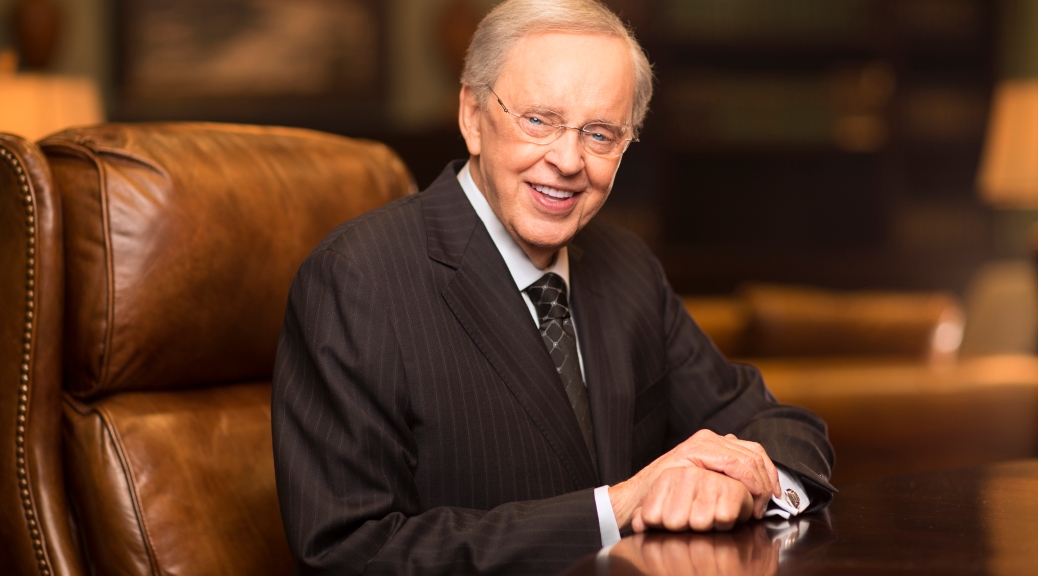
Charles Stanley – Do You Know God’s Voice?


John 10:1-5

Our perceptions of the Lord have a huge impact on how we hear His voice speak to us in His Word and through His Spirit. There are many voices calling for our attention—we need to be able to distinguish Christ’s words from all the others because He alone always speaks truth. If we listen to other voices, we’ll be led astray, and this includes our own internal voice when it perceives God inaccurately.

This is why it’s so important to make sure our image of God fits the one given in Scripture. The Bible teaches us that …

He is righteous. The Lord would never lead us to do anything sinful because doing so would contradict His nature and His Word.

He is gracious. We don’t have to worry that God is waiting to condemn or punish us. Having been saved by Christ, we live continually in His grace and kindness.

He is faithful. He always does what He says and will never abandon those who belong to Him.

He is our heavenly Father. He loves and cares for us, both by providing for our needs and by disciplining us so that we grow in godliness.

He is our Judge. All who are in Christ, however, have passed out of judgment into eternal life and need never fear condemnation (Rom. 8:1).

If our conception of the Lord is inaccurate, we may think He’s harsh, stingy, or angry with us. But there is an even greater danger if we think that God wants to satisfy all our selfish and worldly desires—that is the voice of a stranger; we should reject it and flee to our Good Shepherd.

Bible in One Year: 1 Samuel 15-16


http://www.intouch.org/

Our Daily Bread — Surrounded by God


Bible in a Year:Judges 4–6; Luke 4:31–44

As the mountains surround Jerusalem, so the Lordsurrounds his people both now and for evermore.

Psalm 125:2

Today’s Scripture & Insight:Psalm 125:1–5

In a busy airport, a young mother struggled alone. Her toddler was in full tantrum mode—screaming, kicking, and refusing to board their plane. Overwhelmed and heavily pregnant, the burdened young mother finally gave up, sinking to the floor in frustration, covering her face, and starting to sob.

Suddenly six or seven women travelers, all strangers, formed a circle around the young mother and her child—sharing snacks, water, gentle hugs, and even a nursery song. Their loving circle calmed the mother and child, who then boarded their plane. The other women returned to their seats, not needing to discuss what they had done, but knowing their support had strengthened a young mother exactly when she needed it.

This illustrates a beautiful truth from Psalm 125. “As the mountains surround Jerusalem,” says verse 2, “so the Lord surrounds his people.” The image reminds us how the bustling city of Jerusalem is, indeed, flanked by surrounding hills—among them the Mount of Olives, Mount Zion, and Mount Moriah.

In this same way, God surrounds His people—supporting and standing guard over our souls “both now and for evermore.” Thus, on tough days, look up, “unto the hills,” as the psalmist puts it (Psalm 121:1 kjv). God awaits with strong help, steady hope, and everlasting love.

By Patricia Raybon

Today’s Reflection

How have you sensed the Lord surrounding you with His love? Who can you share His love with today?


http://www.odb.org

Ravi Zacharias Ministry – The Cross or the Cookie Jar


As a young man growing up in Scotland, like many others, I was exposed to Christianity and the symbol of the cross. It was a point of confusion, a mystery at best, and at worst, an object of scorn and disgust. I did not know what it meant or why religious people thought it important, but I knew I wanted nothing to do with it.

Alister McGrath, Professor of theology, ministry, and education at King’s College, London, writes: “Just as God has humbled himself in making himself known ‘in the humility and shame of the cross,’ we must humble ourselves if we are to encounter him. We must humble ourselves by being prepared to be told where to look to find God, rather than trusting in our own insights and speculative abilities. In effect, we are forced to turn our eyes from contemplation of where we would like to see God revealed, and to turn them instead upon a place which is not of our choosing, but which is given to us.”(1)

In other words, nothing in history, experience, or knowledge can prepare the world for God’s means of drawing near. At the cross, something we are not expecting is revealed, something scandalous unveiled, something we could never have articulated or asked for is given to us. Philip Yancey, the renowned author, offers more on this: “Here at the cross is the man who loves his enemies, the man whose righteousness is greater than that of the Pharisees, who being rich became poor, who gives his robe to those who take his cloak, who prays for those who deceitfully use him. The cross is not a detour or a hurdle on the way to Kingdom, nor is it even the way to the Kingdom; it is the Kingdom come.”(2)

Christian or not, I think many of us have significantly distorted ideas about the purpose and meaning of the cross. When many people think of “sin” or the human condition before God, what comes to mind is perhaps something like the image of a child caught with his hands in the cookie jar. Such an image might well be understood as disobedience or maybe even naughtiness, but is it really that important? It is certainly not bad enough to justify extreme reactions. As a result of such a metaphor, our moral reflections on sin tend to foster incredulity or disgust. The response seems totally out of proportion to the offense.

But let us shift the metaphor. Supposing one day you go for a routine medical examination, and they discover you have a deadly virus. You did not do anything. You were not necessarily responsible, but you were exposed, and infected. You feel the injustice of it all, you are afraid, you are angry, but most of all, you are seriously sick. You are dying and you need help.

Whatever the cross and the gospel are about, it is not a slap on the hands for kids refusing to heed the rules of the cookie jar. It is not mere advice to get you to clean up your life and morals. It is not mere ideas to inform you about what it takes to be nice. It is restoration and recreation, a physician’s mediation; it is about human flourishing and discovering life.

The cross may seem an extreme and offensive measure to the problem of sin and death and sickness—but what if it is the very cure that is needed? McGrath describes our options at the cross of Christ. “Either God is not present at all in this situation, or else God is present in a remarkable and paradoxical way. To affirm that God is indeed present in this situation is to close the door to one way of thinking about God and to open the way to another—for the cross marks the end of a particularwayof thinking about God.”(3) Shockingly, thoroughly, scandalously, the cross depicts a God who throws himself upon sin and sickness to bring the hope of rescue miraculously near.

Some find it shocking, some overwhelming, some almost too good to be true. It is, however, for all.

Stuart McAllister is regional director for the Americas at Ravi Zacharias International Ministries in Atlanta, Georgia.

(1) Alister McGrath, The Mystery of the Cross, (Grand Rapids: Zondervan, 1988), 104.
(2) Philip Yancey, The Jesus I Never Knew, (Grand Rapids: Zondervan, 1995), 196.
(3) Alister McGrath, The Mystery of the Cross, (Grand Rapids: Zondervan, 1988), 103.


http://www.rzim.org/

Joyce Meyer – The Warrior Within


“But you will receive power when the Holy Spirit has come upon you, and you will be my witnesses in Jerusalem and in all Judea and Samaria, and to the end of the earth.” — Acts 1:8

Are you fighting a battle right now? I believe we all have battles to fight at different times in life. The good news is, as followers of Christ, we are not fighting alone. We have a Mighty Warrior and His host of angels on our side. That makes it a totally different fight. The Holy Spirit, our personal Warrior, is in each of us, and He is our Helper.

When we accept Christ as our Savior, the Holy Spirit comes to dwell inside of us—God literally gives each one of us a little piece of Himself. So, what does this mean? It means that all of God’s power, strength, comfort, creativity, and help are available to us at all times.

God never meant for us to live weak, powerless lives—always “running on fumes” and barely getting by. His will is for us to be “more than conquerors” (see Romans 8:37). And through His Spirit, He wants to provide us with the strength and ability we need to succeed in life and lead us through each battle we face.

The enemy will try to stop us from moving forward in the things of God. And he will use any strategy against you, things such as discouragement and distraction. But remember that Almighty God is on your side no matter what you’re facing, and He has a plan for you to be victorious.

Prayer Starter: Father, I believe You lead, guide and direct me every day. Help me to be the strong warrior you have called me to be and follow the plan you have for me to win the battle. In Jesus’ Name, Amen.


http://www.joycemeyer.org

Campus Crusade for Christ; Bill Bright – The Holy Spirit Enlightens


“But the man who isn’t a Christian can’t understand and can’t accept these thoughts from God, which the Holy Spirit teaches us. They sound foolish to him, because only those who have the Holy Spirit within them can understand what the Holy Spirit means. Others just can’t take it in” (1 Corinthians 2:14).

Though I have been a Christian for more than 35 years, I still have much to learn. I am far from perfect. And I do not ever expect to be – in this lifetime. Only our Lord Jesus Christ was without sin.

However, I know from experience that the more time I spend with God through reading, studying, memorizing and meditating on His Word, with the help of the Holy Spirit to interpret God’s truth to me, the more I become like our Lord Jesus Christ, God’s Son.

When you spend time daily in Bible reading and study, your life will change. After reading God’s Word consistently for several months, you will be amazed by the things God has done in your life.

How can we understand the Bible? How can we experience its life-changing influence in our lives?

The non-believer and the disobedient, carnal Christian have difficulty in understanding the Bible because they must rely on their human faculties in their attempt to understand things that are of a spiritual nature in God’s Word.

As Paul writes to the church at Corinth,” …the natural man receiveth not the things of the Spirit of God: for they are foolishness unto him: neither can he know them, because they are spiritually discerned” (KJV).

Bible Reading: I Corinthians 2:9-13

TODAY’S ACTION POINT:  Since the Holy Spirit inspired holy men of old to record God’s Word, the Bible, I will ask Him to interpret God’s message to my own life, and today I will encourage someone, or several others, to depend upon the Holy Spirit and to join me in living a supernatural life for the glory of God.


http://www.cru.org

Max Lucado – When Being Good Isn’t Good Enough


Listen to Today’s Devotion

Paul writes in Romans 3:10, “There is no one who always does what is right, not even one.”  And he adds, “All have sinned and are not good enough for God’s glory.”  Then how do you go to heaven?

The two criminals being crucified with Jesus mocked him.  But Jesus prayed, “Father, forgive them, because they don’t know what they are doing.”  Then one thief began to defend Jesus saying, “We are punished justly, getting what we deserve, but this man has done nothing wrong.” The core of the gospel in one sentence—through the mouth of a crook.  Then the thief asks, “Jesus, remember me when you come into your kingdom.”

What right does he have to beg for forgiveness?  The same right you have.  We, like the thief, hear the voice of grace.  Today you will be with me in my kingdom.

Read more He Still Moves Stones

For more inspirational messages please visit Max Lucado.


Home

Denison Forum – British Airways jet lands in wrong country on purpose

When you’re in London, Düsseldorf, Germany, is 357 miles to the east. Edinburgh, Scotland, is 403 miles to the north. If you’re flying to Düsseldorf, you’d not expect your airplane to land in Edinburgh.

But that’s just what happened Monday.

The aviation company operating British Airways Flight 3271 filed the wrong flight plan, sending the jet to Edinburgh. The pilots, cabin crew, and air traffic controllers thus assumed the plane was supposed to go to Scotland.

When they landed, confusion ensued. Flight attendants asked for a show of hands of passengers who thought they were traveling to Düsseldorf. When every hand went up, they realized that every passenger was now in the wrong place.

We can be both sincere and wrong

There are many ways to be sincerely wrong today.

Same-sex marriage supporters are convinced that biblical, moral, or religious liberty objections are irrelevant or wrong. The same is true with abortion advocates. Their claims seem simple and persuasive: “Everyone should be able to love who they love,” “A woman is the best person to decide what to do with her own body,” and so on.

But as British Airways proved, it’s possible to be both sincere and wrong. Another topic making today’s news illustrates the same point.

Underwater hotels and restaurants are being built for the ultra-wealthy. One submerged hotel offers an underwater villa for $50,000 a night. “Billionaire bunkers” are being constructed around the world, enabling the wealthy to survive nuclear attacks and other catastrophes.

But all is not well on the wealth frontier.

As Bloomberg reports, deceptive billing for private and corporate jet users is escalating. The Department of Education has opened a probe into the $25 million college admissions cheating scandal in which fifty people were criminally charged. And the ex-wife of a man who won a $273 million jackpot does not want him back, telling reporters: “I have morals.”

Another story on our theme is being reported by the New York Times: “Human Contact Is Now a Luxury Good.” The wealthy are discovering that human engagement is vital to their well-being. They are spending on experiences such as luxury travel and dining rather than technology and other goods.

Clearly, possessions cannot produce happiness, even when we sincerely think they will.

Three dead ends to avoid

No one thinks in a vacuum.

You and I inherited our Western culture from the Greeks and Romans. Centuries before Christ, their worldview divided the soul from the body, determining that the former is positive while the latter is evil. This belief led centuries of Christians to venerate monastic withdrawal from the world as the highest form of spirituality.

A second version of cultural engagement we inherited from our cultural ancestors splits religion from the “real world.” As we noted yesterday, transactional religion teaches us to placate the gods so they will do what we want. “Go to church on Sunday so God will bless you on Monday” is the formula today. We are therefore told to live in two worlds: the religious and the secular, valuing each as we wish.

A third view is rising quickly in our culture: there is no soul or supernatural reality, so we are free to focus on the material. According to a new survey, 23.1 percent of the American population has “no religion,” slightly more than Catholics (23 percent) and evangelicals (22.5 percent).

Withdrawing from the culture, separating faith from life, or ignoring the supernatural—none of these is the way God intends us to relate to our world.

“The righteous will flourish like a green leaf”

I am studying Proverbs these days and found chapter 11 especially relevant to today’s conversation. Solomon, one of the wealthiest men of all time, warned us: “Riches do not profit in the day of wrath, but righteousness delivers from death” (v. 4). He added: “Whoever trusts in his riches will fall, but the righteous will flourish like a green leaf” (v. 28).

If we are not to trust in material wealth, how are we to relate to the material world?

  • We are to be righteous so that God can bless the fallen culture through us: “By the blessing of the upright a city is exalted, but by the mouth of the wicked it is overthrown” (v. 11).
  • We are to offer biblical wisdom to others: “Where there is no guidance, a people falls” (v. 14).
  • We are to be generous with all: “One gives freely, yet grows all the richer; another withholds what he should give, and only suffers want” (v. 24).

In short, we are to use the material for the spiritual, the temporal for the eternal.

Those we know who do not know Jesus may well be sincere in their unbiblical beliefs, from denying God’s existence to rejecting Jesus’ divinity to questioning the truth or relevance of Scripture. The fact that they are sincerely wrong means they don’t know how wrong they are.

And it means they need our witness and ministry much more than they think they do.

Torn up Bibles and lost souls

Ben Malcolmson played on the 2006 University of Southern California football team that won the Rose Bowl. He told Fox News yesterday, “From the moment I made the team, I knew God had a purpose for me there. I started pressing into that mission from day one.”

But he didn’t know how hard it would be to help his teammates meet his Lord.

He started a Bible study, but no one came. He began a prayer group, but no one joined him. He then placed Bibles at each of his teammates’ lockers on Christmas Eve, days before the team was to play in the Rose Bowl. When he returned to the locker room two days later, he found the Bibles torn up and shredded.

“It was the culmination of a season full of discouragement,” he said.

Nearly four years later, working as an assistant to Coach Pete Carroll of the Seattle Seahawks, an old friend connected with Malcolmson. He told him that one of the Bibles he gave his fellow players had been picked up and read by a teammate who accepted Christ three days before passing away.

Malcolmson concluded, “Even when I couldn’t see [God’s] hand in the moment, he truly was at work all along.”

How will you follow his example today?


Denison Forum

Charles Stanley –Hearing God Accurately


Mark 4:9-13

In reading the Word of God, we may think we come with no preconceptions, but that’s not really the case. Just as the expectations of the disciples affected how they heard and understood Jesus’ teaching, so too our perception of God’s voice is shaped by our experiences.

Let’s consider how some of the people and events in our life helped define how we hear God speak through His Word and His Spirit.

Our Parents. Our self-concept is shaped early by the way we were treated in childhood, and that in turn affects how we perceive our heavenly Father and His love for us.

Our Teachers. If we had a teacher who was a harsh taskmaster, we may have a similar image of the Lord. But if our instructor was kind and patient, then God may seem more approachable to us.

Our Friends. Having one loyal friend can help us view the Lord in that same light. But if we’ve ever been betrayed, seeds of doubt about God’s faithfulness may be sown in our minds and affect how we hear Him speak in His Word.

Our Experiences. Whether our life has been pleasant and free of turmoil or painful and traumatic, everything we’ve experienced has shaped our understanding of the way God treats us.

This is why it’s critical to let the Word of God rather than our experiences become the filter through which we see life and understand the Lord. Before picking up the Bible or praying, let’s ask God to strip away any misconceptions so we can hear Him accurately.

Bible in One Year: 1 Samuel 13-14


http://www.intouch.org/

Our Daily Bread — Remembering My Father


Bible in a Year:Judges 1–3; Luke 4:1–30

Whatever you do, work at it with all your heart, as working for the Lord.

Colossians 3:23

Today’s Scripture & Insight:Job 38:1–11

When I remember my dad, I picture him best outdoors hammering or gardening or downstairs working in his cluttered workroom, stuffed with fascinating tools and gadgets. His hands were always busy at a task or project—sometimes building (a garage or a deck or a birdhouse), sometimes locksmithing, and sometimes designing jewelry and stained-glass art.

Remembering my dad prompts me to think of my heavenly Father and Creator, who has always been busy at work. In the beginning, “[God] laid the earth’s foundations . . . [and] marked off its dimensions . . . while the morning stars sang together and all the angels shouted for joy” (Job 38:4–7). Everything He created was a work of art, a masterpiece. He designed a breathtakingly beautiful world and pronounced it “very good” (Genesis 1:31).

That includes you and me. God designed us in intimate and intricate detail (Psalm 139:13–16); and He entrusted us with and instilled in us (His image bearers) the goal and desire to work, which includes ruling and caring for the Earth and its creatures (Genesis 1:26–28; 2:15). No matter the work we do—in our job or in our leisure—God empowers and gives us what we need to work wholeheartedly for Him.

In everything we do, may we do it to please Him.

By Alyson Kieda

Today’s Reflection

What has God worked out in your life recently? How does it change your view of even mundane tasks to see them as opportunities to serve and honor Him?


http://www.odb.org

Ravi Zacharias Ministry – Redirection


A special report on This American Life follows the lives of several people currently living what they unequivocally call “Plan B.” Host Ira Glass expounds his thoughts on an informal poll and a seemingly universal human reality. He asked a room of hundred people to think back to the beginning of adulthood when they were first formulating a plan for their lives. He called it Plan A, “the fate you were sure fate had in store.” He then asked those who were still following this plan to raise their hands. Only one person confessed she was still living Plan A; she was 23 years old.

It seems a trend among us: There is the thing we plan on doing with our lives, and then there’s the thing we end up doing, which becomes our life. Here, Christians often have a nuanced view of Plan A: it is God’s plan they are trying to follow. But there is still very much an initial picture of what this plan, and subsequently our lives, will—or should—look like. God’s best becomes something like a divine Plan A, while any other plan leads the follower to something else.

But akin to the statistics in the room with Mr. Glass, it is likely that the number of Christians who find themselves living the plan they first imagined are also few and far between. For some, this is seen as good news. Many discover along their carefully laid out plans that they are doing far more leading than being led, and God seems to mercifully redirect them. “Many are the plans in a human heart,” the proverb reads, “but it is the Lord’s purpose that prevails.” Others find the journey with God from Plan A to B to C to D an interesting part of the pilgrimage itself, maybe even the gift of following an unfathomable creator, a creator who we discover is far more creative than we! Yet there are still many others who walk away from Plan A thoroughly defeated. Regretful turns and drastic detours may now be behind us, but the deviation from the journey is writ large before us. We have failed at Plan A, the plan we believed divinely inspired; God’s best is now merely God’s backup. Wrestling with the guilt or disappointment of such a deviation can be found with or without the Christian spin.

When life turns out to be something you didn’t plan on, when missteps and unplanned detours loom with guilt, a life of alternative routes and broken roads seems certain. It is easy to wonder in despair what it means to have missed God’s best, and to believe that somehow God must now step back into the picture, disappointed, and find a secondary plan for your life. I find it equally despairing to encounter those who maintain they are living God’s Plan A and smugly insist it was their own virtue that accomplished it. How significant, then, are Christ’s words to his despairing disciples after an evening of mistakes, both to those of us who have ever felt the sting of falling off track and to those of us who want a pat on the back for getting it right. To these men who repeatedly failed to follow his instructions, Jesus simply said, “Rise, let us be going.”

Author and humanitarian Naomi Zacharias once told me that following God is something like following the directions on a GPS system. At the beginning of the journey, the plan for arriving at the desired destination is before you. But when you accidentally turn left or are forced to take an unforeseen detour, the computer doesn’t scold you. It doesn’t force you to start over or announce that you can no longer make it to your final destination because you have ruined the route. In fact, it doesn’t even make you feel guilty. The end still in mind, it simply adjusts the plan from that point onward, as if the “wrong” turn was a part of the journey all along. The destination has not changed. Plan A may have switched to Plan B in your mind, but the outcome remains the goal, not self-invented praise for the journey.

Although Blaise Pascal was a mathematician who saw the created world as one of equations and precision, he saw the God who created this world as one who is innately personal, guiding, and accommodating. “[T]he God of the Christians is a God of love and consolation,” Pascal wrote in his Pensees, “a God who fills the soul and heart of those whom he possesses, a God who makes them inwardly aware of their wretchedness and his infinite mercy, who united himself with them in the depths of their soul…who makes them incapable of having any other end but him.“(1)

What if the God you followed is well aware that there are turns in life we can never undo, choices we cannot erase, and detours we were never expecting? Some of these turns God no doubt laments with us. But God is never deterred by our position. Plan B may be a phrase you use to punish yourself or others, but the God of Christianity is not any farther away in what you are calling Plan A than Plan A or C or D. In fact, God sees only one plan: “For I know the plans I have for you,” declares the LORD to a struggling people, “plans to prosper you and not to harm you, plans to give you hope and a future.” In this, God is ever at work redirecting your steps, while the end—God alone—remains the same. Despite broken roads and secondary paths, God is forever showing that the destination is unchanging, and in the end, “God’s best” comes into our lives not because of our own careful steps toward the divine but because of divine steps toward us. The God of the Christian is one whose plans are all-encompassing, whose arm is not too short to save, who goes the extra mile, and who takes every detour without mention, that even one will not remain lost.

Jill Carattini is managing editor of A Slice of Infinity writer at Ravi Zacharias International Ministries in Atlanta, Georgia.


(1) Blaise Pascal, Pensees (London: Peguin Books, 1993), 141-142, emphasis mine.


http://www.rzim.org/

Joyce Meyer – Expect God to Do Something Great


What then shall we say to these things? If God is for us, who can be against us? — Romans 8:31What then shall we say to these things? If God is for us, who can be against us?

The Lord wants us to expect Him to do great things for us. He wants us to watch with an attitude of faith to see how He will come through on our behalf and help us defeat the enemy.

As Jehoshaphat and the people of Judah followed God’s battle plan, the Lord delivered them from their enemies. How did they defeat their enemies? When Jehoshaphat appointed singers to sing and praise at the head of Judah’s army, the Lord defeated their enemies by confusing them so much that they killed each other! (See 2 Chronicles 20:22.)

When you are faced with a battle and you don’t know what to do, I encourage you to follow the battle plan God gave Jehoshaphat and the people of Judah.

First, seek God for encouragement and guidance. Next, acknowledge your dependence on Him to help you. Third, take your position—worshiping God and giving Him thanks. Finally, watch and expect God to move on your behalf.

Remember, the battle belongs to the Lord! As you seek and worship Him, you will not only be in a position to win your battles, but also to enjoy your walk with Him and your everyday life more than ever.

Prayer Starter: Thank You, Father, that You give me the strength to keep fighting. I am grateful that You are always with me and that You fight my battles with me. In Your Name I pray, Amen.


http://www.joycemeyer.org

Campus Crusade for Christ; Bill Bright – We Are Each a Part


“Each of us is a part of the one body of Christ. Some of us are Jews, some are Gentiles, some are slaves and some are free. But the Holy Spirit has fitted us all together into one body. We have been baptized into Christ’s body by the one Spirit, and have all been given that same Holy Spirit” (1 Corinthians 12:13).

I find that most Christians agree that the Holy Spirit baptizes the believer into the Body of Christ, as this verse affirms. But the unity of the body is divided here on earth by many differences of interpretation concerning a “second baptism,” speaking in tongues and “Spirit-filling.”

Most believers agree, however, that we are commanded to live holy lives and the Holy Spirit supernaturally makes this human impossibility a reality. He does this when we totally submit ourselves to His indwelling love and power. Or, to use a metaphor of the apostle Paul, “For all of you who were baptized into Christ have clothed yourselves in Christ” (Galatians 3:27, NAS).

In His high-priestly prayer, our Lord prayed that we who are believers may be one with Him, even as He and the Father were one. We are commanded to love one another. “By this shall all men know that ye are my disciples, if ye have love one to another” (John 13:35, KJV). No one who criticizes his brother is Spirit-filled. No one who sows discord among his brethren is Spirit-filled. In fact, the test as to whether or not we are controlled by the Holy Spirit is how we love our brothers.

It is my joy and privilege to know most of the famous Christian leaders of our time, men and women whom God is using in a mighty way to help change our nation and some other nations of the world with the gospel. How I rejoice at every good report that comes to me of God’s blessing upon their lives and ministries. In fact, it is one way of checking my own walk with Christ. If I were jealous and critical, fault-finding and sowing discord, I would know that I am not walking in the light as God is in the light.

Bible Reading: I Corinthians 12:14-20

TODAY’S ACTION POINT:  I will not allow my interpretation of the Spirit-filled life to separate me from other members of the body of Christ, but will love them and seek to promote unity among believers.


http://www.cru.org

Max Lucado – Understanding Death


Listen to Today’s Devotion

By the time Jesus arrived in Bethany, Lazarus had been dead for four days.  John 11:21 says that Martha confronted Jesus, saying, “Lord, if you had been here, my brother would not have died.”  Hurt and disappointment.  When we face death, our definition of God is challenged.  Which, in turn, challenges our faith.

Why is it that we interpret the presence of death as the absence of God?  As a result, we get angry or resentful when God doesn’t answer our prayers for healing. It’s distressing that this view of God has no place for death.  Jesus didn’t raise the dead for the sake of the dead, but for the sake of the living.  The same voice that awakened the corpse of Lazarus will speak again.  The earth and the sea will give up their dead.  There will be no more death.  Jesus made sure of that.

Read more He Still Moves Stones

For more inspirational messages please visit Max Lucado.

Home

Denison Forum – Conflict in Israel and a Jewish cemetery desecrated in Massachusetts: Why should we have hope for our culture?

Following a day of relative calm, the Israeli military carried out a series of strikes on Hamas targets in the Gaza Strip overnight. According to the army, the strikes were in response to incendiary balloons and rockets fired earlier toward Israel by Hamas.

In other news, police say fifty-nine gravestones at a Jewish cemetery in Massachusetts were defaced with anti-Semitic graffiti. Two of the gravestones had been knocked over. The stones were desecrated with swastikas and phrases including “Hitler was right.”

According to experts, America is experiencing a resurgence of anti-Semitism that is unprecedented in the last half-century. Anti-Semitism is also rising sharply across Europe: France reported a 74 percent increase in the number of offenses against Jews, while the number in Germany surged by more than 60 percent.

As I noted yesterday, discrimination is also escalating in America against those who affirm biblical morality. We are certainly not facing aggression on a level experienced by Jews around the world, but Jesus’ prediction for his followers is nonetheless true for us: “The world has hated them because they are not of the world, just as I am not of the world” (John 17:14).

It would be easy to abandon hope for our culture. But it’s always too soon to give up on the future because it’s always too soon to give up on God.

“Let this cup pass from me”

I led a study tour of Israel last week. On Thursday, our group spent a very moving hour in the Garden of Gethsemane. I read from Matthew 26, where Jesus pled with his Father, “If it be possible, let this cup pass from me” (v. 39).

Why did our Savior seek so fervently to avoid the “cup” that awaited him?

Continue reading Denison Forum – Conflict in Israel and a Jewish cemetery desecrated in Massachusetts: Why should we have hope for our culture?