Tag Archives: holy spirit

Charles Stanley – How to Listen to God


Isaiah 50:4-5

Most of us are better at talking than listening, but communicating with the Lord involves both. God intends for His children to hear His voice. His goal is the same today as it has always been—to be certain that we comprehend the truth about Him, to conform us to His ways, and to equip us for communicating His truth to others.

One of the main instruments God uses to speak to modern-day believers is His Word. For this reason, studying the Bible is more important than getting breakfast, lunch, and dinner each day. We can easily live on one daily meal, but we cannot survive in this wicked world unless we feast on Scripture. The result of regular consumption of God’s Word is a discerning spirit. When a Christian shares something the Lord has laid on his heart to tell us, our spirit verifies the truth of the message.

Regardless of how loudly God speaks, we won’t hear unless listening is a priority. We must ask the Lord to teach us to hear and then work at having a quiet attitude. An internal “receiver” tuned to the Father develops only through committed prayer, meditation, and practice at listening. In addition, we need a spirit of submission to obey His commands.

God’s goal for us is a lifestyle of sensitivity so we can hear Him in noisy or calm situations. Listening is a critical skill for ensuring that our hearts are open to divine guidance in every circumstance. In addition to the nourishment provided by our feast of Scripture, there is also “dessert”—recognition of our Father’s voice.

Bible in One Year: Jeremiah 49-50

Our Daily Bread — Turn It Off


Read: Mark 6:30-32,45-47

Bible in a Year: Psalms 113-115; 1 Corinthians 6

Come aside by yourselves to a deserted place and rest a while. —Mark 6:31

When our kids were young, we took a trip to northern Wisconsin to visit my grandparents. They didn’t get very good reception on their television, but TV wasn’t much of a priority with them. After I had seen our son Scott fiddling with the TV set for a while, he asked with frustration, “What do you do if you can get only one channel and you don’t like what’s on that one?”

“Try turning it off, ” I said with a smile. Not exactly the advice he was hoping for. It’s even more difficult to do now, especially when there are so many devices that entertain, inform, and distract us.

Sometimes we do need to just turn it all off and rest our minds for a little while; we simply need to “unplug.” Jesus often drew aside for a time—especially when He wanted to take time to pray (Matt. 14:13). He encouraged the disciples to step away as well—even for a brief time (Mark 6:31). That kind of solitude and time for reflection is beneficial for each of us. In those moments we are able to draw near to God.

Follow the example and wisdom of Christ. Get away by yourself and “rest a while.” It will be good for your body, mind, and spirit. —Cindy Hess Kasper

Lord, help me to seek those things which are from above. I want to turn off all that distracts me and draw near to You.Share this prayer from our Facebook page with your friends. facebook.com/ourdailybread

Turning down the volume of life allows you to listen carefully to God.

INSIGHT: Mark 6 is a pivotal chapter in this gospel account. It begins with the people of Jesus’ hometown of Nazareth rejecting Him (vv. 1-6). This experience is compounded by the death of John the Baptist (vv. 14-29)—a person Jesus loved and honored (Matt. 11:1-11; 14:1-13). These moments of difficulty, however, did not impede Jesus’ continuing work. The chapter concludes with two of His most notable miracles: His feeding of the multitude (vv. 30-44) and His walking on water (vv. 45-56). Great heartache and power combine to make this chapter so strategic in Mark’s gospel. Bill Crowder


Alistair Begg – No Weeping in Heaven


I will rejoice in Jerusalem and be glad in my people; no more shall be heared in it the sound of weeping and the cry of distress. Isaiah 65:19

In heaven the glorified do not weep, for all outward causes of grief are gone. There are no broken friendships, nor unfulfilled longings in heaven. Poverty, famine, danger, persecution, and slander are unknown there. There will be no pain to distress us, no anxious thoughts of death or bereavement to sadden. Those there do not weep, for they are perfectly sanctified. No evil heart of unbelief prompts them to depart from the living God; they are faultless before His throne and fully conformed to His image. Well might they stop mourning since they have stopped sinning. They do not weep, because all fear of change is past. They know that they are eternally secure. Sin is shut out, and they are shut in. They are safe in a city that will never be taken; they bask in a sun that shall never set; they drink of a river that will never run dry; they pluck fruit from a tree that will never wither. Countless cycles may revolve, but eternity will not be exhausted; and while eternity endures, their immortality and blessedness shall endure with it.

They are forever with the Lord. They do not weep because every desire is fulfilled. They cannot wish for anything that they do not have. Eye and ear, heart and hand, judgment, imagination, hope, desire and will-all the faculties are completely satisfied; and although our present ideas of what God has prepared for those who love him are imperfect, still we know by the revelation of the Spirit that the saints above are supremely blessed. The joy of Christ, which is an infinite fullness of delight, is in them. They bathe themselves in the bottomless, shoreless sea of infinite blessing. That same joyful rest awaits us. It may not be too long before the weeping willow is exchanged for the palm-branch of victory, and sorrow’s tears will be transformed into the pearls of everlasting bliss. “Therefore encourage one other with these words.”1

1) 1 Thessalonians 4:18

The Family Bible Reading Plan

  • 1 Samuel 15
  • Romans 13

Devotional material is taken from “Morning and Evening,” written by C.H. Spurgeon, revised and updated by Alistair Begg.

John MacArthur – Maintaining Doctrinal Purity


“[Love] rejoices with the truth” (1 Cor. 13:6).

Love never compromises God’s Word.

Paul has just given us a list of things that love does not do: become jealous, brag, act arrogantly or unbecomingly, seek its own, become provoked, keep track of wrongs suffered, or rejoice in unrighteousness. Now he comes to the first of five things love does: “[Love] rejoices with the truth” (v. 6).

The contrast in verse 6 is between love’s inability to rejoice in unrighteousness and its joy when truth prevails. “Truth” refers to God’s Word, which is the standard of righteousness. Paul could have said, “Love doesn’t rejoice in unrighteousness but rejoices with righteousness,” but he went beyond the mere deeds of righteousness and addressed its standard and motive.

Love won’t tolerate false doctrine or sinful behavior, but it rejoices when God’s Word is taught and obeyed. The psalmist said, “O how I love Thy law! It is my meditation all the day. Thy commandments make me wiser than my enemies. . . . I have more insight than all my teachers . . . . I understand more than the aged. . . . I have restrained my feet from every evil way, that I may keep Thy word. I have not turned aside from Thine ordinances, for Thou Thyself hast taught me. How sweet are Thy words to my taste! Yes, sweeter than honey to my mouth! From Thy precepts I get understanding; therefore I hate every false way” (Ps. 119:97-104). That’s the testimony of one who rejoices in the truth.

Often Christians are willing to compromise sound doctrine for the sake of loving others. They believe that doctrinal precision is somehow divisive and unloving. But Scripture says, “This is love, that we walk according to His commandments. . . . For many deceivers have gone out into the world, those who do not acknowledge Jesus Christ as coming in the flesh. This is the deceiver and the antichrist. Watch yourselves, that you might not lose what we have accomplished, but that you may receive a full reward” (2 John 6-8).

Biblical love always operates within the parameters of God’s Word and spiritual discernment (Phil. 1:9-10). The most loving thing you can do is live according to biblical truth. Doctrinal compromise simply diminishes the quality of love and plays into the hands of the evil one.

Suggestions for Prayer

Ask God for wisdom and discernment to keep your love within its proper biblical bounds.

For Further Study

Memorize Philippians 1:9-11.

Joyce Meyer – Too Much Talk Leads to Sin


In a multitude of words transgression is not lacking, but he who restrains his lips is prudent. — Proverbs 10:19

We all need to learn how to establish and maintain boundaries with our words. Proverbs 10:19 in the NIV states, When words are many, sin is not absent, but he who holds his tongue is wise. In other words, people who talk a lot will often find themselves in trouble.

Because our words carry so much power, we need to learn to say only what needs to be said. Almost every time we have a problem with somebody, it’s over something we have said or that person said. There may be other elements—something somebody is doing, for example—but the main cause of the argument most of the time is something that was said. If we learn to speak only what is wise and necessary, then we will have much more peace.

Power Thought: I speak words of wisdom that are filled with God’s power.

Campus Crusade for Christ; Bill Bright – He Does Glorious Things 


“Thank the Lord for all the glorious things He does; proclaim them to the nations. Sing His praises and tell everyone about His miracles” (Psalm 105:1,2).

How long has it been since you have taken time to meditate upon and list all the glorious things the Lord has done for you and how long has it been since you have shared them with your family, your neighbors or even strangers? Of course, your list may differ from that of your neighbors or of fellow believers in your local church or from mine. But among those glorious things that He has done are: He has, by His Holy Spirit, drawn us all to Himself; He has created within our hearts a hunger for His love; and through faith in Christ we have become His children; our sins have been forgiven and we now have the joy of living every moment of every day in vital union and fellowship with Him – all this with the certainty that we shall spend eternity with Him. Mere human words could never express the gratitude that wells up within one’s heart at the thought of God’s great gifts. The word “alleluia” is universal and is spoken in all languages as an expression of praise to God and no word is more appropriate.

My personal list of blessings also includes a godly, praying mother who lived her Christianity and dedicated me to Christ before I was born, and followed me – as she did all her other children – with her daily prayers; a wonderful father who, I had the privilege of introducing to Christ after I became a Christian and seeing him begin to experience that peace which comes from knowing Christ; a godly wife who loves the Lord Jesus Christ and shares my commitment to serve Him as our Lord and Master whatever the cost, wherever He leads us.

I thank Him for sons who love Him, and who have committed their lives to serving Him wherever He leads; a daughter-in-law who shares the love and conviction of her husband; a marvelous staff of thousands of godly men and women who seek first the kingdom of God and his righteousness; and hundreds of thousands of co-laborers who undergird me and this ministry.

The glorious things that He has done are without number. Yes, we must sing His praises and tell everyone about His miracles. We must proclaim the glorious things he has done to all the nations!

Bible Reading: Psalm 113

TODAY’S ACTION POINT: Today I will meditate upon the glorious things God has done for me and I will sing His praises and tell everyone about His miracles. I will give my prayer and financial support to helping proclaim His greatness to all the nations of the earth.


Presidential Prayer Team; J.K. – Good Judgment


Prudent, shrewd and discerning – choice words to describe Abigail found in I Samuel 25. Her husband Nabal was a wicked and harsh man. Soon-to-be-king David had fled to the wilderness to escape from jealous King Saul. He and his 600 followers helped Nabal’s shepherds care for 3,000 sheep and 1,000 goats so that none were lost to predator or robber. The men asked only for some food in return, but Nabal insulted them and sent them away with nothing. David’s first instinct was to fight and kill the foolish man.

Blessed be the Lord who has avenged the insult I received…and has kept back his servant from wrongdoing.

I Samuel 25:39

But Abigail intervened. Her good judgment helped David avoid undermining his reputation. She understood a difficult situation and made an immediate and wise decision to help David reject revenge. Her discernment helped her speak to David intelligently and persuasively. Abigail was an expert peacemaker – and eventually won David’s favor and love (I Samuel 25:40-42).

Like Abigail, be wise in your dealings with others. Seek to be discerning in your responses to those who might oppose you. Then intercede for this nation’s leaders – that they would govern with prudence.

Recommended Reading: I Samuel 25:13, 23-35

Night Light for Couples – Words You Can Count On


“I have put my hope in your laws.” Psalm 119:43

Just as you must trust the Lord in all you do, so also should you trust His Word.

Years ago, shortly after I (jcd) left my positions at Children’s Hospital of Los Angeles and the University of Southern California School of Medicine, I discovered that my frequent travel and speaking engagements on behalf of families were taking a toll on my own family. As I wrestled with this problem, I came across a Scripture passage that showed me the solution. Moses was exhausted from solving all his people’s disputes. Jethro, his father‐in‐law, recognized this and advised Moses to appoint others to help, saying “If you do this, and God so commands, you will be able to stand the strain, and all these people will go home satisfied” (Exodus 18:23). The next day I canceled all but two of my speaking appointments for the following year and determined to stay home. That decision led to the start of Focus on the Family and a film series seen by 80 million people!

The wisdom contained in the world’s leading bestseller—the Bible— has sustained husbands and wives for thousands of years. Wouldn’t it be foolish to trust God, yet ignore His Word?

Just between us…

  • What Scripture verse has made the biggest difference in your life?
  • Do you feel that we spend enough time reading the Bible as a couple?
  • How can we allocate more time for reading the Word?
  • Which book of the Bible would you like to study next?
  • How can we get even more out of our Scripture reading?\

Dear God, thank You so much for giving us a trustworthy, written guide to show us how we should live. Help us to increasingly rely on the Bible for Your wisdom for our lives. Amen.

From Night Light For Couples, by Dr. James & Shirley Dobson

Charles Stanley – Motivated for Commitment


Daniel 1:1-20

Although Daniel was living as a captive in Babylon, he resolved in his heart not to violate God’s laws. He never wavered from his commitment. What motivated this young man to live out such a pledge?

Devotion to God. Daniel’s deep love for the Lord made him determined not to defile himself with the king’s food and wine. Dedication to God means choosing to be set apart to love, worship, and obey only Him. It amounts to declaring, “Lord, every part of me is Yours. I want what You want.” When we keep Jesus Christ as the focus, our hearts will overflow with thanksgiving, and we will be motivated to stand firm.

Clear direction. If Daniel refused outright to eat the king’s food, he would likely have lost his life. So he and his friends turned to God for direction. The Lord gave them the wisdom they needed to develop an alternate plan—and then also provided them with the courage to ask permission to follow His way. Notice there were no loud demands, no arguments, and no rebellious spirit. Their behavior was marked by trust in God and dependence on Him. Jesus promises that the Holy Spirit will give us guidance and understanding (John 16:13). When we listen closely to His direction, we will be motivated to act.

Through daily prayer and meditation upon God’s Word, we can keep our eyes centered on Christ, our ears attuned to His voice, and our hearts motivated to obey. We’ll be able to make the same wholehearted commitment Daniel did. So ask yourself, How eager am I to do God’s will?

Bible in One Year: Jeremiah 46-48

Alistair Begg – Longing For Christ


I adjure you, O daughters of Jerusalem, if you find my beloved, that you tell him I am sick with love. Song of Solomon 5:8

Such is the language of the believer panting after present fellowship with Jesus-he is sick for his Lord. Gracious souls are never perfectly at ease except when they are in close communion with Christ; for when they are away from Him, they lose their peace. The nearer to Him, the nearer to the perfect calm of heaven; the nearer to Him, the fuller the heart is, not only of peace, but of life and vigor and joy, for these all depend on constant fellowship with Jesus. What the sun is to the day, what the moon is to the night, what the dew is to the flower, such is Jesus Christ to us. What bread is to the hungry, clothing to the naked, the shadow of a great rock to the traveler in a sun-scorched land, such is Jesus Christ to us. And therefore if we are not consciously one with Him, we should not be surprised if our spirit cries in the words of the Song, “I adjure you, O daughters of Jerusalem, if you find my beloved, that you tell him I am sick with love.”

This earnest longing after Jesus has a blessing attending it: “Blessed are those who hunger and thirst for righteousness”;1 and therefore, supremely blessed are those who thirst for the Righteous One. Blessed is that hunger, since it comes from God: If I do not experience the blessedness of being filled, I will come again in my emptiness and eagerness until I am filled with Christ. If I do not yet feed on Jesus, I will continue to hunger and thirst after Him. There is a hallowedness about that hunger, since it sparkles among the beatitudes of our Lord. But the blessing involves a promise. These hungry ones “shall be satisfied” with what they desire. If in this way Christ causes us to long after Him, He will certainly satisfy those longings; and when He does come to us, as come He will, how sweet it will be!

1) Matthew 5:6

The Family Bible Reading Plan

  • 1 Samuel 14
  • Romans 12

Devotional material is taken from “Morning and Evening,” written by C.H. Spurgeon, revised and updated by Alistair Begg.

Charles Spurgeon – As thy days, so shall thy strength be


“As thy days, so shall thy strength be.” Deuteronomy 33:25

Suggested Further Reading: Psalm 91

What a varying promise it is! I do not mean that the promise varies, but adapts itself to all our changes. “As thy days, so shall thy strength be.” Here is a fine sunshiny morning; all the world is laughing; everything looks glad; the birds are singing, the trees seem to be all alive with music. “My strength shall be as my day is,” says the pilgrim. Ah! Pilgrim, there is a little black cloud gathering. Soon it increases; the flash of lightning wounds the heaven, and it begins to bleed in showers. Pilgrim, “As thy days, so shall thy strength be.” The birds have done singing, and the world has done laughing; but “as thy days, so shall thy strength be.” Now the dark night comes on, and another day approaches—a day of tempest, and whirlwind, and storm. Dost thou tremble, pilgrim?—“As thy days, so shall thy strength be.” “But there are robbers in the wood.”—“As thy days so shall thy strength be.” “But there are lions which devour me” “As thy days, so shall thy strength be.” “But there are rivers; how shall I swim them?” Here is a boat to carry thee over; “As thy days, so shall thy strength be.” “But there are fires: how shall I pass through them?” Here is the garment that will protect thee: “As thy days, so shall thy strength be.” “But there are arrows that fly by day.” Here is thy shield: “As thy days, so shall thy strength be.” “But there is the pestilence that walketh in darkness.” Here is thy antidote: “As thy days, so shall thy strength be.” Wherever you may be, and whatever trouble awaits you, “As thy days, so shall thy strength be.” Children of God, cannot you say that this has been true hitherto? I can.

For meditation: We often spoil our lives by trying to live tomorrow today. God does not promise to provide for the needs of his people before they have them (Matthew 6:34; 1 Corinthians 10:13).

Sermon no. 210

22 August (1858)

John MacArthur – Rejoicing in Righteousness


“[Love] does not rejoice in unrighteousness” (1 Cor. 13:6).

Love never justifies sin.

To most Christians, the idea of rejoicing over unrighteousness is repulsive because it suggests enjoying deliberate, wanton sin. We’ve seen sin’s tragic effects on mankind and know how it offends God, so how could we ever rejoice in such a thing? But rejoicing in unrighteousness includes any attempt to justify sin in your own life or the lives of others, so it can be a very subtle thing.

There are many ways to rejoice in unrighteousness. One is to exchange right for wrong. That’s what the prophet Isaiah condemned when saying, “Woe to those who call evil good, and good evil; who substitute darkness for light and light for darkness” (Isa. 5:20). In our society, for example, virtues such as virginity and fidelity in marriage are branded as old-fashioned and prudish, while promiscuity and adultery are heralded as contemporary and liberating. Social pressures can cause undiscerning or weak Christians to yield to confused and godless moral standards.

Another way to rejoice in unrighteousness is to be undiscerning about what you expose yourself to. The humanistic philosophies and blatant immorality of our society can quickly dull your moral and spiritual senses. Therefore you must carefully evaluate what you read, view, and listen to. Do they denigrate God and exalt violence, crime, immorality, slander, and the like? If so, and you find them entertaining, you are rejoicing in sin.

Some believers actually do rejoice over the sins of others. That’s what Jonah did when he refused to preach at Nineveh for fear the people would repent and God would forgive them. He preferred to see them continue in sin rather than reconcile with God. That attitude is not so far removed from today as we’d like to think. I’ve known professing Christians who wanted out of their marriages so badly that they hoped their spouses would commit adultery so they would feel justified in getting a divorce. What a convoluted perspective!

True love cannot rejoice in sin, but glories whenever righteousness prevails. If you love God, the things that please Him will please you, and the things that offend Him will offend you. Let that always be your standard.

Suggestions for Prayer

Ask God for the grace to live a life that pleases Him.

For Further Study

Read Matthew 18:15-20, carefully noting the procedure for confronting a sinning Christian.

Joyce Meyer – It’s Okay to Walk with a Limp


And as he passed Penuel [Peniel], the sun rose upon him and he was limping because of his thigh. – Genesis 32:31

Jacob was a man with many weaknesses, yet he pressed on with God and was determined to receive God’s blessing. God likes that kind of determination. He actually told Jacob in Genesis 32:28 that he (Jacob) had contended with God and man, and that God would be glorified in him. God can always be glorified through people who will not allow their personal weaknesses to stop Him from flowing through them.

In order for God to flow through us, we must first come face-to-face with the fact that we have weaknesses—and then we must determine not to let them bother us. Our imperfections will not stop God from working through us unless we let them. We need to accept ourselves completely—weaknesses and all—because God does.

God will bless all of us even though we limp (are not perfect in all of our behavior). Remember, God looks at our hearts. If we have faith in Him and hearts that long to obey Him and bring Him glory, then He will work wonders through us in spite of our weaknesses.

Love Yourself Today: Don’t let your weaknesses stop you. Be determined to let God work through you in spite of them.

Campus Crusade for Christ; Bill Bright – Put God to the Test 


“Oh, put God to the test and see how kind He is! See for yourself the way His mercies shower down on all who trust in Him” (Psalm 34:8).

Sam wanted to receive Christ, but he was reluctant. Somehow, he just could not bring himself to make that necessary commitment of the will to exercise his faith and receive Christ. Because of unfortunate experiences in his youth, he had a distorted view of the goodness of God.

I encouraged Him to make his commitment, but he still hesitated. Finally, I turned to that wonderful promise of our Scripture for today and asked him to read it. As he read, the Holy Spirit gave him the faith to believe that he could trust God.

Put God to the test. Taste and see how good and kind He is. Sam discovered that day, and for the rest of his life, the faithfulness and the goodness and the kindness of God.

Do you have reservations, uncertainties, fears about the trustworthiness of God? If so, I encourage you to place your trust in Him, and you will find, as millions have found, and as I have found, that God is good, faithful, and true.

Similarly, you and I can put God to the test and find a friendly haven in the midst of enemy territory. More important, perhaps, is the certainty we can have that God does hear and answer our prayers – in situations where He and He alone knows the end from the beginning and can provide deliverance.

How vital to the supernatural life to know that we have immediate access to the God of the universe, the very one who alone can guarantee victory and deliverance.

Bible Reading: I Peter 2:1-5

TODAY’S ACTION POINT: Realizing that, as a believer, I am constantly in “enemy territory,” I will trust God and encourage others to trust Him moment by moment for deliverance, for I know that He is just and kind and good. He is a loving, heavenly Father whom I can trust. I will encourage others to put God to the test and see how kind He is, to discover for themselves His mercies that He showers on all who place their trust in Him.

Presidential Prayer Team; A.W. – Boldly Be


There are many well-known poets who spoke of boldness. “Fortune befriends the bold,” said Emily Dickinson; “Boldness be my friend,” said William Shakespeare; “Freedom lies in being bold,” said Robert Frost. Many consider these poets bold with their words. Perhaps boldness is what made them famous and their words so impactful and lasting.

So he went in and out among them at Jerusalem, preaching boldly in the name of the Lord.

Acts 9:28

Today’s verse tells of Paul, who also spoke and acted boldly. Paul, formerly Saul, was a fierce persecutor of Christians until he met Jesus on the road to Damascus and had a life-changing experience. His encounter eventually resulted in him writing 14 letters that became part of the Bible and going on at least five missionary journeys where he led countless others to Christ.

Have you had an encounter with Jesus that has changed you? Do you want your words about Christ to make a difference? Speak and act boldly as God’s Word commands, and pray for boldness as did Paul and the other disciples. Then you’ll be impactful and lasting in your family, community and nation – to His glory!

Recommended Reading: Acts 4:1-4, 8-13

Greg Laurie – What is the Best Posture for Prayer?


“Pray in the Spirit at all times and on every occasion. Stay alert and be persistent in your prayers for all believers everywhere.”—Ephesians 6:18

I heard the story of three ministers debating the best posture for prayer.

One minister shared that he felt that the key was in the hands. He always held his hands together and pointed them upward as a symbolic form of worship.

Another minister suggested that real prayer was conducted on one’s knees. That was the only way to really pray.

The third said that they were both wrong. The only position in which to pray was to lie on the floor, flat on your face.

As they were talking, a telephone repairman had been working in the background, listening. Finally, he couldn’t take it any longer. He blurted out, “For me, the most powerful prayer I ever prayed was while I was dangling upside down by my heels from a power pole, 40 feet above the ground!”

Listen: the posture of prayer is not the most important thing.

The main thing is to pray!

  • You can pray in any position, at anytime, anywhere.
  • You can pray publically, privately, verbally, silently.
  • You can be kneeling, standing, sitting, lying down, or even driving.
  • You can pray with your eyes open or closed! (Ever make eye contact with someone while praying?)

Sometimes we think that perhaps the Lord will hear our prayers more readily if they are prayed in a church building. But that is not necessarily true.

  • Daniel prayed in a lion’s den.
  • David prayed in a field.
  • Peter prayed on and under the water.
  • Jonah’s prayer was heard from the belly of a whale!

It doesn’t matter where you are . . . Just pray!

Night Light for Couples – The Wheelbarrow of Trust


“I will trust and not be afraid.” Isaiah 12:2

Most of us struggle to “be anxious for nothing,” but we can learn to rely on God if we know the difference between faith and trust.

Let’s imagine you’re near the beautiful but dangerous Niagara Falls. A circus performer has strung a rope across the falls with the intention of pushing a wheelbarrow from one side to the other. Just before stepping on the rope, he asks you, “Do you think I can accomplish this feat?”

His reputation has preceded him, so you reply that you believe he can walk the tightrope. In other words, you have faith that he will succeed. Then he says, “If you really believe I can do it, how about getting in the wheelbarrow and crossing with me?” Accepting his invitation would be an example of remarkable trust.

It isn’t difficult for some people to believe that God is capable of performing mighty deeds. After all, He created the entire universe. Trust, however, requires that we depend on Him to keep His promises to us even when there is no proof that He will. It’s not so easy to get into that wheelbarrow and put our lives in His care. Yet it’s a step we must take if we are to “be anxious for nothing” in all of life’s circumstances.

Just between us…

  • Do you find it easy or difficult to trust God?
  • Have you ever felt that the Lord has abandoned you, or that He hasn’t heard your prayer? How did you deal with that feeling?
  • How could putting our trust in God help our marriage?

Dear Lord, You alone are worthy of our complete trust. But responding to You in trust is often difficult. Teach us to trust You—to lean on Your strength, to count on Your goodness, and to expect Your faithfulness always. Amen.

From Night Light For Couples, by Dr. James & Shirley Dobson

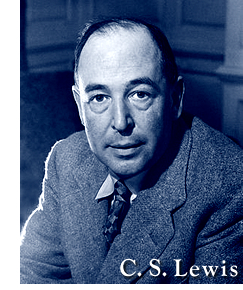
C.S. Lewis Daily – Today’s Reading – On time


[The demon Screwtape writes:] The humans live in time but our Enemy destines them to eternity. He therefore, I believe, wants them to attend chiefly to two things, to eternity itself, and to that point of time which they call the Present. For the Present is the point at which time touches eternity. Of the present moment, and of it only, humans have an experience analogous to the experience which our Enemy has of reality as a whole; in it alone freedom and actuality are offered them. He would therefore have them continually concerned either with eternity (which means being concerned with Him) or with the Present—either meditating on their eternal union with, or separation from, Himself, or else obeying the present voice of conscience, bearing the present cross, receiving the present grace, giving thanks for the present pleasure.

Our business is to get them away from the eternal, and from the Present. With this in view, we sometimes tempt a human (say a widow or a scholar) to live in the Past. But this is of limited value, for they have some real knowledge of the past and it has a determinate nature and, to that extent, resembles eternity. It is far better to make them live in the Future. Biological necessity makes all their passions point in that direction already, so that thought about the Future inflames hope and fear. Also, it is unknown to them, so that in making them think about it we make them think of unrealities. In a word, the Future is, of all things, the thing least like eternity. It is the most completely temporal part of time—for the Past is frozen and no longer flows, and the Present is all lit up with eternal rays.

From The Screwtape Letters

Compiled in Words to Live By

Streams in the Desert for Kids – High and Low


Luke 4:1–2

Have you ever noticed that after you’ve had a “high” day like a birthday or passing a test or a vacation, sometimes you have a “low” day? On high days everything seems to be going great and you are happy. On low days nothing seems to go right. You are grumpy and sad and you may not even know why.

Everyone has high days and low days. Jesus had a wonderful day when he was baptized by his cousin John in the Jordan River. The Bible says he was full of the Holy Spirit, and being full of the Holy Spirit makes you feel great. But immediately, the same Holy Spirit led him out into the desert, and there the Devil came to visit him and to tempt him. It was an awful time for Jesus. So how did he get through it? He responded to every temptation by quoting God’s Word, and the Devil finally gave up and left him.

So when a high day comes your way, don’t be surprised if a low day follows. And when the low day comes, believe that it will go away in time. Hide God’s Word in your heart for those low days, and use it to help you resist the temptations that you face.

Dear Lord, I love high days, and I wish they could stay all the time. I hate low days, but help me to realize they won’t last forever. Help me to hide your Word in my heart for those low days. Amen


Charles Stanley – Perseverance in Prayer


Romans 12:10-13

As a pastor, I speak with many people about their spiritual journey. From these interactions, I know that most individuals are not satisfied with their prayer life. They lack anticipation and faith, and time with God often feels empty. This is, no doubt, why many Christians pray so little and so indifferently.

Yesterday, we began looking at obstacles to a healthy prayer life. Let’s explore one more hindrance to vibrant communication between God and us: impatience.

Most of us have at some point brought fervent supplication to Jesus but did not see the desired results. Unfortunately, humans are by nature faint-hearted. We get weary of asking when all we perceive is silence. Remember, though, that God does not act on our cue like some cosmic bellhop. If we could see the big picture as He can, we’d gladly wait for His way and timing.

The truth is, I believe we benefit by not receiving all that we request. To understand this concept is a sign of spiritual maturity. When we are thoroughly satisfied with the Lord’s presence, our relationship with Him will flourish, even when we don’t get everything we ask. When that’s the case, we grasp what prayer is—not a long list of wants, but regular communication in a relationship.

Barriers can develop if we persistently cry out to God and nothing changes. But by continuing to pray, we’ll both sense God’s presence beyond the “wall” and find peace, joy, and awesome glimpses of His glory. This will be completely satisfying, even if He never gives exactly what was requested.

Bible in One Year: Jeremiah 41-45