Tag Archives: holy spirit

Our Daily Bread — Continuing with Christ


Read: 1 Kings 19:19-21

Bible in a Year: Psalms 107-109; 1 Corinthians 4

Whoever loses his life for My sake will find it. —Matthew 16:25

As a child, my favorite week of the summer was the one I spent at a Christian youth camp. At the end of the week, I’d sit elbow-to-elbow with friends in front of an enormous bonfire. There, we would share what we had learned about God and the Bible and sing. One song I still remember focused on deciding to follow Jesus. The chorus contained an important phrase: “no turning back.”

When Elisha decided to follow the prophet Elijah, Elisha did something incredible that made it difficult, impossible really, for him to return to his prior occupation of farming. After going home and having a farewell banquet, Elisha “took a yoke of oxen and slaughtered them” (1 Kings 19:21). Leaving his way of life, he burned up his plowing equipment. He roasted the freshly butchered meat over the blaze and fed everyone present. Then “[Elisha] arose and followed Elijah, and became his servant” (v. 21).

Giving ourselves to God, who deserves our devotion, often comes with a price. At times, it means making difficult decisions about relationships, finances, and living arrangements. However, nothing compares with what we gain when we continue on with Christ. Jesus said, “Whoever desires to save his life will lose it, but whoever loses his life for My sake will find it” (Matt. 16:25). —Jennifer Benson Schuldt

Father, help me to see if there’s something You want me to leave behind to follow You completely.

Jesus is looking for fulltime followers.

INSIGHT: It is often difficult to understand the significance of some events in Scripture without a knowledge of the cultural context. Today’s story of Elijah and Elisha is an example of this. Two elements that carry significance are the placing of the cloak on Elisha (19:19 niv) and the slaughtering of the oxen to feed the people (v. 21). The placing of the cloak represented a significant calling. A person could not simply choose to be Elijah’s apprentice; that person was chosen and it was a great honor. The slaughtering of the oxen, the burning of the plowing equipment, and the feeding of the people signified a deliberate leaving of Elisha’s former life to follow Elijah. It was a public statement of Elisha’s new identity. J.R. Hudberg

Ravi Zacharias Ministry – Good Sleep


The Christian Vision Project was an initiative that began three consecutive years with a question. The aim was to stir thought, creativity, and faithfulness within the Christian church around the subjects of culture, mission, and gospel. In 2006, project leaders asked a group of Christian thinkers how followers of Christ could be countercultural for the common good. Their answers ranged from becoming our own fiercest critics to experiencing life at the margins, from choosing wisely what to overlook and what to belabor to packing up and moving into the city.

But today one answer in particular comes to mind. To the question of counterculturalism for the common good, professor and author Lauren Winner proposed: More sleep. She quickly admitted the curious nature of her retort. “Surely one could come up with something more other-directed, more sacrificial, less self-serving,” she wrote. Still, she carefully reasoned through the forces of culture that insist we give up an hour of sleep here, or two hours there—the grinding schedules, the unnerving stock piles of e-mail in need of responses, the early-taught/early-learned push for more and more productivity. Thus, Winner concluded, “It’s not just that a countercultural embrace of sleep bears witness to values higher than ‘the cares of this world, the deceitfulness of riches, and the desire for other things.’ A night of good sleep—a week, or month, or year of good sleep—also testifies to the basic Christian story of Creation. We are creatures, with bodies that are finite and contingent.”(1) We are also bodies living within a culture generally terrified of aging, uncomfortable with death, and desperate for our accomplishments to distract us. “The unarguable demands that our bodies make for sleep are a good reminder that we are mere creatures,” Winner concludes. “[I]t is God and God alone who ‘neither slumbers nor sleeps.’”(2)

It is indeed a strange part of the Christian story, the countercultural proclamation that the distinction matters deeply—that our humanity’s particular condition is as vital to who we are as God’s identity is to God. In fact the most momentous part of the Christian story—Christ has died, Christ has risen, Christ will come again—is often confessed liturgically beside the humble beginnings of creatureliness. The ashes of Ash Wednesday starkly remind us of the dust we came from and the dust to which we will return—as Christ’s own. Foreheads are marked with a bold and ashen cross of dust, recalling both our history and our future, invoking repentance, inciting stares. Marked with his cross, we are Christ’s: pilgrims on a journey that proclaims death and suffering, life and resurrection all at once. The journey through the light and darkness of Christ’s life is for those made in dust who will return to dust, those willing to trace the breath that began all of life to the place where Christ breathed his last. It is a journey that expends everything within us. To pick up the cross and follow him is to be reminded at every step that we are mere creatures, and he has come near our humanity to show us what that word originally meant.

To be sure, there are times when we may feel like the disciples in the garden of Gethsemane, weary with sorrow, our own eyes heavy with sleep. Current world events and worn-out cries of anguish only deepen this wearied exhaustion. Arguably, this innate instinct is fitting. “[T]o sleep, long and soundly,” says Winner, “is to place our trust not in our own strength and hard work, but in him without whom we labor in vain.”(3) We cannot carry all that Christ carried anymore than we can carry the sorrows we now see all around us. Yet, where we are quite prone to exchange sound and trusting sleep for fretful slumber, helpless sorrow, or apathetic fatigue, Christ emerges through his own weariness to wake us. “Are you still sleeping and taking your rest? See, the hour is at hand.”(4)

The way toward the cross is one that will show both the Christian and a world of contrasting beliefs that we are all finite, fragile creatures in need of a guide, in need of sleep, in need of one who can bear far more than we are able. The cross will also show that the one we desperately need truly exists. While his friends slept, Jesus stepped closer toward betrayal and agony, going all the way to his death, so that one day he could wake us for good: “Wake up, O sleeper, rise from the dead, and Christ will shine on you!”(5)

Jill Carattini is managing editor of A Slice of Infinity at Ravi Zacharias International Ministries in Atlanta, Georgia.

(1) Lauren Winner, Books & Culture, January/February 2006, Vol. 12, No. 1, Page 7.

(2) Ibid.

(3) Ibid.

(4) Matthew 26:45.

(5) Ephesians 5:14.

Alistair Begg – God’s Comfort For Those Who Comfort Others


Whoever brings blessing will be enriched, and one who waters will himself be watered. Proverbs 11:25

We are taught here the great lesson that to get, we must give; to accumulate, we must scatter; to make ourselves happy, we must make others happy; and in order to become spiritually vigorous, we must seek the spiritual good of others. In watering others, we are ourselves watered. How? Our efforts to be useful bring out our powers for usefulness. We have latent talents and unused gifts that become apparent by exercise. Our strength for work is even hidden from ourselves until we take our stand and fight the Lord’s battles or climb the mountains of difficulty. We do not know what tender sympathies we possess until we try to dry the widow’s tears and soothe the orphan’s grief.

We often find in attempting to teach others that we gain instruction for ourselves. What gracious lessons some of us have learned in visiting the sick! We went to teach the Scriptures, and we came away blushing that our knowledge of them was so poor. In our conversation with humble saints, we are taught the way of God more perfectly for ourselves and get a deeper insight into divine truth. So watering others makes us humble. We discover how much grace there is where we had not looked for it, and how much the humble saint may outstrip us in knowledge.

Our own comfort is also increased by working for others. We endeavor to cheer them, and the consolation gladdens our own heart. Consider the two men in the snow-one massaged the other’s limbs to keep him from dying, and in doing so kept his own blood circulating and saved his own life. Remember the poor widow who supplied the prophet’s needs from her own meager resources, and from that day she never experienced need again. Give, and it will be given to you-good measure, pressed down, shaken together and running over.

The Family Bible Reading Plan

  • 1 Samuel 13
  • Romans 11

Devotional material is taken from “Morning and Evening,” written by C.H. Spurgeon, revised and updated by Alistair Begg.

Charles Spurgeon – Faith illustrated


“For the which cause I also suffer these things: nevertheless I am not ashamed: for I know whom I have believed, and am persuaded that he is able to keep that which I have committed unto him against that day.” 2 Timothy 1:12

Suggested Further Reading: Hebrews 6:13-20

Joab, when he fled from the sword of Solomon, laid hold on the horns of the altar, thinking that surely when he had laid hold on the altar he was safe. His was vain confidence, for he was dragged from the horns of the altar and slain. But if you can lay hold on the horns of the altar of God, even Christ, you are most surely safe, and no sword of vengeance can ever reach you. I saw the other day a remarkable picture, which I shall use as an illustration of the way of salvation by faith in Jesus. An offender had committed a crime for which he must die, but it was in the olden time when churches were considered to be sanctuaries in which criminals might hide themselves and so escape. See the transgressor—he rushes towards the church, the guards pursue him with their drawn swords, all athirst for his blood, they pursue him even to the church door. He rushes up the steps, and just as they are about to overtake him and hew him in pieces on the threshhold of the church, out comes the Bishop, and holding up the crucifix he cries, “Back, back! Stain not the precincts of God’s house with blood! Stand back!” and the guards at once respect the emblem and stand back, while the poor fugitive hides himself behind the robes of the priest. It is even so with Christ. The guilty sinner flies to the cross—flies straight away to Jesus, and though Justice pursues him, Christ lifts up his wounded hands and cries to Justice, “Stand back! Stand back! I shelter this sinner; in the secret place of my tabernacle do I hide him; I will not suffer him to perish, for he puts his trust in me.”

For meditation: We should never be ashamed to be seen hiding behind Jesus (Mark 8:38).

Sermon no. 271
21 August (1859)

John MacArthur – Forgiving Others


“[Love] does not take into account a wrong suffered” (1 Cor. 13:5).

If you love someone, you won’t keep a record of their offenses.

It is reported that when the Moravian missionaries first went to the Eskimos, they couldn’t find a word in their language for forgiveness. They had to combine a series of shorter words into one compound word: Issumagijoujungnainermik. Although the word appears formidable, its meaning is beautiful, being translated: “Not-being-able-to-think-about-it-anymore.”

You’ve probably noticed that unforgiving people usually have good memories. Some can hold a grudge for a lifetime. But love never keeps a record of wrongs committed against it. It forgives and is unable to think about them anymore.

That’s what Paul had in mind when he said that love “does not take into account a wrong suffered” (1 Cor. 13:5). The Greek word translated “take into account” was used of the entries in a bookkeeper’s ledger. Those entries helped the bookkeeper remember the nature of each financial transaction. In contrast, love never keeps a record or holds others accountable for the wrongs they’ve committed against it.

The greatest example of that kind of love is God Himself. Romans 4:8 says, “Blessed is the man whose sin the Lord will not take into account.” Second Corinthians 5:19 adds, “God was in Christ reconciling the world to Himself, not counting their trespasses against them.”

Every sin we commit as believers is an offense against God, but He never charges them to our account. We are in Christ, who bore our penalty on the cross. When we sin, we are immediately forgiven.

If you love others, you’ll forgive them as God has forgiven you. Instead of holding them accountable for their offenses, you’ll look beyond their sin to their potential in Christ. You’ll heed Paul’s admonition to “be kind to one another, tender-hearted, forgiving each other, just as God in Christ also has forgiven you” (Eph. 4:32). That’s the character of true love.

Suggestions for Prayer

  • Is there someone from whom you’ve been withholding forgiveness? If so, recognize it as sin and confess it to the Lord. Then be reconciled to that person right away.
  • Thank God that He doesn’t keep an account of your sins (cf. Ps. 130:3).

For Further Study

What does Matthew 18:21-35 say about forgiving others?


Joyce Meyer – Stepping Into the Unknown


And I said to you, You have come to the hill country of the Amorites, which the Lord our God gives us. Behold, the Lord your God has set the land before you; go up and possess it, as the Lord, the God of your fathers, has said to you. Fear not, neither be dismayed.- Deuteronomy 1:20–21

Parents, teachers, and other role models can teach children how to fear or they can teach them to be bold. A mother who is fearful herself will transmit that fear to her children. She will be overly cautious about many things, and a silent fear sinks into the heart of her children. We should not teach our children to live recklessly, but we should teach them to be bold, take action, and to never be so afraid of making mistakes that they won’t try things.

I believe we should teach our children and those under our authority to take chances in life. If we never take a chance, we will never make progress. Progress always requires stepping into the unknown. Experience gives us confidence, but we never get experience unless we step out and try things we have not tried before.

I encourage you to teach others by word and example how to be bold and courageous. Tell people to try things, reminding them that making a mistake is not the worst thing that can happen.

Lord, help me both in word and deed to show others to be bold and courageous. I will gladly follow You into the unknown. Amen.

Campus Crusade for Christ; Bill Bright – His Ways Will Satisfy 


“Don’t copy the behavior and customs of this world, but be a new and different person with a fresh newness in all you do and think. Then you will learn from your own experience how His ways will really satisfy you” (Romans 12:2).

“The trouble with living sacrifices,” someone has well said, “is that they keep crawling off the altar.” That may be true. We “crawl off the altar” when we sin, and the only way to put ourselves back on the altar is to breathe spiritually – confess our known sins in accordance with the promise of 1 John 1:9 and appropriate the fullness of the Holy Spirit as we are commanded to do by faith (Ephesians 5:18).

When we do this, we will be living supernaturally and our lives will produce the fruit of the Spirit in great abundance.

Only by being filled with the Spirit, and thus realizing the fruit of the Spirit, can spiritual gifts be effectively utilized in witnessing and building up the Body of Christ.

We begin by totally yielding ourselves by faith to Christ in a full irrevocable surrender to His lordship.

“He died once for all to end sin’s power, but now He lives forever in unbroken fellowship with God. So look upon your old sin-nature as dead and unresponsive to sin, and instead be alive to God, alert to Him, through Jesus Christ our Lord.

“Do not let sin control your puny body any longer; do not give in to its sinful desires. Do not let any part of your bodies become tools of wickedness, to be used for sinning; but give yourselves completely to God – every part of you -for you are back from death and you want to be tools in the hands of God, to be used for His good purposes” (Romans 6:10-13).

Bible Reading: Romans 12:3-18

TODAY’S ACTION POINT: Knowing that God’s ways will really satisfy me, I will seek first His kingdom, resist the devil at his every appearance and watch with joy as he flees.


Presidential Prayer Team; C.H. – Purpose Precedence


The United States military is known for teaching young and often stubborn men and women to obey orders without question. The Army, Navy, Air Force and Marines are renowned for their development of strong individuals who will follow commands in the heat of battle to defend their country.

Mary said, “Behold, I am the servant of the Lord; let it be to me according to your word.”

Luke 1:38

Mary, the mother of Jesus, was not an Army soldier in training, but her adherence to follow God’s will in doing the impossible could rival the spirit of even the toughest of the Special Forces. When the angel told Mary a virgin birth was possible with God, Mary didn’t question or say, “I can’t do this.” She simply told the Lord she was His vessel and to “let it be.”

When God reveals His will to you, how often do you follow without question? May all Christians in this nation be as obedient and willing as the mother of Jesus. When you allow His purposes precedence over your own, great things are accomplished. Ask God to develop a willing spirit within you. Pray, too, for America’s leaders to recognize the will of God and develop a desire to follow Him.

Recommended Reading: Luke 1:46-55

Greg Laurie – Your Spiritual Impact


And they said to one another, “Come, let us cast lots, that we may know for whose cause this trouble has come upon us.” So they cast lots, and the lot fell on Jonah.—Jonah 1:7

One man or woman outside the will of God can be a menace to themselves and to everyone else. A case in point: Jonah. The Lord had told Jonah to go and preach to Nineveh, and Jonah said no. Then he boarded a boat going in the opposite direction. A storm came, and the boat was shaking and tossing back and forth in the sea. Everyone was affected because of Jonah, and they figured out that he was the problem. He told the men, “Pick me up and throw me into the sea; then the sea will become calm for you. For I know that this great tempest is because of me” (Jonah 1:12). So off Jonah went, and the storm stopped.

One man, in his disobedience, affected all those other people. Think of the husband who is not being the man God has called him to be. He is not being the spiritual leader of the family. In so many Christian homes, the wife is the spiritual leader, and the husband kind of goes along for the ride. How wonderful it is when a husband recognizes that he is to lead spiritually.

I read about a study in which researchers found that if both parents attend church regularly, 33 percent of their children will become regular churchgoers, while 41 percent will be irregular churchgoers. And interestingly, even if a father attends church regularly and a mother does not, 38 percent of their children will become regular churchgoers.

Think of the impact parents have on their children. They are passing that legacy on. When parents say, “We are going to church” or “We are going to go to a midweek study,” what a great example it is for their kids.

Think of the spiritual impact you are having on others.

Max Lucado – Doing What Comes Naturally


My child’s feelings are hurt. I tell her she’s special. My child is afraid. I won’t go to sleep until she is secure. I’m not a hero. I’m a parent. When a child hurts, a parent does what comes naturally. He helps. As a father, I can tell you those moments are the sweetest in my day. They come naturally. They come willingly. They come joyfully.

If I know that one of the privileges of a father is to comfort a child, then why am I so reluctant to let my heavenly Father comfort me? Do I think he was just being poetic when he asked if the birds of the air and the grass of the field have a worry? And if they don’t, do I think God will? Why don’t I let my Father do for me what I’m more than willing to do for my children? Good question.

From The Applause of Heaven

Night Light for Couples – That’s the Way I Feel About You


by Nancy Jo Sullivan

One hot July morning, I awoke to the clicks of a broken fan blowing humid air across my face. The well‐used fan had seen better days. It had only one setting, and its blades were worn and bent. It needed repair. So, I thought, did my life.

Earlier that year Sarah, our Down’s syndrome daughter, had undergone heart surgery. That was behind us, but now we faced mounting medical bills that insurance wouldn’t cover. On top of that, my husband’s job would be eliminated in just weeks, and losing our home seemed inevitable.

As I closed my eyes to try to put together a morning prayer, I felt a small hand nudge my arm. “Mommy,” Sarah said, “I g‐g‐got r‐r‐ready for v‐v‐vacation B‐B‐Bible school all by myself!”

Next to the bed stood five‐year‐old Sarah, her eyes twinkling through thick, pink‐framed glasses. Beaming, she turned both palms up and exclaimed, “Ta‐dah!”

Her red‐checked, seersucker shorts were on backward, with the drawstring stuck in the side waistband. A J. C. Penney price tag hung from a new, green polka‐dot top. It was inside out. She had chosen one red and one green winter sock to go with the outfit. Her tennis shoes were on the wrong feet, and she wore a baseball cap with the visor and emblem turned backward.

“I‐I‐I packed a b‐b‐backpack, t‐t‐too!” she stuttered while unzipping her bag so I could see what was inside. Curious, I peered in at the treasures she had so carefully packed: five Lego blocks, an unopened box of paper clips, a fork, a naked Cabbage Patch doll, three jigsaw puzzle pieces, and a crib sheet from the linen closet.

Gently lifting her chin until our eyes met, I said very slowly, “You look beautiful!”

“Thank y‐y‐you.” Sarah smiled as she began to twirl around like a ballerina.

Just then the living room clock chimed eight, which meant I had forty‐five minutes to get Sarah, a toddler, and a baby out the door. As I hurried to feed the kids while rocking a crying infant, the morning minutes dissolved into urgent seconds. I knew I was not going to have time to change Sarah’s outfit.

Buckling each child into a car seat, I tried to reason with Sarah. “Honey, I don’t think you’ll be needing your backpack for vacation Bible school. Why don’t you let me keep it in the car for you.”

“No‐o‐o‐o. I n‐n‐need it!”

I finally surrendered, telling myself her self‐esteem was more important than what people might think of her knapsack full of useless stuff. When we got to church, I attempted to redo Sarah’s outfit with one hand while I held my baby in the other. But Sarah pulled away, reminding me of my early morning words, “No‐o‐o‐o… I l‐l‐look beautiful!” Overhearing our conversation, a young teacher joined us. “You do look beautiful!” the woman told Sarah. Then she took Sarah’s hand and said to me, “You can pick up Sarah at 11:30. We’ll take good care of her.”

As I watched them walk away, I knew Sarah was in good hands. While Sarah was in school, I took the other two children and ran errands. As I dropped late payments into the mailbox and shopped with coupons at the grocery store, my thoughts raced with anxiety and disjointed prayer. What did the future hold? How would we provide for our three small children? Would we lose our home? Does God really care about us? I got back to the church a few minutes early. A door to the sun‐filled chapel had been propped open, and I could see the children seated inside in a semicircle listening to a Bible story.

Sarah, sitting with her back to me, was still clutching the canvas straps that secured her backpack. Her baseball cap, shorts, and shirt were still on backwards and inside out.

As I watched her, one simple thought came to mind: “I sure do love her.”

As I stood there, I heard that still, comforting voice that I have come to understand is God’s: “That’s the way I feel about you.”

I closed my eyes and imagined my Creator looking at me from a distance: my life so much like Sarah’s outfit—backward, unmatched, mixed up.

“Why are you holding that useless ‘backpack’ full of anxiety, doubt, and fear?” I could imagine God saying to me. “Let Me carry it.”

That night as I once again turned on our crippled fan, I felt a renewed sense of hope. Sarah had reminded me that God’s presence remains even when life needs repair. I might not have the answers to all my problems—but I would always be able to count on Him to help carry the load.

Looking ahead…

Thanks to her five‐year‐old daughter, Nancy Jo Sullivan rediscovered the reality of God’s all‐powerful presence. Many never understand that He is in our midst, ready to love us and pick up our backpacks full of troubles and fears. These people doubt, neglect to ask for His help, or fail to see how the Lord provides in their time of need. But He is there—the Unfailing Presence—always watching, always ready to share in our strife and lovingly guide us, no matter how difficult our circumstances.

When hardship and crises strike, you may be tempted to feel that God has let you down or no longer cares. Resist this thinking! Even when His solution is not the one you seek, be assured that it is just what you need for the trials you face.

We’ll spend this week talking about the trustworthiness of the Lord. Sooner or later in every Christian marriage, it’s a truth that matters more than life itself!

– James C Dobson

From Night Light For Couples, by Dr. James & Shirley Dobson

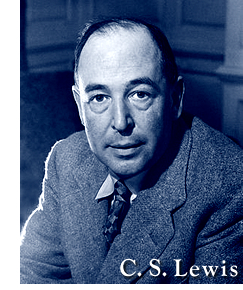
C.S. Lewis Daily – Today’s Reading


TO MARY WILLIS SHELBURNE: On the need to cry; on the need to remember God’s past mercies; on the suitability of his Ransom trilogy, especially That Hideous Strength, for children; and on the kinds of snobbery. Lewis asks if he may dedicate The Magician’s Nephew to her friends.

22 February 1954

I am very sorry indeed to hear that anxieties again assail you. (By the way, don’t ‘weep inwardly’ and get a sore throat. If you must weep, weep: a good honest howl! I suspect we—and especially, my sex—don’t cry enough nowadays. Aeneas and Hector and Beowulf and Roland and Lancelot blubbered like school-girls, so why shouldn’t we?) You were wonderfully supported in your worries last time: I shall indeed pray that it may be so again.

Would the Kilmer family like to have the next story but one dedicated to them? Let me know: the site is still vacant.

I didn’t object to the family reading the trilogy on the ground that it would be too difficult—that would do no harm—but because in the last one there is so much evil, in a form not, I think, suitable for their age, and many specifically sexual problems which it would do them no good to think of at present. I daresay the Silent Planet is alright: Perelandra, little less so: T.H.S. most unsuitable.

I don’t think that an appreciation of ancient and noble blood is ‘snobbery’ at all. What is snobbery is a greedy desire to know those who have it, or a mean desire to flatter them, or a conceited desire to boast of their acquaintance. I think it quite legitimate to feel that such things give an added interest to a person who is nice on other grounds, just as a hotel which was nice on other grounds would have an added charm for me if it was also a building with ‘historic interest’.

I write in great haste—I can’t, like you, do it in working hours! But you’re nothing to [Charles] Lamb: as far as I can make out all his letters, which now fill two volumes, were written in the office. Happy days those.

Well I hope I shall have better news in your next. God bless you.

From The Collected Letters of C.S. Lewis, Volume III

Compiled in Yours, Jack

Charles Stanley – Hindrances to Prayer


Ephesians 3:14-21

When you pray, are you confident that God is listening and will answer? Or do you, like many other believers, feel doubtful that your words are even heard?

Let’s consider some obstacles to a healthy prayer life. First, poor concentration can inhibit our communication with the Lord. Human minds are prone to wander, and it is common for our thoughts to drift from prayer to other topics. One antidote for this is to realize with whom we are speaking. The more we grasp God’s power, love, omniscience, and holiness, the easier it will be for us stay focused.

Second, we may feel unworthy to talk with the God of all creation. Guilt over sin in our life can tempt us to avoid time alone with Him, but He wants us to bring our wrongs into His light. On our own, we will never be worthy to be in the presence of pure perfection. But Jesus’ death and resurrection brought us forgiveness and acceptance, so we can come to the Father without fear or embarrassment.

Third, fear can stand in our way. Some people worry, What if I don’t pray correctly? The truth is, none of us knows how to pray in a manner worthy of a holy God. That’s why the Holy Spirit intercedes on our behalf. The Lord desires our hearts, not perfect words.

The Lord has made Himself available to us through prayer. Do you realize that the most powerful tool and greatest privilege is accessible to us? We can come before almighty God in prayer. Our heavenly Father is waiting to listen to our praise, confession, and requests.

Bible in One Year: Jeremiah 37-40

Our Daily Bread — Who Is My Neighbor?


Read: Luke 10:30-37

Bible in a Year: Psalms 105-106; 1 Corinthians 3

Go and do likewise. —Luke 10:37

Mary enjoyed her midweek church group meeting when she and several friends gathered to pray, worship, and discuss questions from the previous week’s sermon. This week they were going to talk about the difference between “going” to church and “being” the church in a hurting world. She was looking forward to seeing her friends and having a lively discussion.

As she picked up her car keys, the doorbell rang. “I’m so sorry to bother you,” said her neighbor Sue, “but are you free this morning?” Mary was about to say that she was going out when Sue continued, “I have to take my car to the repair shop. Normally I would walk or cycle home, but I’ve hurt my back and can’t do either at the moment.” Mary hesitated for a heartbeat and then smiled. “Of course,” she said.

Mary knew her neighbor only by sight. But as she drove her home, she learned about Sue’s husband’s battle with dementia and the utter exhaustion that being a caregiver can bring with it. She listened, sympathized, and promised to pray. She offered to help in any way she could.

Mary didn’t get to church that morning to talk about sharing her faith. Instead she took a little bit of Jesus’ love to her neighbor who was in a difficult situation. —Marion Stroud

Lord, help me to be ready at any time to be Your hands and feet to those in need.

Faith is seen in our actions.

INSIGHT: Samaritans lived in the territory between Galilee (to the north) and Judea (to the south). Historically, they were Jews who, when conquered by the Assyrians, intermarried with their conquerors and lost their ethnic purity as Jews. For this reason Samaritans were despised by Jews who would not even travel through Samaria, choosing instead to travel around that land. This makes it stunning that Jesus would choose a hated Samaritan as the hero of this parable and an example of one who was a neighbor. Bill Crowder

Ravi Zacharias Ministry – Alienation and Embrace


Vincenzo Ricardo. If that name does not mean much to you, you are not alone. It does not seem to have meant much to anyone else except, perhaps, him who bore it. In fact it was not even his name. His real name was Vincenzo Riccardi, and nobody seemed to get it right after the sensational discovery of his mummified body in Southampton, New York. He had been dead for 13 months, but his television was still on, and his body was propped up in a chair in front of it.(1) The television was his only companion, and though it had much to tell him, it did not care whether he lived or died.

Riccardi’s story raises many unsettling questions. How can a human being vanish for over a year and not be missed by anyone? Where was his family? What about his relatives? Why was the power still on in his house? Whatever the answers are to these and other questions, one thing is clear: Riccardi was a lonely individual whose life can be summed up in one word, alienation. You see, Riccardi was blind, so he never really watched television; he needed this virtual reality to feed his need for real companionship. Moreover, his frequent “outbursts and paranoid behavior” may have played a role in driving people away from him.(2)

This is indeed a tragic and extreme tale, but it makes a powerful statement about how cold and lonely life can be for millions across the globe. Even those who seem to have all of their ducks in a row are not immune to the pangs of loneliness and alienation. The Christian story attests that alienation affects us at three different levels. We are alienated from ourselves, from others, and most significantly, we are alienated from God. That is the reality in which we exist. The restoration process involves all three dimensions, but it begins with a proper relationship with God. We cannot get along with ourselves or with others until we are properly related to God. The good news of the Christian gospel is that abundant restoration is available to all who want it.

This process is well illustrated in an encounter Jesus had with another deeply wounded man who lived in a cemetery. Relatives, and perhaps friends, had tried unsuccessfully to bind him with iron chains to keep him home. He preferred to live among the tombs (alienation from others), cutting himself with stones, his identity concealed in his new name—”Legion” (alienation from self). His mind and body were hopelessly enslaved by Satan’s agents, and his life was no longer his own (alienation from God). It took an encounter with Jesus for the man to be fully restored, “dressed and in his right mind” (Mark 5:15). Only then could he follow Jesus’s command to go back to his family and tell them what God had done for him.

The restoration process remains the same today. Until we are properly related to God, our true identity and potential will always elude us. No virtual reality or gadget can even begin to address the problem, for they only give back to us what we have put into them. They are like the message in a bottle which a castaway on a remote island excitedly received, only to realize that it was a cry for help that he himself had sent out months before. As Augustine prayed, “You have made us for Yourself, and our hearts are restless until they find their rest in You.” We are finite creatures, created for a relationship with an Infinite Being, and no finite substitute can ever meet our deepest needs. Trying to meet our real needs without Christ is like trying to satisfy our thirst with salty water: the more we drink, the thirstier we become. This is a sure path to various sorts of addictions.

But when we turn toward the Bread of Life who offers himself up, calling each one of us to the table by name, loneliness is countered with the hope of embrace. We become members of God’s extended family. With Abraham, we look “forward to the city with foundations whose architect and builder is God” (Hebrews 11:10). Day by day, we learn to trust God as we travel with others along a heavily trodden path that never disappoints. Friends and relatives may desert us, but we are never alone. We may grieve and lament, but never like those without hope. We have peace and joy within, and even in our own hour of need, others can still find their way to God through us. The alternative is a crippling sense of isolation and alienation within a worldly system whose offerings, however sophisticated and well-intentioned, can never arouse us from spiritual death.

J.M. Njoroge is a member of the speaking team at Ravi Zacharias International Ministries in Atlanta, Georgia.

(1) Erika Hayasaki, “He Died in Vast Isolation,” LA Times, March 31, 2007.

(2) Ibid.


Alistair Begg – David, The Psalmist


The sweet psalmist of Israel. 2 Samuel 23:1

Among all the saints whose lives are recorded in Holy Scripture, David possesses an experience of the most striking, varied, and instructive character. In his history we meet with trials and temptations that are not found, as a whole, in other saints of ancient times, and as a result he provides us with a shadowy picture of our Lord. David knew the trials of all ranks and conditions of men. Kings have their troubles, and David wore a crown. The peasant has his cares, and David handled a shepherd’s crook. The wanderer has many hardships, and David hid in the caves of Engedi. The captain has his difficulties, and David found the sons of Zeruiah too hard for him.

The psalmist also faced trials from his friends; his counselor Ahithophel forsook him: “[He] who ate my bread, has lifted his heel against me.”1 His worst foes came from his own household: His children were his greatest affliction. The temptations of poverty and wealth, of honor and reproach, of health and weakness all tried their power upon him. He had temptations from without to disturb his peace and from within to mar his joy. David no sooner escaped from one trial than he fell into another, no sooner emerged from one season of despondency and alarm than he was again brought into the lowest depths and all God’s waves and billows rolled over him. This is probably the reason that David’s psalms are so universally the delight of experienced Christians. Whatever our frame of mind, whether ecstasy or depression, David has exactly described our emotions. He was an able master of the human heart because he had been tutored in the best of all schools-the school of heartfelt, personal experience.

As we are instructed in the same school, as we grow mature in grace and in years, we increasingly appreciate David’s psalms and find them to be “green pastures.”2 My soul, let David’s experience cheer and counsel you today.

1) Psalm 41:9

2) Psalm 23:2

The Family Bible Reading Plan

  • 1 Samuel 12
  • Romans 10

Devotional material is taken from “Morning and Evening,” written by C.H. Spurgeon, revised and updated by Alistair Begg.

Charles Spurgeon – Christ’s first and last subject


“From that time Jesus began to preach, and to say, Repent: for the kingdom of heaven is at hand.” Matthew 4:17. “And that repentance and remission of sins should be preached in his name among all nations, beginning at Jerusalem.” Luke 24:47

Suggested Further Reading: Philippians 3:1-14

If you are renewed by grace, and were to meet your old self, I am sure you would be very anxious to get out of his company. “No,” say you, “No, sir, I cannot accompany you.” “Why, you used to swear!” “I cannot now.” “Well, but,” says he, “You and I are very near companions.” “Yes, I know we are, and I wish we were not. You are a deal of trouble to me every day. I wish I could be rid of you for ever.” “But,” says Old Self, “you used to drink very well.” “Yes, I know it. I know you did, indeed, Old Self. You could sing a song as merrily as any one. You were ringleader in all sorts of vice, but I am no relation of yours now. You are of the old Adam, and I of the new Adam. You are of your old father, the devil; but I have another—my Father, who is in heaven.” I tell you, brethren, there is no man in the world you will hate so much as your old self, and there will be nothing you will so much long to get rid of as that old man who once was dragging you down to hell, and who will try his hand at it over and over again every day you live, and who will accomplish it yet, unless that divine grace which has made you a new man shall keep you a new man even to the end. Good Rowland Hill, in his “Village Dialogues,” gives the Christian, whom he describes in the first part of the book, the name of Thomas Newman. Every man who goes to heaven must have the name of new-man. We must not expect to enter there unless we are created anew in Christ Jesus.

For meditation: In our testimonies we should own up to what we used to be, but in such a way that we also disown the people we used to be. Don’t be like the biography of a Christian which seems to glory in the sin of the past—reserve all the glory for your Saviour (1 Corinthians 15:9,10; 1 Timothy 1:13-17).

Sermon no. 329

20 August (Preached 19 August 1860)

John MacArthur – Godly Anger Versus Selfish Anger


“[Love] is not provoked” (1 Cor. 13:5).

Self-centered anger cannot coexist with love.

The great eighteenth-century preacher and theologian Jonathan Edwards had a daughter with an uncontrollable temper. When a young man asked Dr. Edwards for his daughter’s hand in marriage, he said no. The young man was crushed. “But I love her and she loves me,” he pleaded. “That makes no difference,” Edwards replied, “she isn’t worthy of you.” “But she is a Christian, isn’t she,” the young man argued. “Yes,” said Edwards, “but the grace of God can live with some people with whom no one else could ever live.”

That may seem harsh, but Jonathan Edwards knew what his would-be son-in-law hadn’t yet learned: the presence of selfish anger indicates the absence of genuine love. “Love,” said Paul, “is not provoked.” It isn’t given to sudden outbursts of emotion or action. It doesn’t respond in anger to offenses committed against it.

Paul wasn’t talking about anger over sin and its terrible consequences. That’s righteous indignation, which Christians are expected to have. When Jesus drove the merchants and moneychangers out of the temple (John 2:14-15), He was genuinely angry because His Father’s house was being desecrated. But He never reacted that way when He was personally attacked or maligned. In the same way, it’s right for you to be angry when others are mistreated, when God is offended, or when His Word is misrepresented. But love always bears up under personal attacks.

Such graciousness is foreign to our society, which teaches us to fight for our personal rights and retaliate when we don’t get what we think we deserve. That has produced greedy and loveless people who want little more than personal success and comfort. Anyone who dares to stand in their way is in danger of incurring their wrath.

As a Christian, you must resist such influences by focusing on your spiritual duty rather than your rights. If you expect nothing from the world, you won’t be angered or disappointed when nothing comes. Remember, God is the giver of every good and perfect gift (James 1:17). So humble yourself before Him and He will exalt you at the proper time (James 4:10).

Suggestions for Prayer

Ask God for the grace to forgive those who wrong you.

For Further Study

According to Ephesians 4:26-27, how should you deal with anger?


Campus Crusade for Christ; Bill Bright – A New Creature 


“As it is written, there is none righteous, no, not one: There is none that understandeth, there is none that seeketh after God. They are all gone out of the way, they are together become unprofitable; there is none that doeth good, no, not one” (Romans 3:10-12, KJV).

At the conclusion of one of my messages at a pastor’s conference, a pastor stood to take issue with me concerning a statement that I had made. I had said that there is a great hunger for God throughout the world, and that more people are now hearing the gospel and receiving Christ than at any time since the Great Commission was given almost 2,000 years ago.

“How can you say that,” he objected, “when the Scripture clearly teaches that no man seeketh after God?”

“That is exactly what the Bible teaches,” I responded, “and I agree with the Word of God 100 percent, but do not forget that – though in his natural inclination man does not have a hunger for God – the Holy Spirit sends conviction and creates within the human heart a desire for the Savior.”

As Jesus put it, “No one can come to Me unless the Father who sent Me, draws him” (John 6:44, NAS). There are three things that we can learn about the human race from this passage. First, no one is righteous. Second, no one understands the things of God; and third, no one seeks God. What a contrast between what man is like in his natural state and what man becomes at spiritual birth when he is liberated from the darkness and gloom of Satan’s kingdom and ushered into the light of God’s glorious kingdom through Jesus Christ. That man becomes a new creature. Old things are passed away and behold all things become new.

What a contrast between the natural and the supernatural. The natural man must depend upon his own resources, his own wisdom, to find meaning and purpose in his life, inevitably resulting in a life of conflict, discord and frustration. But the one who trusts in God has the privilege of drawing upon the supernatural resources of God daily; resources of joy, peace, love; resources that provide meaning and purpose, assurance of eternal life.

Most people live lives of quiet desperation in self- imposed poverty because those of us who know the truth of the supernatural are strangely silent. God forgive us.

Bible Reading: Romans 3:13-20

TODAY’S ACTION POINT: With God’s help I refuse to remain silent any longer, but will seek to proclaim “the most joyful news ever announced” (Luke 2:10-11), to all who will listen in order that others may join me in living the supernatural life.

Presidential Prayer Team; C.H. – Purpose Precedence


The United States military is known for teaching young and often stubborn men and women to obey orders without question. The Army, Navy, Air Force and Marines are renowned for their development of strong individuals who will follow commands in the heat of battle to defend their country.

Mary said, “Behold, I am the servant of the Lord; let it be to me according to your word.”

Luke 1:38

Mary, the mother of Jesus, was not an Army soldier in training, but her adherence to follow God’s will in doing the impossible could rival the spirit of even the toughest of the Special Forces. When the angel told Mary a virgin birth was possible with God, Mary didn’t question or say, “I can’t do this.” She simply told the Lord she was His vessel and to “let it be.”

When God reveals His will to you, how often do you follow without question? May all Christians in this nation be as obedient and willing as the mother of Jesus. When you allow His purposes precedence over your own, great things are accomplished. Ask God to develop a willing spirit within you. Pray, too, for America’s leaders to recognize the will of God and develop a desire to follow Him.

Recommended Reading: Luke 1:46-55