Tag Archives: human-rights

Campus Crusade for Christ; Bill Bright – Free Gift 


“For the wages of sin is death, but the free gift of God is eternal life through Jesus Christ our Lord” (Romans 6:23).

One night I was speaking to several hundred men gathered in a skid row mission for an evangelistic meeting. I had been invited to bring the address and as always my heart was deeply stirred when I realized that these men needed the Lord so very much. In the spiritual sense, though, their lot was no worse than the leaders of the city, for all have sinned and come short of the glory of God, and the wages of sin is death whether one is rich or poor, old or young, sick or well. It makes no difference. The wages of sin is death.

In an effort to communicate to these men the love of God and His free gift of eternal life through faith in Jesus Christ our Lord, I pulled a ten-dollar bill from my pocket and said, “The first person who comes to take this from my hand, can have it as a free gift.” This was my way of illustrating God’s gift of grace. Out of the hundreds of people seated before me, not a single person moved as I extended the bill, repeating several times, “The first one who will come and take this bill from my hand can have it.”

Finally, a middle-aged man, shabbily dressed like the rest, stood timidly to his feet and with an inquiring expression said, “Do you really mean it?” I said, “Sure, come and get it; it is yours.” He almost ran to grasp it and he thanked me. The rest of the crowd began mumbling, as if to say, “Why didn’t I have the faith to go and accept the gift?”

This gave me a marvelous opportunity to emphasize that we do not earn God’s love. He loves us unconditionally – not because of who we are, but because of who He is. God proved His love for us in that while we were all wretched sinners, He sent His only begotten Son to die on the cross for us and give to all men who will receive Him the gift of eternal life. Oh, what an attractive gift. Who could refuse to accept such a wonderful gift?

Bible Reading:Romans 6:17-22

TODAY’S ACTION POINT: I will trust the Lord to help me make His offer of this marvelous free gift, the gift of His only begotten Son who is eternal life, so attractive that no one can refuse to accept it.


http://www.cru.org

Words of Hope – Daily Devotional – Working in Exile


Read: Jeremiah 29:4-14

Seek the welfare of the city where I have sent you into exile, and pray to the Lord on its behalf . . . (v. 7)

Exile is a metaphor the Bible uses repeatedly for the life of faith. It is during times of displacement that God’s people most profoundly rely on God’s presence and God’s promises. And it is during exile that God makes himself known to an unbelieving world through his people.

When the Babylonians conquered and enslaved Judah in 586 BC, God’s people faced two choices. They could curse the pagan city while capitalizing on it. Or they could assimilate into the city, becoming pagans themselves. God mandates a third choice. God tells his people to maintain their faith while living in this home away from home. At the same time, God adds: “Seek the welfare of the city where I have sent you into exile, and pray to the Lord on its behalf” (v. 7).

God commands this investment in the pagan city not only to benefit his people but also to benefit their neighbors. Neighbors who, in this instance, are social and political adversaries. As Christians, we live in a world that is inherently hostile to us. Like the exiles, we are tempted either to capitalize on the “earthly city” while cursing it or to assimilate to such an extent that we are unrecognizable as God’s people. God commands a third way: to invest ourselves in such a way that our communities are blessed and God’s name is known. —Ben Van Arragon

Prayer: Lord God, make your presence known to my community through my investment in it.


https://woh.org/

Charles Stanley – Failing to Listen to God


Genesis 3:1-6

Listening to God is not a one-time event. We must continually keep His Word before us, or we’ll begin to listen to the wrong voices.

In Genesis 2:16-17, the Lord gave a command not to eat from the tree of the knowledge of good and evil. But Eve began to listen to another voice and did not hold firmly to her Creator’s words. All that Satan had to do was plant a seed of doubt about God’s integrity and offer Eve one appealing advantage of doing things her own way—and she fell for it. He mentioned wisdom, but using her own reasoning, Eve added two more benefits to the temptation: the fruit is good for food and a delight to the eyes.

The schemes of the enemy have not changed. He still whispers lies and twists truth to convince us that God can’t be trusted and His ways are not the best. In every temptation, there is a deception about the character and motive of God, plus an attractive promise of a better way.

The world is filled with voices that vie for our attention and influence our thoughts and actions. Throughout the day, consider the messages that are sent your way through the media and people. Consciously begin to compare them to what Scripture says about God and His ways.

Remembering what the Lord says in His Word is our safeguard against deception and temptation. Devotions read during our quiet time won’t protect us if they’re quickly forgotten during the day. Follow Jesus Christ’s example: Be ready with truth in your mind and on your tongue whenever temptation strikes. (See Matt. 4:1-11.)

Bible in One Year: Jeremiah 51-52


http://www.intouch.org/

Our Daily Bread — We Would See Jesus


Read: John 12:20–26 | Bible in a Year: Psalms 116–118; 1 Corinthians 7:1–19

They came to Philip . . . with a request. “Sir,” they said, “we would like to see Jesus.” John 12:21

As I looked down at the pulpit where I was sharing prayers at a funeral, I glimpsed a brass plaque bearing words from John 12:21: “Sir, we would see Jesus” (kjv). Yes, I thought, how fitting to consider how we saw Jesus in the woman we were celebrating with tears and smiles. Although she faced challenges and disappointments in her life, she never gave up her faith in Christ. And because God’s Spirit lived in her, we could see Jesus.

John’s gospel recounts how after Jesus rode into Jerusalem (see John 12:12–16), some Greeks approached Philip, one of the disciples, asking, “Sir, . . . we would like to see Jesus” (v. 21). They were probably curious about Jesus’s healings and miracles, but as they weren’t Jewish, they weren’t allowed into the inner courts of the temple. When their request was passed along to Jesus, He announced that His hour had come to be glorified (v. 23). And by that, He meant that He would die for the sins of many. He would fulfill His mission to reach not only the Jews but the Gentiles (the “Greeks” in verse 20), and now they would see Jesus.

After Jesus died, He sent the Holy Spirit to dwell in His followers (14:16–17). Thus as we love and serve Jesus, we see Him active in our lives. And, amazingly, those around us too can see Jesus!

Lord Jesus Christ, I am humbled and amazed that You would come and live in me. Help me to share this amazing gift with those I meet today.

We can see Jesus in the lives of His followers.

By Amy Boucher Pye

INSIGHT

At first glance, it might appear that Jesus brushes off the Greeks who requested to see Him. But characteristically, His indirect reply points to a far more profound reality. Jesus is explaining the significance of what will happen to Him later that week. First He says, “The hour has come for the Son of Man to be glorified” (John 12:23), a reference to His death and resurrection for the salvation of the world—including the Greeks. Then He uses the metaphor of wheat to describe Himself and His mission. William Hendriksen points out the significance of the kernel of wheat in the context of the approaching Passover celebration. The seed must die before it can grow into a wheat stalk, producing many more seeds that will be made into bread—bread that will be eaten at Passover. Jesus (the Bread of Life) would have to die to produce “many seeds” (v. 24). And anyone who wants to serve Jesus must hate their life in this world (v. 25)—in other words, die to self.

Am I willing to die to self in order to serve the One who died for me? Will I do what is necessary to “see Jesus”?

Tim Gustafson


http://www.odb.org

Joyce Meyer – Free to Fly


The Spirit of the Lord God is upon me, because the Lord has anointed me to bring good news to the poor; he has sent me to bind up the brokenhearted, to proclaim liberty to the captives, and the opening of the prison to those who are bound. — Isaiah 61:1

Adapted from the resource Closer to God Each Day Devotional – by Joyce Meyer

Love offers people both roots and wings. It provides a sense of belonging (roots) and a sense of freedom (wings). Love does not try to control or manipulate others.

Jesus said that He was sent by God to proclaim liberty. As believers, that is what we are meant to do also—to free people to fulfill God’s will for their lives, not to bring them under our control.

Have you ever seen parents push their children to do things they do not even want to do just to meet the frustrated desires of their parents? Have you ever seen a person who is clingy and emotionally smothering to a new friend, because he is afraid to lose that person? Both of these examples bind rather than set free.

That is not the way true love works. Love does not try to gain personal satisfaction at the expense of others. Love will always proclaim liberty. When we love God, and when we love others, we will excitedly allow the people in our lives to follow God’s plan—not our plan—and see who they can be and what they can accomplish in Christ Jesus.

Prayer Starter: Father, help me to truly love the people in my life, allowing them the freedom to truly be the best they can be. In Jesus’ Name, Amen.


http://www.joycemeyer.org

Campus Crusade for Christ; Bill Bright – Reverence Brings Reward


“If you belong to the Lord, reverence Him; for everyone who does this has everything he needs” (Psalm 34:9).

Roger had a heart for God. He wanted to be everything the Lord wanted him to be. But he was troubled over how to achieve the balance between being what God wanted him to be and doing what God wanted him to do.

As we talked together I reminded Roger that everything flows from our relationship with the Lord – that He has to be primary. In Matthew 4:19, Jesus says, “Follow me, and I will make you fishers of men.” As we follow Him, He enables us to become fishers of men.

“If ye abide in Me, and My words abide in you, ye shall ask what ye will, and it shall be done unto you” (John 15:7, KJV). “Out of the heart are the issues of life” (Proverbs 4:23, KJV). That which is most on our hearts will be most on our lips. If we love the Lord Jesus with all our heart, soul, mind and strength, it will be impossible for us to remain silent.

At the same time, obedience is a confirmation of our walk with the Lord. Jesus said, “He that hath My commandments, and keepeth them, he it is that loveth Me: and he that loveth Me shall be loved of My Father, and I will love him, and will manifest Myself to him” (John 14:21, KJV).

One of the most important commandments of our Lord is that we lead holy lives. Another is that we be fruitful in our witnessing for Christ. There is no substitute for reverence, worship, praise, adoration.

As we remember to reverence God by enlisting His guiding hand before we get into a predicament, He reaches out in love and extends a protecting hand in the midst of the trouble as we again invoke His divine care. If I am to live the supernatural life today, it will require divine enabling, and I must remain yielded to God’s indwelling Holy Spirit.

Bible Reading:Psalm 34:10-15

TODAY’S ACTION POINT: I will worship God today as a demonstration of my love and trust for Him by spending quality time with Him in His word and in prayer, and helping others to understand the importance of reverence for and worship of God.


http://www.cru.org

Max Lucado – You Have Clout with God


Listen to Today’s Devotion

You may find yourself in an impossible situation. You feel outnumbered and outmaneuvered.  You want to quit.  Could I ask you to memorize this promise and ask God to bring it to mind?  Write it where you’ll find it.  Tattoo it, if not on your skin at least on your heart: “When a believing person prays, great things happen” (James 5:16).

If you’ve taken on the name of Christ, you have clout with the most powerful being in the universe.  When you speak, God listens. Jesus said, “When two of you get together on anything at all on earth and make a prayer of it, my Father in heaven goes into action” (Matthew 18:19).  Prayer is just the first step. God has power you’ve never seen, strength you’ve never known.  He delights in answering prayer! And because his promises are unbreakable, our hope in unshakable!

Read more Unshakable Hope

For more inspirational messages please visit Max Lucado.

Home

Denison Forum – $120 million cannot buy happiness


Tim Cook will become $120 million richer today when he receives 560,000 shares of Apple stock. But he should beware: prosperity is no guarantee of happiness.

Writing in the New York TimesJonathan Rauch notes: “Real per capita income has more than tripled since the late 1950s, but the percentage of people saying they are very happy has, if anything, slightly declined.”

Why?

A Harvard study tracked a group of men for close to eighty years. The bottom line: loving relationships are the key to happiness and health. It was not money or status but strong interpersonal relationships that led to the greatest life satisfaction.

This news should not surprise Christians. We know that we are made in God’s image (Genesis 1:27) and that our Creator is relational by nature. He relates to himself as Father, Son, and Spirit. And “God is love” (1 John 4:8), an attribute that requires someone to love.

Here’s the question: With whom should we most seek a loving relationship as the key to happiness? The answer may surprise you.

A personal confession

I was led to faith in Christ through a bus ministry. A church in my Houston, Texas, neighborhood enlisted volunteers to knock on doors, inviting people to ride their bus to church. In August 1973, they knocked on my apartment door. My brother and I came to Jesus as a result.

I will be eternally grateful for evangelical churches that emphasize evangelism and practical ministry. But I was active in church life for years before I began realizing that Jesus wanted to be more than my Savior and Lord–he wants to be my friend. He wants an intimate, personal, loving, daily relationship with me. He wants to be a “friend who sticks closer than a brother” (Proverbs 18:24).

Continue reading Denison Forum – $120 million cannot buy happiness

Charles Stanley –Our Father’s Unconditional Love


Romans 5:8

Many of us have heard since childhood that the Lord loves us. Yet it isn’t until we begin to understand the true nature of His never-ending love that our lives start to change dramatically—anxiety is exchanged for peace, depression for joy, and fear for confidence.

Today’s Bible verse tells us that while we were still living in rebellion against God, His love sent Jesus to the cross to pay the ultimate price for our redemption. In other words, He didn’t wait for our apologies or even our recognition of Him. No, the Almighty loved us so completely that He sent His Son to die for us while we were steeped in sin.

This doesn’t mesh with our human understanding of love. Much of our concern for others is conditional, hopefully with the exception of care for our children and families. We oftentimes project this imperfect image onto the Lord. It is hard for us to imagine that there actually exists a greater love than what we ourselves can give.

Thankfully, God is not restricted by our view of Him. So great is His care, in fact, that when we trust in Him, He calls us His children and adopts us! And our Father promises that nothing can separate us from Him (Rom. 8:38-39).

As you read Scripture, focus on verses about the heavenly Father’s love. Ask Him to help you start to grasp how great His love is. Document what you learn so that it is available to review when guilt or doubt creeps into your mind. What peace there is for Christians in the Almighty’s unfailing, unconditional care!

Bible in One Year: Jeremiah 49-50


http://www.intouch.org/

Our Daily Bread — An Enduring Happiness


Read: Psalm 34:1–14 | Bible in a Year: Psalms 113–115; 1 Corinthians 6

Whoever of you loves life and desires to see many good days . . . . Turn from evil and do good. Psalm 34:12,14

Often we hear that happiness comes from doing things our own way. That, however, is not true. That philosophy leads only to emptiness, anxiety, and heartache.

Poet W. H. Auden observed people as they attempted to find an escape in pleasures. He wrote of such people: “Lost in a haunted wood, / Children afraid of the night / Who have never been happy or good.”

The psalmist David sings of the remedy for our fears and unhappiness. “I sought the Lord, and he answered me; he delivered me from all my fears” (Psalm 34:4). Happiness is doing things God’s way, a fact that can be verified every day. “Those who look to him are radiant,” writes David (v. 5). Just try it and you’ll see. That’s what he means when he says, “Taste and see that the Lord is good” (v. 8).

We say, “Seeing is believing.” That’s how we know things in this world. Show me proof and I’ll believe it. God puts it the other way around. Believing is seeing. “Taste and then you will see.”

Take the Lord at His word. Do the very next thing He is asking you to do and you will see. He will give you grace to do the right thing and more: He will give you Himself—the only source of goodness—and with it, enduring happiness.

Lord, sometimes we must simply pray: “I believe. Help my unbelief.” Help us trust You by doing what You have given us to do today.

Happiness is doing the right thing.

By David H. Roper

INSIGHT

In Psalm 34:14, David calls us to “turn from evil and do good.” What is good? Micah 6:8 says God has shown us what is good: “To act justly and to love mercy and to walk humbly with your God.” Yet in another psalm, David says, “There is no one who does good” (14:1–3)! So how is good possible? David provides a clue in still another psalm, “Trust in the Lord and do good” (37:3). Doing good is tied to trust in God. In the New Testament we see over and over again that doing good is dependent on a relationship with God through Jesus. Jesus equips us to do good and then produces good in us through the Spirit (Hebrews 13:20–21; Galatians 5:16–25).

What good is God calling you to do in His strength?

Alyson Kieda


http://www.odb.org

Ravi Zacharias Ministry – Poverty of Words

I remember the time when my son had to go through a very simple surgery when he was just five years old. He was not able to breathe properly, so the doctors had to remove some extra tissue surrounding his nostril and nasal passages. During the hours and days after his surgery, my once-a-chatterbox son had become completely quiet. Because of the fear of being hurt if he spoke, he quit using words for his way of communication. It was overwhelming to see my boy struggling to express himself in that condition.

As I assisted my son get back to talking, I could not help but think of how unexpectedly Zechariah lost his speech after he questioned the angel who brought him such good news about a long-waited child in his old age.(1) In Zechariah’s case, the temporary loss of words was something of an acknowledgement of the promised child he doubted, a child who would prepare the way for the Messiah. Though he knew why he was made silent, I am sure he felt restless until he held his son in his arms and was finally able to describe his emotions properly.

There are spiritual retreat centers in various locations around the world, which offer “Silent Weeks” to those who are over-exhausted from excessive communication. During these weeks, individuals are banned from verbal communication in order to quiet themselves internally. The goal is simply to bring back the core purpose of real interaction: tending to what is being said in reality.

When the words are taken from us either because of the inability to speak or the lack of verbal direction, we become strangely poor, almost incomplete. There are two sides of this poverty: one is internal, losing the comfort of one’s capability to express oneself fully. The other is external, as one finds no real guidance to turn to for wisdom. In my opinion, the latter has eternal ramifications if not satisfied in a timely manner.

Continue reading Ravi Zacharias Ministry – Poverty of Words

Joyce Meyer – A Wondering Mind


In the morning, when they were passing along, they noticed that the fig tree was withered [completely] away to its roots. And Peter remembered and said to Him, Master, look! The fig tree which You doomed has withered away! And Jesus, replying, said to them, Have faith in God [constantly]. Truly I tell you, whoever says to this mountain, Be lifted up and thrown into the sea! and does not doubt at all in his heart but believes that what he says will take place, it will be done for him. For this reason I am telling you, whatever you ask for in prayer, believe (trust and be confident) that it is granted to you, and you will [get it]. — Mark 11:20-24 (AMPC)

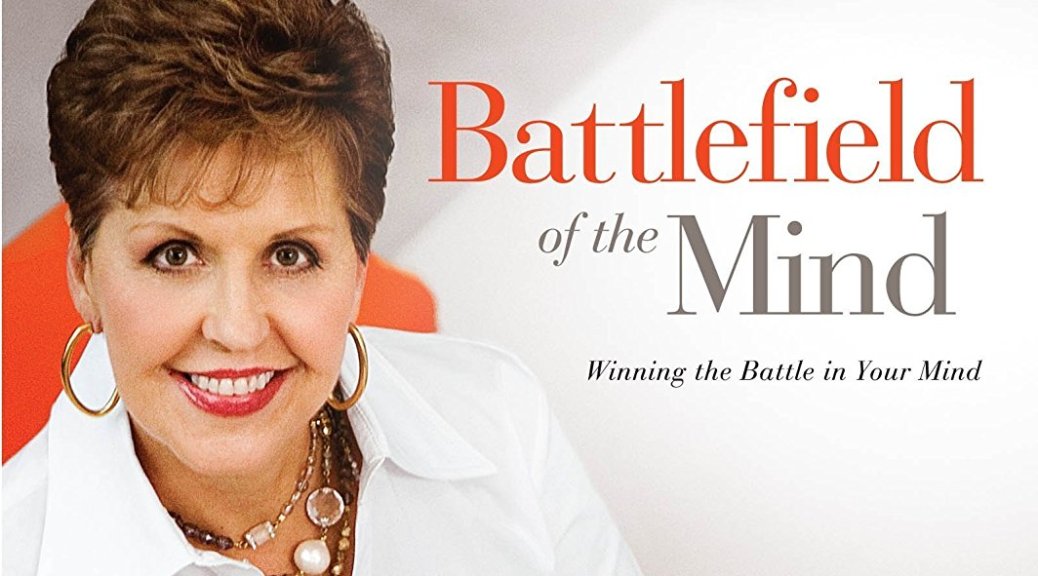
Adapted from the resource Battlefield of the Mind Devotional – by Joyce Meyer

When you say the words, “I wonder,” they sound innocent and honest. They also represent the way we avoid certainty in making decisions.

Suppose you’re the CEO of a business. Every day twenty people come to your office and ask you to make decisions. Yours is the final answer on everything that goes on in the corporation. Instead of giving decisive answers, you rub your chin, stare out the window, and say, “I wonder. I wonder what we should do about that?”

An indecisive CEO wouldn’t stay in that position very long. The position is much too important to the overall success and well-being of the organization and all who are associated with it. You are not in that position to wonder—you’re there to act.

Too many of us forget that this is the way it is with the Christian life, as well. Too often, instead of choosing what we need to do, we avoid facing the situation and say, “I wonder.”

I know because I’ve done it. In times past, when I’ve been invited to a party or to be the featured speaker at a banquet, I’ve said, “I wonder what I should wear.” It’s easy for me to waste a lot of time looking through my closet, considering the color and style, as I try to choose just the right outfit for a particular occasion.

This may seem like such a small thing—and it really is. The problem, however, is that if we allow enough of these “wonderings” in our lives, we not only fail to accomplish the things we need to do, but wondering becomes the normal way our minds function. Being indecisive keeps us from moving forward and can eventually defeat us.

In the verses quoted earlier, the incident started with a fig tree that wasn’t bearing fruit. The disciples could have wasted time wondering about the particulars of why the tree didn’t bear fruit. They could have wondered if it hadn’t received enough sunlight or water. They might have wondered why the owner hadn’t cut it down since it wasn’t productive. But wasting time wondering really wasn’t necessary.

When Jesus spoke and doomed the tree, He put a stop to any mental speculation. He used the incident as an object lesson for the disciples, encouraging them to believe. He wanted them to understand that if they truly believed, they could have whatever they asked of Him.

Sometimes God’s people are reluctant to ask boldly for big things. But Jesus has given us permission to step out in faith and ask boldly. And yet some still waste time just wondering. They wonder what it would be like if God would give them a better job. They wonder what it would be like if God would give them a larger house.

I can tell you that wondering is a waste of time. So, stop wondering and start acting! That’s one of the most important things I’ve learned about the wondering mind. Rather than wondering what I should wear to a banquet, I look at my clothes and I decide. God gave me the ability to make wise choices, so I can just do it instead of wasting my time wondering.

Wondering and indecision can become strongholds in our minds that can leave us feeling confused, insecure, and ineffective. But that’s not God’s plan. He wants us to overcome the wondering thoughts by believing and then receiving the answer to our prayers from God, by faith.

Notice that Jesus did not say, “Whatever things you wonder when you pray, you will have.” Instead, He said, Whatever you ask for in prayer, believe (trust and be confident) that it is granted to you, and you will [get it].

Prayer Starter: Lord Jesus, help me to overcome any wondering tendencies that keep me from moving forward in Your good plan. In Your name, I ask You to help me reach out in faith, boldly asking for what I need. Then help me to believe it and receive it. Amen.


http://www.joycemeyer.org

Campus Crusade for Christ; Bill Bright – He Does Glorious Things 


“Thank the Lord for all the glorious things He does; proclaim them to the nations. Sing His praises and tell everyone about His miracles” (Psalm 105:1,2).

How long has it been since you have taken time to meditate upon and list all the glorious things the Lord has done for you and how long has it been since you have shared them with your family, your neighbors or even strangers? Of course, your list may differ from that of your neighbors or of fellow believers in your local church or from mine. But among those glorious things that He has done are: He has, by His Holy Spirit, drawn us all to Himself; He has created within our hearts a hunger for His love; and through faith in Christ we have become His children; our sins have been forgiven and we now have the joy of living every moment of every day in vital union and fellowship with Him – all this with the certainty that we shall spend eternity with Him. Mere human words could never express the gratitude that wells up within one’s heart at the thought of God’s great gifts. The word “alleluia” is universal and is spoken in all languages as an expression of praise to God and no word is more appropriate.

My personal list of blessings also includes a godly, praying mother who lived her Christianity and dedicated me to Christ before I was born, and followed me – as she did all her other children – with her daily prayers; a wonderful father who, I had the privilege of introducing to Christ after I became a Christian and seeing him begin to experience that peace which comes from knowing Christ; a godly wife who loves the Lord Jesus Christ and shares my commitment to serve Him as our Lord and Master whatever the cost, wherever He leads us.

I thank Him for sons who love Him, and who have committed their lives to serving Him wherever He leads; a daughter-in-law who shares the love and conviction of her husband; a marvelous staff of thousands of godly men and women who seek first the kingdom of God and his righteousness; and hundreds of thousands of co-laborers who undergird me and this ministry.

The glorious things that He has done are without number. Yes, we must sing His praises and tell everyone about His miracles. We must proclaim the glorious things he has done to all the nations!

Bible Reading:Psalm 113

TODAY’S ACTION POINT: Today I will meditate upon the glorious things God has done for me and I will sing His praises and tell everyone about His miracles. I will give my prayer and financial support to helping proclaim His greatness to all the nations of the earth.


http://www.cru.org

Max Lucado – Your Prayers Matter to God


Listen to Today’s Devotion

Do you know that God delights in hearing your prayers!  We can’t even get the plumber to call us back, so why would God listen to our prayers?  Your prayers matter to God because you matter to God.  You aren’t just anybody, you are his child.

When God saved you, he enlisted you.  He gave not only forgiveness for your past but also authority in the present and a role in the future.  This life is on-the-job training for eternity. “If we endure, we will also reign with him” (2 Timothy 2:12).

When you, as God’s child, seek to honor the family business, God hears your requests.  Will God do what you ask?  Perhaps. Or perhaps he will do more than you imagined. Stand firmly on this promise:  “When a believing person prays, great things happen” (James 5:16). And because God’s promises are unbreakable, our hope is unshakable!

Read more Unshakable Hope

For more inspirational messages please visit Max Lucado.


Home

Denison Forum – Is the “Big One” coming?

6.2-magnitude earthquake struck off the coast of Oregon yesterday.

The earthquake followed an intense week of seismic activity in which the “Ring of Fire” was rocked by sixty-nine quakes in just forty-eight hours. (The “Ring of Fire” stretches 25,000 miles clockwise around the Pacific Ocean from New Zealand to the southern part of South America.)

Whenever such seismic activity occurs in the region, journalists speculate that the “Big One” may be coming. This is a reference to an earthquake of 8-magnitude or higher that is expected to occur along the San Andreas Fault. Such a quake could strike San Francisco, Los Angeles, or other populated areas on the West Coast.

Seismologists say we’re overdue for such a disaster. One states, “There is a 99.9% chance that there will be a damaging quake (magnitude greater than or equal to 6.7) somewhere in California in the next 30 years.”

“The whole world lies in the power of the evil one”

If you don’t live along the California coast and think such warnings are irrelevant to you, consider these facts:

I live in Dallas, Texas, where we are at risk from everything on the list. Are you exempt from natural disasters where you live?

When such tragedies strike, people always want to know why the God who made our planet allows such calamities to afflict his creation. We can respond with the fact that our world is broken as a result of sin (Romans 8:22), remembering that there were no natural disasters in the Garden of Eden. We can also point out that “the whole world lies in the power of the evil one” (1 John 5:19), an enemy who “comes only to steal and kill and destroy” (John 10:10).

But the skeptic is likely to counter: Why didn’t the God who calmed the stormy Sea of Galilee prevent the disaster that affected me? If he’s more powerful than Satan, why does he let Satan harm us? If “Jesus Christ is the same yesterday and today and forever” (Hebrews 13:8), why does he allow tragedies that his omnipotence could prevent?

The bottom line is that God’s ways are higher than my ways, and his thoughts are higher than my thoughts (Isaiah 55:8-9). If my mind could understand the Lord’s mind, either I would be God or he would not be.

But I do know one way he redeems natural disasters. It’s a life principle we can begin using today, whether the “Big One” is coming tomorrow or not.

“O God, you are my God”

Psalm 63 finds David “in the wilderness of Judah,” according to its inscription. We know of two times he was in this barren area: when he was hiding from King Saul and when he was fleeing from his son Absalom. The fact that David refers to himself as “the king” in verse 11 makes the latter calamity the more likely setting.

Imagine that you are an elderly man, running for your life from your own son. You’re in the desert with no circumstantial reason to believe you will ever return to your throne or even survive the night.

How do you respond to the God who allowed this calamity?

David prays: “O God, you are my God; earnestly I seek you; my soul thirsts for you; my flesh faints for you, as in a dry and weary land where there is no water” (v. 1). He can seek God in the present because he has experienced his omnipotence in the past: “So I have looked upon you in the sanctuary, beholding your power and glory” (v. 2).

His past experiences with God’s greatness empower him to trust the Lord with his future fears: “Because your steadfast love is better than life, my lips will praise you. So I will bless you as long as I live; in your name I will lift up my hands” (vv. 3-4).

Note the pattern: Seek God in the present by remembering his goodness in the past and trusting him for the future. When we make disaster an invitation to faith and worship, others see our trust in our Father and are drawn to him. Such confidence may be our most powerful witness to a skeptical culture.

Consider an example.

#StandWithTheBible

Evangelist Greg Laurie recently concluded the twenty-ninth annual Southern California Harvest Crusade. This year’s event became controversial when a real estate company removed the campaign’s billboards from two malls, claiming that it received complaints and a “serious threat” about the billboards’ depiction of Laurie holding a Bible.

In response, Laurie staged the #StandWithTheBible campaign, encouraging Christians to take photos or videos of themselves holding a Bible and post them on social media. He also urged attendees to bring Bibles and hold them up each night.

The weekend crusade saw 100,000 people in attendance, 74,300 webcast views, and 267,800 Facebook Live views. More than nine thousand people made professions of faith in Christ.

What the enemy means for evil, God uses for good (Genesis 50:20). This fact doesn’t explain disasters, but it redeems them in ways that far outlive the temporal calamities of this broken planet.

I don’t know if the “Big One” will hit tomorrow or ten generations from tomorrow. But I do know that we have only this day to be ready. And I know that the best way to be ready is to say with David, “O God, you are my God; earnestly I seek you.”

Are you “earnestly” seeking God today?


NOTE:  In a world growing more openly hostile toward Christian values and beliefs, we must know how to “make a defense to anyone who asks.”

My prayer is that the new and just released volume 2 of Biblical Insight to Tough Questions can help with that. I’d like to send it to you to thank you for your gift and to help you “speak the truth in love” to tough questions.

I hope volume 2 will help you grow your faith and encourage you to engage culture with truth. To receive your copy, please click here.


Denison Forum

Charles Stanley – God’s View of Mankind


Hebrews 2:16-18

To understand the ways of the Lord, we need to comprehend His perspective of mankind. Oftentimes, we rely on our human viewpoint instead of trying to see ourselves through His eyes. All that He does on earth is guided by His care and love for the human race. Consider three elements of God’s perspective of humanity:

Created in God’s image. Of all the creatures that the Lord fashioned, only the man and woman were made in His image (Gen. 1:26-27). They had a mind, will, and emotions as well as a spirit, which enabled them to worship and relate to God. Being sinless and perfect, they were designed to live forever in intimate relationship with their Creator.

Corrupted by sin. However, an act of disobedience broke their relationship with the Lord (Isa. 59:2). The divine image was marred by sin, which infiltrated human nature and corrupted every person born thereafter. Mankind stood spiritually dead, without hope, and condemned before a holy God.

Worthy of redemption. Yet the Lord considered them worthy of restoration. Through the redemptive work of His Son, all who believe in Jesus are made spiritually alive again, and the broken relationship between God and man is repaired (Col. 1:13-14). One day—in heaven—sin will be no more, and a perfect environment will be reinstated.

Between life’s pace and trials, losing sight of divine viewpoint is all too easy. When we’re overwhelmed by criticism, trouble, or suffering, it’s vital to recognize our worth in the Lord’s eyes. That realization can energize our service and renew our love for the One who gave Himself to bring us back to God.

Bible in One Year: Jeremiah 46-48


http://www.intouch.org/

Our Daily Bread — God’s Care for Us


Read: Genesis 3:1–13 | Bible in a Year: Psalms 110–112; 1 Corinthians 5

The Lord God made garments of skin for Adam and his wife and clothed them. Genesis 3:21

My young grandsons enjoy dressing themselves. Sometimes they pull their shirts on backwards and often the younger one puts his shoes on the wrong feet. I usually don’t have the heart to tell them; besides, I find their innocence endearing.

I love seeing the world through their eyes. To them, everything is an adventure, whether walking the length of a fallen tree, spying a turtle sunning itself on a log, or excitedly watching a fire truck roar by. But I know that even my little grandsons are not truly innocent. They can make up a dozen excuses about why they can’t stay in their beds at night and are quick to yank a wanted toy from the other. Yet I love them dearly.

I picture Adam and Eve, God’s first people, as being in some ways like my grandchildren. Everything they saw in the garden must have been a marvel as they walked with God. But one day they willfully disobeyed. They ate of the one tree they were forbidden to eat (Genesis 2:15–17; 3:6). And that disobedience immediately led to lies and blame-shifting (3:8–13).

Still, God loved and cared for them. He sacrificed animals in order to clothe them (v. 21)—and later He provided a way of salvation for all sinners through the sacrifice of His Son (John 3:16). He loves us that much!

Dear Lord, thank You for loving us, despite our sin, and for making a way for us to be with You forever!

For help in your spiritual growth, see this course: christianuniversity.org/spiritual-life-basics.

Jesus loves us so much He sacrificed Himself for our sins.

By Alyson Kieda


http://www.odb.org

Ravi Zacharias Ministry – Consider the Lilies


Wendell Berry has written a poem that haunts me frequently. As a creative writer, the act of paying attention is both a spiritual and professional discipline. But far too often my aspirations for paying quality attention to everything dissolves into something more like attention deficit disorder. As it turns out, it is quite possible to see and not really see, to hear and not really hear. And this is all the more ironic when my very attempts to capture what I am seeing and hearing are the thing that prevent me from truly being present. Berry’s poem is about a man on holiday, who, trying to seize the sights and sounds of his vacation by video camera, manages to miss the entire thing.

…he stood with his camera

preserving his vacation even as he was having it

so that after he had had it he would still

have it. It would be there. With a flick

of a switch, there it would be. But he

would not be in it. He would never be in it.(1)

I sometimes wonder if one of the most quoted sayings of Jesus is not often employed with a similar irony. “Consider the lilies,” Jesus said, “how they grow; they neither toil nor spin. Yet I tell you, even Solomon in all his glory was not clothed like one of these. But if God so clothes the grass of the field…will he not much more clothe you? Therefore, do not worry.“(2) Typically, Jesus is quoted here as giving a helpful word against worry. And he is. But worry is not the only command he articulates. Consider the lilies, he said. We hear the first instruction peripherally, hurriedly, as mere set up for the final instruction of the saying. And in so doing, we miss something great, perhaps even something vital, both in the means and in the end. With our rationalistic sensibilities, we gloss over consideration of the lilies; ironically, in an attempt to consider the real work Jesus is asking us to do.

But what if considering the lilies is the work, the antidote to anxious, preoccupied lives? What if attending to this short-lived beauty, to the fleeting details of a distracted world is a command Jesus wants us to take seriously in and of itself?

It is with such a conviction that artist Makoto Fujimura not only paints, but elsewhere comments on Mary and her costly pouring of perfume on the feet of Jesus. The anger of Judas and the disgust of the others are all given in rational terms, the cacophony of their reaction attempting to drown out her quiet act of attention: That bottle would have cost over a year’s wages. The poor could have used that money. This sinful woman clings to a holy man’s feet. Does he not see who it is who touches him? Their response to her and her act of beauty exposes their own inattention to a world beyond the one they see—to their own peril. As Fujimura writes, “Pragmatism, legalism, and greed cannot comprehend the power of ephemeral beauty. The opposite of beauty is not ugliness; the opposite of beauty is legalism. Legalism is hard determinism that slowly strangles the soul. Legalism injures by giving pragmatic answers to our suffering.”(3) The corollary, of course, is that beauty can offer healing; that paying attention, even to fleeting glimpses of the mere suggestion of new creation, is deeply restorative.

When Jesus asks the world to consider the lilies, to consider beauty in the midst of all the ashes around us, his request is full of promise, for he is both the Source of beauty and its Subject. His own history is one that takes so seriously the goodness of the created world that he joins us within it, taking even our profound wounds upon himself, and presenting in his body the hope of a creation made new. Paying attention to the ephemeral, being willing like Mary to risk and to recognize beauty, is in and of itself restorative because it is paying attention to him. Here, both the anxiety-addicted and the attention-overloaded can find solace in a different sort of kingdom: one in which there is room for the paradox of a fleeting world with eternity in its heart.

But perhaps Jesus also instructs the world to consider the lilies because it is the very characteristic of God’s concern for us. The daily liturgy of lilies comes with unceasing care and attention for all who will see it, the gift of a God who revels in the creation of yet another flower, the details of another sunset, the discovery of even one lost soul. Consider the lilies; how they grow. They neither toil, nor spin.

Jill Carattini is managing editor of A Slice of Infinity at Ravi Zacharias International Ministries in Atlanta, Georgia.

(1) Wendell Berry, “The Vacation,” Selected Poems, (Berkeley: Counterpoint, 1998), 157.

(2) Matthew 6:28-31.

(3) Makoto Fujimura, “The Beautiful Tears,” Tabletalk, September, 2010.


http://www.rzim.org/

Joyce Meyer – Good


…how much more will your Father who is in heaven give good things to those who ask him! — Matthew 7:11

Adapted from the resource Wake Up to the Word Devotional – by Joyce Meyer

The word good means, “useful; valuable; having qualities or a tendency to produce a beneficial effect.”

God is good, without respect to persons. In other words, He is good to all, all the time. His goodness radiates from Him.

Not everything in our life is good, but God can work it out for good if we will trust Him. Joseph suffered much abuse at the hands of his brothers as a young boy, but later in life when he had an opportunity to get revenge against them, he said: You thought evil against me, but God meant it for good (see Genesis 50:20). Joseph could have been bitter, but he searched for the good in his painful situation.

God’s entire motive and purpose is to do good to everyone who will receive it from Him. It is impossible for God not to be good, because it is His character. Don’t think that God is like people, because His ways and thoughts are far above ours (see Isaiah 55:8–9).

Prayer Starter: Father, thank You for being good…all the time. Help me to expect Your goodness throughout my day. In Jesus’ Name, Amen


http://www.joycemeyer.org

Campus Crusade for Christ; Bill Bright – Put God to the Test 


“Oh, put God to the test and see how kind He is! See for yourself the way His mercies shower down on all who trust in Him” (Psalm 34:8).

Sam wanted to receive Christ, but he was reluctant. Somehow, he just could not bring himself to make that necessary commitment of the will to exercise his faith and receive Christ. Because of unfortunate experiences in his youth, he had a distorted view of the goodness of God.

I encouraged Him to make his commitment, but he still hesitated. Finally, I turned to that wonderful promise of our Scripture for today and asked him to read it. As he read, the Holy Spirit gave him the faith to believe that he could trust God.

Put God to the test. Taste and see how good and kind He is. Sam discovered that day, and for the rest of his life, the faithfulness and the goodness and the kindness of God.

Do you have reservations, uncertainties, fears about the trustworthiness of God? If so, I encourage you to place your trust in Him, and you will find, as millions have found, and as I have found, that God is good, faithful, and true.

Similarly, you and I can put God to the test and find a friendly haven in the midst of enemy territory. More important, perhaps, is the certainty we can have that God does hear and answer our prayers – in situations where He and He alone knows the end from the beginning and can provide deliverance.

How vital to the supernatural life to know that we have immediate access to the God of the universe, the very one who alone can guarantee victory and deliverance.

Bible Reading:I Peter 2:1-5

TODAY’S ACTION POINT: Realizing that, as a believer, I am constantly in “enemy territory,” I will trust God and encourage others to trust Him moment by moment for deliverance, for I know that He is just and kind and good. He is a loving, heavenly Father whom I can trust. I will encourage others to put God to the test and see how kind He is, to discover for themselves His mercies that He showers on all who place their trust in Him


http://www.cru.org