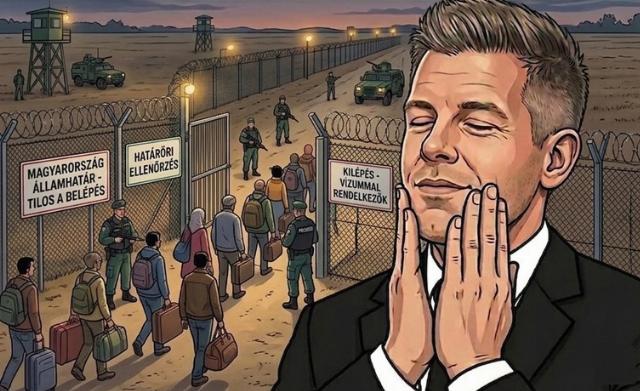
Orban Versus Magyar: What Happened? 

Viktor Orban wasn’t as good as many believe, and Peter Magyar may be better than many people expect.


Viktor Orban, the valiant populist, the restorer of the Christian faith in Hungary, the welcome thorn in the side of the EU Establishment, and the strong ally of President Trump since his first bid for office, has lost his own re-election bid. I had a feeling it would come to this.

Sixteen years of uninterrupted administration as a strong force for conservative, right-wing nationalist populism have come to an end, at least under Orban’s leadership.

Sometimes, voters have a strange fatigue when it comes to governments. Fourteen years of a “Conservative” UK government ushered in the Labour Party in 2024. However, fatigue doesn’t explain Orban’s crushing loss.

What set that off?

Corruption charges and the argument that his administration had looked the other way when sex abuse scandals broke out at a local school.

Economics also reared its ugly head when the EU cut off its funding. Orban’s supposed lack of judicial reforms, as well as his uniform check on EU policy, frustrated Brussels.

Orban faced a crisis election, and inviting US VP JD Vance to campaign on his behalf didn’t help.

Why would Hungarian voters care what a foreign politician thinks? This desperate move only exacerbated how out of touch the Orban government had become. Critics also saw him as too close to Russian “president” Vladimir Putin and unhelpful in resolving the Russo-Ukrainian war. The EU had been waiting for this opportunity: an unpopular Orban facing electoral collapse.

They were salivating for a post-Orban Hungary, one that would stop its Christian restorationism, welcome more LGBT promotion, tolerate more spending, and open its borders.

Would the Orban replacement accomplish their scheme?

His challenger, Peter Magyar, was trained and prepped as an Orban acolyte.

In 2024, he broke from his party, but not over core policy. Magyar (whose name means “Hungarian,” for what it’s worth) campaigned to end corruption and restore good government in Hungary. He campaigned to the right of Orban, calling for an end to importing cheap labor into the country. He campaigned on cracking down harder on immigration—illegal and mass—than the incumbent!

His message, if anyone was listening, wasn’t pro-EU. He was still asking, “What about us Hungarians?”

Supporters of the cultural restoration Right thought that Orban was not getting the job done. Was he failing?

On April 12, 2026, Magyar’s Tisza Party swept the elections, securing a supermajority of up to 140 of 199 seats. Orban won 56 seats, and another far-right party won the rest.

Sure, EU progressive elites celebrate Orban’s loss, as did Barack Obama and George Soros. They view Orban’s downfall as a harbinger of the end of Republican hegemony in Washington later this year.

Yet look again at the results of the Hungarian parliamentary elections. I mentioned three parties that won seats: three right-wing parties. Not one left-wing or centrist element came to power or won seats. A minimum threshold of five percent in the election results is required for a party to place. The left was shut out of the Hungarian parliament.

The Right Wing won Hungary. Orban may have lost his premiership, but Orbanism is standing strong.

This election focused on personalities, not principles.

Magyar is just as socially conservative as Orban. He has already pledged to end the foreign permit workers. He wants to give Hungarians abroad a chance to return to their home country and thrive again. That’s about as “Hungary First” as it gets!

Magyar has already stated that he will not support fast-tracking Ukraine’s membership into the EU. Huge move for ending the Russo-Ukrainian war!

He announced a diversification plan for energy. Instead of relying predominantly on Russia, he wants to draw oil from the South and the West, as well. This sounds like real economic freedom for Hungary. National populism is great, but it must face economic realities. Too many right-wing populist governments are shoveling out money to voters for school supplies, raising families, and pensions. Where is the money supposed to come from? More taxes?! From whom?

Right-wing socialism is still…socialism, and Orban had a problem here.

Eventually, the government runs out of others’ money, or inflation bites whatever purchasing power the government intended for the people. Inflation and tariff pressures weighed down Orban’s reelection chances.

Orban’s Hungary was still not the perfect social conservative paradise for other reasons. Prostitution is still legalAbortion is also still legal. While countries need to encourage their native populations to bear children, that vision will collapse in the face of easy sex and no responsibility. Cultural norms need reinforcement, with no tolerance for deviance.

Orban and his party imposed vaccine passports and health mandates during COVID. How is this good for the working public? Where is the freedom? Too much state-sponsored anything is bad for a country.

Even now, Hungarians cannot own a gun without passing strict major government demands. Czechia made self-defense a right, and in Switzerland everyone owns a gun (Though it’s registered with the state).

Throughout his tenure, Orban strengthened ties with China, joining the deceptive Belt and Road initiative. He even allowed Chinese police to operate in his country! American citizens voiced righteous outrage when the local press exposed former New York City mayor Eric Adams for allowing a CCP-run police station in the Big Apple. Yet no one on the Right complained about Orban allowing the CCP into Hungary? That’s wrong.

There’s room for improvement, and Magyar can exceed Orban’s victories while correcting his mistakes.

He is already doubling down on stopping mass migration!

He is committed to putting all Hungarians first and fighting for the rights of ethnic Hungarians in other countries.

Magyar must revive and restore Hungary’s economy. One can hope he will place his country in a better position to profit without dependence and root out undue Chinese influence.

In a media masterstroke, he appeared on state television to discuss his plans for the country. Without missing a beat, he dressed down the reporter interviewing him, castigating the news organization for not allowing him on their program over the last year and a half. He then scolded them for lying about him and his family.

Then came the coup de grace: he announced his government plan to cut their funding and shut them down. Hungary needs honest independent media, he said, not government-funded agitprop that would inspire envy in Joseph Goebbels or North Korea.

He is not hostile to Putin, but he will not engage him aggressively either: sounds a lot like Trump!

He will not participate in the EU migration pact. He is keeping up the border fences, but he has also pledged to find a way for the EU to release the funds the country needs.

He is making inroads with his Slavic neighbors, including the more populist, nationalist leaders in Slovakia and Czechia

Magyar reminds me of Florida Governor Ron DeSantis. He isn’t just talking the national populist talk. He is walking the walk, and he is sprinting ahead with major reforms.

Orban was T-800. Magyar may well be T-1000, and the EU Left is going to find that he will be worse for their globalist, leftist, secularist agenda.


Source: Orban Versus Magyar: What Happened? – American Thinker

RFK Jr. Is Doing Well


There was skepticism when President Trump nominated Robert F. Kennedy, Jr. to be secretary of Health and Human Services.  He was grilled by Democrats in Congress over his vaccine statements, and there were even Republicans, including Senators Tillis, Murkowski, Cassidy, and McConnell, who questioned the choice.

It’s been just over a year since Kennedy took office, so it’s a good time to ask: How’s he doing?  Compared to his predecessor in HHS — whom no one can name, actually — what has he accomplished so far?

In his short time in office, RFK Jr. has done a lot to save America.  He has directed food manufacturers to remove artificial dyes from their products.  He has overseen the issuance of a revised food pyramid stressing whole foods over processed ones and restoring saturated fat to the diet.  He has revised guidelines for vaccinations that are not based on the science.  He has stepped up studies of chronic childhood disease, and he has ordered unhealthy processed foods to be removed from SNAP and school lunch programs.  He has also proposed reinstating the presidential fitness test in schools, and his MAHA Commission is charged with examining the role of fitness across the board.

Certainly, RFK Jr. is facing an uphill battle in changing America’s lifestyle choices.  A brief tour of any grocery store reveals part of the problem: aisle upon aisle of chips, cookies, sweetened baked goods, overly salted canned goods, and an oversupply of meat and other animal products — far more than our ancestors consumed even fifty years ago.  These choices mirror the habits of consumers.  If the public wanted more soy milk and kale crackers, these items would dominate the aisles, but lifestyle choices take decades to alter.

Sixty years ago, government began educating the public about the cancer risk of smoking.  It took decades, but now smoking has declined from 85% among men in the 1950s to around 20% today, and the incidence of lung cancer has declined along with it, with lung cancer incidence declining between 1990 and 2007 by 15.3% and from 2007 to 2015 by another 25% among males.  But heart disease, diabetes, and other cancers continue to plague America.

What stands out is that it took so long for the public to change its ways.  The first mandatory warnings appeared on cigarette packages exactly sixty years ago.  RFK Jr.’s agenda focuses on banning toxic chemicals in food and food packaging, including PFAS, BPA, BHA, BHT, and industrial solvents; elimination synthetic food dyes; and reducing consumption of processed food.  Along with this, he is promoting organic and whole foods and food from grass-fed and free-range animal products.  Taken together, I believe that these changes would go a long way toward making America healthy again, but so far, Kennedy’s emphasis has been on removing what is toxic and not on adding what is healthy.

Healthy eating is a niche in America, and only that.  Healthy living videos by Dr. Joel Fuhrman and others are popular on YouTube, but the percentage of the population that watches them is infinitesimal.  It’s estimated that McDonald’s alone sells some 2.63 billion hamburgers annually, and that is just one fast food chain.  Frozen prepared food is often not very different from fast food in terms of fat, salt, and sugar content.

Occasionally, politicians have tried to impose food choices on the public, such as when New York Mayor Michael Bloomberg limited the size of soft drinks to 16 oz., but always with disappointing results.  The public will not change until it wants to change.

In fact, the consumption of pizza and burgers, and hot dogs and sausage, and luncheon meats and fried foods — and the corresponding lack of consumption of fruits and vegetables, greens, tofu, nuts, and seeds, and the lack of daily exercise — contributes to many of America’s health problems.  There is abundant evidence for this statement.  The WHO’s International Agency for Research on Cancer has classified processed meat as “Group 1: Carcinogenic to Humans.”  The American Diabetes Association recommends eating less processed food and specifically less in refined carbohydrates and less in added sugars.  The American Heart Association offers a succinct guideline for healthy eating that includes eating more nuts and whole grains along with fruits, vegetables, beans, fish, and low-fat dairy and avoiding processed foods.  The information is out there, but it has not yet sunk in.

Kennedy has also done less to promote exercise than might be expected of a MAHA advocate.  It will take more than a 90-second shirtless video with Kid Rock (which many mocked) to get Americans off the couch.  JFK’s U.S. Physical Fitness Program, headed up by Coach Bud Wilkinson of the University of Oklahoma, set modest goals, such as 15 minutes of physical exercise for all students and testing to track improvement.  In many schools, the program involved much more than 15 minutes, and the results were substantial in the short run, but JFK’s fitness program ended with Kennedy’s death in 1963 and would probably have faded away regardless.

One could argue that some form of fitness program in the schools is far more important today than it was in 1961, when JFK’s program began.  A 2019 article revealed that 27% of potential Army enlistees were too obese or overweight to enlist and that another 47% of men and 59% of women failed the entry-level training test following enlistment.  But nothing the government has done, including the Army’s own attempt to prepare recruits in advance, has made much of a difference.  Obesity rates have doubled over the past 30 years, and they continue to rise.

As always, government programs, however well meaning, cannot alter habits that the public does not want to change.  Tobacco usage declined slowly over decades as the public came to understand tobacco’s relationship with lung cancer and heart disease, but the public made these changes largely on its own.  Government can ban certain toxic chemicals, but essential lifestyle changes have to come from individuals.  Once the public comes to see the dangers of unhealthy habits, it will make the necessary changes, but it will take time.

America is fortunate to have an HHS director who is passionate about making America healthy again.  Some of his actions will have almost immediate benefits, whereas others, such as the Kid Rock video, will have none at all.  What can actually make America healthier is the realization that lifestyle changes may lead to a happier and longer life.  Government can promote that idea, but until it actually sinks in, health changes will be slow to come.

Jeffrey Folks is the author of many books and articles on American culture, most recently Heartland of the Imagination (2011).


Source: RFK Jr. Is Doing Well – American Thinker

When Biblical Education Was The Norm, There Was No ‘Mental Health’ Crisis Among Children


A shocking 94 percent of California teenagers and young adults report experiencing “mental health challenges” in an average month, according to a new poll commissioned by Blue Shield of California’s BlueSky “youth mental health initiative.”

When asked, “How is your mental health today,” almost half of the youth in Los Angeles reported that it was “fair” or “poor.” Statewide, almost a third said the same, with the numbers getting worse and worse as time goes on.

The polling results correspond with the latest CDC data showing 40 percent of youth feel “persistent sadness or hopelessness.” Even more shocking, the national survey found 20 percent seriously considered attempting suicide. Almost 10 percent actually attempted suicide, just over the past year

Ironically, the record levels of mental issues among young Americans come even as government at all levels and public schools roll out more “mental health” and “social-emotional learning” schemes than ever before in history. Some critics suggest there is a link.

Under the guise of dealing with what self-styled experts are calling an unprecedented mental health “crisis,” Big Pharma-funded policymakers are working to make dangerous psychotropic drugs more widely available to young people.

As The Newman Report exposed last year, an official “mental health app” backed by the state of California is targeting vulnerable children with controversial propaganda involving the occult, the New Age, homosexuality, transgenderism, fornication, and more.

With God and the Bible increasingly sidelined, much of the angst being felt by youth in the Golden State is due to confusion. In fact, indoctrination and propaganda in government schools and so-called “social media” are key, the survey results revealed.

According to the poll, 85 percent of youngsters pointed to “gun violence” as a major stressor contributing to the supposed mental-health challenges. Almost eight in 10 cited concerns about alleged man-made “climate change.”

The constant race mongering and “LGBTQ+” propaganda is also taking a toll, with almost 80 percent reporting concerns about “racism” and nearly 70 percent pointing to “discrimination against LGBTQ+ people.”

Concerns about supposed discrimination against immigrants were even more stressful to the state’s increasingly indoctrinated young people, with over 80 percent calling it a “stressor.”

No doubt responding to establishment efforts to promote and normalize censorship, some 84 percent of youth are concerned about the negative impact of “misinformation” online. Virtually all of the young people—97 percent—reported using social media for “fun and entertainment.”

“The data shows youth are deeply affected by the world around them, from climate anxiety and safety to social media pressures,” argued Dr. Nicole Stelter, director of Behavioral Health at Blue Shield of California. “Young people are concerned about the future and how we treat one another.”

“It’s more important than ever that clinicians, educators, policymakers and caring adults listen to what our youth are saying and treat this seriously for what it is — a youth mental health crisis,” added Dr. Stelter.

To help deal with this supposed “mental health crisis,” the Blue Shield of California health plan launched its scheme known as “Blue Sky.” According to a press release, the initiative has supported tens of thousands of “youth” and “educators” while engaging in “youth-driven advocacy.”

Blue Shield’s Blue Sky initiative chief Paula Ambrose suggested that ever-larger quantities of young people must obtain “professional mental health support” to help deal with this. Apparently, “stigma” is holding some back, and so visiting “professionals” must be promoted and normalized.

“It’s clear that stigma is still standing in the way of healing,” said Ambrose. “Reducing stigma isn’t just about encouraging youth to speak up — it’s also about making sure we’re listening and acting on what they’re telling us.”

Ironically, despite the mushrooming growth of “mental health” schemes, drugging, and “social-emotional learning,” the numbers keep getting worse. When Blue Shield polled youth in 2023, 87 percent reported “mental health challenges,” compared with 94 percent in 2025.

The Blue Shield survey was conducted by an outfit called “Children Now,” described as a “leading nonpartisan, California-based research and policy organization.” It was conducted last year and polled some 750 California residents between the ages of 14 and 25.

In Illinois, lawmakers recently approved universal “mental health” screening for all children in government schools. Critics from across the political spectrum and even leaders from within the field of psychiatry slammed the move.

Legendary Harvard-trained psychiatrist Dr. Peter Breggin blasted the schemes of lawmakers to screen all students and normalize the idea of ubiquitous “mental health” issues among children while peddling drugs.

“The idea of screening school children for mental problems is equivalent to screening them for the drug market,” Breggin explained. “This will stigmatize increasing numbers of children, lead many of them to taking dangerous psychiatric drugs, and push some into a lifetime ‘career’ as mental patients.”

“Nothing is worse than telling a child they have a mental problem, first because it demoralizes them, and second because the problem, if there is one, is corrected by improving how we relate to them,” added the psychiatrist, whose work exposing everything from lobotomies to Prozac has led to profound changes in the industry.

The Illinois legislature, where almost 90 percent of politicians’ campaigns are funded by Big Pharma, is also working on bills to mandate “mental health education” and more “social-emotional learning” for students in government schools.

Ironically, a peer-reviewed study by the National Bureau of Economic Research found that “youth suicides are closely tied with in-person school attendance.” When school is out for summer, the number of suicides among students plummets, before skyrocketing again when school begins.

When the Bible, prayer, close-knit family, and biblical education were the norm, there was no “mental health” crisis among children — no epidemic of child suicide, school shootings, or persistent hopelessness. This is all a modern phenomenon.

What the youth need is not “climate” hysteria, gender-bending indoctrination, endless “race” mongering, or even more “mental health” schemes at their government school. What they really need is Truth and love.

In the end, only parents can rescue and protect their children from this escalating horror show. The wellbeing of their precious progeny literally depends on taking urgent action, before it is too late.


Source: When Biblical Education Was The Norm, There Was No ‘Mental Health’ Crisis Among Children – Harbinger’s Daily

Turning Point; David Jeremiah – Coals of Love


NEW!Listen Now

If your enemy is hungry, give him bread to eat; and if he is thirsty, give him water to drink; for so you will heap coals of fire on his head, and the Lord will reward you.
Proverbs 25:21-22

Recommended Reading: Romans 12:14; 12:17-21

A strange, ancient practice used as a metaphor occurs in Proverbs 25:22 and in Romans 12:20. The metaphor is based on an apparent practice of a guilty party being forced to carry a container of burning coals on his head. Some scholars think the practice was common in Egypt; the intent seems to be to motivate a guilty party to repent of his actions. The writer of Proverbs and the apostle Paul both cite the practice (as a metaphor) when encouraging charitable actions toward one’s enemy. In other words, charitable actions toward an enemy may motivate him to repent of his evil deeds.

There are examples in Scripture of feeding and clothing enemy captives in times of war (2 Kings 6:22; 2 Chronicles 28:15), and exhortations against seeking vengeance against those who have hurt you (Romans 12:14, 17-21). Jesus corrected a Jewish tradition that allowed for hating one’s enemies: “Love your enemies, bless those who curse you” (Matthew 5:43-44).

If you have been hurt, follow Jesus’ example and be kind.

The success of the Gospel exasperates its enemies.
Matthew Henry


https://www.davidjeremiah.org

Our Daily Bread – Joining God to Help


He will deliver . . . the afflicted who have no one to help. Psalm 72:12

Today’s Scripture

Psalm 72:12-14

Listen to Today’s Devotion

Apple LinkSpotify Link

Today’s Devotion

As the Taliban swiftly overran the Afghanistan government in 2021, and tens of thousands were trapped with no way to escape, many were isolated and desperate. Ordinary citizens jumped to action, including one young man who launched an Instagram campaign, raising $7 million to pay for chartered evacuation flights. “We’ve shed the political divisions in this situation,” he told a news outlet, “and really come together from all walks of life to rally together and save these people.” They chose to jump into the fray.

It’s not just Afghanistan. From skyscrapers to villages around the world, so many people are alone—enduring crushing sorrows. It’s stunning, however, to see God’s attention turned toward these places of suffering and hopelessness. Somehow, ultimately, in His own way and time, He will “deliver the needy who cry out, the afflicted who have no one to help” (72:12). And remarkably, one way God’s help arrives is through us. Psalm 72 refers to both King Solomon’s work and God’s work—and it’s not always easy to disentangle which is which. God is the rescuer, but He calls us to move with Him.

When we encounter injustice or suffering, we can join Him, moving right into the middle of the ruin. We can follow God and go into the places where no one else is there to help.

Reflect & Pray

What situation have you encountered where it seems like there’s no one else to help? How can you join God in that place?


Dear God, thank You for promising to help us—and for calling us to join You in helping others.


Today’s Insights

Psalm 72 is one of only two psalms attributed to King Solomon (see also Psalm 127). The Expositor’s Bible Commentary says of Psalm 72, “This psalm is a royal psalm wherein petition is made for the prosperity of the Lord’s anointed. The psalm is messianic in the sense that Jesus is the ‘Christ’ (‘anointed one’) who shares in all the promises made to David and to his descendants (see 2 Samuel 7).” Seen as a messianic psalm, it anticipates the time when Jesus will return as “King of kings and Lord of lords” (1 Timothy 6:15; see Revelation 19:16) and bring an end to all injustice and suffering. In fact, this psalm was the inspiration for the classic hymn “Jesus Shall Reign” by Isaac Watts, which celebrates the future worldwide reign of Christ. Today, as we wait for His return, we can join Him and help those who are suffering.

Learn how you can be moved to helping those in need.


http://www.odb.org

Denison Forum – What is the “shadow docket” and why does it matter?


The “shadow docket” refers to the way the Supreme Court decides whether to issue emergency rulings, often determining whether a lower court’s decision can take effect while it’s being appealed to a higher court. The practice has become far more common in recent years, and a recent New York Times story has shed new light on how its rise began.

Why it matters: While the Supreme Court is intended to be the least politicized branch of government, it has faced increasing accusations over recent years that it has lost its independence. The litany of shadow docket decisions in response to appeals from the Trump administration and others are a big reason why so many have sought to discredit the Court over that time.

The backstory: How the shadow docket works

Maybe I’m just paying more attention to it now, but it feels like the Supreme Court has been in the news a lot more often over the last few years. Court insiders like Sarah Isgur have called it the “last branch standing,” but its members have also come under fire for appearing to be overly partisan and—especially over the last year—beholden to President Trump. That description is flawed for a number of reasons, but a recent story from the New York Times shed light on one of the Court’s most pressing problems: the shadow docket.

Continue reading Denison Forum – What is the “shadow docket” and why does it matter?

Harvest Ministries; Greg Laurie – Watch Out


 You will be accepted if you do what is right. But if you refuse to do what is right, then watch out! Sin is crouching at the door, eager to control you. But you must subdue it and be its master. 

—Genesis 4:7

Scripture:

Genesis 4:7 

Years ago, my son Christopher was lying out in the sun at our house when he woke up to find a huge gopher snake, coiled up and hissing at him, poised to strike. It must have been six or seven feet long. Terrified, he ran into the house and shut the door behind him.

His experience reminds me of a hard truth about the Christian life. Like that gopher snake, sin is poised to strike—usually when we least expect it. And it’s been that way since the very beginning.

When Cain saw that the Lord accepted Abel’s offering but not his, he was angry. So, God gave him a warning. He essentially told Cain what was going to happen to him if he didn’t get himself under control: “You will be accepted if you do what is right. But if you refuse to do what is right, then watch out! Sin is crouching at the door, eager to control you. But you must subdue it and be its master” (Genesis 4:7 NLT). The passage portrays sin as a dangerous wild animal, always ready to pounce.

The apostle Peter used similar imagery in his description of the devil in 1 Peter 5:8: “Stay alert! Watch out for your great enemy, the devil. He prowls around like a roaring lion, looking for someone to devour” (NLT). And while the imagery is certainly sobering, we need to keep these words of Scripture in proper perspective. It’s not so much an emergency broadcast warning as it is a word to the wise. Peter doesn’t tell us to panic, hide, or be afraid. He tells us to be alert.

Our enemy isn’t all-powerful, but he is always watchful. He looks for opportunities to make us stumble, to make us doubt, to make us lose sight of the path God would have us travel. He attacks us when we’re weak—physically, emotionally, mentally, relationally. He also attacks us when we seem to be strong, after a spiritual victory or a “mountaintop” experience. In good times and bad, he keeps sin crouched at our door, ready to pounce.

But we need not fear. As the psalmist wrote, “The LORD hears his people when they call to him for help. He rescues them from all their troubles” (Psalm 34:17 NLT).

So, the next time sin comes knocking at your door, you might say, “Lord, would You mind getting that? I’m going to stand in Your strength. I’m going to trust in You. You are the only one who can give me the strength to overpower sin.” If we will master sin, then we must first be mastered by Him who mastered it.

Reflection Question: What types of sin often crouch at your door, poised to strike? Discuss this with believers like you on Harvest Discipleship!


Harvest.org | Greg Laurie

Days of Praise – Accepted in the Beloved


by Henry M. Morris, Ph.D.

“To the praise of the glory of his grace, wherein he hath made us accepted in the beloved.” (Ephesians 1:6)

This wonderful verse assures that all who have been saved by God’s grace have been “accepted” by the Lord. However, this is not just a marginal acceptability. The Greek word occurs only one other time in the New Testament, and there it appears in the words of the angel Gabriel to Mary. “Hail, thou that art highly favoured, the Lord is with thee: blessed art thou among women” (Luke 1:28). That is, we are not merely accepted, but we are highly favored by God!

This is not because of our own personal merits, of course. It is because God sees us as in His Son; He loves us because He loves Him, and we are in Him.

Although Christ is called God’s “beloved Son” seven times in the New Testament (each time directly by the Father Himself), there is only one other time when He is spoken of simply as “the beloved.” This is in Matthew 12:18 (quoting Isaiah 42:1): “Behold my servant, whom I have chosen; my beloved, in whom my soul is well pleased: I will put my spirit upon him.”

The love of God the Father for His beloved Son is the root source of every other love in the universe, for it is the one love that is eternal. “Father, I will that they also, whom thou hast given me, be with me where I am; that they may behold my glory, which thou hast given me: for thou lovedst me before the foundation of the world” (John 17:24). This is what it means to be highly favored in the beloved! This was the prayer of Christ on His way to Gethsemane the night before He went to the cross.

We who are in Him as redeemed sinners saved by grace through faith are predestined to be with Him in glory, to behold His glory, and forever to be “to the praise of the glory of his grace” (today’s text). HMM


https://www.icr.org/articles/type/6

Joyce Meyer – You Can Be Free from Shame


I live in disgrace all day long, and my face is covered with shame.

Psalm 44:15 (NIV)

Have you ever felt like the writer of today’s scripture—as though you go through life wearing a cloak of shame? I felt this way for years, and I know it’s a terrible way to feel. I also know there is hope!

Many people are “rooted” in shame. This means their shame is so deep that it functions as the root of a tree and actually produces “fruit” in the form of unhealthy thoughts and behaviors that negatively affect their lives and relationships. Shame is different from guilt, and it affects people more deeply than guilt. Normal guilt causes us to feel embarrassed, regretful or bad about something we have done, while shame makes us feel bad about who we are.

When you and I make mistakes or commit sin, we feel bad until we repent and are forgiven. Then we’re able to put it behind us and go on without any lasting harm. But when people are rooted in shame, it affects everything about their lives. They have such deep negative attitudes and feelings toward themselves that their negativity poisons everything they try to accomplish. They struggle more than people who don’t deal with shame and seem doomed to failure because they have no confidence.

According to Hebrews 12:2, Jesus bore our shame for us on the cross. This includes both the shame anyone would feel in certain situations and the deeply rooted shame that affects some people. You don’t have to live ashamed of who you are. Jesus has set you free.

Prayer of the Day: Thank You, Jesus, for Your work on the cross and for making a way for me to live free from shame. Heal my heart, I pray.


http://www.joycemeyer.org

Max Lucado – As I Have Done to You 


Play

Victoria Ruvolo doesn’t remember the 18-year-old boy leaning out the window, of all things, holding a frozen turkey. He threw it at her windshield. Crashing through the glass, it shattered Victoria’s face like a dinner plate on concrete.

John 13:14-15 (NKJV) says, “Since I, the Lord and Teacher, have washed your feet, you ought to wash each other’s feet…do as I have done to you.” Victoria Ruvolo did. Months later, she stood face to face with her offender in court. He was no longer cocky. He as trembling, tearful, and apologetic. Six months behind bars, five years’ probation. Everyone in the courtroom objected to the light sentence. He sobbed, but she spoke. The light sentence was her idea. She said, “I forgive you, and I want your life to be the best it can be.” Grace does this. Grace chooses to give the forgiveness that’s been received.


Home

Today in the Word – Moody Bible Institute – Steadfast Love


Read Lamentations 3:1–26

Michael Card writes about lament: “One of the fascinating features of biblical laments…was the way every one transitions. These psalms begin lamenting…and then at some unpredictable point they transition and begin to praise…In three important laments, Psalms 13 and 69 and Jeremiah’s Lamentations, the word hesed appears at this turning point. It marks the transition from despair to hope.”

The prophet Jeremiah wrote the grief-saturated book of Lamentations in the aftermath of Jerusalem’s destruction and Israel’s exile in 586 BC (see our August 2025 study). Lamentations is a raw outcry of pain and loss. Jeremiah began chapter 3 by blaming God for his hardships. He accused God of afflicting him, driving him away, and turning against him out of wrath (vv. 1–3). Then, Jeremiah described his body—broken, aged, and covered in darkness (vv. 4–6).

These physical details vivify his human vulnerability and agony. Jeremiah’s pain was also spiritual. In verses 7–9, he uses the metaphor of a prisoner. His grief felt like thick walls and heavy chains. Most devastating was the seeming silence of God. He likened God to a bear or a lion who attacked and left him for dead. Jeremiah’s grief took a social and emotional toll. His people mocked him (v. 14) until his hope and peace were gone (vv. 17–18).

But God! In verse 21 we see a turning: “Yet this I call to mind and therefore I have hope.” This transition is an intentional shift in thought, leading to one of the most hope-filled declarations in all of Scripture: “Because of the LORD’s great love we are not consumed, for his compassions never fail. They are new every morning; great is your faithfulness” (v. 22). The Hebrew word for “great love” (“steadfast love” in the ESV) is hesed.

Go Deeper

When have you expressed lament? Did you transition to hope? If so, how?

Pray with Us

God, is it possible to trust You even in “the valley of the shadow of death”? Yes, Your Word says that in You we find hope and strength, and Your steadfast love heals the brokenhearted. We praise Your holy name!

Because of the LORD’s great love we are not consumed, for his compassions never fail. They are new every morning; great is your faithfulness.Lamentations 3:22–23


https://www.moodybible.org/