Biblical Authority And Limits: The True Meaning Of The ‘Separation Of Church And State’

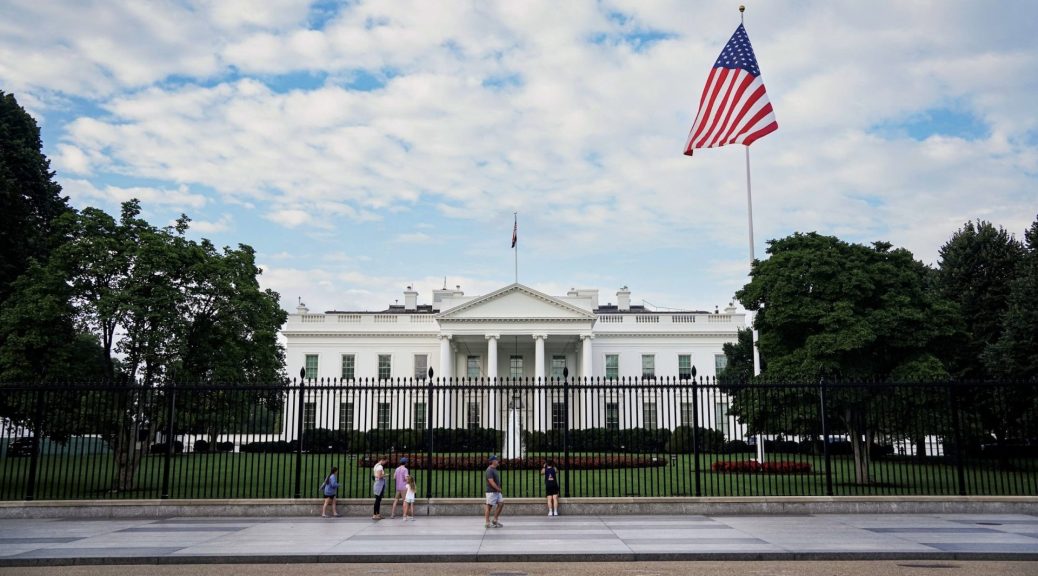
President Trump’s Truth Social post last weekend which seemed to depict him as the Great Physician (though he later deleted it) serves as a reminder of why the biblical principle often described as the separation of church and state still matters.

Yes, I support that separation and always have. Let me explain.

When many on the Left invoke “separation of church and state,” they often mean the exclusion of God from government, suggesting He has no authority or place in public life. That is neither biblically grounded nor practically sustainable. As the Apostle Paul writes in Romans 13:1“there is no authority except from God, and the authorities that exist are appointed by God.” Civil leaders get their authority from God.

And when governments deny or marginalize that truth, they ultimately erode the very foundation of their own authority.

Scripture draws a clear boundary. Civil leaders are not to assume roles or authority that belong to God or His ordained institutions, yet spiritual leaders are responsible for upholding those boundaries.

We see this vividly in 2 Chronicles 26 during King Uzziah’s reign. Israel was flourishing, economically strong, militarily secure, and territorially expanding. But success gave way to pride: “But when he [Uzziah] was strong, he grew proud, to his destruction. For he was unfaithful to the LORD his God and entered the temple of the LORD to burn incense on the altar of incense. But Azariah the priest went in after him, with eighty priests of the LORD who were men of valor, and they withstood King Uzziah and said to him, ‘It is not for you, Uzziah, to burn incense to the LORD, but for the priests…’” (2 Chronicles 26:16-18)

He entered the temple to burn incense, a duty reserved exclusively for the priests. Azariah and 80 priests confronted him, warning that he had crossed a line established by God. Uzziah’s judgment was swift and sobering.

The lesson is clear: God establishes both authority and limits. The king was not above those limits. The priests had the authority not only to defend the sacred but also to confront and correct the king. To do so, they needed to be independent of the king.

This is the proper understanding of the separation of church and state: civil leaders must not assume spiritual authority, and spiritual leaders must not surrender moral authority. It protects the church’s independence so it can speak truth to power — and it restrains the state from assuming spiritual authority it does not possess.

Dr. Martin Luther King Jr. captured this well in his sermon “A Knock at Midnight”“The church must be reminded that it is not the master or the servant of the state, but rather the conscience of the state. It must be the guide and the critic of the state, and never its tool. If the church does not recapture its prophetic zeal, it will become an irrelevant social club without moral or spiritual authority.”

When any political leader is portrayed — or allows himself to be portrayed — in explicitly messianic terms, a line has been crossed. And when the church remains silent, the line fades.

The question is not merely about one post or one moment. It is whether the church will faithfully serve as the conscience of the state — or quietly surrender that role.

Because when the line disappears, both institutions suffer — and truth is the casualty.


Source: Biblical Authority And Limits: The True Meaning Of The ‘Separation Of Church And State’ – Harbinger’s Daily

Mike Pompeo: We Must Resist The Left’s War On Religious Freedom


It should go without saying that the First Amendment freedoms of conscience, religion, and speech are foundational to our constitutional order. The more these rights are eroded, the faster we will find ourselves on a path toward the type of political and social decay afflicting so much of Western Europe.

This should be a completely bipartisan position. Unfortunately, the Left’s growing hostility to people of faith – and particularly, to Christians who oppose abortion – has created an environment in which progressive politicians feel empowered to trample upon the First Amendment rights of pro-life individuals and organizations.

Thankfully, President Trump is prioritizing the protection of conscience rights and is taking long-overdue actions to address the many abuses of the previous Administration. A new report by the Justice Department’s Weaponization Working Group has revealed the full extent of the Biden Administration’s efforts to undermine the First Amendment rights of pro-life Americans. An extensive review of internal records confirms that the Biden Justice Department systematically weaponized the Freedom of Access to Clinic Entrances (FACE) Act against pro-life Americans – an outrage that the ACLJ has fought for years to expose.

The findings of the report are damning: showing that the Biden DOJ worked with pro-abortion groups like Planned Parenthood to monitor and target pro-life activists with legal harassment; sought significantly harsher sentences for pro-life defendants than pro-abortion defendants; and ignored or downplayed violent attacks on faith-based Pregnancy Resource Centers.

Since the Supreme Court struck down the constitutionally factitious Roe v. Wade decision, progressives have intensified their persecution of pro-life activists and organizations, as well as the Pregnancy Resource Centers that provide ultrasounds and other services that encourage women to bring their pregnancies to term. Ironically, the people who never stop shouting about “choice” apparently do not want women to have the opportunity to do just that if it means choosing life.

The collusion between the Justice Department – an arm of the Executive branch tasked with the fair and impartial administration of justice to all Americans – with pro-abortion activists against their ideological foes flies in the face of the DOJ’s mission, and the animating spirit of our Constitution. This doesn’t just compromise the rights of pro-life Americans – it opens the door for future abuses by government officials of all political and ideological stripes.

As a person of faith and as an American, I am grateful to the current Administration for doing the necessary to defend the First Amendment liberties of pro-life Americans. We cannot have a country in which the government treats our constitutional rights as conditional, or as favors to be granted to preferred political constituencies rather than God-given liberties.

But the fight doesn’t stop here. While we can hope that the legal remedies being pursued by the Trump DOJ will chill future efforts to engage in this type of behavior, there can be little doubt that pro-abortion activists will continue to use their power within the increasingly radical far-Left base to push for these tactics to continue. I give thanks every day for organizations like the ACLJ, which are truly doing the Lord’s work to ensure that these anti-constitutional, anti-faith zealots do not prevail.


Source: Mike Pompeo: We Must Resist The Left’s War On Religious Freedom – Harbinger’s Daily

The Pope, Iran, and My Being Sentenced to Death As a Christian in Iran


Only after my release from Iran’s notorious Evin prison in 2009 did I begin to learn about the extent of the wide, grassroots support my friend and I received from around the world. At one point, one senior prison official angrily let me know about the huge number of letters of support that were sent to us in prison, though we were never given access to any of them. The number must have been vast, in that it’s believed that the widespread pressure on the Islamic regime was at least in part responsible for our being released from death row, fearing the possibility of being executed by hanging at any time.

It’s no secret that since 1979, the Islamic Republic has used arrests, torture, and execution as a means of repressing the Iranian people. Hundreds of thousands have been slaughtered over the decades, some following fake, staged trials like mine, where the verdict was predetermined. Others have been executed in cold blood on the streets, many of whose remains “disappeared” by being buried and literally paved over, thrown in lakes with their hands bound, and other sick, inhuman acts that define the Islamic Republic.

With hundreds of thousands of Iranians executed, what made my case different? Why the international outcry from people as influential as the Pope, and why does that matter today?

I was arrested in March 2009 and convicted of “apostacy,” carrying an automatic death sentence. My “crime?” I converted to Christianity a decade earlier. When my friend and I were arrested, all the authorities knew was that we had become Christians. That was a crime enough for them, and reason enough to sentence us to death by hanging. They did not know that we had distributed 20,000 Bibles across Iran, that we ran two home churches, that we spoke openly about Jesus and the Gospel, bringing many other Iranians who were hungry for truth and a relationship with the true God to Christianity as well.

Since being released from prison due to the pressure on the regime and moving to the United States, I have spoken out and written widely about the need to bring down the Islamic Republic. In a dream, God once told me He was giving them a chance to repent, otherwise He would destroy them. Given the evil it represents and the death and suffering it has inflicted, no means to do so are illegitimate. I speak from my personal experiences, but also as a Christian. So it’s shocking to hear Christians directly or indirectly defend the Islamic regime by not standing up and speaking out for oppressed Christians in Iran, the Iranian people, and supporting any means necessary to eradicate the Islamic regime when Islam is at its core the enemy of Christianity.

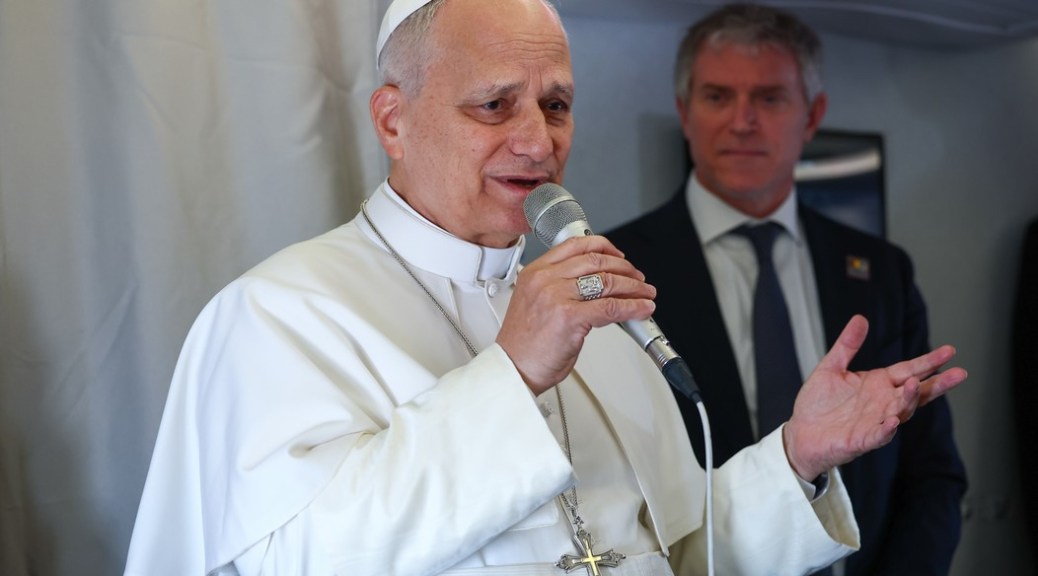
Recently, there has been friction between President Trump and Pope Leo related to the war against the Islamic Republic. The president wrote that the Pope “should get his act together as Pope, use Common Sense, stop catering to the Radical Left, and focus on being a Great Pope, not a Politician. It’s hurting him very badly and, more importantly, it’s hurting the Catholic Church.”

Pope Leo responded, “I have no fear of the Trump administration or speaking out loudly of the message of the Gospel, which is what I believe I am here to do…there has also been this threat against the entire people of Iran. And this is truly unacceptable! There are certainly issues of international law here, but even more, it is a moral question concerning the good of the people as a whole, in its entirety.”

What I know as an Iranian who spent nearly a year on death row, and a lifetime subjugated by the evil Islamic regime as a woman and as a Christian, is that the threat to the Iranian people comes from the Islamic regime. Not only should pressure not yield, but pressure on the regime works. The Islamic Republic is evil. The Iranian people and Christians in Iran must be supported through all means necessary. If Pope Benedict spoke up on my behalf, I can’t imagine him not speaking up for all Iranians, and Iranian Christians in particular. Where was Pope Leo’s moral outrage when the Islamic regime slaughtered tens of thousands?

The Islamic regime has slaughtered tens of thousands of Iranians this year alone, injuring hundreds of thousands. The regime is evil, satanic, to its core. It must be stopped. How can the Pope do anything other than support the Iranian people, the persecuted Iranian church, and every effort to bring down the godless ayatollahs, mullahs, and IRGC, who have repressed Iranians for so long, not to mention being responsible for the death and harm to hundreds of thousands around the world?

The Pope also recently stated that God does not hear the prayers of those who make war. Forget that this is biblically unfounded, that God Himself designated people who led and fought wars to be some of the greatest Biblical role models; sometimes, war is necessary. In the case of Iran, it is. If the Islamic regime is not eliminated and Iran is not freed from the darkness of Islam, it will continue to infiltrate Western society, erode our Judeo-Christian values, and see many more victims inside and outside Iran who will not be as lucky as I was.

But if Pope Leo doesn’t believe me, hopefully he’ll listen to the words of the prophet Jeremiah (49:34-39), who says that God Himself will destroy Elam (modern Iran) and establish His kingdom there. Rather than being critical of the war to destroy the regime, the Pope should be celebrating it as a prophecy fulfilled.


Marziyeh Amirizadeh is an Iranian American who immigrated to the U.S. after being sentenced to death in Iran for the crime of converting to Christianity. She endured months of mental and physical hardships and intense interrogation. She is the author of two books (the latest, “A Love Journey with God”), a public speaker, and a columnist. She has shared her inspiring story throughout the United States and around the world, to bring awareness about the ongoing human rights violations and persecution of women and religious minorities in Iran, www.MarzisJourney.com.

She is also the founder and president of NEW PERSIA, whose mission is to be the voice of persecuted Christians and oppressed women under Islam, to expose the lies of the Iranian Islamic regime, and restore the relationships between Persians, Jews, and Christians. www.NewPersia.org.


Source: The Pope, Iran, and My Being Sentenced to Death As a Christian in Iran

Today in the Word – Moody Bible Institute – Boaz Responds


Read Ruth 3:10–15

Have you ever wanted something badly but were completely unsure how it would turn out? Achieving the goal feels impossible. For Ruth, certainly, her situation was complicated.

At Naomi’s request, Ruth had approached Boaz, asking him to be her redeemer. But another complication will come between them and the redemptive future for which they longed. The scene opens with Boaz responding to Ruth’s overture by uttering a blessing from the Lord and calling her “daughter” (v. 10). He understood her intent to be pure, and he too acted virtuously. He praised her acts of hesed, proclaiming that her gesture of hesed toward him was even greater than the hesed she had shown toward Naomi. Not only had she sacrificed her home to follow her mother-in-law, she also laid aside any preference for a younger man to pursue a marriage with Boaz.

Boaz assured Ruth that he would do as she asked, and he complimented her character (v. 11). He explained that the whole town knew of her reputation. Her uprightness was so astounding that people were talking. The reader should remember that the author said something similar about Boaz in 2:1.

Boaz acknowledged his role and responsibility as guardian-redeemer. But he then uttered an unexpected twist—a new complication (v. 12). According to the clan structure, another nearer relative (guardian) should have first rights of refusal when it came to both the land and Ruth. Boaz acted with full integrity. He would present the opportunity to the nearer guardian before making any move of his own.

Boaz cared for Ruth by reassuring her of his intent, protecting her reputation, and providing more food. The next morning, Boaz went straight to town. He took the initiative in doing the right thing.

Go Deeper

What complications are you facing now? How can you trust God, even in the midst of confusing circumstances?

Pray with Us

Who is like you, God? You love us, You watch over us and guide us. Even in the most difficult, confusing circumstances we can trust You because You have a plan for our lives, and Your plans cannot be thwarted.

What I have said, that I will bring about; what I have planned, that I will do.Isaiah 46:11


https://www.moodybible.org/

Our Daily Bread – Accountability Matters


[A person] who wrongs another . . . must confess the sin they have committed. They must make full restitution for the wrong they have done. Numbers 5:6-7

Today’s Scripture

Numbers 5:5-10

Listen to Today’s Devotion

Apple LinkSpotify Link

Today’s Devotion

A judge used a unique approach to address shoplifting—sentencing offenders to wash cars in a local store’s parking lot as part of their community service. He hoped it would deter future thefts and serve as a vivid reminder of the consequences of wrongdoing. He emphasized that actions have consequences and accountability matters.

The judge’s sentence reflects the instruction in Numbers 5:6-7: “[One] who wrongs another . . . must confess the sin they have committed. They must make full restitution.” In these verses, we see the importance God places on acknowledging wrongdoing, confessing sin, and seeking restoration. And they underscore a profound truth: Every offense revealed disloyalty to the ideals of Israel’s society and showed that the offender was “unfaithful to the Lord” (v. 6).

Just as washing cars in public serves as a humbling consequence that encourages reflection and responsibility, God called Israel to recognize their sins honestly—confessing them and seeking forgiveness. True freedom came when they confronted their actions, made amends, and embraced His grace.

Today, let’s take a moment to reflect sincerely on our lives before God. As we seek reconciliation and restitution where necessary (see Matthew 5:23-24; Luke 19:8-10), His mercy and forgiveness will restore us to wholeness.

Reflect & Pray

How can you pursue reconciliation with someone you’ve wronged? Why is restitution so important?

Dear God, please show me where I’ve been wrong and help me pursue reconciliation and restitution.

Today’s Insights

Numbers 5 restates a law first given in Leviticus 6:1-7 that when someone harms a neighbor through deceit, theft, or fraud, they must confess and not only make full repayment but add a fifth of the value to it. They must also sacrifice a ram as a guilt offering. Numbers 5 adds a further stipulation that if restitution can’t be made directly to the person wronged, and if they have no close relative to pay restitution to, then repayment should be given to the priest—returning what they’d wrongly taken back to God (v. 8).

This highlights the truth that harming another also damages someone’s relationship with God (v. 6). Yet this provision of offering a sacrifice and making restitution to a priest also highlights God’s grace. Even when it’s impossible to correct the wrong done to another, because of Christ’s sacrifice, when we confess our sin, God still provides a way to a restored relationship with Him.

Watch more on restored relationships.


http://www.odb.org

Denison Forum – In President Trump’s feud with the pope, who is right?


Is America’s war with Iran just?

The feud between President Trump and Pope Leo XIV continued on Thursday, when the pope decried that “The world is being ravaged by a handful of tyrants,” in what many took to be a thinly veiled shot at the president. Given that Pope Leo was speaking in Cameroon, where real tyrants have plunged much of Africa into a perpetual state of war, it’s possible that the pope’s comments were intended solely for his immediate context. However, few find that suggestion convincing.

After all, given the extent to which their feud has permeated the larger culture, it would be quite an oversight to say something so potentially incendiary without giving some thought to how others might perceive it. And, at least thus far in his time as pope, Leo does not seem like a man given to that level of oversight.

But how did we reach the point where the leader of the free world and the leader of the world’s largest church are publicly tearing one another down?

Continue reading Denison Forum – In President Trump’s feud with the pope, who is right?

Days of Praise – God Is Spirit


by Henry M. Morris III, D.Min.

“God is a Spirit: and they that worship him must worship him in spirit and in truth.” (John 4:24)

Mankind has always struggled with this aspect of God. The second commandment prohibited any attempt to represent God with any physical shape (Exodus 20:4–5). The triune God cannot be contained by finite attributes.

  • “Now unto the King eternal, immortalinvisible, the only wise God, be honour and glory for ever and ever. Amen.” (1 Timothy 1:17)
  • “Who only hath immortality, dwelling in the light which no man can approach unto; whom no man hath seen, nor can see: to whom be honour and power everlasting. Amen.” (1 Timothy 6:16)

Were it not for the Second Person of the Godhead, He whom the apostle John identifies as “the Word,” we would have no possibility of knowing God (John 1:1–14). Philip asked to see the Father, and the Lord Jesus replied, “He that hath seen me hath seen the Father” (John 14:9).

But how can this be? Paul explained to the Philippian church that Jesus Christ emptied Himself, took on the form of a servant, and was made in the likeness of men (Philippians 2:7). Our Lord Jesus, our Redeemer and Savior, the same Creator who spoke the worlds into existence, “was made flesh” (John 1:14) in order to provide all that was necessary for the thrice-holy God to “be just, and the justifier of him which believeth in Jesus” (Romans 3:26).

Jesus insisted “no man can come to me, except the Father which hath sent me draw him” (John 6:44). Salvation is not possible unless “he that cometh to God [believes] that he is, and that he is a rewarder of them that diligently seek him” (Hebrews 11:6). Jesus Himself told the Samaritan woman, “God is a Spirit: and they that worship him must worship him in spirit and in truth.” HMM III


https://www.icr.org/articles/type/6

Joyce Meyer – Get to Know People


Be honest in your judgment and do not decide at a glance (super- ficially and by appearances); but judge fairly and righteously.

John 7:24 (AMPC)

Have you ever met someone you immediately disliked? I’m sure we all have. But how could we honestly dislike someone we barely know or perhaps don’t know at all?

I believe it’s because we have let an attitude, or a mindset, affect our feelings and opinions without ever examining where the thought came from or why we have it.

There are lots of reasons why we might not like someone, but none of them are valid reasons to judge them. Perhaps they have a personality type that we don’t enjoy, or they may have a personality that reminds us of someone who has hurt us in the past. An insecure woman could meet a very beautiful woman and feel a dislike for her simply because she feels threatened by her good looks. It took me a few years to realize that I rejected people who reminded me of my father. He was gruff, negative, and generally unfriendly, so I preferred people who had none of those traits, even though I was that way myself.

It is important that we get to the root of these problems, because God’s Word teaches us not to judge at a glance or superficially. And if we take time to get to know people a little more intimately, we may even like them more.

It is wise to always treat others the same way we want them to treat us.

Prayer of the Day: God, I want to see people the way You see them. Give me Your eyes and Your heart. Let me give people a chance, and not judge superficially, amen.


http://www.joycemeyer.org