Tag Archives: human-rights

Max Lucado – Living Loved


Listen to Today’s Devotion

The secret to loving is living loved. It’s the forgotten first step in relationships. Remember Paul’s prayer? “May your roots go down deep into the soil of God’s marvelous love” (Ephesians 3:17 NLT).

Many people tell us to love. Only God gives us the power to do so. We know what God wants us to do. “This is what God commands. . .that we love each other.”  (1 John 3:23). But how can we? How can we be kind to those who are unkind to us? How can we love as God loves? By being loved. By following the principle: receive first and love second. God loves you personally…powerfully…passionately! He loves you with an unfailing love. Others have promised and failed. But God has promised and succeeded!

Read more A Love Worth Giving

For more inspirational messages please visit Max Lucado.

Home

Denison Forum – What Meghan Markle must do to become British

As most of the planet knows, Meghan Markle will marry Prince Harry in seventeen days. However, the British have a rule: they want their royal family to be British. And she’s American.

For her to become a British citizen, she must have lived in Britain for three years, have a good knowledge of English, be of sound mind, and pass the “Life in the UK” test. To fulfill the last requirement, she must successfully answer eighteen out of twenty-four questions selected from some three thousand facts.

She might be asked the age of “Big Ben” (it was cast on April 10, 1858) or the height of the London Eye Ferris wheel (135 meters—I had to look up both answers). More than a third of those who recently took the test failed it. One applicant failed it sixty times.

And there’s one other requirement: the couple must earn a combined 18,600 pounds (approximately $25,000). Since the royal family is worth $88 billion, this shouldn’t be a problem.

Not everyone is happy with the “Life in the UK” test. A report last month by Britain’s House of Lords committee on citizenship stated, “The current test seems to be, and to be regarded as, a barrier to acquiring citizenship rather than a means of creating better citizens.”

Loneliness in America

Continue reading Denison Forum – What Meghan Markle must do to become British

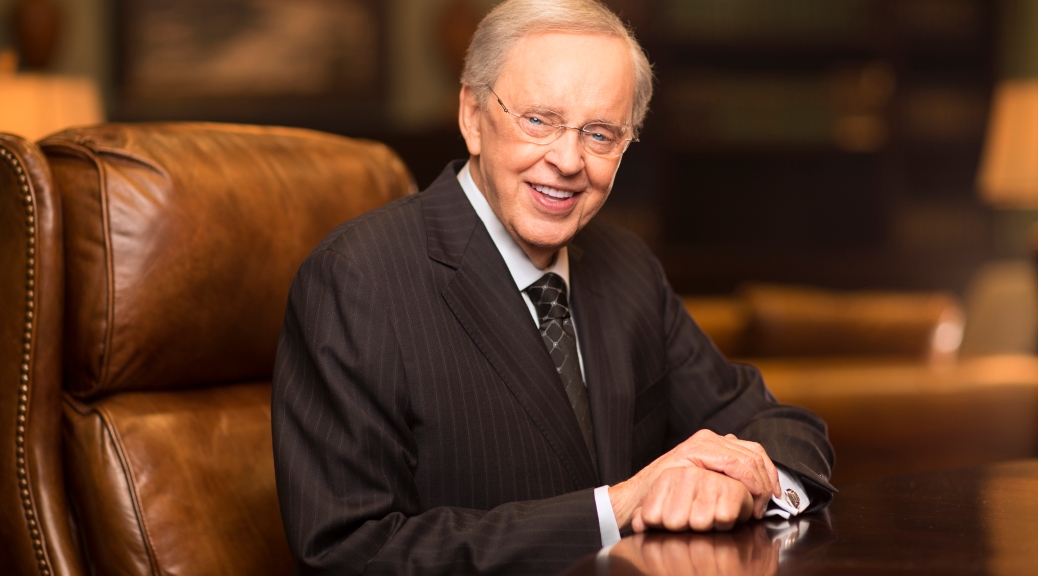
Charles Stanley – Our Inheritance


Ephesians 1:3-14

Do you ever feel as if the Christian life is nothing but sacrifice? After all, Jesus said those who follow Him must deny themselves, take up their cross daily, and follow Him (Luke 9:23). If we look at salvation only from an earthly perspective, it may seem costly, but today’s passage opens our eyes to the vast riches of grace that God has lavished upon us in Christ Jesus.

From start to finish, our salvation includes an abundance beyond imagination. The climax of these spiritual blessings is found in Ephesians 1:11: “We have obtained an inheritance, having been predestined according to His purpose.” At the moment we come to faith, we receive every benefit mentioned in today’s passage, along with the promise of future blessings. The Holy Spirit within us is the pledge, or deposit, guaranteeing our inheritance.

Let’s consider just one aspect of our amazing legacy in Christ—our physical form. Philippians 3:21 says that when Jesus returns, He will “transform the body of our humble state into conformity with the body of His glory.” Right now we groan in bodies weakened and corrupted by sin, but these will be changed in the twinkling of an eye when Jesus comes for us.

John describes it this way: “We know that when He appears, we will be like Him” (1 John 3:2). God’s purpose of glorifying His Son in us will then be accomplished as we are fully conformed to Christ’s likeness. So how are we to live in light of our coming inheritance? John summarizes the answer quite nicely in the next verse: “Everyone who has this hope fixed on Him purifies himself, just as He is pure.”

Bible in One Year: 1 Chronicles 1-3


http://www.intouch.org/

Our Daily Bread — Waiting in Anticipation


Read: Psalm 130:1–6 | Bible in a Year: 1 Kings 10–11; Luke 21:20–38

I wait for the Lord more than watchmen wait for the morning, more than watchmen wait for the morning. Psalm 130:6

Every May Day (May 1) in Oxford, England, an early morning crowd gathers to welcome spring. At 6:00, the Magdalen College Choir sings from the top of Magdalen Tower. Thousands wait in anticipation for the dark night to be broken by song and the ringing of bells.

Like the revelers, I often wait. I wait for answers to prayers or guidance from the Lord. Although I don’t know the exact time my wait will end, I’m learning to wait expectantly. In Psalm 130 the psalmist writes of being in deep distress facing a situation that feels like the blackest of nights. In the midst of his troubles, he chooses to trust God and stay alert like a guard on duty charged with announcing daybreak. “I wait for the Lord more than watchmen wait for the morning, more than watchmen wait for the morning” (v. 6).

God can be trusted in the light and in the dark.

The anticipation of God’s faithfulness breaking through the darkness gives the psalmist hope to endure even in the midst of his suffering. Based on the promises of God found throughout Scripture, that hope allows him to keep waiting even though he has not yet seen the first rays of light.

Be encouraged if you are in the middle of a dark night. The dawn is coming—either in this life or in heaven! In the meantime, don’t give up hope but keep watching for the deliverance of the Lord. He will be faithful.

Please bring light to my darkness. Open my eyes to see You at work and to trust You. I’m grateful that You are faithful, Father.

God can be trusted in the light and in the dark.

By Lisa Samra

INSIGHT

In Psalm 130:5–6 the word wait(s) appears five times. In the Lord’s development of our personal faith, He often delays an answer to prayer to deepen our trust in Him. At times this can be perplexing. Asking for His intervention for a wayward child or for healing of a painful illness often carries a sense of urgency. We pray, “Lord, I need your help now!” But “waiting on the Lord” takes discipline and develops a perseverance in our faith that only steadfastness can yield. Abram waited years for Isaac, the child of promise, to finally be given to him. And this was through Sarah’s unlikely conception when she was advanced in years and beyond the age of childbearing. Yet God’s sovereign hand was orchestrating these events. Abram waited on God in prayer, and eventually God granted him offspring too numerous to count (Genesis 12; 16:10; 17:1–19).

What prayers are you waiting for God to answer? In what ways might your heavenly Father be developing your faith as you wait?

Dennis Fisher


http://www.odb.org

Ravi Zacharias Ministry – Is Trust Still Possible? Facebook Distrust and the Surprising Relevance of Faith


Years ago the late night comedian Conan O’Brien told a joke in his Year 3000 sketch that went viral. It goes like this: “YouTube, Twitter, and Facebook will merge to form one super time-wasting website called YouTwitFace.”

Well, after watching Mark Zuckerberg defend the credibility of Facebook before Congress, I couldn’t help but think that it is we who are the twits in the recent Facebook struggle. It is clear that Facebook users do not have much trust in the platform they spend their time scrolling on an hourly basis. Recent data provided by the think-tank Ponemon Institute shows that only 27 percent believe that “Facebook is committed to protecting the privacy of my personal information.” If you thought that the catastrophic levels of distrust we are experiencing applied only to political leaders, this revelation tells another story.

We are indeed a very skeptical lot. But what concerns me most are the suggested take-away points from the Facebook conundrum.  First is the impassioned cry from many Facebook users who say that Facebook has an obligation to inform them that their personal information was lost or stolen. I certainly understand the indignation, but there is a critical disconnect here: Facebook, like many other companies, makes its money off of users’ data. Just as there is no such thing as a free lunch, so there is no such thing as a free social media platform. Andrew Keen has made the point that “we think we are using Instagram to look at the world, but actually we are the ones who are being watched.” “We”, he writes, “are the free laborers for the data factories.”

But what is perhaps even more surprising is that, as Hannah Kuchler recently pointed out in The Financial Times, even though we know that our privacy is being handled inappropriately the majority of Facebook users say it is unlikely or there is no chance they would even lessen their use of the social network. So there you have it: we are blazingly furious at the social network for manipulating our personal information, but not upset enough to withstand its allure.

Douglas Rushkoff’s landing point in his thoughtful article about Mark Zuckerberg’s  appearance before Congress was that we need to build an alternative platform that promotes its users’ interests instead of everybody else’s. Although I like the optimism of that charge, I wonder if we forget that Mark Zuckerberg began as a user himself. Facebook started out with perhaps ambiguous intentions, but certainly with its users in mind.

Maybe an alternative social network might be just what we need, but I am not sure. Much of the dialogue, concern, and stress about Facebook highlights the distrust, the anger, and the uncertainty that we harbor toward a social platform that promises relational connectivity.

If one were to arrive late to this conversation, they could be forgiven for mistaking this for a religious dialogue. They wouldn’t be far off the mark simply because underlying the anger and uncertainty of how our data is being used by Facebook is a moral complaint; our indignation is inextricably linked to a sense that the privacy breach is categorically wrong. And when we do some digging, we realize that what we deem to be right and wrong are not simply thin-air principles, but a lived out reality of what we believe to be true of the world, about ourselves, and even our belief in a higher power.

This is where faith comes into play. The almost-hidden assumption of moral complaints is that they are appealing to a moral law that governs how we view right and wrong choices. But if there is such a thing as a moral law, we at some point start asking the God question: could there really be a God out there who gives us that moral law?

This is challenging, but also encouraging. Challenging, because many of us don’t want that reality to be true. It is encouraging because it tells us that there actually could be someone worthy of our trust. Instead of giving up on trust altogether, perhaps we should set out to find something or someone truly trustworthy. Maybe, just maybe, it might be worth exploring the idea that there might be a God beyond our moral frustration with Facebook.

Posted by Nathan Betts, on RZIM


http://www.rzim.org/

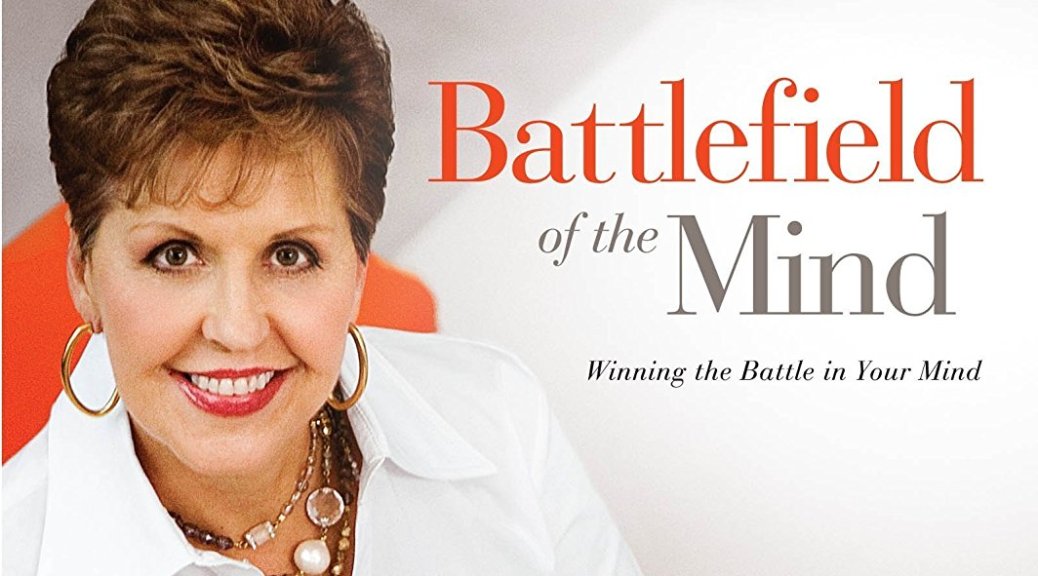
Joyce Meyer – Hunger and Thirst for Peace


…Live in peace, and [then] the God of love [Who is the Source of affection, goodwill, love, and benevolence toward men] and the Author and Promoter of peace will be with you.— 2 Corinthians 13:11 AMPC

When Jesus sent out the disciples two by two to preach and heal, He told them to go into each city, find in it a suitable house in which to stay, and to say to the people, “Peace be unto you.” He went on to say that if they were accepted, they should stay there and minister. But if they were not accepted, they were to leave, shaking the very dust of that place off their feet (see Matthew 10:11-15).

I used to wonder why Jesus said that. Then the Lord revealed to me that if the disciples remained in a house or city that was in strife, they could not do any real work there. Do you know why? Because strife grieves the Holy Spirit. When peace leaves, the Holy Spirit leaves, and He is the one who does the real work.

When you picture Jesus going about ministering to others, how do you see Him? Certainly not with the hurry-up attitude we often have. Don’t you instead get an image of Him ministering in quiet, tranquil peace? That is a trait you and I need to develop. As ambassadors for Christ, we need to be more like our Master. If we want to do anything for our Lord and Savior, we need to learn to hunger and thirst for peace.

Prayer Starter: Father, thank You for Your peace. Please reveal any areas of my life where I am allowing strife to creep in. Help me to become a “maker and maintainer of peace” everywhere I go (see Matthew 5:9). In Jesus’ Name, Amen.


http://www.joycemeyer.org

Campus Crusade for Christ; Bill Bright – The Lord Forgave You


“Since you have been chosen by God who has given you this new kind of life, and because of His deep love and concern for you, you should practice tenderhearted mercy and kindness to others. Don’t worry about making a good impression on them but be ready to suffer quietly and patiently. Be gentle and ready to forgive; never hold grudges. Remember, the Lord forgave you, so you must forgive others” (Colossians 3:12,13).

  1. C. Penney, a devout Christian whom I knew personally, built one of America’s leading businesses on the principle of the Golden Rule, taught by our Lord:

“Do unto others as you would have them do unto you.”

He and other gentle men have developed tenderness and sensitivity to others through their years of maturing, often through many difficult and trying experiences. So should we as Christians seek to develop gentle spirits through the trials and tribulations that God permits us to go through.

Do you lack gentleness in your life?

Do you have a tendency to be arrogant, proud, boastful?

Are you overbearing or even coarse and rude with others?

By faith you can become a gentle person. By faith you can confess your sins and know that they have been forgiven. By faith you can appropriate the filling of the Spirit of Christ. By faith you can practice tenderhearted mercy and kindness to others.

The Lord has commanded us to be gentle people, so by faith we can ask for that portion of the fruit of the Spirit, gentleness and love, and know that He is changing us for the better.

As I have cautioned with regard to other Christlike traits, this is one which usually develops over an extended period of time, usually through the maturing process that comes only with time and trials and sometimes tribulation. Pray that God will give you patience with yourself as you mature into the gentle and humble person He wants you to be.

Bible Reading:Colossians 3:14-17

TODAY’S ACTION POINT:  God’s promise to me is that He forgives; with His help I will forgive and practice tenderhearted mercy and kindness to others, with the prayer that I may be more and more conformed to the image of my Lord.


http://www.cru.org

Max Lucado – God’s Love is Unfailing


Listen to Today’s Devotion

God loves you. Personally. Powerfully. Passionately! God loves you with an unfailing love. And his love—if you let it—can fill you and leave you with a love worth giving!

Could it be that the first step of love is not toward them but toward him? Could it be that the secret to loving is receiving? You give love by first receiving it. “We love, because he first loved us” (1 John 4:19 NASB). Long to be more loving? Begin by accepting your place as a dearly loved child. “Be imitators of God, therefore, as dearly loved children and live a life of love, just as Christ loved us” (Ephesians 5:1-2 NIV).

We need help from an outside source. A transfusion. Would we love as God loves? Then we start by receiving God’s love.

Read more A Love Worth Giving

For more inspirational messages please visit Max Lucado.

Home

Denison Forum – Deadly caterpillars have invaded London

London is a world-class city. Its history and pageantry are combined with its status as a global financial center. It’s not surprising that more than forty-two million tourists are expected to visit the city this year.

But if you’re planning a visit this summer, avoid the caterpillars.

A particular breed (technically the larval stage of the oak processionary moth) has been deemed toxic by authorities at the UK’s Forestry Commission. The caterpillar’s sixty-two thousand hairs seem to trigger severe allergic reactions in humans. They can cause skin rash, difficulty in breathing, and even death by anaphylactic shock.

Here’s my question: if you have no plans to visit London, what about this story caused you to read it?

A second item in the news: doctors have identified five habits that could help you live a decade longer.

A new study names the five: never smoke, maintain a healthy body-mass index, keep up moderate to vigorous exercise, don’t drink too much alcohol, and eat a healthy diet. Adhering to these five lifestyle factors at age fifty, compared with not adhering to any of them, was associated with fourteen additional years of life for women and 12.2 added years for men.

Once again, what about this story caused you to read it?

What’s wrong with fear

I recently read Hans Rosling’s Factfulness: Ten Reasons We’re Wrong About the World—and Why Things Are Better Than You Think. Bill Gates calls it “one of the most important books I’ve ever read.” I can see why.

One reason we’re “wrong about the world,” according to Rosling, is that we’re afraid of it. He notes that fears of physical harm, captivity, and contamination by invisible substances that can poison or infect us are “hard-wired deep in our brains.”

In our media-saturated day, one very effective way for a news outlet to get our attention is to tell us stories that stoke such fears. Stories on declining malaria rates or mild weather won’t get past our filters. Stories on earthquakes, wars, disease, fire, flood, sharks, and terror attacks will.

As a result, we are inundated with news that focuses on things we fear. For instance, deadly caterpillars and ways to prevent death made it past your attention filter in today’s Daily Article.

As a result, many of us are wrong about much of the good news in the world.

An example: Rosling asks how the number of deaths per year from natural disasters has changed over the last hundred years: (A) more than doubled; (B) remained about the same; or (C) decreased to less than half. What did you answer?

The correct response was (C). In fact, the number of deaths from acts of nature is 25 percent of what it was one hundred years ago.

Rosling’s point is not that the world is not still a dangerous place. His point is that we have been conditioned by fear to miss the good news for the bad news. And to focus our fear on the wrong subjects.

A lesson from the “Avengers”

I saw the latest Avengers movie over the weekend. I’ve only seen a few of the nineteen that have been made, which makes those I see more confusing than enlightening. I did understand at least this part of the newest film in the series: the heroes are trying to keep the villain from annihilating half of the population in the universe.

This seems a worthy aim. Imagine playing a role in saving so many lives from death.

As I watched the film, however, I could not help thinking about the spiritual death awaiting every person who has not received God’s gift of eternal life in Christ. Of course, there was no fear of such damnation mentioned in the movie.

In Hollywood, people either live or they die. In real life, people either live eternally or they die eternally (Revelation 20:14–15). But we’re so focused on physical fears that we can overlook spiritual fears.

Jesus said, “Do not fear those who can kill the body but cannot kill the soul. Rather, fear him who can destroy both soul and body in hell” (Matthew 10:28). This fear should cause us to share Christ with lost people, no matter the risk to ourselves. The worst that can happen to us cannot compare with the worst that can happen to them.

“I don’t respect people who don’t proselytize”

You may know the name Penn Jillette, a famous magician and outspoken atheist. Some years ago, he made a YouTube video about a businessman who gave him a Bible. We might expect Jillette to castigate the man for “proselytizing.”

Actually, the opposite is true: “He was really kind and nice and sane and looked me in the eyes and talked to me and then gave me this Bible. And I’ve always said that I don’t respect people who don’t proselytize. I don’t respect that at all.”

Jillette explained: “If you believe that there’s a heaven and hell and people could be going to hell or not getting eternal life or whatever, and you think that it’s not really worth telling them because it would make it socially awkward . . . How much do you have to hate someone to believe that everlasting life is possible and not tell them that?” He added, “That was a really good man who gave me that book.”

What will you tell the Penn Jillettes you meet today?


Denison Forum

Charles Stanley – The Spiritual Fruit of Patience


Romans 5:1-4

The list known as “Fruit of the Spirit” includes patience (Gal. 5:22-23), but that does not mean the Holy Spirit wills it into the believer’s life. Instead, He acts as our ever-dependable teacher and the one who enables our growth. Spiritual fruit is something that matures over time as we obey the heavenly Father and surrender to His will.

Patience with both God and our fellow man is an outgrowth of deepening faith. The Holy Spirit urges believers to take note of the Lord’s handiwork on the journey through life. Our confidence in Him is nurtured by answered prayer, the rich blessings that arise unexpectedly from difficult circumstances, and every trace of good that God salvages from a bad situation. As our trust in His goodness and sovereignty grows, we find ourselves more willing to wait for God’s solutions and outcomes.

In fact, I believe that recognizing God’s sovereignty is key to developing patience. A significant part of surrendering to His absolute control is waiting upon Him to do what He will. It is wisdom to realize that our lives unfold according to His master plan—exasperated toe tapping doesn’t make Him speed up one bit. God expects His children to step into His timeline and practice patience no matter what pace He sets.

Patience doesn’t come naturally. That’s why we have the Holy Spirit. He strengthens our resolve to endure without complaint when progress seems sluggish. After all, God is slow only from a human standpoint. From a divine, eternal perspective, He’s always working at the perfect speed.

Bible in One Year: 2 Kings 24-25


http://www.intouch.org/


Our Daily Bread — Breaking the Chains


Read: Ephesians 1:3–14 | Bible in a Year: 1 Kings 8–9; Luke 21:1–19

In him we have redemption through his blood, the forgiveness of sins. Ephesians 1:7

We found our visit to Christ Church Cathedral in Stone Town, Zanzibar, deeply moving, for it sits on the site of what was formerly the largest slave market in East Africa. The designers of this cathedral wanted to show through a physical symbol how the gospel breaks the chains of slavery. No longer would the location be a place of evil deeds and horrible atrocities, but of God’s embodied grace.

Those who built the cathedral wanted to express how Jesus’s death on the cross provides freedom from sin—that which the apostle Paul speaks of in his letter to the church at Ephesus: “In him we have redemption through his blood” (Ephesians 1:7). Here the word redemption points to the Old Testament’s notion of the marketplace, with someone buying back a person or item. Jesus buys back a person from a life of slavery to sin and wrongdoing.

Jesus redeems us from the slavery of sin.

In Paul’s opening words in this letter (vv. 3–14), he bubbles over with joy at the thought of his freedom in Christ. He points, in layer after layer of praise, to God’s work of grace for us through Jesus’s death, which sets us free from the cords of sin. No longer do we need to be slaves to sin, for we are set free to live for God and His glory.

Lord God, through the death of Your Son, You have given us life forever. Help me to share this gift of grace with someone today.


http://www.odb.org

Ravi Zacharias Ministry – Matchless Wonder

For anyone who has ever been troubled by the lone sock left at the end of the laundry, help is on the way, and it comes in the form of indignation: Who ever said socks had to come in pairs anyway? At least that is the rebellious philosophy of one sock manufacturer who is single handedly trying to change the way we see “the sock problem.”(1) “The missing sock is never going to go away,” said one of the company’s founders, insisting that this is a way to have fun with one very small real-world problem: “People lose their socks… Let’s embrace the problem, and run with it.”(2) Currently they have in circulation over six hundred thousand socks, all sold without matches in packages of 1, 3, or 7.

Type A personalities aside, the embracing of mismatched socks actually seems to be catching on. I happen to think the idea is clever, particularly among the target market (girls age 9-13), but I also think it may indeed be one more logical outworking of a current philosophical state of mind. “Imbalance by design—and the studied quirkiness it reveals—is everywhere,” notes one cultural observer.(3) Random is the new order, as Apple insisted a few years ago. Whether selling music or socks, in the constant undertow of marketing, the spirit and mood of the age is keenly, if cleverly, seen. But imbalance by design is still by design.

Physicist and Nobel laureate Leon Lederman once jokingly remarked that the real goal of physics was to come up with an equation that could explain the universe but still be small enough to fit on a T-shirt—or perhaps a twitter feed. With such a challenge in mind, Oxford scientist Richard Dawkins offers up his own one-lined slogan: “Life results from the non-random survival of randomly varying replicators.” This is to say, as he has said elsewhere, the watchmaker is blind. The universe has neither design nor purpose; it exhibits nothing but blind pitiless indifference.

But if the universe has always been a disordered series of time and matter and chance, I’m not alone in my need to understand how we account for the intricate orderedness to life, the uniformity of nature, even the intricacy of the very mind that asks the question. How is it that we can ever accept the non-random consistency of nature in a random world? And what would it really look like if random was the new order? Even in the nonconforming concept of mismatched socks, the factories making them still exhibit a scrupulous degree of order; each random sock is designed and produced with creativity and intent.

Continue reading Ravi Zacharias Ministry – Matchless Wonder

Joyce Meyer – Wait on God

…For you [and only You] I wait [expectantly] all the day long. — Psalm 25:5

I am a person of action, and when there is a problem, I am ready to take action, but sometimes I make the situation worse because I didn’t wait to get God’s plan. Being aggressive has many benefits, but it can also cause problems if we are acting independently of God.

I am reminded today of the importance of maintaining an attitude of waiting on God. I am not suggesting inactivity but rather the highest form of spiritual activity, that of trusting God in every area of life. Wait on Him for strength, healing, wisdom, and opportunity. Wait on God to reveal Himself to you and to show you His amazing favor. God is waiting to be good to us, and He looks for those who are waiting on Him (Isaiah 30:18).

Waiting on God is mostly an attitude of the heart. One that is fully aware that God is everything and we are nothing without Him. We should pray and refuse to take action without assurance that God is leading. Go to Him as early as possible each day, which is the moment you wake up. He is always near, and you need no special preparation to begin fellowshipping with Him. Always remember that God loves you unconditionally and is with you at all times.

Prayer Starter: Father God, I desire to form a habit of waiting on You all throughout the day. Help me not to rush ahead into activities and decisions without acknowledging You. Thank You for Your presence. In Jesus’ Name, Amen.


http://www.joycemeyer.org

Campus Crusade for Christ; Bill Bright – Self-Control Is Better

“It is better to be slow-tempered than famous; it is better to have self-control than to control an army” (Proverbs 16:32).

You and I know from experience that it is not easy to discipline our emotions, our passions or our self-will. In fact, apart from God’s help, it is an impossibility.

  • A lustful person who does not control his thoughts quenches and grieves the Spirit.
  • An overweight person, because he cannot control his appetite, quenches and grieves the Spirit.
  • A Christian who places undue emphasis on material possessions quenches and grieves the Holy Spirit.
  • A gossip who cannot control his tongue quenches and grieves the Spirit.
  • A husband, wife, or child who fails to live according to the commands of Ephesians chapter 5 quenches and grieves the Holy Spirit.
  • A student who fails to study adequately because of poor discipline quenches and grieves the Spirit.

Many pages would be required to list all the ways in which lack of self-control quenches and grieves the Holy Spirit.

The spirit, mind and body are the three aspects of our being over which we are told to practice self-control.

What is man’s spirit?

It is his immaterial being – man without his body, if you will. The Bible gives many characteristics of the spirit of man. It is that which communicates with the Spirit of God.

Man’s spirit is the center of emotions (1 Kings 21:5), the source of passions (Ezekiel 3:14) and the seat of volition or exercise of the will (Proverbs 16:32). Our spirit is subject to divine influence while housed in our mortal body (Deuteronomy 2:30 and Isaiah 19:14), and leaves the body at the time of physical death (Ecclesiastics 12:7 and James 2:26).

Bible Reading:Proverbs 15:1-5

TODAY’S ACTION POINT:  Drawing upon this enabling power of the Holy Spirit, I will practice the vital discipline of self-control.


http://www.cru.org

Max Lucado – When Everything Changes


Listen to Today’s Devotion

Are you on the eve of change? A new chapter? A new season? Heaven’s message for you is clear: when everything else changes, God’s presence never does. You journey in the company of the Holy Spirit, who “will teach you everything and will remind you of everything” he has told you (John 14:26 NLT). So, make friends with whatever’s next.

Change is a part of life, and a necessary part of God’s strategy. To use us to change the world, he alters our assignments. But, someone might ask, what about the tragic changes God permits? Some seasons make no sense. They do, however, if we see them from an eternal perspective. What makes no sense in this life will make perfect sense in the next. As Paul wrote, “These troubles are getting us ready for an eternal glory that will make all our troubles seem like nothing”  (2 Corinthians 4:17 CEV).

Read more Fearless

For more inspirational messages please visit Max Lucado.

Home

Denison Forum – The story of Alfie Evans: A tale of two Kates

“My gladiator laid down his shield and gained his wings at 2:30.” This is how Alfie Evans’s father described the death of his twenty-three-month-old son early Saturday morning.

Alfie suffered from a degenerative neurological condition. His doctors in Great Britain said he was in a “semi-vegetative state” with almost no brain function.

His parents, Tom and Kate, wanted to provide further care in line with their Catholic faith. Pope Francis and Italian authorities supported their desire to have their son treated in Italy, where their wishes would have been honored.

Italy had a military plane on standby to take Alfie to Rome. He had also been granted Italian citizenship to facilitate his transport and arrival.

However, his British doctors believed that further treatment was futile and petitioned the courts to end his medical care. Under British law, it is common for courts to intervene when doctors and parents disagree on the treatment of a child. In such cases, the rights of the child (as determined by the court) are given primacy over the parents’ right to decide what’s best for their children.

Alfie’s life support was withdrawn last week after the courts sided with the doctors.

Conversely, Kate Middleton made global headlines Friday morning with the announcement that she and Prince William had decided on a name for their newborn son. Prince Louis has received the best of medical care, of course, and will live in the spotlight of fame accorded the British royal family.

In God’s eyes, which baby is more sacred?

Valuing life by its utility

Continue reading Denison Forum – The story of Alfie Evans: A tale of two Kates

Charles Stanley – Developing Patience


James 1:1-4

When people confide in me that they are praying for patience, I often ask what else they’re doing to acquire a calm and gentle heart. Patience isn’t so much something believers receive as it is an attribute that they develop over time and through experience.

Think of patience as a muscle that you have to use in order to see it build. To that end, believers should recognize difficulty as an opportunity to flex their patience. The human instinct is to cry out to God in bewilderment when tribulation comes knocking. We blame. We resist. We complain. What we don’t do is say, “Thank You, Father—it’s time to grow in patience!” People aren’t trained to think that way, but according to the Bible, that is exactly how Christians are to respond.

The book of James tells us to consider trials a joy (James 1:2). But we often fail at this, don’t we? Humanly speaking, praising the heavenly Father for tribulation is unnatural. However, doing so begins to make sense to believers when they cling to God’s promise that good comes from hardship. (See Rom. 8:28.) We are not waiting on the Lord in vain. We can praise Him for the solution He will bring, the lives He will change, or the spiritual fruit He will develop in our life.

Accepting hardship as a means of growth is a radical concept in this world. Even more extreme is the believer who praises the Lord for the storm. But God’s followers have cause to rejoice. Tribulation increases our patience so that we can stand firm on His promises and await His good timing.

Bible in One Year: 2 Kings 21-23


http://www.intouch.org/

Our Daily Bread — Take Another Look at Jesus!


Read: Hebrews 3:1–6 | Bible in a Year: 1 Kings 6–7; Luke 20:27–47

But Christ is faithful as the Son over God’s house. And we are his house, if indeed we hold firmly to our confidence and the hope in which we glory. Hebrews 3:6

If there ever was a faithful person, it was Brother Justice. He was committed to his marriage, dedicated to his job as a postal worker, and each Sunday stood at his post as a leader in our local church. I visited my childhood church recently, and perched on the upright piano was the same bell that Brother Justice rang to notify us that the time for Bible study was about to end. The bell has endured the test of time. And although Brother Justice has been with the Lord for years, his legacy of faithfulness also endures.

Hebrews 3 brings a faithful servant and a faithful Son to the readers’ attention. Though the faithfulness of Moses as God’s “servant” is undeniable, Jesus is the one believers are taught to focus on. “Therefore, holy brothers and sisters . . . fix your thoughts on Jesus” (v. 1). Such was the encouragement to all who face temptation (2:18). Their legacy could come only from following Jesus, the faithful One.

Father, through Your Spirit, empower us to courageously love, honor, and follow the Lord Jesus Christ.

What do you do when the winds of temptation are swirling all around you? When you are weary and worn and want to quit? The text invites us to, as one paraphrase renders it, “Take a good hard look at Jesus” (3:1 The Message). Look at Him again—and again and again. As we reexamine Jesus, we find the trustworthy Son of God who gives us courage to live in His family.

Father, through Your Spirit, empower us to courageously love, honor, and follow the Lord Jesus Christ.

Looking to Jesus can give us courage to face the challenges in our lives.

By Arthur Jackson

INSIGHT

The book of Hebrews was written to encourage Jewish Christians who were facing persecution and hardship for their faith and who were now in danger of drifting away and reverting back to Judaism. The writer warns them against abandoning Christ (2:1–3; 3:7–15; 6:4–6; 10:26–31) and presents the absolute supremacy of Jesus as Savior. Jesus is superior to the angels (chs. 1–2), to Moses (chs. 3–4), and to the Aaronic priesthood (chs. 5–7), and He is the perfect High Priest (chs. 8–10). In today’s passage Moses is compared with Christ. While Moses was one of God’s most faithful servants, Jesus is far greater than Moses because Jesus is God’s Son (3:5–6).

How does reflecting on the supremacy of Jesus encourage you to trust Him in your trials?

  1. T. Sim


http://www.odb.org

Words of Hope – Daily Devotional – Rome at Last


Read: Acts 28:11-16

And so we came to Rome. (v. 14)

When the apostle finally reached Rome, Nero was emperor—a chilling thought, considering that he was the Caesar to whom Paul had appealed his case. But Paul’s arrival looks something like a triumphal entry, which is no less encouraging to the apostle.

Rome was much more than just another stop on Paul’s missionary itinerary. It marks the climax of Paul’s career, as he finally is able to realize his long-time ambition of preaching the gospel in the capital of the empire. But Paul’s arrival in Rome is also the fulfillment of Luke’s plan for the book of Acts.

We could read Acts as “A Tale of Two Cities.” The book begins in Jerusalem and ends in Rome. Luke’s agenda for Acts is spelled out in Jesus’ final instructions to his disciples, recorded in Acts 1:8: “You will be my witnesses in Jerusalem and in all Judea and Samaria, and to the end of the earth.” So why does Rome serve as the climax of the story? There was a well-known saying that is still familiar to us: “All roads lead to Rome.” That was literally true. A golden post set in the middle of the Roman Forum was “Mile Marker 0” for every road throughout the Empire. But if all roads led to Rome, then roads from Rome led everywhere! So in a symbolic sense Paul’s arrival in the capital represented the goal of taking the gospel to the ends of the earth. —David Bast

Prayer: Lord, may the good news of Jesus continue to go to the ends of the earth, until your triumphant return.


https://woh.org/

Joyce Meyer – Give Your Soul A Break


Find rest, O my soul, in God alone; my hope comes from him. — Psalm 62:5 NIV

When you take a vacation, do you give your soul a break, just as you give your body some rest, recreation, and refreshment?

Your soul is comprised of your mind, will, and emotions, and it is a very important part of your entire being. You are a spiritual being, and you live in a physical body. But if you don’t understand your soul’s needs, you will not be a whole, healthy individual.

When we are weary, exhausted in strength, endurance, and vigor, we need help. We need to be refreshed not only physically, but mentally and emotionally as well. Being weary is not something to be ashamed of; it’s simply a sign that we need a break.

You can take a vacation thinking you need a physical rest, but if you don’t let your soul rest at the same time, you will return home just as exhausted as you were when you left. Lying on the beach worrying does not equal a day of vacation. If you take a day off and spend it trying to deal with personal problems, traffic, high prices, and rude people—you’d have been better off at work!

Learning to let our souls rest is vitally important. Jesus said in Matthew 11:28–30 that if we are overburdened, weary, and worn out, we should spend time with Him and see how He handled life. He promises to give us rest. The Amplified Bible’s translation of these verses indicates that the type of rest He is talking about is refreshment, renewal and blessed quiet for our souls. Jesus is really offering us a vacation for our souls, our inner lives.

Prayer Starter: Father, I take this moment to offer You all of my stress, worries, and cares. Please refresh my mind and emotions. Help me to run to You when I am weary and worn out from life. In Jesus’ Name, Amen.


http://www.joycemeyer.org