Tag Archives: human-rights

Moody Global Ministries – Today in the Word – THE ART OF HOLDING FAST


Revelation 2:12–17

The motto of Scotland’s Clan MacLeod is “Hold fast.” This could be the church’s motto. To be faithful we must hold fast to what we believe. More importantly, in order to be faithful we must hold fast to Jesus Christ. This can be hard to do when others around you compromise.

In the church in Pergamum, some claimed to be Christians but held to the teaching of Balaam, “who taught Balak to entice the Israelites to sin so that they ate food sacrificed to idols and committed sexual immorality” (v. 14). In other words, they tried to fit in with pagan culture. They ate food that had been sacrificed to idols and committed sexual immorality, probably as a result of attending pagan worship services.

Pagan worship was so entrenched in Pergamum that Jesus called it the place “where Satan has his throne” and the city “where Satan lives” (v. 13). Poverty-stricken Christians were tempted to participate in pagan festivals because free food was provided. Unfortunately, in addition to eating the food they also engaged in pagan worship and the sexual immorality that often accompanied it.

Jesus offered the example of Antipas. Church tradition says he was appointed bishop of the church by the apostle John and was eventually burned to death on a pagan altar. Jesus also reminded the church of His power, describing Himself as the one “who has the sharp, double-edged sword” (v. 12). The one who judges pagans also disciplines His church, and Jesus threatened to turn this double-edged sword against all who followed the example of the Nicolaitans instead of Antipas (v. 16).

To those who overcame the temptation to compromise their faith for the sake of a meal, Jesus promised to give “the hidden manna” (v. 17).

APPLY THE WORD

Have you been taking small steps away from the path of faithfulness? Ask the Holy Spirit to reveal any of your rationalizations or excuses for compromising your faith. Think of godly examples who can encourage you, and hold fast by God’s grace. Choose to be fed by Jesus’ manna rather than chastened by His sword.


http://www.todayintheword.org

Charles Stanley – Christ Is the Pattern


Matthew 11:28-30

If Christ were not our burden bearer, every one of us would be lost and on our way to eternal separation from God. Jesus bore our sins in His own body on the cross so that we might live righteously (1 Peter 2:24). To those who are tired and downtrodden, He says, “Come to Me, all who are weary and heavy-laden, and I will give you rest” (Matt. 11:28). Because our salvation is the result of Jesus being the sin bearer, He is our perfect role model.

God predestined us to be conformed to the likeness of Christ (Rom. 8:29). That’s why suffering alongside those enduring the trials of life is in our spiritual DNA—it’s part of being a child of God. The hallmark of a Christian is love, and this should be evident in the way we treat others.

But bearing other people’s burdens is difficult, particularly when we have cares and struggles of our own. Nevertheless, we should not try to wait until all of our problems are solved before deciding to emulate the work of Jesus Christ. The apostle Paul, who faced many obstacles, continued to serve others. He said, “My God will supply all your needs according to His riches in glory in Christ Jesus” (Phil. 4:19). That means we can share someone else’s burden even when we have our own. God’s grace is more than sufficient for both.

God is never too busy to tend to our cares. People all over the world are hurting deeply today. The Lord knows how you can be a servant to someone who needs your friendship. Ask Him to use you as a healing salve to bring another person freedom from burdens.

Bible in One Year: 1 Chronicles 10-12


http://www.intouch.org/

Our Daily Bread — Before the Beginning


Read: Matthew 3:13–17 | Bible in a Year: 1 Kings 16–18; Luke 22:47–71

You loved me before the creation of the world. John 17:24

“But if God has no beginning and no end, and has always existed, what was He doing before He created us? How did He spend His time?” Some precocious Sunday school student always asks this question when we talk about God’s eternal nature. I used to respond that this was a bit of a mystery. But recently I learned that the Bible gives us an answer to this question.

When Jesus prays to His Father in John 17, He says “Father, . . . you loved me before the creation of the world” (v. 24). This is God as revealed to us by Jesus: Before the world was ever created, God was a trinity (Father, Son, and Holy Spirit)—all loving each other and being loved. When Jesus was baptized, God sent His Spirit in the form of a dove and said, “This is my Son, whom I love” (Matthew 3:17). The most foundational aspect of God’s identity is this outgoing, life-giving love.

God, thank You for Your overflowing, self-giving love.

What a lovely and encouraging truth this is about our God! The mutual, outgoing love expressed by each member of the Trinity—Father, Son, and Holy Spirit—is key to understanding the nature of God. What was God doing before the beginning of time? What He always does: He was loving because He is love (1 John 4:8).

God, thank You for Your overflowing, self-giving love.

We are created in the image of a God who is loving and relational.

By Amy Peterson

INSIGHT

Love has always defined God; it is at the core of everything He does, now and in eternity. But today’s text urges us to think about an aspect of God’s love we might not typically consider.

The Father, Son, and Holy Spirit spend eternity in a perfect relationship—giving and receiving love. It’s important to remember that genuine love not only gives love but also receives it. It wouldn’t be loving of the Father not to accept the love of the Son and the Spirit. It’s easy to say we love someone and to show it with what we do for them, but part of loving them is receiving their expressions of love too. That takes humility and trust.

Do you need to receive the love of someone else today? Or do you need to receive the love of God again and remember the reason we love Him is because He first loved us.

J.R. Hudberg

http://www.odb.org

Ravi Zacharias Ministry – Many-Splendored Afternoon

Flannery O’Connor could not explain her fascination with peacocks. But she loved them. In fact, the southern writer of short stories lived on a farm where she raised near a hundred of them. She adopted her first peacock at the age of twenty-five, around the time she was diagnosed with a debilitating disease, and she could not stop looking at him. It was for her a mysterious sign of life, and an image that silenced her. In an essay focusing on her fascination, she describes the bird’s transfiguration from fledgling to finery: “[T]he peacock starts life with an inauspicious appearance….the color of those large objectionable moths that flutter about light bulbs on summer nights.” But after two years, when the bird has fully attained its pattern, “for the rest of his life this chicken will act as if he designed it himself… With his tail spread, he inspires a range of emotions, but I have yet to hear laughter. The usual reaction is silence, at least for a time.”(1)

It is not without coincidence that O’Connor used the peacock as a symbol for the transfigured Christ in many of her stories. Often cited is her use of the bird in The Displaced Person. In this story, the peacock is a main character of sorts, functioning for everyone else in the story as something of a spiritual test. Some never notice him; another sees the bird only as “another mouth to feed.” Still another liked to have peacocks around simply to signify his wealth; another is altogether besieged by the peacock’s splendor. With eyes locked on the regal bird poised in color and majesty, he says, overwhelmed, “Christ will come like that.”(2)

I appreciate stories that remind me to keep my eyes opened for all that can be seen but can just as easily be missed. Encounters with the sacred can be like this. Because ancient Greeks held the belief that the peacock’s flesh did not decay after death, the peacock became a symbol of Christ and resurrection in the early church. Many early Christian paintings and mosaics used the peacock imagery as a means of depicting the resurrected Christ or resurrection itself—namely, this new category of creation, the new way of seeing the world that the death and resurrection of Jesus necessitates. The many-splendored disruption that the resurrection ushered into the world is as crucial to take in as the historical evidences of the event. The promise of the fully human resurrected Christ to our own humanity is almost too much to take into our daily moments of running to and fro. And yet, here resurrection stands poised in all its incomprehensible finery, bidding us to consider what it might mean for this very moment, for this afternoon, for this community, for this relationship, for this death. Silence isn’t the worst reaction. Surprise, humility, gratitude are others.

Continue reading Ravi Zacharias Ministry – Many-Splendored Afternoon

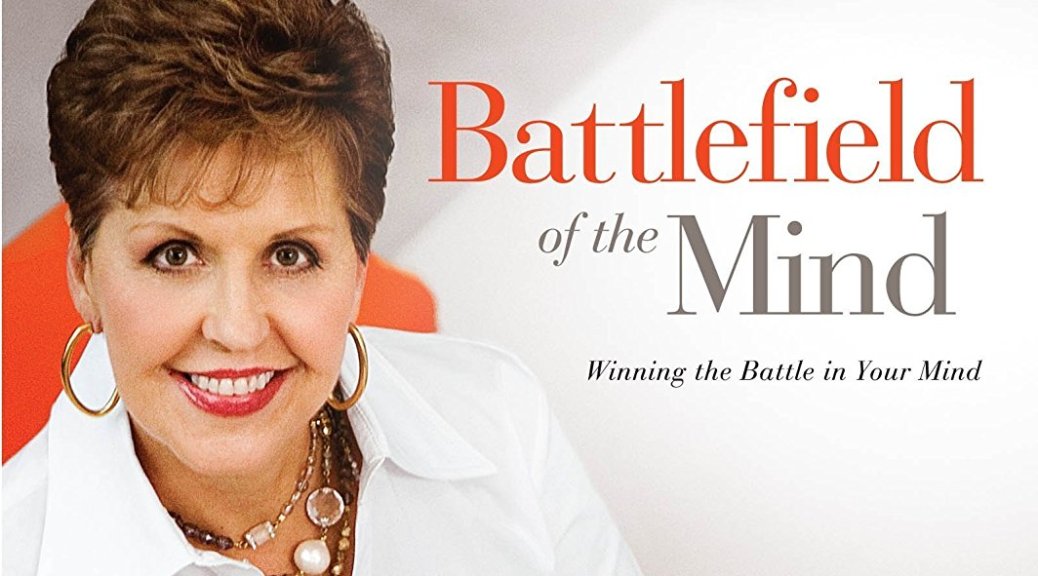
Joyce Meyer –True Prosperity


Beloved, I pray that in every way you may succeed and prosper and be in good health [physically], just as [I know] your soul prospers [spiritually]. — 3 John 1:2

A person is never truly prosperous if all he has are things and money; real prosperity requires far more than that. The Bible gives a more complete approach to prosperity, and so should we.

When our bodies prosper, we are strong and physically healthy. Even if we currently have a physical ailment, we can pray for and expect God to help us. True prosperity includes peace of mind and contentment. When our souls prosper, we flourish on the inside. We are at peace; we are full of joy; we live with a sense of purpose; we are growing spiritually; and we have strong, loving relationships with others.

Jesus said that He came so we could have and enjoy life in abundance and to the full (see John 10:10). God is the God of abundance, and He wants us to live abundant lives filled with thanksgiving and joy.

Prayer Starter: I thank You, Father, that You prosper my body and my soul. I pray today for the health and the peace that You promise in Your Word. Thank You that I am made whole in You. In Jesus’ Name, Amen.


http://www.joycemeyer.org

Campus Crusade for Christ; Bill Bright – Ways That Are Right and Best


“He will teach the ways that are right and best to those who humbly turn to Him” (Psalm 25:9).

A guide, taking some tourists through Mammoth Cave, reached a place called “The Cathedral.”

Mounting a rock called “The Pulpit,” he said he wanted to preach a sermon, and it would be short.

“Keep close to your guide,” he said.

The tourists soon found it was a good sermon. If they did not keep close to the guide, they would be lost in the midst of pits, precipices and caverns.

It is hard to find one’s way through Mammoth Cave without a guide. It is harder to find one’s way through the world without the lamp of God’s Word.

“Keep your eye on the Light of the World (Jesus) and use the Lamp of God’s Word” is a good motto for the Christian to follow.

Humbly turning to God is one of the most meaningful exercises a person can take. We come in touch with divine sovereignty, and we become instant candidates to discern God’s will for our lives.

Humbling ourselves is clearly in line with God’s formula for revival:

“If my people, which are called by my name, shall humble themselves, and pray, and seek my face, and turn from their wicked ways; then will I hear from heaven, and will forgive their sin, and will heal their land” (2 Chronicles 7:14, KJV).

Bible Reading:Psalm 25:1-8

TODAY’S ACTION POINT: With the enabling of the Holy Spirit, I will fix my heart and mind on Jesus first and others second, which is true humility.


http://www.cru.org

Max Lucado – Love is Patient

Listen to Today’s Devotion

Has anyone told you about God’s patience? His patience and willingness to put up with you! “The LORD is compassionate and gracious, slow to anger, abounding in love” (Psalm 103:8).

Paul presents patience as the premiere expression of love. Positioned at the head of the apostle’s Love Armada—a boat-length or two in front of kindness, courtesy, and forgiveness—is the flagship known as patience.  1 Corinthians 13:4 states,  “Love is patient!” Patience waits. It listens. It’s slow to boil. This is how God treats us. And according to Jesus, this is how we should treat others. How infiltrated are you with God’s patience? You’ve heard about it. Read about it. But have you received it? The proof is in your patience. Patience deeply received results in patience freely offered!

Read more A Love Worth Giving

For more inspirational messages please visit Max Lucado.

Home

Denison Forum – Sutherland Springs pastor led National Day of Prayer service

Frank and Sherri Pomeroy helped lead yesterday’s National Day of Prayer service in Washington, DC. The service came just two days before the six-month anniversary of the shooting that took the lives of twenty-six members of Pastor Pomeroy’s church, the First Baptist Church of Sutherland Springs, Texas.

Among the members killed was Pomeroy’s fourteen-year-old daughter, Annabelle.

The church plans to hold a memorial tomorrow to honor the victims and survivors. The congregation will then transition into a groundbreaking ceremony for its new sanctuary. It will be built next to the old church, which currently and forever will serve as a memorial for their lost loved ones.

The new church will be built of stone, symbolizing the strength of the congregation and community.

Their church’s remarkable ministry to their grieving people is just one example of Christians acting as salt and light (Matthew 5:13–16). There were many others yesterday. Those who organized the National Day of Prayer expected some forty thousand events to mark the day across the country.

How much does religion contribute to our economy?

President Trump signed an executive order yesterday creating the White House Faith and Opportunity Initiative. The order was signed in the Rose Garden, attended by his cabinet members and some two hundred religious representatives.

Previous administrations created similarly named offices to foster partnerships between religious organizations and the government. The Faith and Opportunity Initiative will provide policy recommendations on “more effective solutions to poverty” and inform the administration of “any failures of the executive branch to comply with religious liberty protections under law.”

Are you wondering whether religion offers tangible benefits worthy of such recognition?

A recent study by Georgetown University found that the faith sector contributes $1.2 trillion to the US economy. That’s more than the combined revenue of the top ten technology companies in the country, including Apple, Amazon, and Google.

Is religion a product of evolution?

Nonetheless, critics of religion abound.

For instance, an evolutionary biologist named Bret Weinstein is convinced that there is no such place as heaven. He asserts, however, that believing in heaven keeps our descendants in good standing in our religious community, setting our lineage up to continue. Thus, belief systems are “literally false and metaphorically true.”

In response, I would note that his argument offers no evidential basis as a truth claim. He is asserting a secular faith proposition as he denies the truthfulness of religious faith propositions.

A University of Connecticut anthropology professor named Dimitris Xygalatas offers a different skeptical view. He claims that early societies were so small, their members could rely on each other’s reputations to decide whom to trust. In this era, the ancient Greek gods could be worshiped even though they had no interest in people’s personal conduct.

As human societies grew larger, they needed faith in all-knowing, all-powerful gods who would punish moral transgressions. Thus, the evolution of the gods of Judaism, Christianity, and Islam, among others.

However, his argument suffers a fatal historical flaw. Judaism began centuries before Greek mythology and has always centered on objective morality. Islam began among tribal cultures rather than large cities and cultures.

The professor also cites studies claiming that religious activity does not promote moral behavior. However, he makes no distinction between the various world religions and a personal, transformational relationship with Jesus Christ.

Who is on trial?

Despite yesterday’s White House initiative, I am seeing greater skepticism and opposition to religion in general and Christianity in particular than at any time in my life.

How should we respond? By remembering who is on trial.

When Paul stood before Festus and King Agrippa, he turned his personal peril into an opportunity for the gospel. After sharing his salvation story, he defended the gospel so effectively that the king cried, “In a short time would you persuade me to be a Christian?” (Acts 26:28).

The apostle responded, “Whether short or long, I would to God that not only you but also all who hear me this day might become such as I am—except for these chains” (v. 29). He knew that the person in danger was not himself but those before whom he was being tried.

The worst that could happen to him would send him eternally to paradise. The worst that could happen to them would send them eternally to hell.

It is the same with critics of our faith. Rather than becoming defensive, we should remember whose immortal soul is in peril. We can then explain and defend our faith with the confidence that the Holy Spirit is using us in ways we may not be able to measure on this side of heaven (Luke 12:12).

If you were a physician and your patient rejected your lifesaving diagnosis and treatment, you could let your critic die to prove you were right. Or you could respond to rejection with mercy, doing all you could to save your dying patient.

Which would you choose?


Denison Forum

Charles Stanley – A Living Hope


1 Peter 1:3-9

Discovering that a thief has broken into your home and stolen your valuables is a traumatic experience. It leaves you feeling shaken and vulnerable. Not only have you lost precious heirlooms and the possessions that required hard work and savings, but your sense of safety and security is also shattered.

Situations like burglary remind us that this world is not our home and one day we will leave everything behind. No one takes a moving van along after death. Therefore, we must make sure that what we view as treasure is not the things of this world (which will always lead to disappointment) but Christ, who gives us a living hope.

Look at all God has done to assure you of this hope:

  • According to His great mercy, He caused you to be born again.
    • Since Jesus was raised to life, you too will be resurrected.
    • Everything on this earth is destined to perish (2 Peter 3:10-11), but God has reserved an inheritance for you in heaven—one that is imperishable, undefiled, and will never fade away.
    • By God’s power through faith, you are being protected for the culmination of your salvation, which will be revealed in the last day.

Nothing can separate us from Christ, since God is the one who holds us. And He fulfills all His promises, so we can rejoice in this hope even while facing the trials of earth. So set your heart on heaven, where Christ is—and store your treasures there. Then your love for Him will grow because of His goodness toward you. And knowing what awaits you in heaven will increase your joy.

Bible in One Year: 1 Chronicles 7-9

http://www.intouch.org/

Our Daily Bread — A Change in Perspective


Read: Psalm 73:12–28 | Bible in a Year: 1 Kings 14–15; Luke 22:21–46

It troubled me deeply till I entered the sanctuary of God. Psalm 73:16–17

My hometown had experienced its heaviest winter in thirty years. My muscles ached from hours of shoveling the unrelenting snow. When I stepped inside after what felt like a fruitless effort, weary as I kicked off my boots, I was greeted by the warmth of a fire and my children gathered around it. As I gazed out the window from the shelter of my home, my perspective of the weather shifted completely. Instead of seeing more work to do, I savored the beauty of frosted tree branches and the way the snow blanketed the colorless landscape of winter.

I see a similar, but much more poignant, shift in Asaph when I read his words in Psalm 73. In the beginning, he laments the way the world seems to work, how wrongs seem to be rewarded. He doubts the value of being different than the crowd and living for the good of others (v. 13). But when he enters the sanctuary of God, his outlook changes (vv. 16–17): he remembers that God will deal with the world and its troubles perfectly and, more importantly, that it is good to be with God (v. 28).

Lord, help me to see the way You do.

When we’re chilled by the seemingly ceaseless problems in our world, we can enter God’s sanctuary in prayer and be warmed through by the life-altering, perspective-changing truth that His judgment is better than ours. Though our circumstances may not change, our perspective can.

Lord, I admit I quickly become frustrated with the way things appear. Help me to see the way You do.

God gives us the right perspective.

By Kirsten Holmberg

INSIGHT

In Psalm 37 David addresses the same perplexing issue Asaph writes about in Psalm 73—the wicked prosper while the godly suffer unjustly. David tells those who suffer unjustly not to fret or be envious, for God is just and will one day make all things right (Psalm 37:7–11, 35–38). Instead, those who fear the Lord are to rest fully in God and to continue to live holy lives (vv. 3–6). For the Lord “will not forsake his faithful ones” (v. 28).

Are you weighed down because of injustice? How can the hope expressed in these psalms encourage and strengthen you?

  1. T. Sim


http://www.odb.org

Ravi Zacharias Ministry – Songs for the Dark

I think I might have been deflated at the word of no vacancy in the inn. Mary was told by the angel who called her favored that God was with her and that she was part of a plan that would be for all people. In labor in a city that was not home, without the simple comfort of a bed, I wonder if she felt God had let her down that night or that God had somehow forgotten her in the midst of darkness. The text makes it seems unlikely that Mary felt this way. Even with only a manger for a baby bed and shepherds as visitors, Mary is said to have “treasured up” all these things and pondered them in her heart.(1)

I doubt I would have been so forgiving. Time marked with unfavorable conditions often feels like time marked with God’s absence. The psalmist writes of one such experience: “I cried out to God for help; I cried out to God to hear me. When I was in distress, I sought the Lord; at night I stretched out untiring hands and my soul refused to be comforted. I remembered you, O God, and I groaned; I mused, and my spirit grew faint.”(2) It is hard to know what God is doing in the dark. The Incarnation boldly reminds us that God is near though we labor in darkness; but this doesn’t mean the night can’t still be lonely.

Continue reading Ravi Zacharias Ministry – Songs for the Dark

Joyce Meyer – Invest in Someone


The wicked borrows and does not pay back, but the righteous is gracious and kind and gives. — Psalm 37:21

Take chances today and invest in someone else’s life, especially if God tells you to do so. You may give them something of value only to learn they waste it as they have always done in the past. But remember that God made an investment in you, and He wants you to be willing to make an investment in somebody else.

Jesus died to give everybody a chance. Not everyone takes advantage of His provision, but we all have an equal opportunity to enjoy the abundant life. If you help someone, and they end up not doing what is right with it, that is between them and God. Give thanks that you are able to give, and then do whatever God tells you to do.

Prayer Starter: Father, show me ways to purposely be a blessing today. Help me to be gracious and kind, and invest in others the way You have invested I me. In Jesus’ Name, Amen.


http://www.joycemeyer.org

Campus Crusade for Christ; Bill Bright – Perfect Harmony


“Most of all, let love guide your life, for then the whole church will stay together in perfect harmony” (Colossians 3:14).

Martha had a very poor self-image. The distress she felt because of her physical appearance was compounded by the guilt of being grossly overweight. She hated herself and was despondent to the point of seriously considering suicide.

I counsel many students and older adults who are not able to accept themselves. Some are weighted down with guilt because of unconfessed sins. Others are not reconciled to their physical handicaps or deformities. Still others feel inferior mentally or socially.

My counsel to such people is this: God loves you and accepts you as you are. The love of God which is shed abroad in our hearts by the Holy Spirit enables us to love ourselves as God made us. We can be thankful for ourselves, loving ourselves unconditionally as God does, and we can love others unconditionally, too.

It is Satan who is the great accuser, causing us to hate ourselves and others. God, having commanded us to love Him with all of our heart, soul, mind and strength, and our neighbor as ourselves, and our enemies, will enable us to do what He commands us to do as we claim His promise.

The great tragedy of many families is that resentment, bitterness and hate overtake their members like an all-consuming cancer, ultimately destroying the unity among husband, wife and children. Love of the husband and wife for each other, and of parents and children for one another, is so basic that it should not need to be mentioned. Yet, sadly and alarmingly, children are alienated from their parents, and even many Christian marriages are ending in divorce – in fact, in greater numbers today than at any other time in history.

God’s kind of love is a unifying force. Paul admonishes us to “put on love, which is the perfect bond of unity.”

Bible Reading:Colossians 3:18-25

TODAY’S ACTION POINT: Since God commands us to love Him, our neighbors, our enemies and ourselves, today I will claim that supernatural love by faith on the basis of God’s command to love and the promise that if I ask anything according to His will, He will hear and answer me.


http://www.cru.org

Max Lucado – National Day of Prayer


Listen to Today’s Devotion

On this National Day of Prayer let me ask the obvious. If Jesus, the Son of God, the sinless savior of humankind, thought it worthwhile to clear his calendar to pray, wouldn’t we be wise to do the same? You may not understand the mystery of prayer. You don’t need to. But this much is certain. Actions in heaven begin when someone prays on earth. What an amazing thought! When you speak, Jesus hears. And when Jesus hears, thunder falls. And when thunder falls, the world is changed. All because someone prayed.

Prayer does not change God’s nature; who he is will never be altered. Prayer does, however, impact the flow of history. God has wired his world for power, but he calls on us to flip the switch.

Read more Lucado Inspirational Reader

For more inspirational messages please visit Max Lucado.

Home

Denison Forum – Teen arrested for plotting mass shooting at Dallas area mall

A student at Plano West Senior High School is suspected of plotting to commit a mass shooting at Frisco’s Stonebriar Centre mall. Both cities are northern suburbs of Dallas. Like many who live in my area, I have been to Stonebriar many times.

Matin Azizi-Yarand, age seventeen, was taken into custody Tuesday and is being held in lieu of $3 million bail. If convicted, he faces up to life in prison.

Authorities say his ISIS-inspired attack was planned for Ramadan (which begins this year on May 15) to minimize the danger to Muslims. He was working to purchase weapons and tactical gear and had written a “Message to America” explaining his reasons for the attack.

He intended to kill a police officer at the mall, set stores on fire, and perhaps take hostages as well. His plot was discovered by FBI confidential sources and an undercover employee.

Terrorism is not just a story we read about from Syria or Afghanistan. It is a very real possibility anywhere in the world, including my neighborhood and yours. This is another reason America needs the National Day of Prayer we observe today.

Praying for “the next great move of God in America” Continue reading Denison Forum – Teen arrested for plotting mass shooting at Dallas area mall

Charles Stanley – Heirs With Christ


Romans 8:12-18

How often do you think of yourself as an heir of God? It’s not usually the first thing that comes to mind as we consider the blessings that are ours when we accept Jesus Christ as Savior. Perhaps this is because we don’t really know what it means to be God’s heir. Nor can we begin to comprehend what awaits us in eternity or when that will be.

Being an heir is usually associated with family ties, and the same is true of our relationship to God. When we were born again by His Spirit, we became His adopted children, and as such, we are heirs along with Christ. In Colossians 1:15, Jesus is called “the firstborn of all creation.” In the ancient world, the firstborn son had a place of prominence in the family and was the chief heir of all that his father owned. In the same way, Jesus Christ holds the position of firstborn and is the heir of all creation.

What’s truly amazing is that He has promised to share His inheritance with us. When He returns in glory to take up His rightful place as King of Kings on earth, we will rule with Him, under His authority (Revelation 2:26-27). The Christian life is filled with undeserved favor. What we experience now of God’s grace is only the tip of the iceberg.

Realizing all that Christ has done and will do for His followers should prompt us to live for Him today. The Holy Spirit dwells within us, empowering us to put to death our fleshly desires and to follow God in obedience, even when it’s costly. Anything we suffer here for Christ’s sake is insignificant compared to the glory that awaits us.

Bible in One Year: 1 Chronicles 4-6


http://www.intouch.org/

Our Daily Bread — Longing for God


Read: 1 John 4:13–16 | Bible in a Year: 1 Kings 12–13; Luke 22:1–20

My heart and my flesh cry out for the living God. Psalm 84:2

One day my daughter was visiting with our one-year-old grandson. I was getting ready to leave the house on an errand, but as soon as I walked out of the room my grandson began to cry. It happened twice, and each time I went back and spent a moment with him. As I headed out the door the third time, his little lip began to quiver again. At that point my daughter said, “Dad, why don’t you just take him with you?”

Any grandparent could tell you what happened next. My grandson went along for the ride, just because I love him.

Loving Lord, thank You for Your compassion for me.

How good it is to know that the longings of our hearts for God are also met with love. The Bible assures us that we can “know and rely on the love God has for us” (1 John 4:16). God doesn’t love us because of anything we have or haven’t done. His love isn’t based on our worthiness at all, but on His goodness and faithfulness. When the world around us is unloving and unkind, we can rely on God’s unchanging love as our source of hope and peace.

Our heavenly Father’s heart has gone out to us through the gift of His Son and His Spirit. How comforting is the assurance that God loves us with love that never ends!

Loving Lord, thank You for Your compassion for me, proven at the cross. Please help me to obey and love You today.

God longs for us to long for Him.

By James Banks

INSIGHT

Do you have a hard time relating to the love of God? Many of us think more with our heads than our hearts. John, a disciple of Jesus, is remembered as the apostle of love and referred to himself as “the disciple whom Jesus loved” (John 13:23).

John wrote more on love than any New Testament writer. But he wasn’t always so inclined. The gospel writer Luke remembers the day John and his brother James wanted to see Jesus call down fire from heaven on a Samaritan village that had turned Jesus away (Luke 9:51–56). Jesus let the two brothers know that their lack of empathy didn’t reflect His heart. Yet Jesus probably wasn’t surprised. Early on, and maybe with a smile, He had affectionately called them “sons of thunder” (Mark 3:17).

Yet John is the one who ends up being overwhelmed with the love of God and writes about the importance of loving others (1 John 3:16; 4:8, 16). What happened? Did he recognize the coldness of his own heart? Did he learn from Jesus that our ability to relate to the love of God may depend on our readiness to admit—and to be forgiven for—our lack of love? (John 3:16; Luke 7:37–50).

Mart DeHaan


http://www.odb.org

Ravi Zacharias Ministry – Credible Witnesses

As it happens every Easter season, various scholars and skeptics weigh in on whether or not Jesus was actually raised from the dead. Bart Ehrman’s book How Jesus Became God is a case in point. Writing as a historian, he questions many of the gospel remembrances of the events surrounding the crucifixion and resurrection of Jesus. His conclusion is that the gospels are not reliable, historical witnesses. But is this really the case?

A careful reading of the four evangelists’ remembrances of the resurrection does indeed reveal many different emphases and details. The Gospel of Matthew, for example, tells us that a great earthquake occurred as an angel of the Lord descended and came and rolled away the stone and sat upon it. The Gospel of Mark, on the other hand, tells us that a young man sitting at the right, wearing a white robe was inside the tomb to announce Jesus’s resurrection. The Gospel of Luke tells us that two men suddenly stood near the women in dazzling apparel and John’s Gospel reports the discovery of the linen wrappings abandoned in the empty tomb.(1)

There are many other differences in the retelling of the resurrection appearances of Jesus, and this should be expected from different testimonies. No two people report exactly the same details about any event or happening! But, there is one feature that is the same in all four gospel testimonies: the resurrection announcement is made first to the women who followed Jesus (Matthew 28:1; Mark 16:1; Luke 23:55-24:5; John 20:1). Many reasons have been offered as to why women serve as the immediate witnesses to the resurrection: the women stayed with him through the crucifixion, so he appeared first to those who stuck with him to the last; women traditionally carried out the burial rituals in first century Judaism, so they were witnesses by default. Others suggest that the first women witnesses represent Jesus’s elevation of the status for women of the first century and for women in general.

Continue reading Ravi Zacharias Ministry – Credible Witnesses

Joyce Meyer – A Happy Heart Is Good Medicine


A happy heart is good medicine and a joyful mind causes healing, but a broken spirit dries up the bones. — Proverbs 17:22

The more I ponder it, the more amazed I am that I can immediately increase or decrease my joy and the joy of others by simply choosing to say good things.

Joy is vital! Nehemiah 8:10 tells us joy is our strength. No wonder the devil works overtime trying to do anything he can to diminish our joy. Don’t sit by and let it happen to you. Fight the good fight with faith-filled words, releasing joy into the very atmosphere you are in.

Jesus came to bring good news and glad tidings of great joy, to overcome evil with good. He wants you to be as committed as He is to finding and magnifying the good in everything. Do yourself a favor and say something good!

Prayer Starter: Father, Help me to focus on the good things in life today and choose to live with joy. Let me to also use my words to be a source of joy to others. In Jesus’ Name, Amen.


http://www.joycemeyer.org

Campus Crusade for Christ; Bill Bright – The Right Priorities


“Constantly remind the people about these laws, and you yourself must think about them every day and every night so that you will be sure to obey all of them. For only then will you succeed” (Joshua 1:8).

Jim was a driven man. He loved his wife and his four children. But the thing that consumed almost every waking thought was, “How can I be a greater success? How can I earn the praise of men?”

Through neglect his family began to disintegrate, and he came to me for counsel. His wife was interested in another man; he was alienated from his children. Three were involved in drugs and one had attempted suicide twice.

“Where have I gone wrong?” Jim asked.

I reminded him of the Scripture, “What does it profit a man if he gains the whole world and loses his own soul?”

According to Scripture, a man’s priorities are first, to love God with all his heart, his soul and his mind, and then to love his neighbor as himself. Since his closest neighbors are his wife and children, his second priority is his wife. A good marriage takes the Ephesians 5:25 kind of love. “Husbands, love your wives, even as Christ also loved the church,” a sacrificial, giving love.

The third priority is his children. He must show love to them, not by giving them things, but by giving them himself, spending time with them, letting them know they are far more important to him than his business.

A man must love his wife and children unconditionally as God loves him – not when, if, or because they are good and deserve to be loved.

And the fourth priority I discussed with Jim was his business. A man’s business must be dedicated to the Lord Jesus Christ.

Jim surrendered his life to Christ. After almost three years of implementing the Bible’s priorities, Jim’s family again was united in the love of Christ, and God had given Jim and his wife a new-found love for Himself and for each other.

The law of God is clear: When we disobey Him, he disciplines us as a loving father and mother discipline their child, and when we obey Him, He will bless us.

Bible Reading:James 2:-8

TODAY’S ACTION POINT:  I will seek to please the Lord in all that I do, knowing that I will experience His blessings when I obey Him, and His discipline when I disobey Him.


http://www.cru.org