Tag Archives: Jesus

Charles Spurgeon – The immutability of Christ


“Jesus Christ the same yesterday, and to day, and for ever.” Hebrews 13:8

Suggested Further Reading: Hebrews 1:5-13

It is well that there is one person who is the same. It is well that there is one stable rock amidst the changing billows of this sea of life; for how many and how grievous have been the changes of last year? How many of you who commenced in affluence, have by the panic, which has shaken nations, been reduced almost to poverty? How many of you, who in strong health marched into this place on the first Sabbath of last year, have had to come tottering here, feeling that the breath of man is in his nostrils, and wherein is he to be accounted of? Many of you came to this hall with a numerous family, leaning upon the arm of a choice and much loved friend. Alas! for love, if that were all, and nought beside, O earth! For you have buried those you loved the best. Some of you have come here childless, or widows, or fatherless, still weeping your recent affliction. Changes have taken place in your estate that have made your heart full of misery. Your cups of sweetness have been dashed with draughts of gall; your golden harvests have had tares cast into the midst of them, and you have had to reap the noxious weed along with the precious grain. Your much fine gold has become dim, and your glory has departed; the sweet feelings at the commencement of last year became bitter ones at the end. Your raptures and your ecstasies were turned into depression and forebodings. Alas! for our changes, and hallelujah to him that has no change.

For meditation: Change is part and parcel of everything in a fallen creation (Genesis 3:16-19). The Lord Jesus Christ is not part of creation, not even the very first part, but is Lord over all creation and not subject to any change. In him God’s children can look forward to glorious liberty from creation’s present bondage to decay (Romans 8:21-23).

Sermon no. 170

3 January (1858)

John MacArthur – Blessing the God of Blessings


“Blessed be the God and Father of our Lord Jesus Christ, who has blessed us” (Eph. 1:3).

When we bless God, it is with words of praise; when He blesses us, it is with deeds of kindness.

Paul’s brief doxology identifies God the Father as the ultimate recipient and source of blessing—the One to whom blessing is ascribed and the One who bestows blessings on those who love Him.

“Blessed” translates the Greek word eulogeō, from which we get eulogy. To bless or eulogize God is to praise Him for His mighty works and holy character.

That should be the response of your heart just as it has been the response of believers throughout the ages. The psalmist said “Blessed be God, who has not turned away my prayer” (Ps. 66:20); and “blessed be the Lord God, the God of Israel, who alone works wonders” (Ps. 72:18). Peter said, “Blessed be the God and Father of our Lord Jesus Christ, who according to His great mercy has caused us to be born again to a living hope through the resurrection of Jesus Christ from the dead” (1 Pet. 1:3).

When the situation is reversed and God blesses us, it isn’t with praise, for apart from Him there is nothing praiseworthy about us. Instead, He gives us undeserved benefits through His many deeds of kindness. Scripture identifies Him as the source of every good thing (James 1:17), who works all things together for our good and His glory (Rom. 8:28).

That is but a sampling of the many blessings He lavishes on us in His Son, Christ Jesus. It’s a marvelous cycle: God blesses us with deeds of kindness; we bless Him with words of praise.

Beware of the sin of thanklessness. Recognize God’s blessings in your life and let them fill your heart and lips

Suggestions for Prayer;  Identify ten specific blessings that God has granted to you in recent days and praise Him for each one.

Ask Him to make you more aware of and thankful for His goodness in your life.

Always be ready to seek forgiveness when you take His blessings for granted.

For Further Study; Read Psalm 103.

What blessings does David mention?

How do they apply to your life?

Joyce Meyer – Take the Step


[ Jesus] said, Come! So Peter got out of the boat and walked on the water, and he came toward Jesus. —Matthew 14:29

Perhaps the boat you need to get out of is your past. Sometimes we get so addicted to murmuring about the past and blaming the past for everything that we miss our whole future. You’re not going to enjoy your future, and you’re not going to enjoy your right now, if all you can do is be guilty and ashamed and afraid of your past. What is it that you’re afraid somebody will find out that will cause them to turn against you?

Anything you have to keep hidden has power over you. You are not going to ever be free if you just keep running away from your past. You have to confront and deal with it. No one is going to come along and do it for you. Jesus is calling you out of the boat. God has given you His power, and His Spirit is dwelling in you, so you can do things that are hard to do. You can do anything you need to do. He isn’t going to get into your boat and make you feel better. Get it out of your system. Get out of the boat of your past.

Lord, I will not stay stuck in my past. By Your grace, the past has been forgiven, and I have a new life in You. If there’s something in my past that needs to be dealt with, show me how to do it in the right way. Amen.

Campus Crusade for Christ; Bill Bright – Abundant Life for the Asking


“The thief’s purpose is to steal, kill and destroy. My purpose is to give life in all its fullness” (John 10:10).

For me, the Christian life is an exciting, joy-filled adventure. It has been that way through more than 30 years of walking with the Lord. If you are not already experiencing such a life, it can be the same for you today, tomorrow and the rest of your days, no matter what the circumstances.

Jesus promised the full and abundant life for all those who walk in faith and obedience. His “exceeding great and precious promises” include every kind of provision for you – spiritual, emotional, material.

You start by getting to know God – who He is, what He is like and the benefits we enjoy when we belong to Him. Your view of God influences all the rest of your relationships. Scripture says the righteous shall live by faith. Faith must focus on an object, and the object in which we have our faith is God and His inspired Word.

But how do we acquire that kind of faith? “Faith comes by hearing, and hearing by the Word of Christ” (Romans 10:17, NAS). It is as simple as that. You are building up your storehouse of faith every time you read the Word of God, every time you hear the Word of God and every time you memorize the Word of God.

Our view of God determines the quality and degree of our faith. A small view of God results in a small faith. Great faith is the result of a correct biblical view of God – recognizing Him as great, mighty, all-wise and worthy of our trust.

Our view of God as sovereign, holy, loving, righteous, just and compassionate produces these same qualities in our lives. If we view Him as a God of love and forgiveness, we are prompted to love and forgive others also.

Bible Reading: John 7:36-39

Today’s Action Point: Through the enabling of the Holy Spirit, I determine to begin practicing the presence of God in my life – every moment of the day. I will begin by meditating on His attributes through storing portions of His Word in my heart and mind. As a result, by faith I expect to experience and share with my family friends the full and abundant life which Jesus promised to all who are His.

Presidential Prayer Team; C.P. – Hang in There


A famous poster features a cat hanging in a precarious position with the caption, “Hang in there, Friday’s coming!” That poster has been redone in many forms since its debut 40 years ago, using other cute animals from birds to orangutans. Believers in Christ need encouragement at one time or another, too. They need a poster that says, “Hang in there. Jesus is coming!”

Through endurance and through the encouragement of the Scriptures we might have hope.

Romans 15:4

The first part of Romans 15 is a “hang in there” Scripture. Paul says God’s Word and perseverance combine to give you hope. He orders believers to help each other and be more concerned for others than themselves. He advises the church at Rome to accept each other and live in harmony.

The determination with which Christians study the Bible and treat each other with kindness will have a lot to do with how well they can “hang in there.” At this time of the year, you may be thinking of goals. Aim to be more considerate of the people the Lord has put in your life, praying for them – and for the leaders and citizens of this nation as well – to find their hope in God!

Recommended Reading: I John 4:7-19

Greg Laurie – Prewired for Hope


“For we have heard of your faith in Christ Jesus and your love for all of God’s people, which come from your confident hope of what God has reserved for you in heaven. You have had this expectation ever since you first heard the truth of the Good News” —Colossians 1:4–5

Did you know that you were prewired for hope? There is a restlessness in the human heart for something more than this world can offer.

As Augustine said, “You made us for Yourself, O God, and our hearts are restless until they find their rest in You.”

As believers, our hope is built on a sure foundation, and that is the hope of heaven. The apostle Paul spoke of faith that springs from this hope: “For we have heard of your faith in Christ Jesus and your love for all of God’s people, which come from your confident hope of what God has reserved for you in heaven” (Colossians 1:4).

It is a bit like the Golden Plovers. Native to Hawaii, these little birds migrate during the summer to the Aleutian Isles, some 1,200 miles away. There they mate and lay their eggs. Then, after their little fledglings are born, they return to Hawaii. Even more amazing is that their little fledglings, which are too young to return with their parents, fly to Hawaii once they have grown a little. God has given them a homing instinct that makes this possible.

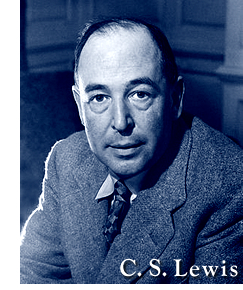
In the same way, God has given us a homing instinct for a place we have never been. We have never been to heaven, but we long for it, because heaven is our home. C. S. Lewis calls it the inconsolable longing. This is what the Bible means when it says that God has set eternity in our hearts (see Ecclesiastes 3:11). Like the Golden Plovers, we have a heavenly GPS.

Bible Gateway’s Discovering God’s Design – Stewardship Study Bible


Job’s Restoration

Job 42:10

Job’s spectacular turnaround isn’t just a reward for righteousness but also a joyous act of God’s generosity. The fact that God owes us nothing has never deterred him from giving us everything, freely and graciously (cf. 2Co 9:7). Notice that Job’s restoration comes only after he forgives his friends and prays for them. As Jesus says, “Forgive, and you will be forgiven. Give, and it will be given to you. A good measure, pressed down, shaken together and running over, will be poured into your lap. For with the measure you use, it will be measured to you” (Lk 6:37–38).

Pastor and author Gordon MacDonald notes that in

the first forty chapters of the book of Job, this man faced a sample of nearly every imaginable kind of suffering. On a few occasions he appeared to bend under the weight of the stress, but he never broke. Given every reason to doubt himself and to revise his view of God, he stayed the course.

Every person who desires to live generously will want to acquaint himself with the journey of Job. His is a message from ancient times of a man with a soul that was bigger than the circumstances. Satan certainly got his answer: Job feared God in comfortable times and in chaotic times. No contest!

As this amazing book concludes, a couple of points stand out as worth pondering. Notice that God never told Job why all this was happening to him … All of Job’s anguish finds its roots in a strange conversation in which Job’s character was impugned. One would like to hear God say to Job, “Now that this is all over, let me tell you what it was all about.” But Job was left, apparently, to live out his days continuing to trust in God …

More significantly, Job regained his prosperity … (see Job 42:10). What does this tell us? First, that prosperity is not always a coincidence nor merely the result of hard work. In this case at least, God showered prosperity upon a man because the man had demonstrated his faithfulness.

Second, the prosperity came not simply because Job had endured the suffering but because he prayed for his friends … Job had no reason to pray grace upon these “friends” of his. They’d done little more than add to his misery during his dark days. Still Job, through his prayer, wished for their best and prayed that God would act kindly toward them …

Two important lessons to keep in mind: First, everything we own may be attributed to Providence as much as to hard work; remember, there are others who work hard without gaining material prosperity. Second, we must never forget that a grace-filled heart does more to trigger God’s kindness than all the more visible things a person can do.

Think About It

  • How do you think this story would have ended had Job not prayed for his friends?
  • How is the story of Job tied not just to the topic of suffering but also to the idea of prosperity?
  • What life lessons can you take away from the story of Job?

Pray About It

Lord, Samuel reminds me that prayer is important when he says to the people, “As for me, far be it from me that I should sin against the LORD by failing to pray for you” (1Sa 12:23). Remind me, Lord, that my prayers on behalf of others are my duty as well as my privilege.

Love at First Sight – Night Light

“Love is of God.” 1 John 4:7

Some people believe that true love can occur the moment a man and woman lay eyes on each other. But “love at first sight” is a physical and emotional impossibility because you cannot love someone you don’t even know. You have simply been drawn to the package in which they live.

A lifelong emotional attachment is much more than a romantic feeling. It is more than a sexual attraction or the thrill of the chase or a desire to get married. Such feelings usually indicate infatuation and tend to be temporary and rather selfish in nature. A person may say, “I can’t believe what is happening to me. This is the most fantastic thing I’ve ever experienced! I must be in love.” Notice that those who make these statements are not talking about the other person—they’re excited about their own gratification. Such individuals haven’t fallen in love with someone else; they’ve fallen in love with love.

Genuine love is not something one “falls” into, as though he or she was tumbling into a ditch. One cannot love an unknown object, regardless of how beautiful or handsome it is. Only when a person begins to develop a deep appreciation and admiration for another—an intense awareness of his or her needs, strength, and character—has one begun to experience true love. From there, it should grow for a lifetime.

Just between us…

  • Do you remember thinking that you were in love as a teenager, only to have that feeling fade over time?
  • What did you think and feel when we first met?
  • How did God show you that I should be your marriage partner?

Dear Heavenly Father, thank You for the wonderful gift of love. Grant us your blessings, Father—more than we can even imagine right now! Amen.

  • From Night Light for Couples, by Dr. James & Shirley Dobson

Charles Stanley – God Is Our Loving Father

Read | Luke 15:11-24

Humanity tends to project its own faulty habits onto God. Consider how God’s love is often seen: Many people assume we must barter, plead, or try hard to earn the Lord’s favor. But as the Prodigal Son learned, the Father’s love is unconditional.

The wayward boy returned home, not expecting to be loved as before; all he hoped for was a place among the family’s servants. Imagine the son’s delight at his dad’s greeting of a hug and a celebration. The boy’s actions surely didn’t merit an outpouring of affection, but Jesus’ parable is all about a Father who doesn’t give people what they deserve.

A love based on conduct would keep people wondering, Have I done enough? Instead, God cares for you simply because you’re you, and He expects nothing in return. Consider the Prodigal’s life after his homecoming party. He didn’t move into the servants’ quarters and go to work. He was reinstated to his place as the second son of a wealthy man, with all of the privilege that entails. In the same way, believers are the Lord’s cherished children (2 Cor. 6:18). When God looks at His loved ones, He doesn’t focus on their past failures, faults, or sins. He sees the heirs to His kingdom—men and women who love Him and desire to spend eternity in His presence.

No matter how far we may wander from the Lord’s perfect will for our lives, we are always welcome back. The Bible teaches that God’s love cannot be lost, regardless of sin or poor decisions (though we may have to live with the consequences). Our Father’s arms are always open.

Our Daily Bread — Where Are You?


READ: Genesis 3:1-10

The Lord God . . . said to him, “Where are you?” —Genesis 3:9

The two teenage boys heard the sound of their parents’ car and panicked. How would they explain the mess in the house? Their father’s instructions had been clear that morning before he and their mother drove out of town: no parties, no rowdy friends. But the unruly friends came and the boys allowed them to stay, despite their father’s warning. Now the house was in a jumble and the boys were tipsy and disheveled. In fear, they hid.

That was how Adam and Eve must have felt after they had chosen to disobey God and then heard the sound of Him approaching. In fear, they hid themselves. “Where are you?” God called (Gen. 3:9). Adam responded, “I heard Your voice in the garden, and I was afraid because I was naked; and I hid myself” (v.10). Sin makes us feel afraid and naked, and we become vulnerable to even more temptation.

God is still calling to people: “Where are you?” Many run away, trying to hide from Him or drown out the sound of His voice. Yet we cannot hide from God; He knows exactly where we are. Rather than hide in fear, we can respond in this way: “God, be merciful to me a sinner!” (Luke 18:13). —Lawrence Darmani

Would you be free from the burden of sin?
There’s power in the blood, power in the blood;
Would you over evil a victory win?
There’s wonderful power in the blood. —Jones

The only place to hide sin is under the blood of Christ.

Bible in a year: Genesis 4-6; Matthew 2

Insight

God did not force Adam and Eve to obey Him but allowed them to choose. Similarly, He did not force them to come to Him after they sinned. Instead, He called to them and allowed them to respond to His call.

Ravi Zacharias Ministry – Waiting for Light


In ancient cities, sentinels kept vigil on the city walls throughout the night. Long, difficult hours of waiting and watching characterized the sentinel’s evenings. The watcher’s role was well understood as vital for the protection of the city and the welfare of its citizens. Morning, nonetheless, meant great relief, both for the watchmen who kept vigil throughout the darkness and for the city within the walls.

Making use of the laden imagery of those who watched for morning, biblical writers often juxtaposed the role of the watchman and the work of the prophet. Through long, dark hours of slavery and exile, stubbornness and despair, the prophets kept watch, calling out evils, calling forth awareness, peace, and repentance. “This is what the LORD says: Stand at the crossroads and look; ask for the ancient paths, ask where the good way is, and walk in it, and you will find rest for your souls. But you said, ‘We will not walk in it.’ I appointed watchmen over you and said, ‘Listen to the sound of the trumpet!’ But you said, ‘We will not listen’” (Jeremiah 6:16-17). The book of Isaiah expands the imagery of the sentinel’s watch even further, suggesting watchful eyes throughout the kingdom of God, servants who hold vigil day and night, watching for light even when presently surrounded by darkness. “Listen! Your sentinels lift up their voices, together they sing for joy; for in plain sight they see the return of the Lord to Zion” (Isaiah 52:8).

An old man in Jerusalem named Simeon was one such sentinel. All that is known of him is that he was righteous and devout, and looked forward to the consolation of his broken land. Led by the Spirit one day, he went to the temple to offer the customary sacrifice, when he noticed an infant in the arms of a young, peasant woman. Taking the baby in his arms, he began to sing:

“Master, now you are dismissing your servant in peace,

according to your word;

for my eyes have seen your salvation,

which you have prepared in the presence of all peoples,

a light for revelation to the Gentiles

and for glory to your people Israel” (Luke 2:29-32).

A watchman who had kept vigil through long years of darkness, Simeon sees the infant Christ and uses the language of a slave that has been freed. There is a sense of immediacy and relief, as if the light of morning has arrived after years of shadow, and he is finally free to leave his post.

Epiphany, the historical Christian feast day that celebrates the arrival of the magi to the birthplace of Jesus, tells a similar story. Matthew describes a vigilant scene not unlike that of Simeon at the temple or sentinels on the city wall. Astrologers from the east followed a lone star through a great expanse of darkness to come upon a new born king. Their watchful journey took years. It impelled further darkness as Herod’s jealousy reared an evil demand for the murder of infant boys throughout Bethlehem. It was a solitary journey, disregarded by the masses, and wrought with difficulty. But the light was real; the glory of the LORD had risen. “Nations shall come to your light,” sang the prophet, “and kings to the brightness of your dawn” (Isaiah 60:3).

With those who first watched and waited for God to step from the heavens and into their world, we hear on the feast of Epiphany that we, too, are a world straining in the dark, waiting for a great light. But in the world of one straining to see more, Christ himself can transform our watching and our waiting, our lives and our deaths, bringing light where death stings, tears discourage, and darkness haunts: because the Light has already come! “I wait for the Lord,” sings the psalmist, “my soul waits, and in his word I hope; my soul waits for the Lord, more than watchmen wait for the morning, more than watchmen wait for the morning” (Psalm 130:5-6). The night is long, but the light is real.

Jill Carattini is managing editor of A Slice of Infinity at Ravi Zacharias International Ministries in Atlanta, Georgia.

Alistair Begg – This Year’s Motto

Continue steadfastly in prayer. Colossians 4:2

It is interesting to consider how large a portion of the Bible is occupied with the subject of prayer, either in furnishing examples, enforcing precepts, or pronouncing promises. We scarcely open the Bible before we read, “People began to call upon the name of the LORD;”1 and just as we are about to close the volume, the “Amen” of an earnest supplication meets our ear.

Instances are plentiful. Here we find a wrestling Jacob–there a Daniel who prayed three times a day–and a David who with all his heart called upon his God. On the mountain we see Elijah; in the dungeon Paul and Silas. We have multitudes of commands, and myriads of promises. What does this teach us, but the sacred importance and necessity of prayer? We may be certain that whatever God has made prominent in His Word, He intended to be conspicuous in our lives. If He has said much about prayer, it is because He knows we have much need of it. So deep are our necessities that until we are in heaven we must not cease to pray.

Do you need nothing? Then I fear you do not know your poverty. Have you no mercy to ask of God? Then may the Lord’s mercy show you your misery! A prayerless soul is a Christless soul. Prayer is the lisping of the believing infant, the shout of the fighting believer, the requiem of the dying saint falling asleep in Jesus. It is the breath, the watchword, the comfort, the strength, the honor of a Christian. If you are a child of God, you will seek your Father’s face and live in your Father’s love.

Pray that this year you may be holy, humble, zealous, and patient; have closer communion with Christ, and enter more often into the banqueting-house of His love. Pray that you may be an example and a blessing to others, and that you may live more to the glory of your Master. The motto for this year must be, “Continue . . . in prayer.”

1) Genesis 4:26

The family reading plan for January 2, 2015
Ezra 2
Acts 2

Devotional material is taken from “Morning and Evening,” written by C.H. Spurgeon, revised and updated by Alistair Begg.

Charles Spurgeon – Faith in perfection


“The Lord will perfect that which concerneth me: thy mercy, O Lord, endureth for ever: forsake not the works of thine own hands.” Psalm 138:8

Suggested Further Reading: Deuteronomy 31:1-8

There is yet another confession in the text—the Psalmist’s confession that all he has, he has from God. “Forsake not the works of thine own hands.” I will not, however, dwell upon it, but urge you who are believers to go home and cry aloud to God in prayer. Let this be a New Year’s day prayer. “Forsake not the work of thine hands. Father, forsake not thy little child, lest he die by the hand of the enemy. Shepherd, forsake not thy lamb, lest the wolves devour him. Great husbandman, forsake not thy little plant, lest the frost should nip it, and it should be destroyed. Forsake me not, O Lord now, and when I am old and grey headed, O Lord, forsake me not. Forsake me not in my joys, lest I curse God. Forsake me not in my sorrows, lest I murmur against him. Forsake me not in the day of my repentance, lest I lose the hope of pardon, and fall into despair; and forsake me not in the day of my strongest faith, lest my faith degenerate into presumption, and so I perish by my own hand.” Cry out to God, that he would not forsake you in your business, in your family; that he would not forsake you either upon your bed by night or in your business by day. And may God grant, when you and I shall come to the end of this year, we may have a good tale to tell concerning the faithfulness of God in having answered our prayers, and having fulfilled his promise.

For meditation: Do you open up every area of your life to the One who has promised never to forsake his people? Are there any aspects of your relationship with him which are not all that they should be (Malachi 1:6)?

Sermon no. 231

2 January (1859)

John MacArthur – Experiencing God’s Peace


“Grace to you and peace from God our Father and the Lord Jesus Christ” (Eph. 1:2).

True peace is God’s gift to those who love and obey Him.

Throughout history mankind has sought peace through military alliances, balances of power, and leagues of nations. Yet lasting peace still remains an elusive dream. Even during times of relative peace, nations struggle with internal strife and crime.

The Bible says that man on his own cannot know peace because he is alienated from its source. But we need not despair. True peace is immediately available from God our Father (the God of peace—Rom. 15:33), and the Lord Jesus Christ (the Prince of Peace—Isa. 9:6). It’s a gift of God’s grace to those who love and obey Jesus Christ.

The New Testament so clearly teaches the inextricable link between God’s grace and peace that “Grace to you and peace” became a common greeting in the early church. Grace is God’s great kindness toward those who are undeserving of His favor but who have placed their faith in Jesus Christ. It is the fountain and peace is the stream. As recipients of His grace, we have peace with God (Rom. 5:1)—we are reconciled to Him through faith in His Son and we will never experience His wrath. We also have the peace of God (Phil. 4:7)—the Spirit’s way of assuring us that God is in control even in the midst of difficult circumstances. That’s why Paul calls it the peace that surpasses all comprehension (Phil. 4:7).

The world’s peace is relative and fleeting because it is grounded in circumstances. God’s peace is absolute and eternal because it is grounded in His grace. Does God’s peace reign in your heart, or have you allowed sin or difficult circumstances to diminish your devotion to Christ?

Suggestions for Prayer;  Thank God that you have peace with Him through faith in Jesus Christ.

Ask the Spirit to reveal any sin that might be hindering God’s peace from ruling in your heart. Be prepared to respond in confession and repentance.

Ask for opportunities to demonstrate God’s peace to others today.

For Further Study; Read Philippians 4:6-7.

What is God’s antidote for anxiety?

How does God’s peace affect a believer’s heart and mind?

Joyce Meyer – A Vital Necessity


One thing have I asked of the Lord, that will I seek, inquire for, and insistently] require: that I may dwell in the house of the presence] all the days of my life, to behold and gaze beauty [the sweet attractiveness and delightful loveliness] of Lord and to meditate, consider, and inquire in His temple.—Psalm 27:4

If we desire to hear from God, then seeking Him must be a priority in our lives. David summarized life’s one requirement in the verse for today. He required God’s presence as a vital necessity in life.

David had enjoyed many opportunities to succeed and gain confidence. Empowered by the presence of God, he had killed a lion and a bear with his bare hands and he had killed an imposing giant with nothing more than a slingshot and gave small stones. God chose this simple shepherd boy to become king of Israel even though he was the youngest brother of a family of men who were all more prominent than he was. His eventual fame and wealth offered everything most people might think would bring satisfaction.

David’s pursuit of more of God, even after experiencing God’s pres¬ence in many ways, should give us a realization that we must continue seeking God no matter how many victories we have enjoyed. After all, even David needed to know God more intimately. I believe we need to continually desire intimate fellowship with God and to seek it with all our hearts. Many people want guidance from God, but they don’t want to lay aside other things in order to hear His voice. But David narrowed down everything he wanted to just one thing—more of God all the days of his life. Psalm 27:4 has become a favorite life scripture of mine, and I believe the only thing that truly satisfies the longing within us is to know God more intimately today than we did yesterday.

Campus Crusade for Christ; Bill Bright – You Can Know the Spirit’s Fullness

“Be filled…with the Holy Spirit and controlled by Him” (Ephesians 5:18).

An enthusiastic, attractive couple traveled from their home in Chicago to Arrowhead Springs to share with me an idea about which they were very excited.

“We heard one of your filmed lectures on ‘How to Be Filled With the Holy Spirit.’ Our lives have been dramatically changed as a result of what you shared,” they said. “We have come all this way to encourage you to go on nationwide television and tell Christians how they can know the fullness and power of the Holy Spirit and experience His revolutionary impact in and through their lives.”

I am humbly grateful to God for the privilege of sharing these great truths concerning the Holy Spirit with tens of millions of people throughout the world, often with the same dramatic results experienced by this remarkable couple.

The disciples were with Jesus for more than three years. They heard Him teach as no man had ever taught. They saw Him perform miracles such as no man had ever performed – raising the dead, restoring sight to the blind and cleansing lepers. Though they were exposed to the most godly life ever lived on earth, during Jesus’ time of crisis, Judas betrayed Him, Peter denied Him and all the others deserted Him.

Jesus knew His disciples were fruitless, quarreling, ambitious, self-centered men, so – on the eve of His crucifixion – He told them, “It is to your advantage that I go away; for if I go, I will send Him to you…He will guide you into all the truth…He shall glorify Me; for He shall take of Mine, and shall disclose it to you” (John 16:7,13,14 NAS).

Bible Reading: Galatians 5:5, 16-18, 22, 23, 25

Today’s Action Point: Today I will receive by faith the power of the Holy Spirit in order to live a supernatural life and be a supernatural witness. I will continue to study the scriptural reference and various books concerning the Holy Spirit, so that I will better understand His role in my life.

Presidential Prayer Team; P.G. – First Priority


Following a failure in parliament, William Wilberforce, a Christian statesman in Great Britain over a century ago, remarked on its possible cause. He said the problem may have been that he had not spent enough time in his private devotions earnestly seeking the will of God.

And rising very early in the morning, while it was still dark, he departed and went out to a desolate place, and there he prayed.

Mark 1:35

Jesus’ schedule was busy, but He made time with His Father the day’s first priority. Many distractions could have disrupted Him, but He avoided them by going to an isolated place so His attention could be fully focused. Jesus prayed. We know from other Bible verses that He prayed for Himself, but He also prayed for those closest to Him and their needs, and for the whole world to be filled with the knowledge of God.

In this New Year, use your devotional time to commune with the Lord, reading His Word and praying for others. Ask that those who know Him will be filled with His wisdom. Plead that the eyes of the nation’s leaders would be opened so they will come to a saving faith in Jesus.

Recommended Reading: John 17:6-21

Greg Laurie – Respect His Name


“You shall not take the name of the Lord your God in vain, for the Lord will not hold him guiltless who takes His name in vain.” —Exodus 20:7

Do you care about your name? Do you like it when people slander you or say things that aren’t true about you? Have you ever had that happen? I have. No one enjoys that. We want to protect our name. The Bible says that “a good name is to be chosen rather than great riches, loving favor rather than silver and gold” (Proverbs 22:1).

God cares about His name, too. And He tells us, “You shall not take the name of the Lord your God in vain, for the Lord will not hold him guiltless who takes His name in vain” (Exodus 20:7). The words in vain literally could be translated “in an empty, idle, insincere, frivolous way.”

So how do people take the Lord’s name in vain? One obvious way is profanity. Isn’t it interesting how people use the name of Jesus Christ so often? Even nonbelievers, in their spiritually deadened state, know there is something different about the name of Jesus. We don’t hear people exclaiming, “Buddha!” or “Hare Krishna!” In a backhanded way, nonbelievers acknowledge the power of Jesus even when they’re misusing His name.

Another way people take His name in vain is by saying “I swear to God.” Jesus said, “But let your ‘Yes’ be ‘Yes,’ and your ‘No,’ ‘No.’ For whatever is more than these is from the evil one” (Matthew 5:37). Your word should be enough.

Let me add another way that people take God’s name in vain that’s important for us to be aware of: Saying “Oh my God” a lot. That seems to be a popular phrase now. But it’s taking God’s name in vain. The same goes for texting OMG. Don’t do that. Don’t use God’s name in an empty way.

God cares about His name, and so should we.


Max Lucado – You Can Count on Him


I was seven years old. I’d had enough of my father’s rules and decided I could make it on my own, thank you very much. I got to the end of the alley and remembered I was hungry, so I went back home! Did Dad know of my insurrection? I suspect he did. Was I still his son? Apparently so. No one else was sitting in my place at the table.

Suppose someone had asked my father, “Mr. Lucado, your son says he has no need of a father. Do you still consider him your son?” What do you think my dad would have said? He considered himself my father even when I didn’t consider myself his son. His commitment to me was greater than my commitment to him. So is God’s. I can count on him to be in my corner no matter what! And you can too!

From Max on Life

Charles Stanley – Building Wise Friendships

Read | Proverbs 17:17; 18:24

Genesis 2:18 contains some of God’s first words regarding His creation of the human being: “It is not good for man to be alone.” This truth still applies. Throughout history, people have sought companionship, though sometimes the focus has been on quantity rather than quality. Even if we count hundreds as pals, we can still be lonely. Wise relationships are built slowly and with significant effort, affording us time to nurture only a small number of loyal friends. But it’s these true friends, not mere acquaintances, who will delight and motivate us throughout life.

In order to develop wise friendships, we must love sacrificially. A relationship that grows out of selfishness or dependency will die as soon as the other person tires of the lopsided arrangement. But two individuals committed to giving without expecting anything in return will develop a mutually beneficial friendship. They serve one another gladly, valuing the other’s desires and needs above personal wants.

Even in loving relationships, however, emotional and psychological injuries can occur. We all make mistakes. But thankfully, everyone who follows Jesus Christ has experienced pure pardon. We should, therefore, be prepared to ask forgiveness and be forgiving.

Only by modeling Christ in our life can we truly commit to a friend’s spiritual growth. As we practice biblical principles, we will be able to encourage our friend to pray and meditate on the Word of God. The commitment to love, forgive, and motivate another person results in a wise and joyous friendship.