Tag Archives: Joy

Presidential Prayer Team;  J.R. – Select Seeking


If you are a parent saving for your child’s education, sit down before you read this. CNN recently reported that Sarah Lawrence College is the most expensive institute of higher education in the nation. The total for tuition, room, board and other required fees: $65,480 per year. A separate study found that the median starting salary for a Sarah Lawrence graduate is $38,600. Some advisors question the wisdom of obtaining knowledge at such a high cost and with such a low return.

And when the queen of Sheba had seen all the wisdom of Solomon…there was no more breath in her.

I Kings 10:4-5

The cost of knowledge can be measured – but wisdom is invaluable. Little is known about the Queen of Sheba, but one thing is certain: she sought out wisdom. She could have purchased knowledge and had it delivered to her. Wisdom, Sheba recognized, could only be garnered from certain, select sources. The queen traveled a thousand miles or more, at great risk and cost, to personally hear Solomon’s wisdom so that she might increase her own.

As you pray for America today, plead for wisdom…for yourself and for your nation’s leaders and its citizens. Unlike a college education, God gives it freely to all who ask.

Recommended Reading: James 3:13-18

Greg Laurie – No Room for Prejudice


Then Philip went down to the city of Samaria and preached Christ to them.—Acts 8:5

Being an effective communicator of the gospel requires a willingness to reach out to people who are different from you. We tend to want to hang around people who look like us, who talk like us, and who are just like us. But how willing are we to leave our comfort zone and go to a person completely different from us with the message of the gospel?

To put it another way, are we willing to acknowledge that all prejudice is wrong? Everyone needs Jesus, and we need to go without embarrassment and share the gospel with them. We can talk all day about how to do evangelism effectively. We can go to classes on how to share our faith and read books about it. We can memorize a list of conversation-starters that can help turn a conversation toward evangelism. All these things are good. But none of them will matter if we don’t care about others. People can tell whether or not we care about them. Even a dog can tell. And a person will know whether you are sharing the gospel out of sincerity or a mere sense of duty.

The Bible gives us the example of Philip, who had a heart for unbelievers. Along with Stephen and others, he was called to be a deacon in the church. And when Stephen was martyred and Saul of Tarsus began to attack Christians, where did Philip go? To Samaria. Philip was a Jew, yet he went to Samaria. This was significant, because Jews hated Samaritans, and Samaritans hated Jews. Yet Philip went to these people, people whom Jews normally would not speak to, much less want to reach.

May God give us compassion for people who do not yet know Him. Philip had that, and we should too.


Max Lucado – What Matters is Who God Is


When God announced Moses was to deliver the Israelites, Moses wasn’t convinced! God demonstrated that who Moses was didn’t matter. What mattered was who God was.

“Moses,” spoke the voice from the bush, “throw down your staff” (Exodus 4:3).

God you may not know…well, you don’t go around throwing down your staff. You never know when. . .

“Throw it down.”

When the rod became a snake, Moses began to run.

“Moses! Pick it up by the tail.”

God, out here, well, you don’t pick up snakes too often and never by the tail.

“Moses!”

Yessir!

As Moses touched the squirmy scales, it hardened. Moses lifted up the rod—the same rod he would lift up to divide the water and guide two million people through the desert. If God can do something with stubborn hearts and a stiff-necked people. . .he can do something with the common!

From The Applause of Heaven

Night Light for Couples – Times of Plenty


“I have set the Lord always before me.” Psalm 16:8

Just as we’re tempted to think God has forgotten about us when hard times come, so we tend to forget God when times are easy. Think about the marriages you have seen slide into trouble just when the couples seemed to have everything going their way.

Jesus told a story about a rich farmer who had no need for God. The farmer had his life nicely laid out. One year he produced such a bumper crop that he couldn’t store it all. In a world of suffering and starvation, that was his biggest problem! Then he said, “This is what I’ll do. I will tear down my barns and build bigger ones, and there I will store all my grain and my goods. And I’ll say to myself, ‘You have plenty of good things laid up for many years. Take life easy; eat, drink, and be merry.’ ” But God said to him, “You fool! This very night your life will be demanded from you. Then who will get what you have prepared for yourself?” (Luke 12:18–20).

Are you in a time of relative plenty in your life together? If so, be careful about slipping into arrogance and self‐contentedness. The next thing you know you’ll be behaving like the fool in Jesus’ story—as if you don’t need God. An old‐time preacher once wrote, “Blessedness is the greatest of perils because it tends to dull our keen sense of dependence on God and make us prone to presumption.”

Take a moment tonight to thank and praise God for all the good you enjoy. And remember to fully depend on Him each day, even when everything is going wonderfully.

Just between us…

  • Do we trust God in good times, or do we begin to feel self‐sufficient?
  • Do we give God the credit and praise when life is good?
  • How can we encourage each other to rely on the Lord at all times?

Lord, You have poured out Your goodness on our lives, and we are truly grateful. Forgive us when we let satisfaction dull our devotion to You. Amen.

From Night Light For Couples, by Dr. James & Shirley Dobson

Charles Stanley – A Lifestyle of Forgiveness


Ephesians 4:29-32

Showing mercy to those who hurt us does not come naturally— it’s easier to get angry at them and remain that way. We justify our lack of forgiveness by pointing to the injustice that took place or harm that was done. But God commands us to be merciful (Luke 6:36). We who have been shown divine mercy are to practice a lifestyle of forgiveness.

So why don’t we obey? Sometimes our pride gets in the way. We are angered when treated with disrespect, passed over for a job opportunity, or ignored despite our accomplishments. At other times we get focused on other people’s refusal to change, so we withhold mercy until they improve their behavior. And some of us have been badly hurt or treated unjustly. Our minds are filled with such pain that we become stuck in the past and cannot see how we’ll ever be able to forgive.

An unforgiving attitude can have all sorts of unwanted consequences, including broken relationships, emotional bondage, and indifference toward the Lord. The longer we hold on to our anger, the more it will affect our fellowship, not only with other people but also with our heavenly Father. Over time, we may become bitter and hostile, which certainly doesn’t fit with our identity in Christ.

It is hard for us to pardon those who tell lies about us, treat us badly, or cause harm to our loved ones. And yet their behavior toward us is not a reason to withhold mercy. God calls us to forgive as He forgave us—and with His help, we can do just that.

Bible in One Year: Lamentations 1-2

Our Daily Bread — When Things Don’t Go Well


Read: Romans 8:28-30

Bible in a Year: Psalm 119:1-88; 1 Corinthians 7:20-40

We know that all things work together for good to those who love God. —Romans 8:28

The first words that many people like to quote when misfortune hits are: “We know that all things work together for good to those who love God, to those who are the called according to His purpose” (Rom. 8:28). But that’s hard to believe in hard times. I once sat with a man who had lost his third son in a row, and I listened as he lamented, “How can this tragedy work for my good?” I had no answer but to sit silently and mourn with him. Several months later, he was thankful as he said, “My sorrow is drawing me closer to God.”

Tough as Romans 8:28 may be to understand, countless testimonies give credence to the truth of it. The story of hymn writer Fanny Crosby is a classic example. The world is the beneficiary of her memorable hymns, yet what worked together for good was born out of her personal tragedy, for she became blind at the age of 5. At only age 8, she began to write poetry and hymns. Writing over 8,000 sacred songs and hymns, she blessed the world with such popular songs as “Blessed Assurance,” “Safe in the Arms of Jesus,” and “Pass Me Not, O Gentle Savior.” God used her difficulty to bring good for her and us and glory for Him.

When tragedy befalls us, it’s hard to understand how anything good can come from it, and we won’t always see it in this life. But God has good purposes and always remains with us. —Lawrence Darmani

What trial in your life have you found to be for your good? What good things have come from it? What are you now suffering that you pray will bring something good?

God always has good purposes for our trials.

INSIGHT: Romans 8:28 is often given as a promise to comfort and encourage those who are going through difficult and painful times. This promise is all-encompassing, for “all things” must include the good and the bad circumstances of life. It assures us that God is not absent and is sovereignly working in all things for our good. Although He may seem silent or even out of sight, nothing is ever wasted in the hands of God. The Old Testament equivalent of Romans 8:28 is Genesis 50:20: “You intended to harm me, but God intended it all for good” (nlt). Romans 8:28 is a promise with a redemptive purpose, for God wants us “to become like his Son” (v. 29 nlt). Sim Kay Tee

Ravi Zacharias Ministry – Latent Christianity


Many years ago, I had the opportunity to travel to Greece and Turkey. While there, I marveled at the ancient ruins of the Greek temples, and wondered at the beautiful mosaics of Christ covering the ceilings of every church—from a tiny chapel in the countryside to the great cathedral of the Hagia Sophia in Istanbul. During the tour, we often saw the ruins of the temples standing side by side with ancient Christian churches. Other times, our guide informed us that the Christian church was built upon the now decimated ruins of an ancient temple.

I remember feeling a bit disturbed over the loss of these ancient ruins which would never be seen again, now built over by largely abandoned Christian chapels. And yet I understood the sweeping movement of Christianity—overturning the pagan environment of Greece and Rome and building churches and chapels as signposts of that victory.

This scene replicated across the landscapes of Greece and Turkey served metaphorically as a picture of the uneasy tension between Christianity and its surrounding culture. On the one hand, church and pagan temple stood side by side, a living picture of the parable Jesus once told about allowing wheat and tares to grow up together until the judgment. On the other hand, churches built on the ruins of pagan temples presented the image of Christianity conquering the pagan religions of the day, standing in triumph and uprooting the tares in victory.

Christianity wrestles with this same tension today, vacillating between constructive engagement in culture on the one hand, and eschewing the culture on the other. The art world is often an arena for this battle. Should Christians engage in the arts? If so, how should we engage in the arts? Should we have Christian music, art, and literature? Or should we be Christians who make music, produce art, and write literature? In other words, do we build next to the pagan temple, or do we replace the pagan temple with a church?

While the answers to these questions can often be complex, perhaps there are some insights from another picture of early Christian interaction using art from the prevailing culture. The catacombs under the streets of Rome are filled with art produced by the early Christians. Interestingly enough, however, the Christian scenes normally used non-Christian forms. Some of the portrayals of Jesus as the Good Shepherd are clearly modeled after pagan pictures in which Orpheus was the central figure.(1) It is not an accident that the early Christians chose to model their art after the pagan depictions of Orpheus. In Greek mythology, Orpheus was such a brilliant musician that “he moved everything animate and inanimate; his music enchanted the trees and rocks and tamed wild beasts, and even the rivers turned in their course to follow him.”(2) Clearly, the early Christians used this artistic rendering for apologetic reasons; like the myth of Orpheus, they believed Jesus had a cataclysmic influence on all of creation.

In every generation, art has been used as a means to communicate the Christian faith, even as an uneasy tension exists with artistic engagement. Yet, without thoughtful engagement a vacuum is left, unfilled. Without a new Orpheus, all that is left to do is bemoan the binding of the arts to darker forces. And while Christians often raise the complaint, we are too often blinded to the very ways in which we are inextricably bound to culture.

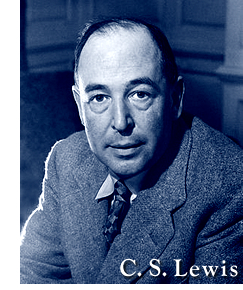
C.S. Lewis once wrote about the value of Christian involvement in popular scholarship. When understood broadly, Lewis’s words are instructive for Christian engagement in the arts or in any other discipline. “I believe that any Christian who is qualified to write a good popular book on any science may do much more by that than by any directly apologetic work….What we want is not more little books about Christianity, but more little books by Christians on other subjects—with their Christianity latent.”(3) Perhaps building such subtle cathedrals on the landscape of culture is indeed more winsome than making ruins.

Margaret Manning Shull is a member of the speaking and writing team at Ravi Zacharias International Ministries in Bellingham, Washington.


(1) Kenneth Scott Latourette, A History of Christianity: Beginnings to 1500, vol. 1 (San Francisco: Harper San Francisco, 1975), 251.

(2) Encarta, Orpheus.

(3) Cited in John Stackhouse, Humble Apologetics (Oxford: Oxford University Press, 2002), 215.

Alistair Begg – Faith in Every Sense


His fruit was sweet to my taste. Song of Songs 2:3

Faith is described in a variety of ways in the Bible. It is sight: “Turn to me and be saved.”1 It is hearing: “Hear, that your soul shall live.”2 Faith is smelling: “Your robes are all fragrant with myrrh and aloes and cassia”;3 “your name is oil poured out.”4 Faith is spiritual touch. By this faith the woman came behind and touched the hem of Christ’s garment, and by this we handle the things of the good word of life. Faith is equally the spirit’s taste. “How sweet are your words to my taste, sweeter than honey to my mouth.”5 “Whoever feeds on my flesh and drinks my blood has eternal life.”6

One of the first performances of faith is hearing. We hear the voice of God not only with the physical ear, but with the spiritual ear; we hear it as God’s Word, and we believe it as such; that is the hearing of faith. Then our mind looks upon the truth as it is presented to us; that is to say, we understand it, we perceive its meaning; that is the seeing of faith. Next we discover its preciousness; we begin to admire it and find how fragrant it is; that is faith in its smell. Then we appropriate the mercies that are prepared for us in Christ; that is faith in its touch. Then follow the enjoyments, peace, delight, communion, which are faith in its taste. Any one of these acts of faith is saving. To hear Christ’s voice as the sure voice of God in the soul will save us; but that which gives true enjoyment is the aspect of faith whereby we taste and see that the Lord is good. In this way we receive Christ, and He becomes, by inward and spiritual apprehension, to be the precious food for our souls. Here we learn to sit under His shadow “with great delight”7 and find His fruit sweet to our taste.

1) Isaiah 45:22

2) Isaiah 55:3

3) Psalm 45:8

4) Song of Solomon 1:3

5) Psalm 119:103

6) John 6:54

7) Song of Solomon 2:3

The Family Bible Reading Plan

  • 1 Samuel 17
  • Romans 15

Devotional material is taken from “Morning and Evening,” written by C.H. Spurgeon, revised and updated by Alistair Begg

Charles Spurgeon – Tomorrow


“Boast not thyself of tomorrow; for thou knowest not what a day may bring forth.” Proverbs 27:1

Suggested Further Reading: Proverbs 31:10-25

On one occasion I pleaded for a friendly society, and not knowing a more appropriate text, I selected this, “Take no thought for the morrow, for tomorrow shall take thought for the things of itself.” Some of my hearers, when I announced my text, feared the principle of it was altogether hostile to anything like an insurance, or providing for the future, but I just showed them that it was not, as I looked upon it. It is a positive command that we are to take no anxious thought concerning tomorrow. Now, how can I do that? How can I put myself into such a position that I can carry out this commandment of taking no thought for the morrow? If I were a man struggling in life, and had it in my power to insure for something which would take care of wife and family in after days, if I did not do it, you might preach to me for all eternity about not taking thought for the morrow; but I could not help doing it, when I saw those I loved around me unprovided for. Let it be in God’s word, I could not practise it; I should still be at some time or other taking thought for the morrow. But let me go to one of the many excellent institutions which exist, and let me see that all is provided for, I come home and say, “Now, I know how to practise Christ’s command of taking no thought for the morrow; I pay the policy-money once a year, and I take no further thought about it, for I have no occasion to do so now, and have obeyed the very spirit and letter of Christ’s command.” Our Lord meant that we were to get rid of cares.

For meditation: Are you playing your part to provide practically for the members of your family? (1 Timothy 3:4-5, 12; 5:4,16). If not, perhaps you should start getting anxious (1 Timothy 5:8).

Sermon no. 94

25 August (1856)

John MacArthur – Expecting the Best


“[Love] believes all things” (1 Cor. 13:7).

Love always expects the best of others.

In Luke 15 Jesus tells a parable about a father who had two sons. The younger son asked for his share of the family inheritance, then left home and squandered it on sinful pursuits. When he realized his folly, he decided to return home and ask his father’s forgiveness. So “he got up and came to his father. But while he was still a long way off, his father saw him, and felt compassion for him, and ran and embraced him, and kissed him. And the son said to him, ‘Father, I have sinned against heaven and in your sight; I am no longer worthy to be called your son.’ But the father said to his slaves, ‘Quickly bring out the best robe and put it on him, and put a ring on his hand and sandals on his feet; and bring the fattened calf, kill it, and let us eat and be merry'” (vv. 20-23).

That’s a beautiful illustration of love’s eagerness to forgive, but it also implies another characteristic of love. While the son was still far away, the father saw him coming. How could that be? Because he was watching for his son— anticipating and longing for his return. Love forgives when wrongs are committed against it, but it also expects the best of others. That’s what it means to believe all things (1 Cor. 13:7). That son had hurt his father deeply, but his father never lost hope that his son would return.

I know a Christian woman who has been married to an unbelieving husband for thirty years. Yet she continues to say, “He will come to Christ someday.” She isn’t blind to the situation, but her love for her husband has transformed her earnest desire into an expectation. She believes he will turn to Christ because love always expects the best.

Perhaps you have a spouse or child who is an unbeliever or has drifted away from the Lord. Don’t lose heart! Expect the best and let that expectation motivate you to pray more fervently and set a godly example for your loved ones to follow.

Suggestions for Prayer

Ask God to guard your heart from cynical and suspicious attitudes toward others.

For Further Study

Read Matthew 9:1-13, noting the attitudes of the Jewish scribes and Pharisees toward Jesus.

Joyce Meyer – You Are Secure


Lean on, trust in, and be confident in the Lord with all your heart and mind and do not rely on your own insight or understanding. In all your ways know, recognize, and acknowledge Him, and He will direct and make straight and plain your paths. – Proverbs 3:5–6

Following God is not a part-time lifestyle. The Bible clearly teaches that we are to be cautious at all times because the devil looks for opportunities to devour us (see 1 Peter 5:8).

But God gives us grace to withstand the devil and to be firm in faith against his onset. You can be rooted, established strong, immovable, and deter¬mined, knowing that whatever you face today is identical to what Christians throughout the world are facing. And God Himself will complete you and make you what you ought to be. He will establish you and ground you securely, strengthen and settle you today (see vv. 9–10).


Campus Crusade for Christ; Bill Bright – Free Gift


“For the wages of sin is death, but the free gift of God is eternal life through Jesus Christ our Lord” (Romans 6:23).

One night I was speaking to several hundred men gathered in a skid row mission for an evangelistic meeting. I had been invited to bring the address and as always my heart was deeply stirred when I realized that these men needed the Lord so very much. In the spiritual sense, though, their lot was no worse than the leaders of the city, for all have sinned and come short of the glory of God, and the wages of sin is death whether one is rich or poor, old or young, sick or well. It makes no difference. The wages of sin is death.

In an effort to communicate to these men the love of God and His free gift of eternal life through faith in Jesus Christ our Lord, I pulled a ten-dollar bill from my pocket and said, “The first person who comes to take this from my hand, can have it as a free gift.” This was my way of illustrating God’s gift of grace. Out of the hundreds of people seated before me, not a single person moved as I extended the bill, repeating several times, “The first one who will come and take this bill from my hand can have it.”

Finally, a middle-aged man, shabbily dressed like the rest, stood timidly to his feet and with an inquiring expression said, “Do you really mean it?” I said, “Sure, come and get it; it is yours.” He almost ran to grasp it and he thanked me. The rest of the crowd began mumbling, as if to say, “Why didn’t I have the faith to go and accept the gift?”

This gave me a marvelous opportunity to emphasize that we do not earn God’s love. He loves us unconditionally – not because of who we are, but because of who He is. God proved His love for us in that while we were all wretched sinners, He sent His only begotten Son to die on the cross for us and give to all men who will receive Him the gift of eternal life. Oh, what an attractive gift. Who could refuse to accept such a wonderful gift?

Bible Reading: Romans 6:17-22

TODAY’S ACTION POINT: I will trust the Lord to help me make His offer of this marvelous free gift, the gift of His only begotten Son who is eternal life, so attractive that no one can refuse to accept it.

Presidential Prayer Team; C.P. – A Man to Be Like


Most people have heard of the apostle Paul, but a lesser-known name is Barnabas. His name was actually Joseph, but the disciples called him Barnabas or “son of encouragement” (Acts 4:36). The first mention of Barnabas is when he sold a field and brought the money to the apostles (Acts 4:37).

For he was a good man, full of the Holy Spirit and of faith.

Acts 11:24

When Paul was converted from persecutor to preacher, it was Barnabas who presented him to Christians who were understandably afraid of Paul (Acts 9:26). Barnabas traveled to Tarsus to find Paul and take him to Antioch, where they both preached for a year (Acts 11:25). It was Barnabas who assisted Paul through most of his missionary journeys (Acts 13-14), and though John Mark had abandoned them earlier, it was Barnabas who opposed Paul to give Mark a second chance (Acts 15:39-40).

Most people will never be like Paul, but most can be like Barnabas – one who gives, encourages, assists and gives second chances. You can be also be like Barnabas by praying and being filled with the Holy Spirit and faith. Intercede for this nation and ask God for opportunities to help spread the gospel to those who have yet to hear it.

Recommended Reading: I Corinthians 12:12-26

Greg Laurie – A Walk of Faith


Therefore, having been justified by faith, we have peace with God through our Lord Jesus Christ.—Romans 5:1

The Bible tells the story of a man who had everything this world says one should have to feel happy and fulfilled: power, wealth, influence, and fame. But along with that came an emptiness that sent him on a search for God. As secretary of the treasury for a powerful nation, he was second only to the queen. But there was a hole in his heart, so it led him on a search to the spiritual capital of the world, Jerusalem. He did not find what he was looking for, but as he was returning home, he unexpectedly found the answer to his questions. He had an appointment with God that resulted in his conversion and complete transformation.

His story shows what happens when a person becomes a Christian. When someone truly believes in Jesus Christ, his or her life changes dramatically. This man went from emptiness and misery to overflowing joy. His story ends with the statement, “He went on his way rejoicing” (Acts 8:39). It is no exaggeration when the Bible says that we pass from darkness to light, from the power of Satan to the power of God, when we believe in Jesus Christ. It is describing what takes place in our lives.

But we also need to recognize that not every case is identical. There are different types of people who come to faith in different ways. Some have a tremendous emotional response, while others have no emotional experience at all.

An emotional experience has little to do with the reality of a person’s conversion. When I prayed and asked Christ to come into my life, I felt nothing. And because of this, I falsely concluded that God had rejected me. Thankfully, I discovered later that Christianity is a walk of faith and not of feeling.

Max Lucado – God Dancing Amidst the Common


There’s one word that describes the night Jesus came—ordinary. A beautiful night but nothing to keep a person awake. The sheep were ordinary. No fleece made of gold. No history makers. And the shepherds…peasants they were, probably wearing all the clothes they owned. You won’t find their staffs in a museum or their writings in a library. They were nameless and simple. And were it not for a God who loves to hook an “extra” on the front of ordinary, the night might have gone unnoticed.

But God dances amidst the common. And that night He did a waltz. The black sky exploded with brightness The night was ordinary no more. The angel came in the night because that’s when lights are best seen and most needed. God comes into the common for the same reason. His most powerful tools are the simplest.

From The Applause of Heaven

Night Light for Couples – The Marriage Triangle


“Blessed is the man who trusts in the Lord.” Jeremiah 17:7

God promises to bless those who trust in Him. The Psalms state that joy, deliverance, triumph, mercy, provision, blessedness, safety, and usefulness will come to those who put their confidence in the Lord. We need to rely on those blessings in our marriages—otherwise the stresses of life will pull us apart. And those stresses will come! When the house burns down… when a child becomes ill… when a job and steady paycheck are lost, it’s all too easy to let fear and frustration drive a wedge between partners. Even minor problems, such as a nagging cold or a sleepless night, can disrupt the quality of our marriage.

The good news is that we weren’t meant to succeed by depending only on each other. Marriage is a triangle—with husband and wife at the bottom corners and the Lord at the top. The book of Ecclesiastes conveys a similar truth when Solomon talks about the strength of a three‐stranded cord (4:12). If we invite the Lord into our marriage and trust in His strength, we can experience strength and peace in our marriage regardless of the circumstances.

Just between us…

  • When, before our marriage, did God prove strong for you in a time of crisis? What specific blessing did He provide?
  • How has He blessed us during hard times in our marriage?
  • What are some of the little stresses that tend to drive us apart?
  • In light of what we’ve read this week, how can we encourage each other to trust God more?

Dear Lord, we praise You that You—the God of love, power, and goodness— want to be a powerful presence in our relationship. When tests come, bind us together with love. When we are weak, be strong for us. Amen.

From Night Light For Couples, by Dr. James & Shirley Dobson

Charles Stanley – God’s Gift of Forgiveness


Colossians 3:12-14

Motivated by love, God provided a way for our sins to be forgiven: He sent Jesus to be our Savior. When we trust in the Lord’s substitutionary sacrifice on our behalf, we receive the gift of forgiveness.

Before placing faith in Christ, we were dead in our sins and objects of divine wrath (Ephesians 2:1-3). But our merciful heavenly Father sent His Son Jesus to redeem us. At the cross, the Savior took our sins upon Himself and experienced God’s fury for our sake. His death secured a pardon for us; there was nothing we ourselves could do to acquire God’s acceptance. We are saved by grace—through faith in Christ and what He accomplished (Ephesians 2:8-9). Our salvation is a free gift from the Father.

God’s will is that we, as forgiven people, show mercy to those who wrong us—to the same degree that He forgave us in Christ. But the human tendency is to attach conditions when extending mercy. We think, I will forgive you only if you apologize. Or, You must fix the problem, and then I’ll stop being angry. Or even, You must make restitution before I will let this go. That’s not what our Savior did. Romans 5:8 expresses it this way: “But God demonstrates His own love toward us, in that while we were yet sinners, Christ died for us.”

Depending on how much hurt we’ve experienced, we may require time and healing before we can truly forgive. But we are to remember that showing mercy is God’s will. We’re called to pardon those who have caused us pain. Through reliance on God’s Spirit, we can become Christlike and forgive.

Bible in One Year: Jeremiah 51-52

Our Daily Bread — Coming Alongside


Read: 2 Corinthians 1:3-11

Bible in a Year: Psalms 116-118; 1 Corinthians 7:1-19

>Blessed be the God and Father of our Lord Jesus Christ, . . . who comforts us in all our tribulation, that we may be able to comfort those who are in any trouble. —2 Corinthians 1:3-4

When my sister Carole was diagnosed with breast cancer, our family worried. That diagnosis, with its surgeries and treatments, caused us to fear for her well-being, which drove our family to prayer on her behalf. Over the ensuing months, Carole’s updates were honest about the challenges. But we all celebrated when the report came back that the surgery and treatments had been successful. Carole was on the road to recovery!

Then, less than a year later, my sister Linda faced the same battle. Immediately, Carole came alongside Linda, helping her understand what to expect and how to prepare for what she would face. Carole’s experience had equipped her to walk with Linda through her own trial.

This is what Paul calls for in 2 Corinthians 1:3-4, where we read, “Blessed be the God and Father of our Lord Jesus Christ, the Father of mercies and God of all comfort, who comforts us in all our tribulation, that we may be able to comfort those who are in any trouble, with the comfort with which we ourselves are comforted by God.”

Thankfully, the Lord doesn’t waste anything. Our struggles not only give us an opportunity to experience His comfort, but they also open the door for us to share that comfort with others in their struggles. —Bill Crowder

Today, how can I be an encouragement to others whose hearts are weighed down by the cares of life?

God’s presence brings us comfort; our presence brings others comfort.

INSIGHT: This passage demonstrates how our personal pain can help others who suffer. Paul uses the word comfort both vertically and horizontally. God extends comfort to us. We experience His comfort. Then we can offer comfort to others. In this way, our pain can become a conduit of care for those in distress and lead to gratitude in the midst of pain. “Blessed be the God and Father of our Lord Jesus Christ, the Father of mercies and God of all comfort” (v. 3). Dennis Fisher

Ravi Zacharias Ministry – Blindness, Delusion, Lies, or Logic


In cities across the world, the blind are leading the blind, quite literally. In an exhibit that hopes to promote understanding between people with and without eyesight, Dialogue in the Dark takes small tour groups through a variety of environments in complete darkness, inviting them to rely on senses they are far less used to trusting. For approximately one hour, visitors are led by visually impaired guides like George Pinon, who has been blind since age 3. Along the way, visitors can ask questions of their visually impaired guide, whose face remains unseen until the end.(1) In a similar worldwide exhibit, Dinner in the Dark, participants are served a four-course meal in complete darkness by blind waiters, challenging taste buds and table manners alike.

In each scenario, the turn of phrase “the blind leading the blind” challenges every negative connotation associated with it. The idiom is, of course, not meant to depict actual visual impairment like Pinon’s, but the far more common impairment of insight, knowledge, or vision of reality. Typically, the saying is applied in situations where the person (or people) in charge knows no more than those whom he or she is leading. The phrase is one used in antiquity, most notably used by Jesus in Matthew 15:14 and Luke 6:39. “Let them alone,” Jesus said of the Pharisees; “they are blind guides of the blind. And if one blind person guides another, both will fall into a pit.”

Just as Jesus seems to say here of the scribes and Pharisees of his day, the non-religious sometime describe every religious person in such terms. They reason that the anatomy of faith in general promotes a culture of the blind leading the blind. Moreover, Christianity in particular, some argue, is founded on such a blindness. The deluded disciples, blind by their love for Jesus or perhaps simply their need to be right, perpetuated a story that continues to delude the world. In his Letter to a Christian Nation, Sam Harris writes that nonbelievers like himself are thoroughly dumbstruck by the pervasiveness of Christian blindness, by the Christian “denial of tangible reality,” by the suffering these Christians create “in service to religious myths” and their wholehearted “attachment to an imaginary God.”(2)

While blindness to reality is a common accusation among the nonreligious, their accusations typically extend well beyond the charge of blindness. Charles Templeton, for instance, describes the resurrection story as a fable put forward by followers hoping to keep the dream alive. He insists that resurrection is first of all implausible, and that the story must be false because there are no secular histories which mention it. What’s more, he describes the discrepancies within the gospel accounts themselves as evidence of dishonesty or tampering of the storyline. Like many, he ends with the sharp conclusion that though Christians embrace it with blind eyes, “the entire resurrection story is not credible.”(3) In such a scenario, however, it would be far more accurate to accuse Christians of being “the deluded following the liars” than “the blind following the blind.”

In fact, I think most Christians would vigorously agree that the resurrection is indeed unfathomable. In the same way that Mary and Joseph understood that pregnancy among the virginal does not make sense, the resurrection flies in the face of what we know to be true of dead bodies: they do not rise. On this point, no one is blind. If by some way a body did happen to rise, it would have been a miracle unparalleled in history. On these details, I think most Christians and atheists can, in fact, agree!

But the claim that resurrection is implausible cannot be accurately bolstered by the claim that secular histories make no mention of it. Secular writers of the time, including Pliny, Josephus, and the Roman historian Tacitus, in fact affirm the biblical accounts in matters of historic detail. Christ’s life, his reported miracles, his sentence under the Roman procurator Pontius Pilate, his crucifixion, and his reported resurrection are all well documented by the historians of the era. Templeton’s insistence that a miracle of resurrection proportions would have convinced the entire population in a matter of hours is optimistic at best; there are far too many who prefer to watch from afar or to keep their eyes closed entirely.

Further, the oft-mentioned claim of discrepancies in the biblical accounts of the resurrection story cannot be used to logically discount the story itself. First, error must not be confused with imprecision. It makes sense that Paul mentions men as the first witnesses of the risen Christ because in that historical context women (who are named as the first witnesses in other accounts) were not considered valid witnesses. Second, falsity must not be confused with perspective. The minimal differences between the gospel accounts actually assure there was legitimate conveying of perspective going on and not simply a memorized story they needed to keep straight.

Finally, the theory that the story was conjured up by disciples who simply believed what they wanted to believe is not quite plausible. If the disciples had agreed to propagate a story, it serves to follow that they would have known to conceive something far less remarkable, a story that would accommodate the arguments they would undoubtedly face. With even the slightest bit of intelligence, one could see the claim that Jesus had only “spiritually” or “figuratively” risen again would have been much harder to prove false by antagonists. Furthermore, when standing up for these falsified claims was a matter of life or death, it seems likely that at least one of them would have buckled—far more likely than an entire group (and many others) being willing to die for a lie. A far cry from “the blind leading the blind,” such a scenario would call for “the liars following the liars.”

On the contrary, the disciples took the dangerous and difficult road—the inconceivable road—and they went to great lengths to proclaim it. Unlike those who might call them “blind” for conceding to the unfathomable, I find it far more difficult to examine the bigger picture and yet refuse to see.

Jill Carattini is managing editor of A Slice of Infinity at Ravi Zacharias International Ministries in Atlanta, Georgia.

(1) Elizabeth Landau, “Being blind, ‘You Have to Be Adventurous,’” http://CNN.com, May 12, 2009, accessed May 12, 2009.

(2) Sam Harris, Letter to a Christian Nation (New York: Alfred A. Knopf, 2007), 91.

(3) Charles Templeton, Farewell to God: My Reasons for Rejecting the Christian Faith (Toronto: McClelland & Stewart, 1996), 122.

Alistair Begg – Christ’s Victory


He who opens the breach goes up before them. Micah 2:13

Inasmuch as Jesus has gone before us, things are not as they would have been if He had never passed that way. He has conquered every foe that obstructed the way. Cheer up now, you faint-hearted warrior. Not only has Christ traveled the road, but He has defeated your enemies. Do you dread sin? He has nailed it to His cross. Do you fear death? He has been the death of Death. Are you afraid of hell? He has barred it against the advent of any of His children; they shall never see the gulf of perdition. Whatever foes may be before the Christian, they are all overcome. There are lions, but their teeth are broken; there are serpents, but their fangs are extracted; there are rivers, but they are bridged or fordable; there are flames, but we wear that matchless garment that renders us invulnerable to fire.

The sword that has been forged against us is already blunt; the instruments of war that the enemy is preparing have already lost their point. God has taken away in the person of Christ all the power that anything can have to hurt us. Well then, the army may march safely on, and you may go joyously along your journey, for all your enemies are already conquered. What will you do but march on to take the prey? They are beaten, they are vanquished; all you have to do is share the plunder. You shall, it is true, often engage in combat; but your fight will be with a defeated foe. His head is broken; he may attempt to injure you, but his strength will not be sufficient for his malicious design. Your victory shall be easy, and your treasure shall be beyond all measure

Proclaim aloud the Savior’s fame,

Who bears the Breaker’s wond’rous name;

Sweet name; and it becomes him well,

Who breaks down earth, sin, death, and hell.

The Family Bible Reading Plan

  • 1 Samuel 16
  • Romans 14

Devotional material is taken from “Morning and Evening,” written by C.H. Spurgeon, revised and updated by Alistair Begg.