Tag Archives: Joy

Night Light for Couples – Persistent Prayer


“They should always pray and not give up.” Luke 18:1

When I was only eight years old, I began praying for my dysfunctional family while alone in my bedroom. It still brings tears to my eyes to think that Jesus Christ was listening to me—a little child from a poor family—in those quiet moments. I had no status or influence in the community—no particular skills or talent that the Lord needed. And yet He accepted and blessed me in the years that followed. Those early prayers for a loving family, and later for a Christian husband, were answered beyond my greatest hopes and dreams.

Some of you reading this tonight, however, have also prayed unceasingly for what you believe is God’s will—yet you’ve seen no evidence that He has even heard your prayers. I know of one husband and wife who have prayed for the salvation of their children for more than twenty‐five years, with no hint of change. To those in a similar situation: I understand your discouragement. I don’t know why the Lord chooses to grant some of our petitions more quickly than others—but I do know that He honors the prayers of His righteous followers, and that we should stay on our knees before Him.

Luke 18 records the parable Jesus told about the widow who approached a judge, day after day, asking for justice against her adversary. For some time the judge refused. Finally, however, he gave in, “so that she won’t eventually wear me out with her coming!” Jesus was telling us to not give up, but to pray persistently for the desires of our hearts.

I have based my life on my belief in the power and importance of prayer. That’s why I agreed to chair the National Day of Prayer Task Force. And it is why Jim and I have made prayer the cornerstone of our marriage. Consistent prayer can also undergird and sustain your marital relationship through the years. We encourage the two of you to bow before our great, loving God—tonight and every night.

Shirley M Dobson

From Night Light For Couples, by Dr. James & Shirley Dobson

Charles Stanley – Softening Your Heart


Psalm 25

When you are continually on your face before God, seeking Him in His Word, His presence will saturate your heart, making it sensitive and teachable. Just as a marriage relationship can begin to grow cold unless proactive steps are taken daily to keep it warm, your heart can gradually harden when you aren’t seeking intimacy with God. You must also obediently—and promptly—respond to whatever He tells you to do so that your heart will stay soft and receptive. Then it won’t take much for the Lord to get your attention, and when He convicts you of sin, you will want to deal with the problem right away. This is why we must walk in the Spirit moment by moment.

If you believe that God might be leading you in a certain direction, take the time to earnestly seek His mind on the matter, and open your heart to listen to Him. Be careful about getting busy with a substitute for what He originally called you to do.

It would be tragic to work extra hard doing what you and others consider good, only to discover that your effort was expended in accomplishing something that was not God’s intention. Resisting the Lord often amounts to putting your life on the shelf, which leaves you feeling that something is missing. There is no substitute for God’s will, even when His plan might seem difficult or impossible. But when you trust Him with a cooperative heart, there is no limit to what God can do through your life. Step out in obedience today and say, “Lord, I want Your will—no matter what.”

Bible in One Year:Isaiah 1-3

Our Daily Bread — An Exchange


Read: Psalm 32

Bible in a Year: Psalms 31-32; Acts 23:16-35

I said, “I will confess my transgressions to the Lord,” and you forgave the guilt of my sin. —Psalm 32:5

Jen sat on her patio pondering a scary question: Should she write a book? She had enjoyed writing a blog and speaking in public but felt God might want her to do more. “I asked God if He wanted me to do this,” she said. She talked with Him and asked for His leading.

She began to wonder if God wanted her to write about her husband’s pornography addiction and how God was working in his life and their marriage. But then she thought that it might publicly disrespect him. So she prayed, “What if we wrote it together?” and she asked her husband Craig. He agreed.

While he didn’t say what sin he committed, King David engaged in a public conversation about his struggles. He even put them into song. “When I kept silent, my bones wasted away,” he wrote (Ps. 32:3 niv). So he said, “I will confess my transgressions to the Lord” (v. 5). Not everyone should go public with their private battles. But when David confessed his sin, he found peace and healing that inspired him to worship God.

Craig and Jen say that the process of writing their deeply personal story has brought them closer than ever. How like God, who loves to exchange our guilt, shame, and isolation for His forgiveness, courage, and community! —Tim Gustafson

Do you need to make an exchange with God of guilt for forgiveness? He is listening.

God forgives those who confess their guilt.

INSIGHT: Like many psalms, Psalm 32 was written after a time of struggle and hardship. That is why it begins with such a wonderful and comforting affirmation: “Blessed is the one . . .” (vv. 1-2 niv). But we must not overlook the path David took to be able to make that statement. David had gone through anxiety and depression while hiding his sin. The blessing came only when he acknowledged and confessed it to the Lord (v. 5).

Ravi Zacharias Ministry – Scandalous Windows


Christian theologians often speak of the “scandal of particularity” that surrounds the gospel. The absurdity of God becoming incarnate in Christ within human history is hard to escape. In other words, it is a scandal to suggest that God somehow stepped into a particular moment in time, the heavens somehow opening like a window. It is scandalous that an unknowable God should somehow become so particularly known.

The prayer of Isaiah conveyed in chapter 64 is one that boldly confronts us with this very scandal. The particularity of the moment in which God, prophet, and the people of Israel are speaking is unmistakable: “Oh that you would tear open the heavens and come down! That the mountains would quake at your presence” (64:1). This cry of longing and remembrance is one wrought out of a great and terrible history, the storied and convoluted relationship of a God called Yahweh and his chosen, wandering people. And yet, there are certainly many who, when reading these words, feel as if Isaiah has torn out their own storied and convoluted hearts and placed them upon the page: Oh that you would tear open the heavens and come nearer! Multiplying the scandal of this particular ancient longing is this Father who is as able to speak to a particular post-exilic people as He is to you and me, here and now.

Adding to this picture, Isaiah’s words strike me as those a person in Bethlehem could likely have been uttering on the night Christ was born (or you or me hundreds of years later). In the days of Mary and Joseph, Elizabeth and Zechariah, the people of Israel were living in a period of silence. It had been over four hundred years since God had spoken of a coming redeemer and his forerunner through the prophet Malachi. Malachi had called the people again to anticipate and to be prepared for the day that was coming. But in the quiet nights of four hundred years, even the faithful stumble and doubt. How long had devoted pilgrims been repeating to themselves: “From ages past no one has heard, no ear has perceived, no eye has seen any God besides you, who acts on behalf of those who wait for him” (64:4). Yet on doubt-ridden nights, the waiting was no doubt for them as wearying as it is today, the silence daunting, the longing unsilenceable, convinced it is we who are foul and repelling. “[Y]ou have hidden your face from us, and have melted us into the hand of our iniquity,” laments Isaiah (64:7).

Whether uttered aloud or groaned silently, how often our longings convey something of the same convoluted emotions—trust and fear, hope and dejection, frustration and guilt. Ours, too, are the cries of a desperate people, wrought with a sense of longing, burdened by a sense of shame. Isaiah’s next question—”How then can we be saved?”—is one we, too, might utter, at times cynically, accusingly; while other times whispered as a prayer or burdened confession (64:5).

Regardless, it is precisely here, in the darkness of post-exilic Jerusalem, in the night of God’s silence, or in the cry of one who is all too aware of the rift of sin, that the very particular cry for God to come down is met with the scandalous assurance of radical and particular belonging. Indeed, Isaiah concludes to God, “[E]ven if no one is calling your name, bestirring himself to take hold of you, because you have hidden your face from us, and melted us down by means of our iniquities, now, Yahweh, you are still our father! We are the clay, and you are our potter. All of us are the work of your hand!” (64:7-8). It is reminiscent of Bonhoeffer’s description of a mining accident and the hope of the Incarnation as the distinct sound of knocking to those trapped beneath the weight of the earth. There is someone coming whether we want him or not, and he is calling your name.

The great window of a torn-open heavens and the massive ladder of a God who descends are the expectant images that tell us the hopeful story of a God who is scandalously near—whether we want God to be near or not. Picturing this hope, our imaginations can run wild at the thought of quaking mountains, awesome deeds, and great reversals we did not expect. But so these windows and ladders are the stirring and expectant vessels of smaller and seemingly insignificant glimpses of a God among us. Even in the soul who can only partially admit that he is a wandering child is something of the radical reach of a Father’s love. In the company of a friend through cancer or the sting of death is the image of the one who is nearer than a friend.

In Isaiah’s particular cry is an invitation to pay attention to the unlikely and the unexpected in the great windows of history and the small windows of daily life. Isaiah’s particular cry is an invitation to hear the cries of those before us as well as the cries of our hearts, which may just be answered by the cry of a God who hears particularly. Indeed, how scandalous is the image of the infant Christ looking up at his young mother, his own cries joining humanity’s own? There was a particular moment in history when humanity heard God weep. And there will be a day in history when this same Christ will dry every tear from our eyes.

Jill Carattini is managing editor of A Slice of Infinity at Ravi Zacharias International Ministries in Atlanta, Georgia.

Alistair Begg – Heaven’s Marriage


I am your master. Jeremiah 3:14

Christ Jesus is joined unto His people in marriage-union. In love He espoused His Church as a chaste virgin, long before she fell under the yoke of bondage. Full of burning affection He toiled, like Jacob for Rachel, until the whole of her purchase-money had been paid; and now, having sought her by His Spirit and brought her to know and love Him, He awaits the glorious hour when their mutual bliss shall be consummated at the marriage-supper of the Lamb.

The glorious Bridegroom has not yet presented His betrothed, perfected and complete, before the Majesty of heaven; she has not yet actually entered upon the enjoyment of her dignities as His wife and queen. She is as still a wanderer in a world of woe, a dweller in the tents of Kedar;1 but she is even now the bride, the spouse of Jesus, dear to His heart, precious in His sight, written on His hands, and united with His person.

On earth He exercises toward her all the affectionate offices of Husband. He makes rich provision for her wants, pays all her debts, allows her to assume His name and to share in all His wealth. Nor will He ever act otherwise to her. The word divorce He will never mention, for He hates it. Death inevitably severs the conjugal tie between the most loving mortals, but it cannot divide the links of this immortal marriage. In heaven they marry not but are as the angels of God; yet there is this one marvelous exception to the rule, for in Heaven Christ and His Church shall celebrate their joyous nuptials.

This affinity, as it is more lasting, so is it more near than earthly marriage. The love of husband, no matter how pure and fervent, is but a faint picture of the flame that burns in the heart of Jesus. Passing all human union is that mystical cleaving unto the Church, for which Christ left His Father and became one flesh with her.

1) Psalm 120:5

The Family Bible Reading Plan

  • Judges 5
  • Acts 9

Devotional material is taken from “Morning and Evening,” written by C.H. Spurgeon, revised and updated by Alistair Begg.

Charles Spurgeon – Continental tour H3


Suggested Reading: 1 Corinthians 9:19-23

I was allowed to stand in the pulpit of John Calvin. I am not superstitious, but the first time I saw this medal bearing the venerated effigy of John Calvin I kissed it, imagining that no one saw the action. I was very greatly surprised when I received this magnificent present, which shall be passed round for your inspection. On the one side is John Calvin with his visage worn by disease and deep thought, and on the other side is a verse fully applicable to that man of God. “He endured, as seeing him who is invisible.” That is the very character of the man. That glorious man, Calvin! I preached in the cathedral. I do not think half the people understood me in the Cathedral of St. Peter’s; but they were very glad to see and join in heart with the worship in which they could not join with understanding. I did not feel very happy when I came out in full clergyman’s dress, but the request was put to me in such a beautiful way that I could have worn the Pope’s tiara, if by so doing I could preach the gospel more freely. They said,—“Our dear brother comes to us from another country. Now, when an ambassador comes from another country, he has a right to wear his own costume at Court; but, as a mark of very great esteem, he sometimes condescends to the manners of the country which he visits, and wears the Court dress.” “Well,” I said—“yes, that I will, certainly, if you do not require it, but merely ask it as a token of my Christian love. I shall feel like running in a sack, but it will be your fault.” But it was John Calvin’s cloak, and that reconciled it to me very much. I do love that man of God, suffering all his life long, enduring not only persecutions from without but a complication of disorders from within; and yet serving his Master with all his heart.

For meditation: The advice “When in Rome do as the Romans do” may lead the believer into unhealthy compromise. When in Geneva Spurgeon willingly became as a Genevan for the sake of the gospel. Does the same thought motivate us to be adaptable, without compromise, in order to win all sorts and conditions of men?

Part of nos. 331-332

22 July

John MacArthur – Praising God for Your Eternal Inheritance


“Blessed be the God and Father of our Lord Jesus Christ” (1 Pet. 1:3).

God has blessed you richly and is worthy of your praise.

The source of your eternal inheritance is God, whom Peter described in several ways. First, He is our blessed God (1 Pet. 1:3). The Greek word translated “blessed” in that verse speaks of that which is worthy of blessing, adoration, praise, or worship. Peter’s praise for God is an example for us to follow. Our God is especially worthy of our praise in light of the glorious inheritance He has granted us in His Son (v. 4).

“Father” to the Jewish people of Peter’s day was one designation for God. The most common Jewish blessings emphasized God as Creator of all things and Redeemer of His people from Egypt, but not as Father (e.g., Gen. 14:20; 24:27; Ex. 18:10). Yet now through Christ, we “have received a spirit of adoption as sons by which we cry out, ‘Abba! [Daddy!] Father!'” (Rom. 8:16).

As wonderful a reality as the fatherhood of God is, Peter’s reference was not primarily to God as our Father, but as Christ’s Father. Their unique relationship affirms Christ’s deity (cf. John 10:30-33). God is the Father of believers in a secondary sense because He has redeemed us through Christ and adopted us into His family (Gal. 4:4-6).

In referring to Christ as “our Lord Jesus Christ” (1 Pet. 1:3), Peter amplifies His redemptive work. “Lord” speaks of His sovereign rulership; “Jesus” is His name as God in human flesh; and “Christ” identifies Him as the Messiah, the anointed King.

Peter’s final description of God is seen in the pronoun “our.” He is “our Lord Jesus Christ,” a personal Lord and Savior—not some distant, impersonal deity. He created and redeemed you because He loves you and wants to be intimately involved in every aspect of your life.

What a glorious God we serve! Worship Him today as He deserves to be worshiped.

Suggestions for Prayer

Bless God, who is your Father, your Redeemer, your constant companion, and the source of your eternal inheritance.

For Further Study

Read John 4:1-26. What did Jesus say about the fatherhood of God?

Joyce Meyer – You Are Not Alone


And even he who is brave, whose heart is as the heart of a lion, will utterly melt. —2 Samuel 17:10

We are all brave in some areas and fearful in others. The pendulum may swing one way or the other, but we all have some of both. For example, a woman we will call Theresa was timid and shy, and yet was very brave when it came to facing pain and tragedy. She had cancer at the age of thirty-two and endured surgery and painful radiation and chemotherapy treatments. Theresa also had three miscarriages before she finally gave birth to a healthy child. She bore these difficulties graciously, bravely, and with little complaint.

Janice, a friend of Theresa’s, was bold and aggressive and appeared to be fearless until she suddenly lost her job of twenty years and her 401(k) retirement program to corporate fraud. She faced tragedy but did not handle it graciously. She displayed fear that amazed those who knew her.

It’s important for us to realize that we are not alone in our battles with fear. The devil wants nothing better than to convince you that there is something really wrong with you and that other normal people don’t have the same kinds of problems. Don’t let him do it; all of us experience fear.

Lord, You know me inside and out. You see my strengths and weaknesses. I trust You to be working and equipping me to face the challenges of today and tomorrow. Help me to be brave, knowing that You are with me. Amen.

Campus Crusade for Christ; Bill Bright – Glorious Future


“As for the one who conquers, I will make him a pillar in the temple of my God; he will be secure, and will go out no more; and I will write my God’s Name on him, and he will be a citizen in the city of my God – the New Jerusalem, coming down from heaven from my God; and he will have my new Name inscribed upon him” (Revelation 3:12).

You and I shall some day be in that beautiful temple in Jerusalem – to rule and reign with the King of kings and Lord of lords forever and forever.

Can you see it now? While we do not know – and need not know – all the incidental details and circumstances, we know enough from God’s holy Word to know that some day we shall be with Him, never to be separated. That is the cause for shouting and rejoicing.

And we need not be terrified by the condition that we must be conquerors before we qualify for any of these promised blessings. Has He not told us that we are already “more than conquerors?”

Here again we have that promise of the new name, thought by some to be the very name of Christ Himself – certainly worthy of attainment, whatever its true meaning.

To be “heirs with God and joint-heirs with Christ” holds all the wonderful promise that the human mind can imagine. Just to be with Him is enough; to know that He adds blessing upon blessing as we rule and reign with Him – that is unparalleled joy indeed.

Bible Reading: Revelation 3:7-13

TODAY’S ACTION POINT: With a quick look at the future, I’ll do my best to make this day all that God intends for me, especially in my outreach to others.

Presidential Prayer Team; P.G. – Outstanding Combination


Have you noticed how the keepers of justice in America are losing favor with the public? Whether local magistrates, regional courts or even members of the nation’s highest, the Supreme Court, you mostly hear of derision…and not much in the way of praise. Even so, this nation’s system of justice is still considered the most equitable in the world.

Blessed are they who observe justice, who do righteousness at all times!

Psalm 106:3

An outstanding combination of observing justice and doing righteousness simultaneously came from the relatives of the Christians massacred at the Emmanuel AME Church in Charleston last month. At the arraignment of the young perpetrator, they all expressed thankfulness in advance for knowing the justice he will receive at the hands of the state; but at the same time, they offered their forgiveness to him. Whether they can maintain that through their grief, only God knows. There is no doubt, though, that He will strengthen the victim’s families in the days to come.

Today, intercede for those whose lives are forever changed by one heinous act. Pray for the judges and justices who will eventually deal with the young perpetrator – and ask God to give wisdom to your members of Congress as they consider legislation that could grow out of that event.

Recommended Reading: Micah 6:1-8

Greg Laurie – Deal Quickly with Sin


A little leaven leavens the whole lump. —Galatians 5:9

Israel committed a great sin. They knew better. They were God’s chosen, covenant people. They had seen his power demonstrated time and time again. They saw the Red Sea parted as they passed through, and they saw it close on the pursuing Egyptian army. They saw manna provided every morning. They saw God’s fire by night and His cloud by day. They saw miracle after miracle. They made a promise to obey God on three separate occasions. Much had been given to Israel, and much was expected from Israel.

So when they worshiped the golden calf that Aaron formed from the jewelry they willingly gave him, it was a radical sin. And it would be dealt with harshly. When Moses arrived, he threw down the commandments, took their golden calf, ground it into powder, put it into water, and then made them drink it. Then he gave the command for a number of them to be put to death for their sin.

It almost seems unfair that God would deal so harshly with these people. But frankly, God doesn’t owe us the time of day, much less an explanation of why He does or does not do certain things. He just does what He is going to do.

Basically God was saying, “I hate sin. It will not be tolerated. It must be dealt with swiftly, lest it spreads and do even more harm.”

The Bible compares sin to leaven, which is yeast that is put into bread to cause it to rise before baking. It is always a picture of evil in the Bible. We could say that sin is like cancer. It needs to be cut out before it metastasizes, before it spreads through someone’s system. That is why the Lord tells us to deal quickly with sin.

Max Lucado – Make God Your Refuge

Refuge is a favorite word of David’s. You will count as many as forty-plus appearances in some Bible versions. But never did David use the word more poignantly than in Psalm 57. The introduction to the passage explains its background: “A song of David when he fled from Saul into the cave.” Lost in shadows and thought, he has nowhere to turn. Go home, he endangers his family; to the tabernacle, he imperils the priests. Saul will kill him. Here he sits. All alone. But then he remembers he’s not. And from the recesses of the cave a sweet voice floats:

“Be merciful to me, O God!

For my soul trusts in You; and in the shadow of Your wings I make my refuge.” (Psalm 57:1)

Make God your refuge. Let Him be the foundation on which you stand!

From Facing Your Giants

Night Light for Couples – Manipulating Our Maker?


“If we ask anything according to his will, he hears us.” 1 John 5:14

It’s tempting for some of us to view our Lord as a heavenly “Mr. Fix‐It”—a supernatural problem solver who can be manipulated according to our whims. We might make a little wager on our favorite football team and then pray for God to intervene so our team will win. Or on the day of the church picnic, we might pray for a rainstorm so we don’t have to fix that potato salad we promised to bring.

Others see prayer as a negotiating tool. They want to make a deal with God: “Lord, if You give me this promotion at work… or allow me to get pregnant this month…or let that car at the dealership still be on sale… then I promise I’ll do [fill in the blank] for You.”

Of course these are foolish bargains that reveal a misunderstanding of the majesty of God. He is Lord of lords, King of kings, and Creator of all heaven and earth. He is not a deal maker who allows Himself to be manipulated. Instead, He wants us to carefully consider His will for our lives before we pray. Prayer is a privilege—a direct line to the Lord’s eternal wisdom and love. Let’s not forget what a blessing it is just to come into His presence.

Just between us…

  • Have you ever tried to manipulate God through prayer?
  • How can we be sure our prayer petitions are within God’s will?
  • Do our prayers include adoration, devotion, and intercession, or do they represent merely a daily “wish list”?
  • How might our relationship change if we focused on prayer from

God’s perspective?

Heavenly Father, thank You for the privilege of bringing our requests to You. Give us a deep desire for Your will—not ours—for our marriage, and help us to shape our prayers and our priorities accordingly. Amen.

From Night Light For Couples, by Dr. James & Shirley Dobson

Presidential Prayer Team; C.H. – Free to Praise


All around the world, people worship under the cover of darkness and use code names for God to discuss Him in public places. Christians have recently been tortured and even beheaded for refusing to denounce Jesus. But in America, you are free to worship your Creator.

I will sing of your love and justice; to you, Lord, I will sing praise.

Psalm 101:1

While Christianity has certainly come under some fire in this nation, you can hop in your car on any given Sunday and drive to one of many churches open for all. You have freedom to host Bible studies in your home or pray on your back patio. You are even free, as today’s verse suggests, to sing praises to the Lord.

While criticism for this country rolls off the tongues of many, remember you are free to worship God – and that is one of the greatest freedoms of all. Pray for Americans to recognize the gift this country really is and praise God for the freedom you have to worship. Then pray for your national leaders to uphold the laws that grant you that liberty – and to find the only One who can give them pure love and true justice.

Recommended Reading: John 4:19-29

Greg Laurie – Are All Sins the Same?


Now it came to pass on the next day that Moses said to the people, “You have committed a great sin.”

—Exodus 32:30

Are some sins greater, or worse, than others? Our knee-jerk reaction might be that all sin is the same. But actually that is not true. All sin is not the same. According to the Scriptures, some sins are more offensive to God than other sins are.

Now in a broad sense, all sin is wrong, from the smallest infraction to the grossest, outright sin. It all separates us from God. Even one sin can separate us from God. Jesus made this clear in the Sermon on the Mount when He pointed out that lusting is as bad as committing adultery, and hating is as bad as murdering.

In one sense, adultery and lust are the same. But in another sense, they are different. In one sense, murder and hate are the same thing. But in another sense, they are different. Some sins have greater ramifications than others, but all sin separates us from God.

Jesus said to Pontius Pilate, “You could have no power at all against Me unless it had been given you from above. Therefore the one who delivered Me to you has the greater sin” (John 19:11).

I think Jesus was referring here to either Caiaphas or Judas. Caiaphas was the high priest, the man who represented God and was supposed to be close to God. Judas was one of the handpicked disciples of the Lord. So if Jesus was referring to them, it really was, in effect, the same sin they would have committed. And what was this “greater sin”? It was sinning when they knew better.

The worst sin people can commit, the unforgivable sin, is the blasphemy of the Holy Spirit, which is the outright rejection of Christ. And as Hebrews 2:3 says, “How shall we escape if we neglect so great a salvation?”

Max Lucado – A Better Option


I spent too much of a high school summer working in the oil field. We donned gas masks, waded into ankle deep, contaminated mire. My mom burned my work clothes. The stink stunk! Yours can do the same. Linger too long in the stench of your hurt, and you’ll smell like the toxin you despise. The better option? Join with David as he announces, “The Lord lives. Blessed be my Rock. It is God who avenges me. He delivers me from my enemies. Therefore I will give thanks to You, O God!” (Psalm 18:46-49).

Wander daily through the gallery of God’s goodness. Catalog His kindnesses. Look at what you have. Let Jesus be the friend you need. Talk to Him. Spare no details. Disclose your fear and describe your dread. You just found a friend for life in Jesus Christ. What could be better than that?

From Facing Your Giants

Night Light for Couples – The Family That Prays Together


“For where two or three come together in my name, there am I with them.” Matthew 18:20

The day you were married, you probably knelt together and shared a prayer during your wedding ceremony. In front of family and friends, you helped cement your union through this joint conversation with the Lord. Sadly, many couples never pray together again.

Don’t misunderstand—prayer when you are alone, with a friend, in a Bible study, or in church is extremely important and valued just as much by our heavenly Father. But there is something special about prayer between husband, wife, and God that can’t be found elsewhere. It creates a spiritual connection, accountability, and a holy bond that brings strength and stability to the relationship. It can even allow you to communicate about sensitive issues that might otherwise never come out—issues that can be discussed and prayed over in a spirit of humility and purity of motive.

The old saw “The family that prays together, stays together” still applies today. We encourage you to remember it the next time you kneel in prayer.

Just between us…

  • When was our last meaningful prayer time together?
  • What’s the most common obstacle that keeps us from praying together?
  • How do you feel about praying with me?
  • How could we benefit from praying as a couple?
  • Should we schedule a regular time of prayer together?

Father, You have blessed us with each other as partners in marriage. Show us how to make prayer—together—a regular part of our life. Amen.

From Night Light For Couples, by Dr. James & Shirley Dobson

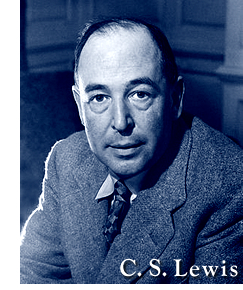
C.S. Lewis Daily – Today’s Reading


Screwtape offers more advice on using daily annoyances to entrap a Patient:

It is, no doubt, impossible to prevent his praying for his mother, but we have means of rendering the prayers innocuous. Make sure that they are always very ‘spiritual’, that he is always concerned with the state of her soul and never with her rheumatism. Two advantages will follow. In the first place, his attention will be kept on what he regards as her sins, by which, with a little guidance from you, he can be induced to mean any of her actions which are inconvenient or irritating to himself. Thus you can keep rubbing the wounds of the day a little sorer even while he is on his knees; the operation is not at all difficult and you will find it very entertaining. In the second place, since his ideas about her soul will be very crude and often erroneous, he will, in some degree, be praying for an imaginary person, and it will be your task to make that imaginary person daily less and less like the real mother—the sharp-tongued old lady at the breakfast table. In time, you may get the cleavage so wide that no thought or feeling from his prayers for the imagined mother will ever flow over into his treatment of the real one. I have had patients of my own so well in hand that they could be turned at a moment’s notice from impassioned prayer for a wife’s or son’s ‘soul’ to beating or insulting the real wife or son without a qualm.

From The Screwtape Letters

Compiled in A Year with C.S. Lewis

Charles Stanley – Friendship: A Help to Holiness


John 15:12-15

In all of God’s creation, just one thing did not meet with His approval. He beheld Adam, who was the only being of his kind, and said, “It is not good for the man to be alone” (Gen. 2:18). The Creator designed people for emotional, mental, and physical intimacy so they’d be able to share their innermost selves with one another.

Jesus explained this to His disciples, saying they should love each other as He had loved them. In a God-honoring friendship, two people build each other up and spur one another toward Christlikeness. Many people, however, fall far short of making and maintaining relationships that sharpen their faith (Prov. 27:17). They instead welcome the trivial talk of casual acquaintances: The weather, tough bosses, and world affairs are safe topics. Sadly, believers often shy away from the penetrating conversations about sin, accountability, and biblical living that would serve to enrich their faith.

Strong relationships begin with men and women who decide to risk their pride and comfort in order to love as Jesus does. They recognize that one of the reasons we have friends is so we can motivate one another toward holiness. In a friendship of mutual trust and submission, two people will confess sin, offer gentle reproof, and share burdens.

The walls we build to keep people at a distance are often defenses against God as well: We don’t want Him too close to our most personal business. But as believers learn to share openly and freely with a brother or sister in Christ, they develop the capacity to be more honest with God.

Bible in One Year:Song of Solomon 5-8

Our Daily Bread — Be Near


Read: Psalm 34:4-18

Bible in a Year: Psalms 29-30; Acts 23:1-15

The Lord is near to those who have a broken heart. —Psalm 34:18

My friend was going through some difficult challenges in her life and family. I didn’t know what to say or do, and I told her so. She looked at me and said, “Just be near.” That’s what I did, and later on we started talking about God’s love.

Many times we don’t know how to respond when others are grieving, and words may do more harm than good. Serving others requires that we understand them and find out what they need. Often we can help by meeting practical needs. But one of the best ways to encourage those who are suffering is to be near—to sit beside them and listen.

God is near to us when we call out to Him. “The righteous cry out, and the Lord hears, and delivers them out of all their troubles,” the psalmist says. “The Lord is near to those who have a broken heart, and saves such as have a contrite spirit” (Ps. 34:17-18).

By putting ourselves in the shoes of others and allowing our hearts to feel compassion, we can help those who are hurting. We can be near them as God is with us and sit close to them. At the right time, the Holy Spirit will give us the words to say, if they are needed. —Keila Ochoa

Who needs my help or for me to sit alongside them this week?

The best way to encourage others may be to just be near.

INSIGHT: Notice the exuberance with which David celebrates God in Psalm 34. In verses 1-3, the king declares his commitment to continual praise and invites others to join him in the celebration. At the root of his exaltation are two great expressions of God’s care—His answers to our prayers (vv. 4-6) and His protection and provision (vv. 7-10). These take on such great value to David because he recognizes his own weakness, marked by his fears (v. 4) and his sense of personal emptiness (“this poor man,” v. 6). God’s rescue in the face of such realities is cause for celebration.