Tag Archives: love

Charles Spurgeon – Struggles of conscience


“How many are mine iniquities and sins? Make me to know my transgression and my sin.” Job 13:23

Suggested Further Reading: John 8:21-47

“Tell me how I can feel the need of my Saviour.” The first advice I give you is this: Particularise your sins. Do not say “I am a sinner;” it means nothing; everybody says that. But say this, “Am I a liar? Am I a thief? Am I a drunkard? Have I had impure thoughts? Have I committed unclean acts? Have I in my soul often rebelled against God? Am I often angry without a cause? Have I a bad temper? Am I covetous? Do I love this world better than the world to come? Do I neglect prayer? Do I neglect the great salvation?” Put these questions and you will soon convict yourself much more readily as being a sinner. I have heard of a hypocritical old monk who used to whine out, while he whipped his back as softly as he could, “Lord, I am a great sinner, as big a sinner as Judas;” and when someone said, “Yes that you are—you are like Judas, a vile old hypocrite,” then he would say, “No I am not.” Then he would go on again, “I am a great sinner.” Some one would say, “You are a great sinner, you broke the first commandment;” and then he would say, “No I have not.” Then when he would go on and say, “I am a great sinner,” some one would say, “Yes, you have broken the second commandment,” and he would say, “No I have not;” and the same with the third and the fourth, and so on right through. So it came to pass he had kept the whole ten according to his own account, and yet he went on crying he was a great sinner. The man was a hypocrite, for if he had not broken the commandments, how could he be a sinner at all? You will find it better not to dwell on your sins as a whole, but to pen them, count them over, and look at them individually, one by one.

For meditation: Christ did not die for a theoretical concept of sin, but for actual sins committed by practising sinners (Matthew 1:21; 26:28; 1 Corinthians 15:3; Galatians1:4; Hebrews 1:3; 9:28; 1 Peter 2:24; 1 John 2:2; Revelation 1:5).

Sermon no. 336

23 September (1860)

John MacArthur – Learning from Christ’s Example  


“Take . . . the sword of the Spirit, which is the word of God” (Eph. 6:17).

To wield the sword of the Spirit is to apply specific Biblical principles to specific situations.

Jesus gave us the perfect example of skillful and precise use of the sword of the Spirit. Following His baptism, “Jesus was led up by the Spirit into the wilderness to be tempted by the devil. And after He had fasted forty days and forty nights, He then became hungry. And the tempter came and said to Him, ‘If You are the Son of God, command that these stones become bread'” (Matt. 4:1-3).

Satan was challenging Christ’s trust in His heavenly Father’s power and provisions. God had just announced that Jesus was His Son (Matt. 3:17). Would He now abandon Jesus to starve in the wilderness? Satan urged Jesus to take matters into His own hands and supply for His own needs. After all, Satan implied, doesn’t the Son of God deserve better than this?

Jesus might have acted on His own authority or demanded that God give Him what He deserved. Instead, He demonstrated His trust in God and rebuked Satan for his evil intents: “It is written, ‘Man shall not live on bread alone, but on every word that proceeds out of the mouth of God'” (v. 4). That’s a specific verse applied to a specific situation. Jesus responded the same way to Satan’s other temptations (vv. 7, 10).

Scripture gives many general principles for Christian living, but the sword of the Spirit is a precise weapon. We must learn to apply the appropriate biblical principles to any given situation. That’s what the psalmist meant when he wrote, “How can a young man keep his way pure? By keeping it according to Thy word. . . . Thy word I have treasured in my heart, that I may not sin against Thee” (Ps. 119:9, 11).

Do you know where to go in the Bible to defend yourself against sorrow, discouragement, apathy, lust, or pride? If not, you’re attempting to do spiritual battle unarmed.

Suggestions for Prayer

Thank God for His precious Word and the study resources that are available to Bible students today.

Renew your commitment to daily systematic Bible study.

For Further Study

Read Psalm 119:97-105. Is that your attitude toward Scripture?

Joyce Meyer – A Simple Approach to an Uncomplicated Life


Do you ever feel like life is complicated?

It’s not supposed to be complicated. Jesus gave His life so we could have joy (John 10:10), not live complicated, frustrated lives. Complication steals joy and creates frustration.

I have a lot going on, and it can become complicated if I let it. We have hundreds of employees and travel around the world…I have books to write and speaking engagements. It’s sometimes hard to enjoy it all.

Life is probably not going to change, but I’ve learned that—with God’s help—I can change my approach to it. And making those changes starts with prayer.

Simple Prayer…Simple Life

Simplicity is the key to avoiding complication. Part of the definition of simplicity is “not complex or complicated; sincere.” So we could say that simple prayer is sincere prayer. It’s talking to God without trying to impress Him with eloquent speech that isn’t really from your heart.

We need to pray simple prayers about everything so we won’t stress-out about anything. And we need to pray our way through the day, seeking God’s help and asking Him to be involved in whatever we’re doing.

Proverbs 3:5,6 (NKJV) says, Trust in the Lord with all your heart, and lean not on your own understanding; in all your ways acknowledge Him, and He shall direct your paths.

Ways I Changed My Approach

As I’ve prayed about how to simplify my life, God has revealed several ways to approach life that have made a big difference for me. One of them is praying for discernment about what I need to deal with and what I need to leave alone.

Before I learned this, I was a first-class nag. I had to know everything that was going on, and I usually had to give my opinion about it all. For example, if my kids were doing something and I didn’t like how they were doing it, I had to “correct” them, even if it was something that didn’t really matter. And if Dave was on the phone in another room, I wanted to go in there to hear what he was talking about.

I remember a time years ago when Dave and I had meetings at our house with our secretary. I had my meeting first and when we were done, Dave wasn’t ready to meet with her yet. So I left the room to go take a bath, but I really wanted to hang around and hear what they talked about during their business meeting.

When I got in the bathtub, I heard their voices through the floor vent but couldn’t make out what they were saying. Well, curiosity got the best of me, and I actually got out of the tub and on the floor by that vent, trying to hear what was going on. It was ridiculous!

Thank God I’ve learned how to determine what I really need to deal with and how to let the rest go. My life is so much better! Now I give God the chance to deal with things and then tell me if I need to do anything. Because the truth is, I don’t have to be involved in everything that’s going on.

Getting Clutter Out of the Way

Another approach I’ve learned to take is clearing out the clutter. I believe one reason people get frustrated and overwhelmed is because they have piles of stuff everywhere they look. And our surroundings affect us more than we realize.

Some people have a hard time getting rid of stuff. If that’s you, pray for God to give you the courage to get rid of things you don’t really need or things He wants you to give away. This will help keep your surroundings organized and clutter free.

If you’re struggling with a complicated, frustrating life, change your approach. Pray about it. As you trust God and acknowledge Him in all your ways, He will show you just what to do.


Campus Crusade for Christ; Bill Bright – He’s in the Midst


“For where two or three gather together because they are Mine, I will be right there among them” (Matthew 18:20).

What better proof is there of the fact that Jesus is God, that He is omnipresent? As you and I gather with our little groups – whether two or three, or 200 – Jesus is there in the midst. And at the same time that wonderful promise applies to similar groups in Africa, Israel, China and anywhere else!

This general assertion is made to support the particular promise made to his apostles in verse 19. Those who meet in His name can be sure He is among them.

An omniscient, omnipotent God – and His Son Jesus Christ – are omnipresent (everywhere present at the same time)! What a glorious truth! Let your imagination soar: among the Masai tribe in Kenya, Africa, or the Quechua Indians in Ecuador – if they are meeting in that name which is above every name, even Jesus Christ our Lord, He is right there meeting with them.

Equally important, you and one or two friends meeting together in His name can have the assurance that He is right there meeting with you as well. And you can feel His presence – especially as you acknowledge the fact that He is there and begin to worship Him for who and what He is.

Joy of joys, God and Jesus Christ who meet with missionaries and national believers on the field and with church leaders in their councils also meet with you and me today.

Bible Reading: Acts 20:32-38

TODAY’S ACTION POINT: I will look for new opportunities to invoke His presence in my midst by fellowshipping with other believers in His name.

Presidential Prayer Team; J.R. – Last Call


Suppose a friend approaches you for advice on a particular matter. They seek you out because you have experience, knowledge or some special insight. You provide the advice, but they fail to take it. The issue persists…they return for more advice. Again you offer it, and the advice is ignored. A third time you are approached. At this point, you’re likely going to suggest to your friend that there is little point in offering advice if it’s not going to be followed.

O Lord God, please remember me and please strengthen me only this once.

Judges 16:28

God certainly knows about this human tendency to do the wrong thing. Consider Samson – captured by his enemies, chained, blinded, and made a laughingstock…directly because of his repeated failure to follow God’s advice. But in his final moments, today’s verse records that he called out one more time, for one more victory – and God was there to answer.

Pray for America’s leaders today, even though they often ignore God’s wisdom. No doubt you have at times…everyone has. But God isn’t keeping score and there is still hope. There is wonderful power in Samson’s – and anyone’s – last call.

Recommended Reading: Luke 23:39-43

Greg Laurie – Fun . . . at First


It was by faith that Moses, when he grew up, refused to be called the son of Pharaoh’s daughter. He chose to share the oppression of God’s people instead of enjoying the fleeting pleasures of sin. —Hebrews 11:24–25

There can be an initial excitement when we sin. Of course, it doesn’t last long. The Bible says that Moses “chose to share the oppression of God’s people instead of enjoying the fleeting pleasures of sin” (Hebrews 11:25, emphasis added). The Bible also says “the wages of sin is death” (Romans 6:23).

When you get away with something and nothing happens, there is an initial euphoria. You think, They lied to me—it’s actually fun. It will be fun . . . at first. It would be exciting to jump off the Empire State Building . . . until you hit the ground. The same is true of sin. It is pleasurable for a time.

The first time you get away with whatever it is you shouldn’t have done, you think, This is pretty cool. I can be a Christian and still do all of this stuff too. You believe you are getting away with it and that you can actually have the best of both worlds. You’ve convinced yourself that you can live a double life. You might even say that you feel good about it. But your feelings can mislead you. And it will all come crashing down.

Sometimes when God doesn’t bust us straightaway for our stupidity, we think we can always get away with it. When we don’t reap the immediate consequences of a sin, we might even, in our warped thinking, rationalize what we are doing. Yet Ecclesiastes 8:11 says, “Because the sentence against an evil work is not executed speedily, therefore the heart of the sons of men is fully set in them to do evil.” Don’t confuse God’s grace with His permission, and even worse, His blessing.

Sin will blind you, and then it will find you. Your sin will find you out.

Max Lucado – Defined/Refined/Aligned


Our best days—our Glory Days—are ahead of us. God has a Promised Land for us to take. A Promised Land life in which Paul said in Romans 8:37, “we are more than conquerors through Christ who loved us.” In 2 Corinthians 4:16, he says we have a life in which we do not lose heart. It’s a life defined by grace, refined by challenge, and aligned with a heavenly call. In God’s land, we serve out of our giftedness and delight in our assignments. We may stumble, but we do not collapse. We boast only in Christ, trust only in God, and lean wholly on his power.

You and your Promised Land life—is yours for the taking! Your Glory Days await you.  Are you ready to march? I invite you to join me at GloryDaysToday.com—to memorize God’s Word as a powerful and useful weapon against any stronghold!

Night Light for Couples –Honoring Mom and Dad


“Honor your father and your mother.” Exodus 20:12

Who do you think is most responsible for establishing a child’s opinion of his mother or father? The other parent, that’s who! Each wields tremendous influence over what the children think of the other. Early in my marriage to Shirley, I learned that occasional irritation between us quickly reflected itself in the behavior of our kids. They seemed to think, If Dad can argue with Mom, then we can, too. In short, my attitude became the attitudes of my children. I realized how important it was to openly express love and admiration for my wife, even when there were issues that we needed to iron out in private.

If you’re the father in the home, I encourage you to remind your kids how hard their mother works and how wonderful she is. And if you’re the mother, praise your husband’s courage and principles in front of the children. Kids will quickly recognize and mirror the respect fathers and mothers give each other. Showing honor now will pay off for years to come.

Just between us…

  • How did your parents show respect to each other?
  • Have we done a good job of honoring each other, and the Lord, in front of our children? In which situations are we most likely to fail?
  • How could we improve?
  • Do we know a couple that sets a good example in this area? What do they do that seems to really work?

Almighty God, we want to be good examples of honoring each other so that our children will grow up to honor their father and mother. We ask for Your wisdom and grace as we seek to excel in honoring one another in our home. Thank You for Your love. Amen.

From Night Light For Couples, by Dr. James & Shirley Dobson

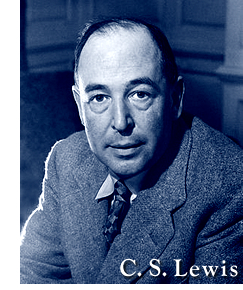
C.S. Lewis Daily – Today’s Reading

On God

God is Goodness. He can give good, but cannot need or get it. In that sense all His love is, as it were, bottomlessly selfless by very definition; it has everything to give and nothing to receive. Hence, if God sometimes speaks as though the Impassible could suffer passion and eternal fullness could be in want, and in want of those beings on whom it bestows all from their bare existence upwards, this can mean only, if it means anything intelligible by us, that God of mere miracle has made Himself able so to hunger and created in Himself that which we can satisfy. If He requires us, the requirement is of His own choosing.

It is a poor thing to strike our colours to God when the ship is going down under us; a poor thing to come to Him as a last resort, to offer up “our own” when it is no longer worth keeping. If God were proud He would hardly have us on such terms: but He is not proud, He stoops to conquer, He will have us even though we have shown that we prefer everything else to Him.

From The Problem of Pain

Compiled in Words to Live By

Charles Stanley – God’s Provisions in Adversity


1 Thessalonians 5:18

As we determined yesterday, if you are not going through a difficult time, you likely will encounter one soon. Jesus assured us that we’d have many hardships in this life (John 16:33).

As unpleasant as trials are, there are still many reasons for giving thanks. Yesterday, we looked at three provisions believers can count on during adversity: God’s presence, a pathway through the trouble, and potential to grow. Today, let’s explore two more.

1) Protection. God doesn’t necessarily keep believers from suffering or disappointment. Stopping the storms may be our goal, but from His point of view, the adversity may be necessary to mature us spiritually. However, the Father offers protection by staying with us in the struggle. Once we receive Jesus as our Savior, we are promised that God’s Spirit indwells us and will never leave. What’s more, we have assurance that nothing can separate us from His love (Rom. 8:38-39). So our ever-present God walks with us through the hardships, providing guidance and speaking truth into the situation.

2) Peace. While difficulties cause many people anxiety, God’s peace is available to His children. This inner serenity does not depend on whether circumstances improve. Rather, it’s a result of our relationship with Him. Our main focus shouldn’t be on fixing the problem; rather, we should concentrate on our dependence upon God.

As we recognize the Lord’s provision during trials, we can genuinely express gratitude. We often don’t know what the purpose is for each ensuing difficulty, but we do know that our God is good and trustworthy.

Bible in One Year: Amos 5-9

Our Daily Bread — A Fishing Lesson


Read: 1 Peter 5:1-9

Bible in a Year: Ecclesiastes 10-12; Galatians 1

Resist [the devil], standing firm in the faith. —1 Peter 5:9

I was fishing quietly on the clear, still waters of Piatt Lake, casting next to a lush weedbed. I watched a large smallmouth bass sneak out of the thick vegetation to investigate. He approached the tempting night crawler on the end of my line, stared at it, and backed into the weeds. This happened several times until he spotted the hook. Then he whipped his tail and disappeared into his lair, never to come out again.

Satan dangles temptation, like a fishhook, right in front of us. It looks tasty. It promises gratification. But Satan’s power ends there. He cannot force us to take the hook. His power stops at the edge of our will—at our decision point. When we are warned by the Holy Spirit and decide to say no, Satan can do no more. James says he runs away (4:7).

As believers, we can receive great comfort from the words of the apostle Peter, who himself experienced great temptation (Matt. 26:33-35). In later life he wrote, “Be alert and of sober mind. Your enemy the devil prowls around like a roaring lion . . . . Resist him, standing firm in the faith” (1 Peter 5:8-9).

Just as that big old bass ignored my hook, we can in God’s strength successfully resist Satan’s most enticing tactics! —David Egner

Father in heaven, thank You for the promise of Your help when we are tempted and for the truth that Satan’s power is limited. Give us the wisdom to recognize temptation and the humility to rely on Your Spirit for the strength to resist.

Respond to the lies of Satan with the truth of God’s Word.

INSIGHT: The apostle Peter wrote this letter to a church that was suffering persecution. In today’s passage he addressed the leaders of the church concerning their attitude, their motivation, and their method. He encouraged them to serve from a willing heart and not out of obligation (v. 2). They were to be motivated by the opportunity to serve, not by money (v.2). Finally, they were not to abuse their power, but to use their position as an opportunity to exemplify a life lived in service to Christ (v. 3). J.R. Hudberg

Ravi Zacharias Ministry – Proficiency of the Ordinary


As one who spends a fair bit of time sitting in airports, I have the opportunity to people watch. There are the elite travelers who emerge from airline lounges with their power suits and designer cases, and then there are those who are traveling for leisure, souvenirs and gifts in tow. I love seeing the variety of clothing styles depending on what region I am in, and listening in on conversations betrays regional dialects and phrases. Business deals are made or broken, discussions over the day’s events all done in the parlance of the place.

More often than not, my attention is drawn to those who sit alone, as I do. In the smaller, regional airports I see the elderly gentleman in the wheelchair, alone. I look at the gate agent as she texts on her phone after yet another flight delay, hoping to hide from the ire of the passengers who needed to arrive at their destination hours ago. There is the single mother trying to corral her children, the slouched, sad looking twenty-something seemingly without much future or hope. There we all sit waiting. Wondering. Is there anything more than this?

The inherent routine, mundane tasks and waiting for whatever is next on the agenda can fill the days with a deepening ennui and a longing for something greater—something like a sense of finding and fulfilling one’s potential. As one who sits anonymously in airports watching and waiting, what does “potential” even mean? In a world that views achievement as athletic prowess, celebrity status, or economic success, how can one ever feel she has reached her potential? If the exceptional is the guide for the achievement of one’s potential, how will those of us who live somewhere between the average and the ordinary ever feel we’ve arrived?

Most of us occupy an existence often filled with the mundane or the banal. Never ending housework, constant bills, and running endless errands do not make one feel substantial. These are the daily details that make up often dulling routines. Indeed for artists and bus drivers, homemakers and neurosurgeons, astronauts and cashiers repetitive motion is more the norm than moments of great challenge or extraordinary success. It is no wonder then, with societal standards and routine-filled lives that most wonder about potential.

In those moments of quiet reflection while sitting in airports, I often wonder how many of those sitting around me wonder if their lives matter when they feel so ordinary. Does the “ordinary” contribute to our sense of meeting our potential, or does it’s predominance in our lives simply serve as a perpetual reminder of a failure to thrive?

The “simple lifestyle” movement attempts to locate potential in exactly the opposite ways of many in society. In this movement, simplicity unlocks the key to potential, and not acquisition, or achievement, or recognition. Instead, through clearing out what clutters and complicates room is made for finding potential in what is most basic and routine. In the Christian tradition, as well, there are many who believe that one’s potential and one’s purpose would only be found in the radical call of simplicity. Some of the earliest Christians, who fled the luxury and security of Rome once Constantine made Christianity the official religion of the Empire, believed that one’s “holiness” potential could only be achieved within the radical austerity of a monastic cell. There in the cloistered walls where each and every day presented simple routine, repetitive tasks, and the regular rhythm of prayer and worship, perseverance with the ordinary became the path to one’s potential.

Brother Lawrence is one of the most well known of this type of monastic. In her book called The Practice of Prayer, Margaret Guenther writes that “Brother Lawrence, our patron of housekeeping, was a hero of the ordinary.”(1) As one who found his potential in cultivating a profound awareness of God in the ordinary tasks of his day, Brother Lawrence radically re-defines reaching one’s potential. While he attended chapel with the other monks, his created his own sanctuary washing the pots and pans in the monastery kitchen. What we may not realize in the popularized retelling of his story is that he too struggled with the ordinary and mundane nature of his work. His abbot wrote about him:

“The same thing was true of his work in the kitchen, for which he had a naturally strong aversion; having accustomed himself to doing everything there for the love of God, and asking His grace to do his work, he found he had become quite proficient in the fifteen years he had worked in the kitchen.”(2)

Quite proficient in the kitchen. Could it be that Brother Lawrence was able to fulfill his potential by washing dishes? Despite his strong aversion, he found purpose in the very midst of the most mundane and ordinary tasks of life. He fulfilled his potential by focusing on faithfulness. Indeed, as Guenther describes it “faithfulness rarely feels heroic; it feels much more like showing up and hanging in. It is a matter of going to our cell, whatever form that might take, and letting it teach us what it will.”(3) Availing himself to consistent faithfulness yielded the blessing of both proficiency and presence—the presence of God—right there in midst of the monotony of dirty pots and pans.

Fulfilling one’s potential has little to do with greatness. And yet, the heroism of the ordinary does not preempt “greatness” that our world confers to those who have reached their potential with staggering and dramatic achievement; for even those who achieve greatness have faced the doldrums of routine and tedium. But to assign the fulfillment of one’s potential solely to great acts and recognition is to miss the blessing that comes from faithful acts of devotion, often done routinely and heroically in the ordinary of our everyday. Perhaps it might be said of us, as it was of Brother Lawrence: “He was more united with God in his ordinary activities.”

Margaret Manning Shull is a member of the speaking and writing team at Ravi Zacharias International Ministries in Bellingham, Washington.

(1) Margaret Guenther, The Practice of Prayer (Boston: Cowley Press, 1998), 113.

(2) Brother Lawrence of the Resurrection, The Practice of the Presence of God, ed. John J. Delaney (New York: Image, 1977), 41.

(3) Margaret Guenther, The Practice of Prayer (Boston: Cowley Press, 1998), 112.

(4) Brother Lawrence of the Resurrection, The Practice of the Presence of God, ed. John J. Delaney (New York: Image, 1977), 47.

Alistair Begg – Rejoice in God’s Attributes


Let Israel be glad in his Maker. Psalm 149:2

Rejoice, believer, but take care that your gladness has its spring in the Lord. You have much cause for gladness in God, for you can sing with David, “God my exceeding joy.”1 Be glad that the Lord reigns, that Jehovah is King! Rejoice that He sits on the throne and rules all things!

Every attribute of God should become a fresh ray in the sunlight of our gladness. The fact that He is wise should make us glad, knowing as we do our own foolishness. That He is mighty should cause us who tremble in our weakness to rejoice. That He is everlasting should always be a theme of joy when we know that we wither like grass. That He is unchanging should provide a perpetual song, for we change every hour. That He is full of grace, that He is overflowing with it, and that this grace in covenant He has given to us, that it is ours to cleanse us, ours to keep us, ours to sanctify us, ours to perfect us, ours to bring us to glory-all this should serve to make us glad in Him.

This gladness in God is like a deep river. So far we have only touched its edge; we know a little of its clear sweet, heavenly streams, but further on the depth is greater, and the current more powerful in its joy.

The Christian feels that he may delight himself not only in what God is, but also in all that God has done in the past. The Psalms show us that God’s people in olden times were keen to make much of God’s actions and to have a song concerning each of them. So let God’s people now rehearse the deeds of the Lord! Let them tell of His mighty acts and “sing to the LORD, for he has triumphed gloriously.”2 Let them never cease to sing, for as new mercies flow to them day by day, so their gladness in the Lord’s loving acts of providence and grace should display itself in continued thanksgiving.

Be glad, children of Zion, and rejoice in the Lord your God.

1) Psalm 43:4

2) Exodus 15:1

The Family Bible Reading Plan

  • 2 Samuel 18
  • 2 Corinthians 11

Devotional material is taken from “Morning and Evening,” written by C.H. Spurgeon, revised and updated by Alistair Begg.

Charles Spurgeon – Repentance unto life


“Then hath God also to the Gentiles granted repentance unto life.” Acts 11:18

Suggested Further Reading: Luke 3:1-14

Can they be sincerely penitent, and then go and transgress again immediately, in the same way as they did before? How can we believe you if you transgress again and again, and do not forsake your sin? We know a tree by its fruit; and you who are penitent will bring forth works of repentance. I have often thought it was a very beautiful instance, showing the power of penitence which a pious minister once related. He had been preaching on penitence, and had in the course of his sermon spoken of the sin of stealing. On his way home a labourer came alongside of him, and the minister observed that he had something under his smock-frock. He told him he need not accompany him farther; but the man persisted. At last he said, “I have a spade under my arm which I stole up at that farm; I heard you preaching about the sin of stealing, and I must go and put it there again.” That was sincere penitence which caused him to go back and replace the stolen article. It was like those South Sea Islanders, of whom we read, who stole the missionaries’ articles of apparel and furniture, and everything out of their houses; but when they were savingly converted they brought them all back. But many of you say you repent, yet nothing comes of it; it is not worth the snap of the finger. People sincerely repent, they say, that they should have committed a robbery, or that they have kept a gambling-house; but they are very careful that all the proceeds shall be laid out to their hearts’ best comfort. True repentance will yield “works meet for repentance;” it will be practical repentance. Yet farther. You may know whether your repentance is practical by this test. Does it last or does it not?

For meditation: As with faith, repentance without works is dead. Jesus could tell that the repentance of Zacchaeus was practical and real (Luke 19:8-9).

Sermon no. 44

22 September (Preached 23 September 1855)

John MacArthur – Dealing with Despair


“Take the helmet of salvation” (Eph. 6:17).

Your helmet of salvation protects you from discouragement and despair.

We’ve seen how Satan attacks believers with his two-edged sword of doubt and discouragement. But he doesn’t stop there. He tries to take you beyond discouragement to despair by robbing you of hope. Unless you’re careful, his attacks will be successful when you’re battle-weary.

The prophet Elijah is an illustration of that truth. The highlight of his ministry came atop Mount Carmel, where he slew 450 prophets of Baal (1 Kings 18:40). Yet immediately after that great victory, he fled for his life because Queen Jezebel threatened to kill him (1 Kings 19:1- 3).

He ran from Mount Carmel into the wilderness of Beersheba, where he “sat down under a juniper tree; and he requested for himself that he might die, and said, ‘It is enough; now, O Lord, take my life, for I am not better than my fathers'” (v. 4). He went on to moan, “I have been very zealous for the Lord, the God of hosts; for the sons of Israel have forsaken Thy covenant, torn down Thine altars and killed Thy prophets with the sword. And I alone am left; and they seek my life, to take it away” (v. 10).

Elijah lost hope because he failed to see his circumstances through the eyes of faith; he was attempting to fight the battle on his own. He allowed himself to become emotionally, physically, and spiritually spent, and became overwhelmed with self-pity. He felt utterly alone.

But God hadn’t abandoned Elijah. He was still in control and His people were numerous (v. 18). But Elijah had, in effect, removed his helmet of salvation and received a near-fatal blow to his confidence in God’s blessing on his life.

There may be times when, like Elijah, you lose your confidence and doubt God’s faithfulness. At such times, putting on the helmet of salvation means taking your eyes off your circumstances and trusting in God’s promises. You may not always sense His presence or understand what He’s doing, but be assured He will never leave you or forsake you (Heb. 13:5) and His purposes will always be accomplished Rom. 8:28).

Suggestions for Prayer

Praise God for His unchanging character and irrevocable promises.

For Further Study

Read Isaiah 40:29-31 and Galatians 6:9.

  • What promises are given in those passages?
  • In what specific ways do they apply to your life?


Joyce Meyer – More Than Enough


And my God will liberally supply (fill to the full) your every need according to His riches in glory in Christ Jesus. — Philippians 4:19

Paul tells us God will “liberally supply” all of our needs. He doesn’t promise God will give us everything we want, but he does assure us God will meet our every need.

Many times we think of needs in terms of the basic necessities of life. These represent our physical needs, but I believe God created us to need more than these essentials. We don’t simply need money, nourishment, a roof over our heads, and clothes to wear. We also need wisdom, strength, health, friends, and loved ones; and we need the gifts and talents and abilities to help us do what we are supposed to do in life. We need many things, and God is willing to meet all of our needs when we trust and obey Him.

Power Thought: God liberally supplies all of my needs.

Campus Crusade for Christ; Bill Bright – Power to Witness


“But ye shall receive power, after the Holy Ghost is come upon you: and ye shall be witnesses unto Me both in Jerusalem, and in all Judea, and in Samaria, and unto the uttermost part of the earth” (Acts 1:8, KJV).

While I was speaking to a group of theological students in Australia, one young man became very angry and argumentative when I emphasized the importance of witnessing for Christ daily as a way of life and explained that disobedient Christians cannot be Spirit-filled. Not to witness for Christ is to disobey our Lord’s specific command. Therefore, any Christian who does not regularly share his faith in Christ cannot walk in the fullness of the Holy Spirit.

“I work day and night to maintain good grades,” he declared, “I don’t have time to witness while in seminary. I can witness after I become a pastor.”

Many Christians make similar excuses for their lack of witness, but none are valid. Some say they do not have the gift of evangelism. Others say they are still preparing for the day when they will be witnesses. Some pastors believe it is the responsibility of their members to witness, and they are to preach and teach the Word. Yet the Bible clearly teaches that all believers are to be witnesses with their lives and with their lips. It is a command of God.

On thousands of occasions we have found that pastors, students and laymen who have never introduced anyone to our Lord become fruitful witnesses when they learn how to live a Spirit-filled life and are taught how to share their faith in Christ with others. The apostle Paul, who was a Spirit-filled witness, shares in Colossians 1:28 how everywhere we go we are to tell everyone who will listen about Christ.

Bible Reading: Luke 24:45-49

TODAY’S ACTION POINT: Today – and every day – I will ask the Holy Spirit to direct me to those whose hearts He has prepared, and to anoint and empower me to speak convincingly, lovingly and effectively of our Savior.

Presidential Prayer Team; A.W. – Unheard Prayers


In September 2011, The Huffington Post published a series of “prayers” in remembrance of 9/11. Their hope was “these sacred words…might provide comfort to those who grieve; compassion to those alienated; and inspiration to all who seek an end to violence and hate in our world.” The prayers included a Baha’i prayer, a Buddhist reflection, a secular reflection, a Hindu prayer, a Jewish prayer, a Muslim prayer, a Sikh prayer, a pagan blessing…and a Christian prayer.

And this is the confidence that we have…if we ask anything according to his will he hears us.

I John 5:14

Today’s verse says God does indeed hear prayers if they are asked according to His will. However, the verse starts with “and,” linking it to the prior verse that says, “I write these things to you who believe in the name of the Son of God.” Only the prayers spoken by believers in the name of Jesus Christ will be heard.

What a privilege you have as a Christian…and what a responsibility! The Creator of Heaven and Earth will listen exclusively to your prayers – but you have to speak them first. Ask God for His purposes to be performed for yourself, your loved ones and the nation…and as you do, remember that a prayer of forgiveness is always in His will.

Recommended Reading: Matthew 6:5-15

Greg Laurie – Not the Bait but the Bite


“Can a man scoop a flame into his lap and not have his clothes catch on fire?” —Proverbs 6:27

I have often said that it is not the bait that constitutes sin; it is the bite. For temptation to be effective, there must be a desire on our part.

James 1:14 says, “Temptation comes from our own desires, which entice us and drag us away.” For the Devil to succeed at tempting us, we must first listen, yield, and most importantly, desire what he offers.

We can be walking along, minding our own business, when all of a sudden, some horrible thought or temptation comes to mind. We’re shocked that we could even think such a thing. It doesn’t mean we’ve done something wrong because we have been tempted. But it does mean we need to resist and recognize that it isn’t from God.

I have seen intelligent people who know the Bible make the worst decisions imaginable under the power of sin. That is why the Bible warns us about the allure and trickery of sin.

When I hear of someone who has run from God, my prayer is, “Lord, help him come to his senses. May it even happen at this moment, wherever he is, whatever he’s doing.”

Sin is like a form of temporary insanity, although sometimes it isn’t so temporary. We rationalize our way though it and say the things that have been said so many other times: “I will just go so far and then stop. . . . I’ll never do it again.”

The Bible asks, “Can a man scoop a flame into his lap and not have his clothes catch on fire?” (Proverb 6:27). People think, I will get out of this. I always find a way out. Then one day, they don’t find a way out. They realize it’s over, and they are going to reap the consequences of their sin.

Max Lucado – God’s Faithfulness


Life has many unanswered questions, but be settled about God’s faithfulness to you! Romans 8:32 declares, If God “did not spare his own Son but gave him for us all,” will he not also give you all you need for a Promised Land life? God’s Word is sure!

And 2 Timothy 3:16-17 is the reminder that Scripture is powerful and a useful weapon against any stronghold. “All Scripture is God-breathed…useful for teaching, rebuking, correcting and training in righteousness, so that the servant of God may be thoroughly equipped for every good work.”

I invite you to join me in a Scripture Memory Challenge. Let’s memorize together the verses in 2 Timothy 3:16-17!  I’ll show you how easy it is at GloryDaysToday.com.

(watch the video for Max’s tips on scripture memorization 🙂