Tag Archives: nature

Campus Crusade for Christ; Bill Bright – He Forgets Our Sins


“And then he adds, ‘I will never again remember their sins and lawless deeds'” (Hebrews 10:17).

We were seated at the breakfast table, talking about the exciting adventure of the Christian life. Chuck and Mary were just discovering new facets and understanding of the life in Christ.

“Can you tell us in a few words what should be our objective as Christians?” they asked me.

In very brief summary, I replied, “The Christian life is the process of becoming in our experience through the enabling of the Holy Spirit what we already are in God’s sight, in order to bring maximum glory, honor and praise to His name.”

Christ gave Himself to God for our sins – as one sacrifice for one time. Then He sat down at the place of highest honor at God’s right hand. For by that one offering He made forever perfect in the sight of God all those whom He is making holy.

I am perfect in God’s sight, because in His sight there is no such thing as time and space. Let me hasten to all: I know that I am not perfect in my experience. That is a process which takes time, knowledge of God and His Word, and growth in faith in order to claim these truths as reality in our lives.

I am perfect in God’s sight because He sees me in Christ, and in Christ, who is perfect and without sin. He sees me without spot or blemish. Someone has referred to this great experience of being crucified, baptized and enthroned with Christ as a different life altogether. As we are reminded in 2 Corinthians 5:17 (KJV), “Therefore if any man be in Christ, he is a new creature: old things are passed away; behold, all things are become new.”

Bible Reading: Hebrews 8:8-12

TODAY’S ACTION POINT: Because God has forgiven and forgotten all my sins and lawless deeds. I will now, through the enabling of His Holy Spirit, receive His forgiveness and cleansing and never again be burdened with those sins of the past. I will claim my new supernatural life in Christ for the glory of God. Because this is such great good news, I will not keep it to myself. I must tell others.

Presidential Prayer Team; J.K. – Clouded Truth


Low barometric pressure, a sign of an oncoming storm, is only one of many variables used to explain and forecast weather. Traffic signs can warn you of impending danger or give good direction for your travel. You can take your cues from the signs given, or you can disregard them to your own fate.

They asked him to show them a sign from heaven.

Matthew 16:1

The Pharisees and Sadducees of Jesus’ day knew God’s Word. But the first group added their own rules, and the second faction discounted doctrines that didn’t suit them. They clouded the truths given by God. The two groups, usually at odds, now joined forces to resist Jesus. They could not give up their own ideas of religion in order to see the signs that the Messiah, foretold in Scripture, stood before them in the person of Christ. Jesus healed the sick, gave sight to the blind, and raised the dead to life.

Hold fast to the Word of God. It is your guide to discerning truth. The greatest sign of Jesus’ ministry was His resurrection. Leaders of His day refused to believe in Him. Intercede now for today’s leaders…that they may see the matters of this world in the framework of the Gospel of Jesus Christ.

Recommended Reading: Luke 16:5-17

Greg Laurie – His Ambassadors


So we are Christ’s ambassadors; God is making his appeal through us. We speak for Christ when we plead, “Come back to God!” —2 Corinthians 5:20

When I would hunt snakes as a kid, I would never pick them up by the tail. I would use my foot to pin them down by the neck, being careful not to crush them, and then I would carefully pick them up, holding them right behind the head. I would never pick up a snake by the tail, because a snake could turn around and bite.

When God told Moses to throw down his rod, which became a snake, and then pick it up by the tail, it was a step of faith. Most likely the snake was a cobra, the symbol of Egypt. I presume it was this type of snake because it was common in that part of the world. It also has a venomous bite. If you are bitten by a cobra, you have a serious problem on your hands.

So God told Moses to take the symbol of Egypt and grab it by the tail. He was effectively telling him, “I don’t want you to be afraid. I am going to defeat this serpent. I am going to overpower Pharaoh. I am going to do it through you, so overcome your fears, step forward, and go for it.”

Moses was called to represent God to a pagan culture. And we have been called by God to do the same. The United States is becoming increasingly pagan, and I mean that in a descriptive, not derogative, sense. There is belief in false gods and in many gods. It seems like there is belief in every god but the right God.

The Lord has called Christians to represent Him and has given us authority: we are His ambassadors (see 2 Corinthians 5:20). And as ambassadors of Christ, we are charged with bringing His message to the world.

Max Lucado – Quarry the Deep Qualities of God


Don’t equate the presence of God with a good mood or a pleasant temperament. God is near whether you are happy or not. But do quarry from your Bible a list of the deep qualities of God, and press them to your heart. My list reads like this:

He is still sovereign. He still knows my name.

Angels still respond to His call.

God is still faithful. He is not caught off guard.

He uses everything for His glory and my ultimate good.

Lay hold of the unchanging character of God. Pray your pain out. Pound the table. Even Jesus offered up prayers with what Hebrews 5:7 describes as “loud cries and tears.” Your family may be gone. Your supporters may have left. But God has not budged! His promise still stands: “I am with you and will watch over you wherever you go” (Gen. 28:15).

From You’ll Get Through This

Night Light for Couples – Anchor For the Soul


“In him our hearts rejoice, for we trust in his holy name.” Psalm 33:21

When a sudden storm strikes a ship at anchor, only the links of chain and the anchor wedged in the rocks keep vessel and crew from being set dangerously adrift. Obviously, the more tumultuous the times, the more important the moorings. In our own stressful moments, our hopes need to be anchored securely—not in wishes or feelings, but in God’s promise. As the author of Hebrews said, “We have this hope as an anchor for the soul, firm and secure”(Hebrews 6:19).

Isn’t it comforting to know that we have a secure anchor in our marriages? When storms threaten to overtake us, Jesus Christ will not let us drown. We can count on Him to deliver what He has promised. We may not know what the future holds for our family, career, finances, or dreams—but we can rest in the knowledge that our souls are safe in the hands of almighty God.

Just between us…

  • Can you think of a time when you thought the storms of life would capsize you? What kept you float?
  • Besides God, who or what provides security and stability in your life?
  • Do you ever feel adrift spiritually? If so, how can I help?
  • Have we placed our hopes and dreams firmly in God’s hands? If not,

can we do that together now?

Lord, You know the desires of our hearts; You know our secret fears, too. But we acknowledge Your unfailing promises and steadfast love. Thank You for being our rock. Tonight we cast our hopes and dreams on You for safekeeping, because we trust You. Amen.

From Night Light For Couples, by Dr. James & Shirley Dobson

Charles Stanley – Trusting the God of Love


Hebrews 8:6-13

Trusting God is a foundational principle in the Christian life. We are expected to accept that God is perfect in love, infinite in wisdom, and sovereign in control. We don’t automatically grasp these truths at the moment of salvation; rather, we learn them over time. Of these three facts, however, the one we most seem to doubt is the Lord’s love for us. However, Scripture gives us three proofs to rely upon when our certainty starts to waver.

Character love—God’s very nature is love (l John 4:8). The Bible also tells us that God is light and there is no darkness in Him (l:5). In other words, there’s nothing sinful or imperfect in His character. If the Father is perfect and loving, He will never mistreat one of His children.

Calvary love—Jesus’ sacrificial death on the cross for our sins provides irrefutable evidence of divine love. The Father’s heart for humanity was revealed when He gave His Son to die in our place. Through Christ, salvation is available to all, but He would have made the same choice if you had been the only person on earth.

Covenant love—God is committed to making us heirs (Heb. 8:10). We know that when we receive Jesus Christ as our Savior, we become children of God. Our immaturity is the reason He is patient and kind to us. God sees us as we are—little ones learning to navigate in our short-term earthly home.

As growing believers, we can’t trust God if we doubt His devotion. Thankfully, we possess these amazing proofs. It is the heavenly Father’s very nature to love, which He demonstrated at the cross and continues to prove by adopting us as His sons and daughters.

Bible in One Year: Psalms 23-28

Our Daily Bread — Look Up!


Read: Psalm 121

Bible in a Year: Nehemiah 1-3; Acts 2:1-21

My help comes from the Lord, who made heaven and earth. —Psalm 121:2

In a park near our home there’s a trail I enjoy walking on. Along one section there’s a panoramic view of red sandstone rocks in the Garden of the Gods with the majestic 14,115-foot Pikes Peak behind them. From time to time, though, I find myself walking that section occupied with some problem and looking down at the wide, smooth trail. If no one is around, I may stop and say aloud, “David, look up!”

The psalms known as “Songs of Ascents” (Ps. 120–134) were sung by the people of Israel as they walked the road up to Jerusalem to attend the three annual pilgrim festivals. Psalm 121 begins, “I will lift up my eyes to the hills. From whence comes my help?” (v. 1). The answer follows, “My help comes from the Lord, who made heaven and earth” (v. 2). The Creator is not an aloof being, but a companion who is always with us, always awake to our circumstances (vv. 3-7), guiding and guarding our journey through life “from this time forth, and even forevermore” (v. 8).

Along life’s path, how we need to keep our eyes fixed on God, our source of help. When we’re feeling overwhelmed and discouraged, it’s all right to say aloud, “Look up!” —David C. McCasland

I look up to You, Father, for You are the One who can help me. Thank You for the joys and trials in my life right now. I’m grateful that I never walk alone.

Keep your eyes on God—your source of help.

INSIGHT: This psalm reminds us that God is our Helper (vv. 1-3) and Keeper (vv. 4-8). As Helper, the Creator of the universe (v. 2) assists us as we journey through life, giving us the security and stability (v. 3) we need. As Keeper, God is the vigilant watchman, fully aware of the events of our lives because He never sleeps (v. 4). This reality allows us to rest in safety and serenity (Ps. 3:5; 4:8; Prov. 3:24).

Ravi Zacharias Ministry – Faint Horns in Elfland


Whether compelling the visions of a child or inspiring music or architecture, the power of the imagination is often clear.

O hark, O hear! How thin and clear,

And thinner, clearer, farther going!

O sweet and far from cliff and scar

The horns of Elfland faintly blowing.(1)

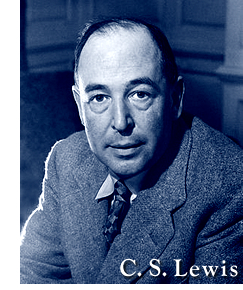
But what of the mere presence of the imagination? “I do not think the resemblance between the Christian and the merely imaginative experience is accidental,” wrote Lewis. “I think that all things, in their way, reflect heavenly truth, the imagination not least.”(2) Certainly, this taste of a richer fare was sensed in the formative imaginations at which Lewis supped long before he knew he was starving for their Host. Writes Lewis:

“Chesterton had more sense than all the other moderns put together; bating, of course, his Christianity. Johnson was one of the few authors whom I felt I could trust utterly; curiously enough, he had the same kink. Spenser and Milton by a strange coincidence had it too. Even among ancient authors the same paradox was to be found. The most religious (Plato, Aeschylus, Virgil) were clearly those on whom I could really feed. On the other hand, those writers who did not suffer from religion and with whom in theory my sympathy ought to have been complete—Shaw and Wells and Mill and Gibbon and Voltaire—all seemed a little thin; what as boys we called ‘tinny.’ It wasn’t that I didn’t like them. They were all (especially Gibbon) entertaining; but hardly more. There seemed to be no depth in them. They were too simple. The roughness and density of life did not appear in their books.”(3)

And while Lewis would come to see that this “lower life of the imagination is not a beginning of, nor a step toward, the higher life of the spirit,” he is equally certain that God in God’s mercy can profoundly make it such a beginning.(4) My own encounter of the great imagination of C.S. Lewis is similar to a testimony given at his funeral, namely, that “his real power was not proof; it was depiction. There lived in his writings a Christian universe that could be both thought and felt, in which he was at home and in which he made his reader at home.”(5) I believe I probably first loved God as an untame Lion, not because the God I wished for was kinder than the God who is, but because I did not yet see that my deficient vision of God was the vision that needed a better imagination. As Lewis later wrote of his intense love of all Norse mythology, “[A]t the time, Asgard and the Valkyries seemed to me incomparably more important than anything else in my experience…More shockingly, they seemed much more important than my steadily growing doubts about Christianity. This may have been—in part, no doubt was—penal blindness; yet that might not be the whole story. If the Northernness seemed then a bigger thing than my religion, that may partly have been because my attitude toward it contained elements which my religion ought to have contained and did not.”(6)

Even so, in moments of moral crisis, we do not pause to ask what Jane Erye would do, I once heard a writer say. She had referenced the Brian Nichol’s story—the gunman who went on a shooting spree in Atlanta and ended up holding a woman hostage in her apartment where she read to him from The Purpose Drive Life and eventually convinced him to turn himself in. She then asked if this story would have turned out the same if the young girl had read to him from Moby Dick or War and Peace or any of the great classics of history. Her point was clear: the influence of art and imagination is usually not in the thick of things, but on the margins of culture; nor it is always clear and obvious, but often dense and unsettling. And yet there are inarguably characters and stories that indeed become of moral significance, pulling us into worlds that call for attention, compassion, and consideration. Long before I had any idea about the word “allegory” or the concept of good or bad literature, Narnian kings, talking beavers, and the Queen of Glome began appearing in my dreams, beckoning me to another place. In the aftermath of death and subsequent disappointment over the miracle we did not get, it was Aslan’s empathetic tear for the grieving Digory that came to mind when all seemed lost. For Lewis, it was the bright shadow coming out of a George MacDonald book that found him mercifully in the margins. “In the depth of my disgraces, in the then invincible ignorance of my intellect, all this was given me without asking, even without consent. That night my imagination was, in a certain sense, baptized; the rest of me, not unnaturally, took longer. I had not the faintest notion what I had let myself in for by buying Phantastes.”(6) But the Spirit no doubt mercifully did.

It is quite true that a young materialist or pessimist, atheist or agnostic who wishes to stay this way cannot be too careful in choosing what to read. God is unscrupulous, as Lewis attests, willing to use our own imaginations against us, our own pens to probe the wounds. If imagination is not the property of materialism, but the playground of heaven, it is nonetheless not the thing itself. But the hopeful signs of God’s own compelling imagination are everywhere—beautiful and terrible, inviting and transforming. It is the encounter with the Gate, not the signs along the way, that transforms the entire journey. It is said that Lewis became more like himself when he finally kneeled and admitted that God was God—”as though the key to his own hidden and locked-away personality was given to him.”(7) Everything is intensified—his loves, his responses, Jack himself—as the one brought in kicking and screaming discovered in Christ and his kingdom the world of Joy he had only before heard feebly. The faint horns of Elfland give way to the resounding glory of the creator and wonders beyond our imagining.

Jill Carattini is managing editor of A Slice of Infinity at Ravi Zacharias International Ministries in Atlanta, Georgia.

(1) Lewis, C. S. Lewis, Surprised by Joy: The Shape of My Early Life (Orlando: Houghton Mifflin Harcourt, 1955), 167.

(2) Lewis, 213-214.

(3) Lewis, 167.

(4) Alan Jacobs, The Narnian: The Life and Imagination of C.S. Lewis (San Francisco: Harper, 2005), 312.

(5) Lewis, 76.

(6) Lewis, 181.

(7) Jacobs, 131.

Alistair Begg – Are You Laughing?


And Sarah said, “God has made laughter for me; everyone who hears will laugh over me.”

Genesis 21:6

It was far above the power of nature, and even contrary to its laws, that the aged Sarah should be honored with a son; and even so it is beyond all ordinary rules that I, a poor, helpless, undone sinner, should find grace to carry in my soul the indwelling Spirit of the Lord Jesus. I, who once despaired, as well I might, for my nature was as dry and withered and barren and accursed as a howling wilderness, even I have been made to bring forth fruit unto holiness. Well may my mouth be filled with joyous laughter, because of the singular, surprising grace that I have received from the Lord, for I have found Jesus, the promised seed, and He is mine forever. Today I will sing psalms of triumph to the Lord who has remembered my low estate, for “my heart exults in the LORD; my strength is exalted in the LORD. My mouth derides my enemies, because I rejoice in your salvation.”1

My desire is that all those who hear of my great deliverance from hell and my most blessed visitation from heaven will laugh for joy with me. I want to surprise my family with my abundant peace; I want to delight my friends with my ever-increasing happiness; I want to edify the church with my grateful confessions, and even impress the world with the cheerfulness of my daily conversation.

Bunyan tells us that Mercy laughed in her sleep, and no wonder when she dreamed of Jesus; my joy should not be less than hers while Christ is the theme of my daily thoughts. The Lord Jesus is a deep sea of joy: My soul shall dive in and shall be swallowed up in the delights of His company. Sarah looked on Isaac and laughed without restraint, and all her friends laughed with her. And you, my soul, look on Jesus, and invite heaven and earth to unite in your unspeakable joy.

1) 1 Samuel 2:1

Devotional material is taken from “Morning and Evening,” written by C.H. Spurgeon, revised and updated by Alistair Begg.

Charles Spurgeon – Omniscience


“Thou God seest me.” Genesis 16:13

Suggested Further Reading: Psalm 94:4-11

It were hard to suppose a God who could not see his own creatures; it were difficult in the extreme to imagine a divinity who could not behold the actions of the works of his hands. The word which the Greeks applied to God implied that he was a God who could see. They called him Theos; and they derived that word, if I read rightly, from the root theisthai, to see, because they regarded God as being the all-seeing one, whose eye took in the whole universe at a glance, and whose knowledge extended far beyond that of mortals. God Almighty, from his very essence and nature, must be an Omniscient God. Strike out the thought that he sees me, and you extinguish Deity by a single stroke. There would be no God if that God had no eyes, for a blind God is not God at all. We could not conceive such a one. Stupid as idolaters may be, it is very hard to think that even they had fashioned a blind god: even they have given eyes to their gods, though they see not. Juggernaut, or Jagannatha (a god worshipped in some areas of Hinduism), has eyes stained with blood; and the gods of the ancient Romans had eyes, and some of them were called far-seeing gods. Even the heathen can scarce conceive of a god that has no eyes to see, and certainly we are not so mad as to imagine for a single second that there can be a Deity without the knowledge of everything that is done by man beneath the sun. I say it is as impossible to conceive of a God who did not observe everything, as to conceive of a round square. When we say, “Thou God,” we do, in fact, comprise in the word “God” the idea of a God who sees everything, “Thou God seest me.”

For meditation: The proofs of Jesus’ deity in Mark 2:5-8: He could see faith, forgive sins and perceive the thoughts of the heart. He still can!

Sermon no. 85
15 June (1856)

John MacArthur – Demonstrating Sacrificial Love


“This is pure and undefiled religion in the sight of our God and Father, to visit orphans and widows in their distress” (James 1:27).

Sacrificial love is the hallmark of true Christianity.

Recently a local newspaper reported the story of a young woman who had been brutally beaten, sexually assaulted, repeatedly stabbed, then dumped down a hillside and left for dead. Miraculously she survived the attack and crawled up the hill to a spot along the road where several people were parked enjoying the panoramic view of the city.

Covered with blood from head to foot, she went from car to car pleading for help, only to have one person after another roll up their windows and drive away. No one wanted to get involved. Finally someone came to her rescue and took her to a hospital where she was treated for her wounds. The article went on to describe the anger of her rescuer toward those who turned their backs on the woman’s cries for help.

That tragic story illustrates the lack of compassion that is so prevalent in our society. Many people won’t become involved—even when the lives of others are at stake. They’re unwilling to risk personal injury or inconvenience, or perhaps they’re just complacent and insensitive.

That should never be true of Christians! Jesus showed great compassion to those with special needs, and He expects us to do the same.

Just as James used the tongue to represent a pure heart (v. 26), so he uses widows and orphans to represent pure love. “To visit” means to bring love, pity, and care to them. Widows and orphans are an especially needy segment within the church. As such, they represent all who are destitute and unable to repay your kindness.

Let your love be sacrificial. Give with no intention of receiving anything in return. Generously invest your time and resources in ministering to those who have no resources of their own. That’s the essence of true religion!

Suggestions for Prayer

Is there someone in your neighborhood or church whom you can help today? Ask God for wisdom and discernment on how you might best demonstrate His love to that person.

For Further Study

Read Exodus 22:22-24, Deuteronomy 14:28-29, Psalm 68:5, Acts 6:1-6, and 1 Timothy 5:3-16, noting God’s provisions for widows and orphans.

Joyce Meyer – We Want the Real Thing


I am speaking the truth in Christ. I am not lying; my conscience [enlightened and prompted] by the Holy Spirit bearing witness with me . . . Romans 9:1

Nobody likes being tricked. We don’t like false advertising, phony small-talk, or fake relationships. In our world, people often put on a plastic smile and tell everyone they’re doing fine while inside they’re falling apart. It’s all an illusion.

As Christians we often believe we should feel better than we do or that it is wrong to feel the way we do, so we hide our feelings from everyone. Sometimes we try to hide the way we really feel from ourselves. We pretend to have faith while we’re full of doubt. We pretend to be happy while we are miserable; and we pretend to be in control and have it all together, but at home behind closed doors, we are totally different people. We don’t want to admit that we are living phony lives, so we stay busy enough that we never have to deal with things as they really are. We may even bury ourselves in church work or spiritual activity as a way of hiding from God. He is trying to show us truth, but we would rather work for Him than listen to Him.

God just wants us to be honest and real. Don’t fall into the trap of thinking all your feelings are wrong. Being a person of faith does not mean you will never have negative or ungodly feelings. We will experience feelings that need to be dealt with, but we can always exercise our faith in God and ask Him to help us to not allow our feelings to control us. The Bible says we live by faith and not by sight (see 2 Corinthians 5:7). That means we don’t make decisions based on what we see or feel, but according to our faith in God and His promises to us.

Trust in Him You need to trust that the real you, even on your worst day, is better than being fake or phony. Make the choice today to be honest, genuine, and authentic with God and with all the people in your life.


Campus Crusade for Christ; Bill Bright – We Are Kings


“The sin of this one man, Adam, caused death to be king over all, but all who will take God’s gift of forgiveness and acquittal are kings of life because of this one man, Jesus Christ” (Romans 5:17).

Jack protested angrily, “Why should I be held accountable for the sin of Adam? Why should I be judged and condemned to eternal punishment because of the disobedience of someone who lived centuries ago? I resent that his action should involve me.” I asked my young student friend if he remembered the infamous Japanese attack on Pearl Harbor followed by the declaration of war by then President Franklin Delano Roosevelt. “Yes,” he said, “I’m a student of history and I remember that event very well.” I reminded Jack that every able-bodied man who was of age was automatically conscripted to join the United States Army to do battle against Japan. “Yes,” he said, “I know.”

“Don’t you think it unfair, following your logic, that the President of the United States should make a decision that would affect young men like yourself? Remember that tens of thousands of them died on the field of battle. Was that fair?”

“Well,” he replied, “that was the only decision that could be made. We had to protect our homeland. We had been attacked and had to defend ourselves.”

“So it was with Adam,” I explained. “The wisdom of the Almighty Creator was attacked by Satan in the Garden of Eden and the battle was lost when Adam and Eve, the epitome of God’s creation, surrendered to Satan’s tempting lies. God, in His sovereignty, wisdom and grace caused the results of the disobedience of Adam to be borne by the rest of us in the human race. But the judgement of God which demands penalty for sin was intercepted by God’s love. while we were yet in our sins God proved His love for us by sending the Lord Jesus Christ to die for us. Now, through accepting God’s free gift by faith, we can become kings of life because of this one man, Jesus Christ.”

Simply stated, one man, Adam, through his disobedience to God, introduced sin into the world, and one man, Jesus Christ, through his obedience to God, paid the penalty for that sin for all who would believe and trust in Him.

Bible Reading: Romans 5:14-21

TODAY’S ACTION POINT: Christ has overcome the sin I inherited from Adam by liberating me from the king of death, and making me a king of light. As an expression of my deep gratitude for His love and grace, I will seek every opportunity to communicate this good news to others who still live in darkness that they, too, may enjoy the abundant supernatural life which I now enjoy.

Presidential Prayer Team; P.G. – Duty or Devotion


In his book Freedom From the Tyranny of the Urgent, Charles Hummel notes, “Tension and frustrations mount when we are performing the wrong tasks or trying to cram too many activities into a given period. A critical spirit develops and we begin to judge and condemn others for what they do or don’t do.”

But Martha was distracted with much serving.

Luke 10:40

When Jesus went to visit Mary and Martha, each woman reacted differently. Martha, desiring to be a “hostess with the mostest” worked so hard at it – and without help from her sister – that she became embittered. She even chastised Jesus for not instructing her sister to help out. But Mary had a different focus and chose to spend time with the Lord listening to His teaching.

Part of the Christian life is discovering the balance between duty and devotion. It is important to spend time in Bible reading and prayer. Just as vital is finding your place to serve. But sitting without serving is powerless, just as serving without sitting is directionless. As you pray today, ask God to help you maintain the right balance – then intercede for America’s leaders to add devotion to God to the duties to the people they perform.

Recommended Reading: Luke 10:38-42


Greg Laurie – The God of Ordinary Men


So when the Lord saw that he turned aside to look, God called to him from the midst of the bush and said, “Moses, Moses!” And he said, “Here I am.”—Exodus 3:4

As far as we know, Moses hadn’t heard from God for 40 years. Then God spoke to him and called him. And how did He do it? Through a burning bush. It was not uncommon for a bush to catch fire. A bolt of lightning could have caused that. But Moses had never seen a bush that perpetually burned. God was doing something out of the ordinary that got Moses’ attention. And then He spoke.

Notice what God said to Moses: “I am the God of your father—the God of Abraham, the God of Isaac, and the God of Jacob” (Exodus 3:6). When we hear those names, we think of them as great patriarchs of the faith—and indeed they were. But let’s consider each one for a moment. Abraham certainly was a man of God, but he had serious lapses of faith. Isaac was blessed, but he often didn’t listen to the Lord. And Joseph’s faux pas were legendary. Yet these men were powerfully used by God.

It’s as though God was saying, “Moses, I am the God of men who have failed. I am the God of ordinary men who have accomplished extraordinary things. Moses, if I can use Abraham, Isaac, and Jacob, then I can surely use you. Are you up for that? Are you ready to go? I am aware of what is happening to my people in Egypt.”

Moses was 80 years old. That is past retirement age. Yet God was saying, “You are just where I wanted you to be. You are just the man that I want.”

It seems that God goes out of His way to choose the most unlikely candidates. God sees your potential, even when you don’t. God sees you for what you will become in the days ahead.

Max Lucado – More Sponge, Less Rock

Make God’s presence your passion. How? Be more sponge and less rock. Put a rock in the ocean, and what happens? Its surface gets wet. The exterior may change color, but the interior remains untouched. Yet place a sponge in the ocean, and notice the change. It absorbs the water. The ocean penetrates every pore and alters the essence of the sponge. God surrounds us in the same way the Pacific surrounds an ocean floor pebble. He is everywhere—above, below, on all sides.

We choose our response—rock or sponge? Resist or receive? Hard hearts never heal. Spongy ones do. The Psalmist determined, “When I am afraid, I will trust in You.” Open every pore of your soul to God’s presence!

From You’ll Get Through This

Night Light for Couples – Healthy Hope


“Faith is being sure of what we hope for.” Hebrews 11:1

Hope based on the realistic expectation that something can or will change is a powerful, positive, driving force. It motivates us to do our best and helps us achieve what may seem impossible to others. But naive hope that’s grounded in wishful thinking can be deeply disappointing and even destructive. I (jcd) know a woman—I’ll call her Martha—who was hurt repeatedly by her father’s lack of interest in her. As long as Martha continued to hope he would change, she suffered a fresh wound whenever he missed an important family event or failed to consider her feelings. I urged Martha to realize that her father was emotionally blind—he was incapable of seeing her needs.

Once she began to accept his “handicap” as permanent, her pain lessened considerably. Your partner’s temperament or experiences may prevent him or her from fully comprehending your feelings and frustrations. My advice is that you change what can be altered, explain what can be understood, teach what can be learned, revise what can be improved, resolve what can be settled, and negotiate what is open to compromise.

Then determine to accept the rest. As you overlook these few “unresolvables” in your relationship, you’ll develop a perspective that brings realistic hope for an honest and satisfying marriage.

Just between us…

  • What kinds of changes do we hope to see in each other? Are our hopes realistic? ‘
  • Would it help our relationship to accept our “unresolvables”?
  • What in our marriage gives you the greatest sense of hope?

Father, thank You that You are “the God of all hope.” Tonight we look to You for help in bringing honest, healing hope to our marriage. Show us what we can change, show us what we should accept, and bless us with hope. Amen.

From Night Light For Couples, by Dr. James & Shirley Dobson

Charles Stanley – The Gospel of the Grace of God

Acts 20:16-24

The apostle Paul was consumed by a passion that was even greater than his desire for life or the dread of suffering. He had a ministry to fulfill and a message of salvation to deliver. His words in Acts 20:24 help us understand the foundational concept involved in our salvation. Paul called it “the gospel of the grace of God.”

We’re saved simply because the Lord is gracious. He knew we could never be good enough to bridge the gap between our? sin and His holiness. That’s why you will never hear of “the gospel of the Law of God.” That would not be good news at all! Can you imagine singing, “Amazing law, how fearful the sound, that saved a wretch like me”? We could never fulfill the requirements, especially the way?Jesus enlarged the meaning of the law?in the Sermon on the Mount (Matthew 5-7). But grace—that’s totally different. It has nothing to do with our worthiness or good performance but is solely based on God’s unmerited favor towards us.

What’s most amazing is that the avenue for our salvation is through faith alone. The grace that God extends in saving us is His gift, and there’s nothing we can add by our works (Ephesians 2:8-9). Otherwise, we’d have to clean up our lives in order to be saved, and that would nullify grace.

Praise the Lord for His wonderful plan of salvation. Christ paid our sin debt with His death, and all we have to do is believe it. Even after salvation, God’s grace keeps flowing. We never have to worry that we aren’t good enough and will fall out?of favor. His grace is forever.

Bible in One Year: Psalms 19-22

Our Daily Bread — Never Stop Learning


Read: 2 Timothy 3:10-17

Bible in a Year: Ezra 9-10; Acts 1

You must continue in the things which you have learned . . . and that from childhood you have known the Holy Scriptures. —2 Timothy 3:14-15

Sheryl is a voracious reader. While others are watching television or playing video games, she is deeply engrossed in the pages of a book.

Much of this zeal can be traced back to her early childhood. Her family often visited a great aunt and uncle who owned a bookstore. There, Sheryl would sit on Uncle Ed’s lap as he read to her and introduced her to the wonders and delights of books.

Centuries ago a young man named Timothy had his steps guided on the road to learning. In Paul’s last recorded letter, he acknowledged that Timothy was first introduced to the Bible by his grandmother and mother (2 Tim. 1:5). Then Paul exhorted Timothy to continue in the Christian way because “from childhood you have known the Holy Scriptures” (2 Tim. 3:14-15).

For the believer, learning about the spiritual life should never cease to delight us and help us grow. Reading and study can be a big part of that, but we also need others to encourage and teach us.

Who has helped you grow in your faith? And who in turn can you help? That’s a great way to enhance our appreciation of God and strengthen our relationship with Him. —Dennis Fisher

Lord, give us the desire to learn throughout life, so that we may grow increasingly closer to You each day. Thank You for those who have inspired us to learn about You.

Reading the Bible is meant not to inform but to transform.

INSIGHT: Timothy was of mixed parentage, having a Greek father and Jewish mother (Acts 16:1). Although his biological father probably did not play a significant role in his spiritual development, Timothy was taught the holy Scriptures from childhood and came to faith through the teaching and godly influence of his grandmother Lois and mother Eunice (2 Tim. 1:5). Timothy first met Paul in Derbe at the start of his second missionary journey (Acts 16:1), and Timothy soon became Paul’s protégé. The apostle Paul affectionately called him “a true son in the faith” (1 Tim. 1:2) and “a beloved son” (2 Tim. 1:2).

Alistair Begg – Delight Yourself in the Lord


Delight yourself in the Lord. Psalm 37:4

The teaching of these words must seem very surprising to those who are strangers to vital godliness, but to the sincere believer it is only the reminder of a recognized truth. The life of the believer is described as a delight in God, and we are reminded of the great fact that genuine faith overflows with happiness and joy.

Ungodly persons and mere professors never look upon religion as a joyful thing; to them it is service, duty, or necessity, but never pleasure or delight. If they attend to religion at all, it is either because of what they might get or because they are afraid of the consequences of neglect. The thought of delight in religious exercise is so strange to most men that no two words in their language stand further apart than holiness and delight.

But believers who know Christ understand that delight and faith are so wonderfully united that the gates of hell cannot manage to separate them. Those who love God with all their hearts find that His ways are ways of pleasantness, and all His paths are peace. The saints discover in Christ such joy, such overflowing delight, such blessedness that far from serving Him from custom, they would follow Him even though the whole world rejected Him. We do not fear God because of any compulsion; our faith is no shackle, our profession is no bondage, we are not dragged to holiness, nor driven to duty. No, our piety is our pleasure, our hope is our happiness, our duty is our delight.

Delight and true faith are as interwoven as root and flower, as indivisible as truth and certainty; they are, in fact, two precious stones glittering side by side in a setting of gold.

‘Tis when we taste Thy love,

Our joys divinely grow,

Unspeakable like those above,

And heaven begins below.

Devotional material is taken from “Morning and Evening,” written by C.H. Spurgeon, revised and updated by Alistair Begg.