Tag Archives: Peace

Charles Spurgeon – Profit and loss


“What shall it profit a man, if he shall gain the whole world, and lose his own soul?” Mark 8:36

Suggested Further Reading: Luke 12:15-21

Spiritually man is a great trader—he is trading for his own welfare; he is trading for time and for eternity; he keeps two shops: one shop is kept by an apprentice of his, a rough unseemly hand, of clayey mould, called the body; the other business, which is an infinitely more vast concern, is kept by one that is called “the soul” a spiritual being, who does not traffic upon little things, but who deals with hell or heaven, and trades with the mighty realities of eternity. Now, a merchant would be very unwise who should pay all attention to some small off-hand shop of his, and take no account whatever of a large establishment. And he would, indeed, be negligent, who should very carefully jot down every trifle of the expenditure of his own household, but should never think of reckoning the expenses of some vast concern that may be hanging on his hands. But the most of men are just as foolish—they estimate the profits (as they conceive them to be) which are gained in that small corner shop called the body, but they too seldom reckon up the awful loss which is brought about by a negligence of the soul’s concerns in the great matters of eternity. Let me beseech you, my brethren, while you are not careless of the body, as, indeed, you ought not to be, seeing that it is, in the case of believers, the temple of the Holy Spirit, to take more especial care of your souls. Decorate the tenement, but do not suffer the inhabitant to die of starvation; do not paint the ship while you are letting the crew perish for want of stores on board. Look to your soul, as well as to your body; to the life, as well as to that by which you live.

For meditation: We can be so bodily minded that we are no heavenly use

(1 Timothy 4:8 gives the right balance).

Sermon no. 92

7 July (Preached 6 July 1856)

John MacArthur – Your Priestly Service


“You . . . are being built up as a spiritual house for a holy priesthood, to offer up spiritual sacrifices acceptable to God through Jesus Christ” (1 Pet. 2:5).

Christians share common spiritual characteristics with Old Testament priests.

Peter identified believers as holy priests, but many Christians don’t really know what that means because priests aren’t part of our culture as a whole.

The primary purpose of an Old Testament priest was to offer acceptable sacrifices to God on behalf of the people. Priests were chosen by God Himself, specially cleansed through prescribed ceremonies, clothed in a prescribed manner, and anointed with oil as symbolic of God’s Spirit upon them. They were expected to obey God, love His Word, and walk with Him.

Faithful priests had a positive impact on believers and unbelievers alike. Malachi 2:6 says they “turned many back from iniquity.” Verse 7 adds that “the lips of a priest should preserve knowledge, and men should seek instruction from his mouth; for he is the messenger of the Lord of hosts.”

Those qualifications are paralleled in Christians, whom God regards as the only true priests. You were chosen by Him from before the foundation of the world and cleansed by the washing of regeneration and renewing by the Holy Spirit. You are clothed with the righteousness of Christ, and anointed by the Holy Spirit. Your purpose is “to offer up spiritual sacrifices acceptable to God through Jesus Christ” (1 Pet. 2:5).

Scripture tells you therefore to present your body a living and holy sacrifice, acceptable to God, which is your spiritual service of worship (Rom. 12:1). Obedience, love for the Word, and communion with God should characterize your life; saints and sinners alike should see Christ in you and be affected by what they see.

The priesthood of believers is a high and holy calling to which no one is suited apart from God’s grace and power. But be assured that He who called you will accomplish His good pleasure in you. Be committed to that goal each day as you lean on His resources and trust in His sufficiency.

Suggestions for Prayer

Thank God for the priesthood He has entrusted to you. Ask Him to use you today to influence others in godly ways.

For Further Study

Read Leviticus 8 and 9, which tell of the consecration and inauguration of the Aaronic priesthood.


Joyce Meyer – Acknowledge God


In all your ways know, recognize, and acknowledge Him, and He will direct and make straight and plain your paths.- Proverbs 3:6

Acknowledging the Lord in all your ways means submitting all your plans to Him and allowing Him to work them out according to His will and desire for you. He wants you to come to know Him in the power of His resurrection (see Philippians 3:10).

It is a sign of maturity to seek God for who He is and not only for what He can do for you. So as you pause at the end of your day, seek God’s face (His presence) and get to know your wonderful, loving heavenly Father better. Acknowledge His power and experience the joy of walking in the paths He chooses for you.

Campus Crusade for Christ; Bill Bright – Riches in Glory


“And it is He who will supply all your needs from His riches in glory because of what Christ Jesus has done for us” (Philippians 4:19).

God has faithfully met the needs of this great worldwide ministry since its inception. He met our needs when there were only two of us – Vonette and I – on the staff. He meets our needs today (1983) with more than 16,000 full-time and associate staff members serving in most communities of America and in 151 other countries.

He met our needs when our budget was a few thousand dollars a year. He continues to meet our needs when our budget is approximately $100 million a year. During this exciting, incredibly rich and rewarding adventure with our gracious Lord, we have never had an extra dollar at the end of any day. We get only what we need – and no more.

During these years, there have been many dramatic demonstrations of His faithfulness, when He has led us to undertake major and frequently expensive projects. He has always supplied the funds to pay for what He orders. We have learned many lessons concerning God’s faithfulness.

First, whatever He leads us to do He will enable us to do by supplying the manpower, the finances and the know-how – oftentimes dramatically – if we continue to trust and obey Him.

Second, “we have not because we ask not” (James 4:2 KJV).

Third, we do not receive when our motives are impure.

But of this we can be sure: if our hearts are pure, our motives are pure and we do what we do for the glory of God – to help fulfill the Great Commission through the winning and discipling of men for Christ throughout the world -we can always be assured that God will supply our needs. Not to do so would be a contradiction of His attributes, for the idea of the Great Commission began with our Lord.

Bible Reading: II Corinthians 9:6-11

TODAY’S ACTION POINT: I will examine my heart to determine my motives and relate my needs to the scriptural commands with the confidence that God will supply all of my needs from His riches in glory, because of what Christ Jesus has done for me. I will thank Him in advance for meeting my needs, and encourage others to trust Him also. This is a part of my commitment to supernatural living.

Presidential Prayer Team; C.H. – Find Your Rest


Summertime and lightning bugs always bring children outdoors at dusk – and when three or more kids are outside together, you can bet there will be a game of tag. Historians say variations of tag have been played as far back as anyone can remember. Every nation has its own version of the game, but one common denominator is “base.” Base is the one spot where you’re free to find rest. No one can get to you on base.

Be a rock of refuge for me, a strong fortress to save me!

Psalm 31:2

In a similar way, you can find freedom in the presence of God. In today’s verse, David says the Lord is his refuge or protection from danger. Daily life can often feel like a game of tag, where you’re running from one thing or another, not knowing when you might be “it.” Take comfort knowing that Christ is always a place to find safety – a place where you are free to rest.

Praise God today for the strong fortress He provides. Pray that you’ll remember to come to Him when you are out of breath from running. Intercede, too, for your national leaders to find rest in your Heavenly Father.

Recommended Reading: II Samuel 22:1-7

Greg Laurie – A Murderer at Heart


Get rid of all bitterness, rage, anger, harsh words, and slander, as well as all types of evil behavior. —Ephesians 4:31

Many of us would never murder a person, but we may wish someone were dead. Have you ever hated anyone? Let me rephrase the question: Have you ever driven on a freeway anywhere in Southern California?

In the Sermon on the Mount, Jesus said, “You have heard that our ancestors were told, ‘You must not murder. If you commit murder, you are subject to judgment.’ But I say, if you are even angry with someone, you are subject to judgment! If you call someone an idiot, you are in danger of being brought before the court. And if you curse someone, you are in danger of the fires of hell.” (Matthew 5:21–22).

We also read in 1 John 3:15, “Anyone who hates another brother or sister is really a murderer at heart. And you know that murderers don’t have eternal life within them.” The word used here for hate means “to habitually despise.” It is not just a transient emotion of the affections but a deep-rooted loathing.

We all lose our temper at times. I don’t think the Bible is saying that if you get angry and honk at someone, then you are a murderer. No, you are just a honker, and maybe you shouldn’t have lost your temper. The hatred the Bible is speaking of here is a deep-rooted loathing. It’s an attitude that says, “I hate your guts. When you walk into a room, I just seethe. I boil. I would like to see you destroyed. I sit around and think of ways that I could hurt you.”

Guess what? That is like murdering a person, and that is a sin before God.

So even if we have never committed the physical act of murder, the reality is that we still can be murderers in our hearts.

Max Lucado – Forgiveness: Stay the Course

Vengeance is God’s. He will repay—whether ultimately on the Day of Judgment or intermediately in this life. God can discipline your abusive boss. He can bring your ex to his knees or to her senses. Forgiveness doesn’t diminish justice; it just entrusts it to God. He guarantees the right retribution.  The God of justice has the precise prescription. Forgive your enemies? Ah, that’s where you and I come in.

“Do not let the sun go down on your anger,” Paul wrote, “and do not give the devil an opportunity” (Ephesians 4:26-27). Don’t give the devil territory or ground. Bitterness invites him to occupy a space in your heart, to rent a room. Believe me, he will move in and stink up the place! When it comes to forgiveness, all of us are beginners. Stay the course!

From You’ll Get Through This


Night Light for Couples – The Third Party


“No one can lay any foundation other than the one already laid, which is Jesus Christ.” 1 Corinthians 3:11

To experience genuine love with our mate, we must bring a third party into the equation—Jesus Christ. Only through this spiritual connection with Him can we begin to fulfill all the potential of the relationship we call marriage.

Anyone who studies the Bible will recognize numerous principles woven throughout that apply to married life. Judeo‐Christian values have effectively guided men and women from the beginning. These values were inspired by the Creator Himself, the originator of the institution of marriage. No matter what society says, or how laws change, the precepts that make up this scriptural system remain the way to find love and happiness in life.

Establishing a personal relationship with Jesus Christ is the critical first step toward attaining every meaningful goal, including the intimacy we all seek. If you haven’t already given your heart to Him, we urge you to do so. It will bring meaning and purpose to every dimension of your life—including your marriage. Tomorrow we’ll explain how.

Just between us…

  • How have we been putting biblical principles to work in our marriage?
  • How can I encourage you to spend more time in God’s Word?
  • Have we both personally invited Jesus Christ to be Lord of our lives and of our marriage? If not, can we take that life‐changing step right now?

Lord Jesus, You are the foundation of our marriage. Help us look to You and Your strength in every way as we build a life together. Amen.

From Night Light For Couples, by Dr. James & Shirley Dobson

Charles Stanley – How to Walk Wisely


Proverbs 3:5-6

Living a life that’s committed to Christ calls for following His wisdom. Let’s look at attitudes necessary for consistent Christ-centered lifestyle:

Determination.Walking in wisdom is not something that happens automatically. We must decide ahead of time to pursue godly living wholeheartedly.

Focus. To stay on the path of the Lord’s will, we must fix our attention on His Word. As we meditate on Scripture and absorb its truths, our minds will align with Christ’s, and our choices will be in tune with biblical principles.

Spirit Sensitivity. With determination to live a holy life and with close attention to Scripture, we become more sensitive to the promptings of the Spirit, our guide who indicates the direction we are to take.

Trust. Sometimes the Lord’s choice for us doesn’t appear sensible. It may seem foolish or require sacrifice. Trusting in His perfect wisdom is necessary if we’re to walk according to His plan.

Courage. Some things God requires of us may cause us to react with fear. As our trust in Him deepens, courage grows, and we discover the joy of embracing His choice for us.

Perseverance. It is one thing to start out on the right path; maintaining the course for a lifetime is something else. By depending on God, we can persist and choose wisely over a long period.

Walking in wisdom requires that we continually practice a few basics: Know God, trust Him, listen, and obey. Is this your pattern for living? Remember, a lifetime of godliness develops one choice at a time.

Bible in One Year: Psalms 139-144

Our Daily Bread — Darkness and Light

Read: Psalm 91:1-8

Bible in a Year: Job 32-33; Acts 14

You shall not be afraid of the terror by night, . . . nor of the pestilence that walks in darkness. —Psalm 91:5-6

When I was a boy, I delivered newspapers to about 140 homes on two streets that were connected by a cemetery. Since I delivered a morning newspaper, I had to be out at 3:00 a.m. walking through that cemetery in the darkness. Sometimes I would be so frightened that I would actually run! I was afraid until I was standing safely under a streetlight on the other side. The scary darkness was dispelled by the light.

The psalmist understood the connection between fear and darkness, but he also knew that God is greater than those fears. He wrote, “You shall not be afraid of the terror by night, nor of the arrow that flies by day, nor of the pestilence that walks in darkness” (Ps. 91:5-6). Neither terrors of night nor evil in the darkness need to drive us to fear. We have a God who sent His Son, the Light of the World (John 8:12).

In the light of God’s love and grace and truth, we can find courage, help, and strength to live for Him. —Bill Crowder

Lord, I come to You, the Light of the World. I want You to bring Your light into the darkness of my fears.For help in overcoming worry, read discoveryseries.org/q0711

You need not fear the darkness if you are walking with the Light of the World.

INSIGHT: Psalm 91 celebrates the safety and security of those who trust in God. The psalmist warns of danger from insidious schemes of men, uninvited troubles, physical attacks, sickness, and disasters. But the Lord protects those who trust in Him. This psalm does not promise immunity from danger, but security in the midst of it. Various metaphors are used to describe the safety of the Lord including “the secret place of the Most High,” “the shadow of the Almighty,” a “refuge,” and a “fortress” (vv. 1-2). He will “cover [us] with His feathers,” “under His wings” we take refuge (v. 4), and “His faithful promises are [our] armor and protection” (v. 4 nlt).

Share your thoughts on today’s devotional on Facebook or odb.org.


Ravi Zacharias Ministry – Public, Private, and Practical


There is no mistaking the presence of unique challenges to belief in our modern day world. Our secular, privatized, consumerist affections have wielded a religion (indeed many religions) that has little or nothing to do with life itself. Coupled with secularism’s privatizing of religion from the public realm, consumerism’s pull creates a context whereby the choice of belief is not only a personal matter, but a matter entirely divorced from the history and communities that inform these beliefs. As professor David Wells notes, “God has been evacuated from the center of our collective life, pushed to the edges of our public square to become an irrelevance to how our world does its business. Marxism rested on a theoretical atheism; our secularized world rests on a practical atheism in the public domain, though one that coexists with private religiosity.”(1) This chasm between public and private, sacred and secular, forces a theology whereby God is largely absent, unknown in the public arena, and silent unless spoken to.

Meanwhile, in conjunction with our evacuation of God and subsequent practical atheism, we live within an understanding of unbounded freedom to pursue and consume whatsoever we will. While we may recognize secularism for what it is, Wells warns: “[W]e do not recognize the corrupting power of our affluence for what it is…. We consider our abundance as essentially harmless and, what is just as important, we have come to need it. The extraordinary and dazzling benefits of our modernized world, benefits that are now indispensable to our way of life, hide the values which accompany them, values which have the power to wrench around our lives in very damaging ways.”(2) Far more than a matter of wealth, our sheer appetites, which we readily appease as if angry gods, bring us to the conclusion that we ourselves are the center of collective life, echoing the call of secularism that God is exactly where God belongs—in quiet, private corners. Even within the church, this outlook is often practically lived if not publicly admitted.

Yet, this dichotomy that is now readily accepted between matters of private faith and public life belies a betrayal of the very identity Jesus sets forth for his followers. The hope within the Christian is not something we are able to keep private—for if the very public act of Christ’s resurrection from the dead was not real, then the very faith our culture would have us keep in private is futile. The events of Christ’s life, death, and resurrection, and the faith that upholds them, do not allow for the dichotomies of public and private, spiritual and physical, sacred and secular. The call of Christ is one that encompasses every possible realm, thus making “private faith” an unintelligible distinction.

Nonetheless, while the challenges of “practical atheism” may indeed be the outworking of a unique cultural moment, it is hardly a new way of life. Though the causes and contexts are certainly different, our current cultural mood is in some ways comparable to the scene Paul discovered in Athens. Standing before these men and women, Paul gently bid them to see that their philosophy amounted to little more than practical atheism. Where there was belief that amounted to very little, where gods were acknowledged but unknown, and worship was offered in ritual, fear, and apathy, Paul set before them the God who is there, the God who is known. While the cultural challenges before us are intricate and unyielding, Christ brings the countercultural hope of a life touched by the God who is there. Practical atheism is unlivable when it is placed beside the one who is known.

Thus we might be encouraged in any attempt to believe, for regardless of the risks and opportunities that fill the world around us, so it is filled of the unfailing love of a present God. And it is this reality that despite ourselves or our obstacles compels the blind to see. On such matters of the Spirit, 18th-century preacher Jonathan Edwards once noted, “Though great use may be made of external arguments…for they may be greatly serviceable to awaken unbelievers, and bring them to serious consideration, and to confirm the faith of true saints… [T]here is no spiritual conviction…but what arises from an apprehension of the spiritual beauty and glory of divine things. And such a direct apprehension is a gift mediated only by the Holy Spirit of God.”(3) In our pluralistic, privatized, and practically atheistic culture this Spirit indeed continues to move.


Jill Carattini is managing editor of A Slice of Infinity at Ravi Zacharias International Ministries in Atlanta, Georgia.

(1) David Wells, “This Unique Moment: The Changing of the Guard and What It Means For Christians Today,” Modern Reformation, Sept./Oct. Vol. 4, No. 5, 1995, 10.

(2) Ibid., 11.

(3) Jonathon Edwards, Treatise on the Religious Affections (New Haven: Yale University Press, 1959), 307.

Alistair Begg – Protecting His Own


Whoever listens to me will dwell secure and will be at ease, without dread of diaster. Proverbs 1:33

Divine love is clearly observable when it shines in the face of judgments. Fair is that single star that smiles through the gaps in the thunderclouds; bright is the oasis that blooms in the wilderness of sand; so fair and so bright is love in the midst of wrath. When the Israelites provoked the Most High by their continued idolatry, He punished them by withholding both dew and rain, so that their land was visited by a sore famine; but while He did this, He took care that His own chosen ones should be secure. If all other brooks are dry, yet shall there be one reserved for Elijah; and when that fails, God shall still preserve for him a place of sustenance. Not only so, the Lord also had a remnant according to the election of grace, who were hidden by fifties in a cave; and though the whole land was subject to famine, yet these fifties in the cave were fed, and fed from Ahab’s table too by His faithful, God-fearing steward, Obadiah.1

Let us from this draw the inference that come what may, God’s people are safe. Let convulsions shake the solid earth, let the skies themselves be torn apart, yet amid the wreck of worlds the believer shall be as secure as in the calmest hour of rest. If God cannot save His people under heaven, He will save them in heaven. If the world becomes too hot to hold them, then heaven shall be the place of their reception and their safety. Be confident then, when you hear of wars and rumors of wars. Let no agitation distress you; don’t be unsettled by fear of evil. Whatever happens on the earth, the believer is sheltered beneath the broad wings of Jehovah and shall be secure. Take your stand upon His promise; rest in His faithfulness, and boldly face the darkest future, for there is nothing in it harmful for you. Your sole concern should be to display to the world the blessedness of taking heed to the voice of wisdom.

1) Kings 18:1-16

Devotional material is taken from “Morning and Evening,” written by C.H. Spurgeon, revised and updated by Alistair Begg.

Charles Spurgeon – Christ exalted


“This man, after he had offered one sacrifice for sins for ever, sat down on the right hand of God; From henceforth expecting till his enemies be made his footstool.” Hebrews 10:12,13

Suggested Further Reading: Revelation 22:12-21

Many of us are expecting that Christ will come; we cannot tell you when, we believe it to be folly to pretend to guess the time, but we are expecting that even in our life the Son of God will appear, and we know that when he shall appear he will tread his foes beneath his feet, and reign from pole to pole, and from the river even to the ends of the earth. Not long shall antichrist sit on her seven hills; not long shall the false prophet delude his millions; not long shall idol gods mock their worshippers with eyes that cannot see, and hands that cannot handle, and ears that cannot hear—“Lo! He comes, with clouds descending;” In the winds I see his chariot wheels; I know that he approaches, and when he approaches he “breaks the bow and cuts the spear in sunder, and burns the chariot in the fire;” and Christ Jesus shall then be king over the whole world. He is king now, virtually; but he is to have another kingdom; I cannot see how it is to be a spiritual one, for that is come already; he is as much king spiritually now as he ever will be in his Church, although his kingdom will assuredly be very extensive; but the kingdom that is to come, I take it, will be something even greater than the spiritual kingdom; it will be a visible kingdom of Christ on earth. Then kings must bow their necks before his feet; then at his throne the tribes of earth shall bend; then the rich and mighty, the merchants of Tyre, and the travellers where gold is found, shall bring their spices and myrrh before him, and lay their gold and gems at his feet;

“Jesus shall reign where’er the sun
Does his successive journeys run;
His kingdom stretch from shore to shore,
Till moons shall wax and wane no more.”

For meditation: You may, or may not, agree with some of the detail of Spurgeon’s understanding of the Second Coming. But do you share his spirit of enthusiasm and readiness, or are you too much in love with the present world (2 Timothy 4:8-10)?

Sermon no. 91
6 July (1856)

John MacArthur – Access to God


“You . . . are being built up as a spiritual house for a holy priesthood, to offer up spiritual sacrifices acceptable to God through Jesus Christ” (1 Pet. 2:5).

Christ’s death provided access to the Father for all believers.

Throughout history, false gods have been portrayed as remote, indifferent, and apathetic to human needs and generally unapproachable by the common masses. Out of fear, a man might attempt to appease his idols but he has no desire or capacity to draw near to them.

Even those in Old Testament times who worshiped the true God had limited access to Him. The average Jewish person could commune with God through prayer, but was forbidden to approach Him physically. Only the high priest was allowed to enter into God’s presence in the Holy of Holies—but only once a year on the Day of Atonement. Even then he had to go through a ceremonial washing and offer a sacrifice for his own sin. If he failed to prepare himself properly, he could forfeit his life.

Anyone daring to usurp the office of a priest was also in danger of severe punishment by God: King Azariah (also called Uzziah) was afflicted with leprosy, King Saul’s lineage was cursed, and Korah and his rebellious followers were destroyed when the ground opened and swallowed them.

However, we as Christians enjoy unlimited access to the Father through Jesus Christ. Hebrews 10:19-22 says, “Since therefore, brethren, we have confidence to enter the holy place by the blood of Jesus, by a new and living way which He inaugurated for us through the veil, that is, His flesh, and since we have a great priest over the house of God, let us draw near with a sincere heart in full assurance of faith.”

As a member of God’s royal priesthood, you can approach Him with confidence, knowing He loves and welcomes you into His presence just as He welcomes His own Son. Take full advantage of that access by communing with Him in prayer and offering each day as a spiritual sacrifice to Him.

Suggestions for Prayer

  • Praise Jesus for shedding His precious blood so you can have access to the Father.
  • Praise the Father for being a personal and approachable God.

For Further Study

Read Exodus 19.

  • What did God tell Moses?
  • What were the people to prepare themselves for?
  • Was God approachable to the people?


Joyce Meyer – Joy Unspeakable


Now to Him Who is able to keep you without stumbling or slipping or falling, and to present [you] unblemished (blameless and faultless) before the presence of His glory in triumphant joy and exultation [with unspeakable, ecstatic delight].- Jude 1:24

I used to be so miserable when I went to bed that I wished it was time to get up. And when I got up, I was still so miserable I wanted to go back to bed. I was under the curse of not obeying the voice of the Lord or serving Him with joyfulness (see Deuteronomy 28:15–48).

Obedience to God fills our lives with so much joy that we don’t even know how to talk about it. The Bible calls it “joy unspeakable and full of glory” (1 Peter 1:8 KJV). Experience the joy of being in God’s awesome presence. Start your day by praising God for your blessings, and worshiping Him with a heart ready to serve Him.

Campus Crusade for Christ; Bill Bright – He Keeps His Promises


“Understand, therefore, that the Lord your God is the faithful God who for a thousand generations keeps His promises and constantly loves those who love Him and who obey His commands” (Deuteronomy 7:9).

Torn between the desire to surrender his life to the Lord and the desire to be his own person, Tom gave vent to his frustration.

“I want to be a good Christian,” he said, “but I’m afraid of God and what He might do to change my plans. You see, I have great plans for my life and I don’t want to end up wasting it.

“For example, I don’t want to marry someone with whom I would be miserable or risk my opportunities for a successful business career.”

I asked Tom, as I have often asked others, “Do you really believe that God loves you?”

“Yes,” he replied – and that is the general response. Then I reminded him that Jesus Christ so loved him that He was willing to die on the cross for his sins.

“Do you believe that He died for you?”

“Yes,” Tom agreed, and that also is the general reply.

Then, my final question, “Don’t you think that you can trust the omnipotent Creator God, who so loved you that He sent His only begotten Son, who Himself loved you so much that He was willing to die on the cross for your sins, that you may have a full and abundant life here on earth and for all eternity?”

Tom’s response was, “I’d never thought of it that way before. Of course I can trust Him, and I will.”

Together we knelt in prayer, and God touched his life in such a dramatic way that he has since been used to introduce many thousands to our Savior.

Bible Reading: Deuteronomy 7:6-8, 10-13

TODAY’S ACTION POINT: Today I will surrender my will to do the will of God in all things, because I know that He is a God of love, wisdom, compassion and concern who wants the very best for me. I will share this good news with other Christians who are reluctant to surrender their wills to Him and with nonbelievers who have not yet entered into the joy and excitement of the supernatural life.


Presidential Prayer Team; H.L.M.- He Said “Yes”


Dr. Francis Collins, director of the National Institute of Health, grew up in a family of agnostics. By the time Francis graduated from medical school, he described himself as a full-fledged atheist. Yet during his medical residency, Francis watched people suffering from terminal disease without blaming God. In fact, their faith seemed to give them strength and even improve their symptoms.

I have trusted in the Lord without wavering.

Psalm 26:1

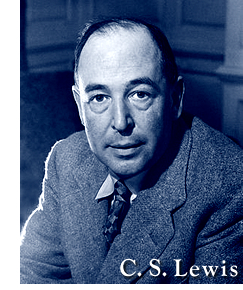
Then a patient questioned Francis about his faith. Realizing he had rejected any faith view without doing any research, Francis turned to the C.S. Lewis book Mere Christianity. As he read, his assumptions about faith in God were shaken. Finally, after months of wrestling over the question of God, he finally broke down. While hiking in the Cascade Mountains and admiring the grandeur of God’s creation, Francis said “yes” to the Lord. “I’ve never turned back,” Francis said. “That was the most significant moment of my life.”

Jesus said, “You will know the truth, and the truth will set you free.” (John 8:32) Christ has promised salvation and freedom from death for all who receive Him as Savior and Lord. That promise became a reality for Francis. Pray that it will for America’s leaders as well.

Recommended Reading: John 8:24-32


Greg Laurie – Is All Killing Wrong?


“You shall not murder.”—Exodus 20:13

We live in a violent and murderous culture today, a culture that is awash in fighting and killing, a culture where nearly two million people are violent crime victims each year. Yet the sixth commandment says, “You shall not murder” (Exodus 20:13).

ll murder is wrong, but all killing isn’t necessarily wrong. That is an important distinction to make. All murder is killing, but all killing is not necessarily murder. We are never to take the life of another human being for no justifiable reason. But the Bible does not condemn all killing. If you study Numbers 35, you will see that God established a difference between killing and murder.

So when is killing right? One example is self-defense. You have the right to defend yourself. A country also has a right, and really the responsibility, to defend itself. God has even established authority, such as the military and the police. Romans 13 says, “For rulers are not a terror to good works, but to evil. Do you want to be unafraid of the authority? Do what is good, and you will have praise from the same. For he is God’s minister to you for good. But if you do evil, be afraid; for he does not bear the sword in vain; for he is God’s minister, an avenger to execute wrath on him who practices evil” (verses 3-4).

When Paul made that statement, the authority was the Roman government. Was the Roman government a pure, moral, godly force on the earth? Hardly. But even with the problems of the Roman government and the Caesars, Paul recognized that God is ultimately in control.

There is a place for authority, for the military and the police. It doesn’t mean they always do the right thing. But God has established the authority.

Max Lucado – God Never Gives Up


God moves us forward by healing our past! Can he really? Can God heal this ancient hurt in my heart? Of course He can. In fact, God cares more about justice than we do. Paul reminds us in Romans 12:17-19, “Never pay back evil for evil. . .never avenge yourselves. Leave that to God, for He has said that He will repay those who deserve it.”

We fear the evildoer will slip into the night, unknown and unpunished. Escape to Fiji and sip mai tais on the beach. Not to worry. Scripture says, “God will repay,” not “God might repay.” God will execute justice on behalf of truth and fairness.

Unlike us, God never gives up on a person. Never. Long after we’ve moved on, God is still there, probing the conscience, stirring conviction, always orchestrating redemption. Fix your enemies? That’s God’s job.

From You’ll Get Through This

Night Light for Couples – Happily Ever After?


“Are you married? Do not seek a divorce.” 1 Corinthians 7:27

What you have observed by looking around your social circles is born out by the numbers: According to nearly every relevant statistic, the institution of marriage is in serious trouble. The Council on Families in America reports that half of first marriages are likely to end in divorce. The National Center for Health Statistics tells us that the number of Americans choosing to marry is declining. And Brent Barlow, professor of family sciences at Brigham Young University, says that if cohabitation and divorce trends continue, “married” could become a minority status within ten years.

Obviously, millions of couples who were once deeply in love and believed they were wonderfully suited for each other are seeing their marriages fall apart. If you and your spouse are going to beat the odds, you will need to bring dedication and hard work to your relationship.

Does this challenge seem more like a threat than a promise? We have good news. First, couples who are willing to invest in their relationship will find the greatest fulfillment and meaning that life has to offer. That is the promise of a godly marriage. Statistics bear this fact out too! Second, you need not try to beat the odds alone. In fact, you were never meant to. But more on that tomorrow…

Just between us…

  • What, specifically, does having a “happy marriage” mean to you?
  • Are you happy? Why or why not?
  • What can I do to bring more happiness to your life?

Heavenly Father, You designed the covenant of marriage from the beginning, and our marriage belongs to You. So bless our union with Your best! Draw us together, and draw us to You. Amen.

From Night Light For Couples, by Dr. James & Shirley Dobson