Tag Archives: Peace

Ravi Zacharias Ministry – The Dynamism of Faith


What is the nature of faith? Is faith the sort of thing that is like an impenetrable fortress? Is it a sense of absolute certainty, as is found in mathematical formula, with consistent and guaranteed results? Or is the nature of faith like the feeling one gets when barely hanging on—fingers fatigued, sweaty, and slowly slipping off of whatever prop, cliff, or ledge that holds one from falling into the abyss of disbelief?

I wonder about the nature of faith as I encounter so many different perspectives and experiences. After profound loss, for example, many individuals suffer what is described as a ‘crisis of faith.’ All that seemed a sure foundation before the loss crumbles under the weight of crisis. For others, faith seems a swinging pendulum that vacillates between certainty and doubt. The poet Emily Dickinson wrote that “We both believe and disbelieve a hundred times an Hour.”(1) Still for others faith is a constant assurance, a sense of strength and repose regardless of the assaults to it.

Of course, to ask about the nature of faith is to inquire about the nature of trust and belief. As such, it is not simply a conversation among religious adherents, but a real question over which humans wrestle whether they acknowledge it explicitly or not. We make decisions each and every day about whether or not we will trust the bus driver and the bus to get us to work. We make decisions to trust other drivers on the highway that they will keep their vehicles under control and not careen into our lane of traffic. We make decisions to trust individuals—spouses, children, friends, employers. The exercise of trust is a basic requirement for relationships and for living in this world.

This is why it is so interesting to me that talk of ‘faith’ is often relegated to the margin that is religious discourse. To have ‘faith’ or ‘trust’ or ‘belief’ in scientific studies is simply assumed because science has become the standard by which truth is measured. And yet, even scientists exercise ‘faith’ in relationship to a tradition of knowledge. Assumptions, assured findings from the past, and the methods of science all become a part of the relationship between faith and knowledge. Sometimes, even this relationship comes under testing when what were once considered ‘true’ results are called into question by new assumptions and new data.(2) Relationships are dynamic; going through ebbs and flows, ups and downs, changes and stasis. As such, it seems a complete category mistake to speak of faith and certainty in the same sentence-even in the realm of science. As author Philip Yancey asserts about the necessary uncertainty of faith, “Doubt always coexists with faith, for in the presence of certainty who would need faith at all?”(3)

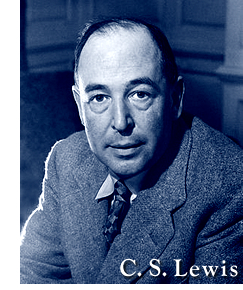
It is reasonable, then, to wonder aloud about the nature of faith. One ought to be wary of arriving at a simple definition. For C.S. Lewis, one of the great spokesmen on behalf of the Christianity, the nature of faith was complicated and something that was not easily understood. In his heart-wrenching memoir, A Grief Observed, Lewis writes: “You never know how much you really believe anything until its truth or falsehood becomes a matter of life and death to you. It is easy to say you believe a rope to be strong and sound as long as you are merely using it to cord a box.”(4) I believe Lewis articulates a profound dynamic of faith—one never really knows what it is until it is tested. Yet, once tested the true nature of one’s faith is revealed-even when it is revealed to be wanting. In these times, we can reflect honestly about that in which we’ve placed our trust and whether the subject or object of trust is warranted.

Yet, even here where one’s faith might be revealed for what it is and what it is not, there is room for growth and for hope. Philip Yancey reflects that,

“What gives me hope, though, is that Jesus worked with whatever grain of faith a person might muster. He did, after all honor the faith of everyone who asked, from the bold centurion to doubting Thomas to the distraught father who cried, ‘I do believe, help me overcome my unbelief!’”(5)

The true nature of faith is inextricably bound to relationship. As such, it is subject to all of the intricacies and complexities of relationship. At times unshakable and strong, and at other times revealed to be flabby and weak, the nature of faith is dynamic. But entering into a relationship of trust with the God revealed in Jesus of Nazareth assures me that despite the complexities, and despite my often small offering of faith, I am welcomed into a relationship anyway. And as my faith is tested, its true nature is progressively revealed.

Margaret Manning Shull is a member of the speaking and writing team at Ravi Zacharias International Ministries in Bellingham, Washington.

(1) From a letter to Otis Lord, April 30, 1882; Thomas H. Johnson, ed., The Letters of Emily Dickinson (Cambridge: Belknap, 1958), 728.

(2) As is seen in the recent studies that showed a new gauge for cholesterol was flawed. Cardiologists learned that a new online calculator meant to help them determine a patient’s suitability for cholesterol treatment was flawed, doubling the estimated risk of heart attack or stroke for the average patient. See Gina Kolata, “Flawed gauge for cholesterol risk poses new challenge,” NY Times, November 18, 2013.

(3) Philip Yancey, Reaching for the Invisible God: What Do We Expect to Find? (Grand Rapids: Zondervan, 2000), 41.

(4) C.S. Lewis, A Grief Observed (New York: HarperCollins ebooks, 2009), loc 326-329.

(5) Philip Yancey, Reaching for the Invisible God: What Do We Expect to Find, 40.

Alistair Begg – I Know


I know that my Redeemer lives. Job 19:25

The essence of Job’s comfort lies in the little word “my”–“my Redeemer”–and in the fact that the Redeemer lives. Oh, to get hold of a living Christ. We must get a share in Him before we can enjoy Him. What is gold to me while it is still in the mine? It is gold in my possession that will satisfy my necessities by purchasing the things I need. So a Redeemer who does not redeem me, an avenger who will never stand up for my blood, what benefit is there in that?

Do not rest content until by faith you can say, “Yes, I cast myself upon my living Lord; and He is mine.” You may hold Him with a feeble hand and half think it presumption to say, “He lives as my Redeemer.” But remember, if you have faith even as a grain of mustard seed, that little faith entitles you to say it.

But there is also another word here, which expresses Job’s strong confidence: “I know.” To say, “I hope so, I trust so” is comfortable, and there are thousands in the fold of Jesus who hardly ever get much further. But to reach the essence of consolation you must say, “I know.” Ifs, buts, and maybes are sure destroyers of peace and comfort. Doubts are dreary things in times of sorrow. Like wasps they sting the soul! If I have any suspicion that Christ is not mine, then there is vinegar mingled with the gall of death. But if I know that Jesus lives for me, then darkness is not dark: Even the night is light about me.

Surely if Job, in those ages before the coming of Christ, could say, “I know,” we should not speak less positively. God forbid that our positiveness should be presumption. Let us make sure that our evidences are right, in case we build upon an ungrounded hope; and then let us not be satisfied with the mere foundation, for it is from the upstairs rooms that we get the panoramic views. A living Redeemer, truly mine, is unspeakable joy.

Devotional material is taken from “Morning and Evening,” written by C.H. Spurgeon, revised and updated by Alistair Begg.

Charles Spurgeon – The carnal mind


“The carnal mind is enmity against God.” Romans 8:7

Suggested Further Reading: Romans 5:6-11

Let me suppose an impossible case for a moment. Let me imagine a man entering heaven without a change of heart. He comes within the gates. He hears a sonnet. He starts! It is to the praise of his enemy. He sees a throne, and on it sits one who is glorious; but it is his enemy. He walks streets of gold, but those streets belong to his enemy. He sees hosts of angels; but those are the servants of his enemy. He is in an enemy’s house; for he is at enmity with God. He could not join the song, for he would not know the tune. There he would stand; silent, motionless; till Christ should say, with a voice louder than ten thousand thunders, “What doest thou here? Enemies at a marriage banquet? Enemies in the children’s house? Enemies in heaven? Get thee gone! Depart ye cursed, into everlasting fire in hell!” Oh! sirs, if the unregenerate man could enter heaven, I mention once more the oft-repeated saying of Whitefield, he would be so unhappy in heaven, that he would ask God to let him run down into hell for shelter. There must be a change, if you consider the future state; for how can enemies to God ever sit down at the banquet of the Lamb? And to conclude, let me remind you—and it is in the text after all—that this change must be worked by a power beyond your own. An enemy may possibly make himself a friend, but enmity cannot. If it be but an adjunct of his nature to be an enemy he may change himself into a friend; but if it is the very essence of his existence to be enmity, positive enmity, enmity cannot change itself. No, there must be something done more than we can accomplish.

For meditation: The Lord Jesus Christ has done for us much more than he commanded his disciples to do for their enemies (Luke 6:27-28).

Sermon no. 20
21 April (Preached 22 April 1855)

John MacArthur – The Cushion of Peace


“Blessed are the peacemakers, for they shall be called sons of God” (Matt. 5:9).

God’s peace cushions the soul during difficult times.

I remember reading about what is called “the cushion of the sea.” The ocean surface is often greatly agitated, but as you descend, the water becomes increasingly calm. At its greatest depths the ocean is virtually still. Oceanographers dredging ocean bottoms have found animal and plant remains that appear to have been undisturbed for hundreds of years.

Similarly, Christians can experience a cushion of peace in their souls regardless of their troubled surroundings. That’s because they belong to God, who is the source of peace; serve Christ, who is the Prince of Peace; and are indwelt by the Holy Spirit, who is the agent of peace. Galatians 5:22 says, “The fruit of the Spirit is love, joy, [and] peace.” When you become a Christian, God grants you the gift of peace.

God is not only the source of perfect peace, but also its purest example. Everything He does is marked by peace. First Corinthians 14:33 says He is not a God of confusion but of peace. In Judges 6:24 He is called Jehovah-shalom, which means, “the Lord is peace.” The Trinity is characterized by a total absence of conflict: perfect oneness, perfect righteousness, and absolute harmony. It is impossible for God to be at odds with Himself!

God wants everyone to know that kind of peace. He created the world with peace and sent His Son to offer peace. Someday Christ will return to establish His kingdom and reign in peace for eternity.

In the meantime turmoil exists for all who don’t know Christ. They have no cushion for their souls. You, however, have peace with God through the death of Christ Jesus, and as you obey Him, His peace will continually reign in your heart. Don’t ever let sin rob you of that blessed cushion. Only as you experience peace within yourself can you share it with others.

Suggestions for Prayer

  • Thank God for the cushion of peace He has provided amid difficult circumstances.
  • Ask God to use you as an instrument of His peace today.

For Further Study

Read Isaiah 57:15-21, noting how God encourages the repentant and warns the wicked in relation to peace.

Joyce Meyer – Faith as a Channel, Not a Source


My help comes from the Lord, Who made heaven and earth. Psalm 121:2

We need to know about faith. Faith is a wonderful thing. The Bible says that without faith it is impossible to please God (see Hebrews 11:6 KJV). The reason it is so important and so vital is because it is the means through which we receive from God all the good things He wants to provide us. That is why the Lord trains His people in faith. He wants them to get their eyes on Him and learn to believe Him so He can do for and through them what He wants done in the earth. The same is true of prayer, praise, meditation, Bible study, confession, spiritual warfare, and all the other precepts we have been hearing about and engaging in.

But in all our spiritual activity, we must be careful that we don’t start worshiping—adhering to, trusting in and relying on—these things instead of the Lord Himself. It is possible to worship our prayer time, our Bible study, our confession, our meditation, our praise, our good works. It is possible to develop faith in our faith rather than faith in our God. It is almost frightening because there is such a fine line between the two. But the thing we must remember is that as good as all these things are, they are only channels to receiving from the Lord.

Campus Crusade for Christ; Bill Bright – All Men Know What God Wants Them to Do


“But this is the new agreement I will make with the people of Israel, says the Lord: I will write my laws in their minds so that they will know what I want them to do without My even telling them, and these laws will be in their hearts so that they will want to obey them, and I will be their God and they shall be my people” (Hebrews 8:10).

Harry boasted that he was an atheist, that he could not believe in God – that there was no such thing as right and wrong. But as we counseled together, it became apparent that he lived a very immoral life, and the only way he could justify his conduct was to rationalize away the existence of God.

This he was unable to do. As God’s Word reminds us, His law is written in our minds, so that we will know what He wants us to do without His even telling us.

A very honest, frank, straightforward counseling session helped Harry to see that he was living a lie, a life of deceit and shame. All of this resulted in making him a very miserable person until he surrendered his life to Christ and became an honest, authentic, transparent disciple of the Lord Jesus Christ.

The Bible says that the mind of natural man is essentially disgusting (Ezekiel 23:17-22), despiteful (Ezekiel 36:5), depraved (Romans 1:28), hardened (2 Corinthians 3:14), hostile (Colossians 1:21) and defiled (Titus 1:15).

In contrast, the Scriptures show that the mind of the Christian is willing (1 Chronicles 28:9), is at peace (Romans 8:6), is renewed (Romans 12: 2), can know Christ’s mind (I. Corinthians 2:16) and can be obedient (Hebrews 8:10).

Our minds are susceptible to the influence of our old sin- nature and, as such, can pose some dangers to us. As soon as we get out of step spiritually with the Holy Spirit and get our focus off the Lord, our minds begin to give us trouble.

Bible Reading: Hebrews 8:7-13

TODAY’S ACTION POINT:  Claiming by faith the help of the Holy Spirit, I will discipline my mind to think God’s thoughts as expressed in His holy, inspired Word. In this way, I can be assured of knowing and doing His perfect will.

Presidential Prayer Team; H.L.M. – Set Free


Roman Gutierrez vowed to die of a heroin overdose just like his dad. At age 11, Roman jabbed a needle in his arm. Then his rage continued with an arrest, violence and more suicide attempts. By age 25, Roman was living under a freeway and participating in cage fighting. After another failed attempt to end his life, Roman promised his mother he would go to church.

Christ died and lived again, that he might be Lord both of the dead and of the living.

Romans 14:9

When Roman walked into the church, he felt something happen in his heart: “If you will call on His name, you will be free,” the pastor said. Roman prayed, “God, I am sorry for all my sins. I need your forgiveness. I believe Jesus died in my place and shed blood to cleanse me. I believe you rose from the dead and are alive to help me. I give you my life.”

The Lord left His closest friends – and all believers – with these last words of instruction: “Go therefore and make disciples of all nations.” (Matthew 28:19) As you pray for the nation, look for opportunities to share the message of eternal freedom with your friends, neighbors and co-workers…so they may be set free!

Recommended Reading: Ephesians 2:1-10

Greg Laurie – How to Get a Life


Then He said to them all, “If anyone desires to come after Me, let him deny himself, and take up his cross daily, and follow Me. For whoever desires to save his life will lose it, but whoever loses his life for My sake will save it.”

—Luke 9:23–24

Some may think the Christian life is restrictive, but actually it is the very opposite. Out there in the world where there are no restrictions, people will start reaping the consequences of their foolish actions. But those who are following Christ will find life at its fullest. Yes, there are boundaries and parameters, but they are there for our own protection.

Jesus said, “If anyone desires to come after Me, let him deny himself, and take up his cross daily, and follow Me” (Luke 9:23).

Nowadays we don’t fully grasp the idea of taking up a cross. But people living in the first century did. The sight of someone carrying a cross down the street in Jerusalem meant that person was about to die. So when Jesus said, “Let him deny himself, and take up his cross daily,” people got it. Jesus was saying that if we want to follow Him, then we must die to our own desires and put God’s will above our own.

Jesus also said, “For whoever desires to save his life will lose it, but whoever loses his life for My sake will save it” (Luke 9: 24). We have to lose our lives to find them.

People today like to say, “I need to find myself.” But Jesus said that if you want to find life, purpose, and happiness, then you need to lose yourself. You come to God and say, “Here is my life. Here are my plans. Here are my dreams. Here are my hopes. Here are my aspirations. I present them to You. I want Your will more than my own.”

If you really want to find life, then lose your life. If you want to get a life, then present it to the Lord, and watch what He will do.

Max Lucado – Potential Time with God


Psalm 46:10 says, “Be still and know that I am God.” Imagine considering every moment as a potential time of communion with God. Try being silent with God.

By the time your life is over, you’ll have spent six months at stoplights, eight months opening junk mail, a year and a half looking for lost stuff (double that in my case), and a whopping five years standing in various lines.

Why don’t you give these moments to God? By giving God your whispering thoughts, the common becomes uncommon. Simple phrases such as “Thank you, Father”…“Be sovereign in this hour, O Lord”… “You are my resting place, Jesus”…can turn a commute into a pilgrimage. You don’t have to leave your office or your kitchen. Just pray where you are. Let the kitchen become a cathedral or the classroom a chapel. Give God your whispering thoughts.

From Just Like Jesus

Charles Stanley – God’s Throne of Grace

Hebrews 4:13-16

When sadness, depression, or loneliness assails us, we may feel as if there’s nowhere to turn. But God clearly tells us what to do when we’re in need: We are to go straight to His throne of grace.

The prophet Isaiah’s vision of this setting is so overwhelming that he cries out, “Woe to me! I am ruined! For I am a man of unclean lips, and I live among a people of unclean lips, and my eyes have seen the King, the Lord Almighty” (Isa. 6:5 NIV). This throne room is filled with God’s glory, power, and radiant majesty—it is a holy place from which He rules over the entire universe.

We, like Isaiah, may feel unworthy, but God extends His great mercy and love to us from His throne, taking away our sin. We can approach God there once we have given our lives to Him through Christ. As we cry out to Jesus to save us because we know we can’t save ourselves, the door of heaven swings wide open, and we are ushered into the throne room. We are welcome because Jesus is our intercessor—He gives us access to the God of all creation. Because He walked where we walk, and He sympathizes with our weaknesses.

Jesus was tempted just as we are but never sinned and always remained one with the Father. He invites us to follow in His steps. His death and resurrection make it possible for us to receive mercy and grace at all times. So, instead of sitting alone in our pain, outside this wonderful place where we’re always accepted, we should run through the open doors, straight into the presence of our Father.

Our Daily Bread — A Father Who Runs


Read: Luke 15:11-24
Bible in a Year: 2 Samuel 9-11; Luke 15:11-32

The Son of Man has come to seek and to save that which was lost. —Luke 19:10

Every day a father craned his neck to look toward the distant road, waiting for his son’s return. And every night he went to bed disappointed. But one day, a speck appeared. A lonesome silhouette stood against the crimson sky. Could that be my son? the father wondered. Then he caught sight of the familiar saunter. Yes, that has to be my son!

And so while the son was “still a great way off, his father saw him and had compassion, and ran and fell on his neck and kissed him” (Luke 15:20). It is remarkable that the family patriarch did something that was considered undignified in Middle Eastern culture—he ran to meet his son. The father was full of unbridled joy at his son’s return.

The son didn’t deserve such a reception. When he had asked his father for his share of the inheritance and left home, it was as if he had wished his father dead. But despite all that the son had done to his father, he was still his son (v.24).

This parable reminds me that I’m accepted by God because of His grace, not because of my merits. It assures me that I’ll never sink so deep that God’s grace can’t reach me. Our heavenly Father is waiting to run to us with open arms. —Poh Fang Chia

Father, I’m so grateful for all Your Son did for me at the cross. I’m thankful for grace. I offer You a heart that desires to be like Jesus—merciful and gracious.

We deserve punishment and get forgiveness; we deserve God’s wrath and get God’s love. —Philip Yancey

INSIGHT: The parables of Luke 15 deal with recovering what was lost. In verses 3-7 the search is for a lost sheep; in verses 8-10, a lost coin; in verses 11-24, a lost son. Each time the emphasis is on the sense of urgency of the one who is searching.

Alistair Begg – Not Far From Home


…that through death he might destroy the one who has the power of death. Hebrews 2:14

Child of God, death has lost its sting, because the devil’s power over it is destroyed. Stop fearing death! Ask God the Holy Spirit to grant you an intimate knowledge and a firm belief in your Redeemer’s death, so that you may be strengthened for that journey. Living near the cross of Calvary, you may learn to think of death with pleasure and welcome it when it comes with intense delight. It is blessed to die in the Lord: It is a covenant blessing to sleep in Jesus. Death is no longer banishment; it is a return from exile, a going home to the many mansions where the loved ones are already living. The distance between glorified spirits in heaven and militant saints on earth seems great; but it is not.

We are not far from home–a moment will bring us there. The sail is spread; the soul is launched upon the deep. How long will its voyage be? How many weary winds must beat upon the sail before it shall be berthed in the port of peace? How long shall that soul be buffeted on the waves before it comes to that sea that knows no storm? Listen to the answer: “away from the body and at home with the Lord.”1 The ship has just departed, but it is already at its destination. It simply spread its sail, and it was there. Like that ship of old upon the Lake of Galilee, a storm had tossed it, but Jesus said, “Peace, be still,” and immediately it came to land. Do not think that a long period intervenes between the instant of death and the eternity of glory. When the eyes close on earth, they open in heaven. The chariots of fire are not an instant on the road.

So child of God, what is there for you to fear in death, seeing that through the death of your Lord Jesus its curse and sting are destroyed? And now it is like a Jacob’s ladder with its base in a dark grave, but with its top reaching to everlasting glory.

  1. 2 Corinthians 5:8

Devotional material is taken from “Morning and Evening,” written by C.H. Spurgeon, revised and updated by Alistair Begg.

Charles Spurgeon – Final perseverance


“For it is impossible for those who were once enlightened, and have tasted of the heavenly gift, and were made partakers of the Holy Ghost, And have tasted the good word of God, and the powers of the world to come, If they shall fall away, to renew them again unto repentance; seeing they crucify to themselves the Son of God afresh, and put him to an open shame.” Hebrews 6:4-6

Suggested Further Reading: Hebrews 10:26-39

God preserves his children from falling away; but he keeps them by the use of means; and one of these is, the terrors of the law, showing them what would happen if they were to fall away. There is a deep precipice: what is the best way to keep any one from going down there? Why, to tell him that if he did he would inevitably be dashed to pieces. In some old castle there is a deep cellar where there is a vast amount of stale air and gas which would kill anybody who went down. What does the guide say? “If you go down you will never come up alive.” Who thinks of going down? The very fact of the guide telling us what the consequences would be, keeps us from it. Our friend puts away from us a cup of arsenic; he does not want us to drink it, but he says, “If you drink it, it will kill you.” Does he suppose for a moment that we should drink it? No; he tells us the consequence, and he is sure we will not do it. So God says, “My child, if you fall over this precipice you will be dashed to pieces.” What does the child do? He says, “Father, keep me; hold thou me up, and I shall be safe.” It leads the believer to greater dependence on God, to a holy fear and caution, because he knows that if he were to fall away he could not be renewed, and he stands far away from that great gulf, because he knows that if he were to fall into it there would be no salvation for him. It is calculated to excite fear; and this holy fear keeps the Christian from falling.

For meditation: God is the One who keeps us from falling (Jude 24), but he still tells us that we have some responsibility to keep ourselves in his love (Jude 21).

Sermon no. 75
20 April (1856)

John MacArthur – Becoming Pure in Heart


“Blessed are the pure in heart, for they shall see God” (Matt. 5:8).

You have a part to play in becoming pure in heart.

Purifying a heart is the gracious and miraculous work of the Holy Spirit, but there are some things we must do in response to His prompting. First, we must admit we can’t purify our own hearts. Proverbs 20:9 says, “Who can say, ‘I have cleansed my heart, I am pure from my sin?'” The implied answer: no one!

Next, we must put our faith in Jesus Christ, whose sacrifice on the cross is the basis for our cleansing. Acts 15:9 says that God cleanses hearts on the basis of faith. Of course our faith must be placed in the right object. First John 1:7 says, “If we walk in the light as He Himself is in the light, we have fellowship with one another, and the blood of Jesus His Son cleanses us from all sin.”

Finally, we must study the Bible and pray. The psalmist said we keep our way pure by keeping it according to God’s Word, which we must treasure in our hearts (Ps. 119:9, 11). As we pray and submit to the Word, the Spirit purifies our lives.

That’s how you acquire and maintain a pure heart. As a result you “shall see God” (Matt. 5:8). That doesn’t mean you’ll see Him with physical eyes, but with spiritual ones. You begin to live in His presence and become increasingly aware of His working in your life. You recognize His power and handiwork in the beauty and intricacy of creation (Ps. 19). You discern His grace and purposes amid trials and learn to praise Him in all things. You sense His ministry through other Christians and see His sovereignty in every event of your life. Life takes on a profound and eternal meaning as you share Christ with unbelievers and see Him transform lives.

There’s no greater joy than knowing you are pure before God and that your life is honoring to Him. May that joy be yours today and may God use you in a powerful way for His glory!

Suggestions for Prayer; Ask the Lord for continued grace to live a pure life so others will see Christ in you.

For Further Study; Read Isaiah 6:1-8.

  • Describe Isaiah’s vision of God.
  • How did Isaiah respond to God’s presence?


Joyce Meyer – Set a Goal to Enjoy Every Part of Your Day


Therefore my heart is glad and my glory [my inner self] rejoices; my body too shall rest and confidently dwell in safety. Psalm 16:9

There are dozens of things that happen during ordinary, everyday life, and we can enjoy them all if we just make a decision to do it.

Things like getting dressed, driving to work, going to the grocery store, running errands, keeping things organized, sending e‑mails, taking the kids to practice, and hundreds of other things.

After all, they are the things that life is made up of. Begin doing them with an attitude of gratitude and realize that, through the Holy Spirit, you can enjoy absolutely everything you do every day of your life.

Joy doesn’t come merely from being entertained, but from a decision to appreciate each moment that you are given as a rare and precious gift from God.

Prayer of Thanks Father, thank You for the gift of life, and thank You for every activity that comes with that gift. I pray that You will help me find joy in each part of my day as I live for You. I thank You that I can choose to enjoy even the average, routine parts of my day.

Campus Crusade for Christ; Bill Bright – Place of Privilege


“For because of our faith, He has brought us into this place of highest privilege where we now stand, and we confidently and joyfully look forward to actually becoming all that God has had in mind for us to be” (Romans 5:2).

Interesting, is it not, that because of our faith, which is really His faith imparted to us, He has brought us, you and me, to a place of highest privilege.

What are some of the benefits that constitute this highest privilege?

First, we are justified – considered righteous in God’s sight.

Second, we are admitted into His favor and we abide there.

Third, we have the hope and prospect of even higher and richer blessings, in the fullness of His glory, when we are admitted into heaven.

Strange, then, that you and I often chafe at the bit when things become a little rough. At such time as that, I need to remind myself that I do not deserve any better. All the mercies and blessings of God are undeserved – gifts of God’s grace (“God’s Riches at Christ’s Expense,” as the apt acrostic expresses it).

What, really, is the “bottom line” of everything that happens to the believer – to you and me? After confessing that we are receiving our just deserts, we must always go back to the all-inclusive promise: “All things are working together for our good.” They may not feel good, they may not seem good, they may not even be good, but they are accomplishing good in us.

Bible Reading: Ephesians 3:8-12

TODAY’S ACTION POINT:  I will meditate on the rare and high privilege that is mine as a child of God and look forward to becoming all that God wants me to be.


Presidential Prayer Team; C.H. – Glorious Sequel


When movies are box office hits, audiences crave a sequel. When the President of the United States has a great four-year term, you can most assuredly expect him to run for a second. When dinner is delicious, you may ask for another helping. When people experience things they love, they always want a continuation of a good thing.

Some mocked. But others said, “We will hear you again about this.”

Acts 17:32

Some of Paul’s listeners in today’s key verse felt the same way when they heard the incredible story of Jesus and about His resurrection from the dead. This has always been the case when the gospel is presented – some mock and others want more. “For the word of the cross is folly to those who are perishing, but to us who are being saved it is the power of God.” (I Corinthians 1:18)

Many Americans disregard the name of Christ, but don’t let that dissuade you from sharing about His resurrection and love. Ask God to open the hearts of your fellow Americans and its leaders to the good news of Jesus…and get excited! Christ’s return – His glorious sequel – is coming!

Recommended Reading: Hebrews 9:19-28

Greg Laurie – Make a Stand


“If you want to be my disciple, you must hate everyone else by comparison–your father and mother, wife and children, brothers and sisters–yes, even your own life. Otherwise, you cannot be my disciple.”

—Luke 14:26

When I became a Christian, all of my friends were no longer my friends. They quickly turned on me, mocked me, and made a joke out of what I had just done.

Sometimes relationships hold people back from following Christ. They think, If I become a Christian, what will my boyfriend say? Or, What will my girlfriend say? If you have a boyfriend who would not want you to become a Christian, then you need a new boyfriend. And guys, the same is true of a girlfriend. If you have friends who would oppose your being a follower of Jesus Christ, then you need some new friends. You need to make a stand.

In Luke 9 we find the story of a man whom Jesus called to follow Him. But the man said to Jesus, “Lord, let me first go and bury my father” (verse 59).

Jesus responded by saying, “Let the dead bury their own dead, but you go and preach the kingdom of God” (verse 60). We may read that and think, Wow. Jesus was a little heartless, wasn’t He? But the man was using an expression of the time that meant “wait until my father and mother die.” It didn’t mean that his father was dead. The man was effectively saying, “Give me a little time. Later, when my parents pass away, then I will follow You.”

But Jesus was saying, “No, do it right now. I called you. If you want to do it, then do it. Or don’t do it. It is your choice. But do it now.”

The disciple must love Jesus more than anyone or anything else. Or to put it another way, your love for God should be so strong, so intense, that all other loves would be like hatred in comparison.

Max Lucado – God’s Translator


When he walked this earth, Jesus was so in sync with the Father that he could say in John 14:11, “I am in the Father and the Father is in me.” It was if he heard a voice that was missing.

Remember when everyone was distraught about Lazarus’s illness? Jesus wasn’t. Rather than hurry to his friend’s bedside, he said, “This sickness will not end in death. It is for the glory of God.” Jesus had unbroken communion with his Father. It was as if Jesus could hear what no one else could. How could a relationship be more intimate?

Do you suppose the Father desires the same for us? Absolutely! God desires the same abiding intimacy with you that he had with his Son. Paul says in Romans 8:29 that we have been “predestined to be conformed to the image of his Son.”

From Just Like Jesus

Charles Stanley – Life Principle 24: The Key to the Christian Life


The key to the Christian life is to allow Jesus to live in and through you. But how do you allow Him to do so?

To live the Christian life is to allow Jesus to live His life in and through us.

Galatians 2:20

Many Christians today seem content to live what they think is an adequate Christian life. They believe if they go to church, read their Bibles from time to time, and say their prayers once in a while, they will be all right with God. Occasionally, they may be inspired to go above and beyond their normal routines and volunteer to serve others as ushers, members of a church committee, or even travel on a short-term mission trip. Though they go through the motions of being a “good Christian,” they do not enjoy the power, peace, and joy that should come with the abundant life Jesus promised (John 10:10). Eventually, the counterfeit Christian life they’re living becomes a burden and does not comfort them when the storms of adversity assail.

God desires to have a daily relationship with you where you experience His presence and trust Him for wisdom, courage, and strength in all situations.

This was not what you were created for. God does not call you or any believer to a marginal Christian life characterized by chores and rituals. He desires to have a daily relationship with you where you experience His presence and trust Him for wisdom, courage, and strength in all situations. With every step you take, decision you make, conversation you have, and thought you entertain, the Lord wants to glorify Himself through you. He desires to shine in your life—with His love, joy, peace, patience, kindness, goodness, faithfulness, gentleness, and self-control illuminating your unique talents, traits, and personality as you walk in obedience to Him.

In other words, to live the Christian life is to allow Jesus to live in and through you. That is why Paul wrote, “I have been crucified with Christ; and it is no longer I who live, but Christ lives in me; and the life which I now live in the flesh I live by faith in the Son of God, who loved me and gave Himself up for me” (Gal. 2:20).

How do you allow Jesus to do so? In what way does He live in and through you? If these two questions seem difficult or confusing to you, you aren’t alone. Many people never realize how powerfully Christ could demonstrate His life through them. This is because many believe that the key to living the Christian life starts with pious acts, when it really begins with a deep, intimate relationship with Him.

Therefore, to answer the first question: How do you allow Jesus to do this?—you must realize the answer comes by working on your relationship with Christ. You do this through Bible study, prayer, worship, and fellowship with other believers. You not only learn about Him, but you must also listen to Him, because He will teach you how to love Him, live for Him, and walk in His ways.

The answer to the second question: In what way does He live in and through you?—is as unique as each believer who follows Him. This is because He has a special purpose for your life, and the most important thing you can ever do is simply obey Him—no matter what He tells you to do. God will allow situations and troubles in your life that only He can solve. This is so He can demonstrate His glory, power, love, and wisdom through you.

With every step you take, decision you make, conversation you have, and thought you entertain, the Lord wants to glorify Himself through you.

Is there anything distracting you from having an intimate relationship with the Lord? Have you failed to trust God’s sovereignty? Are you worried that you’re not doing enough to deserve a relationship with Him or that you could lose the eternal life He has given you? Then you need to return to the basic truth that your salvation is through faith in Christ and not by works. There is absolutely nothing you can do to earn it or be worthy of it. Therefore, there is nothing you can do or fail to do that would cause you to forfeit it either.

The issue is not your salvation but the impact of your life for Christ and the joy and fulfillment you receive from Him. God does not call you to an adequate life—He wants it to be extraordinary. However, for you to experience the life He planned for you, you must stop being distracted by peripheral issues and focus your attention completely on Him. Can you do it? Can you trust Jesus to live His life through you and take care of all that troubles you?

Of course you can! The God who redeems you can teach you how to live for Him. The Savior you trusted for your eternity is more than capable of taking care of all the matters that burden you daily and shining through you brightly so that others can know Him and be saved. Therefore, die to your notions of what the Christian life should be so you can experience true life in Him.

Adapted from The Charles F. Stanley Life Principles Bible