Tag Archives: Peace

John MacArthur – Following Christ’s Example


“Blessed are the merciful, for they shall receive mercy” (Matt. 5:7).

Mercy is compassion in action.

Mercy is not a human attribute. It is God’s gift to those who seek Him. Psalm 103:11 says, “As the heavens are high above the earth, so great is his mercy toward them that fear him” (KJV).

The verb form of “merciful” appears many times in Scripture and means “to have mercy on,” “aid the afflicted,” “give help to the wretched,” or “rescue the miserable.” In general it refers to anything you do to benefit someone in need. The noun form is used only twice: here in Matthew 5:7 and in Hebrews 2:17, which reads, “[Christ] had to be made like His brethren in all things, that He might become a merciful and faithful high priest.” Christ Himself is both the source and illustration of mercy.

Christ modeled mercy throughout His earthly ministry. He healed the sick and enabled the crippled to walk. He gave sight to the blind, hearing to the deaf, and speech to the mute. His redeeming love embraced sinners of all kinds. He wept with those in sorrow and comforted the lonely. He embraced little children and the elderly alike. His mercy was compassion in action!

Despite His abundant mercy, Jesus received no mercy from His enemies. They hated Him without cause, accused Him falsely, beat Him, nailed Him to a cross, spat upon Him, and cursed Him. Even then He sought mercy for them, praying, “Father, forgive them; for they do not know what they are doing” (Luke 23:34).

Some have paraphrased Matthew 5:7 to say that if you show mercy to others, they will show mercy to you. Now that might happen in some isolated incidences, but in this jaded world that’s not often the case—as Jesus’ life clearly demonstrates. Many Christians have incurred slander, rebuke, lawsuits, and even death for their noble efforts. Jesus didn’t guarantee merciful treatment from others. His emphasis was that God shows mercy toward those who show mercy to others.

Don’t ever be reluctant to show mercy to others—even when they misunderstand or mistreat you. God will use your kindness for His glory and reward you accordingly.

Suggestions for Prayer

  • Praise Jesus for being willing to suffer death that you might receive mercy.
  • Is there someone you might show mercy to today in some tangible way?

For Further Study

Read John 5:1-18.

  • How did Christ demonstrate mercy to the sick man?
  • How did the Jewish religious leaders react?


Joyce Meyer – Speak and Act with Humility


Talk no more so very proudly; let not arrogance go forth from your mouth . . . 1 Samuel 2:3

When we can do something well, or when we reach a personal goal, we tend to feel good about those things. As long as we feel positively about ourselves in a balanced way, it’s fine. When we become proud and fail to be merciful toward others who struggle with things we have mastered, it’s a problem.

I am fairly disciplined in my eating habits, and I recently spent a week with someone who really struggles in that area. She mentioned several times how disciplined I am and how undisciplined she is. Each time she did so, I said, ” I have areas of weakness also, and you will overcome this as you continue to pray and make an effort.”

There was a time in my life when I would not have been so sensitive to my friend’s feelings. I probably would have given a sermon about the dangers of overeating and poor nutrition. But I would not have succeeded in doing anything but making my friend feel guilty and con¬demned. I have discovered that one way to love people is to help them not to feel worse about things they already feel bad about.

Meekness and humility are two of the most beautiful aspects of love. Paul said that love is not boastful (see I Cor. 13:4). Love never wants to make people feel badly because they cannot do what we can do. Instead of bragging about our strengths, let’s thank God for them and encourage those who are weak in ways we are strong.

Love Others Today: What are some things you do well? Be merciful and humble toward people who are struggling in those areas.

Campus Crusade for Christ; Bill Bright – Destroying the Devil’s Works 


“But if you keep on sinning, it shows that you belong to Satan, who since he first began to sin has kept steadily at it. But the Son of God came to destroy these works of the devil” (1 John 3:8).

A young Christian came to inquire of me one day, “How do you account for the fact that so many Christian leaders, many of them famous personalities, pastors and heads of Christian organizations are involved in moral and financial scandals?”

He named several well-known pastors and Christian leaders to illustrate his point.

Sadly I acknowledged his statement to be true. It seems there is an all-out attack of Satan to destroy the credibility of the Christian message. My explanation to him was that our Lord and the apostle Paul dealt with the same problem because, even though the disciples had been with the Lord Jesus three years or more, Judas betrayed Him and the others deserted Him.

The apostle Paul spoke of several who had deserted him. Those included Demas, who loved the present world, and Hymenaeus, Alexander and Philetus, who strayed from the truth.

Only one person can help us live holy lives that will honor our Lord, who came to destroy the works of the devil, and that is the third person of the Trinity – God the Holy Spirit. As long as we cast our ballot for the Spirit in our warfare against the flesh, we can live supernaturally every day in the joy, the wonder, the adventure and the power of the resurrection. It is simply a matter of our will; the decision is ours.

Bible Reading: I John 3:4-10

TODAY’S ACTION POINT:  “Oh, God, thank You that You sent Your Son to destroy the works of the devil. I will claim the supernatural power of the Holy Spirit so that I may live victoriously and never bring scandal or disgrace to Your name.”


Presidential Prayer Team; G.C. – Someone Out There


America is a nation founded and nurtured on prayer. However, according to a recent Pew Report, prayer in America has “gone rogue.” In other words, anything goes: from spirit drumming to mystical chanting. People across the USA are praying, but most confess they are merely addressing “someone out there.”

We always pray for you, that our God…may fulfill every resolve for good and every work of faith.

II Thessalonians 1:11

In 1787, about five weeks into the Constitutional Convention, the framers were frustrated in their attempts to draft the U. S. Constitution. Benjamin Franklin challenged them to return earnestly in prayer to God on behalf of their nation. He asked, “If a sparrow cannot fall to the ground without His notice, is it probable that an empire can rise without His aid? We have been assured that ‘except the Lord build the House, they labor in vain that build it.’”

God is still shaping America’s future in the hearts of those who seek Him. Today, pray specifically for those blindly praying to “someone” that they may discover the true identity of God’s Son, the Lord Jesus Christ; placing all hope for themselves, and for America, in His great power.

Recommended Reading: I Timothy 2:1-8


Greg Laurie – Why Fellowship?


Then those who feared the Lord spoke to one another, and the LORD listened and heard them; so a book of remembrance was written before Him for those who fear the Lord and who meditate on His name.  —Malachi 3:16

Have you ever been somewhere and someone mentioned your name? You noticed, didn’t you? When my grandchildren say to me, “Papa,” I will turn to look. And when I hear a little child say “Papa,” I will turn around instinctively. I am in tune to that word.

In the same way, God listens and hears when we talk about Him. We are told in Malachi 3:16, “Then those who feared the Lord spoke to one another, and the Lord listened and heard them.” That phrase listened and heard means to bend down so as not to miss a single word.

The Lord likes to listen in on our conversations. He likes it when we gather together for fellowship. In the book of Acts, we read that the early church “continued steadfastly in the apostles’ doctrine and fellowship, in the breaking of bread, and in prayers” (2:42). In this verse the word fellowship comes from the Greek word koinonia. It is an interesting word that also can be translated “partnership,” “communion,” or “commune.” There are many different facets of this word, but the idea being communicated here is that these first-century believers loved to gather together.

When you are walking with God, you will want to be with God’s people too. And when you are not walking with God, you won’t want to be with God’s people. It’s actually a pretty good gauge of where you are spiritually. If you want to hang around godly people, then I would almost guarantee that you are living a godly life. And if you don’t want to be around godly people, then it would be an indication that something is wrong spiritually.

If you find yourself out of fellowship with God, then you will find yourself out of fellowship with other believers as well.

Max Lucado – Ears to Hear


“Let he who has ears to hear, use them.” Jesus said these words more than once. We’re reminded that it’s not just enough to have ears—it’s necessary to use them.

Scripture has always placed a premium on hearing God’s voice. “Happy are those who listen to me” is the promise of Proverbs 8:34. When John wrote to each of the seven churches in Revelation, they were addressed in the same manner: “He who has an ear, let him hear what the Spirit says to the churches.” John 10:3-5 says, “The sheep recognize his voice…” They follow because they are familiar with the shepherd’s voice.

Our ears, unlike our eyes, do not have lids. They are to remain open, but how easily they close. Romans 10:17 says, “Faith comes from hearing.” How long has it been since you had your hearing checked?

From Just Like Jesus

Encouragement for Today – The Miracle of Friendship by Melanie Shankle.


“As soon as he had finished speaking to Saul, the soul of Jonathan was knit to the soul of David, and Jonathan loved him as his own soul.” 1 Samuel 18:1 (ESV)

One of my dearest friends is dying of cancer right now.

I realize that’s not really an uplifting start to your day. But it’s the reality. I am heartbroken at the prospect of losing my Jen. She’s been a constant presence in my life since we first met at 18 years old and she swept into a room wearing a denim wrap skirt and Cole Haan loafers that caused me to immediately reexamine all my personal wardrobe goals. She was exuberant and confident, and immediately I wanted to be her friend … if I could get over feeling so intimidated.

Fortunately, I did, and she quickly became one of my dearest friends as we learned all the ways we were alike and all the ways we were different. God used Jen to draw my heart back to Him as she demonstrated how to make faith a priority. I look back at that time and realize God very purposely knit our hearts together during those years. He knew all the ways He would use us to encourage and strengthen one another.

As we see in our key verse, 1 Samuel 18:1, God sometimes knits our hearts with others like He did with David and Jonathan. He puts people in our paths because He knows we’ll need them.

Jonathan was just what David needed at that stage of his life. David was a young shepherd thrust into the spotlight. And based on some of his future writings in the book of Psalms, maybe a little overemotional at times.

David was often overwhelmed by feelings of inadequacy and depression, and being hunted by a crazy king. (I can relate to all of these things with the exception of the crazy king.) But Jonathan loved David, believed in him, and sought God’s best for him. Jonathan’s friendship was what David needed to grow into the king and leader he was to become.

As women, many of us spend our early lives thinking about marriage and hoping to find Mr. Right. Then we realize our husbands don’t necessarily want to hear all about the best waterproof mascara or cry with us over the kid who’s failing math or eat cookie dough straight from the bowl. That’s why God gives us our girlfriends.

Beyond common interests, affection and a sense of humor — the aim of friendship is to sow into each other words of eternal life and blessing. We remind each other of God’s wisdom and provision, refresh each other’s spirit and strengthen each other’s faith.

Good friendships require walking with one another down some hard roads, losses, a bad diagnosis, financial problems and much more. We need friends to help us remember what God has done for us and that He will be faithful.

In 2 Samuel 1:26b, David says of Jonathan, ” … Your friendship was a miracle-wonder, love far exceeding anything I’ve known — or ever hope to know,”(MSG). That’s ultimately what God gives us in friendship: a real life, everyday miracle in the form of another person.

But having your soul knitted to another isn’t for the faint of heart.

It means you bear your own hurts along with those of your friend. You cry when they cry and laugh when they laugh and feel like your heart will break wide open when you face not having them by your side.

But it’s worth it because they cause you to love harder, laugh louder, live richer and become more than you could ever be without them. It’s putting your heart and your name in the hands of another person and saying, “I trust you with all of this,” as they do the same.

Dear Heavenly Father, thank You for the friends You have given us to walk with us through life here on earth. Please show us ways to love each other better and take away any fear we have of being authentic about our struggles. Help us have open hearts that love the way You love. Thank You for knitting our hearts together with the people You know will make us stronger. In Jesus’ Name, Amen.

TRUTH FOR TODAY:
Proverbs 27:17, “Iron sharpens iron, and one man sharpens another.” (ESV)

1 Corinthians 13:4-7, “Love is patient and kind; love does not envy or boast; it is not arrogant or rude. It does not insist on its own way; it is not irritable or resentful; it does not rejoice at wrongdoing, but rejoices with the truth. Love bears all things, believes all things, hopes all things, endures all things.” (ESV)

REFLECT AND RESPOND:
Reflect on some ways your friendships have made you stronger and how God has used them in your life.

What are some tangible ways you can show your friends how much they mean to you?

RELATED RESOURCES:
Stop by Melanie’s blog today to connect with her and learn more about her writing and ministry.


Night Light for Couples  – Error Or Opportunity?


“An anxious heart weighs a man down, but a kind word cheers him up.” Proverbs 12:25

Many years ago, at what was then Standard Oil Company, an executive’s mistake cost the firm more than two million dollars. On the day the news leaked, the firm’s employees feared the wrath of the powerful head of the company—John D. Rockefeller—and found various ways to avoid him. One partner, however, kept his previously scheduled appointment. When he walked into the president’s office, he saw Rockefeller writing on a pad of paper.

“Oh, it’s you, Bedford,” Rockefeller said calmly. “I suppose you’ve heard about our loss?” The partner said that he had. “I’ve been thinking it over,” Rockefeller said, “and before I ask the man to discuss the matter, I’ve been making some notes.” Across the top of the page was written, “Points in favor of Mr. ________.” There followed a long list of the man’s virtues, including a description of how the executive had helped the firm make the right decision on three separate occasions. Since the earnings from these decisions had added up to many times the cost of the recent error, Rockefeller told Bedford that he had decided to seize the opportunity to encourage the executive instead of censure him.

The next time your spouse fails you, you could cut him or her down in a torrent of angry words… or you could see a golden opportunity to encourage.

Just between us…

  • When was I most encouraging to you during a crisis?
  • Is there a particular Scripture verse you cling to during tough times?

Lord, we so often underestimate how much influence our words can have. We ask for wisdom to speak encouragement—especially when criticism might be expected. Amen.

From Night Light For Couples, by Dr. James & Shirley Dobson

Charles Stanley – Our Greatest Treasure

Matthew 8:5-13

What do you consider your most prized possession? A house, car, boat, or cash would likely be high on most folks’ lists. But even treasures and luxuries won’t bring lasting satisfaction—why else do so many men and women keep trading up and adding to their collection? Sadly, in the race to have “better” and “more,” a lot of people overlook the most valuable asset of all: faith.

Hebrews 11:1 defines faith as “the assurance of things hoped for, the conviction of things not seen”—and this corresponds to trust in Jesus Christ as Savior. Faith isn’t something we can work to obtain; rather, it is a gift from the Lord.

Consider the power that God makes available. In Matthew 17:20, Jesus said that faith as small as a mustard seed—which His audience would have known to be tiny—enables us to achieve the miraculous. The book of Acts shows that the apostles’ belief led to numerous healings (3:1-8; 5:16). And Matthew’s gospel tells us that through a Canaanite woman’s faith, her daughter was freed from demonic possession (15:22-28).

Trust in Christ is more than an avenue to miracles—it is the way to salvation. The Bible states that there is nothing we can do to achieve eternal security in God’s kingdom; we are saved only by His grace, through faith (Eph. 2:8-9).

The best way to move forward is by first receiving life’s greatest gift: faith in Christ. Romans 10:9 says to “confess with your mouth Jesus as Lord, and believe in your heart that God raised Him from the dead, [and] you will be saved.” Salvation and abundant life are found nowhere else.

Our Daily Bread — Pray First


Read: 1 Samuel 23:1-5
Bible in a Year: 1 Samuel 22-24; Luke 12:1-31

David inquired of the Lord. —1 Samuel 23:2

When my husband and I supervise our son’s piano practice sessions, we begin by asking God to help us. We pray first because neither my husband nor I know how to play the instrument. Together, all three of us are coming to understand musical mysteries such as the meaning of “staccato” and “legato” and when to use the piano’s black keys.

Prayer becomes a priority when we realize that we need God’s help. David needed God’s assistance in a dangerous situation as he considered fighting the Philistines in the city of Keilah. Before engaging in battle, “David inquired of the Lord, saying, ‘Shall I go and attack these Philistines?’” (1 Sam. 23:2). God gave His approval. However, David’s men admitted that the enemy forces intimidated them. Before a single sword was lifted against the Philistines, David prayed again. God promised him the victory he later claimed (v.4).

Does prayer guide our lives, or is it our last resort when trouble strikes? We sometimes fall into the habit of making plans and then asking God to bless them, or praying only in moments of desperation. God does want us to turn to Him in moments of need. But He also wants us to remember that we need Him all the time (Prov. 3:5-6). —Jennifer Benson Schuldt

Dear God, please guide me as I walk through this life. Help me not to act only by my own wisdom, but to seek Your will in every situation.

God wants us to pray before we do anything at all. —Oswald Chambers

INSIGHT: In today’s passage we are told twice that David “inquired of the LORD” (vv. 2,4), but we are not told how he sought out God’s will. Some say David himself was the prophetic voice (2 Sam. 23:2; Acts 4:25) or that he cast lots since the Lord directed the lots (Prov. 16:33). He may have simply petitioned God in prayer with an open heart.

Ravi Zacharias Ministry -Curiosities


In a special documentary, a major television network investigated the beginnings of Christianity and the influence of the apostle Paul in spreading the message of Christ. The narrator noted his fascination with the historical figure, commenting that if not for the voice of Paul, it is “unlikely that the movement Jesus founded would have survived beyond the first century.” Yet of the resurrection of Christ he also noted, “Something must have happened, otherwise it’s hard to explain how Jesus’s story endured for so long.”

Why has the story of Christ endured? Has it survived through the centuries because of effective speakers in antiquity? Has it endured, as Sigmund Freud argued, because it is a story that fulfills wishes, or as Friedrich Nietzsche attested, because it masks and medicates our despairing fate? Has the story of Christ endured because something really happened after Jesus’s body was taken down from the cross or was it only the clever marketing of ardent followers?

We live in an age where religion is examined with the goal of finding a religion, or a combination of religions, that best suits our lives and lifestyles. We are intrigued by characters in history like Jesus and Paul, Buddha and Gandhi. We look at their lives and rightly determine their influence in history—the radical life and message of Christ, the fervor with which Paul spread the story of Christianity, the passion of Buddha, the social awareness of Gandhi. But far too often, our fascination stops there, comfortably and confidently keeping the events of history at a distance or mingling them all together as one and the same.

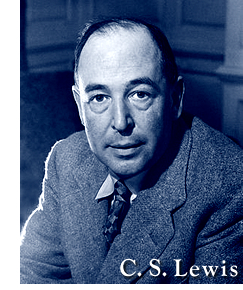
C.S. Lewis wrote often of “the great cataract of nonsense” that blinds us to knowledge of earlier times and keeps us content with history in pieces. He was talking about the common tendency to treat the voices of history with a certain level of incredulity and inferiority—even if with a pleasant curiosity all the same. Elsewhere, he called it chronological snobbery, a tendency to concern oneself primarily with present sources while dissecting history as we please. Yet to do so, warned Lewis, is to walk unaware of the cataracts through which we see the world today. Far better is the mind that truly considers the past, allowing its lessons to interact with the army of voices that battle for our allegiance. For a person who has lived thoroughly in many eras is far less likely to be deceived by the errors of his or her own age.

We might be wary, then, among other things, of assuming the earliest followers of Christ thought resurrection a reasonable phenomenon or miracles a natural occurrence. They didn’t. Investigating the life of Paul, we might ask why a once fearful persecutor of Christ’s followers was suddenly willing to die for the story he carried around the world, testifying to this very event that split history. Investigating the enduring story of Christ, we might ask why the once timid and frightened disciples were abruptly transformed into bold witnesses. What happened that led countless Jews and many others to dramatically change directions in life and in lifestyle? That something incredible happened is not a difficult conclusion at which to arrive. It takes far greater faith to conclude otherwise.

A friend of mine is fond of saying that truth is something you can hang your hat on. Even as we struggle to see it today, her words communicate a reality Jesus’s disciples knew well. The resurrection was shocking in its real-ness; it was an event they found dependable and enduring. It was not for them like the latest scandal that grabs our curiosity and passes with the next big thing. It is solid and it is real. The disciples and the apostle Paul were transformed by seeing Jesus alive again—a phenomenon that would be just as unthinkable to ancient minds as it would be for us today. In fact, even the most hesitant among them, and the most unlikely of followers, found the resurrected Christ an irrefutable reality. Comfort was irrelevant, it went far beyond curiosity, and personal preference was not a consideration. They could not deny who stood in front of them. Jesus was alive. And they went to their deaths talking about it.

It seems to me that the story of Christ has endured for innumerable reasons: because in the fullness of time God indeed sent his Son; because knowingly Jesus walked to the Cross and into the hands of those who didn’t know what they were doing; because something really happened after his body was laid in the tomb; and because with great power and with God’s Spirit, the apostles continued to testify of the events they saw. What if the story of Christ remains today simply because it is true?

Jill Carattini is managing editor of A Slice of Infinity at Ravi Zacharias International Ministries in Atlanta, Georgia.

(1) Photo by Ben may Media, http://benmaymedia.zenfolio.com. Used by permission.


Alistair Begg – Why a “Sachet of Myrrh”?


My beloved is to me a sachet of myrrh. Song of Songs 1:13

Myrrh may well be chosen to typify Jesus because of its preciousness, its perfume, its pleasantness, its healing, preserving, disinfecting qualities, and its connection with sacrifice. But why is He compared to “a sachet of myrrh”?

First, because it speaks of plenty. He is not a drop of it–He is a basketful. He is not a sprig or flower of it, but a whole bundle. There is enough in Christ for all my needs; do not let me be slow to avail myself of Him.

Our well-beloved is compared to a “sachet,” again, for variety, for there is in Christ not only the one thing needful, but “in him the whole fullness of deity dwells bodily”;1 everything needful is in Him. Consider the numerous aspects of Christ, and you will see a marvelous variety–Prophet, Priest, King, Husband, Friend, Shepherd. Consider Him in His life, death, resurrection, ascension, second coming; view Him in His virtue, gentleness, courage, self-denial, love, faithfulness, truth, righteousness–everywhere He is a sachet of preciousness.

He is a “sachet of myrrh” for preservation–not loose myrrh tied up, but myrrh to be stored in a container. We must value Him as our best treasure; we must prize His words and His ordinances; and we must keep our thoughts of Him and our knowledge of Him as under lock and key, in case the devil should steal anything from us.

Furthermore, Jesus is a “sachet of myrrh” for specialty. The emblem suggests the idea of distinguishing, discriminating grace. From before the foundation of the world, He was set apart for His people; and He gives His perfume only to those who understand how to enter into communion with Him, to have close dealings with Him–blessed people whom the Lord has admitted into His secrets, and for whom He sets Himself apart.

Choice and happy are those who can say, “My beloved is to me a sachet of myrrh.”

  1. Colossians 2:9

Devotional material is taken from “Morning and Evening,” written by C.H. Spurgeon, revised and updated by Alistair Begg.

Charles Spurgeon – A willing people and an immutable leader


“Thy people shall be willing in the day of thy power, in the beauties of holiness from the womb of the morning: thou hast the dew of thy youth.” Psalm 110:3

Suggested Further Reading: 1 Kings 19:9-18

Christ shall always have a people. In the darkest ages Christ has always had a church; and if darker times shall come, he will have his church still. Oh! Elijah, thy unbelief is foolish. Thou sayest, “I, only I, am left alone, and they seek my life.” No, Elijah, in those caves of the earth God has his prophets, hidden by seventies. Thou too, poor unbelieving Christian, at times thou sayest, “I, even I, am left.” Oh! If thou hadst eyes to see, if thou couldst travel a little, thy heart would be glad to find that God does not lack a people. It cheers my heart to find that God has a family everywhere. We do not go anywhere but we find really earnest hearts—men full of prayer. I bless God that I can say, concerning the church wherever I have been, though they are not many, there are a few, who sigh and groan over the sorrows of Israel. There are chosen bands in every church, thoroughly earnest men who are looking out for, and are ready to receive their Master, who cry to God that he would send them times of refreshing from the presence of the Lord. Do not be too sad; God has a people, and they are willing now; and when the day of God’s power shall come, there is no fear about the people. Religion may be at a low ebb, but it never was at such a low ebb that God’s ship was stranded. It may be ever so low, but the devil shall never be able to cross the river of Christ’s church dry shod. He shall always find abundance of water running in the channel. God grant us grace to look out for his people, believing that there are some everywhere, for the promise is, “thy people shall be willing in the day of thy power.”

For meditation: Do you feel one of the few? God’s people may be nearer and more numerous than you imagine (Acts 18:9,10); even when we are very few, Christ is nearer than we sometimes imagine (Matthew 18:20).

Sermon no. 74
13 April (1856)

John MacArthur –Being Filled with Mercy


“Blessed are the merciful, for they shall receive mercy” (Matt. 5:7).

Mercy is a characteristic of true believers.

Like the other beatitudes, Matthew 5:7 contains a twofold message: to enter the kingdom you must seek mercy. Once there, you must show mercy to others.

The thought of showing mercy probably surprised Christ’s audience because both the Jews and the Romans tended to be merciless. The Romans exalted justice, courage, discipline, and power. To them mercy was a sign of weakness. For example, if a Roman father wanted his newborn child to live, he simply held his thumb up; if he wanted it to die, he held his thumb down.

Jesus repeatedly rebuked the Jewish religious leaders for their egotistical, self-righteous, and condemning attitudes. They were intolerant of anyone who failed to live by their traditions. They even withheld financial support from their own needy parents (Matt. 15:3-9).

Like the people of Jesus’ time, many people today also lack mercy. Some are outright cruel and unkind, but most are so consumed with their quest for self-gratification that they simply neglect others.

Christians, on the other hand, should be characterized by mercy. In fact, James used mercy to illustrate true faith: “What use is it, my brethren, if a man says he has faith, but he has no works? Can that faith save him? If a brother or sister is without clothing and in need of daily food, and one of you says to them, ‘Go in peace, be warmed and be filled,’ and yet you do not give them what is necessary for their body, what use is that? Even so faith, if it has no works, is dead, being by itself” (James 2:14- 17). He also said mercy is characteristic of godly wisdom: “The wisdom from above is first pure, then peaceable, gentle, reasonable, full of mercy and good fruits, unwavering, without hypocrisy” (3:17).

As one who has received mercy from God, let mercy be the hallmark of your life.

Suggestions for Prayer

  • Thank God for His great mercy.
  • Ask Him to give you opportunities to show mercy to others today.

For Further Study

Read Luke 10:25-37.

  • Who questioned Jesus and what was his motive?
  • What characteristics of mercy were demonstrated by the Samaritan traveler?
  • What challenge did Jesus give His hearer? Are you willing to meet that challenge?

Joyce Meyer – Be Prepared


Strength and dignity are her clothing and her position is strong and secure; she rejoices over the future [the latter day or time to come, knowing that she and her family are in readiness for it]! Proverbs 31:25

This woman’s strength and dignity are her clothing, and her position is strong and secure. This certainly must have increased her confidence. She isn’t afraid of losing her position or something bad happening. She boldly faces the future because she knows she and her family are prepared for it.

Proverbs 27:23 tells us: Be diligent to know the state of your flocks, and look well to your herds. Lack of preparation is one of the major causes for low confidence. Being prepared requires working ahead of time instead of putting things off until the last minute. Matthew 25 tells us of the five wise virgins who took extra oil with them as they waited for the bridegroom to come, but the five foolish virgins didn’t do anything to prepare. When the bridegroom was delayed, the foolish lost their opportunity to meet the bridegroom.

This same scenario happens to many people in life. They procrastinate until it is too late to take advantage of an opportunity that could have been a tremendous blessing to them. Knowing you are prepared for whatever comes will increase your confidence in an amazing way.

Lord, help me to be diligent and prepared for the opportunities You will bring my way. I want to walk in the confidence that I am always ready to go. Amen.


Campus Crusade for Christ; Bill Bright – Inner Strengthening 


“That out of His glorious, unlimited resources He will give you the mighty inner strengthening of His Holy Spirit” (Ephesians 3:16).

In Christ are all the attributes and characteristics promised to His children as the fruit of the Spirit. And the Holy Spirit was given to glorify Christ.

  • Do you need love?

The Lord Jesus Christ is the incarnation of love. Paul prays that our roots may “go down deep into the soil of God’s marvelous love; and may you be able to feel and understand, as all God’s children should, how long, how wide, how deep and how high His love really is; and to experience this love for yourselves (though it is so great that you will never see the end of it, or fully know or understand it”) (Ephesians 3:17-19).

  • Do you need peace?

Christ is the “Prince of Peace.” “I am leaving you with a gift,” said Jesus, “peace of mind and heart! And the peace I give isn’t fragile like the peace the world gives” (John 14:27).

  • Do you need joy?

Christ is joy.

  • Do you need patience?

Christ is patience.

  • Do you need wisdom?

Christ is wisdom.

  • Are you in need of material possessions so that you can better serve Christ?

They are available in Him, for God owns “the cattle on a thousand hills,” and He promised to supply all our needs (Philippians 4:19).

All that we need is to be found in Christ and nowhere else. The supernatural life is Christ, for in Him dwells all the fullness of the Godhead bodily.

Bible Reading: Ephesians 3:17-21

TODAY’S ACTION POINT:  Knowing that God’s unlimited resources make possible the mighty inner strengthening in my life, I shall focus my attention upon Him through reading His inspired Word and obeying His commands.

Presidential Prayer Team; H.L.M. – Cry Out


Keith Thibodeaux was cast in 1956 as Little Ricky, the drum-playing son of Lucille Ball and Desi Arnaz on the hit series “I Love Lucy.” Thibodeaux’s abilities led him to a national tour and various acting stints on many shows. Yet the former child star left Hollywood at age 15 after his parents’ divorce. He joined a band called David and the Giants and got involved with drugs. That’s when Thibodeaux realized he needed help.

His Son from heaven, whom he raised from the dead, Jesus…delivers us from the wrath to come.

I Thessalonians 1:10

“I needed a Savior because I got down to the end of my rope when I was playing rock,” he said, “and just went down into the drug world and I was clinically depressed. It was at that point God answered my prayer – my cry. I found Jesus. And God did the work in my life.”

“For God has not destined us for wrath,” I Thessalonians 5:9 says, “but to obtain salvation through our Lord Jesus Christ.” Every person has the opportunity to turn from sin and embrace the love of God for eternity. Pray that all Americans and their leaders would, like Thibodeaux, cry out to the Lord as the source of their eternal peace.

Recommended Reading: Romans 13:8-14

Greg Laurie – Giving Place to the Word of God


Now it came to pass, when Jesus finished commanding His twelve disciples, that He departed from there to teach and to preach in their cities. —Matthew 11:1

There are times when I have gone into the pulpit with a prepared message and have ended up saying things that I never planned on saying. I believe that is because God will speak through the person who is teaching His Word. Something supernatural takes place when we hear God’s Word being taught in person.

There are times when people have walked up to me after a church service and said, “That thing you said. . . . It was just like it was for me!”

I’ll tell them that maybe it was. That is because I didn’t plan on saying it.

Others have said, “Who has been telling you about me?” They seriously want to know.

“What do you mean?”

“You were talking about the details of a person doing a certain thing, and that is what I have been doing.”

When we open our hearts to the Word of God, He will speak to us in a specific way. That happens when we are gathered together as the church. And the job of a pastor is to preach and teach the Word of God. Paul wrote to the young pastor Timothy, “Preach the word! Be ready in season and out of season. Convince, rebuke, exhort, with all longsuffering and teaching” (2 Timothy 4:2). Preaching is God’s primary way of reaching lost people.

Yet there are churches today that don’t give place to the Word of God. For them, it is more about music and drama and skits and interpretive dance and clips from movies. But give me something that I can’t find anywhere else. Give me the Word of God. That is what I need to hear. And that is what you need to hear. That is what we should be longing to hear: the Word of God.

Charles Stanley – OVERCOMING FEAR AND INSECURITY


Have you ever been afraid of obeying God? Have you avoided responsibility because you felt inadequate? God wants you to place your confidence in Him, not yourself. In this Bible study about Gideon’s life, you’ll learn about victory over fear and insecurity.

Read Judges 6-8.

  1. Feeling afraid or unworthy doesn’t disqualify us from being used by God.
  • Briefly describe Israel’s situation in Gideon’s day (Judg. 6:1-6).


  • Read Exodus 33:20. Why did speaking with God make Gideon afraid (v. 22)?


How could Gideon survive “seeing God”? Since God is Spirit (John 4:24), no man has ever seen the Father in His essence. However, in Judges 6 (as in other Old Testament passages), He assumes a visible form (Gen. 32:24-30, Ex. 24:9-10, Isa. 6:1, Dan. 7:9). Some scholars believe references like this one to “the angel of the Lord” describe Jesus before He was clothed in human flesh.

  • God asks Gideon to tear down His father’s altar to Baal, the false god some Israelites worshipped at the time. How does Gideon approach his first assignment (Judg. 6:27)?


  • What does his neighbors’ reaction reveal about the hearts of the Israelites at this time (v. 30)?


  • What frightens you about fully obeying all God asks of you?


  1. Exchanging our viewpoint for God’s perspective is essential to winning our battles.
  • From God’s perspective, who would deliver Israel (vv. 8-10)?


  • On what did Gideon focus (v.13)?


  • Contrast Gideon’s perception of himself with God’s view (vv. 12,15).


By refusing to help Gideon—who was God’s chosen deliverer—the leaders of Succoth and Penuel aligned themselves with the Midianites by default (Judg. 8).

  • What does Gideon’s threat to them reveal about how he viewed himself after victory over the Midianites (vv. 5-9)?


  • Name a difficulty or challenge you face. Where do you tend to look for a solution in your own strength? How do you think God wants you to approach it?


  1. The Lord is prepared to confirm His will.
  • Initially, Gideon doesn’t believe he’s really talking with God. What sign does Gideon prepare (Judg. 6:18-21)?


When several enemy armies assembled near Gideon’s home, he used a sheep’s fleece to ask God for a confirmation of Israel’s deliverance.

  • Why was his action unnecessary (vv. 36-37)?


  • Why do you think Gideon was afraid the Lord’s anger would burn against him (v. 39)?


Although God was patient with Gideon, this method of determining His will is generally not the best. It can take our focus off of the Lord, placing it on a “sign,” which may or may not indicate God’s will accurately.

  • What finally convinced Gideon that the Lord had given victory into the Israelite’s hands (Judg. 7:13-15)?


  1. When we obey God despite our weaknesses, He gets the glory. On his first assignment from God—tearing down the altar to Baal—Gideon acts at night, in fear.
  • Why did Gideon suddenly have the confidence to assemble an army and declare himself its head (Judg. 7:34)?


  • Why did God want to decrease the number of warriors (v. 2)?


  • Why do the two eliminations also make sense from a practical standpoint (vv. 3-7)?


Gideon’s army attacked at night, around 10 p.m., right as the first watch was ending. The retiring guards had not yet returned to their tents and probably were mistaken for Israelites by the confused Midianties.

  • Why do you think the strategy of breaking the jars and blowing the trumpets was successful?


  • Why couldn’t Gideon take credit for what happened as a result of their surprise “attack” (v. 22)?


When the Israelites returned home after their victories, the men of Israel asked Gideon to rule over them (Judg. 8:22).

  • Why do you think Gideon responded as he did (v. 24)?


  • Gideon’s disobedience in making and worshipping the ephod could have been due to ignorance or the low moral standards at the time. What were the consequences (vv. 24-27)?


  • Despite the ephod, what did God do for Israel as a result of Gideon’s victory (v. 28)?


Closing: What is God asking you to do? Be willing to obey, trusting that He will provide all you need. No matter what happens, your faithfulness will result in deep inner peace, which is the fruit of being right with the Lord.

Prayer: Lord, thank You for the gift of the Holy Spirit, Who helps me accomplish Your will. Teach me to take my eyes off of my circumstances and the solutions the world offers—and instead look to You. I pray this in Jesus’ name. Amen.


Our Daily Bread — That Is Mine!


Read: Ezekiel 29:1-9
Bible in a Year: 1 Samuel 19-21; Luke 11:29-54

I am the Lord; that is My name. —Isaiah 42:8

The Nile of Africa, which spans 6,650 kilometers (more than 4,100 miles) and flows northward across several northeastern African countries, is the world’s longest river. Over the centuries, the Nile has provided sustenance and livelihood for millions of citizens in the countries it passes through. Currently, Ethiopia is building what will become Africa’s largest hydro-power dam on the Nile. It will be a great resource for the area.

Pharaoh, the king of Egypt, claimed to be the Nile’s owner and originator. He and all Egypt boasted, “My River is my own; I have made it for myself” (Ezek. 29:3,9). They failed to acknowledge that God alone provides natural resources. As a result, God promised to punish the nation (vv.8-9).

We are to care for God’s creation, and not forget that everything we have comes from the Lord. Romans 11:36 says, “For of Him and through Him and to Him are all things, to whom be glory forever.” He is the One who also endows humanity with the ability to manufacture and invent man-made resources. Whenever we talk about a good thing that has come to us or that we have accomplished, we need to remember what God says in Isaiah 42:8, “I am the Lord; that is My name; and My glory I will not give to another.” —Lawrence Darmani

Praise the Lord God, the God of Israel, who alone does such wonderful things. Praise Your glorious name forever! Let the whole earth be filled with Your glory.

To God be the glory—great things He has done!

INSIGHT: The psalmist says, “The earth is the LORD’s and everything in it” (Ps. 24:1 NIV). Ezekiel underscores this point to the Pharaoh of Egypt. Pharaoh claimed to have created the Nile (Ezek. 29:3), but Ezekiel shows that God is angry with Pharaoh’s arrogant claim. God is the true Creator and He controls the beasts of the field and the fish of the sea (vv. 3-5).