Tag Archives: Prayer

Joyce Meyer – The Beautiful Truth


The Lord is merciful and gracious, slow to anger and plenteous in mercy and loving- kindness. Psalm 103:8

The promise that God is not mad at us is the most freeing truth we will ever find. God knows that we will sin, but He provided the forgiveness of our sins in Jesus. The beautiful truth is that when we no longer focus on our sin, we find that we do it less and less. As we focus on God’s goodness, we become more and more like Jesus.

God, through Christ, has totally taken care of the problem of sin—that’s something to be thankful for! God urges us not to sin, but He knew we would due to the weakness of our flesh, so He took care of the problem by sending His Son as the sacrifice for our sins.

Jesus paid for everything that we have done and ever will do wrong, and He opened up a new way for us to live and serve God. Not in fear or guilt, but in freedom, love, and intimacy. Receive God’s love, mercy, and forgiveness today and be thankful for it!

Prayer of Thanks Father, I am so grateful that You are not mad at me. I am thankful that You still love me even when I sin. And thank You for the sacrifice of Jesus, making it possible for me to be in relationship with You today.


Campus Crusade for Christ; Bill Bright – You Cannot Outgive God


“For if you give, you will get! Your gift will return to you in full and overflowing measure, pressed down, shaken together to make room for more, and running over. Whatever measure you use to give – large or small – will be used to measure what is given back to you” (Luke 6:38).

R.G. Le Tourneau was one of God’s great businessmen. He wrote a book, entitledGod Runs My Business. Though he had little formal training, he became one of America’s leading industrialists, developing and securing patents for many major improvements in earth-moving equipment. He gave away millions of dollars, and he founded a wonderful Christian college which bears his name. I had known and admired him for many years, but one of my most memorable experiences with him was at his plant in Longview, Texas. As we chatted, I was captivated by this exuberant, joyful layman who was overflowing with the love of God, still creative in his later years, and always proclaiming the truth that you cannot outgive God – the more you give away the more you receive. He had discovered a law of the universe.

The giving of the tithe (ten percent of our increase) is an Old Testament principle. The New Testament principle of giving is expressed in this passage: “The more you give, the more you will receive.” I personally do not believe that that involves indiscriminate giving, but rather that we should prayerfully evaluate all the various opportunities that are available to further the cause of Christ and His kingdom.

New Testament concept makes clear that everything belongs to God. We are custodians, stewards, of that which is entrusted to us for only a brief moment of time. Three-score and ten years (or possibly a little more), and then all that we possess will pass on to another. We are not to hoard, nor are we to pass on large estates to our heirs. That which is entrusted to God’s children is given to them to be used while they are still alive. We are to care for our own, and make provision for their needs, but all that is entrusted to us beyond that amount should be spent while we are still alive, while we can guarantee proper stewardship.

Bible Reading: II Corinthians 8:1-6

TODAY’S ACTION POINT: Mindful of this spiritual principle, that everything belongs to God and He has entrusted me with the privilege and responsibility of being a good steward, I will seek every opportunity to invest all the time, talent and treasure available to me while I am still alive, for the enhancement of the kingdom of God.

Presidential Prayer Team; J.K. – Intense Gratitude


Everything contrary to human thought comes as a command from the Lord Jesus in today’s verses. It is possible to love the unlovable – but you must have a confident trust in the sovereignty of God and His care and direction in the events, and people, of your life.

Do good to those who hate you, bless those who curse you, pray for those who abuse you.

Luke 6:27-28

Many years ago, Jackie DeShannon sang, “Think of your fellow man / lend him a helping hand / Put a little love in your heart…And the world will be a better place.” It is shallow theology, for many humanitarians can help people in need. But your faith in the saving work of God’s Son on the cross should instill in you an intense gratitude for Christ’s love, causing you to serve Him with all your heart, soul and strength. Then you can be nice – bless, pray, and do good – to those who are not.

Spread a little Sonshine in your part of the world today. Testify to God’s goodness to you. Intercede for those who lead this country…that they may love as Jesus loved.

Recommended Reading: Luke 6:27-36

Greg Laurie – Called to Do Something


Just as our bodies have many parts and each part has a special function, so it is with Christ’s body. We are many parts of one body, and we all belong to each other. —Romans 12:4–5

When we think of Moses, a lot of things come to mind. We might think of Charlton Heston’s portrayal of Moses in The Ten Commandments. We may think of Moses as the great lawgiver or as the man whose personal integrity and godliness kept three million-plus people from full-tilt idolatry. But probably the best thing we could say about him is that he was Moses, the man of God.

Yet the life of Moses is a great paradox. He was a human being, which means that he had flaws, just like the rest of us. He had some serious setbacks and made some gross mistakes. As Bible commentator I. M. Haldeman said of Moses, “He was the child of a slave, and the son of a queen. He was born in a hut, and lived in a palace. . . . He was educated in the court, and dwelt in the desert.” One thing we learn from the life of Moses is that God can use anyone.

Have you ever wondered whether God could use someone like you? As believers, we are a part of what the Bible calls the body of Christ. And just as each part of the human body plays an important role, every person in the body of Christ plays an important role as well.

God has called each of us and has gifted us to serve Him. We are told in Romans 12, “Just as our bodies have many parts and each part has a special function, so it is with Christ’s body. . . . In his grace, God has given us different gifts for doing certain things well” (verses 4, 6).

God wants to use you. We are not all called to do the same thing. But we are all called to do something.

Max Lucado – His First Choice


You are God’s child. He saw you, picked you, and placed you! Jesus said, “You did not choose me, I chose you!” You are God’s child. Replacement or fill-in? Hardly. You are His first choice. The choice wasn’t obligatory, required, compulsory, forced, or compelled. He selected you because He wanted to. You are His open, willful, voluntary choice. He walked onto the auction block where you stood, and He proclaimed, This child is mine!

1 Peter 1:19 says He bought you, “with the precious blood of Christ, as of a lamb without blemish and without spot.” You are His child forever. Your struggles will not last forever—but you will. The promise is in 2 Timothy 2:12: “If we endure, we shall also reign with Him.” Believe it. Clutch it. Tattoo it on the interior of your heart!  You are God’s child.

From You’ll Get Through This

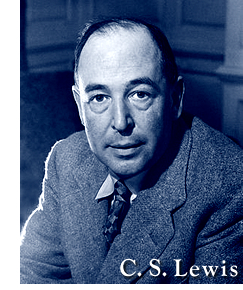
C.S. Lewis Daily – Today’s Reading


TO MARY VAN DEUSEN: On how one responds to the diagnosis of serious illness and on four strategies for coping.

10 April 1959

I have just had Sister Hildegarde’s letter. My heart goes out to you. You are now just where I was a little over two years ago—they wrongly diagnosed Joy’s condition as uremia before they discovered cancer of the bone.

I know all the different ways in which it gets one: wild hopes, bitter nostalgia for lost happiness, mere physical terror turning one sick, agonised pity and self-pity. In fact, Gethsemane. I had one (paradoxical) support which you lack—that of being in severe pain myself. Apart from that what helped Joy and me through it was 1. That she was always told the whole truth about her own state. There was no miserable pretence. That means that both can face it side-by-side, instead of becoming something like adversaries in a battle-of-wits. 2. Take it day by day and hour by hour (as we took the front line). It is quite astonishing how many happy—even gay—moments we had together when there was no hope. 3. Don’t think of it as something sent by God. Death and disease are the work of the Devil. It is permitted by God: i.e., our General has put you in a fort exposed to enemy fire. 4. Remember other sufferers. It’s fatal to start thinking ‘Why should this happen to us when everyone else is so happy.’ You are (I was and may be again) one of a huge company. Of course we shall pray for you all we know how. God bless you both.

From The Collected Letters of C.S. Lewis, Volume III

Compiled in Yours, Jack

The Collected Letters of C. S. Lewis

Charles Stanley – Praying in the Name of Jesus


John 14:7-27

When we develop a vibrant prayer life, it transforms the way we live and see things. Through prayer, the Lord can change our weakness into His strength, our ignorance into His wisdom, and our emptiness into His fullness. Jesus made an awesome promise: He is committed to accomplishing whatever we ask in His name. But what does this really mean?

Praying in His name means recognizing that Jesus has paved the way for us to have access to the Father. Anyone who believes in Christ’s death as full payment for his or her sins and who has received Him as personal Savior can, amazingly, approach the throne of Almighty God (Heb. 4:16).

Praying in His name denotes exercising the authority He has given to each born-again child of God. Jesus, the heir of all things, has made us “fellow heirs” with Him (Rom. 8:14-17). Understanding our position should give us confidence and boldness as we humbly ask and expectantly look for God’s awesome answers. We are on a mission that requires us to be people of prayer—always connected with the Holy Spirit’s power, always crying out to the Father, always depending on Him as our source.

Praying in the name of Jesus signifies agreement with His will. You are asking the Father to grant your need or desire as Jesus would, were He in your position. When you pray with this attitude, God is going to reveal His will because you want nothing less than what He wants. This is the kind of prayer that changes the world.

Bible in One Year: Job 31-34

Our Daily Bread — On a Hill Far Away


Read: Genesis 22:1-12

Bible in a Year: 2 Chronicles 30-31; John 18:1-18

Take now your son, your only son Isaac, whom you love. —Genesis 22:2

I often find myself thinking back to the years when my children were young. One particular fond memory is our morning wake-up routine. Every morning I’d go into their bedrooms, tenderly call them by name, and tell them that it was time to get up and get ready for the day.

When I read that Abraham got up early in the morning to obey God’s command, I think of those times when I woke up my children and wonder if part of Abraham’s daily routine was going to Isaac’s bed to waken him—and how different it would have been on that particular morning. How heart-rending for Abraham to waken his son that morning!

Abraham bound his son and laid him on an altar, but then God provided an alternate sacrifice. Hundreds of years later, God would supply another sacrifice—the final sacrifice—His own Son. Think of how agonizing it must have been for God to sacrifice His Son, His only Son whom He loved! And He went through all of that because He loves you.

If you wonder whether you are loved by God, wonder no more. —Joe Stowell

Lord, I am amazed that You would love me so much that You would sacrifice Your Son for me. Teach me to live gratefully in the embrace of Your unfailing love.

God has already proven His love for you.

Ravi Zacharias Ministry – Things Forgotten and Endured


In a letter dated September 6, 1955, Flannery O’Connor confessed that though the truth “does not change according to our ability to stomach it,” there are periods in the lives of us all, even of the saints, “when the truth as revealed by faith is hideous, emotionally disturbing, [even] downright repulsive.”(1)

I take solace in her unapologetic confession—here, a writer who viewed her faith not as a substitute for seeing, but as the light by which she saw. And as I stared recently at a painting of Mary and the infant Jesus by Giovanni Bellini, I knew what she meant. I was suddenly but entirely disturbed by the story of the Incarnation. In my mind the message and mystery of the Incarnation was still a vast and hopeful notion, the character and complexity of a Father who sends a Son into the world an unchanging, unfathomable story still intact. Yet in front of me was suddenly a different side of that story. I was unexpectedly filled with questions of the Incarnation I had never considered. Would we label a father “loving” who gives a teenage girl a task that devastates her future, destroys her reputation, and in the end, mortally wounds her with grief? What kind of God asks for servants like Mary?

Madeleine L’Engle reflects on faith and art with words O’Connor would affirm and those of us with honest questions embody. She reminds us that in all artful learning “either as creators or participators, we are helped to remember some of the glorious things we have forgotten, and some of the terrible things we are asked to endure.”(2) Like many, I have recalled and retold the Christmas story for years, but I had never remembered it like this. In the light and shadows of Bellini’s interpretation of this biblical scene, I was startled in the call of Mary to bear the human Son of God, the severe cost of obedience and the complete disruption of a life.

In fact, it is fairly easy to rush to the theological implications of the texts that depict the role of Mary in the life of Jesus. We quickly move from Mary’s acceptance of Gabriel’s words to the grown man who preformed miracles and calmed storms in a way that makes him seem motherless. While the song of Mary recorded in Luke 1:47-55 slows readers down and bids them to consider the young mother in her own words, it is easy to assume in the ease of her praise of the Almighty a sense of ease for her situation, to add to her cries of joy the assumption that she never wept. Mary sings: “My spirit rejoices in God my Savior, for he has looked with favor on the lowliness of his servant. Surely, from now on all generations will call me blessed; for the Mighty One has done great things for me, and holy is his name. His mercy is for those who fear him from generation to generation. He has shown strength with his arm; he has scattered the proud in the thoughts of their hearts. He has brought down the powerful from their thrones, and lifted up the lowly; he has filled the hungry with good things, and sent the rich away empty. He has helped his servant Israel, in remembrance of his mercy, according to the promise he made to our ancestors, to Abraham and to his descendants forever.”

Giovanni Bellini, Madonna and Child, c. 1510. Oil on panel, 68.9 x 73 cm (27 1/8 x 28 3/4 in.) High Museum of Art, Atlanta.

Luke depicts an image of Mary that is hard to ignore, and Bellini follows his example. With one hand, Mary holds Jesus securely to her side, while with the other she gently holds his foot in a way that seems to communicate both her willingness to share the child with the world and her suspicion that he will spring from her care to lift the lowly as she herself has been lifted. Mary is seated poised, stoic, and adult-like, which in some ways seems far from the childlike Mary we encounter in Luke, and in other ways seems to reflect the wisdom she was able to express far beyond her years. As one pledged to be married in first century Nazareth, Mary would have been little more than a child herself, a child who was perhaps able to respond to Gabriel the way she did because “she had not lost her child’s creative acceptance of the realities moving on the other side of the everyday world.”(3) Bellini’s Mary looks far more weathered, serious, and austere, as if she is somehow aware of the fate of the child in her arms and her utter helplessness to save him. In the face of the girl who was somehow able to see beyond the great risk of being pregnant and unwed, the weight of her decision is here apparent in her tired, helpless expression.

In front of this picture, I could not help but remain at the level of the servant and the severe cost of discipleship. Yet the longer I stared, the more grace seemed to permeate my deepest reservations about the nature of God’s calling and the often unchallenged images of a Father with strange ways of showing love. The longer I considered the song of Mary in light of all she would endure, the more I heard in my disturbance the cry of Christ himself: My God, my God, why have you forsaken me? How often it seems that the glimpses of God’s light which stay with us longest are not the glimpses that are blinding and certain in their power, but those which are mysterious and steady in their invitation, emerging out of dark questions and entirely disturbing moments.

In fact, there are far worse things than being disrupted by the one who calls the world to follow, the once-fragile child who now asks that we put our hands on the plow and not look back, let the dead bury the dead, take up our own crosses, and bring with him good news to the poor. It is far worse to be so at ease that we do not receive the graceful disturbance of a Father who would offer his only Son, and a Son who would go willingly. It is far worse to be so familiar with the story that we fail to see the beautiful One disturbing this world, lifting up the lowly, sending the powerful away empty, and filling the hungry with good things.

Jill Carattini is managing editor of A Slice of Infinity at Ravi Zacharias International Ministries in Atlanta, Georgia.

(1) Flannery O’Connor, The Habit of Being, ed. Sally Fitzgerald (New York: Farrar, Straus, & Giroux, 1988), 100.

(2) Madeleine L’Engle, Walking on Water: Reflections on Faith and Art (New York: Bantam, 1982), 30.

(3) Ibid., 18.

Alistair Begg – Stand Up!


For many fell, because the war was of God.

1 Chronicles 5:22

Warrior, as you fight under the banner of the Lord Jesus, observe this verse with holy joy, for as it was in the days of old, so is it now: If the war is of God, the victory is sure. The armies of God could barely muster forty-five thousand fighting men, and yet in their war with the enemy, they captured “a hundred thousand men,” “for they cried to God in the battle, and he granted their urgent plea because they trusted in him.”

The Lord saves not by many, nor by few; it is ours to go in Jehovah’s name even if we are only a handful of men, for the Lord of Hosts is with us as our Captain. They did not neglect their weapons, but neither did they place their trust in them; we must use all fitting means, but our confidence must rest in the Lord alone, for He is the sword and the shield of His people. The great reason for their extraordinary success lay in the fact that “the war was of God.”

Beloved, in fighting with sin in us and around us, with error doctrinal or practical, with spiritual wickedness in high places or low places, with devils and the devil’s allies, you are waging Jehovah’s war, and unless He himself can be defeated, you do not need to fear defeat. Do not tremble before superior numbers; do not shrink from difficulties or impossibilities; do not flinch at wounds or death; strike with the two-edged sword of the Spirit, and the dead shall lie in heaps.

The battle is the Lord’s, and He will deliver His enemies into our hands. With steadfast foot, strong hand, dauntless heart, and flaming zeal, rush to the conflict, and the hosts of evil will fly like chaff before the gale.

Stand up! stand up for Jesus!

The strife will not be long;

This day the noise of battle,

The next the victor’s song:

To him that overcometh,

A crown of life shall be;

He with the King of glory

Shall reign eternally.

Devotional material is taken from “Morning and Evening,” written by C.H. Spurgeon, revised and updated by Alistair Begg.

Charles Spurgeon – Salvation to the uttermost


“Wherefore he is able also to save them to the uttermost that come unto God by him, seeing he ever liveth to make intercession for them.” Hebrews 7:25

Suggested Further Reading: Romans 8:31-34

It is pleasant to look back to Calvary’s hill, and to behold that bleeding form expiring on the tree; it is sweet, amazingly sweet, to pry with eyes of love between those thick olives, and hear the groanings of the Man who sweat great drops of blood. Sinner, if you ask me how Christ can save you, I tell you this—he can save you, because he did not save himself; he can save you, because he took your guilt and endured your punishment. There is no way of salvation apart from the satisfaction of divine justice. Either the sinner must die, or else someone must die for him. Sinner, Christ can save you, because, if you come to God by him, then he died for you. God has a debt against us, and he never remits that debt; he will have it paid. Christ pays it, and then the poor sinner goes free. And we are told another reason why he is able to save: not only because he died, but because he lives to make intercession for us. That Man who once died on the cross is alive; that Jesus who was buried in the tomb is alive. If you ask me what he is doing, I bid you listen. Listen, if you have ears! Did you not hear him, poor penitent sinner? Did you not hear his voice, sweeter than harpers playing on their harps? Did you not hear a charming voice? Listen! What did it say? “O my Father! Forgive…….!” Why, he mentioned your own name! “O my Father, forgive him; he knew not what he did. It is true he sinned against light, and knowledge, and warnings; sinned willfully and woefully; but, Father, forgive him!” Penitent, if you can listen, you will hear him praying for you. And that is why he is able to save.

For meditation: How often do you stop and think what Christ is doing for you right now, if you are a Christian (1 John 2:1)?

Sermon no. 84

8 June (1856)

John MacArthur – Being a Doer of the Word


“Prove yourselves doers of the word, and not merely hearers who delude themselves” (James 1:22).

A doer of the Word obeys what Scripture says.

Effective Bible study is built on three key questions: What does the Bible say? What does it mean? How does it apply to my life? Each of those questions is important, but applying the Word must always be the highest goal. Knowledge without application is useless.

Both the Old and New Testaments emphasize the importance of applying Scripture. For example, just prior to leading the Israelites into the Promised Land, Joshua received this message from God: “This book of the law shall not depart from your mouth, but you shall meditate on it day and night, so that you may be careful to do according to all that is written in it; for then you will make your way prosperous, and then you will have success” (Josh. 1:8). That’s a command to be a doer of the Word—one who receives, studies, and understands Scripture, then applies it to every aspect of his or her life. That was the key to Joshua’s amazing success.

James 1:22 is a New Testament counterpart to Joshua 1:8 and is directed to every believer: “Prove yourselves doers of the word, and not merely hearers who delude themselves.” It’s not enough to hear the Word; you must also do what it says.

The phrase “doer of the word” doesn’t refer to the person who obeys periodically, but the one who habitually and characteristically obeys. It’s one thing to run in a race; it’s something else to be a runner. It’s one thing to teach a class; it’s something else to be a teacher. Runners are known for running; teachers are known for teaching—it’s characteristic of their lives. Similarly, doers of the Word are known for their obedience to biblical truth.

Never be content to be a hearer of the Word only, but prove yourself a doer in the Christian life. Your claim to love Christ will mean something only if you obey what He says.

Suggestions for Prayer

Memorize Joshua 1:8 and pray regularly that God will make you a faithful doer of the Word.

For Further Study

Read Psalm 1.

  • What are the benefits of delighting in God’s law?
  • How does the psalmist characterize those who reject righteousness?

Joyce Meyer – Be Careful What You Think


But his delight and desire are in the law of the Lord, and on His law (the precepts, the instructions, the teachings of God) he habitually meditates (ponders and studies) by day and by night. And he shall be like a tree firmly planted [and tended] by the streams of water, ready to bring forth its fruit in its season; its leaf also shall not fade or wither; and everything he does shall prosper I and come to maturity]. Psalm 1:2-3

Your word have I laid up in my heart, that I might not sin against You…I will meditate on Your precepts and have respect to Your ways [the paths of life marked out by Your law]. Psalm 119:11, 15

In the early days of computers, they used to say, “Garbage in, garbage out.” That was a way of explaining that the computer only worked with the data put into the machine. If we wanted different results, we needed to put in different information.

When it comes to computers, most people have no trouble grasping that concept, but when it comes to their minds, they don’t seem to get it. Or perhaps they don’t want to get it. So many things demand their attention and beg for their focus. They’re not just sinful things. The apostle Paul said that although everything was lawful for him, not everything was helpful (see l Corinthians 6:12).

If you are going to win the battle of the mind and defeat your enemy, where you focus your attention is crucial. The more you meditate on God’s Word, the stronger you’ll become and the more easily you’ll win the victories.

Too many Christians don’t realize the difference between meditating on the Bible and reading the Bible. They like to think that whenever they read God’s Word, they’re absorbing the deep things of God. Too often people will read a chapter of the Bible, and when they get to the last verse, they have little idea of what they’ve read. Those who meditate on Gods Word are those who think and think seriously about what they’re reading.

They may not put it in these words, but they are saying, “God, speak to me. Teach me. As I ponder Your Word, reveal its depth to me.”

In today’s scripture, I quoted from Psalm 1. This psalm begins by defining the person who is blessed, and then points out the right actions of that person. The psalmist wrote that those who meditate and do it day and night are like productive trees…and everything they do shall prosper.

The psalmist made it quite clear that meditating on and thinking about God’s Word brings results. As you ponder who God is and what He’s saying to you, you’ll grow. It’s really that simple. Another way to put it is to say that whatever you focus on, you become. If you read about and allow your mind to focus on God’s love and power, that’s what operates in you.

The apostle Paul says it beautifully in Philippians 4:8: …”Whatever is true, whatever is worthy of reverence and is honorable and seemly, whatever is just, whatever is pure, whatever is lovely and lovable, whatever is kind and winsome and gracious, if there is any virtue and excellence, if there is anything worthy of praise, think on and weigh and take account of these things [fix your minds on them].”

It’s sad, but most Christians don’t put much effort into their study of the Word_ They go to hear others teach and preach, and they may listen to sermon tapes and read the Bible occasionally, but they’re not dedicated to making God’s Word a major part of their lives.

Be careful what you think about. The more you think about good things, the better your life will seem. The more you think about Jesus Christ and the principles He taught, the more you become like Jesus and the stronger you grow And as you grow, you win the battle for your mind.

Lord God, help me think about the things that honor You. Fill my life with a hunger for more of You and Your Word so that in everything I may prosper. I ask this through Jesus Christ. Amen.

Campus Crusade for Christ; Bill Bright – In the World to Come


“And Jesus replied, ‘Let me assure you that no one has ever given up anything – home, brothers, sisters, mother, father, children, or property – for love of Me and to tell others the Good News, who won’t be given back, a hundred times over, homes, brothers, sisters, mothers, children and land – with persecutions! All these will be his here on earth, and in the world to come he shall have eternal life'” (Mark 10:29,30).

What a wonderful promise. God will return to you and me a hundred times over what we invest for Him and His kingdom.

I believe that millions of Christians like ourselves are awakening to the fact that we must be about our Father’s business. As I observe God’s working in the lives of people around the world through many movements, I am persuaded that the greatest spiritual awakening since Pentecost has already begun.

Jesus said, “Go…and make disciples in all nations.” In order to make disciples, we must be disciples ourselves. Like begets like. We produce after our own kind.

The man who is committed to Christ, who understands how to walk in the fullness of the Spirit, is going to influence others and help to produce the same kind of Christians. Jesus said, “If anyone wishes to come after Me, let him deny himself, and take up his cross daily, and follow Me” (Luke 9:23).

For some, such a call to discipleship may sound too hard. However, in these verses Jesus tells us that we must be willing to give up everything. That this promise has been fulfilled in the lives of all who seek first Christ and His kingdom has been attested to times without number – not always in material things, of course, but in rewards far more meaningful and enriching.

Bible Reading: Luke 9:23-26

TODAY’S ACTION POINT: Realizing that God has promised manifold gifts, persecutions, eternal life in exchange for faithfulness and commitment to Him, I vow to make that surrender real and meaningful in my life every day.

Presidential Prayer Team; – Practicality Speaking


A century ago, Spanish Influenza hit the small Ohio town when Richard was still a toddler, sickening the child. The doctor pronounced little hope and instructed his parents to put him in a back room, not feed him, and wait for his inevitable death. Hearing Richard’s heartrending cries, each of them snuck into the room with water and food, and the boy recovered. He lived to the age of 88.

And he…told them to give her something to eat.

Mark 5:43

When Jesus came to the house of the Roman ruler, He took compassion on the parents of a girl who had died. Christ spoke to her and she lived. Her parents and others were so overcome with relief and amazement that Jesus had to remind them to give the girl something to eat.

One of the things God calls believers in Him to do is to be practical: feed the hungry, care for the sick and ailing, and watch over widows and orphans. These are jobs given to people in Christian churches, but too often, they have been abdicated to the government. As you pray today, consider what the Lord wants you to do – practicably speaking. Then pray for Congress as it wrestles with government entitlement programs.

Recommended Reading: James 1:16-27

Greg Laurie – Set a Prisoner Free


Repay no one evil for evil. Have regard for good things in the sight of all men.—Romans 12:17

We have all been hurt at one time or another in our lives. Someone may have wronged us, mistreated us, or slandered us. We didn’t deserve it; we were innocent. So we think, I will never forgive them.

We need to forgive them. Even if we don’t want to, we need to. Why? Because Bible commands us to forgive. Ephesians 4:32 says, “And be kind to one another, tenderhearted, forgiving one another, even as God in Christ forgave you.” And Colossians 3:13 tells us, “Bearing with one another, and forgiving one another, if anyone has a complaint against another; even as Christ forgave you, so you also must do.”

In what we call the Lord’s Prayer, Jesus taught, “In this manner, therefore, pray: Our Father in heaven, hallowed be Your name. Your kingdom come. Your will be done on earth as it is in heaven. Give us this day our daily bread. And forgive us our debts, as we forgive our debtors” (Matthew 6:9–12).

And think about this for a moment: we need to forgive for our own sake. Why? Because it tears us up inside. It also turns us into mean, bitter people who are no fun to hang around. All we want to do is talk about what happened to us and how these people hurt us. It is changes us for the worse. We need to forgive.

When you forgive someone, you set a prisoner free: yourself. Forgiven people need to be forgiving people. And if you are not willing to forgive someone else, then I have to wonder whether you understand what God has done for you.

We don’t deserve forgiveness. Yet God, in His mercy, forgave all our sins. And there is no greater example of forgiveness than Christ himself hanging on the cross.


Max Lucado – Looking Upward

Genesis tells us, When Joseph had come to his brothers, they stripped him of his tunic. They took him and cast him into a pit. . .and they sat down to eat a meal. (37:23-25)

Joseph’s hands were bound, his ankles tied, and his voice became hoarse from screaming. It wasn’t that his brothers didn’t hear him. Twenty-two years later, when a famine tamed their swagger, they would confess, “we saw the anguish of his soul when he pleaded with us, and we would not hear” (Gen 42:21).

You’re a version of Joseph. You carry something of God within you—something the world needs. If Satan can neutralize you, he can mute your influence. Life in the pit stinks! Yet it forces you to look upward. Someone from up there must come down here and give you a hand. God did for Joseph, and He will do the same for you!

From You’ll Get Through This

Charles Stanley – Make Your Life Count


Ephesians 1:13-21

What I do doesn’t count. Perhaps you sometimes have that thought—and you would be correct if your action is your idea, done your way. We have nothing to offer others when we rely on our own abilities and efforts. But as born-again believers seeking to live obediently, we are wrong when we fall into that kind of thinking. Scripture makes it clear what matters to God. Let us seek to think the way God does about what counts.

  • New Creation. The Bible tells us that what counts is being a new creation (Galatians 6:15). We who have received Christ as our Lord and Savior are exactly that. Are you a new creation? If so, know that you are of great value to God.
  • Holy Spirit. It is the Holy Spirit indwelling us who makes what we do significant (John 6:63). Do you recognize His presence within you? He equips you to make your life count.
  • Faith. A key ingredient in living a life that makes an impact is faith (Hebrews 11:6). This is not something we produce on our own—it is developed in us. Are you nourishing your soul through God’s Word in order to grow strong in faith?
  • Love. Without love, faith rings hollow and discordant (1 Corinthians 13:1). Is godly love seasoning your words as well as your actions?
  • Obedience. Following the Lord’s commands is what truly counts (John 15:10). Have you yielded your ways in order to obey His Word?

When we live God’s way, what we do counts in the eyes of the only One who matters—God Himself.

Bible in One Year: Job 26-30

Our Daily Bread — The Greatest Thing


Read: Luke 10:38-42

Bible in a Year: 2 Chronicles 28-29; John 17

Mary . . . sat at Jesus’ feet and heard His word. —Luke 10:39

During a church service I spotted an infant several rows ahead. As the baby peeked over his father’s shoulder, his eyes were wide with wonder as he looked at the members of the congregation. He grinned at some people, drooled, and chewed his chunky fingers, but never quite found his thumb. The pastor’s words grew distant as my eyes kept sliding back to that sweet baby.

Distractions come in all shapes and sizes. For Martha, distraction took the form of cooking and cleaning—trying to serve Christ instead of listening to Him and talking with Him. Mary refused to be sidetracked. “Mary . . . sat at Jesus’ feet and heard His word” (Luke 10:39). When Martha grumbled because Mary wasn’t helping her, Jesus said, “Mary has chosen what is better, and it will not be taken away from her” (v. 42 niv).

Jesus’ words remind us that our relationship with Him is more important than any of the good things that might temporarily capture our attention. It has been said that good things are the enemies of great things. For followers of Jesus, the greatest thing in this life is to know Him and to walk with Him. —Jennifer Benson Schuldt

What do you think Martha’s distractions were? Was she wanting to be seen as a good host? Or was she jealous of her sister? What attitudes cause you not to make Jesus your top priority?

Teach me, Lord, to get to know You, for that’s when I’ll learn to love You more than anything.

INSIGHT: The “certain village” mentioned in Luke 10:38 is Bethany, a small village on the eastern slopes of the Mount of Olives (Mark 11:1), about 2 miles from Jerusalem (John 11:18). It was home to three siblings, Martha, Mary, and Lazarus (Luke 10:38; John 11), and Jesus probably stayed at their home when He was in Jerusalem (Matt. 21:17; 26:6; Mark 11:11; 14:3; John 11:1; 12:1). Bethany was where Lazarus was raised from the dead (John 11) and where Simon the leper held a feast to honor Jesus (Mark 14:3). It is also where Mary anointed Jesus with an expensive perfume to prepare Him for His death (vv. 3-8). Jesus’ ascension, it is believed, also took place in Bethany (Luke 24:50-52).


Alistair Begg – Love the Lord, Hate Evil


O you who love the Lord, hate evil! Psalm 97:10

You have good reason to “hate evil,” for just consider what harm it has already caused you. What a world of mischief sin has brought into your heart! Sin blinded you so that you could not see the beauty of the Savior; it made you deaf so that you could not hear the Redeemer’s tender invitations. Sin turned your feet into the way of death and poured poison into the very fountain of your being; it tainted your heart and made it “deceitful above all things, and desperately sick.”1

What a creature you were when evil had done its utmost with you, before divine grace intervened! You were an heir of wrath just like others; you ran with the crowd to do evil. We were all like this, but Paul reminds us, “but you were washed, you were sanctified, you were justified in the name of the Lord Jesus Christ and by the Spirit of our God.”2

We have good reason, indeed, for hating evil when we look back and trace its deadly workings. We were in such a sorry state that our souls would have been lost if omnipotent love had not intervened to redeem us. Even now it is an active enemy, always looking for ways to harm us and to drag us to perdition.

Therefore “hate evil,” Christian, unless you desire trouble. If you want to cover your path with thorns and plant nettles in your pillow, then fail to “hate evil”; but if you would live a happy life and die a peaceful death, then walk in all the ways of holiness, hating evil right to the end. If you truly love your Savior and want to honor Him, then “hate evil.” We know of no cure for the love of evil in a Christian like daily communion with the Lord Jesus. Be often with Him, and it is impossible for you to be at peace with sin.

Order my footsteps by Thy Word,

And make my heart sincere;

Let sin have no dominion, Lord,

But keep my conscience clear.

1) Jeremiah 17:9

2) 1 Corinthians 6:11

Devotional material is taken from “Morning and Evening,” written by C.H. Spurgeon, revised and updated by Alistair Begg.