Tag Archives: Prayer

Ravi Zacharias Ministry – Too Good to Be True?

You may have heard it said that religion only survives because people desperately want it to be true, because they can’t come to terms with their own mortality (or that of loved ones). It was Sigmund Freud who helped to popularize this idea, as he suggested that the concept of a loving Creator was simply a psychological projection of a person’s innermost wishes:

“We tell ourselves that it would be very nice if there was a God who created the world and was a benevolent Providence and if there were a moral order in the universe and an after-life; but it is the very striking fact that all this is exactly as we are bound to wish it to be.”(1)

This kind of argument would seem to ring true, at least on a superficial level. You would expect it to be more likely for people to believe in something that they like than something that they don’t, and it is clear that Christianity is powerfully compelling. In fact, the argument itself is an admission of this, as it acknowledges the innate desire in us all that is fulfilled by God. Who wouldn’t want to be in a relationship with a loving deity who not only wants the best for those he has created, but who is offering eternity in a place that is more wonderful than can be imagined? Yet the Bible also contains some very hard-hitting passages, which would seem to contradict the notion that religious belief is simply a projection of our wishes. C. S. Lewis pointed out that scripture also teaches that believers should fear the Lord, but you would not then suggest that this meant faith was some kind of “fear fulfillment”!(2)

The problem with the argument is that it cuts both ways. If you suggest that people only believe because they want it to be true, then the counter-claim is that atheists are only non-believers because they don’t want it to be true. Some people have expressly stated this, such as Aldous Huxley who wrote:

Continue reading Ravi Zacharias Ministry – Too Good to Be True?

Joyce Meyer – Dealing with Emotions While Grieving


Why are you in despair, O my soul? And why have you become restless and disturbed within me? Hope in God and wait expectantly for Him, for I shall again praise Him For the help of His presence. — Psalm 42:5

People experiencing tragedy often become emotionally unstable and need to express their grief somehow. They may cry uncontrollably, and tears or other feelings of distress can come and go when least expected. Confusion, anger, fear, depression and waves of overwhelming feelings are common. In times like these, I believe it’s wise to look at King David.

In Psalm 42:5, we see that when David was feeling depressed, he resisted it. He didn’t sink into it or get into the pit of despair. He described how he felt, but he made a decision not to live by his feelings. He praised and trusted in God.

Most of us go through emotionally difficult times when tragic loss occurs, and we need to give ourselves time to grieve. As we go through the process, God wants to comfort us and give us the grace we need to get through it. Those who are walking by faith in God will come out of it even better than when they went in.

If you are hurting right now due to a loss in your life, I want to tell you that a new beginning is in front of you. Trust and praise God like David did. What Satan intends for your harm, God can turn around for your good!


http://www.joycemeyer.org

Campus Crusade for Christ; Bill Bright – We Hear His Voice


“My sheep recognize My voice, and I know them, and they follow Me. I give them eternal life and they shall never perish. No one shall snatch them away from Me, for My Father has given them to Me, and He is more powerful than anyone else, so no one can kidnap them from Me. I and the Father are one” (John 10:27-30).

Are you one of God’s “sheep”? Do you know for sure that you are a child of God? Do you have any question about your salvation? How do you know that Christ is in your life and that you have eternal life and that no one can take you away from our Lord? What is the basis of your assurance?

Frequently, one hears a Christian share the dramatic testimony of how Christ changed his life from years of drug addiction, gross immorality or some other distressing problem. On the other hand, there are many, like myself, who have knelt quietly in the privacy of the home, at a mountain retreat, or in a church sanctuary, and there received Christ into their lives with no dramatic emotional experience at that time of decision. Both are valid, authentic ways to come to Christ.

The apostle Paul had a dramatic conversion experience. However, Timothy, his son in the faith, had learned of Christ from his mother and grandmother in his early youth. The important thing is not how you met Christ, but the assurance that you are a child of God, your sins have been forgiven and you have eternal life. It is not presumptuous or arrogant to say that you know these things to be true, because God’s Word says so (1 John 5:11-13): “And what is it that God has said? That He has given us eternal life, and that this life is in His Son. So whoever has God’s Son has life; whoever does not have His Son, does not have life. I have written this to you who believe in the Son of God so that you may know you have eternal life.”

Bible Reading:John 10:22-26

TODAY’S ACTION POINT: As one of God’s sheep, I will ask the Holy Spirit to help me be more sensitive and alert to the voice of my Savior, in order that I may follow Him more closely and always obey Him, and especially that I may be sensitive to what He would have me say to those around me who are in need of His love and forgiveness.


http://www.cru.org

Max Lucado – What’s Your Word


Listen to Today’s Devotion

If you summarized your emotions regarding the return of Christ what word would you use? Discomfort…denial…disappointment…or hope? Maybe your word is discomfort. After all, the Book of Life will be opened, and names will be read. How could the thought of His return bring anything but discomfort? Maybe it’s denial? We prefer answers and explanations, and the end of time seems short on both. Or how about disappointment? A mother-to-be wants to hold her baby; an engaged couple want to be married. A soldier overseas wants to go home before he goes… home!

Discomfort. Denial. Disappointment. All possible feelings. But here is the one feeling Christ wants us to have– trust! Jesus says, “Don’t let your hearts be troubled. Trust in God and trust in Me” (John 14:1).

From When Christ Comes

For more inspirational messages please visit Max Lucado.

Home

Denison Forum – Billy Graham honored in Rotunda of US Capitol

The body of Billy Graham lay in state yesterday in the Rotunda of the US Capitol. President Trump, senior administration officials, and many members of Congress paid tribute to the evangelist.

Dr. Graham was only the fourth private citizen, and the first religious leader, to be so honored.

Sue Brinner attended the viewing. When she was in college, a guy she liked invited her to see a movie produced by Dr. Graham’s ministry. It changed her life.

She explained: “I could have a personal relationship with Jesus Christ. Somehow I’d missed that, growing up in a traditional Protestant church. I always saw God as a scary, vengeful, angry person. That you could actually have a relationship with God through Jesus Christ, I was blown away. Other people were getting blown away by drugs. I found faith.”

I was glad to see Sue’s testimony reported in the Washington Post, a newspaper not known for its evangelical leanings. And I noted that she found a personal relationship with Jesus through a man whose life was built on such a relationship.

“The motto of every follower of Jesus Christ” Continue reading Denison Forum – Billy Graham honored in Rotunda of US Capitol

Charles Stanley –Wait for God’s Peace


Colossians 3:15-17

Many believers look for a sense of peace as a sign to help them determine God’s will in their life. However, a peaceful feeling may not be enough evidence to verify that a person’s decisions line up with the Lord’s plans. It’s wise to ask ourselves, Whose peace are we experiencing? Sometimes our sense of tranquility can be attributed to our own satisfaction about a choice we’ve made.

Today’s passage talks about letting “the peace of Christ rule in your hearts” (Col. 3:15). This kind of settledness originates from Jesus Christ and is the umpire that determines whether your decisions fit with God’s will. The word peace indicates harmony and oneness. So to have God’s peace about a matter means your decision must be aligned with His will. The only way to determine this is by comparing your thoughts and choices with His Word. Are you thinking the same way He does? Did you make your decision using scriptural principles or your own human understanding?

One of the reasons we often make choices without the guidance of Scripture is because we want a quicker method for finding an answer. The Lord doesn’t just pour His thoughts into our brain without our cooperation. He molds us gradually, day by day, as we read His Word and let its truths sink into our mind.

Building steadily over time is the only way to internalize a foundation of God’s truth. With His instructions as your basis, you can make decisions with confidence, knowing you are following His will. Then you’ll have a sense of oneness with the Lord, and His peace will guard your way.

Bible in One Year: Deuteronomy 21-23


http://www.intouch.org/

Our Daily Bread — Lost but Found

Read: Luke 15:1–9 | Bible in a Year: Numbers 20–22; Mark 7:1–13

Rejoice with me; I have found my lost sheep. Luke 15:6

When we discovered that my mother-in-law had gone missing while shopping with a relative, my wife and I were frantic. Mom suffered from memory loss and confusion, and there was no telling what she might do. Would she wander the area, or hop onto any bus thinking it would take her home? Worst-case scenarios spun through our minds as we began to search for her, crying out to God, “Please find her.”

Hours later, my mother-in-law was spotted stumbling along a road, miles away. How God blessed us in being able to find her. Several months later, He blessed her: at eighty years of age, my mother-in-law turned to Jesus Christ for salvation.

Lord, You search for us and find us. Thank You for making us Your own.

Jesus, comparing humans to lost sheep, gives us this illustration: “Suppose [a shepherd] has a hundred sheep and loses one of them. Doesn’t he leave the ninety-nine in the open country and go after the lost sheep until he finds it? And when he finds it, . . . he calls his friends and neighbors together and says, ‘Rejoice with me; I have found my lost sheep” (Luke 15:4–6).

Shepherds counted their sheep to make sure every one was accounted for. In the same way, Jesus, who likens himself to that shepherd, values each of us, young and old. When we’re wandering in life, searching, wondering about our purpose, it’s never too late to turn to Christ. God wants us to experience His love and blessings.

Lord, You search for us and find us. Thank You for making us Your own.

Amazing grace! . . . I once was lost, but now am found. John Newton

By Leslie Koh

INSIGHT

In the Bible the word shepherd not only applies to the occupation of shepherd (Genesis 29:3; 46:32) but is also used to indicate a leader (2 Samuel 5:2; 2 Chronicles 18:16; Jeremiah 3:15) or spiritual overseer (Acts 20:28; 1 Peter 5:2). Being a shepherd of sheep required bravery, steadfast watchfulness, and tender care. Sheep are helpless without a shepherd and need guidance to food and water as well as protection from the elements and wild beasts (1 Samuel 17:34–36; Psalm 23; Luke 2:8).

Leading people is far more difficult! Thankfully Jesus is the Good Shepherd who cares for us so much that He “[lay] down his life for the sheep” (John 10:11–14). He is “not wanting anyone to perish, but everyone to come to repentance” (2 Peter 3:9) and rejoices over each lost person who repents and is found (Luke 15:3–7).

Have you received the salvation offered by Jesus, the Good Shepherd?

Alyson Kieda


http://www.odb.org

Ravi Zacharias Ministry – Journey into Shadow

In J.R.R. Tolkien’s The Lord of the Rings, Frodo, the young hobbit, has been given the burden of bearing the one ring of power. It is a ring that has the potential to put all of Middle Earth under terror and shadow, and the darkness is already spreading. With a fellowship of friends, Frodo determines he must start the long, dark journey to destroy the ring by throwing it into the volcano from which it was forged. It is a journey that will take him on fearful paths through enemy territory and overwhelming temptation to the ends of himself. Seeing the road ahead of him, he laments to Gandalf the Wise that the burden of the ring should have come to him in the first place.

“I wish it need not have happened in my time,” said Frodo.

“So do I,” said Gandalf “and so do all who live to see such times. But that is not for them to decide. All we have to decide is what to do with the time that is given us.”(1)

A fan of Tolkien’s epic fantasy once wrote the author to say that he preferred to read The Lord of the Rings particularly during the season of Lent. Though I don’t know all this reader had in mind with such a statement, Tolkien’s portrayal of a journey into darkness with the weight of a great burden and a motley fellowship of companions certainly holds similarities to the journey of the church toward the cross. The forty-day period that leads to Easter is both an invitation and a quest for any who would be willing, albeit a difficult one. The deliberate and wearisome journey with Christ to the cross is a crushing burden, even with the jarring recognition that we are not the one carrying it. On the path to Holy Week, the fellowship of the church far and wide is given time to focus in detail on what it means that Jesus came into this world that he might go the fearful way of the Cross. It is time set apart for pilgrimage and preparation, forty days with which we decide what to do with the time that is given us.

Continue reading Ravi Zacharias Ministry – Journey into Shadow

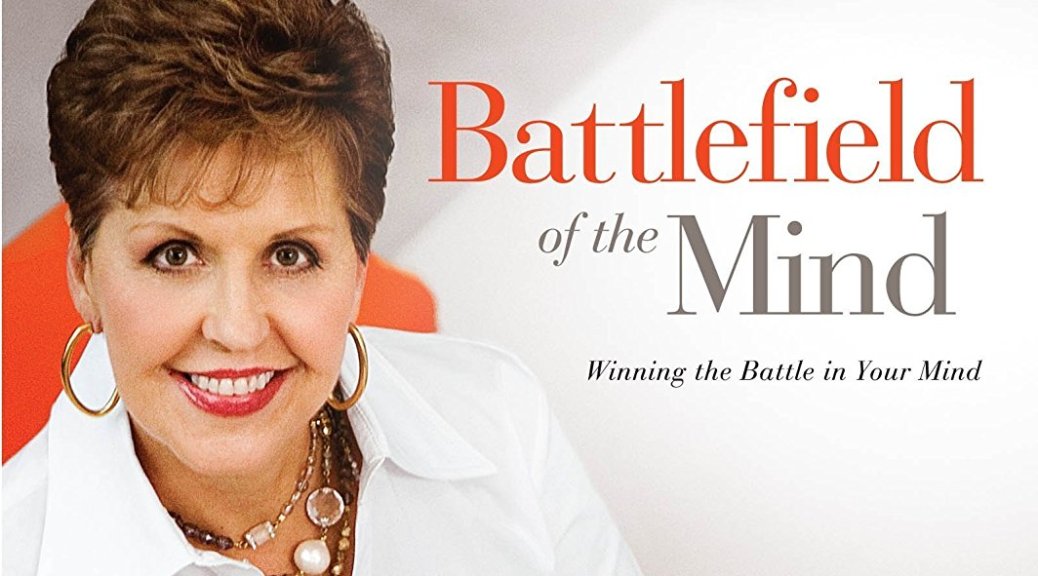
Joyce Meyer – Find the Answers and Power You Need in the Word


For the word of God is living and active and full of power [making it operative, energizing, and effective]. It is sharper than any two-edged sword, penetrating as far as the division of the soul and spirit [the completeness of a person], and of both joints and marrow [the deepest parts of our nature], exposing and judging the very thoughts and intentions of the heart. — Hebrews 4:12

When people ask me where to start reading the Bible, I tell them there’s really no wrong place to start. You can study anything that’s going to help you.

When I first started studying the Word, I didn’t have very good relationships because I didn’t really understand what love was. So I studied the subject of love, and I learned that it’s more than just a gooey feeling. It’s a decision you make about how you’re going to treat people.

By studying what the Bible says about love, I learned how to love. Then my life began to change.

Whatever you’re dealing with, you can find scriptures about it by using a concordance. For example, if you’re dealing with anger or fear, flip to the concordance in the back of your Bible and locate those words to see which scriptures talk about those issues. Ask the Holy No matter where you start, remember that the Word is alive and God wants to speak to your heart today!


http://www.joycemeyer.org

Campus Crusade for Christ; Bill Bright – I Am With You Always


“And then teach new disciples to obey all the commands I have given you; and be sure of this — that I am with you always, even to the end of the world” (Matthew 28:20).

When David Livingstone sailed for Africa the first time, a group of his friends accompanied him to the pier to wish him bon voyage.

Concerned for the safety of the missionary, some of his well-wishers reminded him of the dangers which would confront him in the dark land to which he was journeying. One of the men tried to convince him he should remain in England.

Opening his Bible, Livingstone read the six decisive words that had sealed the matter for him long before: “Lo, I am with you always.”

Then turning to the man who was especially concerned about his safety, Livingstone smiled before he gave a calm reply.

“That, my friend, is the word of a gentleman,” he said. “So let us be going.”

For many years, I have visited scores of countries on each continent, each year traveling tens of thousands of miles, as the director of the worldwide ministry of Campus Crusade for Christ. What a joy and comfort it is to know that I am never outside of His care! Whether at home or abroad, He is always with me, even to the end of the world. I can never travel so far away that He is not with me.

And so it is with you, if you have placed your trust and faith in Jesus Christ. You have His indwelling Holy Spirit as your constant companion – the one who makes possible the supernatural life that is the right and privilege of every believer. How important that we never lose sight of this truth: He is with us always.

Bible Reading:Matthew 28:16-20

TODAY’S ACTION POINT: Today I am reminded afresh that Jesus, to whom God has given all authority in heaven and earth, is with me; that He will never leave me nor forsake me; that His supernatural power is available to me moment by moment, enabling me to do all that God has called me to do — if only I will trust and obey Him.


http://www.cru.org

Max Lucado – When the Pieces Don’t Fit


Listen to Today’s Devotion

Do you want to see a father’s face go ashen as he discovers three words on the box of a just-bought toy: Some assembly required. What follows are hours of squeezing A into B, bolting D into F, and hoping no one notices if steps four, five, and six were skipped altogether. I’m convinced the devil indwells the details of toy assembly. Somewhere in perdition is a warehouse of stolen toy parts.

Some assembly required. Not the most welcome sentence but an honest one. Life is a gift, albeit unassembled. The pieces don’t fit. When they don’t, take your problem to Jesus. He says, Bring your problems to Me!  In prayer, state them simply. Present them faithfully, and trust Him reverently!

Read more Before Amen

For more inspirational messages please visit Max Lucado.


Home

Denison Forum – What “Living Biblically” says about religion and culture today

Television is producing more shows with religious themes, as the sitcom Living Biblically illustrates. The show depicts a lapsed Catholic who is married to an atheist and decides to live by the literal commands of Scripture with the help of a Jewish rabbi and a Catholic priest. I found it mildly humorous at times, cringeworthy at others.

Other religiously themed shows include a young man preparing for his bar mitzvah, a young genius who struggles with his mother’s Christianity, and a stand-up comic who wrestles with his faith.

What they seem to have in common is this: they treat Christianity as a religion more than a relationship.

“That’s easy-it’s grace”

In What’s So Amazing About Grace?, Philip Yancey describes a conference on comparative religions in which experts were discussing whether any specific belief was unique to Christianity.

The debate went on for some time, until C. S. Lewis wandered into the room. “What’s the rumpus about?” he asked. He was told that his colleagues were discussing Christianity’s unique contribution among the world’s religions. Lewis responded: “Oh, that’s easy. It’s grace.”

Continue reading Denison Forum – What “Living Biblically” says about religion and culture today

Charles Stanley – Finding Favor With God and Man


Proverbs 3:1-4

One of our basic human needs is acceptance. Without it, we feel alienated or maybe even rejected. In the Bible, acceptance is often referred to as “favor.” For example, when Joseph was sold into slavery, Genesis 39:4 says he “found favor” in the sight of his master Potiphar and was put in charge of the official’s entire household. Joseph found acceptance and approval because of his exemplary behavior.

Whose favor are you longing to receive? Do you desire God’s approval? Today’s text shows us how we can find favor with both God and man.

First, we should value the Lord’s teaching. God blessed us by giving us His Word, but not everyone makes it a priority. We should recognize Scripture as our most valuable earthly possession because it is God’s revelation of Himself and His instructions for us.

Second, we should make obedience to God a matter of the heart. Following His commands is about far more than just external rule keeping; it involves not only our actions but our attitudes and thoughts as well.

Third, we are to let kindness and truth characterize our life. When we are wholeheartedly living in obedience to God’s commands, the effect will spill over into our relationships, as kindness and truth become the guardians of our words and actions.

Although the Christian faith may evoke a negative response from some, believers shouldn’t be discouraged. A life that reflects Christ pleases God. And in bringing light to a dark world, an obedient life will also bring the favor of many in its circle of influence.

Bible in One Year: Deuteronomy 18-20


http://www.intouch.org/

Our Daily Bread — The Release of Fear

Read: Mark 6:45–53 | Bible in a Year: Numbers 17–19; Mark 6:30–56

Take courage! It is I. Don’t be afraid. Mark 6:50

Our bodies react to our feelings of dread and fear. A weight in the pit of our stomachs, along with our hearts pounding as we gulp for breath, signal our sense of anxiety. Our physical nature keeps us from ignoring these feelings of unease.

The disciples felt shockwaves of fear one night after Jesus had performed the miracle of feeding more than five thousand people. The Lord had sent them ahead to Bethsaida so He could be alone to pray. During the night, they were rowing against the wind when suddenly they saw Him walking on the water. Thinking He was a ghost, they were terrified (Mark 6:49–50).

Lord release me from my fears and give me Your peace.

But Jesus reassured them, telling them not to be afraid and to take courage. As He entered their vessel, the wind died down and they made it to the shore. I imagine that their feelings of dread calmed as they embraced the peace He bestowed.

When we’re feeling breathless with anxiety, we can rest assured in Jesus’s power. Whether He calms our waves or strengthens us to face them, He will give us the gift of His peace that “transcends all understanding” (Philippians 4:7). And as He releases us from our fears, our spirits and our bodies can return to a state of rest.

Lord Jesus Christ, help me when the dread seems to cling to me. Release me from my fears and give me Your peace.

The Lord releases us from fear.

By Amy Boucher Pye

INSIGHT

When we read today’s story, we may wonder why these sturdy fishermen would be afraid of a “ghost” (Mark 6:49). But put yourself in their shoes. The disciples did see someone walking on the water—and they knew that was not possible. We may not fear the same things they feared, but we all have fears. Just like the disciples, we need the assurance of Jesus’s words: “Take courage! It is I. Don’t be afraid” (v. 50). The Lord who fed the multitude with a few loaves and fishes is the same one who walked on water. The disciples did not need to fear because they knew who Jesus was and what He could do. Jesus was essentially saying, “Don’t be afraid! You know me.”

What are you afraid of today? What do you need to remember about Jesus that can help you trust Him?

J.R. Hudberg


http://www.odb.org

Ravi Zacharias Ministry – Question and Answer

“What do you want me to do for you?” is a common enough question. Used in multiple personal exchanges, it could be asked by a clerk of a patron or between colleagues in dialogue. It could be used casually between friends or spoken harshly in retort for misunderstanding. Whatever the context or mood, it is a question of clarification. On the one hand, it seeks to clarify the expectations of the one to whom it is directed. On the other hand, it seeks to clarify what action is required of the one who asks.

“What do you want me to do for you?” is a seemingly ordinary question Jesus asks more than once. In the Gospel of Mark, it is posed both to a blind beggar and to the disciples of Jesus.(1) The writer places the two instances right beside one another in a way that reveals the questioner as much as the expectations of the men being asked. Mark tells the story of the blind man, Bartimaeus son of Timaeus, immediately following a revealing exchange between Jesus and his disciples. For the disciples, the question would no doubt have rung familiarly in their ears. But their answers to this question could not have been more discordant.

Continue reading Ravi Zacharias Ministry – Question and Answer

Joyce Meyer – How Forgiveness and Patience Can Help Your Marriage

Yet for this reason I found mercy, so that in me as the foremost [of sinners], Jesus Christ might demonstrate His perfect patience as an example or pattern for those who would believe in Him for eternal life.— 1 Timothy 1:16

Marriages are not as good as they could be when someone holds on to offenses and hurts that their spouse has caused. I know it’s difficult to completely open yourself up when you’ve been hurt, but nobody can promise that loving someone won’t hurt. In fact, you can’t really love without being willing to be hurt. It’s not possible.

Real love shows mercy and forgives. Love keeps giving the other person another chance. Love is willing to keep trusting them over and over again, expecting them to do the right thing the next time, believing the best of them.

I realize there might be big hurts in your marriage, along with little things you deal with daily. Still, you need to decide to let go of its irritating hold on you. Then, pray and lean on God for the grace and strength to truly forgive.

If you’re struggling with unforgiveness in your marriage, ask the Lord to reveal what has caused you to feel bitterness or resentment. You may be surprised at what He reveals to you, but when you see the truth, decide to let go of the offense. Decide to forgive your spouse and walk in patience as you treat them with God’s amazing, unconditional love.


http://www.joycemeyer.org

Campus Crusade for Christ; Bill Bright – The End Will Come

“And the Good News about the Kingdom will be preached throughout the whole world, so that all nations will hear it, and then, finally, the end will come” (Matthew 24:14).

I applaud every effort to warn Christians and nonbelievers to be ready for our Lord’s return, as Scripture clearly teaches that He will come again and has delayed His return in order that more people might have a chance to hear the gospel. To this end, we must give priority to taking the gospel to all men everywhere throughout the world.

However, we dare not wrongly interpret the Scriptures, as so many in previous generations have done, resulting in a lack of concern for the souls of men and a failure to correct the evils of society.

God expects us as His children to be His representatives here on earth. We are to love with His love, sharing the message of salvation with all who will listen and helping to meet the needs of widows, orphans and prisoners in His name.

True believers in previous generations have always been at the forefront of moral and social reforms as well as being active in evangelism. Child labor laws, women’s suffrage and abolition of slavery, for example, grew out of a mighty spiritual awakening that swept England through the ministry of John Wesley, George Whitefield and their colleagues.

We in our generation must be no less concerned about injustice wherever we find it. The most important way to solve our social ills, however, is to change the hearts of men by introducing them to our Lord Jesus Christ. Our priority commitment as Christians must be to disciple and evangelize in obedience to our Lord’s command.

Then we should instruct new believers that “loving our neighbors as ourselves” includes helping them where they hurt. But remember, the Lord cares more about the soul than He does about the body. The body will soon perish but the soul will live forever.

Bible Reading:Matthew 24:7-13

TODAY’S ACTION POINT: I will keep my priorities straight – first sharing the good news of salvation to as many as possible, but at the same time demonstrating love and compassion to widows, orphans, prisoners and all who are in need, in obedience to our Lord’s command.


http://www.cru.org

Max Lucado – God is Father to the Fatherless


Listen to Today’s Devotion

Psalm 34:8 says, “Taste and see that the Lord is good.” A glimpse of God’s goodness changes us. If He is only slightly stronger than us, why pray? If He has limitations, questions, and hesitations, then you might as well pray to the Wizard of Oz.

Psalm 68:5-6 says, God is “a father to the fatherless. He sets the solitary in families; He brings out those who are bound into prosperity.”

Pray with me!

Dear God. Today remind me today that you protect me. Be my father and defender. Defend those who’re weak and afraid and feel forgotten. Show up in their lives today. Thank you for giving me a spiritual family that can never be taken away. I pray this in Jesus’ name, amen.

At any point you’re only a prayer away from help!

Read more Before Amen

For more inspirational messages please visit Max Lucado.


Home

Denison Forum – Six-year-old boy’s advice on driving in winter weather goes viral

Oliver Davis is a six-year-old Kansas boy with an important message for driving in winter weather: “Slow down! That’s it, that’s all you need to do!” He adds this advice: “You can avoid a cranky trooper by slowing down.” His video has now gone viral.

Meanwhile, media experts are highlighting Billy Graham’s pioneering use of radio, television, satellites, and the Internet to spread the gospel. On a more secular note, Warren Buffett praised Apple in an interview yesterday and the company’s shares rose to a near-record high.

What do Oliver Davis, Billy Graham, and Warren Buffett have in common? They illustrate the fact that a single voice can touch the world. But before you and I seek to follow their example, there’s a voice we need to hear.

The seven “love languages” of God

A dear friend met with me recently for lunch. Beforehand, he asked the Lord if there was something he should do for me. The Father directed him to give me the latest book by pastor and best-selling author Mark Batterson. Ironically, its title is Whisper: How to Hear the Voice of God.

Continue reading Denison Forum – Six-year-old boy’s advice on driving in winter weather goes viral

Charles Stanley – The Power of Christ Over the Flesh


Romans 6:14-18

Bookstores devote entire sections to self-help titles. However, the self-help concept is flawed, since people cannot get rid of their fleshly nature. We can clean up our attitudes and actions temporarily, but lasting change is possible only through the Lord Jesus Christ. When His Spirit is living within us, we can be shaped into successful followers of God.

It’s critical to realize that the Law wasn’t intended for salvation. The commands given through Moses were designed to teach us what sin is and how mankind violates holiness. To lead a God-pleasing life, we must follow biblical principles, but doing so isn’t enough to get us into heaven. The Law was created to drive us to the Savior for salvation; through it, we understand our inability to adhere to the Lord’s rules without His help (Gal. 3:24).

The Law warns that the penalty of sin is death. (See Gen. 3:3; Rom. 6:23.) Jesus Christ is the fulfillment of the Law since He took our sin upon Himself and died. When we accept His sacrifice on our behalf, we’re covered by divine grace, and the Holy Spirit comes to permanently indwell us.

Using Scripture, God’s Spirit challenges Christians to bring fleshly habits and thought patterns under submission. He illuminates the believer’s mind with regard to biblical meaning and application. Therefore, the Word is useful for “teaching, for reproof, for correction, for training in righteousness” (2 Tim. 3:16). The Lord doesn’t want us to go to the self-help section of the bookstore; He wants us to trust Him and surrender to the work of His Spirit. We are to depend on God’s strength, not our own, to conquer the flesh.

Bible in One Year: Deuteronomy 15-17


http://www.intouch.org/