Tag Archives: Truth

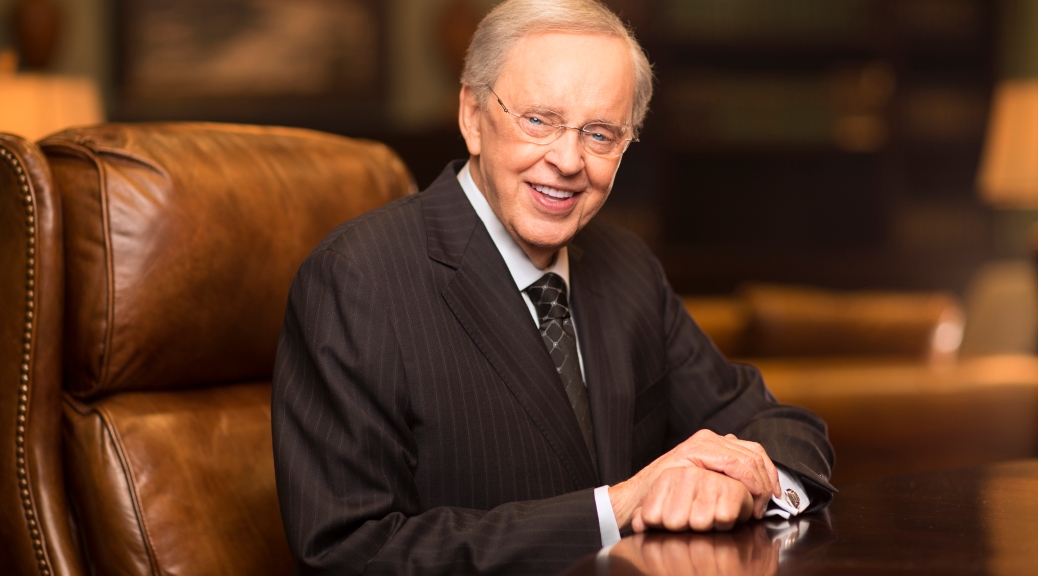
Charles Stanley – Following in Christ’s Footsteps


Matthew 10:24-42

Much of Christianity has a distorted view of discipleship. In our desire to see more people come to Christ, we may be guilty of offering a gospel that emphasizes the benefits of following Jesus while avoiding any mention of the cost involved.

However, Jesus didn’t shy away from speaking truth. He let people know that being His disciple would not be easy, because they’d be following in His footsteps. Since Christ didn’t sail through life without challenges, why should we? Our goal should be to become like our Savior, and that means we must be willing to suffer to one degree or another.

Contrary to what many contemporary sermons suggest, following Jesus may not make your relationships better. It could become a source of contention because a true disciple’s love, devotion, and loyalty to Christ supersedes every other relationship. If what a friend or family member desires contradicts what the Lord has commanded, then the choice must be to follow Christ rather than a loved one.

As Christians, we’ll frequently be tempted to compromise in order to avoid misunderstanding, criticism, rejection, or persecution. But as Christ’s followers, we are called to live a crucified life—and compromise undercuts the wholehearted nature of crucifixion. We cannot pursue the acceptance of the world and at the same time follow the Lord. Until we stand with both feet on the side of obedience, we forfeit assurance of God’s peace and blessings.

Although discipleship is costly, the reward is great. Jesus promises to confess us as His own before God when we enter our heavenly home.

Bible in One Year: Job 9-12


http://www.intouch.org/

Our Daily Bread — Night Watches


Bible in a Year:2 Chronicles 19–20; John 13:21–38

On my bed I remember you; I think of you through the watches of the night.

Psalm 63:6

Today’s Scripture & Insight:Psalm 63:1-8

During my college days, my summers were spent working at a guest ranch in the stunningly beautiful mountains of Colorado. On a rotating basis, staff members were assigned “night watch” duty—to keep an eye out for forest fires in order to protect the guests as they slept. What initially seemed to be an exhausting and thankless task became a unique opportunity for me to be still, reflect, and find solace in the majesty of God’s presence.

King David earnestly sought and thirsted for the presence of God (Psalm 63:1), even from his bed and through the “watches of the night” (v. 6). The psalm makes it clear David was troubled. It’s possible the words contained in it reflect his deep sadness over the rebellion of his son Absalom. Yet the night became a time for David to find help and restoration in the “shadow of [God’s] wings” (v. 7)—in His power and presence.

Perhaps you’re dealing with some crisis or difficulty in your life, and the night watches have been anything but comforting. Perhaps your own “Absalom” weighs heavy on your heart and soul. Or other burdens of family, work, or finances plague your times of rest. If so, consider these sleepless moments to be opportunities to call out and cling to God—allowing His loving hand to uphold you (v. 8).

By 

Reflect & Pray

How do God’s promises encourage you when you face challenges that keep you awake at night? How can the night watches draw you closer to Him?

Dear God, thank You for always being awake and present with me in every night watch.


http://www.odb.org

Ravi Zacharias Ministry – The Face as Figure


Thomas Grüter has always had trouble putting names with faces. But unlike most of us who might have trouble recollecting the name of the man who just said hello, Grüter’s trouble lies in recognizing the face of the man who just said hello—even if it is his own father’s. His condition is called prosopagnosia or “face blindness,” and until recently the disorder was thought to be exceedingly rare. But new research led by a team that included Grüter himself shows the disorder is surprisingly much more common.

Those affected with prosopagnosia are not forgetful or inattentive, nor are they the social snobs they are often accused of being. When it comes to faces—even their own—they see very little that distinguishes one from another. The part of the brain that signals face recognition simply does not respond. As a result, they may greet acquaintances as strangers, struggle to keep up with plots in movies, and have difficulty finding their own children at school pick-up time. “I see faces that are human,” notes one woman of her condition, “but they all look more or less the same. It’s like looking at a bunch of golden retrievers: some may seem a little older or smaller or bigger, but essentially they all look alike.”(1)

The more I think about what it would mean to live unable to recognize faces, the more I am amazed at our ability to do so at all. Human faces are so complex, differing in both great and minute details. Our faces change with expression or circumstance, angle or shift of light; they are transformed by emotions, altered by different situations, and slowly transformed with age. Given the intricacy of the task, it is phenomenal that we should be able to recognize so many faces so effortlessly in the first place.

Yet the face is one of the very first things we learn to respond to as infants. Developmental psychologists speak readily of the importance of the human face in the life of a newborn, particularly the faces of mother and father, which the child quickly comes to recognize. Professor James Loder speaks of the tendency of an infant to smile when one holds the mere configuration of a face on a stick beside the crib. Writes Loder, “[T]he face phenomenon is not strictly something that comes only from the environment; it is also a construct created by the child and developed out of the child’s inherent resources and deep-seated longing. Children seem uniquely endowed with a potential capacity to sum up all the complexity of the nurturing presence in the figure of the face.“(2) For the child, the face plays a central role in their developing sense of the order of their very universe. Thus, when the face of the loving nurturer goes away in any capacity (which is inevitable), the child’s world is upset on some level. For what has gone away is not merely a static face but a much greater presence.

In this, children inherently illustrate a correlation drawn in biblical language. In both Greek and in Hebrew, the word for “face” is also the word for “presence.” Though we do not literally behold the face of God, it is the Father’s greater countenance that we seek, God’s presence that comforts above all. The psalmist’s plea is that the confirming presence of God’s love would remain with him always: “Do not hide your face from me, do not turn your servant away in anger; you have been my helper. Do not reject me or forsake me, O God my Savior. Though my father and mother forsake me, the LORD will receive me” (Psalm 27:9-10). Scripture seems to pronounce what is echoed in the skills and longings of a developing child: namely, our years urge us to pursue “a relationship with the One who is the cosmic ordering, self-confirming presence.”(3) That is to say, the enduring pursuit of the faithful is a pursuit of the Face that will, in fact, never go away.

I cannot imagine the hardship of those for whom no face is familiar. But there are times when God’s face certainly seems obscure to me, and it is a painful discomfort. Though evidence of God’s assuring presence may well be around me, I am at times hard-pressed to recognize it. It is in such times when I am reminded by my own longing that God is near. In my most instinctive desire is the imprint of the face for which I long. Though recognition is a task that doesn’t always come effortlessly, the longing to know the face of God is a sign placed deeply within us, an assuring mark of God’s very calming, comforting presence. Wherever we are in our stages of recognition, the promise of God, and the vicariously human presence of the Son of God, is given in mystery and kindness: For now we see but a poor reflection as in a mirror; but one day we shall see face to face.


Jill Carattini is managing editor of A Slice of Infinity at Ravi Zacharias International Ministries in Atlanta, Georgia.


(1) Nicholas Bakalar, “Just Another Face in the Crowd Even if It’s Your Own,” The New York Times, July 18, 2006.
(2) James E. Loder, The Logic of the Spirit (San Francisco: Jossey-Bass, 1998), 91.
(3) Ibid., 95.


http://www.rzim.org/

Joyce Meyer – Get Up and Get Going


I am weary with my moaning; every night I flood my bed with tears; I drench my couch with my weeping…Depart from me, all you workers of evil, for the Lord has heard the sound of my weeping. — Psalm 6:6,8

Adapted from the resource Starting Your Day Right Devotional – by Joyce Meyer

Even before we are totally awake, Satan is bidding to deceive us and is ready to plant defeating thoughts in our mind. He wants us to be hopeless, faithless, and negative.

He definitely doesn’t want us to be positive when we get up. He wants us to have a bad attitude and be selfish and self-centered, full of hatred, bitterness, resentment, doubt, unbelief, and fear—to be mad at everybody.

But thank God, through Jesus Christ, we have been redeemed from all of those negative patterns. We can resist Satan and trust God’s power in or­der to live victoriously today.

Prayer Starter: Father, this is the day You have made! Help me to approach it with a positive attitude, full of faith and hope, knowing You have great things in store. In Jesus’ Name, Amen.


http://www.joycemeyer.org

Campus Crusade for Christ; Bill Bright – Bring Forth Much Fruit


“Verily, verily, I say unto you, Except a corn of wheat fall into the ground and die, it abideth alone: but if it die, it bringeth forth much fruit” (John 12:24, KJV).

Alex was distressed over his constant failure to live the Christian life victoriously.

“I am always failing,” he said. “I know what is right, but I am simply not able to keep the many commitments, resolutions and rededications that I make to the Lord almost daily. What is wrong with me? Why do I constantly fail? How can I push that magic button which will change my life and make me the kind of person God wants me to be, and the kind of person I want to be?”

I turned with him to review Romans 7 and 8, and discussed with him how all of us experience this conflict when we walk in our own strength. But the victory is ours as we walk in the Spirit. It is impossible to control ourselves and be controlled by the Holy Spirit at the same time.

Perhaps you have had that same problem and wondered why your life was not bringing forth much fruit. Christ cannot be in control if you are on the throne of your life. So you must abdicate – surrender the throne of your life to Christ. This involves faith.

As an expression of your will, in prayer, you surrender the throne of your life to Him, and by faith you draw upon His resources to live a supernatural life, holy and fruitful. The command of Ephesians 5:18 is given to all believers: We are to be filled, directed and empowered by the Holy Spirit, continually, moment by moment, every day. And the promise of 1 John 5:14, 15 is made to all believers: When we pray according to God’s will, He hears and answers us.

The person who walks by faith in the control of the Holy Spirit has a new Master. The Lord Jesus said, “He who does not take his cross and follow after Me is not worthy of Me” (Matthew 10:38, NAS). “Unless a grain of wheat falls into the earth and dies, it remains by itself alone; but if it dies, it bears much fruit” (John 12:24, NAS).

Bible Reading: John 12:25-31

TODAY’S ACTION POINT: Because my deep desire is to “bear much fruit,” I will surrender afresh to God’s Holy Spirit so that He might endow me with supernatural life and enable me to bear much fruit for His glory.


http://www.cru.org

Max Lucado – The Dehydrated Heart


Listen to Today’s Devotion

Your body is 80 percent fluid.  Stop drinking and see what happens.  Coherent thoughts vanish, skin grows clammy, and vital organs wrinkle.

Deprive your heart of spiritual water, and your dehydrated heart will send desperate messages—hopelessness, loneliness, resentment.  Where do you find water for your soul?  Jesus said, “If anyone thirsts, let him come to Me and drink.  He who believes in Me, as the Scripture has said, out of his heart will flow rivers of living water” (John 7:37-38).

Let Christ be the water of your soul.  Church activities might hide a thirst, but only Christ quenches it. Drink him.  Receive Christ’s work on the cross, the energy of his Spirit, his lordship over your life, his unending, unfailing love.  Drink deeply and often.  And out of you will flow rivers of living water.

Read more Come Thirsty

For more inspirational messages please visit Max Lucado.

Home

Denison Forum – Thirty years after Tiananmen: Persecution ‘the world has never seen the likes of’


Tiananmen Square consists of 109 acres in the heart of Beijing, China. Ironically, the name means “Gate of Heavenly Peace.” First constructed in 1420 during the Ming dynasty, it was the entrance to the Imperial City and the Forbidden City (the homes of emperors and their households for almost five hundred years).

When I visited several years ago, I was amazed by the massive size of the square. And by the fact that it displays no indication whatsoever that one of the most dramatic events of my lifetime took place there.

“Tank man” makes history

In 1989, weeks of pro-democracy protests led to demonstrations by more than a million people in Tiananmen Square. Thirty years ago today, the Chinese government ordered its military to reclaim the area.

Troops reached the square around 1 a.m. the following morning, June 4, leading to hundreds of deaths and thousands of arrests. An official death toll has never been released. Several dozen people were later executed for their parts in the demonstrations.

Mention of the massacre is banned in China still today.

Perhaps the most iconic moment came when an unidentified protester stood in front of a line of tanks, blocking their progress. The so-called “tank man” stood there for several minutes before he was pulled aside by onlookers.

The church’s “spectacular growth”

The same day the Chinese government massacred hundreds of pro-democracy demonstrators, Communist Party leaders watched as pro-democracy candidates in Poland supplanted Communist rule. Pope John Paul II’s support was indispensable to their success.

Writing for the Wall Street Journal, Nina Shea and Bob Fu describe what happened to Christians in China after the Tiananmen massacre. Shea directs the Hudson Institute’s Center for Religious Freedom. Dr. Fu was a student leader during the Tiananmen Square demonstrations and founded ChinaAid “to bring international attention to China’s gross human rights violations and to promote religious freedom and rule of law in China.”

It was my privilege to meet with Dr. Fu a few years ago; I have followed his courageous career with gratitude.

Shea and Fu state that Chinese Christianity experienced “spectacular growth” over the thirty years after Tiananmen and report that “there could be well over 100 million Chinese Christians.” They cite projections that China could have nearly 250 million Christians by 2030. By contrast, the Communist Party numbers ninety million.

To counter such tremendous growth, President Xi Jinping last year began enforcing religious regulations to bend the church to the party’s leadership.

“A high-tech digital dictatorship”

According to Shea and Fu, ten thousand Protestant churches were ordered shut last year in Henan province, even though most were registered with the state. During 2018, more than one million Christians were threatened or persecuted; five thousand were arrested.

Mr. Xi’s regulations ban minors from entering churches and forbid Sunday schools and Bible camps. Christian symbols are sometimes being replaced in churches with pictures of Mr. Xi. Police ordered facial-recognition cameras installed in one Protestant megachurch in Beijing, prompting the pastor to close the church.

China expert and social scientist Steven Mosher warns that the persecution of Christians in China is unfolding in unprecedented ways. He reports that local officials have been instructed by the central government not to permit the public expression of religious sentiment anywhere in the towns they control. As a result, these officials are removing crosses from churches and confiscating Bibles and other religious articles from private homes.

Mosher also reports that the Chinese government is using smartphones, video surveillance, social media, and other technology to monitor its citizens. It then rewards or punishes them through a social credit system.

For example, everyone is required to have a Xi Jinping app on his or her smartphone. It is called “Study Xi Strong China”; everyone is required to study Xi on their smartphone for half an hour daily and answer a quiz. If a person misses a session, his or her social score is penalized.

Through the app, big data, artificial intelligence, and surveillance techniques, the Communist Party has developed what Mosher calls “a high-tech digital dictatorship.” He warns: “What we have in China is an unfolding persecution the world has never seen the likes of. It’s not a persecution where Christians are being arrested and fed to lions, but it’s a persecution where Christians are being arrested for their very thoughts.”

“They are doomed to lose this war”

As the world focuses this week on the Tiananmen Square massacre, let’s focus on the spiritual war being waged for the souls of more than a billion Chinese people. Just as we are to “pray for those who persecute you” (Matthew 5:44), so we are to pray for those who are being persecuted (cf. Hebrews 13:3).

Please pray for persecuted Chinese believers to be protected and sustained by God (Psalm 46:1). Pray for them to experience “the hope to which he has called you [and] the riches of his glorious inheritance in the saints” (Ephesians 1:18). Pray for them “to be strengthened with power through his Spirit in your inner being” (Ephesians 3:16). And pray for them “boldly to proclaim the mystery of the gospel” (Ephesians 6:19).

God promises his people: “No weapon that is fashioned against you shall succeed” (Isaiah 54:17). Therefore, let’s say with confidence: “The Lord is my helper; I will not fear; what can man do to me?” (Hebrews 13:6).

Shea and Fu quote a Chinese pastor and his wife who were arrested in December and are awaiting trial for subversion: “In this war . . . the rulers have chosen an enemy that can never be imprisoned—the soul of man. Therefore they are doomed to lose this war.”


Denison Forum

Charles Stanley –The Cost of True Discipleship


Luke 14:25-35

Unlike many churches today, Jesus was never interested in gathering crowds, nor did He make His message more appealing in order to gain a larger following. In fact, He consistently emphasized the high cost of discipleship instead of making it easy for people to follow Him halfheartedly. That’s because His goal was to make true disciples who were totally committed to Him—and this is the same charge He gave us in the Great Commission (Matt. 28:19-20).

In contemplating what makes up the essence of a human being, we might think of an individual’s life, relationships, and possessions. Yet Jesus demanded that His followers surrender all three. In Luke 14, the Lord taught that to be His disciple, a person could not …

Love anyone more than Him (Luke 14:26). When Jesus used the word translated as “hate,” He wasn’t advocating animosity toward family members. Rather, He was emphasizing a commitment to place Him before any human relationship.

Love one’s own life more than Him (Luke 14:26-27). The image Christ used was that of carrying a cross. This symbolized death to our former sinful lifestyle and, if necessary, a willingness to die in order to remain faithful to Him.

Be unwilling to give up all possessions (Luke 14:33). This doesn’t mean we must live as paupers, but we should hold everything loosely, knowing that we are merely stewards of whatever God has entrusted to us.

None of us can fully live up to Jesus’ call. But by His grace, we can commit to Him all that we are and all that we have. This should be the mindset of those who enter through the narrow gate to eternal life (Matt. 7:13-14).

Bible in One Year: Job 1-4


http://www.intouch.org/

Our Daily Bread — Objects in Mirror


Bible in a Year:2 Chronicles 15–16; John 12:27–50

I press on toward the goal to win the prize for which God has called me heavenward in Christ Jesus.

Philippians 3:14

Today’s Scripture & Insight:Philippians 3:7-14

“Must. Go. Faster.” That’s what Dr. Ian Malcolm, played by Jeff Goldblum, says in an iconic scene from the 1993 movie Jurassic Park as he and two other characters flee in a Jeep from a rampaging tyrannosaurus. When the driver looks in the rearview mirror, he sees the raging reptile’s jaw—right above the words: “OBJECTS IN MIRROR MAY BE CLOSER THAN THEY APPEAR.”

The scene is a masterful combination of intensity and grim humor. But sometimes the “monsters” from our past feel like they’ll never stop pursuing us. We look in the “mirror” of our lives and see mistakes looming right there, threatening to consume us with guilt or shame.

The apostle Paul understood the past’s potentially paralyzing power. He’d spent years trying to live perfectly apart from Christ, and even persecuted Christians (Philippians 3:1–9). Regret over his past could easily have crippled him.

But Paul found such beauty and power in his relationship with Christ that he was compelled to let go of his old life (vv. 8–9). That freed him to look forward in faith instead of backward in fear or regret: “One thing I do: Forgetting what is behind and straining toward what is ahead, I press on toward the goal” (vv. 13–14).

Our redemption in Christ has freed us to live for Him. We don’t have to let those “objects in (our) mirror” dictate our direction as we continue forward.

By Adam Holz

Reflect & Pray

How do Paul’s insights on Christ’s forgiveness of us speak into those issues in your life? If you’re struggling with a past choice, who might you talk to for help to “press on”?


http://www.odb.org

Streams in the Desert for Kids – Diamonds in the Making


2 Corinthians 7:5

Carbon is a soft natural material, but it is also the raw material from which diamonds—the hardest substance on earth—are made. How does that happen? Diamonds are formed 75 to 120 miles below the earth’s surface. When carbon buried deep in the earth is put under extreme pressure, and when the temperature is at least 192 degrees Fahrenheit, the carbon changes into diamonds. Scientists discovered that there have been only three times during Earth’s history when diamonds were made, and the planet no longer makes diamonds as it once did. Diamonds are highly valued as jewelry. Maybe your mother or father has a diamond ring. Diamonds are also valued in industry. A diamond saw blade will cut through almost anything.

In the Scripture verse for today, the Apostle Paul describes being harassed, or troubled, on every side. He was under extreme pressure, but God used that pressure to change Paul from an ordinary person into an extraordinary man of God. And God can do the same thing for us. When we feel like everything is pushing on us so hard we cannot stand it, it could be that God is changing us from soft material into a beautiful diamond that he can use.

Dear Lord, I hate to be under pressure. Help me to understand, though, that you can use my troubles to create something new and beautiful in my heart. Amen.

Joyce Meyer – Exceedingly, Abundantly, Above & Beyond


Now to Him who is able to [carry out His purpose and] do superabundantly more than all that we dare ask or think [infinitely beyond our greatest prayers, hopes, or dreams], according to His power that is at work within us. — Ephesians 3:20 (AMP)

Adapted from the resource New Day New You Devotional – by Joyce Meyer

When I pray about or simply meditate on all the people who are hurting, I have a strong desire to help them all. I sometimes feel that my desire is bigger than my ability, and it is—but it is not bigger than God’s ability!

When the thing we are facing in our lives or ministries looms so big in our eyes that our mind goes “tilt,” we need to think in the spirit. In the natural, many things are impossible. But in the supernatural, spiritual realm, with God nothing is impossible.

God wants us to believe for great things, make big plans, and expect Him to do things so great it leaves us with our mouths hanging open in awe. James 4:2 tells us we have not because we ask not! We can be bold in our asking.

Sometimes in my meetings, people will approach the altar for prayer and sheepishly ask if they can request two things. I tell them they can ask God for all they want to, as long as they trust Him to do it His way, in His timing. It is untold what people can do—people who don’t appear to be able to do anything.

God does not usually call people who are capable. If He did, He would not get the glory. He frequently chooses those who, in the natural, feel as if they are in completely over their heads but who are ready to stand up on the inside and take bold steps of faith as they get direction from God.

We usually want to wait until we “feel ready” before we step out, but if we feel ready, then we tend to lean on ourselves instead of on God.

Know your weaknesses and know God—know His strength and faithfulness. Above all else, don’t be a quitter.

Prayer Starter: Oh, Lord, help me to make you bigger in my eyes and believe You can do the impossible in my life. Help me to live with “God confidence,” and trust You to do things that are above and beyond what I even think I deserve. In Jesus’ Name, Amen.


http://www.joycemeyer.org

Campus Crusade for Christ; Bill Bright – Life-giving Fruit


“Godly men are growing a tree that bears life-giving fruit, and all who win souls are wise” (Proverbs 11-30).

“The monument I want after I am dead,” said Dwight L. Moody, “is a monument with two legs going around the world – a saved sinner telling about the salvation of Jesus Christ.”

When a young minister asked the Duke of Wellington whether he did not consider it useless to attempt to evangelize India, the Iron Duke sternly replied:

“What are your marching orders, sir?”

No doubt one of Satan’s greatest weapons of deceit in the world today is that of procrastination. Tomorrow I am going to become a soul-winner. Next month, after an evangelistic training program, I will become a great witness. As soon as I finish seminary or Bible college, I’ll begin sharing the good news of the gospel.

But “today is the day of salvation, now is the accepted time,” declares the Word of God. Sensitivity to God’s Holy Spirit – dwelling within to give me supernatural ability – will enable me to tell others what Christ means to me, and what He has done for me.

In God’s economy, the truly wise person, is that one who is redeeming the time, buying up every opportunity to share his faith, refusing to put off that which he knows should become a natural, every-day, moment-by-moment part of his life. Wonder of wonders, God even promises to put the very words in our mouths, if we ask Him, as we go in His name.

Bible Reading: II Corinthians 5:11-17

TODAY’S ACTION POINT: I will do what God leads me to do this day to bear life-giving fruit.


http://www.cru.org

Charles Stanley – Living by Our Convictions


Romans 14:22-23

Have you ever had to take a stand against a barrage of opposing opinions in order to be true to Christ? Or has a group of friends or coworkers ever wanted to cut corners or participate in a sinful activity—and you were the only one saying no? When the godly voice is outnumbered, it can be challenging to speak up for righteousness.

We all have convictions that define who we are and determine our lifestyle and choices. We may like to think that these are a private matter, but in reality, they are constantly on display for all to see. That’s because we live them out each day with our words and actions.

Since convictions have a powerful influence, we should examine what ours are saying about us. Are they leading us to a righteous life in accordance with God’s will, or are they so weak that our life is dominated by the old fleshly nature?

God has given us principles from His Word to guide, protect, and help us lead godly lives. These standards are like guardrails that keep us from veering off track when temptations beckon. By holding firmly to these convictions, we follow a path that fits our identity in Christ. Instead of going along with the crowd, we’re to walk in God’s will and abstain from the sins that surround us in the world.

The time to establish our convictions is before we face temptations, not in the midst of them. We need solid, immovable biblical principles to shape what we believe and how we live.

Bible in One Year: Esther 6-10


http://www.intouch.org/

Our Daily Bread — Here for You


Bible in a Year:2 Chronicles 13–14; John 12:1–26

I command you to be openhanded toward your fellow Israelites who are poor and needy in your land.

Deuteronomy 15:11

Today’s Scripture & Insight:Deuteronomy 15:7-11

On the outskirts of Paris, as in other cities around the globe, people are coming to the aid of the homeless in their communities. Clothing, covered in waterproof bags, is hung on designated fences for those living on the streets to take according to their needs. The bags are labeled, “I’m not lost; I’m for you if you’re cold.” The effort not only warms those without shelter, but also teaches those in the community the importance of assisting the needy among them.

The Bible highlights the importance of caring for those who are poor, instructing us to be “openhanded” toward them (Deuteronomy 15:11). We might be tempted to avert our eyes to the plight of the poor, holding tightly to our resources instead of sharing them. Yet God challenges us to recognize that we will always be surrounded by those who have needs and therefore to respond to them with generosity, not a “grudging heart” (v. 10). Jesus says that in giving to the poor we receive an enduring treasure in heaven (Luke 12:33).

Our generosity may not be recognized by anyone other than God. Yet when we give freely, we not only meet the needs of those around us but we also experience the joy God intends for us in providing for others. Help us, Lord, to have open eyes and open hands to supply the needs of those You place in our paths!

By Kirsten Holmberg

Reflect & Pray

Are you holding too tightly to your resources? If yes, why? What need can you fill today?

Generosity displays confidence in God’s loving and faithful provision.


http://www.odb.org

Ravi Zacharias Ministry – His Human Face

Most of us likely missed it. Couched between Wednesday’s building crescendo of assignments and Friday’s promise of their demise, Thursday hardly seems more than a means to an end. Though the day is every bit as holy as Easter Sunday, most of the world moves through it unsuspectingly—even those who have confessed the momentous lines of the Apostles’ Creed: “On the third day he rose again from the dead. He ascended to heaven and is seated at the right hand of God the Father almighty.”

Yesterday was Ascension Day, the day that marks the ascension of Jesus Christ. Forty days after the celebration of Easter and the resurrection of Jesus, the church around the world holds in remembrance this eventful day. The gospel writer records: “Then [Jesus] said to his disciples…. ‘See, I am sending upon you what my Father promised; so stay here in the city until you have been clothed with power from on high.’ Then he led them out as far as Bethany, and, lifting up his hands, he blessed them. While he was blessing them, he withdrew from them and was carried up into heaven. And they worshiped him, and returned to Jerusalem with great joy; and they were continually in the temple blessing God.”(1)

The ascension of Christ may not seem as momentous to the Christian story as the resurrection or as rousing as the image of Jesus on the cross. After the death and resurrection, in fact, the ascension might even seem somewhat anti-climatic. The resurrection and ascension statements of the Apostles’ Creed are essentially treated as one in the same: On the third day he rose again from the dead. He ascended to heaven and is seated at the right hand of God the Father almighty. One might even think that the one miraculous act flowed immediately into the other: as if the death of the body of Jesus was answered in the resurrection, a presence who then floated onto heaven. Unfortunately, the result of this impression is that many think of the ascension as somehow casting off of Christ’s human nature, as if Jesus is a presence that only used to be human. Hence, Jesus seems one more fit to memorialize than one we might expect to actually see face-to-face one day.

Continue reading Ravi Zacharias Ministry – His Human Face

Joyce Meyer – A New Thing


Behold, I am doing a new thing; now it springs forth, do you not perceive it? I will make a way in the wilderness and rivers in the desert. — Isaiah 43:19

Adapted from the resource Ending Your Day Right Devotional – by Joyce Meyer

Do you ever get really tired of doing the same old thing all the time? You want to do something different but you either don’t know what to do, or you are afraid to do the new thing you are thinking about doing?

You often get into ruts. You do the same thing all the time even though you are bored with it because you are afraid to step out and do something different. You would rather be safe and bored than excited and living on the edge. There is a certain amount of comfort in sameness you may not like it, but you are familiar with it.

God has created you to need and crave diversity and variety. You require freshness and newness in your life. As this year and this day come to an end, make a quality decision to step out into the new thing God has for you. And don’t forget to enjoy yourself!

Prayer Starter: Father, thank You for the new and exciting things You have for me this coming year! Help me to boldly step out and obey what You put in my heart. I know that Your plans always lead to joy, fulfillment, and good things. In Jesus’ Name, Amen.


http://www.joycemeyer.org

Campus Crusade for Christ; Bill Bright – How to Stay Pure


“How can a young man stay pure? By reading Your Word and following its rules” (Psalm 119:9).

I can live a pure life if I follow God’s Word. That seems to be the clear import of the psalmist’s message in this verse. And if that is true – and I have no doubt it is – then certain things surely should follow.

I will begin today by determining to know His Word and to obey it. Simple logic would dictate that I cannot and will not obey His Word if I am not familiar with it.

In a day when immorality is rampant and divorce is becoming commonplace even among Christians, how important it is that I seek to keep my life pure. Surely I cannot expect to be used of God in a supernatural way to help fulfill the Great Commission unless I am pure. And there seems to be no better way to accomplish that desired end than by reading, studying – even memorizing – His Word, and then, through the enabling of the Holy Spirit, by claiming God’s promises and obeying His commandments.

Earlier (Day 18) we mentioned the importance of hiding God’s Word in our hearts, that we might not sin against Him (Psalm 119:11). Again I would emphasize the value of committing to memory many verses – and even chapters – from the Word of God. In that way, we will have them stored in our minds so that God can bring them to our minds in time of special need and can use them to enable us to live supernaturally.

Basic to living the supernatural life is this matter of spending time in God’s Word, which is quick and powerful.

Bible Reading: Psalm 119:10-16

TODAY’S ACTION POINT: Today I will spend quality time in the Word of God and begin to memorize favorite passages, especially Psalm 119.


http://www.cru.org

Max Lucado – To Hear the Applause of Heaven


Listen to Today’s Devotion

The Beatitudes end with this compelling promise— “Great is your reward in heaven!” (Matthew 5:12).

The Book of Revelation could be called the Book of Homecoming.  In Revelation 21 verse 2, John describes heaven as a “bride beautifully dressed for her husband.”  Verse 4 says “there will be no more death.” The most hopeful words are in verse 5 , “I am making everything new.”  The Master Builder will pull out the original plan and restore the vigor, the energy, the hope, and the soul.

Each step you take brings you closer to home.  Before you know it, you’ll enter the City.  You’ll hear your name spoken by those who love you.  And maybe, just maybe—in the back, behind the crowds—the One who would rather die than live without you will remove his pierced hands from his heavenly robe and…applaud.

Read more Applause of Heaven

For more inspirational messages please visit Max Lucado.

Home

Denison Forum – Oregon lawmakers require schools to teach about the Holocaust: Fourteen-year-old helped make it happen

Alter Wiener was imprisoned in five different concentration camps during the Holocaust. Most of his family was killed, including his father. He weighed eighty pounds when he was liberated in 1945. Wiener moved to the US after the war and eventually made his home in Oregon.

High school freshman Claire Sarnowski first met Wiener at one of his talks about the Holocaust when she was a fourth-grader. The two became friends. According to Claire, it was Wiener’s lifelong dream to confront anti-Semitism by implementing mandatory curriculum standards for teaching students about the Holocaust.

She reached out to a state senator, Rob Wagner, who then co-sponsored a bill requiring such instruction. Wiener and Claire testified at a hearing last September.

“Learning about the Holocaust is not just a chapter in recent history, but a derived lesson how to be more tolerant, more loving and that hatred is, eventually, self-destructive,” Wiener told lawmakers. “Remember, be better, rather than bitter.”

Wiener died last December. The Oregon Senate passed Wagner’s legislation last March; the House passed the bill unanimously last week. If Gov. Kate Brown signs it, Oregon will begin providing such instruction in the 2020–2021 school year.

The world will be better because a fourteen-year-old did what she could to make it so.

The solution is solutions

David Brooks recently cited his New York Times colleague David Bornstein, who points out that much of American journalism is based on a “mistaken theory of change.” The theory: “The world will get better when we show where things have gone wrong.” As a result, Brooks notes, much of what journalists do is “expose error, cover problems and identify conflict.”

Continue reading Denison Forum – Oregon lawmakers require schools to teach about the Holocaust: Fourteen-year-old helped make it happen

Charles Stanley – Following Our Convictions


Acts 4:1-20

Most of us have been blessed to live relatively free from persecution. We may have experienced some mocking, ridicule, or ostracism because of our beliefs, but we don’t have to fear punishment or death. However, that’s not the case elsewhere in the world. There are Christians in other countries for whom today’s passage is all too familiar.

Acts 4 tells us that Peter and John faced great opposition for their faith. After being thrown into jail for healing a sick man, they were warned not to speak or teach in Jesus Christ’s name. But they held firmly to their convictions and replied, “Do you think God wants us to obey you rather than him? We cannot stop telling about everything we have seen and heard” (Acts 4:19-20 NLT).

Our goal as believers is to become unshakeable in our faith. Peter and John didn’t flinch from their responsibility to proclaim salvation in Jesus’ name, even in the face of imprisonment and threats. Yet in reading this account, we may wonder how we could ever endure persecution.

The truth is that in ourselves, we can’t do it. But we are never alone. When we stand for our convictions, God’s Spirit is always present in us. He gives us the physical, spiritual, mental, and moral strength to stand firm when we are tested and tried (Luke 12:11-12).

God wants His children to trust Him with the future; He doesn’t want us becoming panicky about what may lie ahead. But if He ever calls us to suffer for Him, in that moment He’ll provide the grace we need in order to remain faithful.

Bible in One Year: Esther 1-5


http://www.intouch.org/